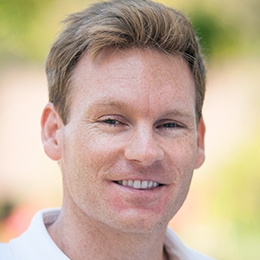
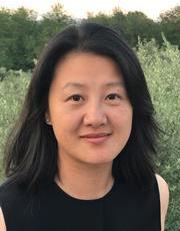
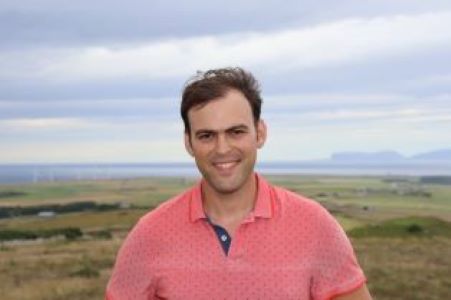
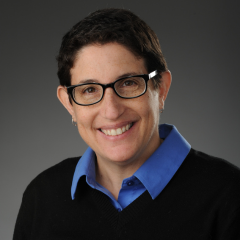
Tyler Johnson, PhD, is an Associate Professor in the Department of Natural Sciences and Mathematics at Dominican University of California's School of Health and Natural Sciences. His expertise lies in Natural Products Chemistry , Bioorganic Chemistry , and Medicinal Chemistry , with a focus on biomedical applications. Johnson's research emphasizes discovering therapeutic lead compounds and molecular probes from marine and terrestrial natural products. His research team investigates chemotypes like mycothiazole , zampanolide , fijianolide , and latrunculin from Indo-Pacific marine sponges. These compounds exhibit potent cytotoxicity (IC50 1~5 nM) against cancer cell lines through mechanisms including microfilament disruption , mitochondrial complex I inhibition , and microtubule stabilization . Current work explores mycothiazole as a molecular probe for mitochondrial aging. Key publications span 2024-2002, covering topics from sponge-derived anticancer agents to inflammation modulation and environmental toxicology. Johnson's laboratory engages in large-scale natural product isolation, spectroscopic validation, and semi-synthetic medicinal chemistry to optimize therapeutic leads. His work integrates undergraduate and graduate students into interdisciplinary biomedical research.
John Diffley is a Principal Group Leader and Associate Research Director at The Francis Crick Institute in London, UK, where he leads research on DNA replication mechanisms. His work focuses on understanding how cells precisely duplicate their DNA during cell division and how errors in this process contribute to cancer development. Diffley obtained his PhD from New York University in 1985 and completed postdoctoral training with Bruce Stillman at Cold Spring Harbor Laboratory until 1990. He established his research group at the Clare Hall Laboratories (originally Imperial Cancer Research Fund, then Cancer Research UK) before moving to The Francis Crick Institute in 2015. His research spans DNA replication initiation, cell cycle control, replication fork checkpoints, and epigenetic inheritance. Diffley's lab has pioneered methods to reconstitute chromatin replication using purified proteins, providing unprecedented insights into chromosome biology. His team combines genetics, cell biology, and biochemistry to study the molecular 'machines' that copy DNA in yeast and human cells. Analysis of Diffley's recent publications reveals a strong focus on structural mechanisms of DNA replication, particularly using cryo-EM to visualize replication machinery. His work examines helicase loading and activation, replication fork stability under stress, and the connection between replication errors and cancer development. The research spans model organisms to human cells, with increasing emphasis on structural approaches in recent years. FRS (Fellow of the Royal Society) FMedSci (Fellow of the Academy of Medical Sciences) Diffley actively mentors a diverse team of postdoctoral researchers and PhD students, investigating various aspects of DNA replication. His lab has received substantial funding to support their work on replication mechanisms, with projects spanning basic biochemical reconstitution to studies of replication errors in cancer contexts. The lab maintains multiple technical platforms including structural biology, biochemistry, and cell biology approaches. His research group operates within The Francis Crick Institute's collaborative environment, utilizing shared facilities for structural biology, microscopy, and genomics to advance understanding of DNA replication mechanisms and their implications for genome stability and disease.
Dr. James Ashton-Miller is a prominent faculty member in the Department of Mechanical Engineering at the University of Michigan, where he directs the Biomechanics Research Laboratory. He serves as a Center Member of the University of Michigan Injury Prevention Center and maintains affiliations with the Institute of Gerontology. His interdisciplinary work bridges engineering principles with medical applications, focusing on injury prevention across sports medicine, obstetrics, and geriatrics. Dr. Ashton-Miller's educational background includes: PhD from the University of Oslo, Oslo, Norway (1978-1983) MSME from M.I.T., Cambridge, MA, U.S.A (1972-1974) B.SC. (Hons) from the University of Newcastle-upon-Tyne, Newcastle-upon-Tyne, England (1967-1972) His research focuses on the biomechanics of injury prevention across multiple critical domains. In sports medicine, he has demonstrated that some ACL injuries are overuse injuries resulting from too many sub-maximal loading cycles that prevent healing of collagen damage. In women's health, his work on childbirth injuries addresses conditions that affect more women than breast cancer. His research on fall-related injuries in older adults reveals the dual threat of physical and cognitive factors. He also investigates sciatica, disc degeneration, and develops new medical devices for screening, diagnosis and treatment. Dr. Ashton-Miller's recent publications show a strong trend toward developing practical clinical applications from fundamental biomechanical research, with emphasis on advanced imaging methods, wearable sensors, and computational modeling for pelvic floor function assessment. His work consistently aims to translate engineering insights into clinical solutions for injury prevention. His research insights have earned him numerous national and international research awards, though specific awards aren't detailed in the available information. His work involves close collaboration with clinicians and surgeons who meet weekly to discuss progress and next steps. Dr. Ashton-Miller is deeply committed to mentoring, working with NIH K-series fellows along with 1-2 post-doctoral fellows, 3-5 PhD students, 2-4 M.S. students, 4-5 undergraduate students, and 2-4 young clinicians. His research is generously supported by the National Institutes of Health, National Science Foundation, National Basketball Association, Fortune 500 companies, and startup companies including Procter & Gamble and Hologic, Inc. He directs the Biomechanics Research Laboratory and co-leads the Pelvic Floor Research Group, where his teams develop new medical devices to improve screening, diagnosis, and treatment of various biomechanical conditions. These laboratories maintain strong clinical connections, ensuring research remains grounded in real-world medical challenges.
Dr. Parth Chansoria is a Lecturer at the Department of Health Sciences and Technology at ETH Zürich, where he leads biofabrication research within the Tissue Engineering and Biofabrication (TEB) group. His work focuses on structured light technology for regenerative medicine applications, including in vivo bioprinting and microgravity-based tissue engineering. He holds Ambizione and Spark grants from the Swiss National Science Foundation and has pioneered innovations in light-guided biofabrication, collagen-based resins, and anisotropic tissue design. Research domains include: Filamented light biofabrication for aligned tissues Minimally invasive light-based in vivo bioprinting Musculoskeletal tissue engineering in microgravity Isotonic collagen-based photocrosslinkable resins He has secured over 6 patents and received prestigious awards including the ISBF Early Career Investigator Award (2022), Marie Curie Actions Fellowship (2021), and SME 30 Under 30 recognition (2021). His interdisciplinary research bridges bioengineering, materials science, and clinical applications. Key collaborations include projects at UNC Chapel Hill (USA) and NC State (USA), where he developed biomimetic patches for dynamic organ pathologies and ultrasound-assisted cell patterning. His lab explores novel bioinks, hybrid fabrication techniques, and translational applications in regenerative medicine.
Zhuo Ban is an Associate Professor in the School of Communication, Film, & Media Studies at the University of Cincinnati, conducting critical global research on Organizational Communication and Public Relations with focus areas including globalized supply chains, offshore labor politics, and corporate social responsibility discourses. Her work has been published in leading journals such as Organization and Management Communication Quarterly . Her educational background includes: PhD in Communication, Purdue University, 2012 MA in Communication, Tsinghua University, 2008 Dr. Ban's research critically interrogates three interconnected domains: Activism and Resistance through culture-centered reinvigoration of theoretical models; Globalization and Marginalization by challenging functional rationality in public relations scholarship; and US-China Offshoring Dynamics analyzing corporate constructions of China's business environment. She employs discourse analysis to examine power structures in contexts ranging from Chinese house churches to breastfeeding discourse in cyberspace. Her publication portfolio reveals consistent engagement with labor politics and discursive constructions of power, evidenced by recurring themes across 12 recent works including migrant labor discourse in China, fair wage negotiations, and Orientalist representations in U.S. news media. Key methodological approaches involve culture-centered analysis and critical discourse frameworks applied to corporate communications and identity formation in Chinese contexts. Dr. Ban actively contributes to academic governance through membership in the Research Working Group, LEAF team, Graduate Admission Committee, Educator Faculty Search Committee, and Diversity and Inclusion Committee. She also serves as reviewer for Communication, Culture and Critique , Environmental Communication , and Health Communication , while teaching undergraduate courses in PR Research and PR Campaigns alongside graduate seminars in Public Relations and Issue Management.
Yvain Bruned is a Professor of Mathematics at Université de Lorraine, Nancy, France, where he leads research in singular stochastic partial differential equations and related fields. He serves as Principal Investigator for the ERC Starting Grant LoRDeT (2023-2028), which focuses on advancing the theory of decorated trees and Hopf algebraic structures for solving singular SPDEs and dispersive PDEs at low regularity. Previously, he was a Lecturer at the University of Edinburgh (2019-2022) and completed postdoctoral work at Imperial College London and University of Warwick under Martin Hairer. His educational background includes: PhD in Mathematics (2012-2015), UPMC (Paris 6), on "Singular KPZ type equations" under Lorenzo Zambotti Master 2 in Probability and Statistics, ENS Cachan / Rennes 1, with honors Master 1 in Mathematics, ENS Cachan, with honors Bachelor in Mathematics and Computer Science, University of Rennes 1, with honors Student at ENS Cachan Brittany extension (2009-2013) Classes Préparatoires in Mathematics and Physics (2007-2009) Bruned's research centers on singular stochastic partial differential equations, with particular focus on Regularity Structures, renormalization theory, and their connections to Hopf algebras. His work bridges theoretical mathematics with applications in quantum field theory, wave turbulence, and numerical analysis. He has developed novel approaches using decorated trees to handle renormalization procedures for singular SPDEs and has extended these methods to dispersive PDEs with random initial data. His research program aims to establish existence and uniqueness results for quasilinear and dispersive SPDEs while developing algebraic tools through deformations of Hopf algebras. His extensive publication record demonstrates consistent contributions to the field of singular SPDEs, with a clear trajectory from foundational work on Regularity Structures to more recent applications in dispersive PDEs and numerical methods. The publications reveal a strong collaborative network with leading researchers in stochastic analysis, mathematical physics, and algebra. His work shows increasing sophistication in handling renormalization procedures through algebraic structures, with recent papers exploring connections between different mathematical frameworks. His major scientific recognition includes: ERC Starting Grant LoRDeT (2023-2028) Bruned actively supervises a large group of researchers, currently advising 4 PhD students and 2 postdoctoral researchers at Université de Lorraine, with several former PhD students having completed their degrees at the University of Edinburgh. His ERC grant has enabled him to organize multiple international workshops in Nancy, fostering collaboration between researchers in singular SPDEs, algebraic structures, and numerical analysis. The grant also supports the development of software platforms for decorated trees and their Hopf algebraic structures. As Principal Investigator of the ERC LoRDeT project, Bruned leads a vibrant research team based at the Elie Cartan Institute of Lorraine, which includes postdocs, PhD students, and visiting researchers. The team regularly organizes specialized workshops on topics including operads, symmetries for quantum field theory, and normal forms for singular dynamics, creating a dynamic research environment that bridges multiple mathematical disciplines.
Laura Wernick is an Associate Professor at Fordham University's Graduate School of Social Service. Her academic background includes a PhD and MA from the University of Michigan, an MSW and MPA from Columbia University, and a BA from UC Berkeley. Dr. Wernick specializes in transformative community organizing models addressing intersectional power dynamics, with a focus on LGBTQ+ youth, domestic worker movements, and disability justice. She employs participatory action research methods to co-create solutions with marginalized communities. Her research explores how organizing models combat ableism, white supremacy in academia, and systemic oppression. Notable areas include youth-led advocacy, wealth mobilization for social justice, and employer-employee dynamics among domestic workers. Dr. Wernick's work bridges theory and practice through youth-adult partnerships and institutional reform initiatives. She maintains an active blog and public scholarship presence at www.laurawernick.com . Recent scholarship highlights include dismantling ableism in social work education and analyzing pandemic-related stigma. Her 2024 publications emphasize disability justice pedagogy and intersectional approaches to youth organizing. Methodologically, she advocates for participatory action research that disrupts traditional academic hierarchies. Leveraging over 20 years of practice experience, Dr. Wernick collaborates with community organizations to design interventions that foster healing and systemic change. Her current projects address racial disparities in school discipline and the mental health benefits of youth activism. She teaches courses on community organizing, social justice pedagogy, and marginalized populations.
Ferran Garcia-Pichel is a Regents Professor and Center Director at Arizona State University’s School of Life Sciences, affiliated with the Biodesign Center for Fundamental & Applied Microbiomics, Center for Biodiversity Outcomes, Water Institute, and Global Drylands Center. He holds a PhD in Microbiology from the University of Oregon (1999) and has been a faculty member at ASU since 1999. His research focuses on microbial adaptations in arid environments, including biogeochemical cycling, soil crust formation, and sustainable land restoration. Key interests include cyanobacterial sunscreen compounds (scytonemin), carbonate dissolution mechanisms, and hydrogen production. Teaching responsibilities include advanced microbiology, microbial ecology, and geomicrobiology courses such as MBB 495 Undergraduate Research and BIO 493 Honors Thesis. Awards span from the 2021 Regents Professor distinction to the 2023 Sperry Award for restoration science. His lab explores interdisciplinary approaches to study microbial communities in desert soils, marine intertidals, and atmospheric dust, with applications in climate resilience and biomedicine. Research highlights include biocrust restoration strategies, microbial nitrogen fixation networks, and the role of GABA/Glu signaling in spatial organization. Collaborations address global challenges like fugitive dust mitigation and carbon sequestration. The lab is based at the Biodesign Building B on ASU’s Tempe campus.
Professor Patrick Diamond is a leading academic in Public Policy at Queen Mary University of London's School of Politics and International Relations. He holds a BA, MPhil from Cambridge, and a PhD from Sheffield. His work focuses on UK productivity, regional inequality, governance structures, and social democratic ideologies. He has held senior roles in UK government, including Head of Policy Planning in Downing Street, and has been a Local Councillor in Southwark. Currently, he chairs Policy Network, advises international organizations, and serves on boards of think-tanks and trusts. His research explores policy advisory systems, Brexit impacts, and Labour Party evolution. He has authored over 20 books and numerous articles, including seminal works on British political history and governance reform. He has secured significant research funding from ESRC, Research England, and others. Educational Background: BA, MPhil (Cambridge); PhD (Sheffield). Research Interests: UK productivity, regional inequality, comparative governance, policy advisory systems, Northern Ireland governance, social democracy, and British Labour Party dynamics. He has led projects on English governance post-Brexit, well-being mapping in London, and economic change in East London. Awards and Grants: ESRC Productivity Institute grant (2022-25), Research England Impact Fund (2023-24), multiple ESRC Impact Acceleration Awards. Fellowships include Visiting Fellow at Kellogg College (Oxford), Policy Fellow at the Ministry of Justice Strategy Unit, and Academy of Social Sciences membership. Students and Supervision: Supervised PhD candidates including Matthew Lloyd, Fathima Sulaiman, and Karl Pike, focusing on British politics, governance, and policy analysis. Active in mentoring doctoral research on political leadership and spatial policy. Public Engagement: Advises international bodies like the Latin American Development Bank and Humana International. Serves on boards of Dartington Service Design Lab and Prisoners’ Education Trust. Regularly contributes to media outlets including BBC Radio 4, Guardian, and Financial Times.
Laura Alonso-Gallo is Professor of English and Department Chair of English and Foreign Languages at Barry University. She earned her BA, MA, and Ph.D. in English Philology from Universidad Complutense de Madrid, Spain. Her research focuses on American Literature , Latino/a Literature , Cultural Studies , Gender Studies , and Comparative Literature . She has extensive editorial experience as editor of Guayaba Sweet and Voces de América , and co-editor of multiple critical volumes. Her scholarly work spans topics including postnationalism , gender representation , ethnic identity , and cultural hybridity in literature. Articles such as 'Deconstructing Mexican Masculinity' and 'Postnacionalismo y el sueño americano' highlight her interdisciplinary approach. Scientific awards include the 2020 Sister Jeanne O'Laughlin Scholarship Award . She has received grants from Spain's Ministry of Education, Dartmouth College (Charles Dana Foundation), and the Salzburg Seminar. Dr. Alonso-Gallo serves on the Board of Directors of the Spain-Florida 500 Years Foundation, and is involved with organizations like Americans for Immigrant Justice and FIU's CasaCuba. She was born in Madrid, raised in Seville, and is committed to mentoring diverse students at Barry University.
Jim Rogers is an Associate Professor and Chair of PhD Studies at the School of Communications, Dublin City University. His research focuses on media and cultural industries, music, and copyright, with an emphasis on the digital transformation of the music industry, global strategies, and policy implications. He has authored and edited multiple books and articles on topics such as the evolution of performing rights organizations, the audio-visual nexus, and Ireland's music industry success. Rogers has presented at international conferences across Europe, Africa, Asia, and the Americas, engaging with issues like intellectual property, creative destruction, and cultural policy. His work bridges academic theory and industry practice, addressing the intersection of technology, law, and cultural production.
Hui Pan is a distinguished academic holding dual positions as Nokia Chair in Data Science and Professor of Computer Science at the University of Helsinki, and Chair Professor of Computational Media and Arts at the Hong Kong University of Science and Technology (HKUST). His research spans networking, mobile computing, augmented reality, and computational social science. He earned his Ph.D. in Computer Science from the University of Cambridge in 2007. His work bridges social networks with mobile systems, pioneering fields like mobile social networks and opportunistic forwarding algorithms. Research interests include data science, complex networks, and innovative applications of augmented reality. His recent publications focus on low-latency AR frameworks, blockchain for computation offloading, and mobile web visualization. He has received prestigious awards, including IEEE Fellow (2018), ACM Distinguished Scientist (2016), and the Nokia Chair Endowment (2017). He has supervised over 15 PhD and 12 MPhil graduates, with 13 current Ph.D. students and 2 MPhil students. His editorial roles include Associate Editorships at IEEE Transactions journals and guest editorships at top venues like IEEE JSAC and ACM Transactions. He has organized conferences such as WWW Track Chair and ExtremeCom General Chair.
Professor George Buchanan is a leading researcher in human-computer interaction and digital libraries at RMIT University . His work bridges information science, digital humanities, and health informatics, focusing on usability in sensitive contexts like healthcare and misinformation. Deputy Dean, Research at RMIT University Former Director, University of Melbourne iSchool Research Interests: Digital information interaction Health and aging informatics Disinformation analysis Mobile interface design Digital library systems Key Contributions: Developed mobile web usability benchmarks, spatial hypertext tools, and thermal feedback interfaces. Currently seeking PhD students for 2025 projects on digital browsing and view change dynamics. Awards: Over twenty best paper awards and Honorary Life Fellow of the Royal Society of Arts. Advising: Accepting Masters/PhD supervision in information interaction and digital health domains.
Professor Paul Sellin is a Professor of Physics at the University of Surrey's School of Mathematics and Physics, with visiting roles at UCL and the University of Wollongong. He holds a PhD in Nuclear Physics from the University of Edinburgh (1992) and a BSc (Hons) in Physics from the University of Birmingham (1988). His research focuses on radiation detector materials, including perovskites, semiconductors, and scintillators, with applications in medical imaging, nuclear security, and high-energy physics. Key interests include perovskite semiconductor development, neutron/gamma detection, and radiation-hard materials. His group collaborates internationally on projects like the DTRA Interaction of Ionizing Radiation with Matter (IIRM) University Research Alliance. Publications highlight advancements in X-ray detection using perovskite nanocomposites, Cu-doped crystals, and organic semiconductors. His work emphasizes material synthesis, charge transport optimization, and device fabrication for low-dose imaging and high-sensitivity detection. Professor Sellin has supervised over 30 postgraduate students, many contributing to seminal studies on perovskite detectors, plastic scintillators, and semiconductor characterization. His contributions span academic networks like the Nuclear Threat Reduction Network (NTR-net) and the STFC NuSec program.
Steven R. Caliari is an Associate Professor in the Department of Chemical Engineering with a secondary appointment in Biomedical Engineering at the University of Virginia’s School of Engineering and Applied Science. He serves as the ChE Graduate Program Director and is a SEAS Copenhaver Fellow (2023). His research focuses on designing biomaterials to study cell-microenvironment interactions, addressing challenges in disease and tissue engineering. He holds a B.S. (2007, University of Florida), M.S. (2010), and Ph.D. (2013) in Chemical Engineering from the University of Illinois, followed by an NIH postdoctoral fellowship at the University of Pennsylvania. His research interests include biomaterials, mechanobiology, musculoskeletal tissue engineering, and advanced manufacturing for biological applications. His lab has pioneered viscoelastic hydrogel platforms and conductive collagen scaffolds, supported by NIH, NSF, DoD, and industry grants. Notable awards include the NSF CAREER Award (2021) and NIH MIRA (2020). Grants: NIH (NIGMS), NSF CAREER, V Foundation, UVA-Coulter Partnership Courses: Tissue Engineering (BME/CHE 4417), Transport Processes I (CHE 3321) Labs: Caliari Lab focuses on biomaterial design and mechanobiological studies His work bridges fundamental science and translational applications, emphasizing dynamic material systems for regenerative medicine and disease modeling.