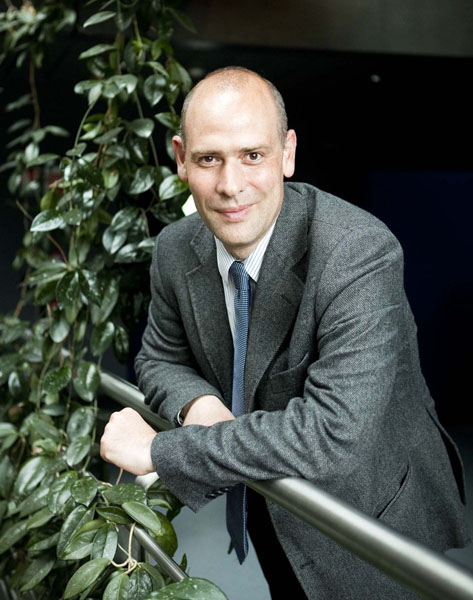
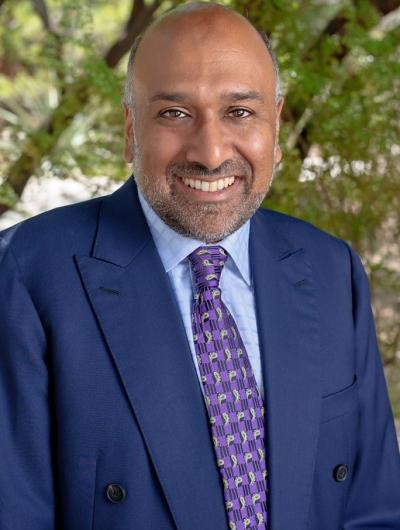
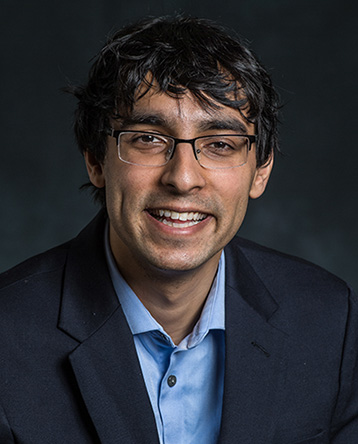
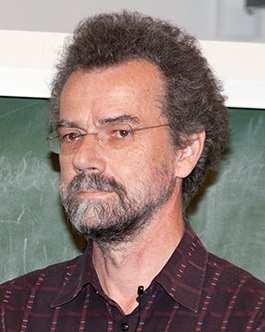
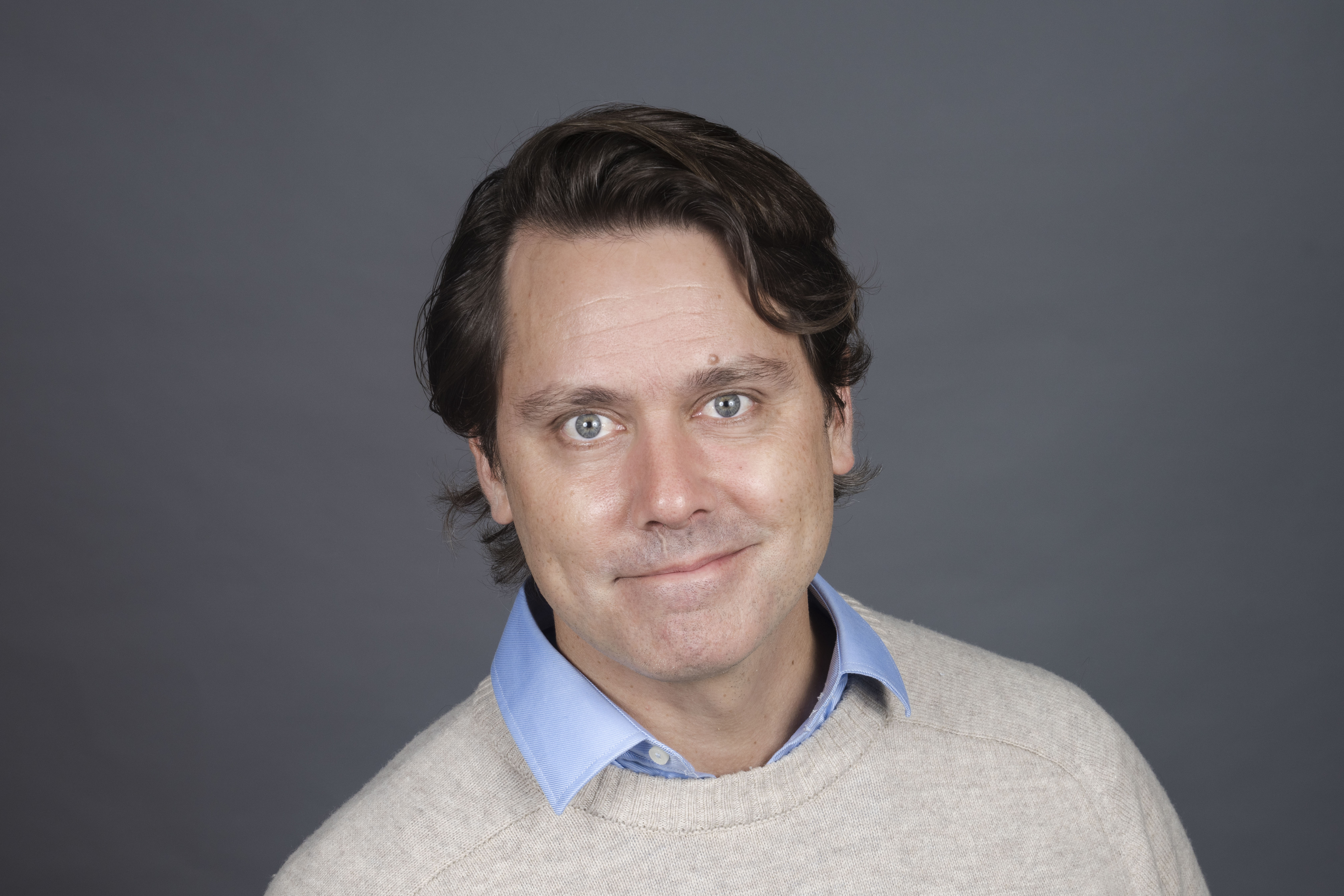
Paolo Samorì is a full-time Professor at the Université de Strasbourg , where he serves as Director of the Nanochemistry Laboratory and Emeritus Director of the Institut de Science et d'Ingénierie Supramoléculaires (ISIS) . He is affiliated with multiple prestigious academies, including the German National Academy of Science and Engineering (ACATECH) , Royal Society of Chemistry (FRSC) , and European Academy of Sciences (EURASC) . Education: Laurea (MSc) in Industrial Chemistry (University of Bologna, 1995), PhD in Chemistry (Humboldt University Berlin, 2000, summa cum laude). His research focuses on Nanochemistry , 2D materials , and supramolecular systems at interfaces , with applications in organic electronics , optoelectronics , and sensing . He pioneered methods for scanning probe microscopies and photoresponsive nanodevices , including graphene-based systems and diarylethene molecular switches. His scientific awards include the ERC Advanced Grant (2019) , Blaise Pascal Medal (2018) , and Catalán-Sabatier Prize (2017) , among 20+ honors. He has trained over 130 students and researchers , including 34 professors now active globally.
Gunnar Blohm is an Assistant Professor in the Department of Biomedical and Molecular Sciences at Queen's University, affiliated with the School of Medicine and Faculty of Health Sciences. His research focuses on sensorimotor neuroscience, particularly 3D sensorimotor control, eye-hand coordination, and computational modeling of neural processes. He holds a Ph.D. from Université Catholique de Louvain and has held postdoctoral positions at York University and his alma mater. Cross-appointed to the School of Computing, Department of Psychology, and Department of Mathematics and Statistics, he is also Vice-Director of the Connected Minds initiative. His research integrates behavioral experiments, brain imaging (MEG/EEG), and patient studies to understand how sensory information is transformed into goal-directed actions. Key areas include visuomotor transformations, multisensory integration, and Bayesian processes in neural computations. Blohm leads the Computational Sensorimotor Neuroscience Lab, emphasizing collaborative projects like Neuromatch Academy and contributions to open science initiatives. Affiliated with Queen's Centre for Neuroscience Studies and Ingenuity Labs, his work bridges computational approaches with clinical applications, aiming to develop frameworks for understanding brain dysfunction and clinical tools. His recent articles explore topics like saccade dynamics, pupil responses, and generative adversarial collaborations in scientific discourse.
Stephen Pratten is a Professor of Economics and Philosophy at King's Business School, King's College London. He holds additional roles as co-editor of the Cambridge Journal of Economics and Research Associate at the Centre for Business Research (CBR). His research focuses on the methodology of economics, particularly social ontology and realist theorizing, alongside empirical studies on structural and regulatory changes in media industries. Education: PhD in Economics from the University of Cambridge Affiliations: King's College London (since 1999), CBR Research Fellow Research interests include critical realism, neoclassical economics, and the history of economic thought. He has contributed to interdisciplinary projects through the Social Ontology Research Unit, which explores social positioning theory and its applications. Recent work examines monetary theory, Deweyan pragmatism, and institutional analysis. His publications span over three decades, addressing topics from transaction cost economics to the philosophy of social institutions. He supervises PhD students and teaches on undergraduate and postgraduate programs, focusing on social science methodology and industrial organization. Despite no explicit awards listed, his extensive editorial roles and prolific publishing highlight his scholarly impact.
William H. Nienhauser, Jr. is the Halls-Bascom Professor of Classical Chinese Literature in the Department of Asian Languages and Cultures at the University of Wisconsin–Madison, College of Letters and Science. He is a leading authority on early Chinese literature, historiography, and poetry, with a particular focus on Sima Qian’s Shiji and the poetry of Du Fu. He has held visiting and research positions in China, Japan, Germany, and Taiwan, and remains academically active, including a 2018 appointment as Visiting Professor at Nankai University. His research interests include early traditional Chinese fiction, historiography, chuanqi and zhiguai tales, and the application of modern Western critical theories to Chinese literary texts. He is deeply engaged in the translation and annotation of classical works, especially the Shiji , often in collaboration with graduate students. His scholarship bridges philology, literary theory, and historical contextualization, contributing significantly to the global understanding of pre-modern Chinese literature. Nienhauser’s publications reveal a sustained focus on textual analysis, narrative structure, and the interplay between history and literature. His work spans from early Shijing poetry to Tang dynasty fiction, with a strong emphasis on Sima Qian’s historiographical methods and legacy. He has also contributed foundational reference works and critical editions, shaping the field of Chinese literary studies. His scientific awards reflect the international recognition of his scholarship: Woodrow Wilson Fellowship ACLS Fellowship NEH Fellowship Fulbright-Hayes Fellowship Japan Foundation Fellowship German Research Foundation Fellowship Alexander von Humboldt Foundation Fellowship Humboldt Foundation Lifetime Achievement Award (2003) Nienhauser has advised numerous graduate students in collaborative research projects, particularly on the Shiji and Du Fu. He has secured major fellowships and grants from prestigious organizations including the NEH, ACLS, Fulbright-Hayes, and the Humboldt Foundation, enabling extended research and translation work. His editorial roles, especially as a founding editor of Chinese Literature: Essays, Articles, Reviews (CLEAR), have been instrumental in advancing the field. While no formal lab or research center is mentioned, Nienhauser leads a major international collaborative translation project on the Shiji , involving scholars and students across institutions. His seminars and graduate courses foster a close-knit research community focused on classical Chinese texts.
Carlos Portugal Gouvêa is an Associate Professor at the University of São Paulo Law School, where he leads multiple research centers including the Center for Corporate Governance (CGC-USP), Asian Legal Studies Center (CELA-USP), and Law and Poverty Group (GDP-USP). He is also the Chief Executive Officer of the Global Law Institute (IDGlobal), a leading think tank in Brazil focusing on environmental and social justice. Educational background includes S.J.D. from Harvard Law School and LL.B. and Livre-Docência from the University of São Paulo Research interests span corporate governance, ESG, human rights, and distributive justice in private law He has coordinated impactful projects including mapping global litigation on homelessness and analyzing carbon offset mechanisms in indigenous territories His scholarly work has influenced major rulings in the Brazilian Supreme Court, particularly regarding intellectual property and health rights. He is a human rights activist and founding member of influential non-profits like Instituto Sou da Paz and Conectas Human Rights. With a focus on high-impact research, his recent publications address racial diversity in corporate leadership, class action trends in Brazil, and social rights for marginalized populations. He actively engages in public policy and legal innovation through his roles in regulatory commissions and academic organizations.
David Damanik is the Robert L. Moody, Sr. Professor of Mathematics at Rice University, where he has established himself as a leading researcher in spectral theory, dynamical systems, and aperiodic order. His work bridges pure mathematics with mathematical physics, focusing on the spectral properties of operators arising in quantum mechanics and quasicrystal theory. Dr. Damanik received his academic training at Johann Wolfgang Goethe-Universität in Frankfurt, Germany, earning a Dipl.-Math. in 1995, Dipl.-Inform. in 1996, and Dr. phil. nat. in 1998. His educational background reflects a strong foundation in both mathematics and computer science, which informs his interdisciplinary research approach. His research interests center around spectral theory of Schrödinger operators, particularly those with ergodic, quasi-periodic, and aperiodic potentials. He has made significant contributions to understanding the spectral properties of operators associated with quasicrystals, substitution sequences, and other aperiodic structures. His work often connects spectral properties with dynamical systems concepts, particularly through the study of rotation numbers, Lyapunov exponents, and gap labeling theorems. Damanik's research has profound implications for understanding quantum transport in aperiodic media and the mathematical foundations of condensed matter physics. Analysis of his recent publications (2022-2024) reveals a continued focus on ergodic Schrödinger operators, with two comprehensive monographs providing a systematic treatment of the field. His work spans both theoretical foundations and specific applications, addressing problems in one-dimensional systems, quasi-periodic potentials, and aperiodic tilings. The research demonstrates strong connections between spectral theory, dynamical systems, and mathematical physics, with particular emphasis on the interplay between spectral properties and the underlying dynamics of the potential. Annales Henri Poincaré Prize (2014) for the paper "Continuum Schrödinger operators associated with aperiodic subshifts" Professor Damanik has mentored numerous PhD students and maintains an extensive network of collaborators across the globe, as evidenced by his long list of coauthors. His research has been supported by various grants that enable him to organize workshops and conferences, fostering collaboration in his field. He has been instrumental in organizing major conferences such as the Spectral Theory and Mathematical Physics conference honoring Barry Simon's 80th birthday (scheduled for 2026) and multiple workshops on aperiodic order at prestigious institutions like Banff International Research Station and Mathematisches Forschungsinstitut Oberwolfach. Through his teaching of specialized courses like "Mathematics of Aperiodic Order" and "Ergodic Theory and Topological Dynamics," Damanik has cultivated the next generation of researchers in his field. His leadership in organizing conferences and workshops has established him as a central figure in the international community studying spectral theory and aperiodic structures.
Lara A. Estroff is a Full Professor and the current Chair of the Department of Materials Science and Engineering at Cornell University's College of Engineering. She has been a faculty member since 2005 and served as Director of Graduate Studies from 2015 to 2019. Her academic leadership and research excellence position her at the forefront of bio-inspired materials and biomineralization research. Her educational background includes a B.A. in Chemistry from Swarthmore College (1997) and a Ph.D. in Chemistry from Yale University (2003), followed by an NIH-funded postdoctoral fellowship at Harvard University in the lab of Prof. George M. Whitesides. Dr. Estroff's research centers on the fundamental mechanisms of crystal growth, biomineralization, and pathological mineralization. She investigates how organisms control mineral formation and applies these principles to engineer synthetic materials with complex structures and functionalities. Her work spans biomaterials, tissue engineering, and energy materials—particularly hybrid organic-inorganic perovskites for photovoltaics. She employs advanced characterization techniques and has pioneered in situ methods to monitor crystallization dynamics. Her recent publications reveal a strong trend toward interdisciplinary research, integrating materials science with cancer biology, immunology, and machine learning. The articles emphasize bio-inspired synthesis, mineral-tissue interactions, and the development of functional crystalline materials for medical and energy applications. Faculty Early CAREER Award, National Science Foundation (2009) Fiona Ip Li '78 and Donald Li '75 Excellence in Teaching Award, Cornell College of Engineering (2007) Marilyn Emmons Williams Award, Cornell Undergraduate Research Board (2009) Keynote Speaker, Gordon Research Seminar on Biomineralization (2012) Lawrence Berkeley National Lab Affiliate (2013) Dr. Estroff leads a major DOE-funded project titled “Formulation Engineering of Energy Materials via Multiscale Learning Spirals,” a $3 million, three-year initiative using machine learning to optimize perovskite synthesis for solar cells. She has advised numerous graduate students and postdoctoral researchers, and her lab is known for fostering collaborative, cross-disciplinary research. She has also contributed to educational initiatives at Cornell, particularly in undergraduate research and materials education. Her research group operates at the intersection of chemistry, engineering, and biology, focusing on high-resolution characterization of biominerals, in situ crystal growth studies, and the design of in vitro models for cell-mineral interactions. The lab actively collaborates with institutions including Lawrence Livermore National Laboratory, National Renewable Energy Laboratory, and Johns Hopkins University.
Gautam Gowrisankaran is a Professor of Economics at Columbia University , with affiliations as a Research Associate at the National Bureau of Economic Research (NBER), a Research Fellow at the Centre for Economic and Policy Research (CEPR), and a Professeur affilié at HEC Montréal. His research spans Health Economics , Industrial Organization , and Environmental Economics . Primary Affiliation : Columbia University, Department of Economics Secondary Affiliations : NBER, CEPR, HEC Montréal His work investigates dynamic market behaviors , including hospital pricing under Medicare reforms, energy transitions in regulated markets, and the impact of policy uncertainty on technology adoption. Recent publications focus on renewable energy integration , insurance market dynamics , and environmental regulation enforcement . Key trends in his research include applied microeconomic modeling , policy evaluation , and strategic interactions in markets with high stakes such as healthcare and energy. His methodological approach often combines structural estimation with empirical data analysis . Notable Grants : Doctoral Dissertation Research in Economics (Effect of Certified Nurse Midwife Scope-of-Practice Laws) Gautam actively contributes to academic discourse through collaborations with institutions like the University of Arizona and University of Chicago . His work addresses critical societal challenges, including healthcare affordability, energy sustainability, and regulatory efficiency.
Akshaya Jha is an Associate Professor of Economics and Public Policy at Carnegie Mellon University’s Heinz College of Information Systems and Public Policy , as well as a Faculty Research Fellow at the National Bureau of Economic Research (NBER) . His work combines economic modeling with causal inference to analyze energy and environmental policy impacts on electricity markets. Education: Ph.D. in Economics, Stanford University B.S. in Economics and Statistics, Carnegie Mellon University Research Interests span energy economics , environmental economics , industrial organization , and public policy , focusing on quantifying economic and environmental trade-offs in electricity supply policies. Recent work includes financial trading in California’s electricity market, Germany’s nuclear phase-out, rooftop solar growth in Western Australia, and electricity blackout determinants in India. Scientific Contributions appear in American Economic Review , Management Science , and PNAS . Article trends reveal expertise in regulatory distortions , market design , environmental externalities , and policy communication . Scientific Awards: Hicks-Tinbergen Award (best paper in Journal of the European Economic Association ) Heinz College Martcia Wade Teaching Award (2023) USAEE Young Professional Research Award (2021)
Prof. Dr. Ercan Yüksel is a full Professor in the Department of Civil Engineering at Istanbul Technical University (ITU), College of Engineering. He has been a faculty member at ITU since 1990, progressing from Assistant Professor to Professor in 2017. His research focuses on earthquake engineering, structural dynamics, and numerical modeling, with applications in seismic design, energy dissipation, and structural health monitoring. PhD, Civil Engineering, Istanbul Technical University MS, Structural Engineering (with thesis), Istanbul Technical University BS, Civil Engineering, Istanbul Technical University His research interests are centered on earthquake engineering , particularly seismic input energy analysis , energy dissipation systems , reinforced and precast concrete structures , and seismic isolation . He actively investigates the dynamic behavior of structures under earthquake loads and develops innovative solutions for improving structural resilience. His work integrates advanced numerical modeling with experimental validation. Recent publications (2023–2025) highlight a strong focus on energy-based seismic design, performance of mechanical couplers, damping systems for high-voltage insulators, and fatigue behavior of railway tracks. These works are closely tied to real-world seismic events like the 2023 Kahramanmaraş earthquake, demonstrating applied and impactful research. His scientific recognition includes: Notable Work Award, Turkish Academy of Sciences (TÜBA), 2012 Golden Beam Award, Turkish Prefabricated Association, 2011 Prof. Yüksel is an active Principal Investigator on multiple research projects funded by ITU’s BAP program, covering topics such as smart sleepers for railway monitoring, novel seismic input energy spectra, and earthquake isolation for racking systems. He has supervised numerous theses and is involved in professional organizations including UNESCO-IPRED and the Turkish Earthquake Foundation. He leads research on structural health monitoring of ballasted railway lines using smart sleeper technology and is developing earthquake isolation systems for industrial storage racks. His lab integrates experimental testing with numerical simulation to validate new structural components under cyclic and biaxial loading.
Prof. Dr. Peter Schneider is a faculty member at the University of Münster, affiliated with the Faculty of Mathematics and Computer Science and the Department of Mathematics and Computer Science . He is a principal investigator in the CRC 1442 Geometry: Deformations and Rigidity and contributes to the Mathematics Münster cluster. University: University of Münster School: Faculty of Mathematics and Computer Science Department: Department of Mathematics and Computer Science Academic Rank: Professor His research focuses on arithmetic geometry and representation theory , particularly the p-adic Langlands program , cohomology theories in mixed characteristics, and noncommutative algebraic structures. He investigates derived categories of p-adic representations, moduli spaces of Galois representations, and geometric approaches to automorphic forms. He has supervised numerous students, including Torsten Schoeneberg (2009), Marten Bornmann (2009), and Marius Kley (2016, 2019). His collaborative works with Rachel Ollivier, Otmar Venjakob, and Marie-France Vigneras explore modular Hecke algebras, Iwasawa theory, and (phi, Gamma)-modules. Emails: pschnei@wwu.de pschnei@uni-muenster.de Workshops Organized: Noncommutative Algebras (2006) Instructional workshop on noncommutative main conjectures (2011) International workshop on K-types for p-adic groups (2003)
Sheena Malhotra is a Professor of Gender & Women’s Studies at California State University, Northridge (CSUN), where she serves as Director of Queer Studies and Academic Director of the MA in Humanities Program. She holds concurrent appointments within the College of Humanities and Gender and Women's Studies Department, with extensive administrative experience including former roles as Associate Dean of the College of Humanities (2017-2019) and Chair of Gender and Women's Studies (2009-2013). Her academic trajectory bridges Indian film/television production and critical academia. Her educational background includes a Ph.D. in Communication Studies (1999) from the University of New Mexico, an M.A. (1993) from Pepperdine University, and a B.A. (1991) from DePauw University. Research interests span Media and Gender , Postcolonial Analysis of Indian Media , Queer Diasporic Audiences , and Racialized Implications of Silence , with methodological roots in intercultural communication and feminist theory. Her publication portfolio reveals consistent thematic evolution toward intersectional analyses of globalization, media, and identity. Early work focused on Indian television commercialization and Bollywood's cultural politics, while recent scholarship examines neoliberal impacts on youth imaginaries and queer coalition-building. Key methodological threads include postcolonial critique, discourse analysis, and embodied feminist approaches across 15+ peer-reviewed articles and two major books. Silence, Feminism, Power: Reflections at the Edges of Sound (2013, Palgrave MacMillan) - Co-edited anthology exploring silence as political strategy Answer the Call: Virtual Migration in Indian Call Centers (2013, University of Minnesota Press) - Co-authored ethnographic study of call center labor National Television Award nominations (India, 1995) during executive television production career Her advisory work includes five years on SATRANG's board (serving South Asian LGBTQIA+ communities in SoCal) and founding directorship of CSUN's Queer Studies Program. Current teaching includes GWS 351 (Gen Race Clas Sex) with hybrid/online course design expertise. Documentary film production remains integral to her scholarly practice through projects like The Shape of Water (2006) examining global feminist organizations.
Ron Peled is a Full Professor in the School of Mathematical Sciences at Tel Aviv University , currently on leave to serve as the Brin Professor in the Department of Mathematics at the University of Maryland starting summer 2024. During 2022–2024 he was a Member at Princeton University and the Institute for Advanced Study . Education & Career: While explicit degrees are not listed, his trajectory shows appointments at NYU (2009–2010), UC Berkeley and Tel Aviv University as a teaching assistant, followed by faculty positions culminating in full professorship. Research Interests: His work lies at the intersection of probability theory, statistical physics, and combinatorics . Key themes include: Disordered systems and random environments (random-field Ising, spin glasses) First-passage percolation and random metrics Random surfaces and height functions Loop models and critical phenomena Random matrices and band matrices Geometric probability and allocation problems Publications & Impact: With over 70 papers in top journals such as Annals of Mathematics , Annals of Probability , Inventiones Mathematicae , and Communications in Mathematical Physics , his recent work explores minimal surfaces in random environments, localization in random band matrices, and quantitative disorder effects in low-dimensional spin systems. Grants & Awards: Research has been continuously funded by: Israel Science Foundation (grants 1048/11, 861/15, 1971/19, 2340/23) ERC Starting Grant LocalOrder ERC Consolidator Grant Transitions Marie Skłodowska-Curie International Reintegration Grant SPTRF Teaching & Mentoring: Prof. Peled has taught a broad spectrum of courses at Tel Aviv University (Brownian motion, probability, percolation, random matrices, stochastic calculus) and NYU (combinatorics, discrete mathematics). He has supervised 13 post-doctoral fellows and 8 graduate students (PhD & MSc) to date. Service & Outreach: He co-organizes the Joint Israeli Probability Seminar and has organized numerous international workshops and conferences including at Oberwolfach, Technion, and Tel Aviv University.
Pedro Monteiro is an Assistant Professor (tenure track) in the Department of Organization at Copenhagen Business School. His research focuses on organizational expertise development, bureaucratic systems, and qualitative methods, with fieldwork in engineering firms and the public sector. Academy of Management Annals Best Article Award Louis Pondy Award recipient Max Boisot Award winner Poets and Quants Top 50 Undergraduate Business Professors 2024 Monteiro's work spans organizational theory, cybersecurity coordination, and migrant expertise challenges. He serves as Communications Editor for Administrative Science Quarterly and contributes to qualitative research communities through co-founding the Talking About Organizations Podcast and Ethnography Atelier. His research projects include a Gothenburg University collaboration funded by Otto Mønsteds Fond (2023). Current teaching includes Organizational Behavior at BSc level and Strategy, Organization & Leadership at MSc level.
Anders Åkerman is a Professor in the Department of Economics and Finance at the UiS School of Business and Law, University of Stavanger. He is an active researcher in applied economics with a focus on labor, trade, technology, and environmental policy. His research interests span applied microeconomics , international trade , labor economics , and environmental economics . He investigates how technological change, market structure, and global shocks affect firms, workers, and policy outcomes. His work often combines empirical methods with policy relevance. The recent articles reflect a strong trend in analyzing digital transformation (e.g., broadband and trade), environmental impacts of trade and production , and economic resilience during crises such as the pandemic. His publications appear in leading journals like the Quarterly Journal of Economics and American Economic Journal: Applied Economics . He has contributed to public discourse through op-eds in Dagens Nyheter and Svenska Dagbladet , and has been involved in policy commissions like Sweden's Coronakommissionen. He regularly presents research at seminars and international conferences, including the Nordic International Trade Seminar and Stockholm Institute of Transition Economics. Anders Åkerman has advised or collaborated with several researchers and policy experts, including Torsten Persson, Magne Mogstad, and Karolina Ekholm. While formal student advisees are not listed, his collaborative work suggests active mentorship and team leadership. He is affiliated with research networks and institutes such as IFN (Research Institute of Industrial Economics) and participates in interdisciplinary teams focused on economic policy and transition. His upcoming work continues to explore the intersection of technology, environment, and labor markets.