Pere-Pau Vázquez is an Assistant Professor in AI for Visual Computing at the Computer Vision Lab, TU Wien, Austria . Previously, he held academic positions at the ViRVIG Group and Facultat d'Informàtica de Barcelona (UPC) , where he taught courses in Programming, Computer Graphics, and Visualization for over 20 years. His research focuses on Information Visualization, Scientific Visualization, Medical Data Visualization, Molecular Visualization, and AI applications to Visual Computing . Current Teaching : Data Visualization, Fast Realistic Rendering, Information Visualization, Medical Images, Scientific Visualization, Virtual Reality, and 3D Medical Visualization. Former PhD Students : Elena Molina, Alexandra Cortez, Jesús Díaz, Pedro Hermosilla, Eva Monclús. His scientific awards include the Best PhD Thesis Award (UPC, 2003), Best Student Paper Award (SPIE, 2012), and Best Paper Award (International Conference on Computer Graphics Theory and Applications, 2013). Recent publications explore AI integration in biomedical visualization, molecular data analysis, and interactive techniques for volume rendering. He serves on the EuroGraphics Executive Board as Secretary and is active in steering committees for EuroVis and Visual Computing for Biology and Medicine . His work bridges Computer Graphics, Artificial Intelligence, and Human-Computer Interaction , with applications in medical and molecular data analysis.
Yolanda Vidal Segui is an Associate Professor in the Department of Mathematics at the Universitat Politècnica de Catalunya (UPC), affiliated with the Escola d'Enginyeria de Barcelona Est (EEBE). Her research focuses on wind energy systems, predictive maintenance, and structural health monitoring of wind turbines. She leads projects in the CoDAlab and WinTurCoM research groups, specializing in data-driven models, condition monitoring, and failure prognosis. Her work integrates machine learning, mathematical modeling, and sensor technology to enhance turbine reliability and energy efficiency. Dr. Vidal holds a PhD in Applied Mathematics and has authored over 350 publications. Her contributions include advancements in SCADA data analysis, vibration-based diagnostics, and AI-driven condition monitoring systems. She has received several accolades, including the WindEurope Technology Workshop recognition and the IFIT Distinction in Mechanism and Machine Science. Her research bridges academia and industry, addressing challenges in offshore wind turbine integrity and maintenance strategies. Active in professional service, she serves on conference committees and editorial boards (e.g., Mechanical Systems and Signal Processing, Wind Energy). Her work emphasizes sustainable energy solutions and has been applied in real-world scenarios like the Alpha Ventus wind farm. She also contributes to educational initiatives, developing innovative teaching materials for engineering students.
Andrea Ianiro is a Full Professor in the Aerospace Engineering Department at Universidad Carlos III de Madrid (UC3M), where he leads research in fluid dynamics, turbulence, and heat transfer. His work bridges experimental techniques and machine learning applications for flow analysis and control. He serves as Associate Editor of the International Journal of Heat and Mass Transfer (2025-2028) and directs the EFM Lab (Experimental Fluid Mechanics Laboratory) at UC3M. Professor Ianiro's research focuses on turbulence characterization, boundary layer flows, and the application of machine learning to fluid mechanics problems. His work spans experimental techniques including Particle Image Velocimetry (PIV), infrared thermography, and advanced data processing methods. Recent research emphasizes data-driven approaches for flow field reconstruction, turbulence control, and heat transfer optimization in wall-bounded flows. His projects often combine theoretical, experimental, and computational approaches to address complex fluid mechanics challenges. The analysis of his recent publications reveals a strong trend toward integrating machine learning with traditional fluid mechanics. His work increasingly focuses on using deep learning techniques (particularly CNNs and GANs) for flow field prediction from limited measurements, developing meshless computational methods for flow analysis, and applying optimization techniques (including genetic algorithms) to heat transfer enhancement. His research maintains a strong experimental foundation while embracing data-driven approaches to tackle turbulence modeling challenges. Associate Editor of the International Journal of Heat and Mass Transfer (2025-2028) Professor Ianiro leads multiple significant research projects including SPANDRELS (SParse AND paRsimonious Event-based fLow Sensing, 2025-2030), HumanIC (Human-Centric Indoor Climate for Healthcare Facilities, 2024-2027), and EXCALIBUR (Extraction of machine learning strategies for turbulent flow control, 2023-2026). His work has attracted funding from the European Commission, Spanish National Research Agency, and industry partners including Airbus. He has supervised numerous theses on topics including AI-based sensing of turbulent flows, convective heat transfer control, and turbulent boundary layers. At UC3M, Professor Ianiro directs the Experimental Fluid Mechanics Laboratory (EFM Lab), which focuses on advanced measurement techniques for fluid flow and heat transfer characterization. The lab specializes in PIV/PTV techniques, infrared thermography, and the development of novel experimental approaches for turbulence research. Current research directions include machine learning applications for flow field reconstruction, plasma-based flow control, and heat transfer optimization in complex flow configurations.
Yuan Zhong is an Associate Professor of Operations Management at the University of Chicago Booth School of Business . He previously held positions as an Assistant Professor at Columbia University’s Department of Industrial Engineering and Operations Research and was a Postdoctoral Scholar at UC Berkeley’s Computer Science Department. Education: PhD in Operations Research, MIT (2012) MA in Mathematics, Caltech (2008) BA in Mathematics, University of Cambridge (2006) His research focuses on applied probability and stochastic system design , with applications in cloud computing , supply chain management , and e-commerce logistics . Recent work explores multi-period production systems and dynamic resource allocation in data centers and healthcare operations . Recent publications analyze cloud value chains , sparse graph design for delivery networks, and process flexibility in manufacturing. He has contributed to journals like Operations Research , Annals of Applied Probability , and Stochastic Systems . Scientific Awards: 2012 Kenneth C. Sevcik Outstanding Student Paper Award Best Student Paper Award at ACM Sigmetrics (2012) He teaches courses in business process fundamentals and queueing theory , with a future schedule including Operations Management: Business Process Fundamentals (2025–2026). No explicit student advising list was provided.
Paolo Mastropietro is a Research Professor at the Institute for Research in Technology (IIT) of Comillas Pontifical University in Madrid. He holds a Master's degree from the University of Rome Tor Vergata (2009) and a PhD from Comillas University (2016), focusing on capacity remuneration mechanisms. His career includes private sector work in Italy and Spain, a UNV Project Officer role in Ethiopia (2011), and joining IIT in 2012 under the SETS Erasmus Mundus PhD program. Affiliations: IIT, School of Engineering (ICAI), Comillas Pontifical University Research Interests: Power sector regulation, security of supply, capacity remuneration mechanisms, regional markets, tariff design, and energy sustainability His research emphasizes regulatory frameworks for energy transition and decarbonization, with contributions on hydrogen markets, electricity storage, and demand response integration. Recent work includes analysis of EU market reforms, pandemic-related energy poverty measures, and capacity mechanisms in Latin America. Key projects include the EU-funded ONESYSTEM (2023–2028) and DEFINER (2022–2025) initiatives, focusing on energy system integration and demand flexibility. He advises on regulatory modernization in Peru, Colombia, and Panama, and has authored over 40 journal articles, books, and technical reports. Awards: 2015 ICER Distinguished Scholar Award, Iberdrola Scholarship (2020) Grants: Projects funded by MICIU, World Bank, European Commission, and others He supervises doctoral research, including P. Brito Pereira’s work on future-proof capacity mechanisms. His expertise spans international energy policy, with engagements at ACER and MIT, and contributions to energy transition strategies globally.
Joseph L. Pagliari is a Clinical Professor of Real Estate at the University of Chicago Booth School of Business. With over 40 years of industry experience, he focuses his research and teaching on issues broadly surrounding institutional real estate investment, analyzing important questions from rigorous theoretical and empirical perspectives. His educational background includes: Bachelor's degree in Finance from University of Illinois-Urbana (1979) MBA from DePaul University-Chicago (1982) PhD in Finance from University of Illinois-Urbana (2002) Professor Pagliari's research centers on asset pricing, strategic use of leverage, portfolio allocation, joint ventures, hedonic pricing, and option-pricing theory. His work specifically addresses the risk-adjusted performance of core and non-core funds, principal/agent issues in incentive fees, comparisons between REITs and private real estate, real estate's pricing and return-generating process, real estate's role in mixed-asset portfolios, and analysis of high-yield financing. His research demonstrates how real estate characteristics impact investment decisions, pricing mechanisms, and portfolio construction across different market conditions and time horizons. His recent publications show a strong focus on understanding leverage dynamics in real estate debt markets, analyzing real estate returns by investment strategy, and examining the role of real estate in mixed-asset portfolios. Pagliari's work on high-yield lending reveals how asset-level volatility significantly impacts mezzanine debt returns, while his research on investment horizons demonstrates how time horizon affects optimal real estate allocations in portfolios. His analysis of credit spreads across different leverage ratios provides critical insights into real estate debt pricing over nearly three decades. Professor Pagliari has received significant recognition for his contributions to real estate research: 2015 winner of PREA's James A Graaskamp Award (recognizing significant research contributions to the common body of knowledge) He actively contributes to the academic and professional real estate community through board memberships and presentations. Pagliari serves on the board of the Real Estate Research Institute (RERI) and previously served on the Real Estate Information Standards (REIS) board. He has presented his research at numerous industry events including ARES, AREUEA, NCREIF, NAREIM, PREA, and ULI, as well as at the Federal Reserve Bank of Atlanta and before a subcommittee of the House of Representatives. His views have also been published in popular press outlets including Barron's and The Wall Street Journal. Professor Pagliari is deeply involved in the real estate academic community, serving as editor of the Handbook of Real Estate Portfolio Management and contributing to numerous academic and professional associations including the American Real Estate Society (ARES), American Real Estate and Urban Economics Association (AREUEA), Homer Hoyt Institute (where he is a Hoyt Fellow), National Association of Real Estate Trusts (NAREIT), National Council of Real Estate Investment Fiduciaries (NCREIF), Pension Real Estate Association (PREA), and Urban Land Institute (ULI).
Dr. Katarzyna Paszkiewicz is Associate Professor in English and Film Studies at the University of the Balearic Islands and a researcher with ADHUC – Research Center for Theory, Gender, and Sexuality at the University of Barcelona. Her work bridges film theory, cultural studies, and the environmental humanities, with a focus on ecologically oriented film analysis, videographic ecocriticism, and affect theory. She has held visiting positions at the University of Pennsylvania, University of Melbourne, University College Dublin, and Harvard University. Her research explores intersections of gender, genre, and ecology in cinema. Key projects include Cinema and Environment: Affective Ecologies in the Anthropocene and Female Filmmakers and Feminism in the Media (FEMME) , an international initiative funded by the French National Research Agency. She has contributed extensively to debates on the Final Girl trope, eco-road movies, and gender dynamics in crime fiction and horror cinema. Dr. Paszkiewicz’s recent publications interrogate petrocultural aesthetics, queer temporalities, and the ethics of care in films like Titane , The Florida Project , and American Honey . As a member of teaching innovation groups such as Lletra de Dona , she develops interdisciplinary tools for literary criticism in virtual environments. Her work emphasizes dialogue between academia and industry to advance gender equality in media.
Roger Uceda Molera is an Associate Professor at the Universitat Politècnica de Catalunya (UPC) in the Department of Mechanical Engineering, affiliated with the Barcelona Higher Technical School of Industrial Engineering (ETSEIB). He is a member of the DigiFACT research group, focusing on advanced manufacturing technologies. His expertise spans entrepreneurship, 3D scanning, additive manufacturing, 3D printing, Industry 4.0, IoT, and mechanization. He has contributed to over 25 research activities, including articles, patents, and awards. Roger’s research emphasizes innovative additive manufacturing techniques, such as hybrid multi-material 3D printing and applications in medical prototyping. His work includes developing materials for concrete additive manufacturing and optimizing ceramic sintering processes. He has collaborated with companies like BCN3D Technologies and led projects funded by public-private partnerships. Key awards include the 2019 Premi Nacional al Partenariat Publicoprivat en R+I and the World to NYC Global Industry Challenge (W2NYC). He holds a patent for extrusion systems in cementitious material manufacturing. His research group, DigiFACT, drives advancements in digital factory technologies and industrial innovation.
Devin G. Pope is the Steven G. Rothmeier Professor of Behavioral Science and Economics at the University of Chicago's Booth School of Business. His research examines psychological biases in economic decision-making using observational data across diverse markets including healthcare, voting, transportation, and consumer behavior. Pope has published extensively in top economics journals (American Economic Review, Quarterly Journal of Economics), general science publications (Science, Nature), and interdisciplinary outlets (Management Science, Psychological Science). His research interests bridge behavioral economics and psychology, focusing on vaccination incentives , racial bias measurement , consumer decision heuristics , and observational data analysis . Recent work leverages smartphone data to study religious attendance patterns, voting wait times, and geographic mobility. Pope's research methodology emphasizes real-world field experiments and large-scale observational datasets to identify psychological biases affecting economic outcomes. Notable scientific contributions include: Co-editing the American Economic Review Amazon Scholar appointment (2019-2021) Robert King Steel Faculty Fellowship Steven G. Rothmeier Professorship Pope advises PhD students and teaches graduate courses including Behavioral Economics and Workshop in Behavioral Science. His research has received significant external funding for pandemic response studies and behavioral interventions. Pope maintains active research collaborations across economics, psychology, and public health disciplines through the Booth School's research centers and workshops.
Alexander P. Frankel is the Isidore Brown and Gladys J. Brown Professor of Economics at the University of Chicago Booth School of Business. His research focuses on mechanism design, game theory, and contracting, with applications across various economic domains. Previously, he worked at Yahoo! Research and has published in top economics journals including the American Economic Review and Journal of Political Economy. Education: BS in Mathematics from the University of Chicago BA in Economics from the University of Chicago PhD in Economic Analysis and Policy from Stanford Graduate School of Business Frankel specializes in information economics, mechanism design, and contract theory. His work explores how information structures affect economic outcomes, with applications to delegation, signaling, and strategic communication. He has made significant contributions to understanding how information is designed and used in strategic settings, particularly in areas such as R&D investment, admissions policy, and central banking. Frankel's publication record demonstrates a consistent focus on information design and its applications across diverse contexts. His work spans theoretical developments in signal structures and information hierarchies to practical applications in education policy, corporate decision-making, and monetary policy. The research shows increasing sophistication in modeling information environments and their economic consequences, with recent work addressing contemporary issues like test-optional admissions while maintaining strong theoretical foundations. As a faculty member at Chicago Booth, Frankel teaches Microeconomics (33001) and The Economics of Contracts (33931). His research has received attention in major media outlets including the New York Times, Chicago Tribune, and Freakonomics blog, indicating the broader relevance of his theoretical work to practical economic issues.
Marcos García Fuentes is a Professor at the Department of Pharmacology, Pharmacy and Pharmaceutical Technology, University of Santiago de Compostela (USC), Spain. He leads the NANOBIOFAR research group focused on nanotechnologies for drug delivery systems and is affiliated with the Center for Research in Molecular Medicine and Chronic Diseases (CIMUS). His expertise includes pharmaceutical biomaterials, cancer therapy, and gene delivery. He earned his PhD in 2004 from USC with a thesis on lipid nanoparticles for peptide transport, supervised by Dr. María José Alonso Fernández and Dr. Dolores Torres López. His research interests revolve around nanomedicine, particularly in designing drug delivery systems using polyphosphazenes, viral protein nanoparticles, and mRNA-activated matrices. He explores applications in glioblastoma treatment, cancer immunotherapy, and regenerative medicine. His work bridges biomaterials science with pharmaceutical innovation, addressing challenges in targeted drug delivery and controlled release systems. Recent publications highlight advancements in gene therapy via polyphosphazene derivatives, protamine-based nanotherapeutics, and self-assembled peptide-polymer hybrids. His contributions span oncology, immunology, and tissue engineering, with a focus on translating nanotechnologies into clinical applications. No scientific awards are explicitly mentioned, but his prolific publication record underscores his impact in the field. He advises research in biomaterials and drug delivery systems through CIMUS and the NANOBIOFAR group. His lab develops platforms for cancer treatment, stem cell differentiation, and chronic disease management. Collaborations include multidisciplinary projects in biomaterial design, pharmaceutical formulation, and nanomedicine.
Albert Gibert Bosch serves as an Assistant Professor in the Department of Organic and Pharmaceutical Chemistry at IQS School of Engineering, Universitat Ramon Llull. He is an active member of the Pharmaceutical Chemistry Group (GQF) and has been involved in significant research projects spanning from 2014 to 2025. His research spans multiple areas of pharmaceutical chemistry with a focus on drug discovery and development. Key research interests include molecular modeling for drug design, CXCR4 inhibitors for cancer treatment, HIV therapeutics, nanoparticle drug delivery systems, and tyrosine kinase inhibitors. His work demonstrates strong interdisciplinary connections between computational chemistry, medicinal chemistry, and cancer biology. Recent publication trends show a consistent focus on CXCR4 targeting compounds with applications in both oncology (particularly B-cell lymphoma) and HIV treatment. His research utilizes advanced molecular modeling techniques to design novel compounds with therapeutic potential. Dr. Bosch has participated in multiple research projects including DisX4lymph: Design and synthesis of CXCR4 allosteric inhibitors and IRAK4 degraders as potential treatments of B-cell lymphoma (2022-2025), and has been part of the Pharmaceutical Chemistry Group funded by Agència de Gestió d'Ajuts Universitaris i de Recerca (AGAUR) from 2022-2025.
Dr. Elisabet Romero is a Group Leader at the Institute of Chemical Research of Catalonia (ICIQ) , where she leads research in bio-inspired solar energy conversion . Her work focuses on designing chromophore-protein assemblies capable of efficiently converting sunlight into electrochemical energy, mimicking natural photosynthesis. She is supported by prestigious grants, including an ERC Starting Grant and a Marie Curie Fellowship . Education: PhD in Biophysics, VU Amsterdam (2011) Master’s in Chemistry, Institute of Advanced Chemistry of Catalonia BSc in Chemistry (Physical Chemistry specialization), University of Barcelona (2003) Research Interests: Dr. Romero’s research lies at the intersection of physical chemistry, photophysics, and sustainable energy . She investigates the quantum mechanical principles underlying energy and electron transfer in photosynthetic systems, applying this knowledge to engineer artificial systems for solar fuel production. Her group uses ultrafast spectroscopy techniques like transient absorption and 2D electronic spectroscopy to probe femtosecond-scale dynamics. Publications & Research Trends: Her recent publications reflect a strong trend in de novo protein design for artificial light harvesting , excitonic coupling in chromophore systems , and quantum effects in biological energy transfer . Collaborative work with leading institutions highlights her role in advancing synthetic biology and quantum bio-inspired materials. Scientific Awards: European Research Council (ERC) Starting Grant Marie Curie Fellowship Advising and Grants: Dr. Romero mentors a dynamic team of PhD students, postdoctoral researchers, and master’s students . Her group has secured competitive funding from the ERC, Severo Ochoa Programme, and Marie Skłodowska-Curie Actions , supporting innovative research in renewable energy technologies. Labs and Teams: Her laboratory at ICIQ is equipped with state-of-the-art ultrafast spectroscopy facilities. The team fosters a collaborative and inclusive environment, combining rigorous scientific inquiry with social engagement and cultural exchange.
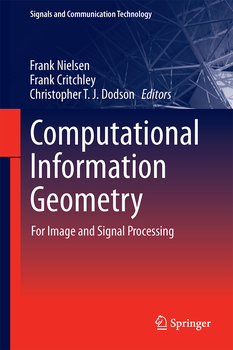
Frank NIELSEN is a Professor at École Polytechnique with expertise in information geometry, data science, and machine learning. He holds a PhD (1996) and HDR (2006) in computer science and has established himself as a leading researcher in geometric approaches to information science. His educational background includes a PhD in computer science (1996) followed by a Habilitation à Diriger des Recherches (HDR) in 2006, the highest academic qualification in France that qualifies one to supervise doctoral candidates. Dr. NIELSEN's research focuses on the Geometric Science of Information , where he develops theoretical frameworks for understanding data through geometric and information-theoretic lenses. His work bridges Computational information geometry Statistical manifold theory Bregman divergences and their applications Machine learning with geometric foundations High-dimensional data analysis He aims to address the challenge of inappropriate data representation in current Data Science by building a theory of Computational Information Geometry to enable Intrinsic Data Science with principled distances. His extensive publication record shows a clear trend toward developing geometric frameworks for understanding statistical divergences, with recent work focusing on Bregman geometry, Fisher-Rao metrics, and their applications in machine learning. His research spans theoretical developments in information geometry to practical implementations like the pyBregMan Python library, demonstrating both theoretical depth and practical relevance. Dr. NIELSEN has made significant contributions through his teaching and publications. He has taught courses at École Polytechnique including INF442, INF517, and INF591. His authored textbooks include Introduction to HPC with MPI for Data Science (2016), A Concise and Practical Introduction to Programming Algorithms in Java (2009), and Visual Computing: Geometry, Graphics, and Vision (2005). He has also edited influential volumes such as Computational Information Geometry for Image and Signal Processing (2016) and Geometric Theory of Information (2014). He actively organizes and participates in academic events, serving on program committees for major conferences including GSI (Geometric Science of Information), CVPR, and ICCV. His work has established him as a key figure in the growing field of geometric approaches to information science.
Scott Nelson is an Associate Professor of Finance at the University of Chicago Booth School of Business. His research bridges consumer credit markets, regulatory frameworks, and behavioral economics, with a focus on how information asymmetries and algorithmic decision-making shape market outcomes. He has contributed to understanding the impacts of the 2009 CARD Act, eviction protections in housing markets, and fairness in credit scoring systems. PhD in Economics, Massachusetts Institute of Technology BA (summa cum laude) in Economics and Mathematics, Yale College Nelson's work employs diverse data sources, including credit reports, court filings, and tax records, combined with structural models to analyze consumer and firm behavior. Key themes include regulatory efficiency, validity disparities in predictive models, and the welfare implications of policy interventions. His articles reveal trends in algorithmic regulation (2025), eviction dynamics (2025), credit scoring disparities (2024), and public finance impacts on Chinese real estate (2023). These publications highlight interdisciplinary methodologies integrating economics, law, and data science. Scientific awards include the AQR Top Finance Graduate Award (2018) and National Science Foundation Graduate Research Fellowship. He has held postdoctoral roles at the Consumer Financial Protection Bureau/Princeton University and visiting research positions at the Federal Reserve Bank of Boston.