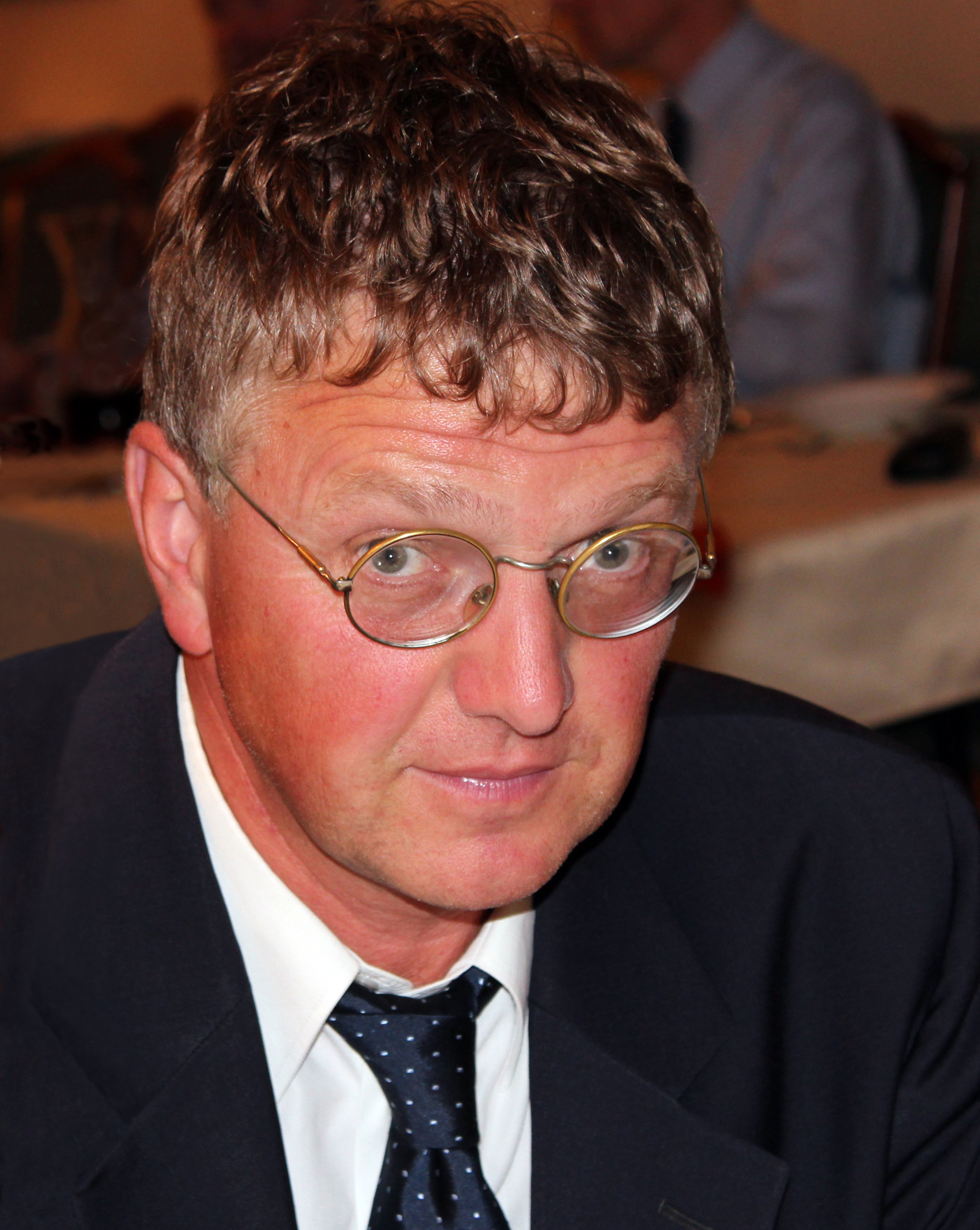
Gábor Somlai is a mathematics researcher at Eötvös Loránd University's Faculty of Science, affiliated with the Department of Algebra and Number Theory since 2006. He is a core member of the HUN-REN-ELTE Geometric and Algebraic Combinatorics Research Group (previously MTA-ELTE until 2023) and participates in the Asymptotic Group Theory ERC project. His institutional roles include contributions to the Mathematics Doctoral School and the Institute of Mathematics. His research spans Algebra , Combinatorics , and Number Theory , with emphasis on spectral sets, tiling problems, group theory, and finite geometry. Recent work explores cyclotomic polynomials, the generalized trifference problem, and connections between tiling and spectral properties in finite abelian groups. His publications reveal a strong focus on combinatorial number theory and algebraic methods in discrete geometry. Somlai's publication trends show sustained contributions to theoretical foundations of tiling and spectral sets (testing Fuglede's conjecture in cyclic groups) Cayley graph properties and CI-group classifications polynomial methods in finite geometry and direction problems His work bridges pure algebra with combinatorial applications, often resolving long-standing conjectures in specialized domains. As part of the HUN-REN-ELTE research group, he collaborates on geometric and algebraic combinatorics projects, leveraging ERC funding for asymptotic group theory investigations. His research infrastructure includes access to the Alfréd Rényi Institute of Mathematics (http://www.renyi.hu) resources.
Dr. Gábor Pintér holds dual academic appointments as Assistant Professor at Károli Gáspár Reformed University's Faculty of Humanities and Social Sciences (Department of Japanology) and as Associate Professor at Kobe University's School of Languages and Communication. Born in Hungary in 1977, he earned his MA (2005) and PhD (2008) in Linguistics from Kobe University, Japan, with a dissertation on asymmetrical segment distributions in Japanese. His research focuses on three interconnected domains: phonological theory (especially Japanese phonology), experimental phonetics, and applications of automatic speech recognition in language education. Specific interests include vowel devoicing patterns, prosodic perception in L2 learners, phonotactic constraints, and diachronic sound changes in Japanese. Pintér actively contributes to international research collaborations, including the JSPS-funded project 'Stochastic & theoretical phonological research' and serves as chair of the Phonology Association in Kansai (PAIK). His 15 most recent publications demonstrate methodological diversity, combining theoretical linguistics with computational approaches and experimental studies, primarily focused on Japanese phonetics and speech technology applications. Professional memberships include board positions in The Phonological Society of Japan and memberships in the International Speech Communication Association and Association for Laboratory Phonology.
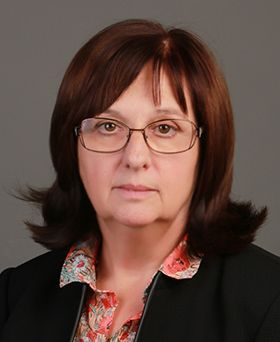
Péter Makk is an Associate Professor and Deputy Head of the Department of Physics at the Budapest University of Technology and Economics , Faculty of Natural Sciences (TTK). His research focuses on quantum transport phenomena, spin-orbit coupling, and superconducting devices at the nanoscale. Email: makk.peter@ttk.bme.hu Office: F I. 1st floor, 7 Research Interests Makk's work centers on quantum physics and condensed matter physics , particularly in nanotechnology and spintronics . He investigates: Pressure-tunable phase transitions in 2D materials Microwave dynamics of superconducting nanowires Gate-controlled superconducting currents Spin-orbit coupling in heterostructures Josephson junctions and Andreev molecules Quantum transport in graphene and related systems Scientific Trends in Publications His recent articles (2025-2024) highlight advancements in: Topological materials and quantum electronics Hybrid superconducting-semiconducting systems Pressure engineering of electronic properties Gate-controlled quantum devices Spin-Orbit Torque and magnetoresistance Graphene-based heterostructures and transport
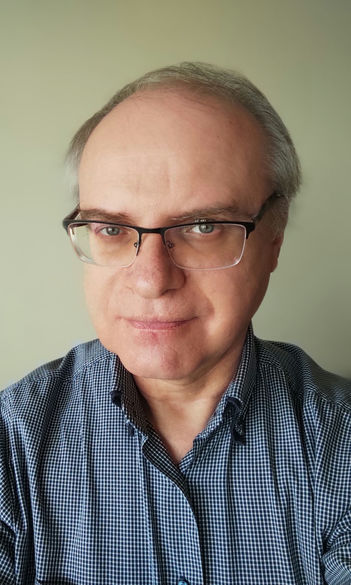
András Perczel is a Professor at the Department of Organic Chemistry, Eötvös Loránd University (ELTE), Faculty of Science, and a Full Member of the Hungarian Academy of Sciences. He holds additional roles as a lecturer in the Institute of Chemistry and has been awarded the honorary title Doctor et Professor Honoris Causa. His research focuses on peptide synthesis, protein structure and dynamics, amyloid formation mechanisms, and drug discovery, with particular emphasis on KRAS inhibitors and biotechnological applications. Key research interests include the development of sustainable peptide synthesis methods using flow chemistry and machine learning, structural studies of amyloid polymorphism, and the design of functional proteomimetics. He has contributed to understanding the molecular basis of protein aggregation in diseases and advancing analytical techniques for peptide characterization. His publications highlight advancements in amyloid core interfaces, GLP-1 receptor agonists, and the application of chiral spectroscopy in protein stability analysis. Scientific awards include membership in the Hungarian Academy of Sciences and an honorary doctoral title. Dr. Perczel collaborates on projects involving KRAS-G12C inhibitors, SARS-CoV-2 nanobody design, and the synthesis of small protein domains via automated flow chemistry. His work bridges organic chemistry, biochemistry, and biotechnology, with a focus on translational research in healthcare and sustainability.
Dr. Katalin KOPECSKÓ is Associate Professor in the Department of Engineering Geology and Geotechnics , Faculty of Civil Engineering, Budapest University of Technology and Economics (BME) . She lectures on construction-materials chemistry, durability and advanced concrete technologies, and maintains an active research portfolio spanning radioactive-waste solidification, geopolymer binders, supplementary cementitious materials and fibre-reinforced cementitious composites. Education & Academic Career Long-standing faculty member at BME Faculty of Civil Engineering (exact degrees not specified in text). Regular instructor for master-level courses: Alkali Activated Materials in Civil Engineering , Chemistry of Construction Materials , Durability of Construction Materials , Structure–Property Relations of Concrete . Holds weekly consultation hours on Thursdays 12–14 in building K, basement level, room 10/5. Research Focus Her research integrates materials science , geotechnical engineering and nuclear-waste management . Recent investigations include: Development of alkali-activated recipes for borate-rich liquid radioactive waste using limestone-portland blends. Application of semi-adiabatic calorimetry to identify optimal cement types for radioactive waste cementation. Enhancement of 3D-printing performance of concrete via metakaolin and silica fume. Long-term geotechnical and hydraulic impacts of municipal solid-waste leachate on soils. Durability of natural-fibre and nanocellulose-reinforced geopolymer mortars. Corrosion behaviour of vitrified high-level waste glass under simulated repository conditions. Across 2022-2025 she has published more than 40 peer-reviewed articles, reflecting a clear shift toward sustainable construction materials , nuclear environmental safety and advanced testing methodologies . Laboratory & Collaborative Environment Dr. KOPECSKÓ operates within BME’s well-equipped Engineering Geology and Geotechnics laboratories, where calorimetry facilities, geopolymer synthesis rigs and microstructural analysis tools support her projects. Close collaboration exists with the Vásárhelyi Pál Doctoral School and the national nuclear-waste management programme at Paks NPP, evidenced by joint publications on cemented-waste testing laboratories. Grants & Awards While specific grant numbers are not listed, her sustained output in high-impact journals and participation in national projects (e.g., NVKP_16-1-2016-0019 “Increasing the Chemical Resistance of Concrete”) indicate continuous external funding. Contact Office: Building K, basement, room 10/5, Budapest University of Technology and Economics. E-mail: kopecsko.katalin@emk.bme.hu Phone: +36 1 463 2238
Yusaf Akbar is a Professor at the Department of Economics and Business at Central European University (CEU). His research focuses on business strategy, public policy, and emerging markets, particularly the sharing economy and non-market strategies. He has held research fellowships at the Institute for Advanced Study and visiting roles at the University of Trieste and Wirtschaftsuniversität Wien. His work bridges academic research with practical applications, including advising the European Commission and multinational corporations like Accenture and Siemens. Education: DPhil in Economics from the University of Sussex (2000). Key publications include EU Enlargement and Central Europe: Regulatory Convergence and the Multinational Enterprise and Global Antitrust: Trade and Competition Linkages . Upcoming books include Digitalization in Emerging Markets (Cambridge University Press, 2024) and an edited volume on emerging markets research agendas (Edward Elgar, 2025). Research interests emphasize strategic calibration in complex environments, AI-augmented decision-making, and systemic vulnerability management. He advises global firms on non-market strategies and has authored case studies for companies like ING Insurance, Vienna International Airport, and Hummus Bar. Professional roles include Founding Editor of the International Journal of Emerging Markets and Editorial Advisory Board member for Journal of Asia-Pacific Business . Teaching spans universities worldwide, including University of Michigan, Stockholm School of Economics, and Queen’s University.
Sándor Ádány is a Professor at the Department of Structural Mechanics , Budapest University of Technology and Economics. His work focuses on advanced structural analysis of thin-walled members and systems-based design methodologies. Research Interests: Specializes in buckling behavior of thin-walled structures, finite element modeling, cold-formed steel stability, and modal decomposition techniques. Key areas include Lateral-torsional buckling Displacement mapping in constrained FEM Stiffener optimization in plate structures Combined loading stability of tubular members Prebuckling deformation effects Fourier-based numerical methods Article Trends (2023-2025): Recent publications emphasize elastic stability analysis of thin-walled beams and tubular structures under complex loading conditions, with particular attention to prebuckling deflections, torsional rigidity effects, and numerical validation of analytical models. Innovations include Fourier-series displacement approximations and constrained finite element methodologies.
Zsolt Czigányik is habilitated Associate Professor at Eötvös Loránd University (ELTE), Budapest, in the School of English and American Studies and Department of English Studies , and concurrently Senior Fellow of the Gerda Henkel Stiftung, Germany. His research integrates literary hermeneutics with intellectual history and political thought to map Hungarian and Central-European utopian/dystopian traditions from the 16th century to the present. Education & Academic Standing: Habilitated Associate Professor (dr. habil.) – qualification above PhD required for full professorship in Hungary. Doctoral data sheet registered at doktori.hu (exact degrees not stated in source). Research Interests: Czigányik’s work revolves around the intersections of utopian imagination, political ideology and literary form . He examines how Hungarian authors from Bessenyei, Jókai and Madách to Karinthy, Babits and Szathmári crafted positive or negative utopias that respond to the region’s chronic liminality between Western and Eastern power structures. Additional interests include translation history (Hungarian versions of Thomas More’s Utopia ), censorship and reception during the Communist period, and cyclical theories of history in authors such as Anthony Burgess. Publication Trends (2015-2024): His recent output clusters around four large Springer e-book chapters (2022), a Palgrave monograph and its concluding chapter (2023), and two 2024 articles on translation history and the Hungarian utopian canon. Collectively these works foreground Hungarian dystopias of the inter-war era , Enlightenment-era moderate optimism , techno-utopias of the long nineteenth century , and reception of More’s Utopia in a multi-denominational context. Grants & Fellowships: Senior Fellow, Gerda Henkel Stiftung (Germany) – current. Advising & Teaching: No individual student names or supervision lists are provided in the supplied text; he is however labelled “lecturer” in departmental context, implying active graduate and undergraduate teaching responsibilities. Labs / Research Teams: No dedicated lab or large-scale team is mentioned; research appears to be individual with network links visible via co-authorship and Academia.edu follower data.
Anikó Csébfalvi is a full professor at the Department of Civil Engineering, Faculty of Engineering and Information Technology, University of Pécs. She specializes in structural optimization, heuristic methods, and stability analysis of elastic structures, with a focus on discrete and continuous optimization of space trusses. Her research integrates hybrid metaheuristic algorithms, such as ANGEL, for engineering applications in structural design and project scheduling. Education: MSc (1978), PhD (1996), CSc (1996), Habilitation (2011) from institutions including Budapest University of Technology and Economics and the University of Pécs. Research: Structural optimization (sizing-shaping-topology), heuristic modeling, stability analysis, resource-constrained project scheduling, and elastic-plastic collapse constraints. Her 15 most recent articles (2004–2012) demonstrate expertise in hybrid metaheuristics, discrete-continuous truss optimization, and financial engineering. She serves as a thesis supervisor in the Marcell Breuer Doctoral School and collaborates internationally on structural mechanics topics. Scientific contributions include memberships in CEACM, ISSMO, and editorial roles for journals like Pollack Periodica and Structural and Multidisciplinary Optimization .
ELEMÉR VASS is an Associate Professor at the Department of Organic Chemistry, Faculty of Science, Eötvös Loránd University (ELTE). He specializes in chiroptical spectroscopy, peptide and protein structure analysis, and metal complex characterization. His research employs vibrational circular dichroism (VCD), Raman optical activity (ROA), and UV-visible spectroscopy to investigate molecular structures and conformational properties. Professional Background: Born in 1965 in Târgu Mureș, Romania. Earned a Diploma in Chemical Engineering (1990) from Babeş-Bolyai University, Cluj-Napoca. Completed his Ph.D. in Chemistry at ELTE (1997, supervised by Dr. Ferenc Ruff). Served as a university assistant professor (1996–2001), then assistant professor (2001–2006), and has been an associate professor since 2006. Education: B.Sc./M.Sc., Babeş-Bolyai University (1985–1990) Ph.D., ELTE Doctoral School of Chemistry (1993–1996), TMB Scholar Research Focus: Investigates spatial structures of peptides/peptidomimetics using FTIR, CD, VCD, and ROA. Determines absolute configurations via VCD, studies transition metal complexes, and explores nucleophilic reactions of hypervalent sulfur compounds. Collaborates internationally with institutions in Lyon, Kyushu, Leuven, Bielefeld, and Warsaw. Teaching: Leads courses in Organic Spectroscopy (MSc Chemistry), Structural Analysis Instruments (MSc Chemistry), and Physical Organic Chemistry (PhD level). Manages laboratory practices in analytical chemistry and material structure testing. Recognition: Recipient of the 1997 Kisfaludy Lajos Foundation Award and the 2003 Bolyai Memorial (MTA). Has published 102+ peer-reviewed articles, with a focus on spectroscopic methods and structural biology. Grants & Collaborations: Holder of Bolyai scholarships (1999–2001, 2004–2005). Participated in DAAD-MÖB and MTA-PAS exchange programs. Research networks include universities in France, Japan, Belgium, and Poland. Labs/Teams: Active in the Department of Organic Chemistry’s spectroscopy research group, focusing on chiroptical methods and peptide chemistry.
Attila Marcelián Dobai is an Assistant Professor at the Institute of People-Environment Transaction within the Faculty of Education and Psychology at Eötvös Loránd University. His research focuses on urban sacred spaces, post-socialist transformation of denominational landscapes, and environmental psychology. He is affiliated with the Environmental Psychology Lab and serves as a lecturer in the department. He holds a PhD and has published extensively on topics including Budapest's post-regime change religious spatial dynamics, cultural pluralism in urban environments, and emerging denominational movements. His work bridges sociology, urban studies, and cultural geography. Dr. Dobai's academic contributions include analyses of sacred geography, spatial democracy, and post-socialist urban renewal. He collaborates with interdisciplinary teams and actively contributes to academic discourse on spatial marginalization and cultural heritage preservation. His professional activities include supervising academic research, maintaining an active publication record, and participating in international scholarly networks. His work is accessible via his institutional website and the university's research portals.
Hedvig Harmati is a university professor and research leader at the Moholy-Nagy University of Art and Design (MOME), where she has held pivotal roles since 2005. She served as Department Head of the Textile Department (2005-2019), led the MOME Doctoral School (2019-2024), and acted as a supervisor for both the Fashion and Textile Design MA and the Doctoral School. Her work bridges textile design and structural design , emphasizing technological integration and architectural parallels. Education: DLA degree (2009), Habilitation (2018) Leadership: Department Head (2005-2019), Doctoral School Leader (2019-2024) Key Projects: Clean Architecture (2016), Human Washer (2016), Plait Positions (2012) Her research focuses on textile design innovation, structural design principles, and the intersection of industrial technology with artistic expression. She has pioneered projects like the Clean Architecture collection (2016), which demonstrated architectural influences in textile design, and the Dark Light international research project (2015-2017). Harmati’s work has been recognized with prestigious awards including: Ferenczy Noémi Award (2017) Hungarian Design Awards (2002, 2016) Main Prize of the Hungarian Academy of Arts (2012) Design 21 Award (UNESCO, 1997) Szombathely Textile Biennale Prize (1998) She has received multiple Creative Grants from Hungary’s National Cultural Fund (2008, 2016-2017) and the Moholy-Nagy László Design Grant (2001, 2004). As a supervisor in the MOME Doctoral School (2019-2024), she mentored future generations while leading the international research project Future Traditions (2022-2026).
Enyedi Kata Nóra is a Lecturer at the Department of Organic Chemistry , Faculty of Science , ELTE Eötvös Loránd University , Budapest. Her research focuses on peptide-based drug conjugates, molecular targeting in cancer therapy, and structural studies of biologically active molecules. Role: Lecturer Email: kata.nora.enyedi@ttk.elte.hu Address: 1117 Budapest, Pázmány Péter sétány 1/a, Room 448 Research Interests: Enyedi's work spans Biochemistry , Molecular Biology , and Medicinal Chemistry , with a focus on: Design and synthesis of NGR and F3 peptide-drug conjugates Epigenetic regulation via histone variants (H2A.Z) Development of hydrogel systems for cancer cell viability Medical imaging techniques (PET/MRI) for tumor angiogenesis Structural studies of protein stability (Asn/Asp isomerization) Publication Trends: Recent studies emphasize targeted tumor therapy, radiolabeled peptides, 3D hydrogel models, and control peptide design. Key keywords include Drug Delivery , Molecular Imaging , and Peptide Synthesis .
József Garay is a Senior Research Fellow at the ELTE-MTA Theoretical Biology and Evolutionary Ecology Research Group, part of the Department of Plant Systematics, Ecology and Theoretical Biology at Eötvös Loránd University in Budapest, Hungary. His research spans evolutionary biology, mathematical ecology, and game theory, with a particular focus on evolutionary stable strategies and their applications to biological systems. Dr. Garay received his M.Sc. in Biology from Eötvös University (1981-1986), followed by postgraduate studies in Mathematics (1985-1989). He completed his PhD at the Hungarian Academy of Science in 2004, after doctoral studies in the Department of Plant Taxonomy and Ecology (1990-1994) and a summer school on Evolutionary Models of Cooperation in Seewiesen, Germany (1994). Garay's research interests center on evolutionary game theory and its applications to biological systems. He has made significant contributions to understanding evolutionarily stable strategies (ESS) in sexual populations, the evolutionary roots of morality, and the mathematical foundations of population dynamics. His work bridges theoretical mathematics with practical ecological applications, particularly in areas like optimal foraging, habitat selection, and the evolution of cooperation. A key aspect of his research involves extending classical game theory concepts to more complex biological scenarios, including multi-species systems and time-constrained evolutionary processes. His work on the evolutionary stability of self-sacrificing behavior and the relationship between individual fitness and group survival has provided important insights into the evolution of altruism and social behavior. Analysis of Garay's recent publications reveals a consistent focus on evolutionary game theory applied to biological systems, with increasing sophistication in modeling approaches. His work has evolved from foundational studies on evolutionarily stable allele distributions (ESAD) to more complex applications in areas like cannibalism dynamics, predator-prey interactions, and kin selection. There's a clear trajectory toward more integrative models that combine mathematical rigor with biological realism, often addressing questions at the intersection of evolutionary theory, ecology, and behavior. Notably, his research increasingly incorporates mathematical modeling techniques to analyze complex ecological phenomena, demonstrating the power of theoretical approaches to address empirical biological questions. Dr. Garay has received several prestigious awards and fellowships throughout his career: Juhász-Nagy Pál junior fellowship at Collegium Budapest Institute for Advanced Study (1999-2000) NATO research fellowship at Wilfrid Laurier University, Waterloo, Canada (2002) Research fellowship at Konrad Lorenz Institute, Austria (2005) Bolyai János fellowship of the Hungarian Academy of Sciences (2006-2008) While specific information about his advising activities is limited in the provided materials, Garay's extensive publication record spanning over three decades suggests he has likely mentored numerous graduate students and early-career researchers. His collaborations with colleagues like Zoltán Varga, Manuel Gámez, and Tomás Cabello indicate a strong network of research partnerships. Garay has secured multiple research grants supporting his work, including the Bolyai fellowship and international research opportunities that have enabled him to extend his theoretical models to practical ecological applications. His work on ecological monitoring systems demonstrates how theoretical frameworks can be applied to real-world environmental challenges. Garay is a core member of the HAS Theoretical Biology Group at Eötvös Loránd University, where he contributes to a vibrant research environment focused on mathematical approaches to biological problems. His work intersects with several research teams studying evolutionary ecology, population dynamics, and mathematical biology, creating opportunities for interdisciplinary collaboration on complex biological questions that require both theoretical insight and empirical validation. The group's research has significant implications for understanding fundamental biological processes and developing more effective conservation and management strategies.
Dr. Gergely Mezei is an Associate Professor and Deputy Head of the Department of Automation and Applied Informatics at the Budapest University of Technology and Economics (BME) , Hungary. He is affiliated with the Applied Computer Science Group within the department and is actively involved in research and education in model-driven engineering and formal methods. His research interests lie at the intersection of multi-level modeling , formal verification , and model transformation systems . He has contributed extensively to the development of modeling languages and tools, particularly in the context of DMLA (Deep Multi-Level Architecture) and Melanee , focusing on enabling rigorous, scalable, and verifiable modeling practices. Dr. Mezei's work emphasizes performance optimization in model transformations, visual modeling frameworks , and domain-specific languages . His research spans both theoretical foundations and practical tool implementations, with a strong focus on bridging the gap between formal semantics and usable modeling environments. His recent publications reflect a consistent focus on advancing the state-of-the-art in multi-level modeling and formal verification , with contributions to international workshops such as MULTI and MPM . These works explore challenges in model validation, transformation correctness, and the usability of modeling tools in complex systems engineering. Contact: Email: gmezei@aut.bme.hu Office: Q.B228, Budapest University of Technology and Economics, 1117 Budapest, Magyar tudósok krt. 2., Hungary Phone: +36 (1) 463-3491