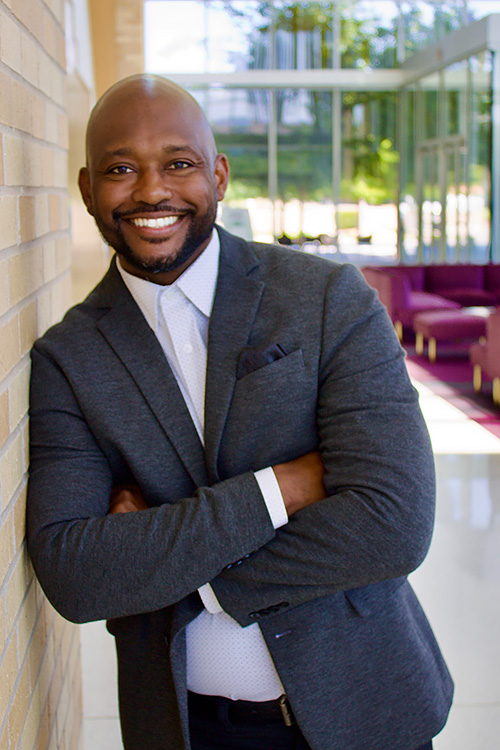
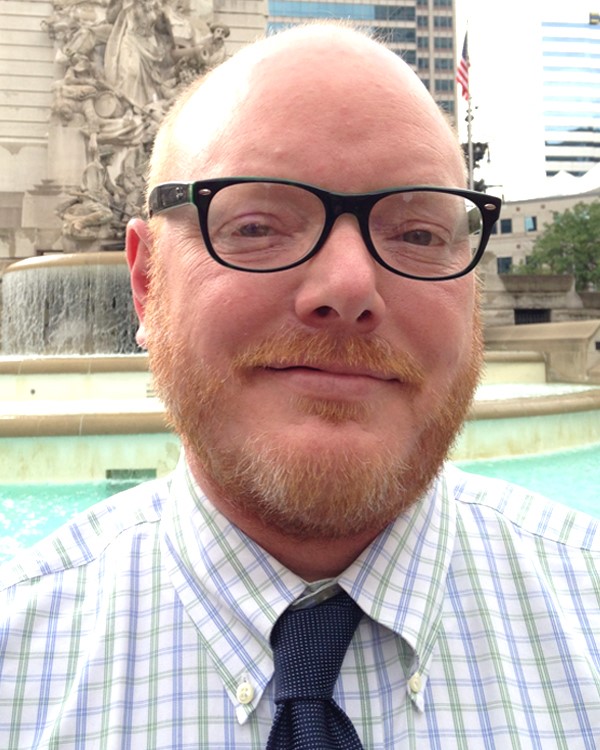
Brandon J. Manning, Ph.D. is an Associate Professor in the Department of English at Texas Christian University's AddRan College of Liberal Arts . His work critically examines intersections of African American literature, gender and sexuality studies, and popular culture through the lens of satire and humor analysis.
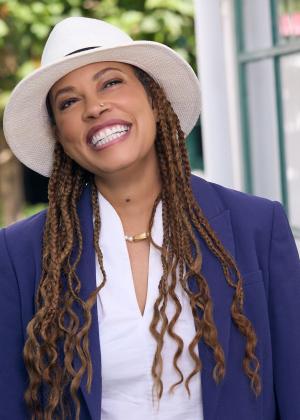
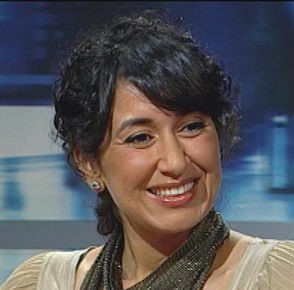
France Winddance Twine is a Professor of Sociology at the University of California, Santa Barbara (UCSB), with affiliations at Cambridge University's Sociology of Reproduction research group. She holds a Ph.D. from UC Berkeley and has held prior positions at Duke University and the University of Washington, where she founded the Latin American Studies unit in the Jackson School of International Studies. Her work focuses on intersectional analyses of race, gender, technology, and inequality, particularly through ethnographic and visual methodologies. Education: Ph.D. in Sociology, UC Berkeley Key Research Areas: Racial literacy, queer reproduction, tech industry inequality, feminist science studies, visual sociology Twine's research bridges multiple disciplines, addressing global racial formations, digital labor markets, and anti-racist strategies. Her concept of 'racial literacy' emphasizes intellectual and cultural practices countering anti-Black racism. Recent work examines Silicon Valley's caste systems and barriers faced by women and minorities in tech. Awarded the 2020 ASA Race, Gender & Class Distinguished Career Award, she also secured a $225K Mellon Foundation grant for interdisciplinary seminars on migration and race. She founded UCSB's Technologies for Justice Lab, fostering collaborations between humanities/social sciences and STEM fields to advance equity in technology. Teaching includes courses on digital technologies, racial justice, and ethnographic methods. Her eleven authored/edited books include A White Side of Black Britain (2010) and Geek Girls: Inequality and Opportunity in Silicon Valley (2022).
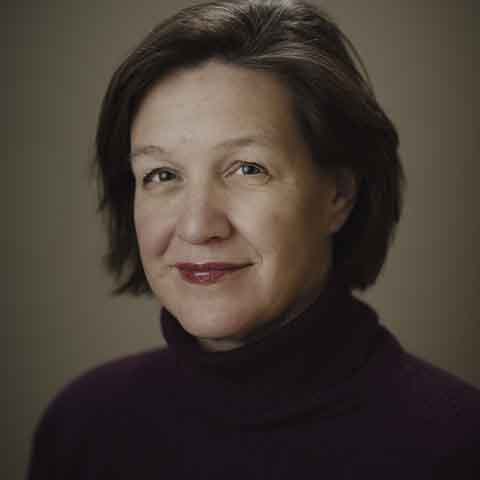
Stephanie Torres is an Assistant Professor in the Department of Educational Psychology at the University of Illinois Chicago (UIC). She leads the FLOR (Familias Overcoming stress with Resilience) Lab, which develops school- and community-based programs to promote mental health among Latinx families. Her research focuses on contexts of risk and resilience, particularly addressing immigration-related stress and structural racism through a trauma-informed lens. She collaborates with The Resurrection Project, a local community agency, to pilot the FIESTA intervention program for Latinx immigrant families. Her clinical expertise includes trauma-informed care for minoritized families, with specialization in bilingual Spanish-speaking populations. She teaches courses on child development (EPSY 255), child-family-community relationships (EPSY 382), and trauma-informed practices (EPSY 471). Her work emphasizes community-based participatory research (CBPR) and policy advocacy, aiming to bridge clinical practice with systemic change. Recent publications highlight her focus on immigration stress, trauma interventions, and structural oppression. While no scientific awards are listed, her professional memberships include the National Latinx Psychological Association (NLPA), Society for Community Research and Action (SCRA), American Psychological Association (APA), and Society for Research in Child Development (SRCD).
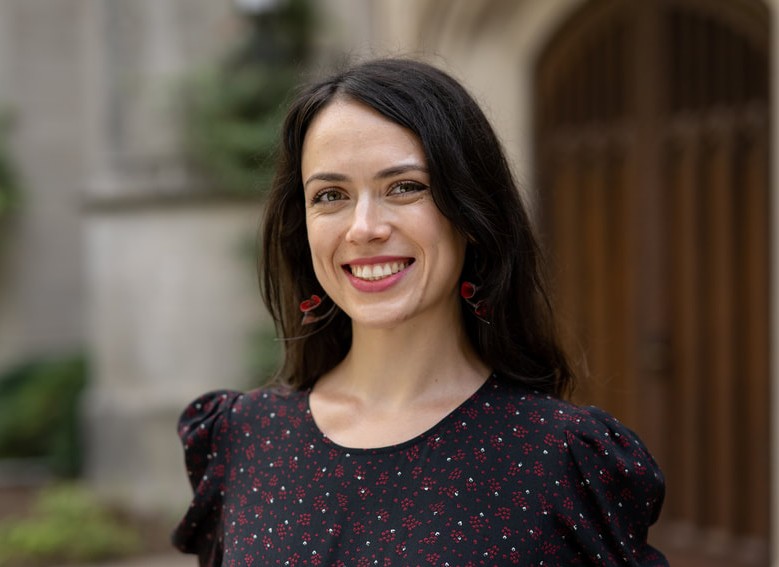
Karen Adkins is a Professor of Philosophy at Regis College, dedicated to teaching and mentoring undergraduate students. Her research focuses on gossip as an epistemic concept, feminist theory, philosophy of emotions, and social philosophy. She authored the book Gossip, Power, Epistemology: Knowledge Underground (Palgrave 2017) and has published widely in journals like Hypatia and Social Epistemology . Her work also appears in popular media such as the New York Times T Magazine . Dr. Adkins teaches courses in philosophy, first-year writing, and integrative core subjects like Justice and Meaning. She has advised hundreds of students through Regis' First-Year Experience program and directed service-learning initiatives. Her community engagement includes chairing The Blue Bench board (supporting sexual assault survivors) and over a decade of involvement as a Reading Buddy in local schools. Academically, she has chaired multiple departments (Philosophy, Women’s and Gender Studies, Classical and Modern Languages, History/Politics/Political Economy) and committees like the Regis College Committee on Rank & Tenure. She co-edits Social Philosophy Today and has reviewed manuscripts for journals, the NEH, and Polity Press. Her recent articles explore themes like online shaming, migration discourse ethics, and institutional gossip dynamics. She emphasizes community engagement, academic service, and bridging scholarly work with public outreach.
Elvira Basevich is an Assistant Professor of Philosophy at the University of California, Davis, and a 2025-2026 Visiting Faculty Fellow at Tulane University's Murphy Institute Center for Ethics. Her work bridges political philosophy, Africana philosophy, and late modern German philosophy, focusing on democracy, justice, and the intersections of race, gender, and labor exploitation in U.S. history. Education: Ph.D. in Philosophy, The Graduate Center, CUNY (2017) Basevich's research interrogates the philosophical foundations of democratic theory through the lens of historically excluded communities. She specializes in reconstructing the work of W.E.B. Du Bois to challenge dominant Kantian and Rawlsian frameworks of justice, while exploring the racialized legacies of slavery and exploitation in 19th-20th century America. Her articles span critical race theory, epistemic injustice, and the ethics of labor, often engaging with German idealism and Marxist theory. Recent publications reflect a thematic focus on abolition democracy, ideology critique, and the normative implications of structural racism. Her work has appeared in Journal of Social Philosophy , The Monist , Kantian Review , and other leading journals. She has edited special issues on Du Bois and democracy, and the anniversary of Charles Mills' The Racial Contract . Scientific Awards: 2025-2026 Faculty Fellow, Center for Ethics (The Murphy Institute)
Jason Hackworth is a Professor in the Department of Geography and Planning at the University of Toronto. His work centers on urban political economy, with a focus on North American cities, racial discrimination, and neoliberalism. He has authored two influential books— The Neoliberal City (2007) and Faith-Based (2012)—and numerous journal articles. Research Interests: Urban political economy frameworks Racial capitalism and systemic inequality Neoliberal urban policy critiques Land abandonment and population shrinkage in Rust Belt cities Intersection of religion and economic development Recent Publications (2021–2025): His work explores racialized dimensions of urban decline, gentrification in low-demand environments, and critiques of conservative economic rhetoric. Articles like "Racial Capitalism in Urban Studies" (2025) and "W.E.B. Du Bois and the Urban Political Economy Tradition" (2021) highlight his focus on systemic racism and historical urban analysis.
Harry Denny serves as Professor and Director of the Writing Lab at Purdue University's Department of English, overseeing both physical consultations and the globally accessed Online Writing Lab (OWL). His leadership shapes institutional writing pedagogy through critical engagement with identity politics and social justice frameworks. His educational foundation includes a BA in American Studies from the University of Iowa, an MA in Sociology from the University of Colorado, and a PhD in Rhetoric and Communication from Temple University. This interdisciplinary background informs his critique of power structures within academic spaces. Denny's research pioneers intersections between Writing Center Studies, Queer Theory, and Social Justice, examining how gender, sexuality, and HIV/AIDS politics manifest in writing pedagogy. He maps sociocultural dynamics in one-to-one mentoring through monographs like Facing the Center while challenging heteronormative assumptions in educational spaces. His work consistently centers marginalized voices, particularly through analyses of media representations and identity disclosure in writing centers. Recent publications reveal intensified focus on decolonial approaches and translanguaging in international writing center collaborations (Colombia/USA), alongside queer possibilities in everyday mentoring practices. This trajectory extends his lifelong commitment to dismantling oppressive structures through writing center praxis, emphasizing anti-racist programming and professional labor conditions. As Writing Lab Director, Denny cultivates Purdue's writing support ecosystem where theoretical rigor meets practical application. His team operationalizes critical frameworks through tutor training, OWL content development, and community partnerships that transform writing centers into sites of social change.
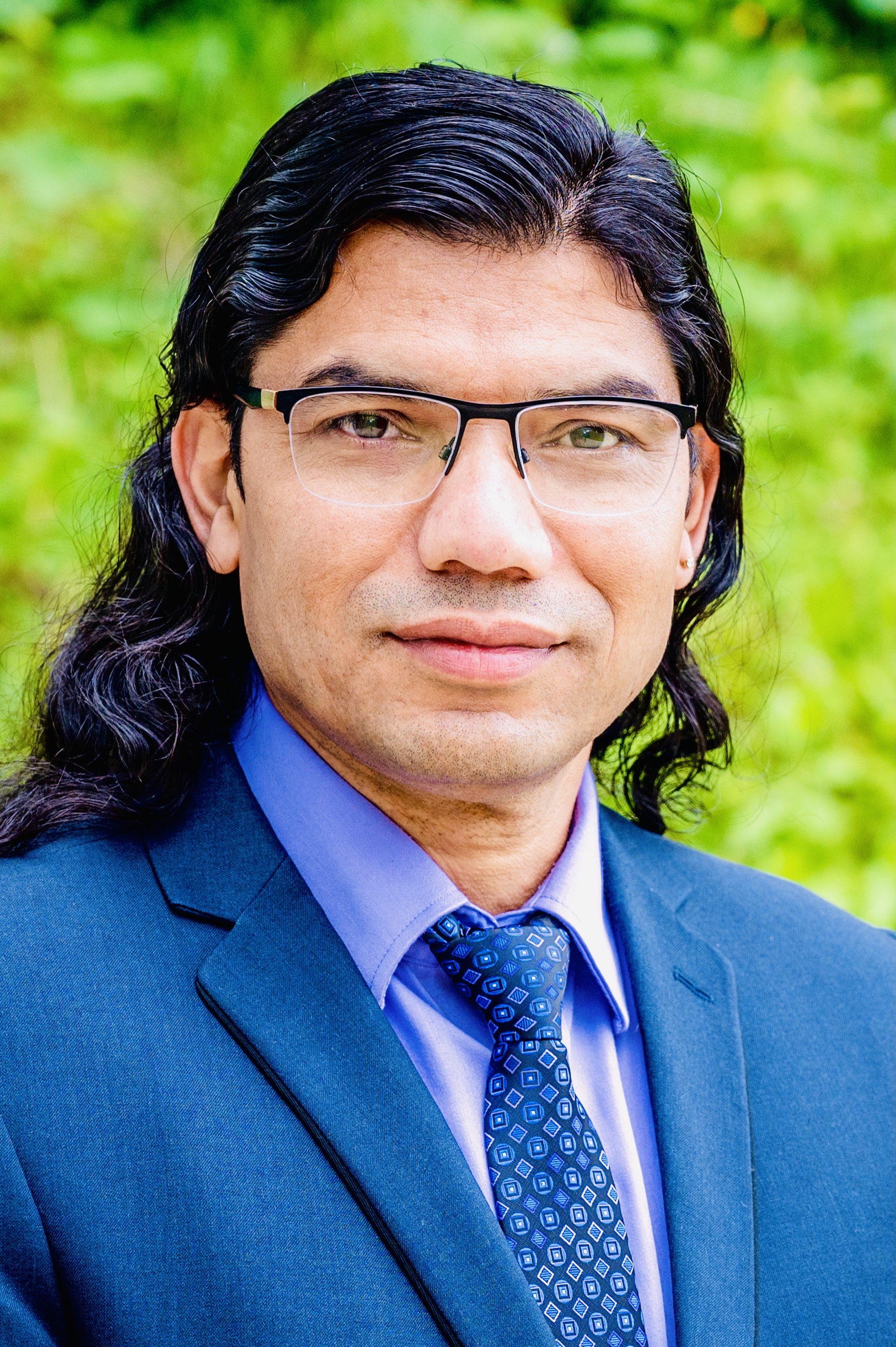
Karun Karki is an Associate Professor at the School of Social Work, University of British Columbia (UBC), joining in July 2024. He previously held positions at the University of Fraser Valley (2020-2024), Memorial University of Newfoundland (2019-2020), and Wilfrid Laurier University (2016-2018). His education includes a PhD in Social Work from Wilfrid Laurier University, alongside multiple master's degrees in Sociology, English Literature, and Education from Tribhuvan University, Nepal. His research focuses on critical theories addressing anti-racism, anti-colonialism, and intersectional social justice. Key themes include biopolitical governance, migration crises, and the marginalization of racialized communities, LGBTQ+ populations, and refugees. He explores topics like ethno-racial labor market segregation and health disparities among diasporic groups. Recent publications (2020-2025) analyze pandemic impacts on migrant workers, racialized immigrants' socioeconomic challenges, and the mental health of healthcare professionals during crises. His work often employs collaborative methodologies like autoethnography and community-based participatory research. Awards/Grants: SSHRC grants totaling over $100K, including studies on skilled immigrant integration and HIV-related gender-based violence. Teaching: Courses span foundational social work theory to advanced clinical practice, with a focus on decolonizing education and mental health interventions. Practice: Engages in community capacity-building, policy advocacy, and psychosocial support for BIPOC communities. His current affiliations include leadership roles in transnational social work research and collaborations with organizations addressing refugee resettlement and healthcare equity.
Vinay Lal is Professor of History and Asian American Studies at the University of California, Los Angeles (UCLA), where he has been teaching since Fall 1993. He holds a joint appointment in the Department of History and the Asian American Studies Department. Born in Delhi and raised across multiple countries including India, Indonesia, Japan, and the United States, Lal brings a global perspective to his scholarship and teaching. His educational journey began at Johns Hopkins University, where he earned both his B.A. (1982) and M.A. (1982) from the Humanities Center with concentrations in literature, history, and philosophy. He then studied film in Australia and India on a Thomas J. Watson Fellowship before pursuing his Ph.D. at the University of Chicago's Department of South Asian Languages and Civilizations, which he completed with Distinction in 1992. His dissertation, 'Committees of Inquiry and Discourses of 'Law and Order' in Twentieth-Century British India', received the Marc Galler Award for the best dissertation in the Division of the Humanities at the University of Chicago. Lal's research spans an extraordinary breadth of intellectual interests, with primary focus on Indian history, historiography, public and popular culture in India, the Indian diaspora, colonialism, human rights, American politics, the architecture of nonviolence, Gandhi studies, and the global politics of knowledge systems. His work consistently challenges conventional disciplinary boundaries, engaging with topics ranging from the politics of religion and ethnicity in South Asia to the moral and political thought of Mohandas Gandhi, from the partition of India to the intersection of history and popular cinema. His scholarship reflects a deep commitment to decolonizing knowledge systems and exploring alternative epistemologies from the Global South. His publications reveal a scholar deeply engaged with both historical analysis and contemporary political issues. The 15 most recent articles demonstrate his consistent focus on South Asian politics, historical memory, nonviolence, and the politics of knowledge. His writing spans academic journals, major newspapers, and public intellectual platforms, with a distinctive voice that bridges scholarly rigor and public accessibility. His work on Gandhi, colonialism, and contemporary Indian politics forms a particularly strong thread throughout his recent publications. Fellow of the World Academy of Art and Science (elected February 2000) William R. Kenan Fellow, Society of Fellows in the Humanities, Columbia University (1992-93) Senior Fellowship from the American Institute of Indian Studies National Endowment for the Humanities Fellowship for University Teachers Fellowship from the Society for the Promotion of Science/Japan Area Studies Center Listed among the '101 Most Dangerous Professors in America' in David Horowitz's book Fulbright-Nehru Fellowship for Academic and Professional Excellence Fellow at the Stellenbosch Institute for Advanced Study (STIAS), South Africa (2024) Oxford University Press India Academic (Humanities) Delegate (2022-2028) As a dedicated mentor, Lal has supervised numerous PhD students who have gone on to prominent academic careers at institutions including CSU-Sacramento, UNC-Charlotte, O.P. Jindal University, UC Irvine, and the University of Pittsburgh. His teaching portfolio at UCLA is exceptionally broad, encompassing undergraduate courses on Indian Civilization, British India, contemporary South Asia, and world history, along with graduate seminars on Indian politics and religion, historiography of modern India, nationalism and colonialism, Indian cinema, and postcolonial theory. His lecture courses are available in their entirety on his academic YouTube channel, which has garnered over 3 million views and 36,000 subscribers. Lal has also served as University of California's Director of the Education Abroad Program in India and as Professor of History at the University of Delhi during 2010-11. Lal is a founding member of the Backwaters Collective on Metaphysics and Politics (2010-2020), which met annually in Kerala, and was associated with Multiversity, a group of scholars focused on decolonizing Western knowledge systems. His current work includes a four-book project titled 'The Genocide and Hope Quartet: Studies in the Architecture of Oppression and the Redemptive Possibilities of Nonviolence', examining Dandi, Auschwitz, Hiroshima, and Robben Island. He maintains an active public intellectual presence through his blog 'LAL SALAAM' and his academic YouTube channel, making scholarly content accessible to wider audiences.
Peter Hitchcock is a Professor at Baruch College's Weissman School of Arts and Sciences, Department of English. A distinguished scholar with a PhD from CUNY Graduate Center, he specializes in postcolonial theory, global literature, and cultural critiques of neoliberalism. His work bridges literary analysis, political economy, and digital humanities. PhD, English, CUNY Graduate Center M.A., English, University of Massachusetts Amherst B.A., Humanities, University of Greenwich His research spans twentieth-century literature , transnational cinema , and environmental culture , with a focus on decolonizing narratives and labor studies. He has published extensively on topics like racial capitalism , digital resistance , and energy humanities . The 15 most recent publications highlight his interdisciplinary approach, including work on postcolonial urbanism , neoliberal documentary , and crypto-capitalism . His articles often employ chronotopic analysis and dialectical materialism to examine cultural production. Scientific Awards : Recipient of multiple PSC-CUNY awards, Mellon Fellowship, NEH grants, and IREX travel support Grants : Funded projects on Beijing's chronotopic representation and African writing in failed states Hitchcock has served on numerous committees including the CUNY/Shanghai University Exchange Program and Center for Place, Culture and Politics . His editorial roles at Cultural Logic and Dialogism underscore his institutional influence.
Professor Miriyam Aouragh is a Digital Anthropologist at the University of Westminster, affiliated with the Communication and Media Research Institute (CAMRI). Her work critically examines the intersection of technology, revolution, and anti-capitalism across West Asia and North Africa, with a focus on Palestine, Lebanon, Jordan, and Morocco. Through ethnographic fieldwork and critical theory, she explores how digital infrastructures mediate resistance, memory, and identity under settler-colonialism and neoliberalism. Key Research Areas: Revolution, Infrastructure, Anti-Capitalism, Critical Race Theory, Digital Colonialism Awards: NIAS Fellowship (2023), Swiss Foundation Grant (2024), TNI Fellow (2023-2028) Academic Engagements: Co-Director, Arab Media Centre (2018-2020); Co-Lead, Global Media Research Group; Coordinator, Labor-Tech Social Justice Working Group Her publications, including Palestine Online (2011) and Infrastructures of Empire (forthcoming), analyze techno-social politics from the Arab Spring to Palestinian cyber resistance. She critiques Western liberal democratic narratives and advocates for decolonial digital praxis, arguing against corporate co-optation of social justice movements. Public Engagement: Aouragh is a vocal critic of Big Tech capitalism and Israeli digital occupation, delivering keynotes at events like the Tom Hurndall Memorial Lecture. She connects struggles across Palestine, Ferguson, and Standing Rock through frameworks of radical kinship and intersectionality.
Dr. Laura Winter is a Reader in Education and Counselling Psychology at the Manchester Institute of Education, University of Manchester. She holds roles as School Director of Equality, Diversity, and Inclusion (EDI) and previously served as Associate Director for EDI and Programme Director for the Doctorate in Counselling Psychology. Her research focuses on social justice, education, and wellbeing, with particular attention to welfare policy impacts on schools and marginalized communities. She is a Chartered Psychologist with the BPS and Fellow of the Higher Education Academy, and leads initiatives like the BPS Division's Social Justice Networking Group. Her research interests include the intersections of social justice and psychological practice, political influences on therapy, and the role of psychologists in advocating for systemic change. Notable works include editing the SAGE Handbook of Counselling and Psychotherapy and co-authoring the Handbook for Social Justice in Psychological Therapies . Recent studies address adolescent mental health, austerity's effects on schools, and policy advocacy in psychological training programs. Awards: Fellow of the Higher Education Academy Professional Roles: BPS Training Committee Deputy Chair, BPS Division Leadership Key Projects: Co-produced research on adolescent well-being, policy analysis of welfare reforms Her teaching emphasizes social justice in counselling psychology, with modules on oppression, discrimination, and reflective practice. She supervises doctoral research on inequality and education, fostering a generation of socially conscious psychologists.
Amy June Rowley is a Professor and Coordinator of the American Sign Language (ASL) Program in the Department of Modern Languages & Literatures at California State University, East Bay. She previously served as Coordinator of the ASL Program at the University of Wisconsin-Milwaukee for nine years. Her expertise includes Second Language Education in Urban Settings, with a focus on ASL program structures and empowering practices. Dr. Rowley holds a Ph.D. in Second Language Education from the University of Wisconsin-Milwaukee, where her dissertation examined ASL Advanced Studies Programs. She is also certified at the Master level by the American Sign Language Teachers Association (ASLTA) and serves as Director of ASLTA's Evaluation and Certification Program. Her research explores systemic hierarchies in postsecondary ASL programs, intersections between Deaf communities and interpreting students, and issues of Audism and oppression in education. She has published on topics related to special education and cultural equity. Office: SF 455 | Phone: (510) 314-8153 | Office Hours: M 2-3 pm, T 12-1 pm
Melanie Baljko is an Associate Professor in the Department of Electrical Engineering and Computer Science at York University's Lassonde School of Engineering. She directs the Practices in Enabling Technologies (PiET) Lab and participates in graduate programs in Science & Technology Studies, Critical Disability Studies, Digital Media, and Interdisciplinary Studies. Research Focus: Human-centered computing, participatory design, maker methods, assistive technology, augmentative communication, and computer-supported speech therapy Teaching: Graduate courses in critical technical practice and human-computer interaction; undergraduate courses in user interfaces, human-computer interaction, and computer science projects Publications highlight her work in accessible technology for Parkinson's patients, DIY assistive technologies in Kenya, and participatory design frameworks. She collaborates with the University Health Network – Toronto Rehabilitation Institute as an Affiliate Scientist. Key Themes: Accessibility, equity in technical design, and empowering marginalized communities through technology. Recent work examines transit app accessibility, disability inclusion in clinical education, and mixed reality teaching tools.
Jonas-Sébastien Beaudry is an Associate Professor at McGill University's Faculty of Law with joint appointments at the School of Population and Global Health (2023-present) and previously at the Institute for Health and Social Policy (2018-2023). He holds the Canada Research Chair in Health, Inclusion and Policy and serves as founder and lead convenor of McGill's Disability Working Group, an interdisciplinary initiative advancing disability rights scholarship and practice. Education: Doctor of Laws (D.Phil.), University of Oxford, 2014 Master of Laws, Harvard Law School, 2007 BCL/LLB program, McGill University, 2004 Admission to the Quebec Bar, 2006 Professor Beaudry's research critically examines disability rights, particularly for people with severe cognitive disabilities, within legal and ethical frameworks. His work bridges health law, bioethics, and human rights theory, with significant contributions to understanding autonomy, equality, and social inclusion for marginalized populations. His scholarship challenges conventional legal paradigms through interdisciplinary approaches that integrate philosophy, ethics, and social justice perspectives. His recent publications reveal a growing focus on bioethical questions surrounding medical aid in dying, euthanasia, and the rights of intellectually disabled individuals, while maintaining consistent engagement with disability law fundamentals. His work spans legal theory, medical ethics, and social justice, demonstrating remarkable interdisciplinary breadth while preserving a clear commitment to disability rights and inclusion across multiple domains. Scientific Awards: Pierre Elliott Trudeau Foundation scholar Canada Research Chair in Health, Inclusion and Policy Boulton Fund Scholar Henigson Human Rights Fellowship Professor Beaudry has advised disability organizations on strategic litigation since 2015 and has been consulted by the Quebec Bar, federal Department of Justice, and Senate on health policy and equality issues. His research has received funding from FQRSC, SSHRC, and the Quebec Bar Foundation. He actively supervises graduate students working on health law, disability ethics, animal law, and human rights theory. Through the Disability Working Group, Professor Beaudry has established a significant interdisciplinary forum connecting academic research with practical applications in disability rights advocacy. His volunteer work with L'Arche and engagement with disability communities demonstrates his commitment to grounding theoretical scholarship in lived experience and practical applications.