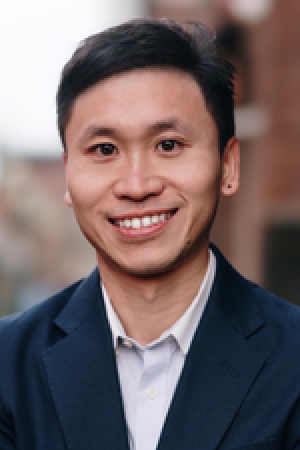
Ka I Ip is an Assistant Professor at the Institute of Child Development , University of Minnesota. As director of the D.A.N.C.E. Lab , Dr. Ip employs multimodal methods including neuroimaging, cortisol assays, and cross-cultural experiments to study emotion regulation and developmental psychopathology. PhD in Developmental Psychology (University of Michigan) Susan Nolen-Hoeksema Postdoctoral Fellow (Yale University) Research focuses on how cultural contexts and early adversity shape emotional development, with particular attention to racial-ethnic minorities and immigrant families . His work applies findings to social policy reform and health equity initiatives. Recent publications analyze neighborhood socioeconomic impacts on brain development , discrimination effects in bilingual adolescents , and cortisol dynamics in immigrant families . Key journals include Biological Psychiatry and Developmental Psychology . APA Editor’s Choice Article (2024) Yale Health Equity Research Finalist (2022) Accepting PhD students for Fall 2026. Collaborates with teams in neuroimaging , cross-cultural research , and pediatric biomarker studies .
Dr. Daan van Rooij serves as an Assistant Professor in the Department of Experimental Psychology at Utrecht University's Faculty of Social and Behavioural Sciences. His academic work is centered within the Helmholtz Institute Experimental Psychology research program under Chair Kenemans. His research expertise spans Cognitive Neuroscience, Functional Magnetic Resonance Imaging, Psychology, Disruptive Behaviour Disorders (specifically ADHD, ODD, CD), Cognitive Development, and Artificial Intelligence. Van Rooij employs fMRI and EEG imaging metrics to study brain development during childhood and adolescence, with particular focus on understanding how biological and environmental factors shape the development of impulsive behavior in youth. His scholarly publications demonstrate strong contributions to autism research, ADHD symptomology, and the genetic architecture of brain structures, with work appearing in high-impact journals including Molecular Autism, NeuroImage: Clinical, and Nature Genetics. Dr. van Rooij teaches various courses within the bachelor and master programs of Applied Cognitive Psychology, as well as AI bachelor and master tracks at Utrecht University, including courses such as 'Artificial Intelligence for an Open Society' and 'Experimentele methoden en statistiek' (Experimental Methods and Statistics).
Tianxi Li is an Assistant Professor in the Department of Statistics at the University of Minnesota, Twin Cities, within the College of Science and Engineering. Their research integrates statistical methodology with applications in network science, data privacy, and biomedical data analysis. Their research interests lie at the intersection of statistics and network science, focusing on statistical modeling of complex networks , data privacy , network security , and biomedical applications such as neuroimaging and genomics. They develop adaptive and scalable methods for network estimation, community detection, and differential correlation analysis. The recent publications demonstrate a consistent focus on advancing statistical tools for network-structured data, with increasing applications in neuroscience and cancer genomics. The work spans theoretical development (e.g., network growth models) and practical applications (e.g., glioblastoma gene modules), reflecting a balance between methodology and real-world impact. Tianxi Li leads an active research program funded by the National Science Foundation, indicating recognition and support for their innovative work. Principal Investigator, Statistical tools for network security protection: from data privacy to threat detection , NSF (2024–2025) They advise graduate students in statistics and data science, though specific advisees are not listed. Their collaborative network includes researchers in biostatistics, computer science, and machine learning, as evidenced by co-authorships and interdisciplinary projects. Li's work contributes to the UN Sustainable Development Goals, particularly through advancements in data-driven solutions for secure and ethical data analysis.
Matt Nassar is an Associate Professor of Neuroscience and Assistant Professor of Cognitive and Psychological Sciences at Brown University. He leads the Learning, Memory and Decision Lab, which is part of the Department of Neuroscience and the Robert J. & Nancy D. Carney Institute for Brain Science. His research focuses on understanding how the brain flexibly processes information to achieve complex and adaptive behaviors through computational approaches that bridge cognitive psychology and neuroscience. Education: PhD, University of Pennsylvania (2012) BA, Colgate University (2004) Nassar's research examines how different cognitive systems—learning, memory, and perception—leverage common computational principles to optimize decision-making. His work particularly focuses on how the brain balances stability and flexibility in processing information, how uncertainty is represented and utilized in learning, and how neural computations underlie complex behaviors. Through computational modeling and empirical research, he investigates how modular information-processing systems impact decisions and complex behavior in dynamic environments. His research integrates methods from cognitive psychology, neuroscience, and computational modeling to address fundamental questions about human cognition. Analysis of Nassar's recent publications (2020-2024) reveals a strong focus on computational neuroscience applied to decision-making, learning, and psychiatric conditions. His work frequently employs Bayesian modeling approaches to understand belief updating, uncertainty processing, and structure learning. Key themes include the neural basis of flexibility in learning, computational mechanisms underlying psychiatric symptoms, and age-related changes in cognitive processing. His research bridges cognitive psychology, neuroscience, and computational modeling to provide insights into both healthy cognition and disorders such as depression and schizophrenia. Scientific Contributions: Developed computational models of belief updating and learning under uncertainty Investigated neural mechanisms of stability-flexibility tradeoffs in cognition Examined age-related differences in learning and memory processes Explored computational mechanisms underlying psychiatric conditions Studied the role of noise correlations in neural learning systems Investigated how prefrontal cortex representations shape decision processes Nassar actively mentors researchers in his lab, with recent announcements highlighting postdocs joining from prestigious institutions like Max Planck UCL and Freie Universität Berlin. His lab appears to receive significant research funding, supporting multiple postdoctoral positions and research projects. Collaborations span multiple departments at Brown University, particularly with researchers in Cognitive and Psychological Sciences, Neurology, and Psychiatry. The lab has produced numerous high-impact publications in top journals including Nature Human Behaviour, Brain, and eLife. The Learning, Memory and Decision Lab, led by Nassar, is an active research group that uses computational models to understand how the brain represents and stores information for effective decision making. Recent lab announcements (as of February 2025) indicate the lab is expanding with new postdoctoral researchers joining from Harvard, Max Planck UCL, and Freie Universität Berlin, suggesting strong research momentum and funding support. The lab appears to be well-integrated within Brown's neuroscience community, with collaborations spanning multiple departments and research centers.
Professor Fernando Calamante is a Professor of Biomedical Engineering at The University of Sydney and Director of Sydney Imaging Core Research Facility. He leads the National Imaging Facility node and focuses on advanced MRI methodologies, particularly Diffusion and Perfusion MRI, to study brain connectivity and neurological disorders. His work includes developing the MRtrix software, widely used in diffusion MRI analysis. He holds extensive funding (~$50M) and has been recognized with awards like ISMRM Fellowship and NHMRC grants. His research spans super-resolution imaging, brain connectomics, and clinical applications in stroke and tumors. Education: BSc (Physics, Argentina), PhD (Magnetic Resonance Imaging, University College London). Career highlights include leadership roles at The Florey Institute and ISMRM presidency (2021-2022). Research interests include: Novel MRI methods for brain connectivity and super-resolution imaging Applications of Diffusion and Perfusion MRI in neurology Integration of structural and functional connectomics Key achievements: Over 200 publications, software innovations, and leadership in global MRI societies.
Lawrence H. Staib is a Professor of Biomedical Engineering at Yale University, with additional academic appointments in Electrical & Computer Engineering and Radiology & Biomedical Imaging. He holds a Ph.D. from Yale University and specializes in automated medical image analysis, including techniques like model-based segmentation, nonrigid registration, and diffusion tensor imaging (DTI). His research focuses on applications in neuroscience, cardiology, and cancer imaging, emphasizing machine learning and functional MRI analysis. His key contributions include advancements in white matter tractography via anisotropic wavefront evolution, real-time neural tract parcellation (Fasciculography), and noise reduction in diffusion tensor fields. Staib is a Fellow of the American Institute for Medical and Biological Engineering (2015), recognizing his impactful work in medical imaging technologies. Staib's research also encompasses statistical deformation models, perturbation-based shape analysis, and 3D deformable models for volumetric segmentation. He has developed patented 3D ultrasound computed tomography systems (USPTO #6878115, 7025725). His work bridges clinical needs with computational methods, addressing challenges in image registration, structural connectivity analysis, and medical robotics.
Mark Jenkinson is a Professor of NeuroImaging at the University of Oxford's Nuffield Department of Clinical Neurosciences and also holds positions at the University of Adelaide's Australian Institute for Machine Learning and the South Australian Health and Medical Research Institute (SAHMRI). He heads the Structural Modelling and Analysis Group at the FMRIB Centre, where his research focuses on multimodal population modeling and structural brain segmentation. Education: DPhil in Robotics Research (University of Oxford, 1999) BSc (Hons I) in Mathematical Physics (University of Adelaide, 1994) BE (Hons I) in Electrical and Electronic Engineering (University of Adelaide, 1993) Professor Jenkinson's research spans two major themes: multimodal modeling of populations to describe disease processes and apply to individual patient diagnoses, and structural segmentation and analysis of brain anatomy and pathology, particularly focusing on sub-cortical structures and lesions. His work integrates advanced computational methods with neuroimaging to develop tools for understanding neurological disorders. As the developer of key components of the FMRIB Software Library (FSL), he has significantly contributed to standard neuroimaging analysis pipelines used worldwide. His recent publications demonstrate a strong focus on deep learning applications in neuroimaging, uncertainty quantification in medical AI, and advanced segmentation techniques. There's a clear trend toward developing more robust, anatomically plausible models that preserve topological structures while improving diagnostic capabilities for conditions like multiple sclerosis, Huntington's, and Parkinson's diseases. Scientific Awards: Highly Cited Researcher (Clarivate Analytics 2018-2021, Thomson Reuters 2014-2016) ISMRM Outstanding Teacher Award (2009, 2014) Teaching Excellence Award, University of Oxford (2012) David Phillips Fellowship from BBSRC (2005-2010) Professor Jenkinson has supervised over 25 doctoral students whose work spans brain segmentation, connectivity analysis, and clinical applications of neuroimaging. His research is supported by significant grants including the Medical Research Future Fund (AU$2m), Wellcome Trust Centre for Integrative Neuroimaging (£11m), and NIH Human Connectome Project (US$30m), reflecting the high impact and translational potential of his work. As head of the Structural Modelling and Analysis Group at FMRIB, Jenkinson leads a team developing the FSL (FMRIB Software Library), one of the most widely used neuroimaging analysis packages globally. His group collaborates extensively with clinical researchers on applications ranging from multiple sclerosis to traumatic brain injury, translating computational advances into clinical practice.
Kep Kee Loh is a Senior Tutor in the Department of Psychology at the National University of Singapore (NUS). Currently, he also holds an NUS Overseas Postdoctoral Fellowship position at both the Montreal Neurological Institute (McGill University) and the University of Oxford. His research focuses on comparative primate neuroanatomy, examining what makes the human brain special compared to other primates through multimodal MRI techniques. Ph.D. in Neuroscience from Université Claude Bernard Lyon I (2014-2018) M.Sc. in Cognitive Neuroscience from University College London (2011-2012) B.Soc.Sci. (Hons.) in Psychology from National University of Singapore (2007-2011) Dr. Loh's research primarily investigates the anatomical organization of brains across humans and various primate species including chimpanzees, baboons, and macaques. He employs different magnetic resonance imaging techniques (anatomical, resting-state, diffusion-weighted MRI) to compare brain organization across species, with particular focus on the medial frontal cortex, sulcal anatomy, and the evolution of speech and language in the human brain. His work adopts a multimodal approach to provide an integrative view of what sets human brains apart from other primates. His recent publications demonstrate a strong focus on comparative neuroanatomy across species, with particular emphasis on primate brain evolution, frontal cortex organization, and language-related neural pathways. The research spans multiple disciplines including neuroscience, cognitive science, and evolutionary biology, with increasing attention to methodological advancements in neuroimaging techniques for cross-species comparisons. NUS Overseas Postdoctoral Fellowship (2021) Institute of Language, Communications and the Brain (ILCB) Postdoctoral Fellowship (2019) Fondation Recherche Médicale (FRM) Fin de Thèse (PhD funding) (2017) BRAIN Student Travel Award, 6th Motivation and Cognitive Control Symposium (2016) Dr. Loh has been involved in numerous collaborative research projects across international institutions, including the French Institute of Health and Medical Research (Stem Cell and Brain Research Institute), Aix-Marseille Université, and currently McGill University and the University of Oxford. His work has received significant recognition with over 1,000 citations for his 33 publications. While specific grant information isn't detailed in the provided text, his postdoctoral fellowships indicate successful competitive funding. Dr. Loh collaborates with several research groups including the Montreal Neurological Institute at McGill University and research teams at the University of Oxford. His work connects with broader initiatives like the collaborative resource platform for non-human primate neuroimaging, indicating participation in larger research networks focused on advancing primate neuroscience through shared resources and methodologies.
Dr Andrea Greve is a Lecturer in the Department of Psychology at the University of Cambridge . Her research focuses on cognitive processes related to memory, prediction error, and learning mechanisms. Key areas of interest include declarative memory formation, semantic predictions, and the influence of novelty on memory retention. She has explored topics such as word learning in variable-choice paradigms, the role of hippocampal lesions in memory binding, and predictive coding in neuroimaging contexts. Her work integrates experimental psychology with neuroscience methodologies, particularly leveraging neuroimaging techniques to investigate memory systems. Notable contributions include studies on false memory effects, the nonmonotonic relationship between object-location memory and expectedness, and the impact of prior knowledge on memory encoding. Dr. Greve has also contributed to methodological advancements, such as improved MRI anonymization for MEG coregistration. While her research spans multiple decades, recent efforts (2023–2025) emphasize predictive frameworks and their applications in understanding cognitive phenomena like semantic surprise and episodic memory formation. Her findings challenge traditional assumptions about fast mapping in adults and highlight the importance of integrating computational models with empirical data. Dr. Greve collaborates extensively with neuroimaging and cognitive science teams, contributing to interdisciplinary projects that bridge theoretical and applied research in memory systems. Her work maintains a strong focus on methodological rigor, particularly in experimental design and data interpretation.
Christopher Honey is an Associate Professor in the Department of Psychological & Brain Sciences at Johns Hopkins University, affiliated with the Krieger School of Arts & Sciences. His research focuses on computational cognitive neuroscience, exploring how the brain processes sequential information such as language and memory. He holds a PhD from Indiana University and has held positions at Princeton University and the University of Toronto before joining JHU in 2016. Education: PhD in Psychological and Brain Sciences, Indiana University Postdoctoral Fellowship at Princeton University with Uri Hasson Bachelor’s in Applied Mathematics and English Literature, University of Cape Town Research Interests: Neural dynamics of memory and perception Temporal processing in the brain Cognitive modeling using computational methods Neuroimaging data standards (e.g., BIDS) Publications highlight his work on brain state fluctuations, neuroimaging data structures, and memory enhancement. His lab develops tools for analyzing fMRI and EEG data, emphasizing real-world applications like smartphone-based cognitive interventions. Lab and Collaborations: Active projects on narrative processing and hippocampal replay Development of open-source neuroscience tools like iELVis Focus on translational research for aging populations
Thomas Beikler serves as a Professor in the Department of Periodontology, Preventive Dentistry and Dental Conservation at the University Medical Center Hamburg-Eppendorf (UKE), which operates under the Faculty of Medicine. His academic credentials include dual doctoral degrees as indicated by his title 'Univ.Prof.Dr.Dr.' Dr. Beikler's research spans multiple dimensions of periodontal science and oral-systemic health connections. His work investigates the relationship between periodontal disease and various systemic conditions including hypophosphatasia, liver cirrhosis, depression, and neurological changes. He has made significant contributions to understanding oral health literacy, particularly among German adult populations with migration backgrounds through the MuMi Study. His research methodology frequently employs large population-based studies like the Hamburg City Health Study to establish epidemiological connections between oral and general health. His publication record demonstrates a strong interdisciplinary approach, bridging dentistry with neurology, hepatology, psychiatry, and public health. Notable research directions include microbiome-based therapies for periodontitis, the role of biomarkers in oral health assessment, and the development of innovative dental education models in Germany. Dr. Beikler has led significant research projects including the 'Transplantation of a healthy oral donor microbiome for periodontal therapy' (2016-2019), which explored cutting-edge approaches to treating periodontal disease. He has also contributed to dental education reform through the iMED DENT program, Germany's first model dental study program.
Yading Yuan, PhD is an Associate Professor of Radiation Oncology (Physics) at Columbia University Irving Medical Center and a member of the Data Science Institute. He holds a PhD in medical physics from the University of Chicago (2010) and completed clinical residency at Harvard Medical Physics Program (2013). His research focuses on AI-driven innovations in radiation oncology, including automated medical image analysis systems, federated learning frameworks for tumor segmentation, and data-driven approaches to personalized cancer treatment. He is certified by the American Board of Radiology and licensed in New York State. Education: PhD in Medical Physics (University of Chicago, 2010); Clinical Residency (Harvard Medical Physics Program, 2013). Research interests include: automated knowledge-based treatment planning, large-scale clinical AI systems, medical image reconstruction algorithms, and panomics integration for precision oncology. His work emphasizes translating data science advancements into clinical practice to improve patient outcomes. Key trends in his publications include federated learning for privacy-preserving medical AI, tumor segmentation in multi-modal imaging (PET/CT, MRI), and AI-driven prediction of treatment outcomes and recurrence risks. Recent work emphasizes decentralized learning architectures and cross-institutional collaboration systems. Scientific Awards: Distinguished Reviewers 2013 (selected by peer review committees) Advising/grants: No specific student names or grant details listed in provided text. His work is supported through institutional and collaborative research initiatives. Labs/teams: Active member of Columbia's Data Science Institute and Radiation Oncology department, contributing to interdisciplinary medical AI research groups.
Brooks Casas, Ph.D., is a Professor at the Fralin Biomedical Research Institute at VTC, with joint appointments in the Department of Psychology (College of Science), Department of Biomedical Engineering and Mechanics (College of Engineering), and the Department of Psychiatry and Behavioral Medicine (School of Medicine) at Virginia Tech. He is also a College of Science Faculty Fellow, recognized for his contributions to decision neuroscience and computational psychiatry. Ph.D. in Psychology, Harvard University Postdoctoral Fellowship, Baylor College of Medicine Former Assistant Professor of Neuroscience and Psychiatry, Baylor College of Medicine Brooks Casas investigates the neural computations underlying social decision-making, focusing on how valuation, learning, and social preferences shape human choices. His research integrates decision neuroscience, behavioral economics, and social psychology to understand both normative and pathological decision processes. Key areas include trust, risk preferences, social influence, and impaired decision-making in psychiatric disorders such as substance abuse and borderline personality disorder. His lab employs fMRI, computational modeling, and longitudinal studies to explore these phenomena. His recent publications span topics such as machine learning applications in diagnosing borderline personality disorder, neural predictors of adolescent risk behaviors, and the role of cognitive control in substance use. His work often involves large-scale longitudinal studies, such as the decade-long investigation into early life adversity and brain development with Jungmeen Kim-Spoon. He has not received any explicitly mentioned scientific awards in the provided text. Casas leads the Casas Lab within the Center for Human Neuroscience Research and collaborates extensively with students and researchers across disciplines. His work is supported by grants from the National Institutes of Health and the Institute for Society, Culture, and Environment. He advises multiple graduate students and early-career researchers, contributing significantly to training in computational psychiatry and decision neuroscience. His lab, the Casas Lab, is part of the Fralin Biomedical Research Institute and focuses on human neuroscience research, particularly using neuroimaging and behavioral experiments to study social and economic decision-making.
Lars Nyberg is a Professor of Neuroscience at Umeå University's Medical Faculty and Director of the Umeå Centre for Functional Brain Imaging (UFBI) since 2001. He has held concurrent roles as Guest Professor in Bergen and Oslo, Norway, and led the Wallenberg Centre for Molecular Medicine (WCMM) from 2019. His academic leadership includes directing major initiatives like the EU-funded Lifebrain project (2017–2022) and holding the Torsten & Ragnar Söderberg Research Professorship in Medicine (2012–2017). Education: PhD in Psychology (1993) and Docent (1996) from Umeå University, with postdoctoral training at the Rotman Research Institute, Toronto. His research focuses on neuroimaging techniques (MRI/PET), dopamine systems, working memory, aging, and episodic memory. Key contributions include linking dopamine receptor availability to cognitive decline and demonstrating brain maintenance mechanisms in aging. Research Interests: Neuroimaging of memory systems, dopamine's role in cognition, aging-related brain changes, and cognitive reserve. Grants: EU Horizon 2020 (Lifebrain, €10M), KA Wallenberg Scholarships (2009, 2016), Swedish Research Council funding for COBRA (2013–2017). His awards include Royal Swedish Academy of Sciences membership (2008), Mångbergs Prize in Neural Sciences (2008), and multiple Wallenberg grants. Nyberg has supervised 27 PhD students and 11 postdocs, advancing translational neuroscience and aging research through interdisciplinary teams at UFBI and WCMM.
Dr. Tiffany Ho is an Assistant Professor in the Department of Psychology at the University of California, Los Angeles (UCLA). She is also affiliated with the Cognition, Affect, and Neurodevelopment in Youth (CANDY) lab, where she leads research on adolescent neurodevelopment, depression, and the neurobiological impacts of early adversity. Her work integrates neuroimaging, psychophysiology, and immunology to understand how stress and adversity shape brain circuits underlying emotion and behavior during adolescence. Education: Ph.D. in Psychology, University of California, San Diego B.A. in Cognitive Science, University of California, Berkeley Postdoctoral Fellowship in Clinical Neuroscience, University of California, San Francisco Postdoctoral Training in Affective Science, Stanford University Research Interests: Dr. Ho’s research focuses on understanding how brain circuits underlying thoughts, emotions, and behaviors change during adolescent development. She investigates how experiences of adversity and perceptions of stress shape neurodevelopment, and how these changes impact the etiology, course, and treatment of depression. Her lab uses a multimodal approach, including behavioral, cognitive, endocrine, immune, and neuroimaging techniques, and leverages big data and global initiatives to identify robust brain imaging markers associated with depression and related conditions. Grants and Funding: Her research has been generously funded by the Klingenstein Third Generation Foundation and the National Institute of Mental Health . Publications and Impact: Dr. Ho has published extensively in high-impact journals, with over 100 peer-reviewed articles. Her recent work includes studies on the effects of COVID-19 on adolescent mental health, the role of inflammation in depression, and the use of machine learning to classify major depressive disorder using neuroimaging data. She is also a key contributor to the ENIGMA consortium, a global initiative aimed at understanding brain alterations in psychiatric disorders.