Professor George Alogoskoufis of the Athens University of Economics and Business (since 1990) is a leading economist specializing in international macroeconomics, inflation dynamics, and European economic integration . As Head of the Department of Economics (since 2020) and Research Associate at the London School of Economics Hellenic Observatory (since 2011), he combines academic research with policy engagement. Born 1955 in Athens, Greece PhD in Economics (1981) from LSE MSc (1978) and BSc (1977) from LSE and University of Athens His research focuses on monetary policy, exchange rate regimes, unemployment persistence , and the political economy of Greece . Key publications include the textbook Dynamic Macroeconomics (MIT Press, 2019) and articles in top journals like American Economic Review and Journal of Political Economy . Awards include the 1981 Sayers Prize and 2002 Academy of Athens Prize . As editor, he co-published the influential Greece and the Euro: From Crisis to Recovery (2021) e-book. His work addresses macroeconomic policy under external constraints , with significant contributions to understanding Greek economic institutions and European policy coordination .
Mengheng Li is a Senior Lecturer at the Economics Discipline Group within the UTS Business School and a research associate at the Centre for Applied Macroeconomic Analysis (ANU) and the Centre for Climate Risk and Resilience (CCRR). He specializes in nonlinear/non-Gaussian state space models, macroeconomic forecasting, and climate change economics. Prior to UTS, he worked at the Dutch Central Bank as an econometrician. His PhD in Econometrics was obtained from VU University Amsterdam and the Tinbergen Institute. Education includes a PhD in Econometrics (2018, VU Amsterdam/Tinbergen Institute), M.Phil. in Economics (2015, cum laude), and B.Sc. in Econometrics (2013, cum laude, Tilburg University). Research focuses on inflation dynamics, business cycles, output gaps, and the economic costs of climate change. He has received awards including the 2019 INFER Best Paper Award and multiple conference grants. Grants: UTS Collaboration Scheme (2023), UTS Business School Research Grant (2022) Professional Affiliations: Econometric Society, International Association for Applied Econometrics Teaching: Advanced Macroeconomics, Time Series Econometrics, Business Statistics His work bridges econometric theory and applied macroeconomic issues, with recent emphasis on climate change's economic implications and high-dimensional volatility modeling.
Alwyn Young is Professor of Economics and Deputy Head of Department (Research) at the Department of Economics, London School of Economics and Political Science. His expertise spans macroeconomics, econometrics, and political economy. Research interests focus on macroeconometric analysis, productivity growth, and methodological innovations in econometrics. His work frequently addresses statistical challenges in empirical economics and economic development patterns. Key methodological contributions include developing collinearity-robust estimation techniques and randomization-based inference methods for econometric applications.
Anthony Garratt is a Professor of Economic Modelling and Forecasting at the Warwick Business School (University of Warwick). He holds affiliations with the Finance Group and has previously served at Birkbeck College (University of London), University of Leicester, University of Cambridge, Bank of England, and London Business School. His research focuses on empirical macroeconomics, econometric modeling, point/density forecasting, model uncertainty, and real-time data analysis, often applied to monetary policy questions. Education background includes roles as College Lecturer in Economics at Trinity College (Cambridge), Senior Research Officer at Cambridge's Department of Applied Economics, and managerial positions at the Bank of England. Research interests emphasize forecasting methodologies, exchange rate dynamics, and structural vector error correction models. Recent work explores currency market mispricing, energy forecast asymmetry, and commodity price impacts on inflation. His ESRC-funded studies are supported by the Bank of England and published in top journals like Journal of Financial and Quantitative Analysis and International Journal of Forecasting . Teaching includes modules on Forecasting for Decision Makers and Case Studies in Data Science across multiple MSc programs (Business Analytics, Finance, Management) and BSc degrees in International Management and Finance.
María Ángeles Carnero Fernández is a Professor in the Department of Fundamentals of Economic Analysis at the University of Alicante since 2003. She is affiliated with the Applied Microeconometrics research group (GEMA) and has held administrative roles such as Subdirector/a de Departamento (since 2025) and Secretario/a de Departamento (2008-2009). Her academic background includes a PhD in Economics from Universidad Carlos III de Madrid (2003) and a B.A. in Mathematics (Statistics and Operations Research) from Universidad de Santiago de Compostela (1995). Her research focuses on Financial Econometrics , Volatility Modeling , and Energy Market Analysis . She has supervised 6 final-year projects and 1 PhD thesis, with recent publications examining skewness in financial returns , tail risk , and multivariate GARCH models . She has participated in 10 public research projects (2018-2025) and coordinated transfer projects with private entities. Teaching experience spans 2003-present, delivering courses like Introduction to Statistics , Time Series Analysis , and Macroeconometrics across Economics, Business Administration, and Marketing degrees. She has undertaken research stays at VU University Amsterdam, Oxford, University of Sydney, and University of Southampton. Competitive public projects: Microeconomía Aplicada y Economía Financiera Empírica (ECO2017-87069-P), Métodos econométricos (ECO2014-58434-P), and others Recent transfer project: Evaluación de Contenido para EQA CERTIFICADOS (2025)
Prof. Dr. Maik Wolters is Research Director of the ifo Center for Macroeconomics and Surveys at the ifo Institute for Economic Research (since October 2020). Concurrently he is Affiliate Professor and Research Fellow at the Institute for Monetary and Financial Stability, Goethe University Frankfurt, and Research Fellow at the Kiel Institute for the World Economy. Prior to joining ifo, he held professorships at the University of Würzburg (2017-2020) and the University of Jena (2012-2017), and was Junior Professor at Kiel University and the Kiel Institute for the World Economy (2010-2012). Education Ph.D. (Dr. rer. pol.), Goethe University Frankfurt, 2007-2010 M.Sc. Quantitative Economics, Goethe University Frankfurt, 2005-2007 M.A. International Business, ESC Rennes School of Business, 2004-2005 Vordiplom, Bielefeld University, 2002-2004 Research Interests Prof. Wolters’ work lies at the intersection of monetary economics , macro-econometrics , and applied forecasting . He studies the transmission of monetary policy, especially during financial crises, and develops econometric techniques for real-time estimation of business-cycle indicators such as the output gap. A second strand of research investigates global financial cycles and their historical evolution since 1880. Recently, he has also examined energy-market shocks, analysing supply and demand disruptions in the German natural-gas market. Scientific Awards & Recognition While no specific awards are listed, Prof. Wolters’ research is published in top-tier journals such as the Journal of Applied Econometrics , Journal of International Money and Finance , Journal of Business & Economic Statistics , and the International Journal of Forecasting , attesting to strong peer recognition. Research Projects & Grants ifo Konjunkturprognose (ifo Business-Cycle Forecast) – ongoing internal project producing quarterly macro forecasts. Gemeinschaftsdiagnose 2018-2022 – funded by the German Federal Ministry for Economic Affairs and Energy (BMWi) to deliver the Joint Economic Forecast for Germany. Teams & Networks He leads the ifo Center for Macroeconomics and Surveys team at the ifo Institute and collaborates extensively with the Institute for Monetary and Financial Stability at Goethe University Frankfurt and the Kiel Institute for the World Economy , serving as a bridge between academic research and policy-oriented forecasting.
Karol Szomolányi is an Associate Professor in the Department of Operations Research and Econometrics at the Faculty of Economic Informatics, University of Economics in Bratislava. He has been a university teacher at the institution since 1999, following his engineering role in the same faculty from 1994-1999. His academic career spans over two decades at this institution, where he has established himself as a prominent researcher and educator in econometrics and macroeconomics. Dr. Szomolányi's research focuses on econometric modeling, price analysis, and macroeconomic dynamics. His work particularly examines asymmetric price adjustments in energy markets, business cycles in post-communist European countries, and the impact of trade terms on Central European economies. He has made significant contributions to understanding the Slovak economy's response to external shocks and monetary interventions. His scholarly output includes several monographs, textbooks, and numerous peer-reviewed articles in reputable journals. Notably, he has co-authored the book "Bayesovská ekonometria" (Bayesian Econometrics) and multiple introductory econometrics textbooks featuring various software platforms including R, EViews, and Gretl. His research demonstrates a consistent focus on applying econometric methods to real-world economic problems, particularly in the Central European context. Dr. Szomolányi has been actively involved in numerous research grant projects, both as principal investigator and co-investigator. Currently, he leads two major projects: VEGA 1/0052/24 on estimating key structural parameters of contemporary macroeconomic models (2024-2026), and KEGA 026EU-4/2024 on creating an interactive web-based book for quantitative economic analysis (2024-2026). His previous projects have examined pandemic impacts on EU economies, short-term and long-term dynamics of European post-communist countries, and economic policy coherence in Europe. As an educator, Dr. Szomolányi teaches courses across all three levels of study. At the bachelor's level, he teaches Economic Analysis I & II and Management Science II. For master's students, his courses include Quantitative Economics I & II and Applied Macroeconometrics. At the doctoral level, he offers Quantitative Macroeconomics and Macroeconometrics. Dr. Szomolányi has supervised doctoral students, including Michaela Blaško (2015-2018) whose dissertation focused on European economic convergence processes with emphasis on Slovak economy dynamics. His teaching and research activities demonstrate a strong commitment to advancing econometric methods and their application to contemporary economic issues in Central Europe.
Rolf Scheufele is a Research Affiliate at the Halle Institute for Economic Research (IWH) since March 2012 and an Economist at the Swiss National Bank . He specializes in applied econometrics and macroeconomic modelling , with a focus on GDP forecasting, dynamic stochastic general equilibrium (DSGE) models, and economic policy analysis. Institution: Halle Institute for Economic Research (IWH) – Member of the Leibniz Association Department: Macroeconomics Current Role: Economist at Swiss National Bank His research explores the use of real-time data versus final data in GDP prediction, disaggregation techniques for macroeconomic forecasting, and the reliability of impulse response analysis in misspecified DSGE models. He has contributed significantly to understanding convergence processes in East Germany and evaluating the New Keynesian Phillips Curve for Germany. Key trends in his publications include: Integration of mixed-frequency models and real-time data for accurate GDP forecasting Comparison of full information and limited information estimation techniques in macroeconomic modeling Analysis of price rigidity , economic shocks , and regional convergence in Germany His work is conducted in collaboration with institutions like the Halle Institute for Economic Research (IWH) , where he contributes to macroeconomic research and policy evaluation.
Ragnar Nymoen is a Professor of Economics at the University of Oslo's Department of Economics, part of the Faculty of Social Sciences. He has held leadership roles, including Head of the Department (2002–2004) and Head of the Macroeconometric Research and Model Building unit (1995–1996). His academic journey includes a Ph.D. in Economics (1990), Cand. polit. (1984), and Cand. mag. in Sociology (1979), all from the University of Oslo. His research focuses on macroeconomics, econometric modeling, wage-price dynamics, and inflation. He has contributed to empirical macroeconometric models, time series analysis, and policy-oriented research. Notable works include studies on Norwegian wage dynamics, inflation expectations, and OECD unemployment dynamics. Nymoen has been affiliated with institutions such as Norges Bank, serving as Scientific Advisor (1993–1995) and Acting Research Director (1993–1994). He has led the Centre for Wage Formation (2014–2017) and contributed to policy committees, including the Ministry of Finance’s Modelling Committee (1996–2003).
Frank Schorfheide is the Christopher H. Browne Distinguished Professor of Economics at the University of Pennsylvania's Department of Economics. His research focuses on macroeconomics, econometrics, and dynamic stochastic general equilibrium (DSGE) models. He specializes in Bayesian methods, policy analysis under uncertainty, and the evaluation of economic forecasting models. Schorfheide's work addresses topics such as monetary policy effects, income heterogeneity, model misspecification, and real-time forecasting during crises like the pandemic. Key contributions include advancements in DSGE model estimation, analysis of zero lower bound (ZLB) constraints, and methodologies for handling sparse heterogeneity in panel data. His research emphasizes robustness in decision-making under partial identification and explores the aggregation of microeconomic heterogeneity into macroeconomic outcomes. Publications highlight innovations in sequential Monte Carlo techniques, mixed-frequency VAR models, and clustering approaches for multi-dimensional heterogeneity. Schorfheide collaborates on projects involving financial frictions, nonlinearities in macroeconomic dynamics, and improving GDP measurement accuracy.
Michael Donihue is the Herbert E. Wadsworth 1892 Professor of Economics at Colby College, where he has served since 1989. He has held leadership roles including Associate Vice President for Academic Affairs (2008-2010), Economics Department Chair multiple times, and Director of the Colby Laboratory for Economic Studies. His research focuses on applied economics, econometrics, and policy analysis with a regional and community-focused lens. Education: Ph.D. in Economics, University of Michigan (1989) M.A. in Applied Economics, University of Michigan (1983) B.A. in Economics, Colby College (1979) Research Interests: Professor Donihue’s work emphasizes economic impacts of environmental policies, regional development, and community-based projects. Recent projects include analyses of Maine’s dairy industry, opioid crisis, recreational marijuana, and seaweed aquaculture. He employs data analytics and forecasting techniques to address real-world challenges, collaborating with stakeholders through the Colby Laboratory for Economic Studies. Grants and Collaborations: His lab engages in community-driven research funded by entities like the Maine Health Access Foundation. Notable projects include the ‘Coast to Cow to Consumer’ initiative and economic impact assessments of Maine’s lobster industry. Professional Activities: He served as a Senior Economist at the U.S. Council of Economic Advisers (1994-1995) and a Visiting Scholar at the Federal Reserve Bank of Boston (2004-2005). He has advised on Maine’s EMS naloxone distribution and contributed to the Maine Climate Council’s carbon policy briefs.
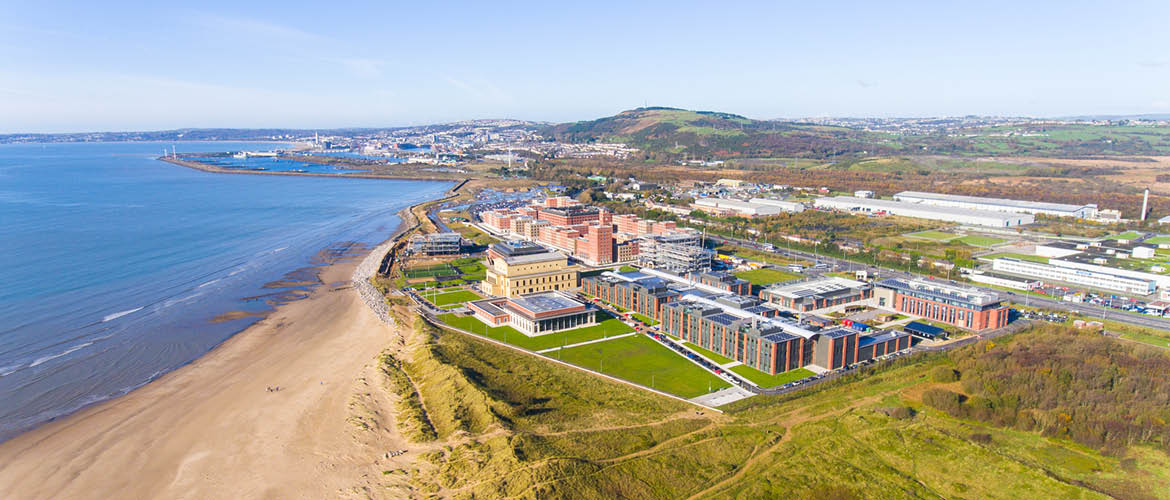
Dr. Bo Yang is a Senior Lecturer in Economics at Swansea University’s School of Management, specializing in macroeconomics, monetary policy, and DSGE modeling. He holds a PhD from the University of Surrey and has held academic roles at institutions including Xi’an Jiaotong-Liverpool University and a part-time position at the University of Surrey. His research focuses on macroeconomic dynamics in emerging economies, particularly the applications of DSGE models to analyze oil price impacts, financial frictions, and policy coordination. Teaching expertise spans macroeconomics, econometrics, and international finance. He has taught at universities across China, India, and Europe, delivering specialized courses on dynamic macroeconometrics for central banks and PhD students. His affiliated roles include Visiting Researcher at the Centre for International Macroeconomic Studies (CIMS) and Researcher at the Emerging Markets Research Centre (EMaRC), Swansea. Key publications explore oil price shocks in resource-rich economies, partial dollarization effects, and open innovation dynamics in mobile payments. His work bridges theoretical models with empirical analysis, emphasizing policy relevance in emerging markets. Supervision areas include empirical macroeconomics and real business cycle analysis.
Victor Valcarcel is an Associate Professor of Economics at the University of Texas at Dallas (UTD), affiliated with the School of Economic, Political and Policy Sciences. His research focuses on the intersection of banking, finance, and macroeconomics, with particular emphasis on central bank balance sheet operations and Divisia money aggregates. He holds a PhD in Economics from the University of Kansas (2008). Valcarcel's research explores time-varying dynamics in monetary aggregates, inflation expectations modeling, and the identification of monetary policy shocks. His work bridges theoretical macroeconomic frameworks with applied econometric techniques, often employing structural VAR models and time-series analysis. Notable areas include central bank operational frameworks, the effects of quantitative easing, and the integration of financial literacy in undergraduate education. His recent publications (2020–2025) analyze financial market responses to policy tightening, inflation hedging mechanisms in cryptocurrency markets, and the construction of Divisia money measures for emerging economies like Mexico. He has contributed to debates on yield curve dynamics, inflation volatility post-Great Recession, and the superneutrality of money under endogenous growth conditions. Valcarcel maintains an active research agenda combining empirical analysis with policy relevance, frequently engaging with questions of monetary policy transmission, financial stability, and macroeconomic forecasting. His work has implications for central bank decision-making in both advanced and emerging economies.
Andreas Tryfonidis serves as Assistant Professor in the Department of Economics at the University of Cyprus's School of Economics and Management since 2019, following prior appointments at Humboldt University of Berlin and the European Central Bank. His academic trajectory includes a visiting research period at the University of Wisconsin Madison during doctoral studies. He earned his PhD in Economics from the European University Institute (2017), establishing foundational expertise in quantitative economic analysis. Tryfonidis's research centers on Quantitative and Empirical Macroeconomics , Macro-Finance , and Econometrics , with particular focus on digitalization's economic impact, macroeconomic resilience to sectoral disruptions, household financial constraints, and liquidity risk dynamics. His methodological approach integrates advanced Bayesian and macroeconometric techniques to address complex policy-relevant questions. Recent publications reveal a cohesive research trajectory advancing at the intersection of technological change and macro-finance. His 2025 work on digitalization effects demonstrates increasing emphasis on production economics, while maintaining rigorous econometric foundations across studies in top journals like the Journal of International Economics and Review of Economic Dynamics. The forthcoming book chapter on administrative data further highlights his policy-engaged scholarship.
Assoc. Prof. Dr. Mariela Nenova-Amar is a lecturer in the Department of Economics at the Faculty of Economics, Sofia University "St. Kliment Ohridski" since 2001. She supervises doctoral students in Economics (3.8) and teaches master's programs. Her research focuses on Macroeconomics , Monetary Policy , and Transition Economics . Department: Economics Academic Rank: Associate Professor Email: Nenova.m@feb.uni-sofia.bg Her scientific interests span empirical analysis of growth, price processes, labor markets, fiscal policy, and EU integration challenges. Articles highlight her work on monetary policy transmission , real convergence , and state-owned enterprise behavior in transition economies. Prof. Nenova-Amar previously held a key analytical role at the Bulgarian National Bank (2003-2018) and contributes to international research networks. She is a member of the Bulgarian Macroeconomic Association and the European Economic Association.