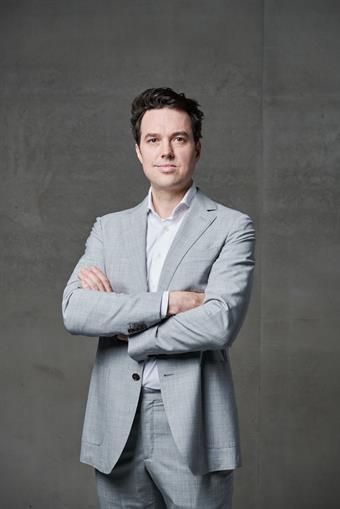
Prof. Moritz Fleischmann is a faculty member at the Peter Behrens School of Arts (PBSA) , Hochschule Düsseldorf , appointed in 2021. His research focuses on data-driven design , Building Information Modelling (BIM) , and sustainable architectural practices . He serves as a board member of the Center for Digitalization and Digitality (ZDD) and Vice Dean of the Architecture Department. Research: Digitalization in architectural design, BIM, computational modeling, lightweight structures Teaching: Bachelor and Master programs in Architecture, Interior Architecture, and Data Science Awards: Recognized with multiple honors including the Mies van der Rohe Preis and Schindler Award His publications emphasize computational design methods for optimizing spaceframe structures , microclimate design , and material behavior integration . Collaborative works with institutions like ICD Stuttgart and firms such as HENN Architekten highlight his interdisciplinary approach. Scientific Awards: Sonderpreis Jongespreis (2016) Best Paper Award AAG 2014 Mies van der Rohe Preis (2011) Detailpreis (2010) Leichtbaupreis (2010) Arch+ Preis (2006) Schindler Award Anerkennung (2004) Professional Activities: Head of Research at HENN Architekten (2011–2015) Co-founder of DRX (Design Research Exchange) projects Contributor to international conferences and journals Exhibited at venues including the Beijing Biennale and AA End of Year Exhibitions
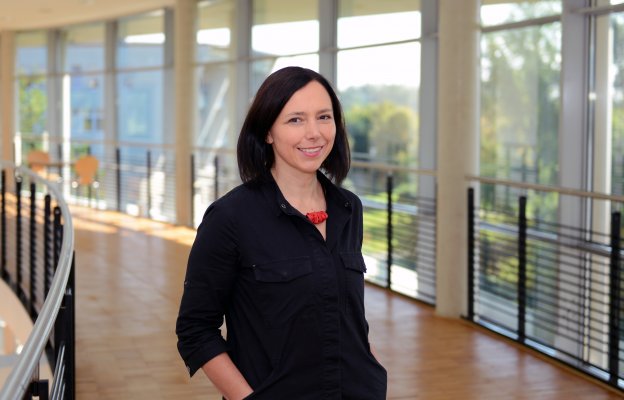
Jun. Prof. Dr. Miriam Christina Reiss is an Assistant Professor of Volcano Seismology at Johannes Gutenberg University Mainz since August 2023. Previously, she worked at the University of Frankfurt and Yale University. Her research focuses on understanding volcanic systems, magma dynamics, and seismological processes through fieldwork, data analysis, and computational modeling. She holds degrees in English and Physics for secondary school teaching, transitioning to geosciences during an exchange in New Zealand. Key highlights include leading a research project in Tanzania studying Oldoinyo Lengai volcano’s unique carbonatite eruptions and contributing to the Eifel Large-N Seismic Network. She is active in mentoring and promoting gender diversity in geosciences, including initiatives like Girls’ Day and ADA Mentoring PRO Academia. Education: 2007: Abitur (High School Diploma) 2013: University Degree in English and Physics for Secondary School Teaching 2017: Doctorate in Geophysics Research Interests: Volcano seismology, magma dynamics, seismic anisotropy, continental rifting, geothermal energy, and the application of machine learning in seismic data analysis. Her work combines field experiments (e.g., deploying seismometers in remote locations), computational modeling, and interdisciplinary collaboration to study Earth’s interior. Professional Activities: Member of German Geophysical Society (DGG), European Geosciences Union (EGU), and American Geophysical Union (AGU) Contributions to seismic network projects like SEISVOL and AlpArray Reviewer for scientific journals and grant proposals Future Goals: Inspire students and early-career researchers in geophysics, establish a research group focused on volcanology and seismic processes, and advance understanding of magma systems to improve volcanic hazard assessment and geothermal energy applications.
Prof. Dr. Peter Bürgisser is a Professor at the Technical University of Berlin, affiliated with the Institute of Mathematics and the Algorithmic Algebra research group within Faculty II - Mathematics and Natural Sciences. His research focuses on algebraic complexity theory, computational algebra, and geometric methods in computer science. Bürgisser has made significant contributions to topics including invariant theory, numerical analysis of algorithms, and the computational complexity of algebraic problems. He has authored influential books such as *Algebraic Complexity Theory* and has published extensively in top-tier journals like the Journal of the ACM and SIAM Journal on Computing. His work includes developing polynomial-time algorithms for problems in invariant theory, analyzing the condition numbers of algebraic varieties, and studying the computational aspects of semialgebraic sets. Bürgisser's research also intersects with probability theory, particularly in understanding the statistical properties of zeros of random polynomials and the geometry of random algebraic varieties. Recent trends in his publications emphasize geometric complexity theory, non-commutative optimization, and the application of numerical methods to algebraic problems. He has collaborated with researchers such as Felipe Cucker, Michael Walter, and Avi Wigderson on foundational topics in computational mathematics and theoretical computer science. Bürgisser's office is located in room EB 116, and his contact information includes the email pbuerg@math.tu-berlin.de. His research has been supported through grants and collaborations, though specific grant details are not explicitly mentioned in the provided texts.
Markus Nielbock works at the Max Planck Institute for Astronomy (MPIA) and the House of Astronomy (HdA), leading science communication initiatives. He develops educational materials for secondary schools, oversees public relations, contributes to the ESO Science Outreach Network, and supervises students in astronomy-related contexts. His career spans research, outreach, and teaching roles. PhD in physics and astronomy (2001) ESO Fellowship in Chile (2001-2003) Postdoctoral research at the University of Bochum (2003-2006) Project scientist for the Herschel Space Telescope at MPIA (2006-2015) Research associate at the House of Astronomy (2015-present) Public relations at MPIA (2018-present) Nielbock's research interests focus on astronomy education, science communication, exoplanet detection techniques, and historical navigation methods. He has developed instructional materials on topics like the transit and radial velocity methods, celestial navigation, and Earth's climate systems. His work bridges astrophysical research with accessible pedagogical resources. He has taught block courses on Introduction to Astronomy for Secondary School Teachers from WS 2016/17 to WS 2023/24, emphasizing practical applications of astronomy. His publications in Science in Schools and astroEDU cover subjects ranging from exoplanets to historical navigation and climate science. Nielbock is involved in organizing public lectures and events to promote astronomy. He collaborates with institutions like the ESO and contributes to educational projects such as Space for Education . His outreach includes media interviews on planetary science and space missions, available via Creative Commons licenses.
Thorsten Helbig serves as Professor of Structural Engineering, Building Materials Science and Constructive Design at Darmstadt University of Applied Sciences since 2022, teaching Structural Engineering, Building Materials in Context, and Principles of Structural Structures. Previously, he was Associate Professor at Cooper Union's Irwin S. Chanin School of Architecture (2018) and co-founded the international engineering firm knippershelbig in 2001, now operating from Stuttgart, Berlin, and New York. His educational background includes: Civil Engineering studies at University of Applied Sciences Bielefeld/Minden (1990-1994) Helbig's research pioneers sustainable structural solutions through lightweight construction , free-form geometries , and reinterpreted traditional materials like timber and rammed earth. His work fundamentally bridges engineering precision with architectural expression, emphasizing climate-responsive design and material efficiency. He champions the philosophy that structural systems should embody both technical excellence and poetic form, as reflected in his recommendation of Peter Rice's An Engineer Imagines . Analysis of his publications reveals three dominant trajectories: sustainable material innovation (rammed earth, timber composites), advanced structural systems for cultural landmarks (museums, opera houses), and computational design for complex geometries. His projects consistently demonstrate how engineering constraints can generate architectural opportunities, particularly in heritage-sensitive contexts. His major recognitions include: German Bridge Building Prize (2020) State Prize for Building Culture Baden-Württemberg (2020) German Steel Construction Award (2018) German Timber Construction Award (2017) Timber Construction Prize North Rhine-Westphalia (2006) As co-founder of knippershelbig, Helbig leads engineering for globally significant projects including the Academy Museum of Motion Pictures (Los Angeles), Trumpf Smart Factory (Chicago), Harvard SEAS engineering school, and Palaisquartier Frankfurt. His office exemplifies the integration of academic research with professional practice, tackling challenges from historic renovations to cutting-edge industrial facilities. He maintains active consultation hours at Darmstadt University while advancing sustainable construction methodologies through ongoing projects.
Dr. Andreas Alvermann is a researcher at the Institute of Physics , University of Greifswald, Germany. His work spans quantum physics, condensed matter theory, and computational methods, with a focus on non-Hermitian systems, Floquet dynamics, and polaronic effects. Develops advanced numerical techniques for eigenvalue problems and quantum transport Investigates symmetry-protected topological phases in photonic systems Applies Chebyshev expansions to quantum impurity problems and disordered systems His research areas include: Non-Hermitian quantum mechanics Topological materials and edge states Quantum-classical crossover phenomena Optomechanical stability and chaos Electron-phonon coupling in polarons Stochastic Green's function methods Recent publication trends emphasize non-Hermitian topological phases (2021-2020), Floquet system engineering (2019-2020), and quantum transport in nanostructures (2015-2010). His collaborations with H. Fehske and G. Wellein highlight interdisciplinary computational physics efforts.
Angela Clemens serves as Professor at Flensburg University of Applied Sciences within the School of Information and Communication. Her academic responsibilities span teaching in Media Informatics, Design, Film & Marketing, and System Technology programs. She leads significant institutional initiatives including the CIVU – Center for Interaction, Visualization and Usability and TechStartUp@HS-Flensburg (TeStUp), while serving as contact person for the DesignLab. Human-Computer Interaction Intermedial Design Brand Design Light Art Product Design Maritime Cultural Installations Professor Clemens' creative output manifests primarily through art installations and photographic exhibitions that explore the boundaries between interior and exterior spaces, often incorporating maritime cultural contexts. Her recent work demonstrates a consistent focus on transforming ordinary objects and spaces through contextual repositioning, creating surreal experiences that challenge conventional spatial perceptions. The research trajectory reveals progressive integration of technological elements with traditional design disciplines, particularly evident in her light-based installations and interactive spatial designs. Her leadership extends to institutional innovation through the TechStartUp initiative and DesignLab collaborations, where academic research directly informs product development for startups. The CIVU center under her guidance represents a multidisciplinary approach to solving complex interaction and visualization challenges.
Gordon Konieczny serves as Professor for Aircraft Cabin Architecture in the Department of Automotive Engineering and Aircraft Construction at Hamburg University of Applied Sciences (HAW Hamburg). Based in Room 217 at Berliner Tor 9, 20099 Hamburg, he is contactable via telephone (+49 40 428 75-7891) and mobile (+491739863698), with consultation hours available upon request. His research centers on Aircraft Cabin Architecture, integrating aerospace engineering principles with cabin design optimization. This work spans structural integrity, passenger ergonomics, and material innovation within commercial aircraft interiors, reflecting the department's dual focus on automotive and aircraft systems engineering. His expertise bridges architectural theory and aerospace manufacturing constraints. Professor Konieczny contributes to the MICHEL research project, though specific objectives remain undefined in the source material. No details regarding student supervision, grant funding, or laboratory facilities are provided. His role emphasizes applied research within Germany's aviation sector, leveraging HAW Hamburg's industry partnerships for cabin system development.
Andreas Gourmelon is a Professor in the Department of Social Sciences at the Hochschule für Polizei und öffentliche Verwaltung Nordrhein-Westfalen (HSPV NRW), based at the Gelsenkirchen campus. He has been a professor since 1998 and teaches across bachelor’s and master’s programs in public administration, with a focus on organizational management, personnel management, e-government, public economics, and social competence training. He also serves as the program coordinator for the Master’s in Human Resource Management, offered in collaboration with Ruhr-Universität Bochum. Education: Diplom in Psychology, Friedrich-Alexander-Universität Erlangen-Nürnberg (1985–1990) Diplom in Business Administration, FernUniversität Hagen (1987–1995) Doctorate (Dr.), Friedrich-Alexander-Universität Erlangen-Nürnberg (1995); Dissertation on memory-friendly and age-appropriate interface design His research centers on public sector human resource management, including personnel selection, integrity testing, performance evaluations, organizational development, and digital transformation. He leads the BMBF-funded project Integration sozialer Roboter in Verwaltungsorganisationen and has directed over 17 symposia on public sector personnel management. His publications span monographs, edited volumes, and over 120 academic articles, with recent works focusing on personnel management frameworks, recruitment procedures, and leadership in public institutions. His publications show a consistent trend toward improving HR practices in government through evidence-based methods, legal compliance, and innovation in administrative processes. Scientific Awards and Recognition: Member of the Scientific Advisory Board, State Working Group on Personnel Development, Ministry of the Interior, North Rhine-Westphalia (2021–2023) Expert for the Austrian National Bank Jubilee Fund (2021) Peer reviewer for the EU/Council of Europe HRM program (2022) Contributor to DIN SPEC 91426 on video-based personnel selection (2019–2020) Served as external expert for various universities and government bodies, including the NRW State Parliament and the Federal Employment Agency Andreas Gourmelon actively advises on personnel policy and has led multiple research grants, including third-party funded projects with the BMBF and collaborations with public agencies. He has served in academic governance roles such as Senate member, head of appointment committees, and chair of the central elections board. He also conducts training on appointment procedures and personnel development. Labs and Research Groups: Co-founder and former spokesperson (2017–2021) of the Institut für Personal und Management at HSPV NRW Member of the Research Commission at HSPV NRW (since 2022) Founder member of the Institut für Korruptionsprävention at Hochschule Hof (since 2015) Leads the RuhrBots project on social robotics in public administration (2022–2025) Organizes the annual Symposium for Personnel Management in the Public Sector , ongoing since 2002
Christiane Ern is a Professor of Design and Construction with a focus on structural interior design at the Peter Behrens School of Arts, Düsseldorf University of Applied Sciences. She has been in this role since 2011, contributing to architectural education through teaching design, construction fundamentals, and interior detailing. Her professional experience includes leadership in municipal construction and academic roles at RWTH Aachen and Bauhaus-Universität Weimar. Professor, HSD Peter Behrens School of Arts (2011–present) Head of Hochbauamt, Solothurn, Switzerland (2009–2011) Visiting Professor, RWTH Aachen (2007–2008) Co-founder, ern + heinzl Architekten (2000–present) Research Assistant, Bauhaus-Universität Weimar (1999–2001) Her research and teaching emphasize the integration of architectural design and construction, particularly in interior spatial development. She focuses on construction detailing, material application, and the interplay between structural systems and spatial quality. Her work bridges theoretical education and practical architectural solutions, especially in educational and residential buildings. The publications and projects highlighted reflect a consistent engagement with architectural detailing , material innovation , and spatial quality in both residential and institutional contexts. Trends include sustainable wood construction, award-winning school designs, and thoughtful interventions in urban and natural landscapes. Her work often appears in specialized architectural journals and award publications, emphasizing technical precision and aesthetic refinement. AIT International Luxury Living Application Award (2012) Murjahn-Medaille (2008) Multiple 1st prizes in Swiss architectural competitions (2013–2017) Häuser des Jahres 2013 Nominations for Swiss Art Award and Farbe-Struktur-Oberfläche Christiane Ern supervises bachelor’s and master’s thesis projects and leads design seminars and compulsory lectures in construction and interior design. While specific grants are not listed, her firm's competition successes and award-winning projects suggest active engagement in funded architectural development. She also contributes to architectural discourse through publications and participation in design juries and professional organizations like the BDA. She leads the Building Construction and Design / Structural Interior Design department at HSD, offering foundational courses and electives. Her firm, ern + heinzl, operates in Solothurn, Switzerland, realizing built projects that inform her academic work. The integration of practice and pedagogy defines her professional identity.
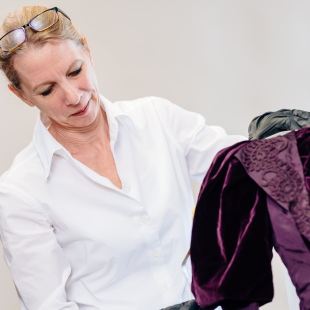
Prof. Dr. Kerstin Kraft is a full-time Professor in the Department of Cultural Studies under the Institute for Art / Music / Textiles at Paderborn University (Faculty of Arts and Humanities). Her work bridges fashion, textiles, material culture, and exhibition analysis. Research Priorities: Basic textile phenomena and fashion theory Object-based clothing research Exhibition design and evaluation Historical analysis of European fashion Recent publications focus on textile methodologies, fashion in the Vormärz period, and collaborative research in museum settings. Kraft also teaches courses in Fashion Textile Design , 20th-century fashion, and Power and Splendor .
Christiane Ern-Heinzl is a Professor at the Peter Behrens School of Arts, University of Applied Sciences Düsseldorf, specializing in Design and Construction with a focus on structural interior design. Her academic work bridges architectural theory and practical building technology. Current academic affiliation (since 2011) Teaching areas: Architectural design, construction fundamentals, interior spatial concepts Previously held roles: Head of Building Department in Solothurn (2009–2011), RWTH Aachen visiting professor (2007–2008) Research interests center on: Integration of design and construction principles Material science applications in architecture Structural detailing for functional spaces Sustainable building practices using wood and concrete Her publications from 2000–2014 emphasize residential projects , educational architecture , and material innovation , with notable projects like the Wallierhof Education Center and argonauten G2 office expansions. Scientific recognition includes: 2017 Swiss Grand Award for New School Building in Bettlach 2008 Murjahn Medal for argonauten G2 renovation Multiple competition successes in Switzerland and Germany Teaching activities span undergraduate and graduate design seminars , construction fundamentals lectures , and thesis supervision , with recent projects like the Düsseldorfer Flughafen lounge design (2018).
Prof. Dr.-Ing. Michael Heber is a Professor of Engineering Design and Plastics Technology at the Niederrhein University of Applied Sciences, affiliated with the Department of Mechanical and Process Engineering. He has been serving in this role since September 1, 2011, and is actively involved in teaching and research in plastics technology, vehicle design, and fiber composites. Full Name: Michael Heber Institution: Niederrhein University of Applied Sciences Department: Design Theory and Plastics Technology Academic Rank: Professor Email: Michael.Heber@hs-niederrhein.de His research focuses on advanced plastics processing, particularly in fiber-reinforced composites, process simulation, and lightweight construction. He has led numerous projects in vehicle construction and material optimization, securing over 1.5 million euros in third-party funding from 2012 to 2017. His work bridges industrial application and academic research, with a strong emphasis on practical engineering solutions. The most recent publications (2012–2017) highlight ongoing work in carbon fiber thermosets, fiber orientation modeling, and innovative molding techniques. These articles reflect a consistent trend in material characterization, simulation of compression molding, and the application of advanced composites in automotive contexts, especially in lightweight interior components and structural design. While no formal scientific awards are listed, his extensive publication record and leadership in funded research projects underscore his professional recognition. He has also contributed to engineering education through outreach lectures on Formula Student and the integration of mathematics in race car design. Prof. Heber has advised various industrial projects and academic initiatives, particularly in the Formula Student program and applied research in plastics processing. He has secured significant external funding, demonstrating strong project acquisition and management capabilities. His industrial experience prior to academia—spanning roles at Whirlpool and Bericap GmbH—has informed his applied research approach. He leads applied research in plastics technology and engineering design, collaborating with industry partners and integrating student projects into real-world engineering challenges. His work supports innovation in manufacturing processes and material applications, particularly in the automotive sector.
Jens Schirmer is a Researcher at the Institute of Precision Engineering and Electronic Design, Technische Universität Dresden. His work focuses on precision engineering construction, modeling and simulation of mechanical systems, and development of medical device technology. He is actively involved in designing specialized 3D printers and miniature actuators inspired by biological systems. Current research includes modeling watch movement gears Development of innovative 3D printers for silicone prostheses Creation of cooling compression bandages Design of automotive interior control elements His publications emphasize mechanical optimization, FEM simulations, and timing belt drive systems. He teaches courses on construction fundamentals, product development, and actuator technology at TU Dresden. Current projects include: Robust optimization of watch movement gears 3D printer development Silicone prosthesis manufacturing technology Automotive control element design
Philipp Oswalt is Professor of Architectural Theory and Design at the University of Kassel, where he has been teaching since 2006 (with a leave period from 2009-2014 when he served as Director of the Bauhaus Dessau Foundation). He previously held visiting professorships at Brandenburg University of Technology and has been deeply involved in architectural research, curation, and practice. His work bridges architectural theory, historical research, and practical urban interventions, with notable projects including the Volkspalast cultural use of the former Palace of the Republic in Berlin and the critical learning site at Potsdam's Garrison Church. Oswalt's research spans architectural theory, urban development (particularly shrinking cities), Bauhaus history and legacy, ecological building practices, and memory culture related to historical trauma. He has led major research projects including 'Shrinking Cities' for the Federal Cultural Foundation (2002-2008), research on the Bauhaus Dessau under Hannes Meyer, and more recently investigations into rural mobility and ecological building history. His work often intersects with political and social questions, particularly regarding national identity in architecture and the relationship between historical memory and contemporary building practices, as evidenced by his critical examination of reconstruction projects like the Berlin Palace/Humboldt Forum and Potsdam Garrison Church. His publications reveal a consistent engagement with the relationship between architectural form and socio-political contexts, with recent works focusing on rural mobility transitions, the political dimensions of architectural reconstruction, and the critical examination of Bauhaus legacy. His research demonstrates how architectural projects can serve as sites for negotiating historical memory, political identity, and future-oriented planning. European Prize for Urban Public Space 2006 (Special Prize) for Volkspalast project Hessian University Prize for Excellence in Teaching 2021 Hessian State Prize for Architecture and Urban Planning 2023 German Environmental Foundation Prize 'Für die Umwelt lesen' Hans-Schaefer Prize 2001 German Photo Book Prize Silver 2014 Oswalt has supervised numerous doctoral students through the Bauhaus Dessau Foundation's doctoral college and continues to mentor students at the University of Kassel. His research has been supported by major funding bodies including the German Research Foundation (DFG), the Federal Ministry for the Environment, and the Federal Office for Building and Regional Planning. He has also been instrumental in founding the Research Center for the History of Ecological Building at the University of Kassel (2024) and the critical learning site 'Lernort Garnisonkirche' in Potsdam (2020). He maintains an active public presence, frequently contributing to major media outlets and participating in critical debates about architecture, urban development, and historical memory. His work demonstrates how architectural theory can engage directly with pressing contemporary issues including energy transition, rural depopulation, and historical reckoning.