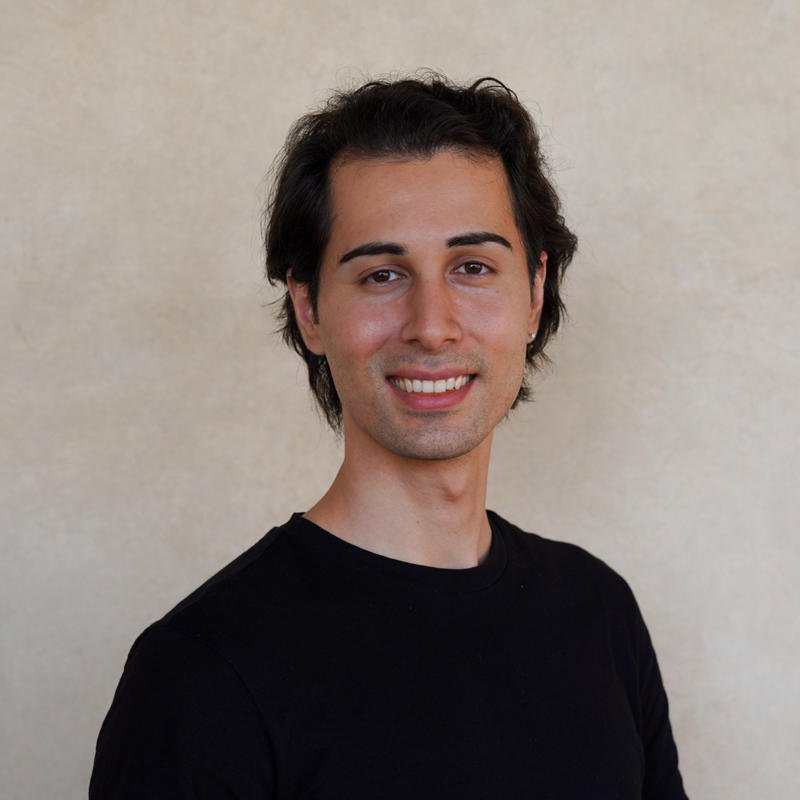
Aziz Bagadirov is a Researcher at the European University Institute's Department of Political and Social Sciences. His work spans critical and political theory, focusing on systemic issues like social justice, inequality, and welfare state reforms. Primary research areas: Critical theory, Political philosophy, Social justice Recent output: 2024 thesis on human flourishing and structural injustice
Johanna Ohlsson is a Researcher and Teacher at Uppsala University's Institute for Russian and Eurasian Studies, holding a PhD in Ethics. Her research focuses on human rights in democratization processes within authoritarian states, justice theory applications in Arctic sustainable development, and ethical dimensions of peacebuilding. She examines interconnections between justice, sustainability, political theory, and administrative ethics. Education: PhD in Ethics Research Focus: Ohlsson's work spans justice theory (including intergenerational, transnational, and postcolonial justice), human rights implementation, sustainability ethics, and peacebuilding frameworks. Her research analyzes how ethical principles translate into public administration and policy, particularly in challenging geopolitical contexts like the Arctic and post-conflict regions. Publications: Her recent works (2020-2023) demonstrate strong thematic coherence across justice theory applications, with 13 publications in 2023 alone focused on conceptual frameworks for justice in social sciences, Arctic governance, and decolonial approaches. Earlier works establish foundations in administrative justification and peacebuilding ethics. Awards: No scientific awards mentioned in source material. Additional Activities: Co-edited multiple academic volumes including 'Theorizing Justice: A Primer for Social Scientists' (2023) and 'Arctic Justice: Environment, Society and Governance' (2023). Contributed to conference reports on African peacebuilding and reconciliation processes.
Dr Alasia Nuti is a Senior Lecturer at the Department of Politics and International Relations, University of York, since 2015. Her research integrates contemporary political theory with gender studies, postcolonial theory, and critical race theory, focusing on historical injustice, structural injustice, memory, immigration, and pluralism. PhD from the University of Cambridge, with Elizabeth Wiskemann Dissertation Prize (2016) and Lisa Smirl Prize (2016) MSc in Gender Research (with Distinction) from the London School of Economics and Political Science MA and BA in Philosophy (summa cum laude) from the University of Genova Her work investigates the normative significance of historical injustices and their contemporary implications. She has co-authored a groundbreaking book on containing illiberal views within political liberalism and explores intersections between feminist/LGBTQ+ activism and historical justice. Her publications address reparations for colonialism, ethics of migration, and feminist political theory. Awards include the Richard Rose Prize (2025), BIAPT Early Career Prize (2022), and Leverhulme Trust Research Fellowship (2025). ECPR Political Theory Prize Honorable Mention (2021) Richard Rose Prize (2025) BIAPT Early Career Prize (2022) Elizabeth Wiskemann Dissertation Prize (2016) Lisa Smirl Prize (2016) Leverhulme Trust Research Fellowship (2025) She supervises PhD students on topics like rectifying racial injustice, gender representation, and stateless groups' rights. Dr Nuti is an Associate Editor of Ethical Theory and Moral Practice and contributes to academic service through peer review and conference organization, including the BIAPT Political Theory Conference.
Atalia Omer is a Professor of Religion, Conflict, and Peace Studies at the University of Notre Dame's Keough School of Global Affairs and a core faculty member of the Kroc Institute for International Peace Studies. She specializes in the intersections of religion, nationalism, decolonial theory, and conflict transformation, with a geographic focus on Palestine/Israel, Africa, and diasporic communities. Her work critically examines peacebuilding practices, neoliberal frameworks, and the role of religious actors in justice movements. Omer holds a PhD in religion, ethics, and politics from Harvard University (2008). Her education includes fellowships at Harvard's Center for the Study of World Religions and the Weatherhead Center for International Affairs. Her research explores: Decolonizing methodologies in religion and peace studies Critiques of the 'harmony business' in institutional peacebuilding Jewish diasporic solidarity with Palestinians Intersectional analyses connecting race, religion, and nationalism Political theologies in settler-colonial contexts Her publications demonstrate consistent focus on deconstructing colonial legacies, with recent work examining white Christian nationalism, Afrofuturism, and the neoliberal co-optation of secularism. Awards include: Andrew Carnegie Fellowship (2017) Notre Dame Institute for Advanced Studies Fellowship (2011) Charlotte W. Newcombe Doctoral Dissertation Fellowship (2007) She teaches courses on Jewish politics, peace studies, religion in global affairs, and the Israeli-Palestinian conflict. As a senior fellow at Harvard Divinity School's Religion and Public Life initiative, she contributes to transnational scholarly networks on religion and conflict.
Katharina Kinder-Kurlanda serves as Professor at Alpen-Adria-Universität Klagenfurt (AAU), affiliated with the Institute for Educational Science and Educational Research and the Digital Age Research Center (D!ARC). Her work bridges digital humanities, educational science, and critical technology studies, focusing on the societal implications of algorithmic systems and data practices within European contexts. Her research centers on Algorithmic Bias detection in AI systems, particularly large language models, and develops frameworks for Fairness in Machine Learning through ethnographic interventions. She investigates Privacy and Data Protection challenges in social media research, explores Open Science opportunities for researcher-subject relationships, and contributes to European AI Regulation through interdisciplinary perspectives on value alignment. Her methodology emphasizes sociotechnical approaches that uncover power dynamics in datafication processes and algorithmic governance. Recent publications reveal consistent focus on bias quantification in language models (2025), ethnographic fairness interventions in machine learning (2024), and European value alignment in AI regulation (2022). Her work demonstrates increasing engagement with Web Science conference leadership and methodological innovations in data studies, while maintaining critical attention to ethical dimensions across all research domains. She leads significant research initiatives including the Marie Skłodowska Curie Innovative Training Network NoBIAS: Artificial Intelligence without Bias (2020-2024) and the Center for Advanced Internet Studies (CAIS) project on Open Science: New Opportunities for the Relationship between Researchers and Researched Subjects? (2020-2021). Her grant portfolio reflects strategic focus on interdisciplinary training networks and ethical framework development for emerging data practices. As core faculty at D!ARC, she contributes to Klagenfurt's interdisciplinary hub for digital transformation research, collaborating across computer science, social sciences, and humanities to address contemporary challenges in algorithmic societies through team-based projects and methodological innovation.
Kate Levy is an Assistant Professor of Practice of Media and Communications at Drew University. She previously served as the Stuart B. and Barbara Padnos Distinguished Artist-In-Residence at Grand Valley State University (2023–2024) and as Co-Director of the Youth Documentary Workshop at Educational Video Center (2019–2021). Her work centers on exposing systemic injustices through documentary films, photography, and multimedia installations. Research Interests Kate's practice combines investigative journalism and historical research to explore intersections of power structures, cultural narratives, and the relationship between everyday life and catastrophic events. Her projects focus on water access, environmental and economic justice, police violence, immigration, and education reform. Recognition 2017 Patagonia Works Grant 2018 MacDowell Fellowship Her award-winning work has been exhibited nationally and contributed to exposing the Flint Water Crisis through collaboration with the ACLU of Michigan. She works extensively with non-profits and media outlets on community-driven storytelling.
Majsa Allelin serves as an Associate Senior Lecturer at Halmstad University's School of Education, Humanities and Social Sciences, where she investigates the intersection of educational systems, social reproduction, and welfare state dynamics with particular focus on Swedish contexts. Her research examines: Marketization's impact on everyday school life and student subjectivity Economic and social reproduction mechanisms within welfare systems Learning processes in marginalized communities Critical analyses of educational commodification Transformations in the Swedish welfare model Recent publications reveal consistent engagement with neoliberal education policies, exploring how market logics infiltrate schooling through grading practices, aesthetic education, and institutional restructuring. Her ethnographic work in both charter and municipal schools documents how students navigate profit-oriented educational environments while her current projects analyze innovation work as learning processes within organizational contexts. Allelin actively participates in the University of Gothenburg's multidisciplinary program examining educational pathways among youth in vulnerable neighborhoods, highlighting informal learning networks that compensate for formal schooling deficiencies. While specific grant details and student supervision records aren't publicly documented, her collaborative research demonstrates sustained commitment to addressing systemic educational inequalities through critical sociological frameworks.
Mary Travis Bassett is the FXB Professor of the Practice of Health and Human Rights and Director of the FXB Center for Health and Human Rights at Harvard University. She has over 30 years of experience in public health, with a focus on health equity, structural racism, and policy reform. Harvard T.H. Chan School of Public Health Former Commissioner of Health for New York City Program Director at Doris Duke Charitable Foundation Education: B.A. in History and Science from Harvard University M.D. from Columbia University's College of Physicians and Surgeons M.P.H. from the University of Washington Her research examines structural racism , reparations , wastewater-based epidemiology , and political determinants of health . She uses interdisciplinary methods to address health disparities globally and locally. Recent publications highlight trends in wastewater surveillance for equity, reparations as public health interventions, and democratic threats to health outcomes. Her work bridges epidemiology, policy analysis, and global health ethics. She collaborates with institutions like the Robert Wood Johnson Foundation and has influenced policies on racial equity , pandemic response, and conflict health . Current projects include equity-centered infectious disease surveillance frameworks and health rights advocacy.
Dorota Golańska is an Associate Professor at the Department of Cultural Studies, Faculty of Philology, University of Łódź, Poland. As Prorektorka (Vice-Chancellor) for science at the University of Łódź, she bridges academic research with institutional leadership. Current affiliations: University of Łódź (Faculty of Philology, Department of Cultural Studies) Academic rank: Associate Professor Her research explores intersections of political violence , feminist theory , new materialism , and cultural memory , with a focus on Israeli-Palestinian conflict, Holocaust memorials, and eco-art practices. She employs posthumanist and diffractive methodologies to analyze violence's material-semiotic dimensions. Recent publications examine slow violence in the West Bank, urbicide as political strategy, and synaesthetic perception in memorial art. Her co-edited volume Investigating Cultures of Equality (2022) proposes frameworks for socially responsible knowledge production. Key themes across her work include: Material geographies of colonialism Gendered approaches to structural violence Artivist responses to trauma Countermonumental aesthetics Relational violence conceptualization Mnemonic practices in post-conflict societies
Raoul Lievanos is an Associate Professor of Sociology and Director of Undergraduate Studies at the University of Oregon (UO). He holds affiliations with the Environmental Studies Program (2017-present), the Department of Indigenous, Race, and Ethnic Studies (2020-present), and the University of Washington Center for Studies in Demography and Ecology (2014-present). His work bridges sociology, environmental studies, and urban planning. Education: A.A. in Liberal Arts (Allan Hancock College, 2002), B.A. in Sociology (Fresno State University, 2004), M.A. (UC Davis, 2007), Ph.D. in Sociology (UC Davis, 2013), Graduate Certification in Air Quality and Health (UC Davis, 2010). Lievanos focuses on environmental and housing market inequalities, social movements, and policy processes related to environmental justice. His research emphasizes relational and intersectional approaches, cumulative pollution burden, energy injustice, and the political dimensions of environmental policy. Current projects include a book on riskscapes and critical race urban-environmental sociology. Recent publications highlight socio-spatial challenges of climate change, racialized vulnerability to pollution, and transportation equity. He employs mixed methods, including spatial analysis, quantitative modeling, and qualitative research, to examine how race, class, and environmental hazards intersect. Professional engagement includes editorial roles for Sociological Perspectives , Environmental Sociology , and the Cambridge Journal of Regions, Economy and Society . He served on ASA committees and was elected Chair-Elect of the Environmental Sociology Section (2023).
María Cristina de la Cruz Ayuso is a Professor of Philosophy and senior researcher at the Pedro Arrupe Human Rights Institute at the University of Deusto, where she also serves as Director of the Deusto International Research School. She is affiliated with the Faculty of Social and Human Sciences and Department of Social and Human Sciences at the University of Deusto, a prestigious Jesuit institution in Spain. With an extensive academic career spanning over two decades, she has established herself as a leading scholar in philosophy, ethics, and human rights. Her research interests encompass Ancient Philosophy, Moral Philosophy, and Research Ethics, with a particular focus on exploring concepts such as responsibility, deliberation, compassion, and inequality. A distinctive aspect of her work involves examining the bridge between philosophy, poetry, and art, with special attention to authors like Eduardo Chillida, José Ángel Valente, and María Zambrano. Her recent publications demonstrate her continued engagement with contemporary philosophical issues, including credibility, phenomenology of urban spaces, and the intersection of human rights with scientific policy. Professor de la Cruz Ayuso has written and edited 22 books and over 100 articles and book chapters, reflecting her prolific scholarly output. Her work shows a clear trajectory from early explorations of María Zambrano's philosophy to current investigations of ethical dimensions in solidarity economy, financial inclusion, and gender equality. Her research demonstrates strong interdisciplinary connections between philosophy, human rights, and social policy. She has supervised numerous doctoral and master's theses, demonstrating her commitment to academic mentorship. Her conference presentations span multiple countries and address diverse topics including ethics in research, human rights, solidarity economy, and philosophical concepts related to social justice. Her work shows consistent engagement with both theoretical philosophical questions and their practical implications for social policy and human rights.
Andrea Ernst-Vintila is an Associate Professor at the University of Reims Champagne-Ardenne, affiliated with the Cognitive Psychology Laboratory (C2S EA 6291) and the Health Socialization research unit. Her work bridges social representations theory with societal norms, focusing on justice, labor dynamics, and the cultural significance of the Champagne region, particularly in luxury and winemaking contexts. Her research explores neurocognitive effects of alcohol, public health implications of drinking behaviors, and sociopolitical dimensions of normative systems. She has contributed to validating psychological scales for assessing future consequences of actions and examined social norms through the Black Sheep Effect in alcohol-related contexts. While her publications emphasize theoretical and empirical analyses of social representations, her collaborative work includes international conferences addressing sustainable development, psychosocial impacts of urban land use, and interdisciplinary intersections between psychology and economics.
Pragya Agarwal is a behavioural and data scientist serving as Visiting Professor of Social Inequalities and Injustice at Loughborough University, holding a PhD from The University of Nottingham and MA from The University of York. Her career includes senior academic roles globally with fellowships from Leverhulme Trust, Royal Society, British Academy, Churchill Trust, British Library, Bodleian Library, and Fulbright Commission. Her educational foundation comprises a Master of Arts from the University of York and Doctor of Philosophy from the University of Nottingham, establishing her expertise in interdisciplinary social science research. Agarwal's research centers on the science of bias and prejudice, examining systemic inequalities across legal systems, artificial intelligence, and societal structures. She investigates how bias impacts minoritised communities through legal frameworks and algorithmic design, while her current work on feminist cartographies explores archival silences and historical erasure. Her methodology uniquely integrates personal narrative, historical analysis, and contemporary data to address gender, race, and social justice issues with empirical rigor. Her distinguished recognition includes the Transmission Prize for making complex scientific ideas accessible and Crucible NESTA award for innovative interdisciplinary work, alongside these major fellowships: Leverhulme Trust Fellowship Royal Society Fellowship British Academy Fellowship Churchill Trust Fellowship Fulbright Commission Fellowship British Library Eccles Centre Fellowship Bodleian Library Sassoon Fellowship for Black and South Asian History Vartan Gregorian Centre for Humanities Fellowship at NYPL Agarwal receives research funding from British Council, Society of Authors, and Royal Society of Literature. As founder of The 50 Percent Project research think-tank, she leads global inequality analysis while maintaining significant media engagement through The Guardian, New Scientist, Wired, BBC, NPR, and major literary festivals including Cheltenham and Edinburgh.
Andrew Pierce serves as Associate Professor of Philosophy and Director of Justice Studies at Saint Mary's College, based in Spes Unica 153 with contact email apierce@saintmarys.edu. His academic leadership spans both departmental instruction and interdisciplinary program direction. His educational background includes: PhD from Loyola University Chicago MA from Michigan State University BA from Michigan State University Dr. Pierce's research critically examines intersections of race, power, and social structures through four primary lenses: Systemic analysis of racial oppression Philosophical foundations of social justice movements Critical race theory applications in education Community engagement pedagogies His publication trajectory reveals evolving scholarly focus from foundational identity theory (2012 monograph) toward urgent contemporary analyses of racial justice movements and urban equity. Recent works demonstrate methodological consistency in applying critical theory to real-world inequities, particularly through examinations of Black Lives Matter and anti-gentrification frameworks. Philosophical humanism serves as recurring analytical anchor across his oeuvre. Dr. Pierce teaches core philosophy courses including Introductory Philosophy, Logic, and Philosophy of Law alongside Justice Studies curriculum, reflecting his dual departmental commitments.
Amin Ebrahimi Afrouzi is a Law & Philosophy Fellow at UCLA School of Law , where he teaches Legal Philosophy . His research spans Jurisprudence , Legal Interpretation , and the Ethics of AI . Previously, he held the Knight Digital Public Sphere Fellowship at Yale Law School’s Information Society Project. Education : JD and PhD in Legal Philosophy (UC Berkeley), BA in Rhetoric (UC Berkeley), MA in Philosophy (Oxford), MA in Classics (Cambridge) His work examines the intersection of law, philosophy, and technology, focusing on topics like accuracy vs sensitivity in judicial processes , egalitarianism in legal systems , and ethical implementation of AI in governance. Recent publications analyze AI judges , resource inequality in trials , and classical Chinese ethical frameworks . Scientific contributions include multiple AI and robotics patents (e.g., collaborative AI systems, robotic authentication methods). Awards include the Knight Digital Public Sphere Fellowship . He has presented at international venues like the Aristotelian Society’s Joint Session and Lisbon Legal Theory Workshop.