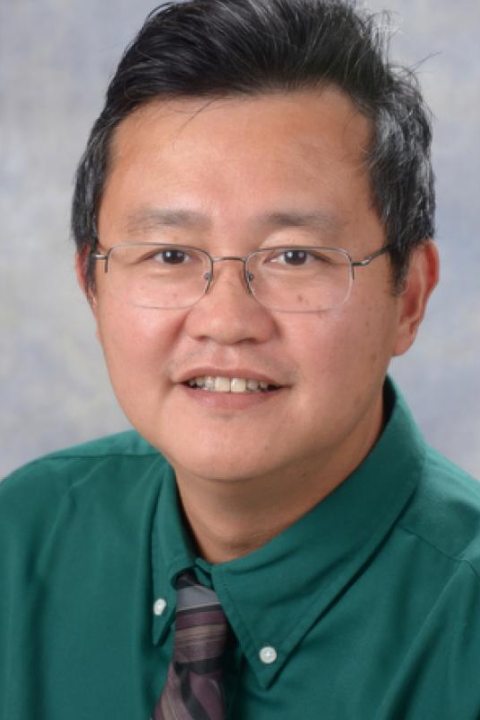
Dr. Bruce Peng is a Professor of Linguistics and Education at SUNY Oswego, where he teaches TESOL methods and linguistics courses. He previously served as Director of the Linguistics Program (2009–2015). His research focuses on clinically rich teaching, language instruction, urban school dynamics, and phonological phenomena across languages like Kikuyu, Warao, and English as a second language. Ph.D. in Linguistics, University of Arizona (1992) MA in TESOL, Northern Arizona University (1987) BA in English, Chongqing University (1982) His work bridges linguistics and education, emphasizing practical applications for teacher training. He co-authored a textbook manuscript on content-based TESOL methods and secured a $553,488 grant (2012–2014) to develop clinically rich teacher preparation programs. Recent conference presentations highlight challenges in transforming TESOL education through clinical models. Awarded grants include the 2012–2014 teacher preparation initiative. His advising and grants underscore a commitment to urban education equity and interdisciplinary collaboration. Active in linguistics and education communities, he has contributed to programs at institutions in China, Singapore, and Hong Kong.
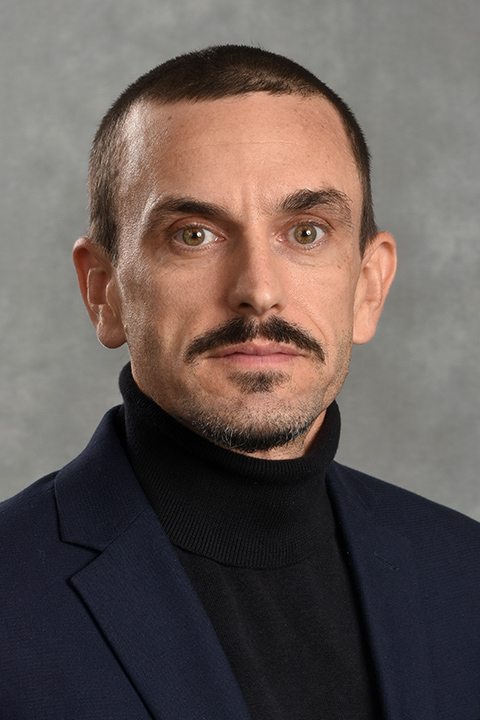
Benjamin Scherrer is an Assistant Professor in the Curriculum and Instruction Department at SUNY Oswego. His research focuses on decolonial educational frameworks, climate justice pedagogies, and postcolonial studies. He critically examines the intersections of colonial legacies, environmental crises, and global educational systems. His work often addresses questions of equity, resistance, and transformative learning. Research Interests : Scherrer’s scholarship integrates climate change education with anticolonial methodologies, exploring how educational systems can disrupt historical injustices. He investigates themes such as floodwater pedagogies, anti-colonial relations in environmental studies, and the role of storytelling in academic spaces. His recent projects emphasize civic education in contexts of mass migration and the praxis of interdisciplinary knowledge co-creation. Publications Overview : Scherrer’s articles (2019–2025) consistently engage with global educational inequities, colonialism’s lingering impacts, and climate justice. He critiques traditional academic structures (e.g., ‘undercommons’ theory) while proposing decolonial alternatives. His 2023–2025 work highlights innovative pedagogical approaches rooted in ecological and cultural resilience. Advising & Grants : No specific grants or advising details are provided in the text. His lab/team affiliations remain unspecified.
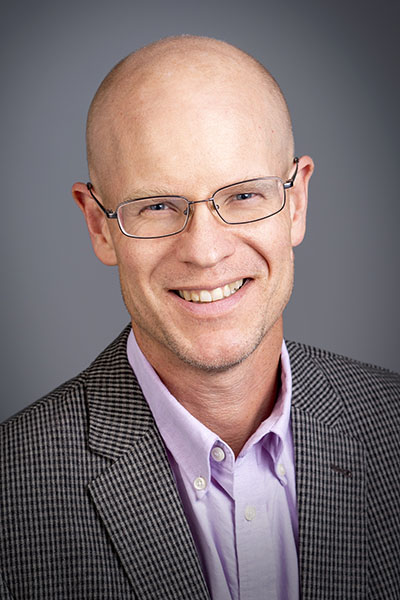
Dr. Alex Hunt is the Vincent/Haley Endowed Professor of Western Studies at West Texas A&M University (WTAMU), affiliated with the Sybil B. Harrington College of Fine Arts and Humanities and the Department of English, Philosophy & Modern Languages. He has been at WTAMU since 2002 and held his endowed professorship since 2012. Hunt earned his B.A. and M.A. in English from Colorado State University and a Ph.D. in English from the University of Oregon. His research focuses on Western American literature, environmental studies, and borderlands narratives, with a particular interest in ecological storytelling, regional identity, and the intersection of literature with historical and cultural contexts. He has authored/co-authored over 20 journal articles and book chapters, including works on Annie Proulx, Cormac McCarthy, and Rudolfo Anaya. Hunt also edited Postcolonial Green (2010) and co-edited The Geographical Imagination of Annie Proulx (2008). His current projects include a biography of Cornelia Wadsworth Ritchie Adair. Hunt's teaching spans 20th-century US literature, environmental writing, and critical regionalism. He has been honored with the H. Bailey Carroll Award (Texas State Historical Association), the Ruth Leggett Jones Award (West Texas Historical Association), and the prestigious Texas A&M System Regents Professor title (2020). His work often bridges literature, history, and environmental ethics, reflecting his commitment to interdisciplinary scholarship.
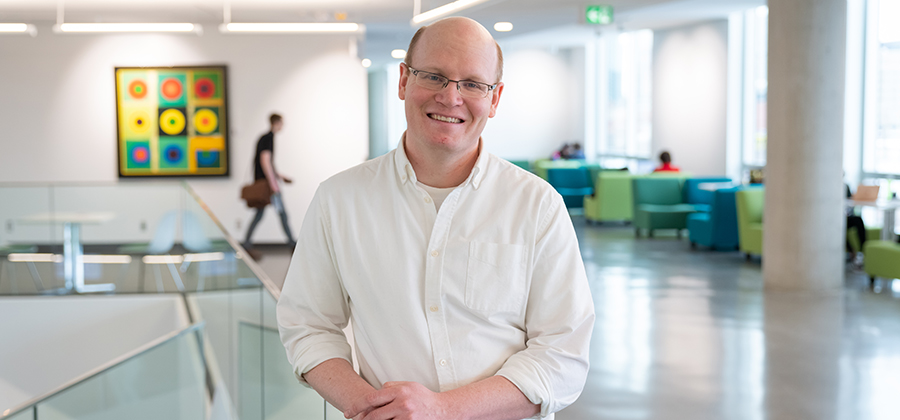
Dr. Craig Blatz is an Associate Professor in the Department of Psychology at MacEwan University, where he has worked since 2010. He holds a PhD from the University of Waterloo and a BA (Honours) from the University of Alberta. His research focuses on political psychology, examining how collective policies shape individual psychology and how core motivations influence political beliefs. Key areas of interest include multiculturalism, political apology, polarization, collective protest, stereotyping, and discrimination. Education: PhD in Psychology, University of Waterloo BA Honours in Psychology, University of Alberta Dr. Blatz’s research lab actively engages students in diverse topics, with a common thread exploring the interplay between societal structures and individual behaviors. His work bridges conservative, liberal, libertarian, and other ideological perspectives to uncover insights into political attitudes and group dynamics. His publications analyze themes like historical injustices, ideological motivations behind racism, and the psychological effects of government instability. Recent work emphasizes the role of official apologies in improving intergroup relations and perceptions of justice. Advising & Grants: Dr. Blatz supervises senior students’ independent studies and maintains an active research lab fostering student participation. No specific grants are mentioned, but his research is consistently output-driven. Labs/Teams: An active research lab at MacEwan University supports collaborative student projects on political psychology and social dynamics.
Dr. Olga Marques is an Associate Professor and Graduate Program Director in the Department of Criminology and Justice at Ontario Tech University’s Faculty of Social Science and Humanities. She holds a PhD in Criminology from the University of Ottawa and an MA in Sociology from the University of Windsor. Her research focuses on gender, sexuality, and carceral systems, with a critical lens on anti-colonial criminology, Indigenous justice, and the policing of marginalized communities. Key areas include sexual deviance, sex work regulation, women’s prison experiences, and structural violence against Indigenous peoples. Teaches courses on gender/justice studies, race in criminal justice, and qualitative methods Supervises graduate research on topics like sexual labor, prison systems, and colonial epistemic violence Active in thug criminology and carceral necropolis theory Her publications analyze intersections of gender, race, and power across carceral institutions, media, and policy. Recent work critiques colonial legacies in criminal justice systems and advocates for transformative justice frameworks. She has presented at international conferences including the American Society of Criminology and the International Association for the Study of Sexuality. No scientific awards explicitly listed in text. Advising focuses on criminological topics with an emphasis on marginalized populations. No grants specifically mentioned in provided text.
Dr Zoe Staines is Senior Lecturer in Social Science at UQ, examining structural injustice through interdisciplinary research on welfare systems and policy impacts. As Co-Editor-In-Chief of the Australian Journal of Social Issues , she publishes on compulsory income management, remote workfare policies, and gender inequality. Her recent studies analyze UBI frameworks for economic security and critique conditional welfare programs. Research collaborations include government and NGO partnerships addressing Indigenous policy evaluation. Key publications investigate: Intersectional effects of income management Remote employment policy impacts Basic income as gender equity mechanism
Dani Linder is a Bundjalung, Kungarakany woman from Grafton, New South Wales, serving as a Senior Lecturer in Law at the University of Queensland's School of Law within the Faculty of Business, Economics and Law. She teaches "Foundations of Law" and "Law and Indigenous Peoples" courses. Dr. Linder holds a Bachelor of Laws from Griffith University, a Graduate Diploma in Legal Practice from The College of Law, a Master of Laws specializing in Corporate and Commercial Law and Practice from Bond University, and a Doctor of Philosophy in Law from Bond University. Her PhD thesis focused on "The Law and Policy of Indigenous Cultural Identity and Political Participation: A Comparative Analysis between Australia, Canada, and New Zealand". Her research centers on Indigenous self-determination and cultural identity, electoral law and policy reform, Indigenous political participation and representation, comparative constitutional law, and international human rights. Dr. Linder's work consistently addresses the intersection of Indigenous rights with constitutional frameworks, particularly focusing on mechanisms for Indigenous political representation and the impact of electoral laws on Indigenous communities. Her scholarship demonstrates a strong commitment to advancing First Nations justice through legal reform and constitutional recognition. Analysis of Dr. Linder's recent publications reveals a clear focus on Indigenous political representation, particularly through constitutional mechanisms like the proposed Voice to Parliament. Her work spans academic journals, book chapters, conference presentations, and media commentary, demonstrating both scholarly rigor and public engagement. The publications consistently address themes of Indigenous rights, electoral participation, constitutional recognition, and the intersection of gender with Indigenous political representation, particularly regarding Aboriginal women's experiences. 2017 Kathleen Fitzpatrick Laureate visiting Fellow for Comparative Constitutional Law at the University of Melbourne 2024 Indigenous Legal Research award for the Australian Legal Research Awards 2024 UQ BEL Academic Excellence Award for work supporting Equity, Diversity and Inclusion Dr. Linder serves on the Alternative Law Journal Editorial Board and the Advisory Board for the Australian Journal of Human Rights. She has been actively involved in the Senior Uluru Dialogue Leadership, holding cultural mandate for the Uluru Statement from the Heart. Her advocacy work includes providing expert advice to the UNSW Indigenous Law Centre's "Towards Truth" project and engaging with government bodies, legal associations, and international organizations including the United Nations Expert Mechanism on the Rights of Indigenous Peoples. Dr. Linder is available for Research Higher Degree supervision on topics related to Indigenous political participation and representation. As a member of the Senior Uluru Dialogue Leadership, Dr. Linder has traveled extensively throughout Australia engaging with Indigenous communities and leaders. Her work bridges academic scholarship with practical advocacy, connecting legal theory with real-world impact on Indigenous rights and representation.
Catherine Lu is a Professor at McGill University, specializing in International Relations and Political Theory. Her work focuses on structural injustice, colonialism, reconciliation, and global justice. She holds a PhD from the University of Toronto and has been affiliated with prominent institutions. Her research explores themes such as decolonization, cosmopolitanism, and the ethics of humanitarian intervention. Key works include Justice and Reconciliation in World Politics (Cambridge, 2017) and articles on structural injustice and reconciliation. Education: PhD, University of Toronto Lu has received major awards including the Friedrich Wilhelm Bessel Research Award (2018) and the Robert L. Jervis and Paul W.Schroeder Best Book Award (2018). Her work bridges normative theory with empirical analysis of global inequalities. She has contributed to debates on reparations, colonial legacies, and the moral foundations of international institutions. Current projects include exploring decolonization through a 'tragic view' of progress and reconciliation as non-alienation.
Elizabeth Barnes is a Professor of Philosophy and Director of Diversity, Equity, and Inclusion at the University of Virginia's Corcoran Department of Philosophy. She holds a B.A. from Davidson College and an M.Litt. and Ph.D. from the University of St. Andrews. Her research focuses on metaphysics, social and political philosophy, feminist philosophy, and ethics, with particular attention to intersections between these fields. Notable works include The Minority Body (2016) on disability theory and Health Problems (2023), which explores the nature of health. Barnes' work frequently engages with feminist, disability, and social justice frameworks. Her educational background includes: B.A. in Philosophy, Davidson College M.Litt. in Philosophy, University of St. Andrews Ph.D. in Philosophy, University of St. Andrews Barnes' research interests emphasize interdisciplinary connections, such as the metaphysics of social structures, the philosophy of race and gender, and normative questions in health and disability. Her articles address topics like medical gaslighting, conceptual analysis of health, and feminist metametaphysics. Her academic contributions include influential books and peer-reviewed articles that bridge metaphysical rigor with socially engaged philosophy. She maintains an active presence in scholarly discourse through podcasts and interviews, such as those featured on Converging Dialogues and New Books in Philosophy .
Kevin Dornbrack is a Doctoral Research Fellow in the Department of Social Anthropology at the University of Oslo. His research focuses on Chemical Anthropology, Toxicity, and Environmental Humanities, with a regional emphasis on South Africa. He holds a Master's degree in Environmental Humanities (University of Cape Town, 2022) and a Bachelor's in Anthropology, Religious Studies, and isiXhosa Communication (2016). His current PhD project investigates pesticide exposure in Western Cape agriculture, exploring intersections of structural inequities, health risks, and global toxin regulation. He has worked as a Research Consultant for Chemical Alert Africa and contributed to the SANOCEAN Project. His interdisciplinary approach combines political ecology, new materialism, and ethnographic methods. Key projects include analyzing pesticide use in South Africa’s vineyards and advocating for policy changes to address labor and environmental injustices. No specific scientific awards are listed, but his work emphasizes applied research for societal impact.
Dr. Joe Hoover is a Reader in Political Theory at Queen Mary University of London's School of Politics and International Relations. He holds a BA from the University of Colorado, MA from LSE, and PhD from LSE. His research bridges agonistic political theory and American Pragmatism, focusing on urban justice, human rights, and radical democracy. Dr. Hoover's work examines political concepts through the lens of urban environments, exploring legitimacy, justice, rights, and citizenship. His publications include 'Reconstructing Human Rights: A Pragmatic and Pluralist Inquiry in Global Ethics' (2016) and 'Global Politics: Myths and Mysteries' (2023). His recent work investigates gentrification injustice and human rights in urban contexts. He has received funding from the British International Studies Association, Käte Hamburger Kolleg, and City University London. Dr. Hoover currently supervises PhD students Luke Lavender, Estelle Broyer, and Emily Morrison, and has previously supervised Marija Antanaviciute, Sophie Crowe, and Sahra Taylor.
Ruth R. Faden, PhD, MPH, is the founder and inaugural Philip Franklin Wagley Professor of Biomedical Ethics at the Johns Hopkins Berman Institute of Bioethics. She served as the Institute’s Director from 1995 to 2016 and as its inaugural Andreas C. Dracopoulos Director (2014–2016). Currently, she works part-time at the FDA’s Office of the Commissioner. Her research focuses on structural justice theory, global food ethics, pandemic preparedness, women’s health, and ethical challenges in biomedical research. Education: PhD and MPH from the University of California, Berkeley; MA from the University of Chicago; BA from the University of Pennsylvania. Research interests include structural justice, ethical challenges in food systems, learning health systems, vaccine policy, and advancing equitable inclusion of pregnant women in biomedical research. She co-authored Structural Injustice: Power, Advantage, and Human Rights (Oxford University Press, 2019/2024) and Social Justice: The Moral Foundations of Public Health and Health Policy . Awards: Recipient of ASBH and PRIMR Lifetime Achievement Awards (2011), elected to the National Academy of Medicine, and fellowships at the Hastings Center and APA. Leadership: Founded the Berman Institute, co-launched the Global Food Ethics & Policy Program (7 by 5 Agenda), and co-founded the Hinxton Group and Second Wave initiative. Key projects include PHASES, PREVENT, and the eSchool+ Initiative during the pandemic.
Kathleen Neal is a Senior Lecturer in the Department of History at Monash University, within the Faculty of Arts. She holds dual PhDs in History (Monash) and Anatomy, Cell Biology, and Physiology (University of Melbourne). Her expertise spans late medieval political culture, communication, diplomacy, rhetoric, and gender studies. Neal has held visiting fellowships at the University of Lincoln and the Oxford Centre for Research in the Humanities, and is a Fellow of the Royal Historical Society. Neal’s research focuses on thirteenth-century English governance, including projects like The King's Spies: Diplomacy and Espionage in Thirteenth-Century England (with Cardiff University) and Addressing Injustice in the Medieval Body Politic (funded by the ARC). She is also co-editing Feeling the Middle Ages: An Interdisciplinary Approach to Medieval Devotional Practice with the University of Padova. Her teaching spans undergraduate and postgraduate courses on medieval history, slavery, warfare, and justice. She is an award-winning educator, recognized by the Australian Awards for University Teaching, Monash Student Association, and Vice-Chancellor’s Awards. Neal’s pedagogical innovations include team-based public history assessments and interdisciplinary approaches to medieval studies. Neal has published widely on medieval letters, governance, and gender, including chapters in Addressing Injustice in the Medieval Body Politic (Amsterdam UP, 2023) and articles on royal diplomacy and noblewomen’s roles. Her work contributes to SDGs related to gender equality and sustainable governance. Neal actively engages in public scholarship through media interviews (e.g., ABC Radio) and editorial roles for journals like Ceræ . She has reviewed for History Australia , Heliyon , and Eras , and delivered public lectures on medieval topics.
Professor Nadine El-Enany is a Professor of Law at the University of Kent’s Kent Law School. Her research focuses on migration law, EU law, protest movements, and racial state violence, with current projects addressing race and justice in death-in-custody cases and environmental harm’s impact on health inequalities. She holds a Philip Leverhulme Prize (2021) and her book (B)ordering Britain: Law, Race and Empire won the Socio-Legal Studies Association prize in 2021. Her work critiques colonial legal frameworks, examining how law perpetuates racial and spatial injustices. She has contributed to media outlets like the Guardian and Open Democracy, and her interdisciplinary approach bridges legal theory, postcolonial studies, and social justice advocacy. El-Enany’s publications span books, edited volumes, and peer-reviewed articles, addressing topics such as Brexit’s imperial echoes, Grenfell Tower’s legal implications, and refugee rights in Fortress Europe. Her recent research engages with colonial violence in Palestine and Rwanda, environmental law’s role in racialized health disparities, and creative protest tactics against oceanic colonialism. She also serves as editor for works like After Grenfell and Justice, Resistance and Solidarity , emphasizing solidarity in legal struggles. El-Enany’s scholarship is characterized by its intersectional lens, linking legal systems to broader structures of power, colonialism, and systemic racism. Her work underscores law’s complicity in perpetuating injustice while advocating for transformative legal frameworks aligned with equity and decolonial goals.
Nadja Tadic is an Assistant Professor in the Department of Linguistics at Georgetown University and currently serves as Director of Undergraduate Studies. Her research focuses on discourse analysis in adult second language classrooms, examining how inclusion/exclusion dynamics and systemic inequities manifest in language education settings. She co-edited the book Critical conversation analysis: Inequality and injustice in talk-in-interaction , and her work appears in journals like Applied Linguistics and Language in Society . Her academic appointment is within the College of Arts and Sciences, emphasizing interdisciplinary approaches to sociolinguistics. Dr. Tadic's research integrates conversation analysis with critical pedagogy, exploring how educators and learners collaboratively construct (and sometimes challenge) exclusionary ideologies through interactional practices. She has conducted video-based studies on topic shifts, raciolinguistic ideologies, and teacher-student rapport-building in multilingual classrooms. Her recent work (2023–2025) extends into digital spaces, investigating online language teacher education and webinar interaction patterns. Earlier studies (2016–2020) highlighted themes such as learner emotional engagement, multimodal stance signaling, and classroom rapport management. While no specific grants or awards are noted in the provided materials, her publications reflect sustained engagement with critical perspectives in applied linguistics. Dr. Tadic has mentored numerous scholars through her editorial work and interview-based discussions with prominent figures in the field, including Dr. Richard Donato and Dr. Bambi Schieffelin. Her research lab focuses on intersectional language practices, though specific team collaborations remain unspecified in the source text.