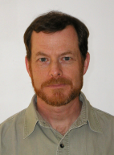
James Stewart is a Professor at Queen's University's School of Computing. His research focuses on biomedical computing and surgical navigation systems. Education: Ph.D. in Computer Science from Cornell University (1992) Location: Office Goodwin 732 Contact: Phone 613 533-3156 Research Interests Professor Stewart's work bridges computer graphics, image processing, and medical applications. Key areas include: Computer-assisted surgical navigation 3D medical visualization Geospatial data representation Robust geometric computation Human-computer interaction in clinical settings Medical imaging uncertainty analysis Scientific Awards Best Poster Award (2013) for 'Image-guided Osteochondral Autologous Autografting of the Ankle' Publications His publications span multiple domains including: Computer graphics algorithms Medical imaging techniques Geospatial visualization Biomedical engineering applications Surgical navigation systems Robust geometric computation
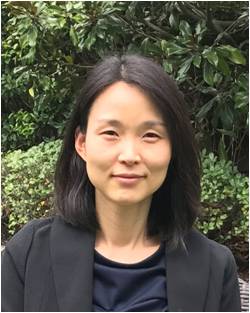
Doeun Choe is an Assistant Professor in the Department of Civil Engineering at New Mexico State University, where he has been serving since January 2021. His expertise spans the intersection of civil engineering, artificial intelligence, and structural reliability with applications to critical infrastructure systems. Education: Ph.D. in Civil Engineering/Structures (2007, Texas A&M University) M.S. in Architectural Engineering/Structural Engineering (2002, Inha University, South Korea) B.S. in Architectural Engineering (2000, Inha University, South Korea) Research Focus: Dr. Choe's work integrates Artificial Intelligence methodologies with traditional structural engineering to solve complex infrastructure challenges. His research in Probabilistic Modeling & Structural Reliability addresses corrosion effects on bridges and coastal structures, while his recent work focuses on Deep Learning applications for structural health monitoring of offshore wind turbines. The AISSRR research group he leads develops innovative approaches to enhance infrastructure resilience against extreme environmental conditions including seismic events and climate change impacts. Publication Trends: Dr. Choe's scholarly output demonstrates an evolving research trajectory from foundational reliability analysis (2008-2009 publications on corrosion effects) to advanced AI applications (2019-2021 work on deep learning for structural monitoring). His publications consistently address structural safety challenges through computational methods, with increasing emphasis on renewable energy infrastructure systems in recent years. The research spans civil engineering, computer science, and materials science disciplines. Academic Leadership: Dr. Choe leads the Artificial Intelligence for Structural Safety, Risk, & Reliability (AISSRR) research group at NMSU and has developed specialized coursework including the 'Artificial Intelligence for Civil Engineers' series (Machine Learning in Fall 2023 and Deep Learning in Spring 2024), which produces student projects applying AI techniques to real-world civil engineering problems.
Glen Bates is a Professor in the School of Health Sciences at Swinburne University of Technology , Australia. His research focuses on trauma, mental health, and psychological well-being, with a particular emphasis on social anxiety, complex PTSD, self-compassion, and resilience. He has a strong publication record and actively supervises PhD students across diverse topics in clinical and health psychology. His research interests span several interconnected domains: Clinical and health psychology, especially trauma-related disorders and mood disorders Social and personality psychology, focusing on stigma, resilience, and identity Applied and developmental psychology, including educational and workplace mental health Digital mental health interventions and telehealth applications Mechanisms of therapy such as emotion regulation, mindfulness, and nonattachment His recent publications reveal a consistent focus on understanding psychological mechanisms in anxiety, trauma, and resilience. The articles show strong use of advanced statistical methods (meta-analysis, structural equation modelling) and qualitative approaches (thematic analysis, phenomenological inquiry). Key themes include the measurement and treatment of complex PTSD, the role of self-compassion and emotion regulation in social anxiety, resilience among marginalized populations, and the impact of societal challenges like the pandemic and food insecurity on mental health. Scientific contributions include: Over 100 publications including high-impact journal articles Systematic reviews and meta-analyses advancing methodological rigor in trauma and anxiety research Development and validation of digital interventions for mental health Exploration of novel constructs such as nonattachment and their role in psychological development He has supervised numerous Doctoral (PhD) candidates, with projects covering areas such as EMDR therapy, digital mental health, intergenerational trauma, HIV resilience, and workplace stress. His grant funding includes projects on monitoring anxiety and depression nationally and on raising teacher status through social innovation. He leads a research program that bridges clinical psychology with public health and educational innovation. He is actively involved in research teams and collaborations, particularly in projects related to trauma, mental health interventions, and social innovation in education. His work often involves interdisciplinary collaboration across psychology, public health, and digital technology.
Maria Grazia Alaimo is a Researcher in the Department of Earth and Marine Sciences at the University of Palermo . Her work focuses on environmental geochemistry, atmospheric pollution analysis, and biomonitoring using plants, lichens, and human biological matrices. She has conducted extensive studies on trace element distribution in urban and industrial areas of Sicily. Current affiliation: University of Palermo Academic rank: Researcher Research Interests: Her research spans trace element geochemistry , urban air quality , and human exposure to heavy metals . Key areas include: Atmospheric pollution dynamics Soil and plant interactions Biomonitoring techniques Industrial contamination effects Health risk assessment Recent publications demonstrate expertise in PM10/PM2.5 analysis , lichen biomonitoring , and heavy metal accumulation in mushrooms and human hair . While no explicit awards or students are listed in available data, her work contributes to environmental health and pollution mitigation strategies.
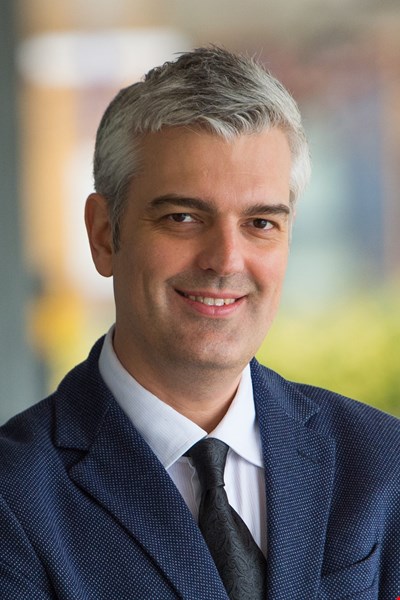
Dr. Sotirios Argyroudis is a Reader (Associate Professor) of Infrastructure Engineering at Brunel University London within the Department of Civil & Environmental Engineering, College of Engineering, Design and Physical Sciences. He leads the infrastructure risk and resilience research group and serves as Coordinator of the Horizon PORTAL project and deputy Scientific Coordinator of the Horizon/UKRI ReCharged project. He co-founded bridgeUkraine.org and co-leads metaInfrastructure.org, both initiatives focused on critical infrastructure recovery and sustainability. With over 20 years of experience, Dr. Argyroudis specializes in vulnerability, disaster risk, and resilience assessment of critical infrastructure exposed to multiple hazards including floods and earthquakes. His educational background includes: Graduate Certificate in Learning and Teaching, University of Surrey, UK (2021) PhD in Geotechnical Earthquake Engineering, Aristotle University of Thessaloniki, Greece (2010) BSc in Geology, Aristotle University of Thessaloniki, Greece (2008) MEng in Civil Engineering, Aristotle University of Thessaloniki, Greece (2000) Dr. Argyroudis' research focuses on infrastructure risk and resilience assessment under multiple hazards including earthquakes, floods, and climate change effects. His work spans vulnerability assessment of transportation networks, bridges, tunnels, and urban systems, with particular emphasis on developing frameworks for climate-resilient infrastructure. He integrates emerging technologies like AI and remote sensing to enhance infrastructure monitoring and decision-making processes. His research has significant applications in disaster risk reduction, post-conflict recovery, and sustainable infrastructure development aligned with UN Sustainable Development Goals. His recent publications demonstrate a clear trend toward integrating climate adaptation with infrastructure resilience, with increasing focus on multi-hazard approaches, digital technologies, and sustainability metrics. His work spans transportation infrastructure (railways, bridges, tunnels), energy systems, and urban networks, with growing emphasis on post-conflict recovery applications as seen in his bridgeUkraine.org initiative. The publications show strong international collaboration across Europe, North America, and Asia. Dr. Argyroudis has received notable recognition including: 2022 European Council on Computing in Construction (EC3) Thorpe Medal Top 2% most highly cited scientists for 2021, 2022, and 2023 (Elsevier/Stanford list) Fellow of the Higher Education Academy, UK (FHEA) Member of the Institution of Civil Engineers (UK), CEng, MICE Dr. Argyroudis actively supervises PhD students across multiple institutions including University Sains Malaysia, Aristotle University of Thessaloniki, and Democritus University of Thrace. His current research portfolio includes significant grants such as the Horizon Europe-funded PORTAL and ReCharged projects, the Brunel BRIEF AWARDS-funded CCRI project, and the HORIZON-INFRA-funded SCOUR&SHAKE project. He serves as a reviewer for EPSRC, the European Commission, and numerous scientific journals, contributing to the advancement of infrastructure resilience research globally. He is a key member of Brunel's Centre for Flood Risk and Resilience and the Research Group of Geotechnical and Environmental Engineering. Through his leadership of the PORTAL project and co-leadership of metaInfrastructure.org, he fosters international collaboration on sustainable and resilient infrastructure solutions. His work with bridgeUkraine.org demonstrates practical application of research to urgent global challenges, connecting academic research with real-world infrastructure recovery needs.
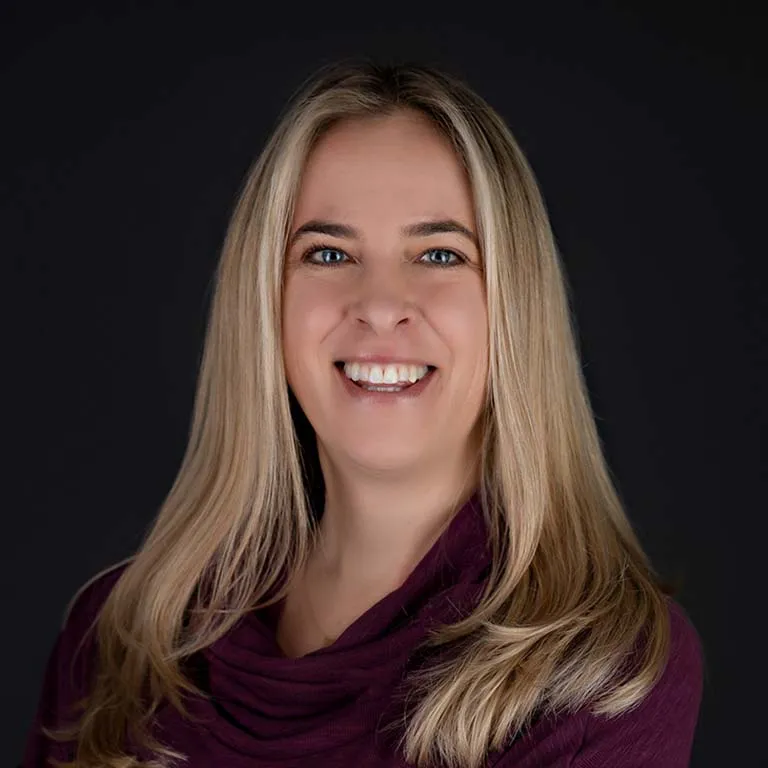
Dr. Andrea Baden is an Associate Professor in the Department of Anthropology at Hunter College, School of Arts and Sciences, and a Doctoral Faculty member at the CUNY Graduate Center. She directs the Primate Molecular Ecology Laboratory (PMEL) and contributes to the New York Consortium in Evolutionary Primatology (NYCEP). Her fieldwork in Madagascar focuses on the Ruffed Lemur Project, integrating ecology, genetics, and behavior. Hunter College, CUNY (2013–present) CUNY Graduate Center (Doctoral Faculty) New York Consortium in Evolutionary Primatology (Core Faculty) Her research explores how landscape features influence primate distribution, migration, and genetic diversity, linking these to social behavior evolution. Publications span journals like Nature Scientific Reports , Animal Behaviour , and American Journal of Primatology , with themes in landscape genetics, conservation, and behavioral endocrinology. Dr. Baden has received the Feliks Gross Endowment Award and a Fulbright Fellowship for her work. She teaches human evolution, primatology, and conservation biology, mentoring future scientists through fieldwork and lab research. PhD in Anthropology, Stony Brook University MA in Anthropology, Stony Brook University BA in Anthropology, University of Miami Postdoctoral Research, Yale University
Nadeem Abbas is a Senior Lecturer at the Department of Computer Science and Media Technology, Faculty of Technology, Linnaeus University, Sweden. He earned his PhD in Computer and Information Science from Linnaeus University and has been working with software systems since 2001. His primary research interests include Self-Adaptive Software Systems, Dynamic Software Product Lines, Software Reuse, Requirements Engineering, Software Architecture and Design, and Architectural Analysis and Reasoning. He is actively involved in multiple research groups including: AdaptWise - focusing on foundations and engineering of self-adaptive software systems Engineering Resilient Systems (EReS) Research Lab - investigating system resilience Smart Industry Group (SIG) - an interdisciplinary group focusing on production and product innovation His recent publications show a strong trend in self-adaptive systems with expansion into health inequality research and environmental monitoring applications. His work bridges theoretical software engineering with practical industrial applications, particularly evident in his survey of industry practices in self-adaptation. Nadeem teaches several courses including: 1DV532 - Starting Out with Java 1DV533 - Structured programming with C++ 1DV534 - Object-Oriented Programming with C++ 2DV600 - Foundations of Software Technology 4DV610 - Adaptive Software Systems 2DV604 - Software Architectures 1DV607 - Object-Oriented Analysis and Design using UML He currently supervises multiple research projects related to self-adaptive systems, architectural analysis tools, and health inequality mitigation through digital solutions. His research portfolio demonstrates strong connections between academic research and practical industry applications, particularly in software architecture and adaptation techniques.
Filippo Ubertini is Professor of Civil and Environmental Engineering at the University of Perugia, Italy, where he coordinates the International Doctoral Programme in Civil & Environmental Engineering and represents the University inside the FABRE national bridge-research consortium. He leads the Structural Health Monitoring Laboratory ( SHM-Lab ) and is the primary contact for assignments linked to smart-infrastructure research. Education: While explicit degrees are not listed in the supplied text, his role as programme coordinator and full professor implies completion of a PhD and habilitation in Civil Engineering. Research focus: Ubertini’s work sits at the intersection of smart materials and data-driven infrastructure management . He develops self-sensing cementitious composites doped with carbon micro-fibers or graphene nano-platelets that can measure strain, cracking and moisture in real time, turning whole bridges and buildings into distributed sensors. Complementary research threads include low-cost acquisition electronics, UAV & InSAR remote sensing, Bayesian & adversarial machine-learning algorithms for damage detection, digital twins and life-cycle cost analysis of bridge networks. Publication trends (2024-2025): Roughly 30 peer-reviewed items per year concentrate on (i) AI-enhanced operational modal analysis and transfer-learning damage classification across bridge populations, (ii) experimental characterisation of 3D-printed and cast self-sensing concrete, (iii) full-scale validation on curved box-girder, masonry and railway bridges, and (iv) integration of satellite radar data with numerical collapse simulations to predict residual service life of landslide-affected viaducts. Scientific awards & recognition: No specific prizes or fellowships are mentioned in the provided text. Doctoral supervision & grants: The text does not enumerate individual students or funded projects; however, his coordination of an international PhD programme and numerous experimental campaigns imply sizeable supervisory and funding responsibilities. Laboratory & team: Ubertini heads the SHM-Lab at UniPg, maintaining facilities for material mixing, 3D concrete printing, electrical impedance tomography, UAV photogrammetry, and large-scale structural testing, while collaborating with the European FABRE consortium and multiple EU projects.
Christine P. Hendon is an Associate Professor of Electrical Engineering at Columbia University's School of Engineering and Applied Science, where she also serves as Vice Dean for Engagement and Provost's Senior Faculty Teaching Scholar. She directs the Structure-Function Imaging Laboratory, which develops biomedical optics technologies for clinical applications. Her research focuses on developing optical coherence tomography (OCT) and near infrared spectroscopy (NIRS) systems for structure-function analysis of biological tissues, with particular emphasis on cardiac electrophysiology applications. The laboratory creates integrative optics and therapeutic probes to improve treatment of cardiac arrhythmias, developing platform optical imaging systems to enable structure-function analysis of biological organ systems. Professor Hendon's recent publications show expansion into women's health applications, with work on uterine tissue mechanics. Her research consistently bridges engineering innovation with clinical practice through collaborations with medical professionals. Presidential Early Career Award for Scientists and Engineers (PECASE) 2017 NSF CAREER Award NIH New Innovator Award Forbes' 30 under 30 in Science and Healthcare MIT Technology Review's 35 under 35 Innovators Fellow of Optica, SPIE, and AIMBE Elected to Optica Board of Directors (2025-2027) Professor Hendon maintains an active research program with multiple ongoing grants, as evidenced by her prestigious awards and recent patent issuances. She mentors a diverse group of students across electrical engineering, biomedical engineering, computer science, applied physics, and mechanical engineering disciplines. Her Structure-Function Imaging Laboratory provides students with opportunities to work on clinically relevant technologies from concept through to potential commercialization, with several patents recently issued from laboratory work. The laboratory maintains strong clinical partnerships that provide students with exposure to real-world medical challenges. Professor Hendon's laboratory develops optical imaging platforms that correlate tissue microstructure to electrical conduction and mechanical contraction, with the main clinical driver addressing unmet needs in cardiac electrophysiology. The lab has produced innovative therapeutic catheters and algorithms for improved guidance and monitoring of arrhythmia therapy.
Ghyslain Gagnon is a Professor in the Department of Electrical Engineering at École de technologie supérieure (ÉTS) in Montreal, Canada. He leads research activities within the LACIME – Communications and Microelectronic Integration Laboratory, focusing on cutting-edge developments in microelectronics, sensors, and communication systems. His work bridges theoretical research and practical applications across multiple domains including health technologies, wireless communications, and quantum engineering. Education: B.Ing. from École de technologie supérieure M.Ing. from École de technologie supérieure Ph.D. from Université de Carleton Professor Gagnon's research spans several interconnected domains with emphasis on Radiofrequency circuits and antennas, Microelectronics, Wireless communications, Sensors and monitoring systems, Machine learning applications, Health technologies, and Quantum engineering. His work demonstrates a strong commitment to translating theoretical concepts into practical solutions with real-world impact, particularly in the areas of health monitoring systems and advanced communication technologies. His recent publications reveal a clear trajectory toward increasingly interdisciplinary research, combining traditional electrical engineering with machine learning, health monitoring, and quantum technologies. The trend shows growing emphasis on practical applications in automotive safety systems, wireless communications for next-generation networks, and health monitoring technologies that leverage flexible electronics and novel sensor designs. Professor Gagnon has successfully supervised numerous graduate students through their doctoral and master's research, with recent theses focusing on smart hearing protection devices, machine learning applications, energy monitoring systems, and flexible sensor technologies. His supervision record demonstrates consistent productivity and relevance to contemporary engineering challenges. He is an active member of the LACIME research laboratory, which focuses on six key areas: Functional materials, Micro- and nanofabrication processes, Conception and design of integrated circuits, Design and fabrication of hybrid components, Photonic and electronic microsystems, and Signal processing and communication. This environment provides students with access to cutting-edge tools and fosters innovation through interdisciplinary collaboration.
Matthew A. Franchek is a Professor in the Department of Mechanical and Aerospace Engineering at the University of Houston, where he has served since 2002. His career spans over three decades, including prior roles as Professor and Chair at the University of Houston (2002–2009), Director of the Biomedical Engineering Program (2002–2009), and faculty positions at Purdue University from 1992 to 2002. He earned his Ph.D. (1991), M.S. (1988), and B.S. (1987) in Mechanical Engineering from Texas A&M University and the University of Texas at Arlington, respectively. Dr. Franchek’s research focuses on Dynamic Systems, Measurement and Control , with expertise in linear/nonlinear system identification, multivariable control theory, diagnostics/prognostics, and adaptive control. His engineering applications span internal combustion engines , exhaust after-treatment , noise/vibration control , and health prognostics for cardiovascular/respiratory systems . His recent publications highlight applications in superconductor manufacturing, aeroelastic stability, magnetic actuators, and subsea engineering. 2002 Best Paper Award, ASME Journal of Dynamic Systems, Measurement and Control 2001 ASME Dynamic Systems and Control Division Young Investigator Award 1997 CASA/SME University Lead Award 1997 Feddersen Faculty Fellow, Purdue University Multiple teaching awards at Purdue University (1994–2001) and Texas A&M University (1991) He has served as an Associate Editor for the ASME Journal of Dynamic Systems, Measurement and Control, held leadership roles in ASME and IEEE, and organized symposia on nonlinear control and robust control at international conferences. His professional activities include advisory roles at Cummins Incorporated and reviewing for NSF and numerous journals.
Levent Dumenci serves as Professor in the Department of Epidemiology and Biostatistics at Temple University's College of Public Health since July 2015. His NIH-funded research (NIMH, NCI) focuses on psychometric test development and discrete latent variable modeling of behavioral data. He is the author of Latent Kappa and provides statistical consultation for quasi-experimental and non-experimental research designs across public health disciplines. His educational foundation includes: PhD in Psychometrics (Major) and Statistics (Minor) from Iowa State University MS in Psychometrics from Iowa State University BS in Psychology from Hacettepe University Dumenci's research integrates structural equation modeling, multitrait-multimethod matrix specification, and statistical modeling of observed/unobserved heterogeneity. His work advances methodologies for situational specificity of behavioral ratings, latent agreement modeling, and health literacy assessment. This interdisciplinary approach bridges biostatistics, epidemiology, and clinical measurement with emphasis on rigorous quantitative analysis of complex health data. His extensive publication record demonstrates consistent focus on orthopedic outcomes (particularly knee arthroplasty), where he applies advanced statistical techniques to patient-reported outcomes, pain assessment, and recovery trajectories. Significant contributions also appear in cancer health literacy, neighborhood-level adverse childhood experiences indices, and opioid use patterns in surgical recovery. His methodological innovations frequently address limitations in minimal clinically important difference estimation and patient outcome classification. Dumenci actively contributes to academic service through NIH/NSF study sections and editorial boards of two international journals. He mentors students through statistical consultation for externally funded projects and teaches core courses including Biostatistics for Health Professions (EPBI 5001) and Structural Equation Modeling (EPBI 8201). He directs the Biostatistics Core at Temple University, which provides statistical methodology support across public health research domains including clinical trials, observational studies, and community-based interventions. His team specializes in complex data modeling for behavioral health, chronic disease management, and health disparities research.
Brian Weeks is an Associate Professor in the School for Environment and Sustainability at the University of Michigan, where he joined as an Assistant Professor in 2019. His research focuses on understanding how species and communities respond to human-induced environmental changes, with particular emphasis on avian systems. Weeks leads an active research group that integrates museum specimen-based work, genomics, and field studies to investigate biodiversity responses to global change. Weeks' research interests span evolutionary ecology, climate change biology, and biodiversity conservation. His work primarily examines how bird species and communities have responded to environmental change through morphological adaptations. He combines museum-, field-, and lab-based approaches to study evolutionary processes across multiple scales, from macroevolutionary patterns in the Solomon Islands to contemporary changes in North American migratory birds. His lab has developed innovative methods like Skelevision for high-throughput measurement of functional traits from museum skeletal specimens. His publication record shows a strong focus on climate-driven morphological changes in birds, with recent work demonstrating how warming temperatures drive size reductions while simultaneously increasing wing length. His research has revealed that smaller-bodied species change at faster rates, and that migration timing shifts are decoupled from morphological changes. Weeks' lab also investigates biodiversity-ecosystem functioning relationships and extinction risk prediction. Packard Fellowship in Science and Engineering (2022) Ecological Society of America's George Mercer Award (2022) Katma Award, American Ornithological Society ISI Highly Cited paper (2021) Weeks advises multiple PhD and Master's students, and his lab collaborates extensively with researchers across institutions. His work has received significant media attention, with coverage in Science, The Wall Street Journal, The Washington Post, BBC News, and numerous international outlets. His research on birds shrinking due to climate change achieved an Altmetric score higher than 99.98% of papers tracked, reflecting its substantial scientific and public impact.
Katarina Hedlund is a Professor at Lund University's Department of Biology and serves as Director and Manager of the Centre for Environmental and Climate Science (CEC). She is also a Professor within BECC (Biodiversity and Ecosystem services in a Changing Climate), a Soil Ecology Profile area member of the LU Profile Area: Nature-based future solutions, and a Professor in Biodiversity and Evolution. Her extensive academic profile demonstrates leadership in multiple interdisciplinary research initiatives focused on environmental sustainability. Dr. Hedlund's research interests span the complex relationships between soil ecology, ecosystem services, and sustainable land management. Her work encompasses molecular studies of functional genes and microorganism interactions, above- and below-ground ecological relationships, and large-scale assessments of soil biodiversity. She investigates how knowledge and values of nature-based solutions can accelerate the transformation toward more sustainable development, with particular focus on soil resources, agricultural biodiversity, and urban ecosystem services. Her research directly contributes to multiple UN Sustainable Development Goals, particularly those related to environmental protection and sustainable resource management. Analysis of her 116 research outputs reveals consistent themes in soil ecology, biodiversity-ecosystem service relationships, and nature-based solutions for climate challenges. Her recent publications demonstrate increasing integration of economic and environmental assessment methods, with growing emphasis on urban applications and policy implementation. The research shows strong European collaboration patterns, particularly in agricultural and urban soil studies across diverse landscapes. Her scientific recognition includes: Excellent Teaching Practice award (2007) The Swedish King's 50th anniversary foundation award (2001) Dr. Hedlund has secured substantial research funding through 19 projects, including multiple Horizon Europe initiatives running through 2027. She has supervised numerous students (10 supervised works documented) and actively contributes to academic discourse through 33 recorded activities including workshops, seminars, and media engagements. Her current major projects include UGPplus (Enhancing urban green planning), NATURESCAPES (Nature-based Solutions for Climate Resilient Communities), and SOLO (Soils for Europe), reflecting her leadership in translating soil science into practical sustainability solutions. She leads research teams within the Centre for Environmental and Climate Science and collaborates extensively through the LU Land network, which brings together over 60 researchers from diverse disciplines to address complex land use challenges. Her work bridges fundamental soil science with practical applications for policymakers and land managers across Europe.
Stefan Prigge is a full-time Professor at the Hamburg School of Business Administration (HSBA) since 2008, specializing in Finance & Accounting. He earned his doctorate and habilitation at the University of Hamburg and has held positions at the Max Planck Institute for Comparative Public Law and the Private Hanseuniversity Rostock. Research Interests: Corporate Governance, Family Businesses, Professional Football Clubs (with a focus on financial and governance aspects). Academic Leadership: Co-founded the Institute for Mittelstand and Family Businesses at HSBA in 2016. Research Trends: His work spans empirical analysis of governance structures in family firms and football clubs, market efficiency, risk diversification, and strategic compliance. Recent studies examine family constitutions, financing models, and sustainability in family businesses. Students: Supervises doctoral candidates like Niklas Bergmann, with former advisees including Martin Wendt and Felix Thiele. Email: stefan.prigge@hsba.de Projects & Labs: Leads the Institute for Mittelstand and Family Businesses at HSBA, focusing on governance frameworks and resilience indicators for family firms.