Susan E. Clarkمشاهده پروفایل
استادیار
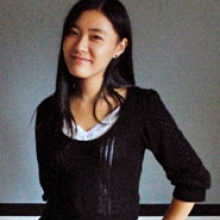
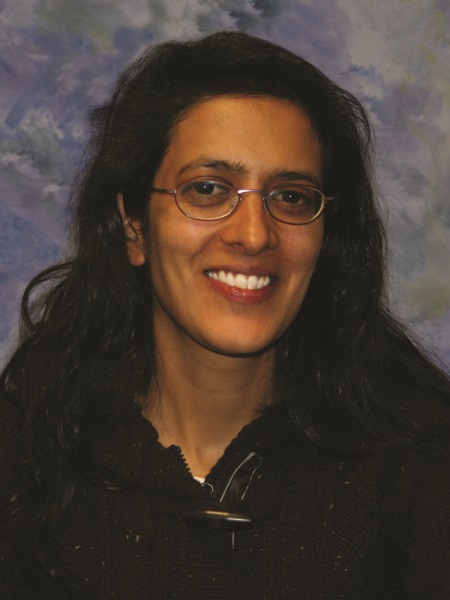
Susan E. Clark is an Assistant Professor of Physics at Stanford University, where she investigates cosmic magnetic fields, magnetohydrodynamic processes, and the interstellar medium (ISM) through observation, simulation, and analytic theory. Prior to Stanford, she was a NASA Hubble Fellow and postdoctoral member at the Institute for Advanced Study in Princeton, New Jersey, after earning her Ph.D. in Astrophysics from Columbia University (2017) and B.S. in Physics from the University of North Carolina at Chapel Hill (2012), supported by a Morehead-Cain scholarship. Education: Ph.D., Astrophysics, Columbia University (2017) — NSF Graduate Fellow B.S., Physics, University of North Carolina at Chapel Hill (2012) — Morehead-Cain scholarship Her research focuses on Galactic and extragalactic magnetism, interstellar turbulence, star formation, and polarized cosmological foregrounds. She leads an interdisciplinary group tackling these problems via observational data, numerical simulations, and machine learning techniques. Current projects include characterizing magnetic field alignment, modeling 3D ISM structure, and analyzing data from experiments like the Atacama Cosmology Telescope, Simons Observatory, CMB-S4, CCAT-Prime, LiteBIRD, and the Galactic Australian SKA Pathfinder (GASKAP). Recent publications highlight her work on dust filament misalignment, HI morphology for gas phase separation, equipartition magnetic field estimation, and tomographic MHD simulations of galactic magnetic fields. These studies integrate astrophysics, computational methods, and observational astronomy to decode the universe's magnetic structure and dynamics. Scientific Awards: Alfred P. Sloan Research Fellowship NSF Graduate Fellowship NASA Hubble Fellowship Clark co-founded the Pan-Experiment Galactic Science Group and co-directs Stanford's Center for Decoding the Universe, fostering interdisciplinary collaborations. Her lab includes postdocs, graduate students, and undergraduates, with alumni transitioning to roles in academia and industry. Funding comes from NSF, NASA, and the Sloan Foundation.