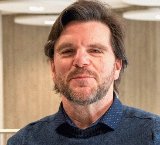
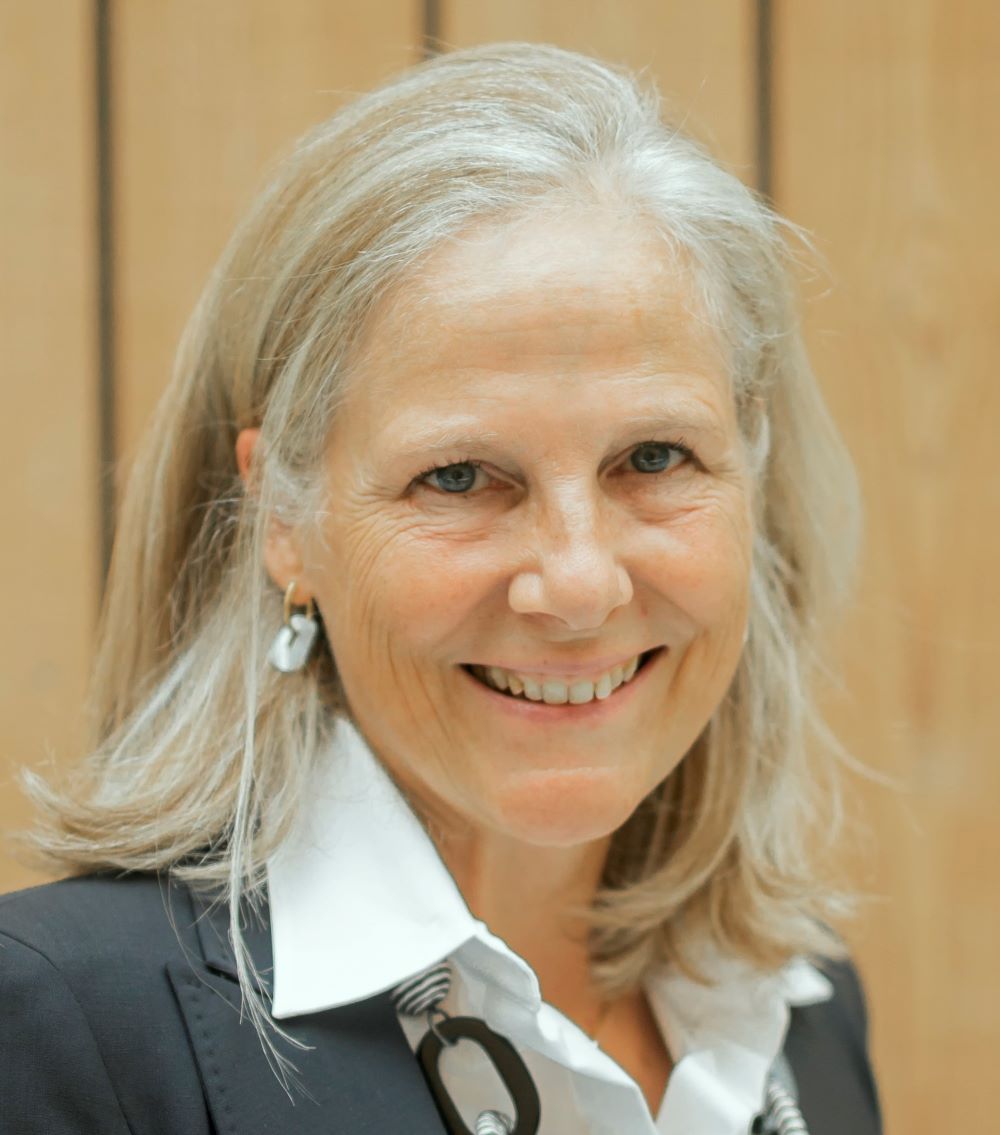
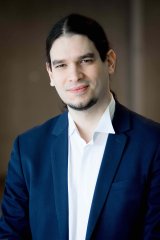
Stefan Vandewalle is a full professor at the Department of Computer Science, Faculty of Engineering Sciences, KU Leuven. His research focuses on numerical analysis, applied mathematics, and computational methods for stochastic differential equations, wind energy modeling, and uncertainty quantification. Department Chair, KU Leuven Member, Subdivision Numerical Analysis and Applied Mathematics Member, iSi Health Institute Observer, Faculty Council of Sciences Chair, Department Council for Computer Science His recent work explores multiscale modeling, Monte Carlo methods, and data assimilation techniques. Projects include micro-macro Parareal algorithms, wind turbine aeroelasticity, and turbulent flow reconstruction for wind farms. He supervises PhD candidates and collaborates on interdisciplinary studies involving structural mechanics and renewable energy systems. Publications highlight advancements in parallel-in-time methods, stochastic optimization for tokamak reactors, and DNS-based control of turbulent flows. Key keywords: Multiscale numerical methods Uncertainty quantification Wind energy simulation Monte Carlo algorithms PDE-constrained optimization Stochastic differential equations He contributes to academic governance as a member of extended faculty boards and evaluation committees.
Yves Rosseel is a Professor at Ghent University (UGent) specializing in Structural Equation Modeling (SEM) , Psychometrics , and Statistical Methodology . With over 15 recent publications (2024-2025), he focuses on small-sample SEM solutions, factor score regression, measurement error, and Bayesian extensions. His work bridges Statistics with applications in Psychology , Education , and Neuroimaging . Research Trends Developed Mixture Multigroup SEM for cross-group comparisons Proposed Information-Theoretic Hypergraphs in psychometrics Advanced Two-Stage Estimation for round-robin data Created blavaan R package for Bayesian SEM Investigated Measurement Error in hypothesis testing Scientific Contributions Published 84 Social Sciences papers, 37 Statistics works, and 11 Neuroimaging studies Promoted 8 PhDs including Sara Dhaene and Julie De Jonckere Co-authored 12+ works with Marijke Welvaert and 10+ with Stijn Vanheule
David Dudal is a Professor at the Faculty of Sciences, KU Leuven, affiliated with the Department of Physics and Astronomy at the Campus Kulak Kortrijk. He serves as Program Director of POC WIF KULAK and holds multiple governance positions including membership in the Faculty Council of Sciences, Faculty POC Sciences, POC Physics and Astronomy, POC BioChem KULAK, Departmental Council of Physics and Astronomy, and Groepsraad Wetenschap & Technologie Campus Kulak Kortrijk. His research focuses on theoretical physics with emphasis on quantum field theory, quantum chromodynamics, and the Casimir effect. He also applies physics principles to geophysical problems, particularly in electromagnetic imaging and saltwater intrusion characterization. His work bridges fundamental theoretical physics with practical geophysical applications. Dudal's publication record shows a strong trend in quantum field theory applications, particularly studying the Casimir effect in various contexts including QCD (Quantum Chromodynamics). His recent work also demonstrates significant contributions to electromagnetic imaging techniques for geophysical applications, showing an interdisciplinary approach that connects theoretical physics with practical environmental problems. His scientific contributions include: Multiple publications in high-impact journals like Physical Review D and Journal of High Energy Physics Presentations at major international conferences including EGU General Assembly and AGU meetings Research bridging theoretical physics and geophysical applications As an educator, Dudal teaches a range of physics courses including electromagnetism, quantum mechanics, and conceptual physics, demonstrating his commitment to both fundamental and applied physics education.
Kristof Cools is a Full Professor at Ghent University's Faculty of Engineering and Architecture , affiliated with the Department of Information Technology and the Internet Technology and Data Science Lab . His research spans computational electromagnetics, integral equations, and finite element methods, focusing on electromagnetic scattering and wave propagation. Research Interests include: Computational Electromagnetics Integral Equations and Boundary Element Methods Domain Decomposition and Preconditioning Antennas, Propagation, and Modeling of Composite Systems His Publications emphasize stable time-domain solvers, multi-trace formulations, and advanced discretization techniques for electromagnetic problems. Notable trends include resonance-free equations, quasi-Helmholtz projectors, and nonlinear surface scattering models. Advisory Roles include supervising doctoral researchers: Cedric Münger Paul Olyslager Quang Huy Nguyen Alessandro Zuccotti Prakash Jay
Hugues Bersini is a Professor at Université Libre de Bruxelles (ULB) and Co-Director of the IRIDIA laboratory, the Artificial Intelligence research laboratory of ULB. His academic career spans over three decades, with significant contributions to the fields of artificial intelligence, complex systems, and biological networks. Bersini earned his MS degree in 1983 and his Ph.D. in engineering in 1989, both from Université Libre de Bruxelles. After working as a researcher with an EEC grant from the JRC-CEE in Ispra (1984-1987), he joined the IRIDIA laboratory at ULB, where he has remained throughout his career, eventually becoming a full professor. His research spans a diverse range of topics within artificial intelligence and complex systems. Bersini is particularly known for his work on modeling and control of complex systems, neural networks, fuzzy control, data mining, autonomous agents, and biological networks. He pioneered the exploitation of biological metaphors, especially from the immune system, for engineering and cognitive sciences applications. His research has evolved to include computational chemistry, immune engineering, cognitive sciences, bioinformatics, and object-oriented technology. In recent years, he has focused on business intelligence applications and public goods through the Brussels Institute FARI. Throughout his career, Bersini has published approximately 300 papers, demonstrating consistent productivity and evolving research interests. His early work focused on optimization algorithms and immune-inspired computing, which gradually expanded to include fuzzy and neuro control systems, biological networks, and more recently, applications to real-world problems through spin-off companies and the FARI institute. His publications show a clear trajectory from theoretical foundations to practical applications, with growing emphasis on interdisciplinary approaches that bridge computer science with biology, chemistry, and cognitive sciences. Bersini has been actively involved in the academic community, having co-organized major conferences including the Parallel Problem Solving from Nature (PPSN), European Conference on Artificial Life (ECAL), European Workshops on Reinforcement Learning (EWRL), and International Competitions on Evolutionary Optimization (ICEO). He also organized tributes to Francisco Varela and the International Conference on Artificial Immune Systems (ICARIS). As an educator, Bersini teaches artificial intelligence, object-oriented programming (C++, Java, .Net, Kotlin, UML, Django/Python), and design patterns to both university students at Solvay and Polytechnic Schools and for industry professionals. He has authored fourteen French books covering computer science fundamentals, complex systems, and the intersection of computer science with other fields. His books range from technical manuals to philosophical explorations of complex systems and emergence. Bersini has coordinated significant research projects including the FAMIMO LTR European Project on fuzzy control for multi-input multi-output processes and participated in ESPIRIT projects NEMORETS and METHODS. His work has led to practical applications through spin-off companies such as Cluepoints, Tevizz, and In Silico DB, and more recently through the Brussels Institute FARI which addresses public goods like mobility, epidemics, access to jobs and schools, and energy transition.
Sabine Henry is a Professor in Geography at the University of Namur (Faculty of Science). Her research focuses on the intersection of environment and migration , particularly at the household/individual level in Africa, Southeast Asia, and Latin America. She leads projects on climate-induced migration, social vulnerability assessments, and participatory approaches to disaster risk reduction. Key projects: FNRS PDR on environmental perception and migration in Sub-Saharan Africa; PRD-ARES collaborations on earthquake/hazard assessments in Haiti, Rwanda, and Burundi Methodological innovations: board games , structured timeline mapping , participatory land-use surveys Her work contributes to UN Sustainable Development Goals related to climate action , zero hunger , and reduced inequalities . Awards include multiple Best Poster Awards from Population Association of America and UISSP.
Prof. Erik Toorman is a leading academic at the KU Leuven within the Faculty of Engineering Science and Department of Civil Engineering . He serves as Head of the Hydraulics and Geotechnics unit and Program Director for Water Resources Engineering. His work bridges theoretical and applied research in sediment mechanics, computational fluid dynamics, and coastal morphodynamics. Key Roles: Promotor for multiple EU/FWO projects, Lecturer in hydraulic engineering, Scientific advisor to Flanders Hydraulics Research. Research Focus: His expertise spans cohesive/non-cohesive sediment transport , two-phase flow dynamics , fluid mud rheology , and microplastics dispersal . Recent projects include nature-based coastal defense (e.g., Lanice conchilega polychaete), high-concentration sediment modeling, and plastic flux quantification in the Scheldt estuary. Publications reveal a strong emphasis on CFD for ship-mud interactions , validated morphodynamic models , bio-geomorphodynamic approaches , sediment-turbulence coupling . Teaching: Coordinates courses like Hydraulics , Sediment Mechanics , and Research Methods for Civil and Water Resources Engineering programs. Collaborations: Partners include Flanders Hydraulics Research , Vrije Universiteit Brussel , and international dredging consultants (DEME, Jan de Nul). He leads the COSINUS and PLUXIN projects, integrating sediment transport with climate resilience and plastic pollution mitigation.
Vsevolod Salnikov is a Researcher affiliated with the Namur Institute for Complex Systems at the University of Namur. His work focuses on complex systems, network analysis, and mobility data applications. He has led research projects such as OpenNext (2017-2019) and MyOpenNext (2020-2021), which developed predictive models and mobile applications for transportation analysis. Salnikov holds a Doctor of Sciences degree in Human Mobility from the University of Namur (2015), focusing on data acquisition and algorithmic solutions for mobility challenges. His research interests span topology, dynamics of networks, transportation economics, and higher-order network analysis. Notable contributions include studies on emergent grammar dynamics, simplicial complex applications in mathematics, and taxi price comparison mobile apps. Salnikov actively participates in conferences, presenting work on topics like non-Markovian dynamics and community detection in temporal networks. Key projects include leveraging mobility data for public interest and developing tools for urban transport optimization. His datasets include contributions to studies on emergent grammar dynamics, reflecting interdisciplinary collaborations in linguistics and network science.
Wim De Roeck is an Associate Professor in the Department of Mechanical Engineering at KU Leuven's Faculty of Engineering Technology. He serves as contact person for the Mecha(tro)nic System Dynamics (LMSD) research group at Group T Leuven Campus and heads Subdivision 20 within the same campus. Additionally, he holds multiple program director roles for Elektromechanica programs across different KU Leuven campuses. His research focuses on acoustics, vibration analysis, and fluid dynamics with particular emphasis on aeroacoustics and flow-structure interactions. De Roeck's work bridges theoretical and experimental approaches to address noise and vibration challenges in mechanical systems. His research spans multiple application domains including automotive systems, aerospace components, and HVAC technologies, with a strong focus on micro-perforations, flow ducts, and Helmholtz resonators. Analysis of his recent publications reveals a consistent focus on advanced measurement techniques (particularly two-port and three-port characterization methods), impedance modeling of micro-scale components, and the development of both experimental and numerical approaches to understand flow-acoustic interactions. His work increasingly incorporates data-driven methodologies while maintaining strong foundations in fundamental acoustics and fluid mechanics principles. As an educator, De Roeck contributes to multiple courses including Strength of Materials for Machine Design, Finite Element Based Design, and Vehicle Dynamics, demonstrating his interdisciplinary expertise across mechanical engineering domains. He actively participates in institutional governance as a member of the Board and Council of the Faculty of Engineering Technology and serves as secretary for the POC Elektromechanica committee, reflecting his significant administrative contributions alongside his research and teaching responsibilities.
Juan Cai is a Researcher at the Brussels Research Centre on Innovation in Learning and Diversity (BILD) within the Department of Educational Sciences at Vrije Universiteit Brussel (VUB). She holds a Doctorate and Master’s in Educational Sciences from VUB, focusing on self-regulated learning, student motivation, and classroom dynamics. Her work integrates quantitative and qualitative methods, including structural equation modeling and content analysis. Key research interests include professional learning communities, inclusive education, self-regulated learning, and the application of Universal Design for Learning (UDL). Recent studies explore the impact of school climate on immigrant students, teacher beliefs in differentiated instruction, and cross-cultural comparisons of classroom learning environments. Her publications appear in high-impact journals like Learning Environments Research , Social Psychology of Education , and Frontiers in Psychology . She actively reviews for SSCI journals and international conferences, contributing to EARLI. Collaborations include the SeReLiDi project in Germany, emphasizing self-regulated learning in digitalized schools. Operates within the BILD lab, focusing on innovation in learning and diversity. No current student advisement or grant details specified in text.
Joseph Winkin is a Full Professor and Director of the Department of Mathematics at the University of Namur, where he leads the Namur Institute for Complex Systems Research Unit in Applied Mathematics and Complexity. His extensive academic service includes membership in the IEEE Control Systems Society's Technical Committee on Distributed Parameter Systems, the IFAC Technical Committee TC 2.6, and the Steering Committee of the International Workshops on Control of Distributed Parameter Systems (CDPS). His research focuses on Controlled Dynamic Systems , specializing in infinite-dimensional and distributed-parameter systems. Key areas include spectral factorization, positive controlled systems, and the analysis and control of chemical/biochemical tubular reactors. His work integrates mathematical rigor with practical applications in process engineering and biological systems. Analysis of his 15 most recent publications (2017-2024) reveals a strong emphasis on observer design, boundary control, and stabilization techniques for infinite-dimensional systems. His research consistently bridges theoretical control theory with applications in epidemiology (SIRD models), cell population dynamics, and chemical reactors, demonstrating interdisciplinary impact across engineering and life sciences. Scientific awards: Outstanding Reviewer of the IEEE Transactions on Automatic Control (2006) As an academic leader, Winkin serves as Director of Mathematics (since 2015), member of the FRIA commission (since 2010), and Scientific Committee member for the FRS-FNRS Thematic Doctoral School in Mathematics (since 2011). His editorial roles include past associate editorships for the International Journal of Applied Mathematics and Computer Science, IEEE Transactions on Automatic Control, and European Journal of Automated Systems. Current projects focus on state estimators for positive distributed-parameter systems and stabilization of infinite-dimensional systems. He actively contributes to major international conferences as program committee member for IFAC workshops, MTNS symposia, and POSTA conferences, reflecting his leadership in the global control theory community.
Annick Timmermans is a Professor at the Faculty of Rehabilitation Sciences at Hasselt University and a practicing physiotherapist specializing in musculoskeletal disorders. Her research focuses on personalized treatments for osteoarthritis and lower back pain, leveraging technological applications to enhance patient self-reliance. She leads a team investigating the biopsychosocial mechanisms of pain and disability in musculoskeletal conditions, with a particular emphasis on hip osteoarthritis and post-surgical recovery. Key areas of study include patient subgroup classification, treatment outcome predictors, and the efficacy of tailored rehabilitation approaches. Recent work explores telemedicine applications, high-intensity training protocols, and the role of perceived injustice in cancer survivors' pain experiences. Her academic contributions span clinical trials, systematic reviews, and translational research in areas such as mHealth interventions, occupational driver health, and postoperative pain management. She actively collaborates with interdisciplinary teams to bridge clinical practice and technological innovation, aiming to optimize functional outcomes and quality of life for patients with chronic musculoskeletal conditions. Notable initiatives include the Techno-HIT trial evaluating technology-supported high-intensity training for low back pain and the DirectPhysio study assessing physiotherapist-led care pathways for acute low back pain. Her research also addresses global health challenges, such as rising osteoarthritis prevalence linked to aging populations and sedentary lifestyles.
Christophe Dubussy is a researcher affiliated with the University of Liège, holding a Doctor of Science degree in Holomorphic Cohomological Convolution, Enriched Laplace Transform and Applications. His work spans mathematical analysis and didactic theory, with significant contributions to the intersection of mathematics and genetics. Education: Doctor of Science (2019), University of Liège His research focuses on holomorphic functions, convolution theory, and didactic transposition. Recent publications explore complex numbers in electrical circuits, the role of equations in interdisciplinary contexts, and epistemological references in teaching practices. His mathematical work connects to genetics through response eQTL analysis and regulatory variants. Scientific activity trends show expertise in Hadamard products, Paley-Wiener theorems, Laplace transforms, and cohomological convolution. These keywords reflect both his theoretical and applied research domains. Dubussy actively participates in academic conferences such as EMF 2025 and CORFEM 2023, presenting on didactic theory and interdisciplinary applications. His collaboration with institutions like the UNamur Institute for Research in Didactics and Education highlights his educational focus.
Nicolas Franco is a Lecturer in Mathematics at the University of Namur (2022–present) and scientific collaborator at Hasselt University's Data Science Institute. His expertise spans mathematical modeling of COVID-19, noncommutative geometry applications in physics, and quantum computing. Previously, he held postdoctoral positions at Hasselt University (2020–2022), University of Namur (2015–2022), Jagiellonian University (2014–2015), and Copernicus Center for Interdisciplinary Studies (2012–2014). Education Doctor of Science: Lorentzian approach to noncommutative geometry (University of Namur, 2011) Master's in Mathematics (University of Namur, 2006) Bachelor of Music: Piano & Chamber Music (Royal Conservatory of Mons, 2003) Research Focus Franco's research integrates mathematical physics with practical applications. His primary domains include: Epidemiological Modeling : Long-term COVID-19 forecasting for the European CDC and Belgian government Quantum Structures : Causality in noncommutative geometries, κ-Minkowski spacetime constraints Quantum Computing : Robust quantum machine learning, qubit-efficient optimization Publication Trends Recent works demonstrate a shift toward quantum computing applications (2021–2024), focusing on optimization robustness and security in quantum neural networks. Earlier foundational contributions (2011–2017) established frameworks for Lorentzian distance formulas and causal structures in noncommutative geometry. Awards & Recognition Namur Resident of the Year - Science Category (2020) Multiple Belgian Mathematical Olympiad prizes (1996–2001) International math competition awards (FFJM) Professional Activities Member: European COVID-19 Scenario Hub (ECDC), RESTORE Consortium Consultant: Belgian federal government pandemic response Reviewer: Physical Review Letters, PLOS Computational Biology, etc.
Anthony Hastir is a researcher at the Namur Institute for Complex Systems , focusing on control theory, nonlinear systems, and partial differential equations (PDEs). His work bridges mathematical analysis with applications in chemical engineering and mechanical systems. Education: PhD in Sciences (2022) and Master in Mathematical Sciences (2018), both advised by Prof. Joseph Winkin. Research Interests include: Stability analysis of nonlinear infinite-dimensional systems Optimal control of distributed parameter systems Frequency-domain approaches for PDE control Stabilization of reaction-diffusion and wave networks His scientific awards include the 2022 Distributed Parameter Systems TC Outstanding Student Paper Prize and the 2018 Frank Callier Prize. Hastir's projects involve: FRACTIONS (2022–2025): Frequency analysis for nonlinear input-output systems Local stabilization of non-isothermal tubular reactors (2020–2022) LQ-optimal control of tubular reactors (2018–2020) His activities span conference presentations on spectral analysis, Kalman filtering, and LQ control of hyperbolic PDEs.