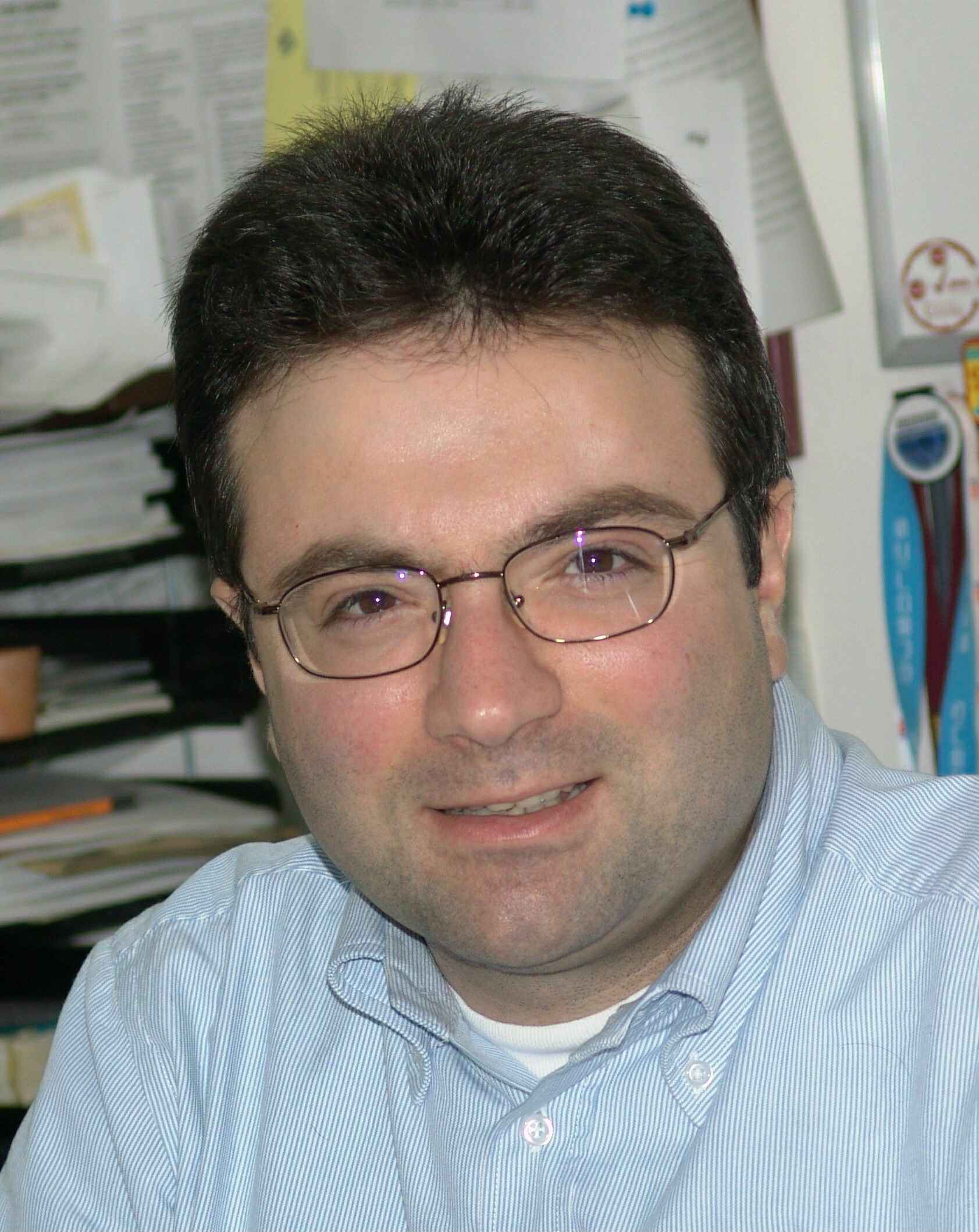
Badogiannis Efstratios is a Professor at the Department of Structural Engineering , National Technical University of Athens. He serves as Deputy Dean and works in the Reinforced Concrete Laboratory, Zografou Campus, Athens, Greece. Email: badstrat@central.ntua.gr Phone: +30 210 772 1266 Research Interests: Focus on sustainable concrete technology, pozzolanic materials (metakaolin, palygorskite clay), durability of lightweight and self-compacting concrete, seismic isolation systems for bridges, application of artificial neural networks in civil engineering, and mechanical/thermal activation of clays. Publication Trends: Recent work emphasizes AI-driven rheological modeling, seismic resilience of precast bridge systems, durability of concretes incorporating industrial by-products (e.g., by-pass filter dust, rice husk ash), and nano-materials for structural health monitoring. Laboratory Affiliation: Actively contributes to research at the Reinforced Concrete Laboratory, focusing on sustainability, corrosion resistance, and innovative construction techniques.
David Naumann is Professor and Department Chair of Computer Science at Stevens Institute of Technology. His leadership in the department and active research program positions him as a key figure in programming languages and formal methods research. Naumann's research focuses on formal methods and software security, with particular emphasis on relational and hyperproperty verification , fine-grained confidentiality/integrity policies , and program analysis and verification . His work bridges theoretical foundations with practical applications in security-critical systems. He has developed novel program logics and verification techniques that enable precise reasoning about information flow and security properties. His recent publications (2022-2025) reveal a strong trend toward modular relational verification techniques with applications to pointer programs, distributed systems, and concurrent applications. The research spans theoretical foundations (algebraic structures for alignment) to practical tools (WhyRel prototype), demonstrating both depth and breadth in addressing verification challenges. Naumann has served as program committee co-chair for IEEE Computer Security Foundations Symposium (2021-2022) and has been active on committees for POPL, CCS, CSF, ECOOP, and other top venues. His editorial service includes ACM Transactions on Programming Languages and Systems, Formal Aspects of Computing, and Journal of Object Technology. He leads the Cypress research group at Stevens Institute of Technology and has secured significant funding from NSF, Microsoft Research, and Siemens. His mentoring extends to numerous PhD students who have gone on to successful careers in academia and industry.
Ioannis Tsaknakis is an Associate Professor at the Department of Electrical & Computer Engineering, School of Engineering, University of Peloponnese. He holds a PhD in computational geometry and multidimensional data structures from the University of Patras (2004) and has been actively involved in software systems research since 2004. His work spans Database Information Management , Big Data Systems , and Knowledge Mining , with a focus on data structures and computational geometry. Research Interests : Information Management in Databases Big Data Management Systems Computational Geometry Knowledge Mining in Databases/Web Publications highlight his contributions to IoT-driven educational frameworks, machine learning applications, and cryptographic systems for data security. He has taught courses on software design and data management since joining the University of Peloponnese in 2019. Contact : jtsaknakis@uop.gr . Office hours are in Building K (Monday & Tuesday, 8:00-9:00).
Fei He is an Associate Professor at Tsinghua University's School of Software, where he leads the THUFV research lab focused on formal verification and program analysis. His research spans formal methods, automated reasoning, and program verification, with applications in concurrent systems, networking (P4 programs), and probabilistic systems. Education & Employment: PhD from Tsinghua University (2008) Visiting Scholar at Carnegie Mellon University (2010-2011) and Politecnico di Milano (2006-2007) Faculty positions at Tsinghua since 2008 (Assistant Professor 2008-2011, Associate Professor 2011-present) Research: He's developed innovative techniques in SMT solving for concurrency verification, termination analysis, and regression verification. His tools like Deagle have won gold medals at SV-COMP. Current work focuses on probabilistic program verification and network program analysis. Publications: His 80+ publications demonstrate consistent contributions across formal methods (PLDI, OOPSLA, ICSE), networking (NSDI, INFOCOM), and software engineering (TSE, TOSEM), with recent emphasis on data-driven verification and automated invariant inference. Awards: Gold Medals in SV-COMP ConcurrencySafety (2022, 2023, 2025) Best Paper Awards at PPoPP 2022 and SETTA 2022 Advising: Mentors 13 PhD/Master's students in THUFV lab, with graduates joining Huawei, MPI-SP, and research institutions. Secured multiple NSF China grants for trustworthy software research. Service: Associate Editor for Theory of Computing Systems, program committees for PLDI/ICSE/OOPSLA, and former Local Chair for ISSTA 2019.
Michalis Xenos is a Professor in the Department of Mathematics at the University of Ioannina, Greece. He holds a PhD in Applied Mathematics (2003) from the University of Patras and has held postdoctoral positions at the University of Illinois at Chicago (2003-2007) and Stony Brook University (2007-2011). His research spans Applied Mathematics, Fluid Mechanics, and Biomechanics, with a focus on Magnetohydrodynamics (MHD), Computational Fluid Dynamics (CFD), and Fluid-Structure Interaction (FSI) in cardiovascular systems. Education : BSc (1996), MSc (1998), PhD (2003) in Applied Mathematics, University of Patras. Affiliations : University of Ioannina (2011-present), Stony Brook University (postdoctoral, 2007-2011), University of Illinois at Chicago (postdoctoral, 2003-2007). His work involves modeling blood flow in aneurysms, optimizing mechanical heart valves, and analyzing hemodynamic factors in vascular diseases. Collaborators include Prof. A.A. Linninger (UIC), Prof. D. Bluestein (SUNY), and Prof. U. Morbiducci (Politecnico di Torino). His publications address MHD flows, AAA rupture risk prediction, thrombogenicity in devices, and nonlinear differential equations.
Maria Kafesaki is an Associate Professor at the University of Crete's Department of Materials Science and Engineering and an Adjunct Researcher at the Institute of Electronic Structure and Laser (IESL) of FORTH. Her research focuses on electromagnetic wave propagation in periodic and random media, particularly in photonic crystals and metamaterials, with applications in nanophotonics and plasmonics. She has over 100 refereed publications and is a Fellow of the Optical Society of America. Education: PhD in Physics (1997), MSc (1992), and BSc (1990) from the University of Crete. Key Contributions: Developments in chiral and bianisotropic metamaterials, THz metamaterials, and reconfigurable metasurfaces. She has led projects on metamaterials for defense and energy applications, including collaborations with international teams. Awards: EU Descartes Prize (2005), Fellow of the Optical Society of America (2014). Editorial Roles: Associate Editor of EPJ: Applied Metamaterials and Section Editor of JEOS:RP. Governing Board member of Metamorphose VI.
Elias N. Glytsis is a Professor at the National Technical University of Athens (NTUA), affiliated with the Department of Electromagnetic Applications, Electro-Optics and Electronic Materials. He previously held a Professorship at the Georgia Institute of Technology (USA) from 1988 to 2003. His research focuses on electromagnetic theory, diffractive devices, optical interconnects, quantum heteromaterials, and numerical methods for electromagnetic problems. Glytsis has published over 115 journal articles, 95 conference papers, and holds 17 U.S. patents with an h-index of 31 (as of 2017). Education: Diploma in Electrical Engineering (NTUA, 1982), M.S. and Ph.D. (Georgia Tech, 1984–1987). Professional memberships include IEEE (Senior Member), Optical Society of America (Fellow), and EURATOM-Hellenic Republic. Research highlights include work on holographic gratings, optical fiber gratings, and plasma-edge RF scattering. He has developed optimization methods for photonic devices and contributed to stochastic modeling via polynomial chaos expansions. Glytsis teaches courses on electromagnetic fields, optical science, and integrated optics at both undergraduate and postgraduate levels. Key technical contributions span microwave interconnects, quantum device modeling, and fusion plasma physics. His methodologies address challenges in material variability, waveguide design, and electromagnetic compatibility.
Efthymios N. Karatzas serves as an Assistant Professor in the Department of Mathematics at Aristotle University of Thessaloniki, Faculty of Sciences, within the Computer Science and Numerical Analysis Section. He maintains an active research profile in computational mathematics with strong institutional affiliations including collaborations with SISSA mathLab and FORTH Institute of Applied and Computational Mathematics. His academic credentials include: PhD in Mathematics, National Technical University of Athens (2015) Master's in Applied Mathematical Sciences – Computational Mathematics, NTUA (2009) Master's in Applied Mathematics, University of Patras (2001) Bachelor's in Mathematics (Computational Mathematics), University of Patras (1999) Dr. Karatzas' research program centers on advanced numerical techniques for partial differential equations , with pioneering work in reduced order modeling , embedded boundary methods , and optimal control systems . His expertise spans computational fluid dynamics, uncertainty quantification, and biomechanical applications, characterized by methodological innovation in handling geometrically complex domains through cut finite element approaches and shifted boundary formulations. Analysis of his 15 most recent publications reveals a cohesive research trajectory focused on developing efficient numerical frameworks for parametrized PDE systems. His work consistently bridges theoretical rigor with practical implementation, particularly in advancing reduced basis methods for fluid-structure interaction and biological modeling, demonstrating significant contributions to computational mathematics through high-impact journal publications. No major scientific awards are documented in the available sources. Dr. Karatzas demonstrates research leadership through project management roles including Scientific Manager for the ELIDEK project at NTUA (2019-2021) and Project Manager for the European Social Fund HEaD initiative at SISSA (2017-2019). His grant administration experience encompasses coordinating interdisciplinary teams and securing external funding for computational mathematics research. He maintains active collaborations with the SISSA mathLab in Trieste (particularly with Prof. Gianluigi Rozza's group) and the FORTH Institute in Crete, participating in international workshops including the Reduced Order Methods in CFD Summer School (2019) and SIAM UQ conferences. His research network spans computational mathematics groups across Europe with emphasis on advancing numerical methodologies for real-world engineering and biological applications.
Dr. Antonios Manousakis is an Associate Professor at the Technical University of Crete, affiliated with the Process Development, Analysis & Design Department (II) within the Mathematics Laboratory. His academic work focuses on functional analysis and Banach space geometry. Education: PhD in Mathematics (University of Athens, 1998), Bachelor's in Mathematics (University of Athens, 1992) Manousakis' research explores quasi-minimality, tightness by range, unconditional saturation, and structural properties of Banach spaces. His work bridges abstract functional analysis with concrete applications in operator theory and space classification. Publications demonstrate expertise in scalar-plus-compact properties, HI spaces, and Tsirelson-type constructions. He teaches foundational mathematics courses including: Differential & Integral Calculus I (MATH 101) Differential & Integral Calculus II (MATH 102) Applied Mathematics for Environmental Engineers (AB-308) Contact: amanousakis@isc.tuc.gr
Alexis Kouvidakis is a Professor at the Department of Mathematics and Applied Mathematics within the School of Sciences and Engineering at the University of Crete . His research focuses on Algebraic Geometry , particularly in areas such as divisors, moduli spaces, Hodge theory, and the geometry of cubic hypersurfaces. He has published extensively on symmetric products of curves, Hurwitz spaces, and Fano surfaces, with recent work exploring effective divisors on projectivized Hodge bundles and geometric properties of cubic fourfolds. His email address is kouvid@uoc.gr . The trends in his publications reflect a deep engagement with geometric structures in algebraic varieties. His work spans topics like Modular Forms in Hodge bundles, Monodromy in cubic threefolds, and Divisorial Loci in Hurwitz spaces. He has also contributed to applied mathematics through research in Medical Physics , including dosimetry modeling for ophthalmic brachytherapy.
Heather Miller is a tenure-track Assistant Professor in the Software and Societal Systems Department within Carnegie Mellon University's School of Computer Science. Her academic journey includes prior roles as an Assistant Clinical Professor at Northeastern University's College of Computer and Information Science and as Executive Director of the Scala Center at EPFL. Miller's research centers on distributed and concurrent computation through the lens of programming languages, with particular emphasis on data-centric systems, big data processing, and edge computing. A defining theme throughout her work is composability - enabling construction of complex distributed systems through composition of components that are correct by construction. Her projects span distributable closures, flexible serialization techniques, futures and promises for asynchronous programming, and deterministic concurrent dataflow models. Her recent publications demonstrate strong trends in applying programming language theory to practical distributed systems challenges, with increasing focus on WebAssembly instrumentation, microservice resilience, and language model pipelines. This evolution reflects her commitment to bridging theoretical foundations with real-world system requirements. Dahl-Nygaard Junior Prize (2023) Mentorship forms a significant component of Miller's academic work. She actively supervises multiple PhD, MS, and undergraduate researchers at CMU, including Christopher Meiklejohn, Matthew Weidner, Huairui Qui, Ria Pradeep, and Luke Dramko. Her service contributions span numerous top-tier conferences including PLDI, SPLASH, ECOOP, and ICSE where she has served as committee member, chair, and keynote speaker. Miller co-founded the Curry On conference to foster industry-academia dialogue, hosting successful editions in Prague, Rome, Barcelona, Amsterdam, and London. She leads research groups focused on distributed programming models and maintains strong industry connections through Two Sigma, where she holds an affiliation. Her work consistently emphasizes practical open-source implementations, primarily within the Scala ecosystem where she's been a core contributor since 2011.
Professor Foto N. Afrati is a Distinguished Faculty Member at the National Technical University of Athens, specifically within the School of Electrical and Computing Engineering and the Division of Communication, Electronic and Information Engineering. She has held this position since 1993, following previous academic ranks at the same university as Associate Professor (1989-1993), Assistant Professor (1985-1989), Lecturer (1982-1985), and Research Fellow (1980-1982). She completed her PhD in Electrical Engineering at Imperial College of the University of London in March 1980, with a dissertation focused on Error Correcting Codes by Algorithms. Her academic journey also included a Diploma from Imperial College (March 1980) and an earlier Diploma in Electrical and Mechanical Engineering from the National Technical University of Athens (June 1976). Professor Afrati's research interests span several critical areas in computer science: Parallel and distributed computation Processing of very large data (including MapReduce) Data and web mining Database Systems Information integration Query optimization Computation and complexity of algorithms Approximation algorithms Her most recent publications demonstrate expertise in MapReduce environments, query optimization with views, and data exchange frameworks. These works are published in prestigious venues like EDBT, VLDB, PODS, and ICDT, with specific focus areas including adaptive sampling techniques, data source integrity, and algorithm complexity in database environments. Professor Afrati has received significant recognition in her field, including Fellow of the Association for Computing Machinery (ACM) Best Paper Award at the International Conference on Database Theory (ICDT) 2009 She has advised numerous PhD students throughout her career, including Theodoros Mitakos, Ezz Hattab, Nikos Kiourtis, and Angelos Vasilakopoulos. Her current PhD students include Victor Kyritsis and Nikos Stassinopoulos. Professor Afrati maintains strong professional networks through her various visiting positions at institutions such as Google, Stanford University, IBM Research Center, University of Helsinki, University of Paris, DIMACS, and others. She has served as associate editor and reviewer for major academic journals and conferences including IEEE TKDE, ACM Transactions of Database Systems (TODS), Journal of ACM (JACM), and Theoretical Computer Science (TCS). Her extensive work in research projects spans both national and international initiatives, with funding from sources including the European Union's Thalis project, ESPRIT working groups, HCM networks, and Greek General Secretariat of Research and Technology grants.
Dr. Aspa Gospodini is a Professor of Town Planning and Urban Design at the University of Thessaly's Polytechnic School, where she directs the Research Laboratory 'Morphology and Urban Design' and the postgraduate program 'Urban Regeneration, Urban Development and Real Estate Market'. She previously served as Vice-President of the Thessaloniki Regulatory Plan & Environmental Protection Organization (2010-2011). Her educational background includes a PhD in Urban Design and Planning from University College London (UCL), an MSc in Syntactic Analysis of Space from UCL, and a Diploma in Architecture Engineering from Aristotle University of Thessaloniki. Her research focuses on transformative urban phenomena including post-industrial landscapes, smart cities, shrinking cities, and place identity dynamics in globalized contexts. She investigates urban regeneration frameworks, cultural-led development, and sustainable spatial policies, with emphasis on Mediterranean and Greek cities. Her extensive publication portfolio demonstrates strong thematic focus on urban morphology transformations, sustainability challenges in regeneration projects, and economic crisis impacts on cities. Research consistently integrates design theory with empirical analysis of European and Greek urban contexts. Scientific Awards: AESOP Prize for Best Published Paper (2005, 2007) GPEAN Distinction for Top Global Planning Publications (2005, 2007) International recognition for research on Olympic-driven urban change and post-industrial landscapes She has led significant research projects including EU-funded TRANSECON (transport infrastructure impacts) and national initiatives on urban regeneration. As director of the Morphology and Urban Design Laboratory, she coordinates interdisciplinary teams investigating sustainable urban transformations. She currently mentors graduate researchers in urban regeneration strategies.
Ioannis Tzimas is a Professor at the Department of Electrical and Computer Engineering of the University of Peloponnese. He is a highly active researcher with numerous publications in areas of Service-Oriented Architectures, Web Engineering, Big Data, and Artificial Intelligence applications. University: University of Peloponnese Department: Department of Electrical and Computer Engineering Academic Rank: Professor Email: tzimas@uop.gr Ioannis Tzimas received his education from the Department of Computer Engineering and Informatics of the University of Patras, where he also completed his PhD in Web Engineering. His research spans multiple interdisciplinary domains at the intersection of computer science and practical applications. Service-Oriented Architectures and Information Systems Web Data Engineering and Web Modeling Big Data Management and Data Science Machine Learning and Artificial Intelligence Applications Digital Ecosystems and Digital Transformation for the Public Sector Bioinformatics Professor Tzimas' recent research output demonstrates a strategic focus on applying advanced computational techniques to address contemporary challenges. His work shows particular expertise in labor market analysis using large language models, electricity demand forecasting in Greece, and social protection systems. His publications reveal a pattern of bridging theoretical computer science with practical, real-world applications across multiple sectors. Since 2018, he has served as an international consultant to the World Bank in the field of information systems and digital transformation, working on projects across Europe, Africa, the Caribbean, the Pacific Islands, and China. His earlier career included significant technical leadership roles at the University of Patras and other Greek institutions. Technical Manager of the Graphics, Multimedia and Geographic Systems Laboratory (1996-2018) Technical Coordinator of the Internet and Multimedia Technologies Research Unit (1997-2011) Scientific Manager of the Network Management Center of the TEI of Messolonghi (2009-mid 2013)
Nectarios Koziris is a Professor at the Department of Computer Science , National Technical University of Athens (NTUA) , and former Dean of the School of Electrical and Computer Engineering . His research focuses on Parallel and Distributed Systems , Computer Architecture , and Cloud Computing . Key Research Themes: Compiler-OS-Architecture Interaction, Datacenter Hyperconvergence, Sparse Matrix Optimization, Quantum Computing, FPGA Virtualization Leadership: Founder of ~okeanos (Europe's largest public Cloud IaaS), Co-founder of GFOSS , Member of IEEE Computer Society Greece, Advisor to Arrikto Inc. His work has led to over 180 publications with 5800+ citations (h-index 33) , including two Best Paper Awards (IPDPS 2001, CCGRID 2013) and Intel Recognition (2015). He has supervised 12 PhD students and participated in 15+ EU projects as coordinator or consortium partner. Scientific Leadership: Program Co-Chair for Europar 2012 , Organizer for IPDPS , ICPP , SC conferences, and active member in Cloud Computing Expert Groups for the European Commission.