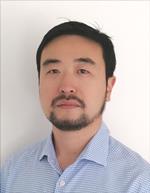
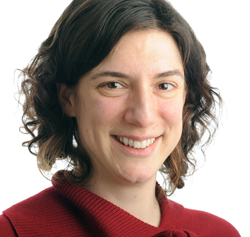
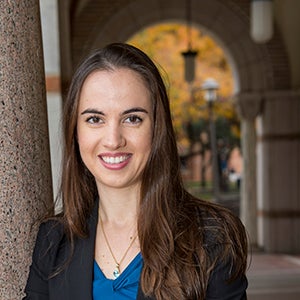
Xiaobo Li is a Professor in the Department of Bio-Medical Engineering at New Jersey Institute of Technology. Holding a Ph.D. in Computer Aided Geometric Design from the University of Birmingham and a B.S. in Automation from Nanjing University of Aeronautics, their research bridges computational methods with neuroimaging and psychiatric disorder analysis. Ph.D., University of Birmingham (Computer Aided Geometric Design, 2004) B.S., Nanjing University of Aeronautics (Automation, 1999) Dr. Li’s work focuses on applying machine learning and graph theory to understand brain network abnormalities in conditions like ADHD , schizophrenia , and traumatic brain injury . Their studies analyze structural-functional connectivity , reward processing , and gut-brain axis interactions using fMRI , fNIRS , and diffusion tensor imaging . Recent publications highlight their development of tools like the GAT-FD MATLAB toolbox for brain network analysis and their exploration of multimodal MRI in schizophrenia diagnosis. They also investigate the neurobiological effects of photobiomodulation and vision therapy interventions.
Jie Peng, Ph.D., is a Professor and Vice-Chair for Graduate Affairs in the Department of Statistics at the University of California, Davis. Her research focuses on statistical methodologies with applications in genomics, neuroimaging, and functional data analysis. She holds a Ph.D. from Stanford University and is actively involved in advancing statistical theory and its practical implementations in biomedical and computational sciences. Education Ph.D. in Statistics, Stanford University Research Interests Dr. Peng’s work spans several key areas including graphical models, high-dimensional inference, and neuroimaging analysis. She develops innovative statistical tools for analyzing complex biological data, such as tumor genomics and brain connectivity patterns derived from diffusion MRI. Her research emphasizes the interplay between theoretical statistics and real-world applications in healthcare and precision medicine. Professional Contributions She serves as an Associate Editor for the Journal of Computational and Graphical Statistics and has contributed to numerous high-impact publications. Her methods have been applied to identify biomarkers in ovarian cancer and to study brain lateralization using Human Connectome Project (HCP) data. Dr. Peng also leads efforts in developing computational frameworks for spatial transcriptomics and dynamic network modeling.
Jiaxiang Zhang is Professor of Artificial Intelligence in the Department of Computer Science at Swansea University's Faculty of Science and Engineering. He holds a PhD in Computational Neuroscience from the University of Bristol and previously held positions at the University of Birmingham, MRC Cognition and Brain Sciences Unit (Cambridge), and Cardiff University where he founded the Cognition and Computational Brain Lab. Zhang's research integrates computational modeling, machine learning, brain imaging (MEG/EEG/fMRI), and experimental approaches to study human cognition, aging, and neurological disorders. Key focus areas include: Neural mechanisms of decision-making and problem-solving Computational models of cognitive processes AI applications in healthcare diagnostics and neuroimaging Brain network dynamics in neurological conditions Recent publications emphasize deep learning models for neural data, multimodal brain connectivity, decision-making impairments in Parkinson's disease, and neuroinformatics tools. His work shows strong clinical translation through epilepsy biomarker development and emergency department outcome prediction. Zhang has led research grants from ERC, MRC, BBSRC, and Wellcome Trust. As primary investigator for multiple projects, he oversees significant computational neuroscience initiatives. He is available for postgraduate supervision.
Dr. Marta Zlatic is a Principal Research Associate at the Department of Zoology , part of the School of Biological Sciences at the University of Cambridge. She leads the Zlatic Lab, focusing on the structural and functional relationships within neural circuits. Her research explores how nervous systems integrate sensory information and prior experiences to enable decision-making, emphasizing learning and memory , sensorimotor transformations , and connectomics . Using Drosophila melanogaster larvae as a model organism, her work combines optogenetics , electron microscopy , and functional imaging to decode circuit principles. Recent publications highlight trends in connectome analysis and behavioural neuroscience , with subfields spanning synaptic architecture , neural network modeling , and genetic manipulation techniques . She collaborates with interdisciplinary teams and maintains active research partnerships at the MRC Laboratory of Molecular Biology. Group members include Bernd Breuer, Nicolo Ceffa, Michael Clayton, and other researchers advancing understanding of Drosophila neurobiology. The lab contributes to Cambridge's Athena Swan Bronze Award initiatives for equality and inclusion in research environments.
Tuija Tessaliina Tolonen is a Doctoral Researcher at the Department of Neuroscience and Biomedical Engineering, Aalto University. Her work focuses on neuroimaging, ADHD research, and brain connectivity. Research Interests: Functional and structural connectivity in adult ADHD Impact of early life stress on neural networks Cognitive neuroscience and neuroimaging methodologies Intervention studies with working memory training Selected Publication Trends: Her recent works examine brain network abnormalities in ADHD, neuroplasticity following cognitive training, and the effects of stress on developing brains. Collaborations span neuroscience, psychology, and biomedical engineering fields. Affiliations: Aalto University, Finland.
Christian Grefkes-Hermann serves as Professor of Neurology at Goethe University Frankfurt's Faculty of Medicine, based at University Hospital Frankfurt's Center of Neurology and Neurosurgery. His research targets stroke-induced brain network disruptions and develops novel rehabilitation strategies using non-invasive brain stimulation to restore motor function. His work focuses on neural plasticity, brain connectivity, and stroke rehabilitation through multimodal approaches including structural/functional MRI, EEG, transcranial magnetic stimulation (TMS), and machine learning. He investigates how interhemispheric network reorganization enables functional recovery and develops biomarkers for personalized rehabilitation protocols. Analysis of his publication history reveals an evolution from foundational studies on crossmodal processing (2002) to clinical applications in stroke recovery, with recent work emphasizing individualized biomarkers and frontoparietal connectivity as predictors of motor recovery. This trajectory demonstrates a consistent translation of basic neuroscience into clinical neurorehabilitation. Professor Grefkes-Hermann leads a research team within the Center of Neurology and Neurosurgery dedicated to bridging neural network science with practical rehabilitation solutions for stroke survivors, addressing Germany's challenge of 200,000 annual stroke cases where over 50% experience permanent disability.
Jakub Vohryzek is a postdoctoral researcher at the Computational Neuroscience (CNS) Group at University Pompeu Fabra in Barcelona, supervised by Prof. Gustavo Deco. His work focuses on spacetime connectomics and whole-brain modeling, particularly in neurodegenerative disorders and psychedelic neuroscience. He holds a DPhil from the University of Oxford, where he studied under Prof. Morten Kringelbach. Research Interests: Spacetime connectomics Psychedelic-induced brain state transitions Neurotwin models for personalized medicine Cognitive and clinical applications of whole-brain dynamics Current projects include developing neurotwin models under a European grant for neurodegenerative treatments, investigating brain state dynamics in mindfulness therapy, and modeling psychedelic effects on Alzheimer’s disease. His recent work emphasizes low-dimensional brain network interactions and functional hierarchy perturbations. His research has explored connectivity profiles, oscillatory restoration in dementia, and algorithmic agent approaches to neuropsychiatric disorders. He collaborates on open-science initiatives like Brainhack and advocates for inclusive conference design.
Dr. Axel Sandvig is an Adjunct Associate Professor at the Department of Community Medicine and Rehabilitation , Umeå University , with a focus on neurodegenerative diseases and neural network engineering. He also serves as a physician at the Department of Clinical Sciences , Umeå University , specializing in neurosciences. His work intersects clinical practice with cutting-edge research in neuroengineering and neurodegeneration. Adjunct Associate Professor, Department of Community Medicine and Rehabilitation, Umeå University Physician, Department of Clinical Sciences, Umeå University Dr. Sandvig’s research spans multiple domains of neuroscience , neuroengineering , and biomedical applications . He investigates Alzheimer’s disease using engineered human neural networks with mutations like LRRK2 G2019S and P301L tau, analyzing structural, functional, and connectomic changes. His work also explores neuroplasticity in stroke recovery , nanotechnology for neuroimaging , and lab-on-chip platforms for neuromodulation. Recent studies highlight synaptic connectivity and autophagy pathways as therapeutic targets. The 15 most recent publications reveal a trend toward neurodegenerative disease modeling , neural network dynamics , and biomedical nanotechnology . Key subfields include LRRK2/tau mutations , small-world network topology , neuroregeneration after ischemia , and gold nanostructure design . His work often involves in vitro models , neuroimaging , and stem cell applications . Dr. Sandvig collaborates extensively on neuroregenerative therapies , including nanoparticle delivery systems and manganese-enhanced MRI for axonal tracing. His affiliations bridge clinical practice at Norrland University Hospital with academic research at Umeå University.
Genevera Allen is an Associate Professor of Electrical and Computer Engineering, Statistics, and Computer Science at Rice University. She is also an Investigator at the Jan and Dan Duncan Neurological Research Institute at Texas Children’s Hospital and Baylor College of Medicine, and the Founding Director of the Rice D2K Lab, a hub for data science education and real-world problem-solving. Education: Ph.D. in Statistics from Stanford University (2010), B.A. in Statistics from Rice University (2006). Her research develops statistical machine learning tools for reproducible discoveries in neuroscience and bioinformatics, focusing on interpretable models, graphical networks, and data integration. She pioneers methods for high-dimensional and multi-modal data, including convex clustering, sparse PCA, and fairness-aware algorithms. The 15 most recent publications span statistical machine learning theory, neuroscience applications, and bioinformatics. Key trends include graphical model estimation, convex optimization for clustering, latent variable adjustment, and ethical AI frameworks. Applications emphasize neuroimaging and single-cell genomics. Scientific Awards: NSF Career Award (2016), Duncan Achievement Award (2021), Curriculum Innovation Award (2020), Research and Teaching Excellence Award (2017), Forbes 30 Under 30 (2014), elected Fellow ASA (2022), Member ISI (2021). Dr. Allen leads the Rice D2K Lab, which connects students with industry and academic data science projects. She serves as Editor for the Journal of Machine Learning Research and Springer Texts in Statistics . Her teaching innovations include client-sponsored capstone programs and courses on machine learning.
P. Murali Doraiswamy, MBBS, FRCP , is Professor of Psychiatry and Professor in Medicine at Duke University School of Medicine, Director of the Neurocognitive Disorders Program, Senior Fellow at the Duke Center for the Study of Aging and Human Development, and holds affiliate faculty appointments with the Duke Center for Applied Genomics & Precision Medicine, the Duke Microbiome Center, and the Duke Initiative for Science & Society. He is a Faculty Network Member of the Duke Institute for Brain Sciences and has advised major agencies including NIH, FDA, WHO, and the World Economic Forum. Research Focus Dr. Doraiswamy leads a multidisciplinary program that integrates advanced neuroimaging, multi-omics, digital therapeutics, and artificial intelligence to understand, predict, and prevent Alzheimer’s disease and related neurodegenerative disorders. His work spans: Development and validation of blood, CSF, imaging, and digital biomarkers for early detection and staging. Clinical trials of novel pharmacological, lifestyle, and digital interventions in mild cognitive impairment (MCI) and Alzheimer’s dementia. Systems-biology approaches combining genomics, metabolomics, lipidomics, and microbiome data to uncover mechanisms of resilience and risk. Policy translation and global mental health initiatives aimed at reducing disparities and improving brain health worldwide. Publications & Impact With more than 400 peer-reviewed publications and continuous federal and industry funding, his research has shaped current diagnostic algorithms and therapeutic pipelines. Recent work (2023-2025) demonstrates accelerated adoption of deep-learning MRI models for amyloid/tau staging, AI-guided companion robots to combat loneliness, and precision nutrition trials leveraging microbiome signatures. Scientific Leadership & Recognition He has chaired the World Economic Forum’s Global Agenda Council on Brain Research and co-chaired innovation advisory councils for large social-impact funds. His findings have been featured by BBC, The New York Times, Scientific American, TIME, NPR, CBS Evening News, Oprah, The Dr Oz Show , and acclaimed documentaries such as (Dis)Honesty: The Truth about Lies and Mysteries of the Brain . Advocacy & Societal Engagement Beyond the laboratory, Dr. Doraiswamy is a leading advocate for increased public and private investment in brain and behavioral research. He serves on multiple charitable boards and co-authored the popular book The Alzheimer’s Action Plan , translating cutting-edge science into practical guidance for patients and families.
Sharmistha Guha is an Assistant Professor in the Department of Statistics at Texas A&M University, part of the College of Arts & Sciences. Her research focuses on Bayesian methods for analyzing complex, high-dimensional data, with applications in neuroscience, network security, and social sciences. She develops techniques for supervised network data analysis, causal inference, and data privacy preservation. Education: Ph.D. in Statistical Science (Duke University, implied by dissertation recognition). Research Interests: Bayesian high-dimensional regression, object-oriented regression, causal inference in randomized trials, probabilistic record linkage, Bayesian nonparametric mixture models, and integration of heterogeneous data types like networks and functional data. Her work addresses challenges in neuroimaging (dMRI/fMRI) and big data analytics. Recent Contributions: Her articles span Bayesian methodologies for network analysis, differential privacy in treatment effect estimation, and applications in environmental health (e.g., PM2.5 exposure studies). Notable trends include leveraging Bayesian hierarchical models for complex data structures and advancing causal inference frameworks. Awards: 2022 Blackwell-Rosenbluth Award (ISBA) 2021 Savage Award Honorable Mention 2024 NSF-DMS Grant 2413721 Grants & Advising: Secured NSF funding for heterogeneous data integration research. Mentored students like Jose Rodriguez-Acosta (NSF GRFP Fellow) and Jacob Pagel (NIH-funded CoSIBS participant). Lab/Team: Leads a research group integrating statistical method development with domain collaborations in neuroscience and network security. Active in organizing workshops and serving on panels to foster academic engagement.
Tianming Liu serves as a Distinguished Research Professor in the School of Computing at the University of Georgia, with courtesy faculty appointments in the Department of Epidemiology and Biostatistics at the College of Public Health and the Institute of Bioinformatics. His academic career at UGA spans from Assistant Professor (2008-2013) to Associate Professor (2013-2015) to full Professor (2015-present), culminating in his recognition as a Distinguished Research Professor in 2017. He also serves as Graduate Program Faculty in the School of Computing. Education: Ph.D. in Computer Engineering, Shanghai Jiaotong University, China (2002) Master of Science in Computer Science, Northwestern Polytechnical University, China (1999) Bachelor of Arts in Computer Science, Northwestern Polytechnical University, China (1998) Dr. Liu's research focuses on the intersection of computer science and neuroscience, with particular expertise in biomedical image analysis, computational neuroscience, and biomedical informatics. His work centers on cortical architecture imaging and discovery, developing advanced computational methods for analyzing brain structure and function. His research spans multiple disciplines including neurosciences, cognitive sciences, biomedical engineering, and clinical sciences, with applications in understanding Alzheimer's disease progression, brain connectomics, and neural architecture. Analysis of Dr. Liu's recent publications reveals a strong trajectory in applying deep learning techniques to neuroimaging data. His work increasingly focuses on developing sophisticated neural network architectures specifically designed for brain connectome analysis, with particular attention to spatiotemporal dynamics and hierarchical organization of brain networks. Recent publications demonstrate his leadership in applying neural architecture search methods to optimize brain network analysis pipelines, with applications spanning from Alzheimer's disease research to fundamental neuroscience questions about cortical folding patterns. Scientific Recognition: Distinguished Research Professor at the University of Georgia (2017) Dr. Liu has secured substantial research funding through multiple competitive grants from NIH and NSF, demonstrating the significance and impact of his work. His most notable projects include the NIH R01 grant "Developing an Individualized Deep Connectome Framework for ADRD Analysis," the NIH R01 grant "Mapping Trajectories of Alzheimer's Progression via Personalized Brain Anchor-nodes," and the NSF CRCNS grant "Exploring the Mechanism of 3-Hinge Gyral Formation and its Role in Brain Networks." These projects highlight his leadership in applying computational methods to address critical challenges in neuroscience and medicine, particularly in the domain of Alzheimer's Disease and Related Dementias (ADRD). Dr. Liu collaborates extensively across disciplines, working with researchers at institutions including University of Virginia, Emory University, UNC Chapel Hill, and UT Arlington. His work has contributed to the development of BiomedGPT, an open-source visual-language foundation model for biomedical applications, demonstrating his commitment to creating accessible tools for the broader research community.
Patrick Desrosiers serves as an Adjunct Professor in the Department of Physics, Physical Engineering and Optics within Université Laval's Faculty of Science and Engineering, while conducting neuroscience research at the CERVO Brain Research Center. He co-directs Dynamica, a multidisciplinary complex systems research group, and participates in UNIQUE (neuroscience-AI integration) and CIMMUL (mathematical modeling applications). His academic training spans physics and mathematics at Université Laval, the University of Melbourne, and CEA-Saclay. Dr. Desrosiers' research centers on mathematical and computational neuroscience , with signature contributions in dimensionality reduction and network resilience analysis . His work bridges biological and artificial neural networks , zebrafish brain mapping , and neurovascular coupling using advanced techniques from spectral graph theory , random matrix theory , and dynamical systems . Current investigations focus on neural decoding under chronic stress and structural-functional relationships in brain networks. Analysis of his 2023-2025 publications reveals three dominant trajectories: (1) Low-dimensional representations for predicting cognitive decline and neural dynamics, (2) Network reconstruction methodologies applied to neuroscience and biodiversity, and (3) Development of computational tools like NeuroTorch for neural data analysis. His work consistently integrates mathematical rigor with biological relevance across species and scales. His recognition includes: Professeur étoile prize for exceptional teaching (Faculty of Science and Engineering, Université Laval, 2018) As Dynamica co-director, he mentors a research team comprising Antoine Légaré, Arthur Légaré, Benjamin Claveau, Jordan Charest, Marziyeh Pourmousavi, Pierre-Luc Larouche, Vincent Savard, Vincent Thibeault, and Zahra Yazdani. His collaborative framework connects physics, mathematics, and neuroscience to address fundamental questions in neural network organization, with funding evident through sustained publication output and lab operations. Dynamica Lab ( https://dynamicalab.github.io/ ) serves as the operational hub for his interdisciplinary research, maintaining active collaboration with CERVO Brain Research Center and international institutions.
Dr. Pedro Mediano is a Lecturer in Computing at Imperial College London's Department of Computing (Faculty of Engineering). His research focuses on complex systems, information theory, and their applications in neuroscience, artificial intelligence, and cognitive science. He is affiliated with the Artificial Intelligence Network and leads interdisciplinary projects exploring synergistic interactions in brain dynamics, psychedelic neurodynamics, and causal emergence. Key research areas include quantifying high-order interactions in complex systems, developing information-theoretic tools for analyzing neural data, and modeling consciousness through integrated information theory. Mediano has pioneered frameworks like the Shannon invariants for scalable information decomposition and developed software tools such as THOI for analyzing higher-order interactions. Recent work examines how psychedelics alter brain entropy, the role of metastability in cognitive processes, and the computational principles underlying causal emergence in machine learning models. His studies integrate mathematical rigor with empirical neuroscience, bridging theoretical and applied domains. Mediano has collaborated on whole-brain models of psychedelic-induced neural complexity and explored the interplay between oxygen metabolism and brain evolution. He holds affiliations with Imperial's AI Network and regularly publishes in top journals across computational neuroscience and complexity science. Current projects include developing open-source tools for information decomposition and investigating the neural correlates of consciousness under altered states.
Lisa Feldman Barrett is a University Distinguished Professor of Psychology at Northeastern University with an appointment at Massachusetts General Hospital (MGH). She leads the Interdisciplinary Affective Science Laboratory (IASLab), studying the brain and body mechanisms underlying emotion, motivation, and cognition. Her work integrates psychology, neuroscience, anthropology, and computational methods to challenge traditional emotion theories. She serves as Chief Science Officer for MGH’s Center for Law, Brain and Behavior and actively engages in public science communication through books, lectures, and media. **Research Focus**: Her lab develops systems-level models of affective neuroscience, emphasizing predictive processing, interoception, and cultural influences on emotion. She critiques universal facial expression theories and advocates for a constructionist model of emotion as contextually constructed experiences. **Awards & Honors**: Recipient of the NIH Pioneer Award, APS Mentor Award for Lifetime Achievement, and APA’s Distinguished Scientific Contribution Award. Elected Fellow of the American Academy of Arts and Sciences and Royal Society of Canada. Former President of the Association for Psychological Science (APS). **Key Contributions**: Pioneered the theory of constructed emotion, emphasized the role of interoception in emotion, and demonstrated variability in facial expressions across cultures. Her work bridges basic science and clinical applications, including mental health and legal contexts. **Lab & Teams**: IASLab collaborates across disciplines, with sites at Northeastern and MGH. Current projects explore neural mechanisms of emotion, allostasis, and the impact of aging on memory and resilience.