
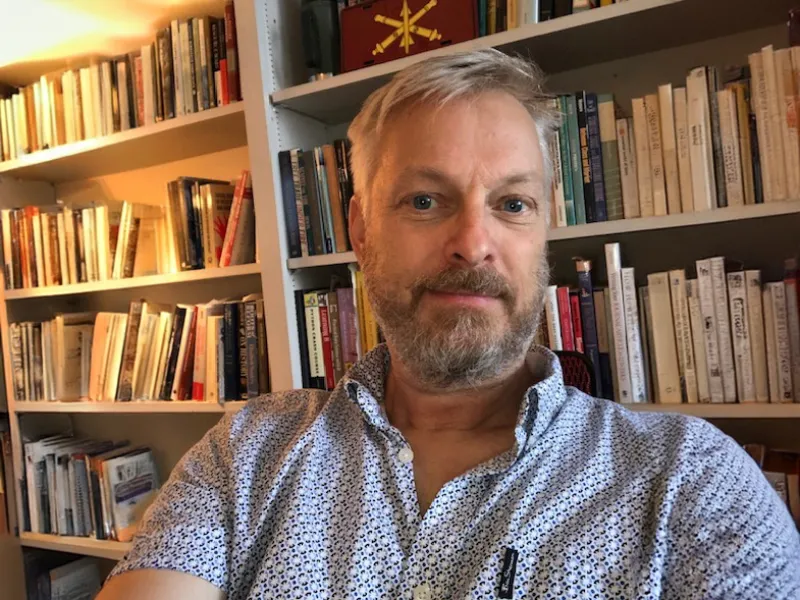
Thomas Oatley is a Professor and Corasaniti-Zondorak Chair of International Relations at Tulane University's Department of Political Science, housed within the School of Liberal Arts. His research focuses on American hegemony and international political economy, emphasizing the interplay between global economic structures and political dynamics. He teaches courses on international relations, globalization, and political economy, reflecting his expertise in these areas. His work addresses contemporary challenges such as climate change, financialization, and global governance, with a particular emphasis on how these issues intersect with power dynamics in the international system. Recent publications explore topics like the dual economy's impact on political polarization, the role of green industrial policy in climate politics, and the persistence of American hegemony in an evolving global landscape. Oatley's academic contributions span theoretical frameworks like complex interdependence and the political economy of currency systems. While no specific awards are listed, his prolific publication record underscores his influence in the field. He advises students in advanced courses such as Research Methods I and maintains active engagement through Tulane's interdisciplinary programs in New Orleans.
جستوجوی استاد و پژوهشگر
استاد راهنما، استاد دانشگاه یا پژوهشگر مناسب برای مسیر پژوهشیتان را پیدا کنید و با او ارتباط بگیرید.
نمایش ۷۳۶-۷۵۰ از ۳۰٬۵۴۴ استاد راهنما
اطلاعات این پروفایلها از صفحات عمومی دانشگاهها جمعآوری شده و ممکن است بهروز نباشد.
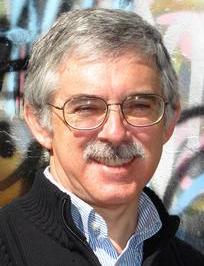
John Eck is a Professor at the University of Cincinnati's Department of Criminology. He earned his Ph.D. in Criminology from the University of Maryland in 1994. Prior to academia, he spent 17 years as Research Director at the Police Executive Research Forum, focusing on police reform and problem-oriented policing strategies. His work emphasizes practical crime prevention solutions rooted in rigorous research, including the development of guides for law enforcement and community initiatives. Eck played a pivotal role in the Cincinnati Collaborative Agreement, addressing racial discrimination in policing, for which he received the 2016 Collaborative Agreement Award and the Ronald V. Clarke Award in 2016. His research interests span problem-oriented policing, crime analysis, environmental criminology, and police reform. He has authored and co-authored numerous books and articles, including Problem-Solving Detective and Mapping Crime: Understanding Hot Spots . Eck teaches courses on policing and crime prevention, contributing to both academic and practitioner communities. Eck's publications reflect a focus on crime prevention strategies, evaluation methods, and policy implementation. His work often bridges theoretical frameworks with real-world applications, such as using GIS and crime mapping to identify and address high-crime areas. He has served on the National Academy of Sciences panel on police research and policy, further highlighting his influence in shaping criminal justice practices. Awards: 2016 Collaborative Agreement Award 2016 Ronald V. Clarke Award Grants and Advising: Eck has contributed to projects funded by the U.S. Department of Justice and the Police Foundation, though specific grant details are not disclosed here. His advisory role in the Cincinnati Collaborative Agreement exemplifies his commitment to bridging academic research and community action. Labs/Teams: Affiliated with the University of Cincinnati Criminal Justice Research Center, focusing on empirical studies of crime prevention and policing strategies.
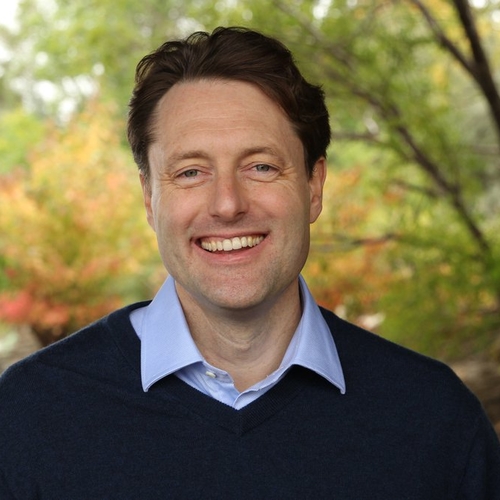
Dr. Steven Manson is a Professor in the Department of Geography, Environment, and Society at the University of Minnesota's College of Liberal Arts, where he also served as Associate Dean for Research and Graduate Programs. He directs the Human-Environment Geographic Information Science (HEGIS) laboratory and leads major data science initiatives like the National Historical Geographic Information System (NHGIS) and IPUMS Terra. PhD in Geography, Clark University (2002) BA Honours in Geography, University of Victoria (1995) His research focuses on geographic information science and human-environment systems , using agent-based modeling and big data to analyze land use change, urban dynamics, and sustainability challenges. Recent work explores spatiotemporal data harmonization and geospatial cyberinfrastructure . The articles reveal trends in GIScience methodology , urbanization analysis , and data-intensive sustainability research . Key contributions include self-organizing map applications for health data and hybrid statistical-GIS techniques for environmental policy. Scientific accolades include: Ecological Society of America Sustainability Science Award NASA Earth System Science Fellow McKnight Land Grant Professorship As Principal Investigator for NHGIS and IPUMS Terra, he secured over $40M in NSF, NIH, and DOJ grants for spatiotemporal data infrastructure. Outreach initiatives include developing open geospatial textbooks adopted globally and collaborating with Twin Cities K-12 programs.

Xueguang Zhou is the Kwoh-Ting Li Professor in Economic Development and Professor of Sociology at Stanford University, with a joint appointment as a Senior Fellow at the Freeman Spogli Institute for International Studies (FSI). He also serves as Director of Graduate Admissions and Director of Graduate Studies in Sociology. His research focuses on institutional changes in contemporary Chinese society, particularly the Chinese bureaucracy, governance, and state-society relationships. Zhou holds a Ph.D. in Sociology from Stanford University (1991). His work includes studies on bureaucratic state evolution, rural governance, and the dynamics of China's administrative systems. Notable contributions include The Institutional Logic of Governance in China (2017) and The Dynamics of Rules (2000). Awards include the Distinguished Scholarly Contribution Award from the International Association for Chinese Management Research (2014) and a Spencer Fellowship (1993-1994). Zhou has taught at Duke University and Cornell University and is a guest professor at Peking University, Tsinghua University, and the People’s University of China. His research spans sociological analysis of organizations, social inequality, and governance models in China, with a focus on bureaucratic behavior, policy implementation, and institutional logics.
- Bayesian Inference
- Biostatistics
- Causal Inference
- +۳ مورد دیگر
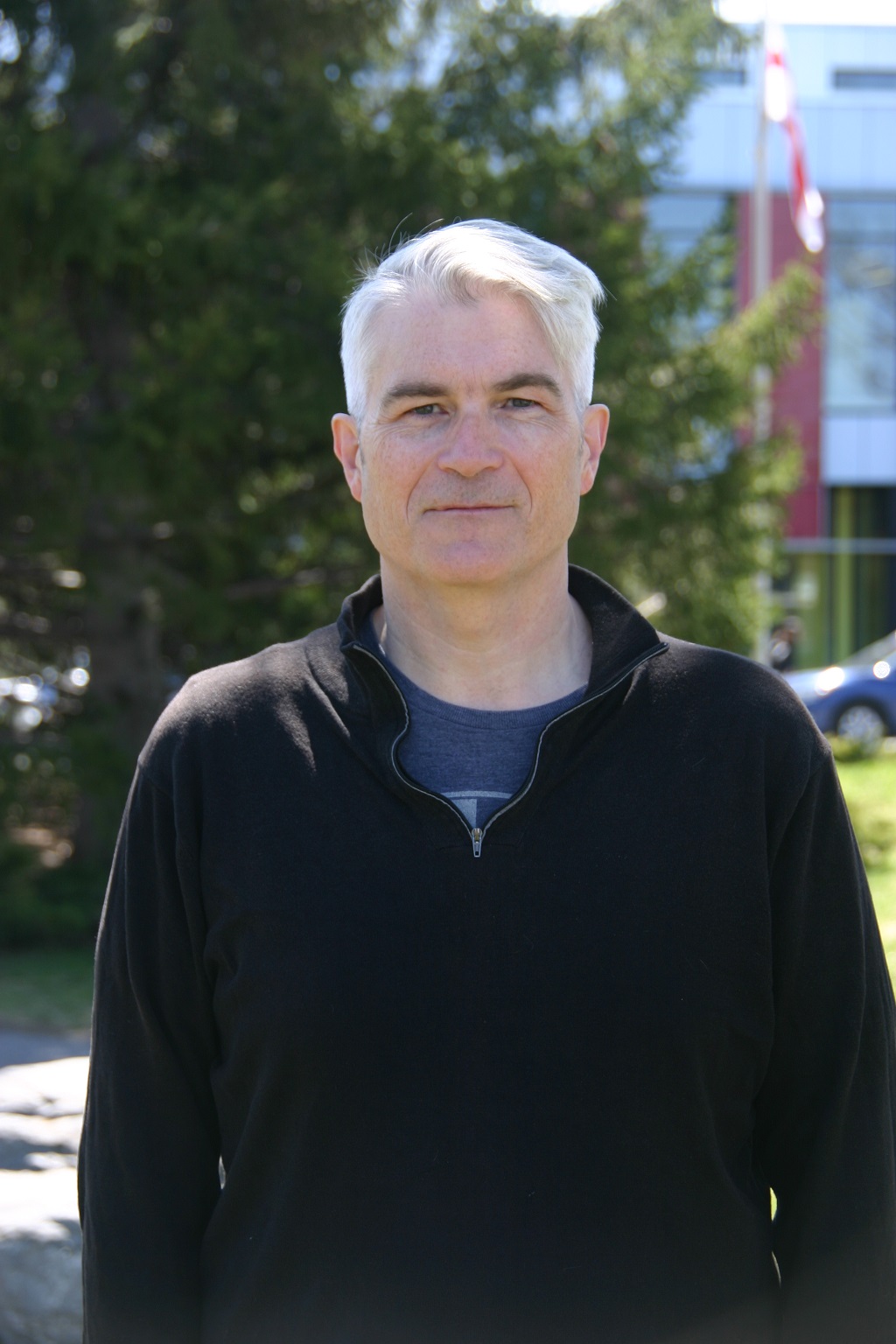
David A. Stephens is a Professor in the Department of Mathematics and Statistics at McGill University, Montreal. He served as Chair of the Department from 2015 to 2019 and as Vice-Dean in the Faculty of Science from 2019 to 2025. His research focuses on Bayesian inference, biostatistics, causal inference, bioinformatics, and statistical genetics. He holds prestigious fellowships: International Statistical Institute (2015), American Statistical Association (2019), and Royal Society of Canada (2024). His work addresses challenges in epidemiology, HIV transmission dynamics, and clinical trial design. Key research themes include: Bayesian hierarchical modeling for infectious diseases (e.g., SARS-CoV-2, HIV) Causal inference in dynamic treatment regimes Survival analysis and censored data methods Statistical genomics and epigenetics His publications analyze public health trends, such as HIV transmission clusters in Quebec and SARS-CoV-2 seroprevalence in Canada. Methodologically, he develops novel techniques for time-series analysis, recruitment forecasting in clinical trials, and computational statistics. Notable contributions include: Advancing phylogenetic cluster inference in HIV studies Optimizing warfarin dosing strategies via SMART trials Modeling gut microbiota impacts on growth faltering in infants His academic leadership includes roles at McGill and prior experience at Imperial College London. His work bridges statistical theory and practical healthcare applications, emphasizing interdisciplinary collaboration.
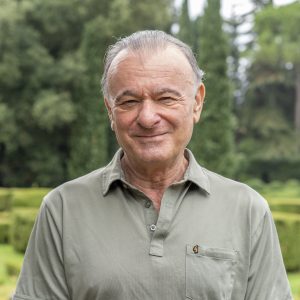
Gary Marks is a Distinguished Professor of Political Science at the University of North Carolina at Chapel Hill (UNC-Chapel Hill) and a Part-Time Professor at the European University Institute (EUI) in Florence. His primary affiliation is with the Department of Political Science at UNC-Chapel Hill, where he holds the Burton Craige Professorship. He also serves as a Research Professor at the Robert Schuman Centre for Advanced Studies at the EUI. Marks received his Ph.D. in Political Science from Stanford University and has held visiting professorships and fellowships at institutions such as VU Amsterdam, the Free University of Berlin, and the Hoover Institution. His research focuses on comparative politics, multilevel governance, European integration, and international organization. Notable contributions include his postfunctionalist theory of governance, detailed in works like Multi-Level Governance and European Integration (2001) and A Theory of International Organization (2019). He has been awarded prestigious honors, including the Humboldt Research Prize (2010), the Daniel Elazar Federalism Scholar Award (2017), and the Martha Derthick Award (2023) for his influential scholarship. Marks co-founded the UNC Center for European Studies (1994) and the EU Center of Excellence (1998). He currently co-leads an ERC Advanced Grant (TRANSNATIONAL) investigating political polarization in Western societies. His recent research explores education-based political cleavages, transnational governance, and the implications of crises like the pandemic on solidarity and policy responses. Awards: Humboldt Research Prize, Martha Derthick Award, Daniel Elazar Award, Honorary Doctorate from Maastricht University (2024) Grants: €2.5M ERC Advanced Grant (2010–2015), Current ERC Grant on Political Polarization (2021–2026) Labs/Teams: Transnational Lab at EUI, Chapel Hill Expert Survey (CHES) project Marks’ work bridges academic and policy circles, with datasets like the CHES providing foundational insights into global governance and political dynamics.

Mylene Lagardeمشاهده پروفایل
دانشیار
- Health Economics
- Global Health
- Healthcare Policy
- +۳ مورد دیگر
Dr. Mylene Lagarde is an Associate Professor of Health Economics and Deputy Head of Department (Research) at the London School of Economics and Political Science (LSE), Department of Health Policy. Her research focuses on applied economic analysis of healthcare decisions in low- and middle-income countries (LMICs), particularly provider behavior, healthcare demand, and health policy evaluation. She has conducted studies on topics such as health worker incentives, user fee removal policies, and the impact of performance-based financing. She holds affiliations with J-PAL and the University of Witwatersrand, South Africa. Her work combines quantitative methods, randomized experiments, and policy analysis to inform global health interventions. Educated in France and with field experience in Cameroon, Lagarde’s academic career includes roles at the London School of Hygiene and Tropical Medicine before joining LSE in 2016. She teaches advanced health economics courses, including MPhil/PhD programs in Health Economics and Policy, and modules on randomized evaluations of health programs. Her research has explored provider behavior in Senegal, Zambia, South Africa, and other LMICs, addressing challenges like antibiotic overprescription, healthcare quality under workload pressures, and equitable access to services. Key areas of focus include the role of pro-social preferences in healthcare workforce distribution, the effectiveness of group incentives for preventive care, and the framing effects of health policies. She has contributed to understanding how financial and non-financial incentives shape healthcare provider performance and patient choices, with implications for improving health system efficiency and equity globally.
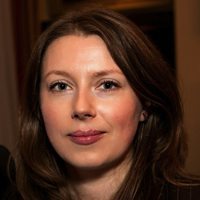
Oksana Levkovychمشاهده پروفایل
پژوهشگر ارشد
- International Political Economy
- Power Transitions
- History of Political and Economic Thought
- +۵ مورد دیگر
Oksana Levkovych is an LSE Fellow in the Department of International Relations at the London School of Economics and Political Science (LSE). She specializes in International Political Economy, focusing on systemic power transitions such as UK-US and US-China dynamics, and the interplay between economic ideas and policy decisions. She is affiliated with the International Political Economy Research Cluster and holds a PhD in International Relations from LSE, supervised by Dr James Morrison and Professor Peter Trubowitz. Her master’s degrees include Political Economy from King’s College London and English Culture from the University of Lisbon. Her research critically examines structural explanations of power shifts by emphasizing political contingency, leveraging archival methods to explore historical and contemporary debates on trade and global political economy. Notably, she investigates the UK and US-led post-war liberal order reconstruction, mercantilism's persistence, and drivers shaping US-China relations. Oksana has been recognized with prestigious awards, including the LSE Excellence in Education Award (2023-4) and dual Class Teacher Awards for Inspiring Teaching and Learning Development (2023-4 and 2024-5). She is actively involved in teaching courses such as The Politics of Economic Policy , International Political Economy , and The Political Economy of China’s Technological Rise . She is committed to academic mentoring and pastoral care but is currently unavailable to supervise MPhil/PhD students. Her expertise extends to qualitative research, historical archives, and the analysis of pivotal actors in systemic change.

Steven Constable is a Professor of Geophysics at the Institute of Geophysics and Planetary Physics (IGPP) within the Scripps Institution of Oceanography at UC San Diego. He specializes in electrical conductivity studies of Earth’s crust and mantle, seafloor instrumentation development, and geophysical data analysis. His research focuses on understanding tectonic processes, subduction zone dynamics, and marine geohazards through electromagnetic methods. Education: B.S., University of Western Australia Ph.D., Australian National University Research Interests: Electrical conductivity of crust and mantle Seafloor instrumentation development Magnetotelluric and controlled-source electromagnetic (CSEM) methods Subduction zone fluid dynamics CO 2 sequestration monitoring Mid-ocean ridge magmatism Grants & Collaborations: NSF-NERC Collaborative Research: Magnetotelluric imaging of plume-ridge interactions (Galapagos) Magnetotelluric Investigation of the Salton Trough (MIST) Experiment PI-LAB Experiment at the Equatorial Mid-Atlantic Ridge Labs & Teams: He leads the Marine Electromagnetics Lab , developing cutting-edge instrumentation for marine geophysical surveys. His team collaborates globally on projects ranging from Arctic permafrost assessment to subduction zone imaging.
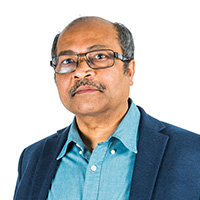
Professor Tirthankar Roy holds the position of Professor of Economic History at the London School of Economics and Political Science (LSE). His expertise spans South Asian economic history, global historical dynamics, environmental history, and the legacies of colonial empires. He teaches courses such as EH307 (Economic History of South Asia, 1600–2000) and EH404 (India and the World Economy). His research interrogates long-term patterns in Indian capitalism, the interplay between climatic conditions and economic change, and the persistence of colonial legal frameworks in modern India. Key contributions include Monsoon Economies: India’s History in a Changing Climate and co-authored works like Law and the Economy in Colonial India and its sequel. His recent book Water and Development: The Troubled Economic History of the Arid Tropics examines water resource management in arid regions. He actively engages with public discourse via social media, countering historical myths about colonialism with evidence-based scholarship. Research interests include the economic development of South Asia, global historical comparisons, environmental determinants of economic activity, and the socio-political dimensions of colonial legal systems. His work bridges historical analysis with contemporary policy debates, emphasizing the need for evidence-based understanding of historical processes.
Lorenzo Pellisمشاهده پروفایل
پژوهشگر ارشد
Dr. Lorenzo Pellis is a Research Fellow at the University of Manchester, holding the Sir Henry Dale Fellowship, and a Visiting Fellow at the University of Warwick's Mathematics Institute and Zeeman Institute. He is also an Honorary Research Associate at the Medical Research Council (MRC) Centre for Outbreak Analysis and Modelling, within the Department of Infectious Disease Epidemiology at Imperial College London. His research bridges applied mathematics and epidemiology, focusing on developing models that inform public health decisions. He earned his Doctoral degree in Mathematical Biology from Imperial College London in 2009, with a dissertation titled Mathematical models for emerging infections in socially structured populations: the presence of households and other social structures II: Comparisons and implications for vaccination . Pellis's research interests include the development of novel deterministic and stochastic methods to model infection spread dynamics, particularly in human populations with complex social structures. He focuses on directly transmitted infections and the impact of co-infections on epidemiological and evolutionary outcomes. His work emphasizes multi-scale models integrating within-host and between-host processes, with applications to antimicrobial resistance, HIV-TB co-infections, and respiratory syncytial virus (RSV) transmission in Kenya. He also explores model comparison techniques to assess the utility of simple models in public health decision-making. His recent articles collectively explore mathematical modeling in infectious disease dynamics, with a focus on network-based approaches, multi-strain infections, and the integration of within-host and between-host processes. They highlight challenges in metapopulation and network models, as well as the evolutionary dynamics of HIV and TB co-infections. Sir Henry Dale Fellow , funded by the Wellcome Trust and Royal Society His grants include support for his Sir Henry Dale Fellowship, which funds research on co-infections and multi-scale models. He collaborates with Prof. Matt Keeling and Dr. Thomas House at Warwick and Prof. James Nokes on RSV studies in Kenya. His work also involves improving epidemic dynamics approximation methods on networks. He is affiliated with the applied Mathematics group at Manchester's School of Mathematics, the Zeeman Institute at Warwick, and the MRC Centre at Imperial College. His interdisciplinary collaborations span institutions and disciplines, including applied mathematics, epidemiology, and public health.
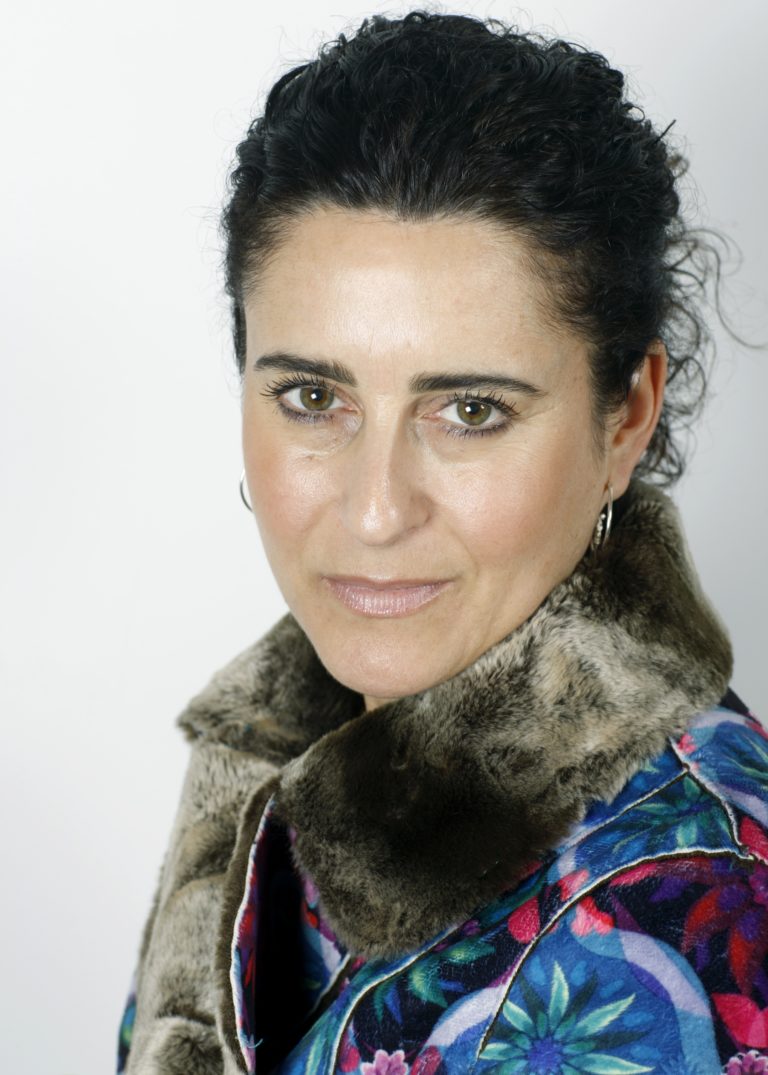
Margot Salomonمشاهده پروفایل
دانشیار
Margot Salomon is Associate Professor in the Law Department at the London School of Economics and Political Science (LSE), where she directs the Laboratory for Advanced Research on the Global Economy at LSE Human Rights and coordinates a cross-departmental research group on Globalisation, Poverty and Responsibility. She is also an Associate of LSE and Leeds's Centre for Climate Change Economics and Policy (CCCEP). Her educational background includes a PhD in International Law from LSE, an LLM in International Human Rights Law from University College London, an MA in Comparative European Social Studies from the University of Amsterdam, and a BA from Concordia University in Montreal. Salomon's research critically examines the relationship between international law, poverty, and economic globalization. Her work spans socio-economic rights, indigenous rights, environmental justice, and the political economy of international law. She explores how international legal frameworks interact with capitalism and investigates possibilities for transformative human rights approaches that challenge dominant economic paradigms. Her recent scholarship has focused on peasant rights, debt, austerity, and the potential for emancipatory legal frameworks that move beyond conventional human rights approaches. Her publications reveal a consistent focus on the structural dimensions of poverty and inequality within international legal frameworks. She has pioneered work on extraterritorial obligations through the Maastricht Principles and has examined how economic governance structures impact human rights. Her scholarship demonstrates a growing emphasis on radical alternatives to conventional human rights approaches, particularly through engagement with peasant movements, commons-based approaches, and post-growth paradigms. European Society of International Law Book Prize (2019) for The Misery of International Law Belgian European Francqui Chair (2018) Salomon has supervised numerous PhD candidates in areas including socio-economic rights, development and international law, and environmental rights, often working in cross-disciplinary supervisory teams. Her advisory work extends to significant policy impact, having served as consultant to the UN High Commissioner for Human Rights on extreme poverty and human rights, and to the World Bank on Human Rights and Economics. She has been involved with major initiatives including the Maastricht Principles on Extraterritorial Obligations and has advised the Speaker of the Greek Parliament on socio-economic rights during the debt crisis. She directs the Laboratory for Advanced Research on the Global Economy at LSE Human Rights, which serves as an interdisciplinary hub for critical research on the global economic order and its relationship to human rights. The Laboratory fosters dialogue between legal scholars, economists, political scientists, and activists working on transformative approaches to global justice.
- Tort Law
- Contract Law
- Labour Law
- +۷ مورد دیگر
Professor Simon Deakin is a Fellow and Director of Studies in Law at Peterhouse, University of Cambridge, specializing in private law (tort and contract law) and labour law. He teaches on the undergraduate Law Tripos and the LLM programme, with research focusing on law and economics, artificial intelligence, and historical legal analysis. Current research on Is Law Computable? and AI ethics Co-editor of computational law essay collection Developed Cambridge Leximetric Database for quantitative legal analysis His research spans tort law, corporate governance, digital economy regulation, and sustainability. Recent work explores the Anthropocene's legal implications and labour law's computational approaches. Scientific awards include the Cambridge Students' Union teaching prize (2023) He supervises doctoral students annually and contributes to legal education through widely used textbooks. As a Centre for Business Research (CBR) affiliate, he advances data-driven analysis of global labour regulation.
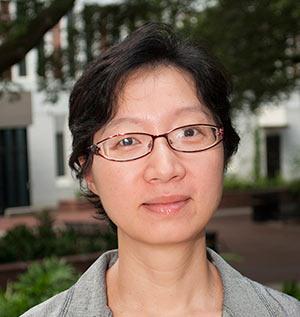
Xinlin Tangمشاهده پروفایل
دانشیار
Xinlin Tang is an Associate Professor at the College of Business, Florida State University (FSU), and serves as Doctoral Coordinator for the Management Information Systems (MIS) Ph.D. program. She teaches core and elective IS courses at both undergraduate and graduate levels, including information technology management and IT project management. Education : Ph.D. in Computer Information Systems (Georgia State); M.S. in MIS (University of South Carolina); M.A. in English Literature (Beijing Foreign Studies University); B.S. in Architecture (Tsinghua University). Her research focuses on the intersection of information system strategy and interorganizational relationship management . Key themes include IT-enabled governance, innovation, knowledge management, and digital intermediation. She has published in top journals such as Information Systems Research , Journal of Operations Management , and IEEE Transactions on Engineering Management . Selected publications highlight her work on IT-enabled business models, supplier portfolio dynamics, structural embeddedness in B2B networks, and e-procurement innovation. Her research often bridges theoretical frameworks with empirical validation in digital transformation contexts. Scientific Awards : Co-PI for NSF China Junior Faculty Research Grant ($26,000) Winner of 2006 Harriet Fulbright Dissertation Grant ($10,000) Nominated for FSU Teaching Award (2008, 2011) She has contributed to the academic community through editorial reviews and curriculum development for MIS programs.

Douglas Northrop is a Professor of History and Middle Eastern Studies at the University of Michigan's College of Literature, Science, and the Arts (LSA). He serves as Acting Director of the Weiser Center for Europe and Eurasia (WCEE) for the 2025-26 academic year, having previously been Associate Director since 2023 and a member of the WCEE Steering Committee. His affiliations include CMENAS (Center for Middle Eastern & North African Studies), CREES (Center for Russian, East European, and Eurasian Studies), and the Global Islamic Studies Center. Ph.D. in History, Stanford University (1999) M.A. in Modern European History, Cambridge University (1991) B.A. in Russian, Political Science, and Mathematics, Williams College (1988) Northrop specializes in the modern history of Central Asia, world history, environmental history, and the cultural dimensions of modern colonialism. His scholarship explores intersections of empire, gender, and environmental change, with a focus on Soviet-era Central Asia and global historical frameworks. His publications include Veiled Empire: Gender and Power in Stalinist Central Asia (2004), which won the W. Bruce Lincoln Prize and Heldt Prize, and Four Days that Shook the World: Earthquakes and Empire on Russia’s Eurasian Frontier (forthcoming). He co-authored BIG IDEAS: A Guide to the History of Everything (2020) and edited the Oxford Handbook to Central Asian History . W. Bruce Lincoln Prize (2004) Heldt Prize (2004)
فقط ۷۵۰ نتیجه اول نمایش داده میشود. برای رسیدن به نتایج دقیقتر، جستوجو را با فیلترها محدودتر کنید.