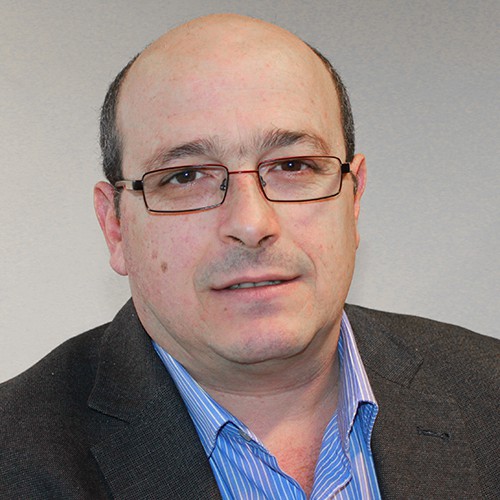
Jesper Havelund is a researcher at the Department of Biochemistry and Molecular Biology, University of Southern Denmark, specializing in metabolomics, mitochondrial biology, and metabolic pathways. His work integrates mass spectrometry and systems biology to study metabolic regulation in diseases like obesity, diabetes, and cancer. Research areas include metabolomics, mitochondrial dysfunction, and metabolic disease mechanisms Key projects: Nordic Metabolomics Society travel grant (2019-2020) Collaborations span neurology, endocrinology, and oncology research Recent publications focus on fructose metabolism in lung cancer, hepatic stellate cells in fatty liver disease, and mitochondrial adaptations in skeletal muscle. His work employs advanced metabolomic techniques to uncover novel therapeutic targets. Scientific awards include the Nordic Metabolomics Society travel grant. He utilizes liquid chromatography-mass spectrometry extensively in his research, with a focus on lipid and amino acid metabolism across multiple organ systems.
Ute Hahn is an Associate Professor at the Department of Mathematics, Aarhus University . Her research bridges Statistics, Biostatistics, and Neuroscience , with a focus on neurodegenerative diseases like ALS and advanced microscopy techniques . Research Interests: Statistical modeling in ALS and genetic research Stochastic geometry and spatio-temporal analysis Super-resolution microscopy (PALM, STED) Medical statistics and clinical epidemiology Functional data analysis and methodological innovations Selected Publications highlight her interdisciplinary work, including studies on ALS mouse models , microscopy artifacts , and spatio-temporal patterns in medical and environmental contexts . Collaborative Projects: Ute is actively involved in the MechanoGeometry research initiative, which began in 2022 and continues into 2023.
Trine Aalborg is a Postdoctoral Researcher in the Department of Chemistry and Bioscience at Aalborg University's Faculty of Engineering and Science. Her research focuses on genomics, bioinformatics, and potato crop improvement, with particular expertise in tetraploid genetics and fungal systems. She maintains an active research profile with multiple publications and projects spanning from 2020 to 2025. Dr. Aalborg completed her MSc in Biotechnology with research focused on Introducing Molecular Methods for Genome Engineering in Apiospora Filamentous Fungi (2019-2021) Her primary research interests center on potato genomics and biotechnology, with specific expertise in tetraploid genetics, genomic selection, and CRISPR/Cas9 applications. She investigates secondary metabolites in filamentous fungi, particularly Apiospora, and applies structural bioinformatics to advance crop improvement strategies. Her work contributes to UN Sustainable Development Goals related to food security and sustainable agriculture. Analysis of her recent publications reveals a consistent focus on tetraploid potato genomics, with particular emphasis on how marker type and density affect genomic prediction accuracy and genome-wide association studies. Her research bridges computational genomics with practical agricultural applications, developing tools and resources for potato breeders. Dr. Aalborg has received notable recognition including: AAU Biotech Scholarship 2020-2021 (70,000 DKK) Karen Nordjysk Naturtalent award in Chemistry (1st place, 2,000 DKK) She serves as a Co-Investigator on multiple significant research projects including: Sekventering og vedligeholdelse af MASPot kartoffelpopulationen (2023-2025) RESPOT: Development of disease resistant potatoes (2020-2024) These projects focus on potato genetic resources, disease resistance breeding, and genomic prediction methodologies. Dr. Aalborg collaborates extensively with researchers across Aalborg University, particularly with Nielsen K.L., Sverrisdóttir E., and Sørensen T., forming part of a robust research team focused on potato genomics and improvement. Her work connects fundamental genomic research with practical agricultural applications through the MASPot population and related resources.
Melisa Benard Valle is an Assistant Professor (Tenure Track) at the Department of Biotechnology and Biomedicine, Technical University of Denmark, working in the Section for Biologics Engineering with focus on Antibody Technologies. Her research addresses snake venom toxicity and antivenom development , contributing to UN Sustainable Development Goals related to health and planetary protection. Key research areas include Neutralization , Phage Display , and Snakebite studies. Recent publications focus on neurotoxin-neutralizing protein design, VHH antibody discovery, and multi-omics venom analysis. Collaborations span tropical disease research and pan-African antivenom initiatives.
Kristoffer Hougaard Madsen is a Professor at the Department of Applied Mathematics and Computer Science , Technical University of Denmark (DTU), specializing in Visual Computing and Cognitive Systems . His work focuses on brain function mapping using functional MRI (fMRI), with expertise in fMRI data analysis, study design, and noise reduction techniques. Education: Civil Engineer (Bioinformatics & Complex Systems) from DTU (2004) External Position: Danish Research Centre for Magnetic Resonance, Copenhagen University Hospital Hvidovre (since 2008) His research spans neuroimaging , brain network modeling , and neuromodulation techniques like transcranial magnetic stimulation (TMS) and deep brain stimulation (DBS). He supervises PhD projects on topics such as individual brain circuit modeling , cerebellum organization in schizophrenia , and cooperation behavior in children . Recent publications highlight his contributions to electric field optimization , time-dependent diffusion imaging for tumors, and high-resolution mapping of brain structures . His work aligns with UN Sustainable Development Goals related to health and well-being. He collaborates extensively with institutions like Copenhagen University Hospital and contributes to interdisciplinary research in neurodegenerative diseases (e.g., Parkinson’s, Multiple Sclerosis) and psychiatric disorders .
Martin Cramer Pedersen is an Associate Professor at the Niels Bohr Institute, University of Copenhagen, affiliated with the Biocomplexity department and the Solid State Physics group. His research spans interdisciplinary topics at the intersection of biophysics, materials science, and computational biology. Specializes in structural characterization using small-angle scattering (SAXS/SANS) Develops computational methods for analyzing complex biological and soft matter systems Investigates active matter dynamics, membrane-bound protein interactions, and colloidal self-assembly Recent publications highlight his work on: Hyperbolic order in curved materials α-synuclein aggregation mechanisms Active particle-induced porous gel structures Advanced scattering data analysis tutorials Casein micelle structural heterogeneity Nematic order collapse on frictional substrates His collaborative research involves institutions across Europe and Australia, with applications in biophysics, nanotechnology, and soft matter physics.
Duccio Medini is a Research Fellow at Novartis Vaccines and Diagnostics , specializing in integrating quantitative methodologies with genomics, preclinical, and clinical data to address global health challenges. His career spans over a decade in pharmaceutical R&D, with expertise in vaccine development, team leadership, and cross-functional international project management. Core Competences: Bioinformatics, Biostatistics, Vaccine R&D, Population Genomics Research Interests His work focuses on meningococcal vaccine development, immunogenicity prediction, and public health impact assessment. He has pioneered synthetic control methods for evaluating vaccine efficacy and advanced dynamic modeling techniques for field effectiveness estimation. Publication Trends Over 12 years, his research evolved from molecular antigen characterization (2010) to population-level vaccine impact analysis (2016-2021), emphasizing data-driven approaches in vaccine epidemiology and translational research. Leadership Roles He has built high-performing teams of quantitative scientists and statisticians while contributing to regulatory approval pathways for major vaccine programs through rigorous statistical and computational analysis.
Andrew Nicholas Blackford is an Associate Professor at the Department of Cellular and Molecular Medicine , University of Copenhagen , affiliated with the Molecular Aging Program . His research focuses on DNA damage response mechanisms and their implications in cancer biology. ORCID: 0000-0003-1979-021X Contact: +4535331593 | ablackford@sund.ku.dk Location: Blegdamsvej 3, 2200 København N. Research interests include DNA repair pathways, genome stability during mitosis, RecQ helicase functions, and evolution of DNA damage response systems. His work employs bioinformatics , proteomics , microscopy , and CRISPR-Cas9 technologies to explore: Coordination of DNA damage recognition with cell cycle checkpoints Translational applications for cancer therapies Protein-protein interaction networks in DDR Novel biomarker discovery for DNA repair disorders Research output (15 most recent) reveals expertise in DNA repair dynamics, mitotic genome integrity, and cancer-related signaling mechanisms. Collaborations span institutions addressing genomic instability and oncogenic processes . Professional activities : Member, Danish Cancer Society (2025) Member, Cancer Research UK (2023)
Beatrice Jacqueline Geiger is a Research Fellow at the Niels Bohr Institute , University of Copenhagen , affiliated with the Biocomplexity department. Her research integrates biophysics and computational biology to investigate the mechanical behaviors of cellular structures. Email: beatrice.geiger@nbi.ku.dk Geiger’s recent publications in bioRxiv highlight her work on membrane dynamics and nuclear envelope mechanics , leveraging computational models to unravel structural and mechanical properties of biological systems. Her research aligns with the Biocomplexity department’s focus on interdisciplinary approaches bridging physics and biology.
Fabian Johannes Schuhmann is a Research Fellow at the Niels Bohr Institute, University of Copenhagen, affiliated with the Biocomplexity and Biophysics group. His research focuses on computational approaches to structural biology and molecular dynamics. Focus areas include mitochondrial protein distributions, amyloidogenic proteolysis, and allosteric protein communication. Recent publications highlight integrative modeling techniques, cross-linking data analysis, and applications in neurobiology and quantum biology. Notable collaborations involve computational drug screening for tick-borne encephalitis virus and physics-based protein network analysis. Research trends span 2024–2025, emphasizing interdisciplinary methods.
Jacob Kæstel-Hansen is a Postdoc at the Department of Computer Science , University of Copenhagen , affiliated with the Machine Learning section under the Faculty of Science. His work bridges machine learning with computational biology, focusing on single-particle tracking and biological data analysis. Research Interests : Machine learning applications in biophysics Single-particle tracking and diffusion analysis Protein aggregation and intracellular dynamics Super-resolution microscopy Automated correlation between biological motion and function Publications : His recent contributions (2024-2025) include advanced machine learning techniques for single-particle dynamics, insulin analog trafficking, and defect-engineered nanocarriers for drug delivery. He collaborates extensively with researchers in biophysics and computational biology. Collaborations : Jacob works with institutions like the SCIENCE AI Centre and researchers in biophysics, chemistry, and computational biology, focusing on sustainability and medical data applications.
Wouter Boomsma is a Professor in the Machine Learning section of the Department of Computer Science at the University of Copenhagen. He leads the BioML research group, which focuses on developing machine learning techniques to address fundamental challenges in biology, particularly in the realm of protein science. His research interests center around understanding the relationship between protein sequence, structure, and function through advanced machine learning approaches. Key research areas include representation learning of protein sequences and structures, 3D structure prediction, and systematic protein optimization using techniques like Bayesian optimization. His work has significant applications in protein engineering, basic biological research on mutation effects in protein interaction networks, and health-related studies on human disease mutations. Boomsma's research program recently received substantial funding from the Novo Nordisk Foundation to establish the Center for Basic Machine Learning Research in Life Science (MLLS), a collaborative effort involving six machine learning research groups in the Copenhagen area. This initiative underscores the significance and potential impact of his work at the intersection of machine learning and life sciences. His publication record demonstrates a consistent focus on applying machine learning to protein science challenges, with recent work emphasizing protein structure prediction, variant effect analysis, and Bayesian optimization for protein engineering. The research output shows strong interdisciplinary connections between computer science, biology, and medicine. Boomsma maintains active collaborations with industry partners and research institutions, with his work gaining recognition through citations and media coverage. His group's research has been featured in high-impact journals including Nature Methods, Nature Communications, and PLOS Computational Biology. The BioML group operates within the Department of Computer Science's Machine Learning section at the University of Copenhagen, with physical location at Universitetsparken 1, Copenhagen Ø. The group maintains an active presence through their website (https://ku-bioml.github.io) and continues to expand its research portfolio in machine learning for biological applications.
Kai Blin is a Senior Researcher at the Novo Nordisk Foundation Center for Biosustainability at the Technical University of Denmark (DTU), specializing in Natural Products Genome Mining as part of the DTU Microbes Initiative. His work focuses on computational approaches to discover and analyze biosynthetic gene clusters in microbial genomes. Dr. Blin's research interests center around genome mining for natural products, particularly through the development and application of bioinformatics tools like antiSMASH. His expertise spans biosynthetic gene cluster analysis, secondary metabolite discovery, microbial genomics, and computational methods for natural product research. His work significantly contributes to the UN Sustainable Development Goals related to health, sustainability, and responsible consumption. His recent publication record demonstrates strong activity in developing resources for natural product discovery, including the BGC Atlas web resource, MIBiG 4.0 database, and antiSMASH database version 4. These tools facilitate the exploration of chemical diversity encoded in bacterial genomes and advance biosynthetic gene cluster curation through global collaboration. Kai Blin actively supervises multiple PhD students on projects related to natural product discovery, computational genomics, and AI/ML applications in the field. His current projects include methods for structural variant calling, sustainable food production techniques, and natural products structure prediction based on genomic data. As an active member of the scientific community, Dr. Blin organizes and participates in conferences and workshops focused on genome mining, including the Natural Products (Meta) Genome Mining conference and Genome Mining for Natural Products workshop. His work on resistance genes has received significant media attention, including coverage in multiple news outlets and academic platforms.
Prof. Yamir Moreno is a Professor of Physics at the Department of Theoretical Physics, Faculty of Sciences, University of Zaragoza, where he also serves as Director of the Institute for Biocomputation and Physics of Complex Systems (BIFI) and leads the Complex Systems and Networks Lab (COSNET). He holds international affiliations as Research Director at CENTAI Institute (Turin, Italy) and External Professor at the Complexity Science Hub Vienna (Austria), and was previously a Principal Scientist and Area Coordinator at the ISI Foundation. PhD in Physics, University of Zaragoza (Summa Cum Laude, 2000) Ramón y Cajal Fellow (2005-2010) First-class Fellow, ISI Foundation Fellow, American Physical Society (2021) Fellow, Network Science Society (2022) His research focuses on complex systems , network science , epidemic modeling , and social dynamics . He investigates disease dynamics, diffusion processes, nonlinear systems, and higher-order network structures using tools from physics, mathematics, and data science. His work bridges theoretical foundations with real-world applications in public health, urban systems, and social behavior. Recent publications highlight trends in multilayer and higher-order networks , digital twins of cities , epidemic modeling with behavioral feedback , and social contagion in complex systems . His research integrates data-driven modeling, machine learning, and network theory to study urban resilience, information spread, and collective behavior. Complex Systems Society’s Senior Scientific Award (2019) Highly Cited Researcher (Web of Science, 2019) Service Award, Complex Systems Society (2022) Editor-in-Chief, Journal of Complex Networks Editor, PLoS Computational Biology, Chaos, Solitons & Fractals, Proceedings of the Royal Society A Divisional Associate Editor, Physical Review Letters (2014-2020) Prof. Moreno has supervised 23 PhD theses and over 30 master’s theses. He has led multiple EU-funded projects and has served on advisory boards for the EU Future and Emerging Technologies and the WHO Collaborative Center on Complexity Sciences for Health Systems. His collaborative network spans institutions in Europe, Latin America, and North America. He leads the Complex Systems and Networks Lab (COSNET) at BIFI, a multidisciplinary team focused on network theory, computational epidemiology, and social dynamics. The lab develops models for epidemic forecasting, urban resilience, and collective behavior using high-performance computing and data analytics.
Thøger Jensen Krogh is a lecturer at the Faculty of Science , University of Southern Denmark , affiliated with the Department of Biochemistry and Molecular Biology . His research focuses on Molecular Biology , Biochemistry , and Microbiology , particularly in bacterial systems. His work explores Genomics , Protein Glycosylation , and Gene Expression Regulation , with studies on Bacteriophage Genomics , ETEC Pathogenesis , and Chromosomal Architecture . Recent publications highlight Prokaryotic Transcriptional Regulation , O-Glycosylation Mapping , and Antibiotic Resistance Mechanisms . Research Keywords: Molecular Biology, Biochemistry, Microbiology, Protein Glycosylation, Genomics, Gene Regulation Key Techniques: Mass Spectrometry, Draft Genome Assembly, SILAC, Chromosomal Modeling Academic Affiliation: Department of Biochemistry and Molecular Biology, SDU