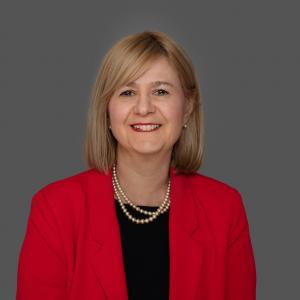
Ema Botica is a faculty member at the Faculty of Humanities and Social Sciences, University of Split, Croatia, where she is affiliated with the Department of Croatian Language and Literature. She holds the academic rank of Assistant Professor and contributes to teaching and research in Croatian language and literature. Her research interests center on Croatian linguistics, philology, and literature. Given her departmental affiliation, her scholarly work likely focuses on language structure, historical development of the Croatian language, textual analysis, and literary studies within the broader South Slavic context. No recent publications are listed in the provided text, though a link to the Croatian Scientific Bibliography Database (CRORIS) suggests a record of scholarly output. Further details on her research trends and thematic focus cannot be determined without access to specific article data. There is no mention of scientific awards or honors in the available information. Ema Botica advises students as part of her academic role, though no named advisees are listed. There is no information available regarding research grants or funded projects she may lead or participate in. No details about laboratories, research teams, or collaborative centers she may be involved with were found in the provided text.
Ivana Brekalo is a Researcher at the Ruđer Bošković Institute in Zagreb, Croatia, affiliated with the Division of Physical Chemistry and the Laboratory for Applied and Sustainable Chemistry. She holds a Ph.D. in Chemistry from Georgetown University (2019), with a thesis on "Solid State Synthesis and Study of Porous Materials," and completed her Master's (2012) and Bachelor's (2010) degrees in Chemistry at the University of Zagreb. Her work bridges mechanochemistry and materials science, focusing on scalable synthesis methods for functional materials. Doctor of Philosophy, Chemistry, Georgetown University (2013–2019) Master of Science, Chemistry, University of Zagreb (2010–2012) Bachelor of Science, Chemistry, University of Zagreb (2007–2010) Her research emphasizes mechanochemical synthesis, particularly for porous materials like metal-organic frameworks (MOFs) and coordination polymers. She explores solvent-free methods, polymorphism control, and the role of gas-phase catalysts in solid-state reactions. Recent publications highlight thermally controlled milling for agrochemical cocrystals, conductivity in alkali metal coordination polymers, and real-time monitoring of mechanochemical processes. Key publications include Nature Reviews Chemistry perspectives on advanced mechanochemical synthesis and Inorganic Chemistry studies on low-dimensional magnetism in MOF-74 materials. Her work appears in journals like ACS Sustainable Chem. Eng. and Chemical Science , with a focus on green and scalable methods. Scientific Awards Scholarship of the Polish National Agency for Academic Exchange – Ulam Programme (2020) Bepina Sabalić Kunin Fellowship (2013-2015, 2017-2018) Ludo Frevel Crystallography Scholarship, IUCr (2017) CCDC award for best presentation (2022) Brekalo contributes to outreach as the 2019 ACS Volunteer of the Year and has received recognition for her work on solvent-free polymorphism and mechanochemical templation of ZIFs.
Robert Junior Kolman is a Researcher at the Ruđer Bošković Institute's Division of Organic Chemistry and Biochemistry, focusing on organic synthesis and biocatalysis. He holds a PhD in Chemistry from the University of Zagreb (2024), following a Master's (2019) and Bachelor's (2017) in Chemistry from the same institution. His research emphasizes stereoselective synthesis, leveraging biocatalysts like halohydrin dehalogenases for kinetic resolution of propargylic epoxides, yielding chiral building blocks with quaternary stereocenters. Key areas of exploration include propargylic epoxide synthesis, enantioselective catalysis, and optimizing biocatalytic pathways. His work bridges fundamental organic chemistry with practical applications in asymmetric synthesis. Recent contributions include advancements in HHDH-catalyzed processes and chiral library generation, published in journals like Advanced Synthesis & Catalysis and Organic Letters . No scientific awards are listed in the text. His teaching roles include laboratory instruction in organic chemistry at the University of Zagreb's Faculty of Science. He is affiliated with the Synthetic Methodologies in Organic Chemistry Laboratory at the Ruđer Bošković Institute.
Zvonimir Šafranko is an Assistant Professor at the Faculty of Economics and Business , University of Zagreb, specializing in Business Law . Since 2019, he has taught Commercial Law and Law of International Trade at both the Faculty of Economics in Zagreb and the Faculty of Organization and Informatics in Varaždin. He earned his PhD in Legal Sciences (2016) from the University of Zagreb with a thesis on Legal Aspects of Electronic Transferable Records in Commercial Transactions . Research Focus: Electronic commerce law, contract classification, EU corporate law, and digital finance. External Engagement: Member of the Organization and Program Committees for the International Conference on European Company Law & Corporate Governance ; editorial board member of InterEULawEast Journal . Recent Publications (2016–2024): Analyze EU law harmonization, electronic commercial records, smart contracts, and digital trade frameworks. His work bridges Croatian law with EU standards, emphasizing legal certainty in e-commerce and corporate sustainability. Awards & Grants: No specific scientific awards listed in the provided texts.
Tamara Rinkovec is a Senior Lecturer at the Ruđer Bošković Institute, affiliated with the Division of Organic Chemistry and Biochemistry. Her research focuses on supramolecular chemistry, molecular self-assembly, thermodynamic studies of complexation, and surface-induced phenomena. She leads projects at the Laboratory for the Computational Design and Synthesis of Functional Materials, exploring interfaces between organic and inorganic systems. Research Interests : Dr. Rinkovec's work spans calixarene-based host-guest chemistry, peptide-anion interactions, and the design of nanoconfined molecular systems. She investigates cooperative effects in self-assembly processes and chiral induction at solid-liquid interfaces. Her recent studies address laser-controlled intercalation dynamics and supramolecular architectures in confined spaces. Key Themes : Articles from 2023–2025 highlight advanced topics like reversible solvent intercalation in graphite, bisurea-functionalized molecular switches, and temperature-dependent network formation. Earlier work (2018–2020) established foundational studies on homocyclopeptide anion binding and chloride-assisted macrocyclization. Labs & Teams : Her lab integrates computational design with experimental synthesis to create functional materials. Ongoing projects include developing surface-responsive systems and studying energy transfer in confined environments.
Prof. Mile Šikić is a Full Professor at the Department of Electronic Systems and Information Processing, Faculty of Electrical Engineering and Computing (University of Zagreb). His research spans computational biology, genomics, and machine learning applications in sequencing technologies. Focus on nanopore sequencing analysis, genome assembly, and protein interaction prediction Developed tools like GraphMap , RiNALMo , and Orthobalancer Active in metagenomics, RNA structure prediction, and CUDA-based algorithm acceleration Scientific contributions include: Advances in de novo genome assembly for error-prone long reads Deep learning models for base modification detection Efficient algorithms for sequence alignment and similarity searches Technical implementations cover: GPU-accelerated sequence alignment libraries (e.g., SW# ) Web platforms for comparative protein analysis Simulation tools for epidemic spread on complex networks
Dr. Krešimir Molčanov is a Senior Scientist at the Ruđer Bošković Institute in Zagreb, Croatia, working within the Division of Physical Chemistry, Laboratory for chemical and biological crystallography. He maintains a dual academic role as an educator at the Department of Chemistry, Faculty of Science, University of Zagreb, where he teaches specialized courses in crystallography and general chemistry. Dr. Molčanov's educational background includes primary education at Ivan Gundulić school in Zagreb (1985-1993), secondary education at II. gimnazija high school in Zagreb (1993-1997), undergraduate studies in Chemistry at the University of Zagreb (1997-2002), and doctoral studies in Inorganic and Structural Chemistry at the same institution (2003-2008). His research primarily focuses on chemical crystallography with special emphasis on radical systems, particularly semiquinone radicals and their electronic properties. Dr. Molčanov investigates the relationship between crystal structure and functionality, with applications in magnetic materials, conductivity, and proton transport. A recurring theme throughout his career is the investigation of 'pancake bonding' - a special type of multicenter bonding in radical systems that bridges the gap between covalent and intermolecular interactions. His work increasingly incorporates quantum crystallographic methods to understand electron density distribution in complex systems. Analysis of Dr. Molčanov's publication record shows consistent evolution from fundamental hydrogen bonding studies toward advanced applications in functional materials. His most recent work (2023-2025) demonstrates sophisticated integration of experimental crystallography with electronic structure analysis, particularly in systems involving radical anions and multicenter bonding. The recurring themes across his publications include π-stacking interactions, charge transfer phenomena, and the design of materials with tailored electronic properties. Dr. Molčanov has led multiple research projects funded by the Croatian Science Foundation and Croatian Academy of Sciences and Arts. His leadership roles include projects on metal-organic systems based on oxalate and quinoid ligands, interactions of semiquinone radicals for magnetic materials, and design of functional materials based on quinoid rings. He has coordinated international collaborations with researchers from France, Slovenia, and India, focusing on crystallographic studies and materials design. Within the Laboratory for chemical and biological crystallography at the Ruđer Bošković Institute, Dr. Molčanov maintains close collaboration with multiple research teams, including the long-standing partnership with Dr. Biserka Kojić-Prodić (his PhD supervisor). His interdisciplinary approach spans chemistry, physics, and materials science, with particular emphasis on the structural basis of electronic properties in solid-state systems.
Prof. Dr. Sc. Dorotea Ćorić serves as a Professor at the University of Rijeka's Department of Maritime and General Traffic Law, where she has established herself as a leading authority in maritime legal frameworks with particular expertise in environmental protection and liability regimes. Her scholarly contributions span three decades, focusing on Croatia's implementation of international maritime conventions within domestic legislation. Her research interests encompass: Maritime pollution liability and compensation systems Legal frameworks for nautical tourism and cruise vessel operations Implementation of international conventions on hazardous substances Autonomous shipping and emerging maritime technologies Environmental protection in coastal zones and marinas Rights of persons with disabilities in transport law Analysis of her 15 most recent publications (2016-2024) reveals consistent focus on Croatia's adaptation of international maritime law, especially regarding pollution from ships, hazardous substances, and nautical tourism infrastructure. Her work demonstrates systematic examination of liability limitations, ecological damage compensation, and regulatory gaps in seabed activities, with increasing attention to autonomous vessels and accessibility standards in transport law. Professor Ćorić maintains active scholarly engagement through Google Scholar, CROBIS, and UNIRI portfolio platforms, regularly contributing to national legal discourse on maritime policy development and international treaty ratification processes.
Toni Milun serves as a lecturer in mathematics and statistics at Algebra University of Applied Sciences, where he bridges theoretical concepts with practical business applications. His academic foundation includes a 1999 degree from the Faculty of Science and Mathematics at the University of Zagreb and a 2012 postgraduate specialist degree in Statistical Methods for Economic Analysis and Forecasting from the Faculty of Economics in Zagreb. He is currently completing his doctoral research in Economics at the Faculty of Economics in Rijeka. His research spans Mathematics Education, Financial Mathematics, and Business Statistics, with a distinctive focus on making complex quantitative concepts accessible through innovative pedagogical approaches. Milun's work consistently connects mathematical theory to real-world economic scenarios, particularly in SME financing, investment analysis, and statistical literacy for decision-makers. His publications reveal a strong emphasis on practical applications in Croatian business contexts and educational settings. Analysis of his 15 most recent publications shows dominant themes in financial mathematics (35%), business statistics (30%), and adult education (25%), with recurring subfields including percentage calculations in commerce, regression modeling of socioeconomic factors, and maritime/IT-specific mathematical applications. His research demonstrates consistent engagement with Croatian economic data and educational challenges. His notable recognition includes: Pride of Croatia award for special contribution to education Milun actively disseminates knowledge through public-facing initiatives rather than formal academic advising. He has co-authored a high school mathematics textbook and provides consulting services in applied mathematics and statistics, focusing on business problem-solving. His educational outreach generates significant impact through digital platforms and traditional media. He leads the www.tonimilun.com educational portal and television productions ('Školski sat' and 'Financijalac'), directing teams of educators, video producers, and subject-matter experts to create accessible mathematical and financial literacy content for diverse audiences across Croatia.
Prof. Dubravka Akšamović is a Full Professor and Head of the Department of Commercial, Financial, Maritime and General Traffic Law at the Faculty of Law, Osijek. She holds a PhD in Competition Law and has been actively involved in academic leadership since 2003, including directing the Law Clinic and co-leading the interdisciplinary Law and Economics Clinic with the Faculty of Economics. Fluent in English, German, and Italian, she teaches courses on Company Law, Commercial Law, Bankruptcy Law, and Competition Law at undergraduate, graduate, and doctoral levels. Her research focuses on EU competition law, judicial review mechanisms, and corporate governance, with notable contributions to publications like Competition Law in Croatia (2019) and EU Competition and State Aid Rules (2018). She chairs specialist programs in Business Law and Transactions and serves on international bodies such as the European Network for Clinical Legal Education (ENCLE). Awards include the 2020/21 Dean’s Award for Excellence in Teaching. Her work bridges legal theory with practical clinical education, emphasizing access to justice and interdisciplinary collaboration. Education: Bachelor’s (Faculty of Law Osijek), PhD in Competition Law (2008). Professional Roles: Bar member since 2003, Head of Clinical Programs, Jean Monnet Module Lead in EU Competition Law (2018–2021). Key Contributions: Over 50 publications, involvement in EU-funded projects, and regulatory advisory roles including the Council of Conciliators at ICSID.
Hrvoje Kozmar is a Full Professor in the Department of Physics at the University of Zagreb's Faculty of Science. His research focuses on fluid dynamics, aerodynamics, and environmental engineering, with particular emphasis on wind energy systems, atmospheric boundary layer flows, and structural dynamics. His work addresses challenges in offshore engineering, wind turbine design, and urban building aerodynamics. Professor Kozmar has contributed to advanced computational models for hydrodynamic loads on offshore structures, turbulence effects on tall buildings, and wind energy harvesting systems. His studies on Bora wind dynamics and rotor blade aerodynamics highlight interdisciplinary applications in meteorology and renewable energy. Key projects include surrogate modeling for offshore monopiles, numerical simulations of wave-current interactions, and experimental studies on porous double-skin façades for wind load mitigation. He has collaborated on wind farm layouts, cable-supported bridge stability, and aerodynamic optimization of vehicles.
Ana Ramljak serves as a Researcher at Croatia's Ruđer Bošković Institute within the Laboratory for Environmental Microbiology and Biotechnology, focusing on microbial responses to anthropogenic stressors in Adriatic coastal ecosystems. Her work bridges marine microbiology and environmental monitoring to develop bioindicators for ecosystem health assessment. Her academic foundation includes: Ongoing postgraduate studies in Oceanology at the University of Zagreb's Department of Geology (2021-present) Master's degree in Environmental Sciences from the University of Zagreb's Department of Biology (2018-2020) Ramljak's research centers on Marine Microbiology and Microbial Ecology, specifically investigating how coastal pollution alters benthic microbial communities in marine sediments. She examines anthropogenic impacts including aquaculture effluents and urban runoff, with emphasis on developing microbial metrics for Good Environmental Status under the Marine Strategy Framework Directive. Her methodology integrates field sampling, culturable microbiota analysis, and community profiling to assess pollution-induced ecosystem changes. Analysis of her publication record reveals a cohesive research trajectory focused on microbial indicators for marine environmental health. Her 2022-2024 works demonstrate increasing methodological sophistication, transitioning from aquaculture microbiota studies to comprehensive assessments of Adriatic sediment communities. Key thematic threads include benthic microbial resilience, antibiotic resistance propagation in coastal zones, and the functional relationship between microbial community structure and pollution gradients. This body of work positions microbial ecology as critical for operationalizing ecosystem-based management in Mediterranean coastal waters. Ramljak actively contributes to professional communities as a member of the Croatian Microbiological Society and EcotoxicoMic international network. Her research is supported through the Microlink project (Croatian Science Foundation HRZZ), with findings regularly presented at conferences including the Croatian Congress of Microbiology and European Coastal Systems Assembly. Current collaborations explore microbial community responses across pollution gradients in the eastern Adriatic Sea.
Dr. Tatjana Šepić is a Professor of Professional Studies at the University of Rijeka, holding a permanent academic appointment. She specializes in English language teaching, literary criticism, and educational technology, with a focus on Romantic literature and multilingualism. Her courses include advanced English language modules for specialized fields such as design, IT, and occupational safety. Dr. Šepić’s research bridges literary analysis and modern pedagogical practices, with notable work on 19th-century authors like Emily Brontë, George Sand, and Jane Austen, alongside studies on the impact of ICT in education. Her publications span interdisciplinary topics including neurology (patient management, swallowing disorders), oncology (laryngeal carcinogenesis biomarkers), and sociolinguistics (multilingual families). Notable works explore narrative techniques in John Fowles and intertextual relationships in Romantic-era texts. Dr. Šepić has contributed to cultural heritage preservation through anthologies of Balkan literature and pioneered eLearning frameworks emphasizing usability and adaptability in language education.
Sunčica Delaš Kalinski is Full Professor at the Faculty of Kinesiology, University of Split (appointed November 2021). She teaches Theory and Methodology of Sports Gymnastics 1 & 2 in the undergraduate university programme, Preschool Physical Exercise in the graduate university programme, and coordinates the gymnastics specialisation within the professional undergraduate study of Sports Coaching. Education: 2000 – Graduate study, Faculty of Natural Sciences and Education, University of Split 2005 – PhD, Faculty of Kinesiology, University of Zagreb Research interests revolve around sports gymnastics , motor learning and control , assessment of fundamental motor knowledge , and preschool physical exercise . Her work bridges biomechanical analysis of gymnastics performance with pedagogical strategies for motor skill acquisition in children and youth. Across the most recent publications ( 2021–2023 ) a clear trend emerges: combining biomechanical, pedagogical and epidemiological perspectives to understand gymnastics performance, injury risk, and effective teaching methods. Studies repeatedly address the relative age effect , choreographic evolution of Olympic routines , and retention of motor skills , reflecting a holistic approach to kinesiology research. Scientific awards & distinctions: currently no specific awards are listed in the provided text. Advising & grants: no explicit lists of graduate students or funded projects are supplied. Laboratories & teams: while individual profiles mention ORCID, ResearchGate, Google Scholar and CroRIS portals, no dedicated laboratory or team names are provided.
Andrea Lučić serves as Associate Professor at the Marketing Department of the Faculty of Economics, University of Zagreb, where she teaches Principles of Marketing, Sustainable Marketing and Ethics, and Marketing and Sustainable Development. Her academic journey began with Finance studies at the same institution, culminating in a doctoral thesis on Sustainable Marketing as a Determinant of Business Success recognized among EDAMBA's 10 Best of 2015. Her research spans critical intersections of sustainability and consumer behavior, with particular emphasis on marketing ethics , responsible financial behavior , and consumer socialization . Recent work explores anti-consumption communication strategies, financial capability typologies among young adults, and the role of parental norms in sustainable household formation. Her scholarship consistently bridges theoretical marketing frameworks with practical interventions for financial literacy and sustainable consumption. Analysis of her 2022-2025 publications reveals three dominant trends: (1) the psychological and social determinants of financial behavior beyond traditional knowledge-based approaches; (2) innovative communication strategies for promoting anti-consumption and sustainable practices; and (3) context-specific investigations of youth financial capability across European settings, with strong methodological emphasis on cross-sectional and comparative designs. Dr. Lučić's scholarly recognition includes: Four Dean's awards for outstanding academic success City of Zagreb and Ministry of Science scholarships for exceptional achievement EDAMBA 10 Best of 2015 doctoral thesis distinction As principal investigator, she leads the Croatian Science Foundation project Strengthening financial ability of young consumers through education and behavioral intervention and the educational initiative Be FIN - Financially literate and responsible . Her Horizon2020 collaboration on strength2food and bilateral Croatia-Bosnia research on financial literacy demonstrate significant international engagement. Through ERASMUS+ exchanges, she has developed academic partnerships with Universidad de Navarra and Università del Salento. Her research team focuses on developing evidence-based interventions for youth financial capability, collaborating with European institutions on projects funded by national science foundations and EU programs, with particular emphasis on translating academic findings into practical educational tools and policy recommendations.