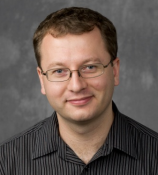
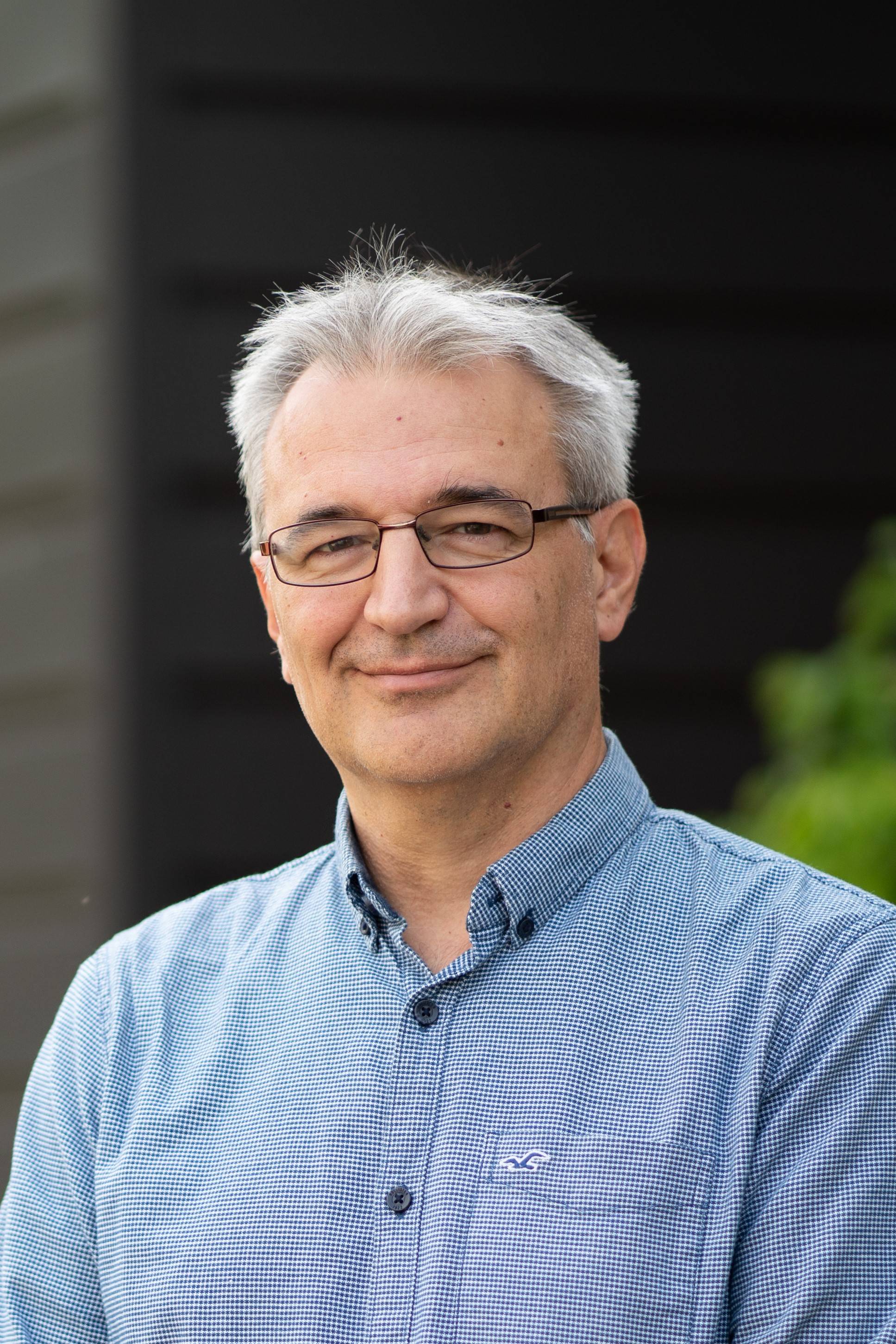
Ian Evans is a Lecturer in Neuroscience at the University of New England’s School of Science and Technology. His research examines EEG signal localization, EMF radiation effects on visual perception, and functional connectivity in neural networks. He employs transcranial stimulation and EEG analysis to study phosphene perception and cortical responses. He holds a B.Psych (Hons) and PhD, with clinical expertise in EEG data analysis. Current projects include investigating mood disorder biomarkers and ambient lighting effects on neural activity. He collaborates with the Australian Centre for Electromagnetic Bioeffects Research.
Dr Olga Daneyko is a Senior Lecturer in Psychology and Course Leader for the MSc Psychology Conversion Course at the Sheffield Institute of Social Sciences , part of the College of Social Sciences and Arts at Sheffield Hallam University. She holds a PhD in Cognitive Neuroscience from the University of Trieste (2011) and a master’s degree from Moscow State University (2005). Her research focuses on perceptual mechanisms, particularly visual and haptic illusions, lightness perception, and affective facial expression recognition. She has previously worked at Italian universities including Pavia, Parma, and Milano-Bicocca before joining Sheffield Hallam in 2018. Teaching responsibilities include modules in Cognitive Psychology (Levels 4, 5, 7) Research Methods (Level 4) Statistics (Levels 5, 7) Dissertation supervision Research Interests span: Psychology of perception and art Visual and haptic illusions Lightness/brightness perception Visual field organization Affective facial expression analysis Psychophysics methodologies External roles include: External Examiner for Liverpool University Chief Editor for Frontiers in Psychology Special Collection Key research themes involve applying perceptual illusions to study sensory mechanisms, analyzing art through perceptual frameworks, and exploring the intersection of lightness contrast and motion effects in visual perception.
Dr. Andrew du Rocher is Senior Lecturer in Psychology at Sheffield Hallam University's College of Social Sciences and Arts. His research examines how personality traits and individual differences influence cognitive processing and mental health outcomes, with particular focus on anxiety disorders and emotional regulation. His research program spans three interconnected domains: (1) Cognitive mechanisms in social anxiety disorders, (2) Reinforcement sensitivity as predictor of emotional experiences, and (3) Mindfulness-attention interactions. Recent experimental work uses emotional Stroop and flanker tasks to quantify attentional biases in anxiety. Publications show consistent methodological approach in combining psychometric assessments (STAI, BIS/BAS scales) with behavioral paradigms. Recent work demonstrates how reinforcement sensitivity traits predict dream intensity and examines philosophical aspects of academic publishing ethics. Dr. du Rocher teaches undergraduate and postgraduate modules including Personality and Individual Differences, Psychological Research Methods, and Clinical Psychology. He supervises dissertation projects on anxiety-cognition interactions and regularly presents at British Psychological Society conferences.
Ladan Ghazi Saidi, Ph.D., is an Associate Professor in the Department of Communication Disorders at the University of Nebraska at Kearney (UNK). Her research focuses on neurocognitive processes of language, cognition, and aging in bilingual and monolingual populations, with a particular emphasis on neuropsychology of aphasia, dementia, and the cognitive benefits of bilingualism. She directs the UNK Language & Cognition Lab, conducting behavioral and neuroimaging studies on language acquisition, cognitive reserve, and alternative therapies like music therapy and animal-assisted interventions. She holds affiliations with the Center for Brain Biology & Behavior (CB3) and is a member of professional organizations including the Society for Neurobiology of Language and the Gerontology Society of America. Dr. Ghazi Saidi completed her Ph.D. in Neuropsychology at the University of Montreal, followed by postdoctoral research at the Institute Gériatrie de Montréal and a fellowship at the Cleveland Clinic Lou Ruvo Center for Brain Health. She teaches courses in aphasia rehabilitation, cognitive communication disorders, and bilingualism. Her work emphasizes interdisciplinary approaches to improving cognitive health in underserved populations, including rural and minority communities. Her research projects include studying the cognitive advantages of bilingualism, telepractice for rural healthcare access, and intergenerational programs linking university students with older adults. She has led studies on interventions for dementia, depression in aphasia patients, and the impact of new language learning on brain plasticity in aging populations. Her findings are disseminated through peer-reviewed journals and presentations at international conferences.
Gia Macias is a Lecturer in the Department of Psychology at Saint Xavier University. She holds a Ph.D. in Cognitive Psychology from Purdue University (2024) and prior degrees from California State University, San Bernardino. Her research focuses on interruption effects during learning and the impact of anxiety on attention and memory processes. She has presented at conferences such as the Psychonomic Society and Midwestern Psychological Association, and her work explores applications in education, clinical settings, and workplace environments. Education: Ph.D. in Cognitive Psychology, Purdue University (2024) M.A. in Psychological Sciences, California State University, San Bernardino (2019) B.A. in Psychology, California State University, San Bernardino (2017) Research Interests: Interruption effects on learning from text Trait/state anxiety's effects on attention and memory Cognitive control mechanisms in attentional tasks Awards: Psychonomic Society Graduate Conference Award (2021) Office of Student Research Summer Grant (2016) Teaching & Service: Teaches courses in Introduction to Psychology, Cognitive Psychology, and Research Capstone Serves as an academic advisor and Sona administrator at Saint Xavier University Past roles include Twitternome for the Psychonomic Society and mentorship in research programs Labs & Affiliations: Former lab affiliations include Purdue University's Cognitive Psychology Lab and CSUSB's Memory and Attention Lab.
Daniel Spieler is an Associate Professor of Psychology at Georgia Tech's School of Psychology within the College of Sciences. His research focuses on cognitive aging, language processing, and quantitative methods in psychology. He holds a Ph.D. in Experimental Psychology from Washington University in St. Louis. Spieler's work examines age-related changes in cognitive processes such as lexical access, executive control, and language production, with a particular emphasis on how these processes adapt to environmental and contextual demands. His research employs methodologies including eye-tracking, computational modeling, and longitudinal analysis to study phenomena like contextual control, sequential congruency effects, and the impact of aging on communication strategies. Key areas of exploration include the interplay between cognitive decline and compensatory strategies in older adults, as well as the application of quantitative techniques to model behavioral and neuropsychological data. Spieler has contributed to understanding how aging affects speech production, word recognition, and the use of task cues to mitigate cognitive load. His recent work highlights the generalizability of context-driven control mechanisms and their implications for cognitive aging theories. His lab, linked via compcog.gatech.edu , integrates experimental psychology with computational modeling to address questions about cognitive dynamics and individual differences. Spieler has collaborated on projects involving dementia prediction and the validation of statistical methods in psychometrics, showcasing his interdisciplinary approach to advancing cognitive science.
Evan Wilson is an Assistant Professor of Medicine at Queen’s University, serving as Program Director for the Infectious Diseases Residency Training Program. He holds a Master of Science in Immunology from the University of Alberta and completed medical training at the University of Alberta, followed by internal medicine residency at Queen’s University and Infectious Diseases subspecialty training at the University of Calgary. Previously, he worked as an infectious diseases consultant with Vancouver Island Health in Victoria, BC. Dr. Wilson’s clinical focus includes inpatient consultations and ambulatory clinics for general infectious diseases, HIV, and tuberculosis. He leads the anti-microbial stewardship program at Kingston Health Sciences Centre (asK), emphasizing quality improvement in anti-microbial utilization and expanding access to outpatient therapies. His research interests span clinical infectious diseases and healthcare operational efficiency. His academic contributions include over 15 peer-reviewed articles addressing cognitive science, visual perception, and medical education innovations. Dr. Wilson maintains active roles in medical training and hospital clinical governance through his departmental responsibilities at Queen’s University.
Heidi Bailey is a Professor in the Department of Psychology at the University of Guelph, affiliated with the College of Social & Applied Human Sciences. Her research focuses on attachment theory, child psychology, and socio-emotional development, with an emphasis on parental behavior and its impact on children's stress responses and attachment relationships. She has a PhD from the University of Western Ontario. Her research explores how parental sensitivity and trauma history influence child development, particularly in attachment security and stress coping mechanisms. She also investigates self-compassion as a real-time process linked to mental health outcomes. Key themes across her work include intergenerational transmission of attachment patterns, physiological stress responses in infants, and interventions for vulnerable families. Her academic contributions span over two decades, with influential studies on maternal sensitivity, unresolved trauma in caregiving, and the physiological underpinnings of attachment behaviors. She has authored or co-authored over 20 peer-reviewed articles and book chapters, many in top journals like Development and Psychopathology and Attachment and Human Development . Dr. Bailey's work bridges clinical and developmental psychology, emphasizing practical applications for improving parenting practices and child mental health outcomes. She teaches advanced courses on developmental psychology, clinical interviewing, and topics in applied psychology at the undergraduate and graduate levels.
Ben Newell is Professor of Cognitive Psychology and Deputy Head of the School of Psychology at the University of New South Wales (UNSW Sydney). He was appointed Director of the interdisciplinary UNSW Institute for Climate Risk and Response in 2023. His research spans judgment, decision-making, and cognitive processes, with applications in environmental, medical, financial, and forensic contexts. Research Interests: Ben Newell’s work investigates the cognitive mechanisms behind decision-making under uncertainty, particularly focusing on overcoming myopic thinking in long-term decisions such as climate action and retirement planning. His research integrates behavioral economics, cognitive psychology, and real-world policy applications. Key themes include risk perception, trust in algorithms, information seeking, mental effort, and the psychological barriers to sustainable behavior. Publications and Trends: His recent publications (2022–2024) reflect a strong focus on experimental and computational modeling approaches. Topics include non-instrumental information seeking, income volatility and saving behavior, the impact of interruptions on decision-making, and the role of uncertainty in learning. His work frequently appears in top journals such as Cognition , Psychological Review , Decision , and Journal of Behavioral and Experimental Finance , demonstrating a consistent contribution to both theoretical and applied decision science. Editorial Roles: Editorial Board, Psychological Science ; Perspectives on Psychological Science ; Thinking & Reasoning ; Decision ; Journal of Behavioral Decision Making ; Experimental Psychology ; Consulting Editor, Judgment & Decision Making . Professional Affiliation: Member, Academic Advisory Panel, Behavioural Economics Team of the Australian Government. Books: Lead author of Straight Choices: The Psychology of Decision Making and Open Minded: Searching for Truth about the Unconscious Mind . Leadership and Outreach: As Director of the UNSW Institute for Climate Risk and Response, he leads interdisciplinary research on climate communication and behavioral responses. He actively engages in public discourse, as seen in his talk titled “From ‘why should I bother?’ to ‘Yes, we can!’: Risk, willingness, and cooperation in action on climate change.”
Darryl W. Schneider is an Associate Professor with tenure in the Department of Psychological Sciences within the College of Liberal Arts at Purdue University. His research lies at the intersection of cognitive psychology and human performance, focusing on attention, cognitive control, task switching, and multitasking. He employs behavioral experiments and computational modeling to understand how people manage complex cognitive demands. Dr. Schneider's research interests center on the mechanisms of attention and cognitive control. He investigates how alertness and selective attention influence performance, particularly in task-switching paradigms. His work explores residual switch costs, cue encoding, response selection, and the role of working memory in managing multiple tasks. He has developed and tested models of task switching, including the role of hierarchical control, compound-cue retrieval, and chunking. His recent work extends into educational psychology, examining active learning and lecture integration. His publication record over the past 15 years shows a consistent focus on fundamental cognitive processes. The articles reflect deep engagement with experimental paradigms in attention and executive function, with a strong emphasis on modeling cognitive mechanisms. Key themes include task-switching dynamics, Hick's law, alertness modulation, and the interplay between perception and response selection. His collaborations with researchers like Gordon D. Logan and John R. Anderson highlight his integration within a leading research network in cognitive science. Dr. Schneider has not listed any scientific awards on his website. However, his sustained publication record in high-impact journals such as Journal of Experimental Psychology , Cognitive Psychology , and Psychonomic Bulletin & Review reflects scholarly recognition. He does not currently recruit new graduate students. There is no public information about grants or advising history on his website. His research appears to be conducted within a cognitive psychology lab at Purdue, likely involving undergraduate and graduate researchers, though specific team members or lab structure are not detailed.
Professor Ben Parris is a faculty member in the Department of Psychology at Bournemouth University, where he holds the rank of Professor and serves as Deputy Head of Department and head of the Cognition and Brain Sciences research group. He completed his DPhil in Experimental Psychology at the University of Sussex in 2005, followed by postdoctoral roles at the Universities of Exeter and Oxford, before joining Bournemouth University as a Senior Lecturer in 2008. Education: BSc (Hons) in Psychology (with studies in Europe), University of Kent, 2000 DPhil in Experimental Psychology, University of Sussex, 2005 PGCert in Research Supervision, Bournemouth University, 2011 His research centers on the cognitive and neural mechanisms of attention and behavioral control. He employs behavioral experiments, eye tracking, pupillometry, fMRI, and TMS to study executive functions, particularly in the context of the Stroop task, hypnotic suggestion, and non-neurotypical populations such as individuals with ADHD. His work also explores conscious awareness, pain perception, and the role of suggestion in modulating cognitive processes. Recent publications highlight trends in cognitive control, inhibition, and the modulation of automatic processing through suggestion and hypnosis. His studies frequently involve distributional analyses, conflict resolution in selective attention tasks, and the neural correlates of executive function. He has a strong focus on methodological rigor and theoretical clarity in cognitive psychology. Scientific Awards and Recognitions: Fellow, Royal Society of Medicine (2015–) Chartered Member, British Psychological Society (2016–) Member, Society for Interdisciplinary Placebo Studies (2015–) Professor Parris has supervised multiple PhD students, including Nabil Hassim, Gizem Arabaci, and Dawid Pekalski. He has secured research grants from the British Academy/Leverhulme, Wellcome Trust, Nuffield Foundation, Experimental Psychology Society, Bial Foundation, and the French National Research Agency. He serves as a Review Editor for Frontiers in Psychology and as a grant reviewer for the Medical Research Council and ESRC. He leads the Cognitive Control Lab at Bournemouth University, which investigates the mechanisms of cognitive control using behavioral and neuroimaging methods. The lab focuses on attention, inhibition, and the influence of suggestion on cognitive performance.
Aakriti Kumar is a Postdoctoral Researcher at the Kellogg School of Management and the Northwestern Institute on Complex Systems (NICO) at Northwestern University, collaborating with Dr. Matt Groh to develop AI tools for empathic communication and synthetic media detection. Her academic background includes: PhD in Cognitive Science from the University of California, Irvine (advised by Dr. Mark Steyvers) Master’s degree in Statistics from UCI B.Tech. in Engineering from IIT Madras, India Her research integrates cognitive science and human-computer interaction to investigate human mental models of AI through behavioral experiments and computational modeling. Key focuses include trust calibration in large language models, metacognitive strategies in human-AI decision-making, and individual differences in cognitive tasks. She emphasizes translating theoretical insights into practical AI applications, particularly in high-stakes domains like autonomous vehicles and synthetic media detection. Analysis of her publications reveals consistent exploration of how humans infer AI capabilities and adjust reliance strategies, with increasing emphasis on large-scale real-world data (e.g., Lumosity cognitive training datasets) to address limitations of controlled lab studies. Her work bridges cognitive theory with industry applications, evidenced by internships at Motional and Honda Research Institute. She received the Irvine Initiative in AI, Law, and Society Fellowship in 2022. During her PhD, she was mentored by Dr. Mark Steyvers and collaborated with industry teams at Motional (advised by Dr. Krysta Chauncey) and Honda Research Institute (hosted by Dr. Kumar Akash). Her interdisciplinary approach combines statistical rigor from her master’s training with engineering problem-solving skills. She contributes to NICO’s interdisciplinary research ecosystem focused on complex systems and human-centered AI, actively developing tools to enhance human skills through AI-mediated interactions.
Fay Séverine is an Assistant Professor at the University of Tours, affiliated with the Department of Psychology in the College of Humanities and Social Sciences. She is a core member of the Center for Research on Cognition and Learning (CeRCA), where she conducts research on episodic memory and cognitive aging using behavioral and electrophysiological (ERP) methods. Research Interests: Fay Séverine's research investigates the cognitive and neural mechanisms of episodic memory in aging. Her work explores how factors such as executive control, cognitive reserve (e.g., education, physical activity), personality traits, and stereotype threat influence memory performance in older adults. She employs experimental paradigms and ERP techniques to understand encoding and retrieval processes, with a focus on identifying protective factors against age-related decline. Publication Trends: Her recent publications (2020–2024) show a strong focus on physical activity as a modulator of memory aging, particularly through its impact on executive functioning. She also examines the role of personality (e.g., Openness to Experience) in mitigating stereotype threat and enhancing memory strategies. Her work increasingly integrates behavioral data with neurocognitive measures, reflecting a multidisciplinary approach to cognitive aging. Scientific Awards: No scientific awards were mentioned in the provided text. Supervision and Grants: Fay Séverine is actively involved in academic supervision, currently co-supervising PhD student Léa Lecoq with David Clarys and Badiâa Bouazzaoui. Her research is collaborative, involving multiple projects with colleagues at CeRCA. While specific grants are not listed, her sustained publication output and leadership in funded research areas suggest active grant involvement in cognitive aging and memory research. Labs and Teams: She is a key member of the Aging and Psychopathology of Memory (ViPsyM) research group at CeRCA, University of Tours. This team focuses on understanding normal and pathological memory aging through experimental and clinical approaches, combining cognitive psychology, neuropsychology, and psychogerontology.
Jelle Habay is an External employee at the Vrije Universiteit Brussel in the Faculty of Physical Education and Physical Therapy . His work focuses on Mental Fatigue and Physiotherapy , with a strong emphasis on Sports Science and Human Physiology . He is part of the Human Physiology and Sports Physiotherapy Research Group . Academic Affiliation : Vrije Universiteit Brussel, Faculty of Physical Education and Physical Therapy Research Focus : Mental Fatigue, Sports Science, Physiotherapy, Neuroscience Habay's research explores Mental Fatigue in athletic contexts, utilizing Systematic Reviews , Wavelet Analysis , and Electrophysiological methods. His work includes studies on Psychomotor Performance and Reaction Time in sports. Recent articles analyze Mental Fatigue induction techniques in sports, fatigue effects on Prefrontal Cortex activity, and Wavelet Analysis of brain signals during exercise. Trends show interdisciplinary work combining Sports Science , Neuroscience , and Physiology . Scientific Awards : FWOTM1144: Underlying factors in the responsiveness to Mental Fatigue (2022) K203122N: Short Stay Travel Grant FWO (2021) OZR3839: Backup mandate Research Council (2021)
Professor Mario Fifić at Grand Valley State University's Psychology Department specializes in Systems Factorial Technology (SFT) to decode cognitive architectures in decision-making and perception. His work bridges mathematical psychology , computational modeling , and experimental design . Ph.D. in Cognitive Psychology from Indiana University Developed diagnostic tools for mental architectures (serial, parallel, coactive) Focus on age-related attentional control and face perception His NSF-funded research (SES-1854762/1854763) examines how humans combine multiple information streams during decisions. The R. Duncan Luce Outstanding Paper Award (2020) recognized his work on attentional capacity in aging . Collaborations span institutions like Max Planck Institute , National Cheng Kung University , and Indiana University , focusing on cognitive synthesis between architectures, random-walk processes, and decision-bound theories. Key SFT applications include: Visual and memory search organization Integral-separable dimension processing Face perception holisticity Reading process architecture Decision strategies under bounded rationality His methodology addresses double jeopardy in cognitive inference through nonparametric analysis and factorial designs . The DecideLab at GVSU trains students in adaptive experimental design and Bayesian cognitive modeling , with applications from airline pilot cognition to clinical population diagnostics .