Dr. Alexander Hunter is a Lecturer and Composition Convenor at the School of Music, Australian National University (ANU). He holds a PhD in composition from Edinburgh Napier University (2014) and has taught composition, theory, and music history since relocating to Canberra in 2014. Hunter founded ANU's Experimental Music Studio, focusing on open-form compositions that engage performers in fluid interpretive roles. His research spans open musical forms, spectralism, acoustic ecology, and intersectional feminism, with a commitment to disability and autistic advocacy in the arts. Education includes studies at Northern Illinois University (BA 2006) and HNC from Colaisde Bheinn na Faoghla (2007). His work integrates multimedia collaborations with artists like Mike Parr and Martyn Jolly, exploring themes of dis/ability, environmental health, and Métis cultural heritage. Key projects include Helping the River Sing (2018–2021), linking river health with artistic expression, and AI-driven music composition research with Charles Martin. Hunter’s performance-led projects often involve magic lantern technology, reimagining 19th-century projection as a medium for contemporary ecological and historical narratives. Research interests also encompass New York School music, reductionist improvisation, and anarchist philosophies in composition. His collaborations with ensembles like Ensemble Dal Niente and the Edinburgh Quartet highlight his commitment to experimental performance practices. Recent publications (2023–2025) explore AI applications in music creation and interdisciplinary performance frameworks.
Associate Professor Thomas Leistner holds a position in Pure Mathematics at the University of Adelaide, within the School of Computer and Mathematical Sciences under the Faculty of Sciences, Engineering and Technology. He earned his PhD from Humboldt-University Berlin, followed by postdoctoral roles at Berlin and Adelaide before becoming an Assistant Professor at the University of Hamburg. His research focuses on differential geometry, particularly Lorentzian and conformal geometries, holonomy groups, and their applications in mathematical physics, general relativity, and string theory. His work explores curved spaces and spacetimes, their geometric properties, symmetries, and connections to differential equations. Notable areas include conformal transformations, holonomy classifications, and geometric structures like Walker metrics and Cahen-Wallach spaces. Recent publications emphasize Lorentzian homogeneous spaces, conformal Killing tensors, and completeness properties of compact manifolds. Leistner is eligible to supervise Masters and PhD students in Pure Mathematics, specializing in geometry and related fields. Though no specific grants or awards are listed, his research maintains an active focus on foundational geometric problems with interdisciplinary relevance.
Natalia Ricci is a Senior Lecturer in Piano at the Sydney Conservatorium of Music, part of the University of Sydney. She holds dual appointments in the Piano and Ensemble departments and has also served as Keyboard Coordinator for the Chamber Music Program. Her teaching spans tertiary and pre-tertiary levels, including leadership of the Open Academy Rising Stars Piano Division. Education: BMus University of Cincinnati (USA), MMus Royal Northern College of Music (UK) Research Focus: Spanish piano literature (Albeniz, Granados, de Falla), Janáček's works, and chamber music performance practice She pioneered the Encuentros Españoles Festival (2013-2022), a landmark event showcasing Spanish music through concerts, workshops, and scholarly symposia. Her pedagogical approach integrates biomechanical efficiency with artistic expression, emphasizing technical mastery, sound production, and interpretive depth across diverse repertoires. Notable achievements include performances at major international festivals (Banff, London Objective, Sydney Festival), recordings for BBC/ABC radio, and mentoring students who've won top prizes in competitions like the Sydney International Piano Competition, Chopin in Wavel, and Franz Liszt Youth Competitions. Her students consistently excel in national competitions including Lev Vlassenko and Sydney Eisteddfod events. Ricci's professional engagements include adjudicating international competitions and delivering masterclasses globally, with upcoming appearances at the 2025 International Festival of Music in Iasi, Romania. She maintains active links with institutions across Australia, Europe, and Asia through teaching, performance, and research collaborations.
Dr. Ramesh Bhat is a Senior Research Fellow at Curtin University's School of Electrical Engineering, Computing and Mathematical Sciences (EECMS), affiliated with the Curtin Research Institute and Curtin Institute of Radio Astronomy (CIRA). His primary affiliation is with the Faculty of Science and Engineering. He is based at Curtin Perth Campus in Brodie Hall, Room 161. His research focuses on astrophysics and radio astronomy, particularly pulsar timing, gravitational wave detection using pulsar timing arrays, and the study of transient phenomena such as fast radio bursts (FRBs). He contributes to major projects like the High Time Resolution Universe (HTRU) survey, MeerTime, and the Murchison Widefield Array (MWA). Key research interests include pulsar population studies, interstellar medium interactions, signal processing for radio astronomy, and instrumentation development for next-generation telescopes like the Square Kilometre Array (SKA). His work spans theoretical models of pulsar emission mechanisms to observational studies of pulsar nulling, subpulse drifting, and gravitational wave backgrounds. Recent publications highlight advancements in pulsar survey techniques (e.g., GPU-accelerated analysis), discovery of new pulsars and FRBs, and constraints on cosmological models via pulsar timing arrays. His research often involves international collaborations, leveraging facilities like the Parkes radio telescope and the MWA. He actively contributes to radio interferometry, transient detection algorithms, and pulsar timing array data analysis. His work bridges observational astronomy with computational methods, aiming to advance understanding of compact objects and gravitational physics.
Sarah Pirrie is a Lecturer in Visual Arts and Coordinator of Creative and Digital Arts VET at Charles Darwin University (CDU), within the Faculty of Arts and Society. She holds a PhD and supervises postgraduate research in the Higher Degree by Research (HDR) cohort. Her research interests focus on conceptual, site-responsive art practices addressing social and environmental issues, often through collaborative projects. Notable projects include the Artback NT Spark Curatorial touring exhibition (2019-2021), the Coastal Links residency (2017-18), and the 'Waiting for Water' interdisciplinary initiative (2016-2018). She has exhibited widely, including at Cross Arts Projects (Sydney), the Darwin Festival, and the Australian Experimental Art Foundation (AEAF). Pirrie’s work contributes to UN Sustainable Development Goals related to environmental sustainability and community resilience. Her exhibitions frequently explore themes like mangrove ecosystems, water scarcity, and Indigenous cultural representation. She has received the Northern Territory Library Creative in Residence award (2017) and participated in significant events like the 57th Venice Biennale (2017). Her peer-reviewed activities include reviewing for the Art Association of Australia & New Zealand (2021).
Christine Rizkallah is a Senior Lecturer in the School of Computing and Information Systems at the University of Melbourne, Australia. She joined the university in December 2021 after serving as a Lecturer at the University of New South Wales (UNSW) from April 2018 to December 2021. Her research focuses on interactive theorem proving, formal verification, programming languages, and systems, with an emphasis on building practical tools for high-assurance software development. She leads a research group working on the Cogent and Dargent languages, aiming to reduce the burden of formal verification in systems programming. Education: PhD in Computer Science, Universität des Saarlandes and Max-Planck-Institut für Informatik, Germany (2015), thesis: Verification of Program Computations , supervised by Prof. Dr. Kurt Mehlhorn. MSc in Computer Science, Universität des Saarlandes, Germany (2009), thesis: Proof Representations for Higher Order Logic , supervised by Prof. Dr. Gert Smolka and Dr. Chad E. Brown. BSc in Computer Science, German University in Cairo, Egypt (2007), thesis: X2-Planner: A Hierarchical Task Network Planner for Real Time Gaming Applications , supervised by Prof. Dr. Slim Abdennadher and Dr. Thorsten Maier. Her research interests lie at the intersection of programming languages and formal methods. She develops domain-specific languages with strong type systems and verified compilers to enable trustworthy software systems. Her work spans algorithms, logic, security, and social choice theory, reflecting a strong interdisciplinary approach. She has published extensively in top venues such as POPL, ICFP, ASPLOS, JAR, and PACMPL, with a focus on certifying compilation, refinement verification, and mechanized reasoning. Her recent publications reveal a consistent focus on formal verification of systems software, particularly through the Cogent language and its ecosystem. Key themes include verified data layout refinement (Dargent), property-based testing, termination analysis, cost modeling, and integration with foreign functions. Her work combines theoretical rigor with practical implementation, often involving mechanized proofs in Isabelle/HOL and Coq. Scientific Awards and Recognition: Distinguished Artefact Award at SLE'22 (awarded to Zilin Chen for work under her supervision). First Prize, SPLASH'22 Student Research Competition (undergraduate), won by Raphael Douglas Giles. Second Prize, ACM-wide Student Research Competition (undergraduate, 2023), won by Raphael Douglas Giles. She has supervised numerous PhD, Masters, and Honours students, many of whom have continued in academia or industry research roles. She has received research funding through institutional support and collaborative grants, though specific grants are not detailed in the provided text. She is actively involved in the programming languages community, serving on program committees for POPL, ICFP, CPP, PLDI, and others, and holding leadership roles such as Program Chair for FUNARCH'25 and Diversity and Inclusion Co-Chair for PLDI'25. She teaches core courses including Declarative Programming and Models of Computation at the University of Melbourne. She leads a vibrant research team and collaborates widely across institutions including UNSW, University of Pennsylvania, and international partners. Her lab focuses on building verified systems using functional programming and formal methods, with strong ties to the DeepSpec project and the Isabelle/HOL community.
Associate Professor Ainslie Murray is an interdisciplinary artist and academic at UNSW Sydney within the Faculty of Arts, Design & Architecture . Trained in Architecture at the University of Adelaide (1993-1998) and holding a PhD in Visual Arts from the University of Sydney (2011), her work bridges architecture, visual arts, and environmental practice through walking, site-specific installations, and explorations of immaterial spatial forces. Research Interests : Ainslie investigates essentiality and minimalism in architectural space, focusing on ephemeral, immaterial, and participatory forms. Her practice includes immersive installations, films, textiles, and performative works, often emphasizing ecological themes like air quality, dust, and climate adaptation. Recent projects, such as the Registry of Itinerant Architectures and A.W.E. Collective collaborations, expand architecture's disciplinary boundaries via landscape and mobile practices. Scientific Awards : Notable accolades include the 2022 National Research Award (AILA), 2022 Red Dot Design Award , and 2007 Beth Winspear Scholarship . She has been shortlisted for international events like the Venice Architecture Biennale (2017) and received grants for projects such as Breathing Buildings (2017). Teaching & Supervision : At UNSW, she leads architectural design studios informed by walking practice and supervises PhD candidates in areas like Environmental Art , Nomadic Architecture , and Landscape Anthropocene . Her supervision emphasizes practice-based research across art, architecture, and spatial practices.
Goetz Richter is an Associate Professor at the University of Sydney’s Sydney Conservatorium of Music, specializing in violin performance and philosophy. He holds a PhD in philosophy from the University of Sydney (2007) and has dual expertise in music performance and academic research. His roles include coordinating violin performance studies and supervising higher-degree students. Richter previously served as Associate Concertmaster of the Sydney Symphony Orchestra (1987–2002), with additional orchestral leadership roles in Australia and internationally. Education and Philosophy: Completed performance studies at Munich’s Hochschule für Musik under Gerhart Hetzel, Max Rostal, Arthur Grumiaux, and Riccardo Odnopossoff. His PhD research explored philosophy of science and music. He initiated the cross-disciplinary 'Elective Affinities' project (2012) linking music and philosophy. Research Interests: Philosophy of music performance, violin pedagogy, ontological aspects of music, and historical performance practices. Notable works include The Congruence of Philosophy and Music (2008) and translations of Eugen Fink’s writings on Nietzsche. Recent research explores musical interpretation through phenomenology and hermeneutics. Publications/Contributions: Over 30 scholarly works including books, journal articles, and conference papers. Key topics: Plato’s aesthetics, Nietzsche’s philosophy, and pedagogical innovations in string performance. Active in editorial roles for String Praxis and international music journals. Teaching and Leadership: Chair of Strings at Sydney Conservatorium since 1997, mentoring students who excel in international competitions. Founded the Camden Haven Music Festival and Kendall National Violin Competition. Guest faculty at the Euro Arts Festival (Leipzig) and visiting professor at Wuhan Conservatorium, China. Orchestral Advocacy: Played key roles in musicians’ unions and industry reforms, including negotiating the 1995 Musicians’ Enterprise Agreement. Served on the Sydney Symphony Orchestra Board (2007–2016) addressing sustainable orchestral practices and artist well-being. Performance Projects: Collaborations with leading artists (Hermann Baumann, Jeanell Carrigan) and global recitals spanning Australia, Europe, Asia. Active in chamber music ensembles like Trio Novalis and the Sydney Schubert Society.
Dr. Jock McOrist is a Senior Lecturer in Mathematics at the University of New England's School of Science and Technology. Educated at the University of Sydney (B.Sc., M.Sc.), University of Chicago (M.S., Ph.D.), he completed postdoctoral work at Cambridge. His research explores mathematical physics, particularly string theory and quantum field theory applications in differential geometry. He supervises PhD students in physics and mathematics, focusing on heterotic string vacua and quantum field theory. His recent publications (2017-2025) consistently investigate moduli spaces in string theory, geometric structures in quantum field theories, and heterotic compactifications. BHP Biliton Science and Engineering Fulbright Scholar Sugarman Prize EPSRC Postdoctoral Fellowship University Medal (Sydney) He co-founded the Australia and New Zealand Geometry, Strings and Fields seminar series to foster regional collaboration.
Dean Rickles is a Professor of History and Philosophy of Modern Physics at the University of Sydney, co-director of the Centre for Time, and holds academic affiliations within the Faculty of Science's History and Philosophy of Science department. He earned his PhD from the University of Leeds (2004) under Steven French, focusing on quantum gravity conceptual issues. His research explores philosophy of physics, quantum gravity, time's nature, and science's historical development. Notable works include Covered with Deep Mist: The Development of Quantum Gravity (2020) and What is Philosophy of Science? (2020). Awards include ARC Australian Research Fellowship (2008) and ARC Future Fellowship (2014–2018). His publications span books, edited volumes, and journal articles addressing foundational physics questions, interdisciplinary philosophy-science intersections, and historical analyses of scientific communities. Current research includes grants on quantum gravity's existential arguments and temporal foundations. Media engagements include PBS's Closer to Truth and The Conversation articles on physics and societal topics.
Dr Paul Rickard-Ford is a Senior Lecturer and Chair of the Piano Unit at the Sydney Conservatorium of Music, The University of Sydney. He holds a BMus from Melbourne Conservatorium, ARCM from Royal College of Music, and a PhD from the University of Adelaide on Schumann’s late piano works. His career spans international performances, recordings, and teaching, marked by awards such as the 2017 Vice-Chancellor’s Award for Excellence in Teaching and the 1988 Australia Achiever award. His pedagogical philosophy emphasizes 'Freedom and Control' in piano technique and creativity. Research interests include Romantic piano repertoire, performance practice, and pedagogy. He has recorded extensively, including Liszt’s Annees de Pelerinage and Schumann’s late works. Collaborations with Natalia Sheludiakova include world premieres like Carl Vine’s Piano Sonata for Four Hands . His students excel in global competitions, with notable wins in Sydney International Piano Competitions (2012, 2016). He tours Asia annually for masterclasses and performs on ABC Classic FM. Publications include Dr Paul's Treasure Chest | Book 1 (2018) and a chapter in Australian Pianists: A Cross-section of Performers (2010). Awards also include the Clarke Scholarship (London) and Dannreuther Prize for concerto performance. His academic roles involve examiner duties for AMEB and guest lecturing on piano pedagogy.
Professor Serge Gaspers is a faculty member in the School of Computer Science and Engineering at the University of New South Wales (UNSW), specializing in algorithms for computationally intractable problems. His research focuses on parameterized algorithms, quantum algorithms, and graph theory, with applications in computational social choice and constraint satisfaction. He joined UNSW in 2012 as an ARC DECRA Fellow and later held an ARC Future Fellowship. Gaspers obtained his PhD from the University of Bergen (Norway) in 2008, followed by postdoctoral positions in Montpellier, Santiago, and Vienna. His research interests include algorithms for NP-hard problems, quantum computing, and fair resource allocation. He has been awarded grants totaling over A$2 million, including an ARC Discovery Project (DP210103849) on improved algorithms via random sampling and collaborations with Data61/CSIRO and NICTA. Notable awards include the ARC Future Fellowship (2014), IJCAI 2013 Most Educational Video Award, and DECRA (2012). Teaching: Gaspers teaches COMP6741 - Algorithms for Intractable Problems . His advising spans parameterized algorithms, quantum algorithms, and graph algorithms. Research grants highlight his work in algorithms, with a focus on turbocharging heuristics and computational complexity of resource allocation problems.
Dr. Andrew Wade is a Postdoctoral Fellow at the Centre for Gravitational Astrophysics, The Australian National University (ANU). His research focuses on gravitational wave detection, quantum optics, precision metrology, and weak light interferometry. He has contributed to projects like the Laser Interferometer Space Antenna (LISA), developing critical technologies such as arm- and cavity-locking systems for gravitational wave detectors. His work emphasizes improving interferometric sensitivity through innovations like subfemtowatt laser phase tracking and thermal noise mitigation in mirror coatings. Wade has collaborated across international detector networks including LIGO, Virgo, and KAGRA, publishing over 178 peer-reviewed articles. His research spans topics from binary black hole mergers (e.g., GW150914, GW170817) to cosmic string constraints and Hubble constant measurements using gravitational wave standard sirens. Notably, his team's work on LISA's locking systems addresses challenges for future space-based gravitational wave observatories. His technical expertise includes cavity frequency stabilization for geodesy applications and optimizing laser interferometers for low-noise operation. While no specific student names are listed, he is registered to supervise research students at ANU. His publications highlight interdisciplinary strengths in both experimental and theoretical gravitational wave physics, with implications for multi-messenger astronomy and fundamental physics tests.
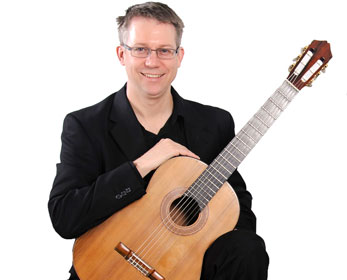
Associate Professor Jonathan Paget serves as Associate Dean (Music) at the Western Australian Academy of Performing Arts (WAAPA), Edith Cowan University. A classical guitarist with international performance experience, he leads the classical guitar program and is a member of the Centre for Keyboard Heritage and Performance Research. His research focuses on Australian music, 19th-century guitar works, and historical performance practices. Doctor of Musical Arts (Eastman School of Music, 2003) Master of Arts and Master of Music (USA, 2002 and 1998) Bachelor of Music with First Class Honours (University of Western Australia, 1996) Paget’s research explores intersections between historical guitar traditions and contemporary performance, with particular emphasis on Bel Canto repertoire and Australian composers. His 15 most recent outputs span book chapters on 19th-century guitar manuscripts, cross-cultural collaborations with Chinese musicians, and analytical studies of Romantic guitar works. He investigates historical authenticity in Napoleonic-era compositions, Australian minimalist guitar works, and the application of Sonata Theory to Bel Canto music. Scientific awards include the Beazley Medal , Hackett Studentship , and Fulbright Postgraduate Award . He has won international competitions like the Shell Darwin and Rantucci Guitar Competitions. Grants highlight his leadership in projects such as the Historic Keyboard Instruments Restoration ($350,000) and Cross-Continental Inspirations in Australia-China collaborations. As a research supervisor, Paget mentors PhD candidates exploring topics like Beethoven performance traditions in China and Gilbert Biberian’s influence. He has held leadership roles with organizations including the Classical Guitar Society of Western Australia and contributes to the Fulbright Alumni Association .
Dr. Harini Desiraju is a Researcher in the Faculty of Science at The University of Sydney. Her work focuses on mathematical physics, integrable systems, and nonlinear dynamics. She is affiliated with the School of Mathematics and Statistics (implied by research focus). Her research interests include Painlevé equations, isomonodromic deformations, tau functions, and applications of Fredholm determinants in theoretical physics. She has contributed to studies on the Landau-Lifshitz equation, conformal field theory on tori, and elliptic orthogonal polynomials. Dr. Desiraju secured a grant titled 'Unveiling integrability with Transformers' (2023) through the DVC Research/External Research Collaboration Seed Funding. Her work bridges pure mathematics and theoretical physics, with a focus on analytical methods in integrable systems. Contact: harini.desiraju@sydney.edu.au Address: A14 - The Quadrangle, The University of Sydney