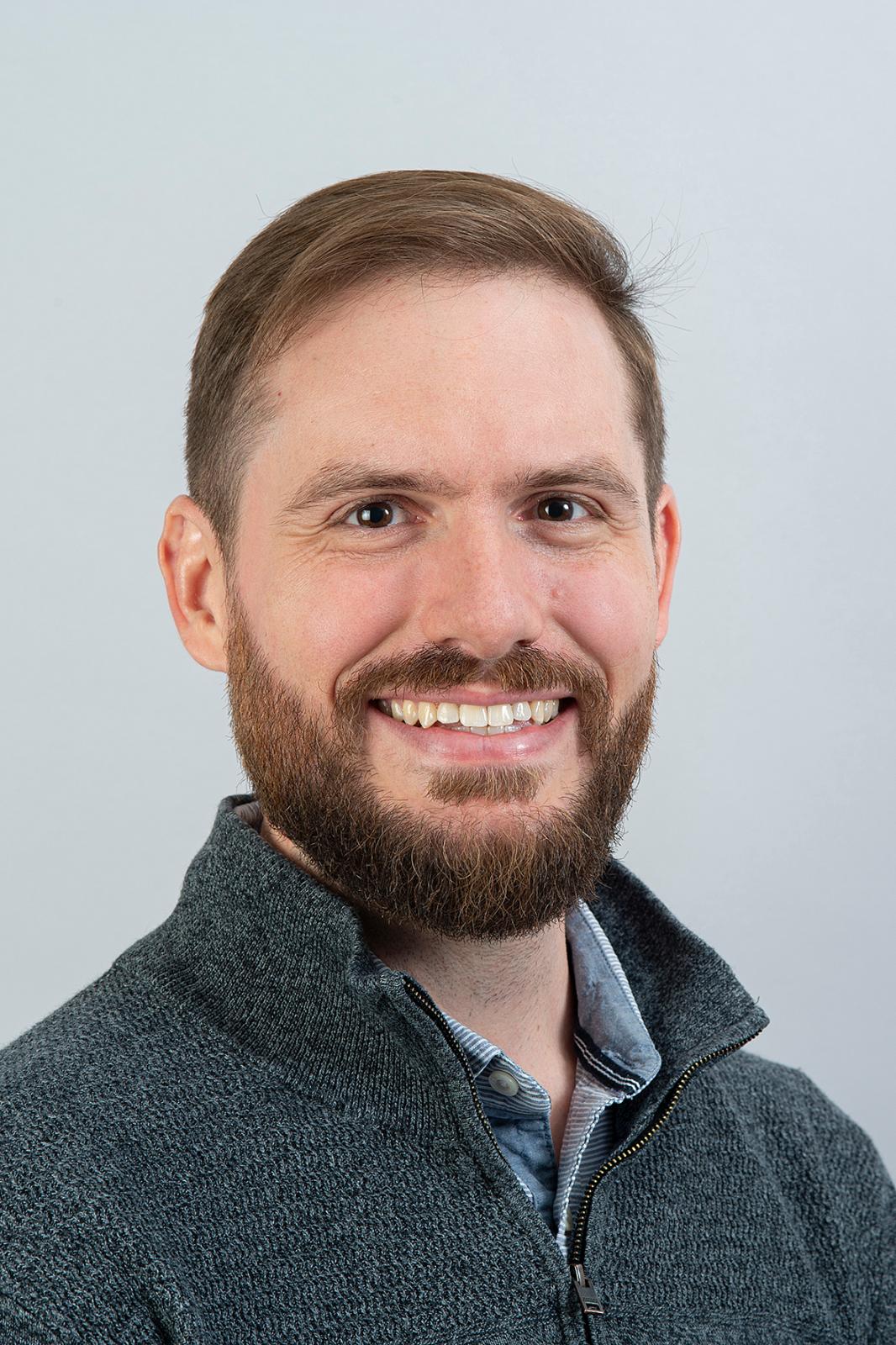
Tim Beadleمشاهده پروفایل
مدرس ارشد
- Astrophysics
- Quantum Mechanics
- Cosmology
- +۳ مورد دیگر
Dr. Tim Beadle is a Senior Lecturer in the Department of Physics and Astronomy at the University of Birmingham. He holds a PhD in Theoretical Physics from the University of Cambridge (2005) and a Master's degree in Physics from the University of Oxford (2002). His research focuses on the intersection of cosmology, quantum mechanics, and high-energy physics, with particular emphasis on dark matter, gravitational waves, and quantum gravity phenomena. He leads the Cosmology and Astrophysics Group at Birmingham and oversees a research portfolio valued at £2.5 million from the Science and Technology Facilities Council (STFC). Education: PhD Theoretical Physics (Cambridge, 2005), MPhys (Oxford, 2002) Dr. Beadle's research interests include astrophysical applications of quantum mechanics, cosmological structure formation, and observational tests of dark energy. He has pioneered studies on dark matter distribution in galaxy clusters and gravitational wave signals from primordial black holes. His work bridges theoretical modeling with cutting-edge observational data from facilities like the Square Kilometre Array and the Event Horizon Telescope. Key research trends in his publications include: 1) Exploring quantum effects in cosmological contexts, 2) Developing new methods for detecting dark matter via gravitational lensing, 3) Investigating gravitational wave signatures of early universe processes, and 4) Testing modified gravity theories against galaxy survey data. His recent work emphasizes multi-messenger astronomy and quantum foundations in expanding spacetimes. Royal Society University Research Fellowship (2020) Institute of Physics Early Career Physicist Award (2018) Marie Skłodowska-Curie Actions Fellowship (2015) Dr. Beadle currently supervises 10 PhD students and has mentored over 20 early-career researchers. He manages a £2.5M STFC grant exploring quantum gravity signatures in cosmological data and leads the Birmingham node of the UK National Cosmology Supercomputing Facility. His research group collaborates internationally with teams at CERN, the European Southern Observatory, and NASA's Jet Propulsion Laboratory. He directs the Cosmology and Astrophysics Group, which operates state-of-the-art computational facilities for cosmological simulations. Future work includes developing novel techniques for detecting cosmic neutrino backgrounds and refining theoretical models of dark energy dynamics using upcoming Euclid mission data.