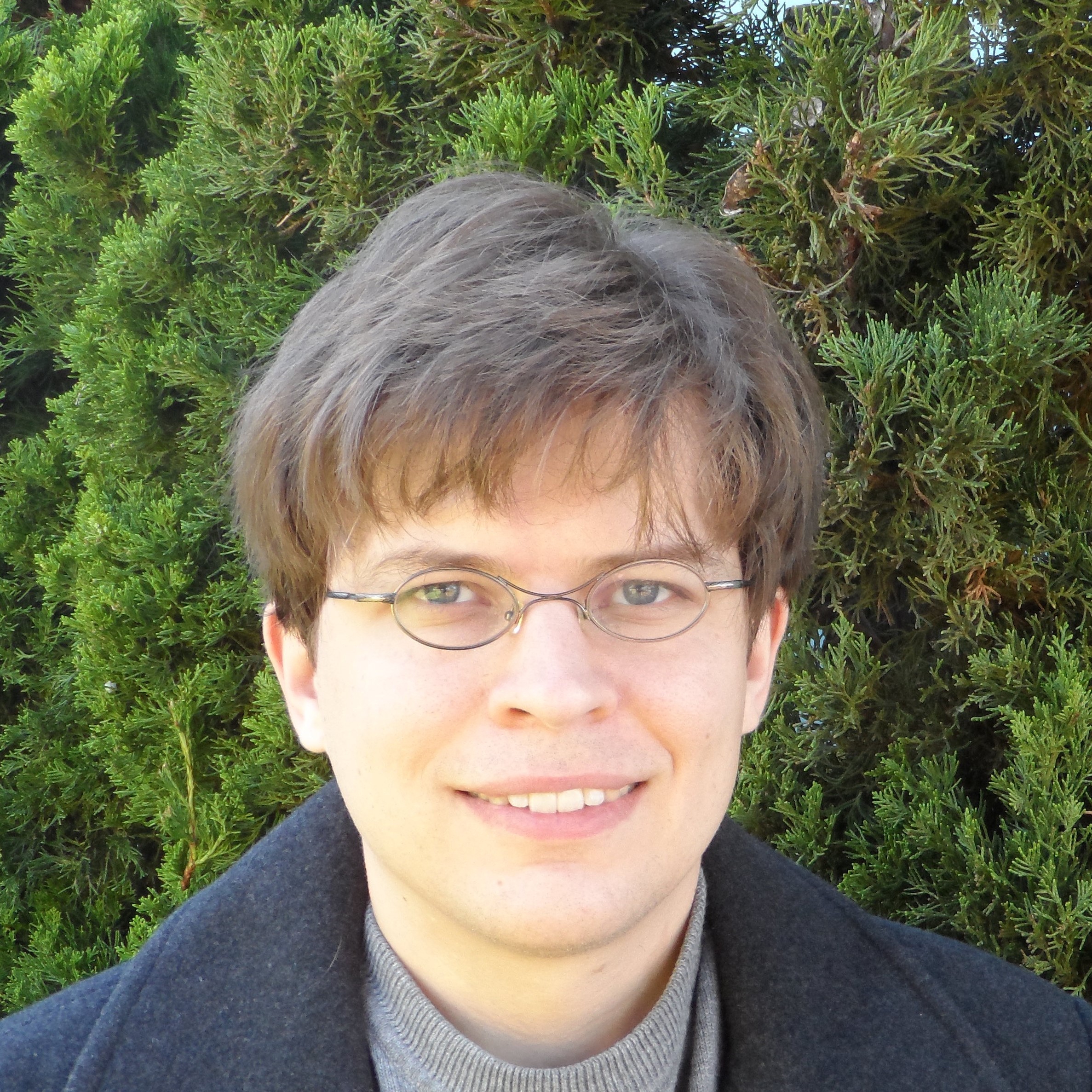
Aron Wall is a Professor of Theoretical Physics at the University of Cambridge, specializing in quantum gravity, black hole thermodynamics, and the holographic principle. He completed his BA at St. John's College (Santa Fe) and PhD in physics at the University of Maryland under Ted Jacobson. Postdoctoral roles at UC Santa Barbara (2011-2014), Institute for Advanced Study (2014-2017), and Stanford Institute for Theoretical Physics (2017-2019). Appointed Lecturer at Cambridge in 2019 and promoted to Professor in 2024. His research includes proposing a mechanism for traversable wormholes without exotic matter (2016 with Gao and Jafferis) via quantum entanglement, and key contributions to quantum extremal surfaces, holographic entanglement entropy, and the quantum focusing conjecture. His 2024 work explores background-independent string actions and cosmological CPT theorems, reflecting ongoing investigations into spacetime's fundamental structure. Notable scientific award: 2019 New Horizons in Physics Prize . His work intersects with philosophical and theological questions, documented on his blog Undivided Looking .
Ivana Stojiljković is a Lecturer in Chemistry at the Faculty of Forestry , University of Belgrade . She has been employed since 2015 and holds a PhD in Theoretical Chemistry from the same university's Faculty of Chemistry. Her research focuses on organic chemistry , computational chemistry , and nanotechnology , particularly in adsorption technologies for environmental applications . Education: BSc, MSc, and PhD in Chemistry (University of Belgrade) Professional Affiliations: Serbian Chemical Society, Educational Forum, Petnica Research Station (visiting lecturer since 2019) Her recent publications highlight interdisciplinary work combining organic synthesis , quantum chemical modeling , and environmental remediation . She has contributed to projects on pesticide removal , heavy metal biosorption , and chemical valorization of waste materials . Her 2025 study on Douglas Fir needles for heavy metal retention and 2023 work on braneworld theory demonstrate her broad research scope. She co-authored the textbook "Praktikum iz Hemije sa radnom sveskom" (2018) for forestry students and participated in the CLEVER Cities initiative (2020), a Horizon 2020-funded project. Her article trends include adsorption mechanisms , quantum modeling , and sustainable materials . Collaborations span institutions like Ghent University (South Korea) and projects funded by the Ministry of Science, Republic of Serbia . She has no explicitly listed scientific awards but contributes to promotional activities at the Faculty of Forestry.
Prof. Dr. Georgi Dvali is a Professor and Chair of Theoretical Particle Physics at the Faculty of Physics, Ludwig-Maximilians-University (LMU) in Munich. He leads a research group focused on theoretical aspects of particle physics, cosmology, and quantum field theory. His work involves collaborations with institutions such as the Max Planck Institute for Physics (MPP), Arnold Sommerfeld Center, and the Excellence Cluster Universe. Research Interests Topological defects in quantum field theories Cosmic strings and domain walls Collider phenomenology Thermal fluctuations in cosmological systems Colored Higgs triplet models 3-form gauge theories Contact Information Institution: Ludwig-Maximilians-University, Faculty of Physics Department: Theoretical Particle Physics Address: Theresienstraße 37, 80333 Munich Email: Georgi.Dvali@physik.uni-muenchen.de
Giuseppe De Luca is a Research Fellow at the Department of Physics and Chemistry - Emilio Segrè, University of Palermo. His work spans interdisciplinary domains including theoretical physics, biophysics, machine learning, and social dynamics. Research Themes : Model averaging techniques, liquid-liquid phase separation, quantum complexity, holography, and social exclusion effects in education. Methodologies : Bayesian inference, multiscale analysis, and machine learning optimization. Recent publications focus on weighted-average least squares estimation, structural degradation in biomaterials, and virtual reality applications in psychological research. He contributes to the SHARE project with statistical expertise in survey weighting and imputation strategies.
Hiroyuki ABE is a Professor at the Faculty of Science and Engineering of Waseda University , specializing in theoretical particle physics , supersymmetric model building , and cosmology . His research bridges high-energy physics and cosmological phenomena through advanced mathematical frameworks. Degrees: Master of Science (Hiroshima University) Doctor of Science (Hiroshima University) Research interests include: Supersymmetric extensions of the Standard Model String theory compactifications with magnetic fluxes Moduli stabilization mechanisms Flavor structure from extra-dimensional symmetries Inflationary models in supergravity Higher-dimensional gauge theories Publication trends show expertise in: 10D/6D supergravity formalisms Non-Abelian flavor symmetries Supersymmetry breaking via fluxes/orbifolds Applications to dark matter and Higgs phenomenology Mathematical structure of extra dimensions Quantum effects in compactified theories Scientific recognition : Particle Physics Medal (2009) - Young Scientist Award in Theoretical Particle Physics Contributions span from foundational work on supersymmetric flavor problems to moduli stabilization in higher-dimensional theories. His collaborative projects with researchers like Tatsuo Kobayashi and Yutaka Sakamura have advanced understanding of supersymmetry breaking and cosmological inflation in string-derived models.
Thomas Gutsche is an Adjunct Professor at the Department of Physics, Faculty of Science, University of Tübingen. His research focuses on theoretical physics, particularly in areas like quantum mechanics, particle physics, and cosmology. Institution: University of Tübingen School: Faculty of Science Department: Department of Physics Email: thomas.gutsche@uni-tuebingen.de
Tony Gherghetta is a Professor in the School of Physics and Astronomy at the University of Minnesota, Twin Cities, with office location at 375-14 John T. Tate Hall. His research spans theoretical high-energy physics and particle phenomenology. His primary research interests include: Physics beyond the Standard Model Supersymmetry and Extra dimensions AdS/CFT holography LHC phenomenology Quantum Chromodynamics Axion physics and cosmology Recent publications (2023-2025) reveal intense focus on axion cosmology solutions to the strong CP problem, effective field theory techniques for massive particles, and precision Standard Model tests. His work bridges theoretical constructs with experimental collider signatures and cosmological observations, particularly in dark matter candidates and quantum gravity implications. Gherghetta has secured significant research funding: Theoretical High Energy Physics at the University of Minnesota (U.S. DOE, 2014-2026) as Co-Investigator New Ideas in Physics Beyond the Standard Model (Simons Foundation, 2019-2022) as Principal Investigator Supersymmetry and Extra Dimensions (Research Corporation, 2003-2008) as Principal Investigator He is an active contributor to the Particle Data Group (PDG), co-authoring the definitive biennial Review of Particle Physics that synthesizes global experimental results and theoretical frameworks for the high-energy physics community.
Elena Castellani is Full Professor of Philosophy of Science at the Department of Literature and Philosophy (DILEF), University of Florence since September 2023. She previously served as Associate Professor (2005-2023) and Researcher (2002-2005) at the same institution. Her academic journey includes prestigious fellowships at Cologne University, Princeton University, and the Munich Center for Mathematical Philosophy. Professor Castellani's research centers on the history and philosophy of physics, with particular emphasis on symmetries, dualities, and structural approaches in theoretical physics. Her work examines ontological aspects of physical theories, reductionism and emergence, the philosophy of string theory, and scientific representation. She has made significant contributions to understanding Curie's principle, symmetry breaking, and the philosophical implications of dualities in quantum field theory. Her publication record shows consistent high-impact output across philosophy of physics journals, with recent focus on convergence strategies for theory assessment, nested modalities in astrophysical modeling, and renormalization group methods. Her work demonstrates how historical case studies, particularly from early string theory development, can illuminate methodological questions in fundamental physics. Premio Le Scienze 2002 for Foundations of Physics Editorial Board, Studies in History and Philosophy of Modern Physics (2008-present) Editorial Board, Philosophy of Physics (2022-present) Steering Committee, European Philosophy of Science Association (2017-2021) Professor Castellani actively supervises PhD students through the joint Florence-Pisa doctoral program in Philosophy. She has organized numerous international workshops on symmetries, dualities, and string theory, fostering interdisciplinary dialogue between physicists and philosophers. Her research is supported through collaborative international projects and participation in major European philosophy of science networks. She leads several seminar series including the interdisciplinary Physics-Philosophy seminar (since 2000) and the Logic and Philosophy of Science seminar (since 2002). Her international collaborations span institutions in Germany, France, the Netherlands, the United States, and Switzerland, reflecting her prominent role in the global philosophy of physics community.
Antonio Masiero serves as a Chair Professor in the Department of Theoretical Physics at the University of Padua, Italy, where he maintains his primary academic appointment and contributes to advanced research and teaching in fundamental physics. His research spans Theoretical Physics with concentrated expertise in Particle Physics, Quantum Field Theory, and Cosmology. Professor Masiero investigates subatomic particle interactions, quantum gravity models, and early-universe phenomena, addressing core questions about physical laws and cosmic evolution through mathematical frameworks. As a senior faculty member, he participates in departmental leadership and academic mentorship within Padua's physics community, though specific details about active grants, student supervision capacity, or laboratory infrastructure are not documented in the available source material.
Dr. Davide Polvara is a scientific assistant at the Institute for Theoretical Physics (Department of Physics II) within the Faculty of Mathematics, Computer Science and Natural Sciences at the University of Hamburg . His work is affiliated with the String Theory Group led by Prof. Dr. Gleb Arutyunov. Contact details: Office in Building 2a, Room 612, Luruper Chaussee 149, 22761 Hamburg. Phone: +49 40 8998-3611. Email: davide.polvara@desy.de . His research focuses on String Theory , a discipline intersecting High Energy Physics , Quantum Field Theory , and Mathematical Physics . This field aims to unify quantum mechanics and general relativity through one-dimensional extended objects (strings), addressing fundamental questions in particle physics and cosmology. He is part of a broader research community at the University of Hamburg, collaborating with groups such as Algebraic Quantum Field Theory , Particle Cosmology , and Phenomenology .
Leonardo Senatore serves as Full Professor and Deputy Head of the Institute of Theoretical Physics within ETH Zurich's Department of Physics, based at HIT K 21.5, Wolfgang-Pauli-Str. 27, 8093 Zurich, Switzerland. His research focuses on fundamental theoretical physics, particularly General Relativity and its intersections with Cosmology, Quantum Gravity, and Gravitational Waves. This work explores the mathematical structure of spacetime, early universe phenomena, and quantum aspects of gravitational interactions. Professor Senatore teaches the graduate-level course 'General Relativity' (402-0830-00L) for the Fall semester 2025, reflecting his expertise in Einstein's gravitational theory and its modern applications. Scientific awards: None mentioned in source materials. He advises graduate students in theoretical physics research though specific names were not provided; no details about research grants or funding sources were included in the available text. As Deputy Head of the Institute of Theoretical Physics, he contributes to one of Europe's leading research groups in fundamental physics, which investigates quantum field theory, string theory, and cosmological models.
Nicolas Boulanger serves as a full-time Associate Professor at the University of Mons (UMONS) and holds a Senior Research Associate position with the F.R.S.-FNRS. He founded and leads the research unit "Physics of the Universe, Fields and Gravitation" at UMONS, specializing in theoretical physics. His academic engagements include visiting professorships at the Universities of Tours and Aix-Marseille, along with multiple invitations to the Institut des Hautes Études Scientifiques (IHES) in France. Boulanger earned his Ph.D. in Physics from ULB Brussels in 2003 under Marc Henneaux's supervision, following post-doctoral research at DAMTP (Cambridge), the University of Mons, and Scuola Normale Superiore (Pisa). His educational trajectory reflects deep immersion in theoretical physics institutions across Europe. His research spans higher spin gravity, higher symmetries, duality in supergravity, Weyl-invariance in extended gravity models, and quantization of gauge systems. He also actively collaborates on interdisciplinary biomechanics projects with engineers and physiotherapists, applying theoretical frameworks to human motor control systems. This dual focus bridges abstract mathematical physics with practical biological applications. Analysis of his publications reveals a consistent thread exploring mathematical structures in quantum gravity, particularly higher-spin systems and dualities. His work demonstrates evolution from foundational anomaly studies (2003-2007) to comprehensive higher-spin frameworks (2012-2017), with increasing interdisciplinary reach into biomechanics. The publications consistently integrate advanced group theory and geometric formulations. Boulanger received the Théophile De Donder prize for Mathematical Physics from the Royal Academy of Belgium in 2015, recognizing his contributions to theoretical physics. This award coincided with the formal establishment of his research unit at UMONS. He directs the "Physics of the Universe, Fields and Gravitation" unit at UMONS, fostering collaborative theoretical research. His biomechanics work involves a pluri-disciplinary team integrating engineering expertise with clinical physiotherapy perspectives, creating a unique cross-departmental research environment focused on movement science.
Daniele Steer is a Full Professor at Ecole Normale Supérieure of Paris with a dual appointment at Paris Diderot University in the AstroParticule et Cosmologie (APC) laboratory. His research spans theoretical physics, cosmology, and gravitational wave astronomy, positioning him at the forefront of one of physics' most dynamic fields. Professor Steer's research interests focus on gravitational wave physics, black holes, and cosmological applications of gravitational wave observations. His work bridges theoretical predictions with observational data from current and future detectors. He investigates cosmic strings, primordial gravitational waves, and the use of gravitational waves as cosmological probes, contributing significantly to our understanding of both fundamental physics and astrophysical phenomena. An analysis of Professor Steer's recent publications reveals a strong emphasis on gravitational wave detection and analysis across multiple frequency bands. His research spans from high-frequency signals detectable by ground-based interferometers like LIGO and Virgo to low-frequency signals targeted by pulsar timing arrays. A notable trend is his involvement in preparing for next-generation detectors like the Einstein Telescope while simultaneously analyzing data from current observing runs. Active participant in LIGO-Virgo-KAGRA Collaboration Contributor to European Pulsar Timing Array research Key researcher in Einstein Telescope development Extensive work on gravitational wave cosmology Professor Steer leads research on gravitational wave signatures from diverse sources including binary black holes, neutron stars, cosmic strings, and potential cosmological signals. His group likely involves students and postdocs in data analysis, theoretical modeling, and preparation for future gravitational wave missions. The collaborative nature of gravitational wave astronomy means his work connects with numerous international teams across different detection approaches.
Leonard Susskind is the Felix Bloch Professor of Theoretical Physics at Stanford University and founding director of the Stanford Institute for Theoretical Physics. He is a member of the US National Academy of Sciences and the American Academy of Arts and Sciences, an associate member of the faculty of Canada's Perimeter Institute for Theoretical Physics, and a distinguished professor of the Korea Institute for Advanced Study. Susskind's research spans string theory, quantum field theory, quantum statistical mechanics, and quantum cosmology. He is widely regarded as one of the fathers of string theory, having independently introduced the concept that particles could be states of excitation of relativistic strings. His recent work focuses on quantum complexity, the holographic principle, and the connection between quantum entanglement and spacetime geometry through the ER=EPR conjecture. His research has fundamentally shaped our understanding of black holes and quantum gravity. Susskind's publication record shows remarkable longevity and continued innovation, with significant contributions spanning from the 1970s to the present day. His recent papers explore quantum gravity in laboratory settings, holographic wormholes, and the geometric interpretation of quantum complexity, demonstrating his ability to identify and develop cutting-edge research directions that bridge theoretical physics and quantum information science. J. J. Sakurai Prize for Theoretical Particle Physics (1998) Member of the US National Academy of Sciences (2000) Member of the American Academy of Arts and Sciences Susskind has mentored numerous students and postdocs throughout his career, maintaining an active research group at Stanford. His work has been supported by various grants enabling theoretical research in quantum gravity and string theory. He has also been instrumental in developing interdisciplinary connections between theoretical physics, quantum information science, and computer science. As director of the Stanford Institute for Theoretical Physics, Susskind has fostered a vibrant research environment that brings together physicists working on fundamental questions in quantum mechanics, gravity, and cosmology. His leadership has helped position Stanford as a leading center for theoretical physics research, particularly in the areas of quantum gravity and string theory.
Alan Harvey Guth is the Victor Weisskopf Professor of Physics at the Massachusetts Institute of Technology, where he has been a faculty member since 1980. Born in New Brunswick, New Jersey in 1947, Guth earned all his degrees from MIT (BS 1968, MS 1969, PhD 1972) before holding postdoctoral positions at Princeton University, Columbia University, Cornell University, and the Stanford Linear Accelerator Center. Guth is best known for developing the theory of cosmic inflation in 1981, which revolutionized our understanding of the early universe. His research focuses on applying theoretical particle physics to cosmology, exploring what particle physics can tell us about cosmic history and what cosmology reveals about fundamental physical laws. His work has centered on cosmic inflation, density fluctuations, eternal inflation, and the possibility of creating a new universe in a laboratory setting. The analysis of Guth's recent publications (2010-2020) reveals continued engagement with inflationary theory, particularly exploring variations of inflation models, axion physics, quantum fluctuations, and the multiverse concept. His work bridges theoretical physics and observational cosmology, maintaining relevance to current research questions in the field. Major Scientific Awards: Kavli Prize in Astrophysics (2014) Breakthrough Prize in Fundamental Physics (2012) Isaac Newton Medal (2009) Gruber Prize in Cosmology (2004) Dirac Medal (2002) Benjamin Franklin Medal in Physics (2001) National Academy of Sciences Member (1989) Throughout his career, Guth has maintained active research while also being recognized for excellence in teaching at MIT. His work on cosmic inflation has become a cornerstone of modern cosmology, with observational evidence from cosmic microwave background measurements providing strong support for the theory's predictions about the early universe's structure and evolution. Guth leads research within the MIT Center for Theoretical Physics, contributing to one of the world's leading centers for theoretical physics research. His ongoing investigations continue to explore the implications of inflation for our understanding of the universe's origin, structure, and ultimate fate.