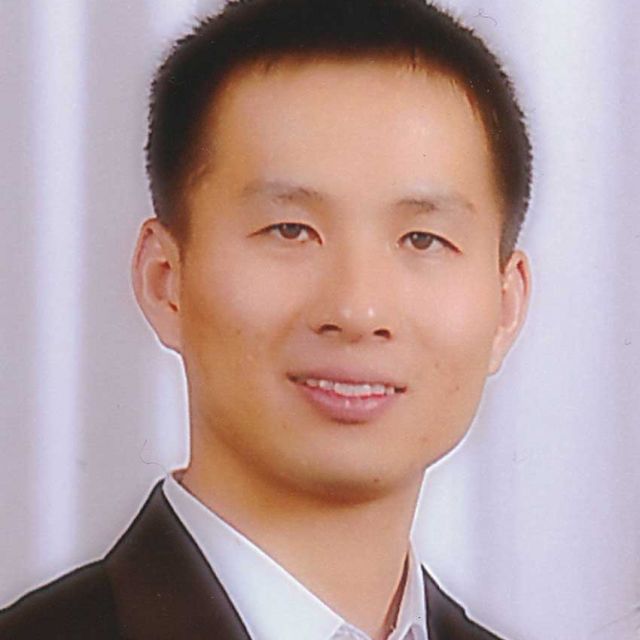
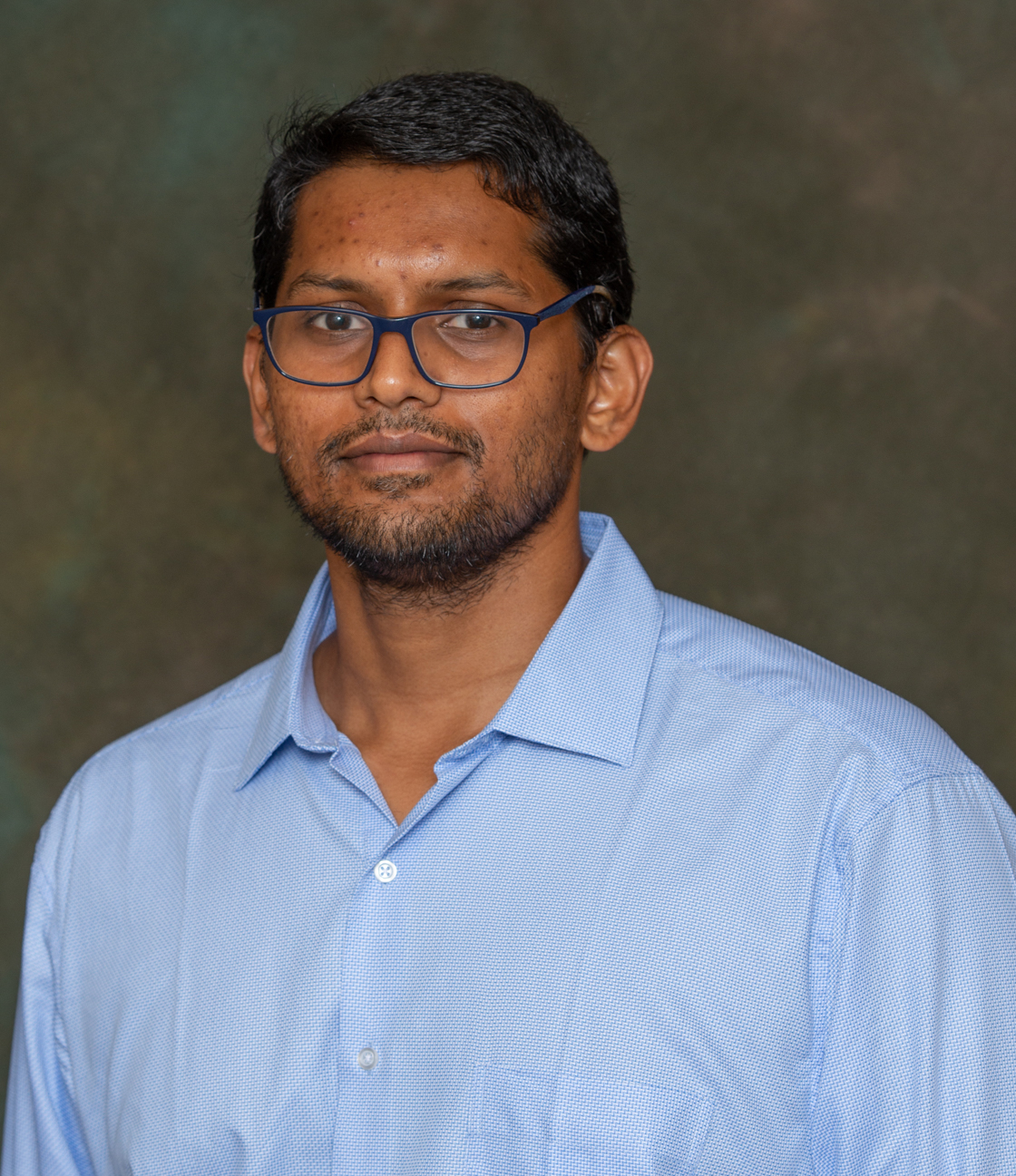
Andrew Joseph Reynolds is a Research Scientist at the University of Iowa , actively contributing to the development of the SMT solver cvc5 . He is a core developer in the Computational Logic Center (CLC) and focuses on improving SMT solvers for unbounded strings, regular expressions, proofs, quantified formulas, and synthesis conjectures. Research Interests : Satisfiability Modulo Theories (SMT), Formal Verification, Automated Reasoning, Quantifier Instantiation, String Constraints, Synthesis Algorithms Scientific Contributions include groundbreaking work in distributed SMT solving, proof reconstruction, and nonlinear arithmetic handling. His publications span premier conferences like FMCAD, CAV, IJCAR, and TACAS, with multiple best paper awards and competition wins. Major Competitions won: SMT Comp (multiple years), SyGuS Comp (General track, Conditional Linear Integer Arithmetic), CASC (typed first-order divisions) He serves on program committees for conferences like FroCoS, LPAR, FMCAD, and SMT, and has organized workshops including the SyGuS Comp 2019 and 2018 FMCAD Student Forum . His work is funded by NSF grants and involves collaboration with leading institutions.
Xi Dong is an Assistant Professor in the Department of Physics at the University of California, Santa Barbara (UCSB). His research spans foundational questions in quantum gravity, quantum field theory, string theory, and cosmology, with a particular focus on the holographic duality between string theory and quantum field theories, and the role of quantum entanglement in the emergence of spacetime. Education and Career: Ph.D. in Physics, Stanford University B.S. in Mathematics and Physics, Tsinghua University Postdoctoral Scholar, Stanford University Member, Institute for Advanced Study, Princeton Assistant Professor, University of California, Santa Barbara (since 2017) Research Interests: Xi Dong's research lies at the intersection of quantum gravity and quantum information, exploring how spacetime and gravity might emerge from underlying quantum entanglement structures. His work includes: Understanding holographic entropy and the Ryu-Takayanagi formula Investigating quantum error correction in AdS/CFT Studying black hole interiors and the information paradox Exploring the role of replica wormholes and entanglement wedges Developing geometric and algebraic approaches to gravitational path integrals Publications: His recent work includes studies on geometric entropies, holographic entanglement negativity, gravitational path integrals, and the emergence of spacetime from entanglement. These publications are widely cited and contribute significantly to the theoretical physics community. Contact: Email: xidong@ucsb.edu Office: Broida 6103, UCSB Department of Physics Website: Xi Dong site
Prof. Ofer Shayevitz is a faculty member at the School of Electrical Engineering , Tel Aviv University , holding the academic rank of Professor . He is affiliated with the Department of Systems and leads interdisciplinary research at the intersection of information theory , statistical inference , and data science . His research explores theoretical challenges in interactive communication , machine learning , and quantum information , with applications to communication complexity , graph analysis , and non-stationary environments . Notable work includes advances in high-dimensional regression , entropy estimation , and memory-constrained algorithms . The trends in his recent publications highlight information-theoretic bounds , statistical inference under constraints , and interactive protocols . His group has made significant contributions to quantum key distribution , planted graph detection , and guesswork analysis . Scientific awards include the Best Student Paper Award at ISIT 2020 . His research is supported by major grants from the Israel Science Foundation (ISF) , ERC Starting Grant , and Israel Innovation Authority . Prof. Shayevitz advises current PhD students Assaf Ben-Yishai , Uri Hadar , and Shahar Stein Ioushua , as well as M.Sc. students Inbar Pinsly and Oz Ben Hamo . Former advisees include faculty members at institutions like Kyushu University and University of British Columbia .
Qin LI is an Associate Researcher at the Institute for Quantum Sciences, Southern University of Science and Technology. He holds a Ph.D. in Mathematics from the University of California at Berkeley (2011) and has previously served as an Assistant Professor at the University of Science and Technology of China (2011-2015) and Southern University of Science and Technology's Department of Mathematics (2015-2021). His academic career has focused on mathematical physics and quantum field theory. Education: B.S. in Mathematics (University of Science and Technology of China, 2005), Ph.D. in Mathematics (University of California at Berkeley, 2011) Qin LI's research explores the mathematical foundations of quantum field theory, including quantization techniques, topological sigma models, and algebraic structures in quantum geometry. His work bridges differential geometry, algebraic geometry, and theoretical physics, with a focus on Kähler manifolds, Chern-Simons theory, and BV quantization frameworks. The 10 most recent publications highlight advancements in Bargmann-Fock sheaves, deformation quantization, and L∞ structures on Kähler manifolds. Key themes include topological quantum field theory, Calabi-Yau geometry, and algebraic approaches to quantization, with applications to Rozansky-Witten models and Berezin-Toeplitz quantization representations. His current affiliation with the Institute for Quantum Sciences at Southern University of Science and Technology underscores his specialization in mathematical quantum physics. His academic trajectory reflects a progression from pure mathematics (postdoctoral studies at CUHK) to interdisciplinary quantum sciences research.
Kirtimaan Mohan serves as East Holmes Assistant Professor in the Department of Physics and Astronomy at Michigan State University, teaching LB 273 (Physics I) and LB 274 (Physics II) through the Lyman Briggs College. His office is located in Holmes Hall, E-189, East Lansing, MI. Education Ph.D. in Physics, Indian Institute of Science (2014) Research Focus Dr. Mohan investigates fundamental questions in particle physics including the nature of dark matter, signatures of new physics beyond the Standard Model, and precision Higgs boson studies. His work integrates quantum field theory calculations with machine learning techniques to analyze collider data and identify exotic phenomena. Current efforts focus on dark matter detection strategies, collider phenomenology, and theoretical frameworks addressing B-physics anomalies. Publication Trends His 2017-2019 publications demonstrate consistent focus on dark matter models (Majorana particles, FIMPs), LHC collider signatures (dijet resonances, energy correlation functions), and B-physics anomalies . The research combines simplified model building with one-loop calculations, bridging theoretical predictions and experimental constraints from both collider and direct detection experiments. Scientific Awards No awards documented in provided materials Academic Activities Information regarding graduate student supervision, grant funding, or laboratory affiliations is not specified in available documentation. His research appears highly collaborative based on multi-institutional co-authorship patterns across publications.
Sergey Oleksandrovych Sgadov is a Senior Lecturer in the Department of Computer Systems and Networks at Zaporizhzhia Polytechnic National University. With academic activity at the university since 1998, he has established himself as a dedicated educator and researcher in computer science and microprocessor technologies. His institutional affiliation places him within the Faculty of Computer Sciences and Technologies, where he contributes to both teaching and research initiatives. Education: Graduated from Zaporizhia National University in 1993 with honors, specializing in "Solid-state electronics and microelectronics" and receiving the qualification of "specialist". Dr. Sgadov's research spans multiple domains of computer science and engineering. His primary interests include microprocessor programming, application development using Delphi and C++, web programming with .NET technologies, and computer modeling of physical processes. He has made significant contributions to graph theory, particularly in topological graph drawing algorithms and their applications in printed circuit board design. His work bridges theoretical computer science with practical engineering applications, focusing on creating efficient algorithms for complex computational problems. Analysis of his publication record reveals a strong focus on graph theory applications in electronic design automation, microprocessor systems development, and educational tools for computer engineering. His research has evolved from fundamental theoretical work on graph algorithms to practical implementations in microcontroller programming and educational technology. The consistent thread throughout his work is the application of computational methods to solve complex engineering problems, particularly in circuit design and microprocessor systems. Dr. Sgadov teaches courses in microcontroller programming and programming of microcontroller systems, bringing his research expertise directly into the classroom. His teaching methodology likely incorporates practical, hands-on experience with modern microprocessor technologies, reflecting his research interests in ARM Cortex processors and microcontroller applications.
Arne Kovac serves as Associate Professor in Statistics within the School of Mathematics at the University of Bristol, where he completed his PhD in 1999 under B. Silverman with the thesis "Wavelet Thresholding for Unequally Time-Spaced Data". His academic profile centers on methodological innovations in nonparametric statistics. His research expertise is defined by eight core areas: Taut String algorithms (100% fingerprint prominence) Confidence Region construction (94% prominence) Regularization techniques Total Variation minimization (68% prominence) Extreme Value theory applications Statistical minimization problems Nonparametric regression frameworks Asymptotic analysis Publication trends from 2009-2014 reveal consistent advancement of smoothing methodologies, particularly through taut string extensions and graph-based regression. These works establish foundational contributions to statistical inference under shape constraints, with notable emphasis on edge preservation in signal processing and confidence band construction. No scientific awards or major honors are documented in the available records. Professionally, Kovac served on the editorial board of Annals of Statistics (2007-2009) and participates in specialized workshops including "Nonparametric statistical inference under shape constraints" (active since 2016). While student supervision and grant funding details remain unspecified, his 20 research outputs—including 14 journal articles with significant Scopus citations (60 for 2009 taut string paper)—demonstrate sustained scholarly impact.
Dr. Samy Missoum is a Professor in the Department of Aerospace and Mechanical Engineering at the University of Arizona's College of Engineering. His academic career spans over two decades with continuous research and teaching contributions in multidisciplinary design optimization, reliability-based design, and computational mechanics. He has maintained an active teaching schedule offering graduate-level courses including Finite Element Methods, Design Optimization, and Advanced Finite Element Analysis through Fall 2025. Dr. Missoum's research focuses on Multidisciplinary Design Optimization, Reliability-Based Design Optimization, Finite Element Analysis, Probabilistic Design, Structural Dynamics, and Aeroelasticity. His work bridges theoretical developments with practical engineering applications, particularly in handling uncertainty in complex systems. He has pioneered approaches using Support Vector Machines for engineering design problems, especially for discontinuous responses and multiple failure modes. His research has significant applications in aerospace structures, mechanical systems, and renewable energy technologies. His recent publications (2022-2024) demonstrate a strong focus on reliability assessment of uncertain systems subjected to random vibrations, stochastic optimization of nonlinear energy sinks, and thermal optimization for concentrated solar power systems. His work employs sophisticated computational approaches including surrogate modeling, multi-fidelity methods, and advanced optimization techniques to address complex engineering problems with uncertainty. Dr. Missoum's scholarly achievements have been recognized through several awards including being named an Associate Fellow of the American Institute of Aeronautics and Astronautics (2017) and receiving the 'Most Helpful to Their College Education' award from AME Seniors (2014). He was also invited as a Professor at Ecole Centrale in Marseille, France during 2021. His research has been consistently supported by grants that enable his work on structural reliability, optimization under uncertainty, and multidisciplinary design. He maintains active collaborations with researchers both nationally and internationally, as evidenced by his co-authored publications with scholars from various institutions. Dr. Missoum leads the CODES Laboratory at the University of Arizona, which focuses on Computational Optimization and Design under uncertainty. The laboratory conducts research on reliability assessment, multidisciplinary design optimization, and development of novel computational methods for engineering design problems with complex constraints and uncertainties.
Xiaokang Qiu is an Associate Professor at the Elmore Family School of Electrical and Computer Engineering , Purdue University , with a Ph.D. in Computer Science from University of Illinois at Urbana-Champaign (2013). His research focuses on Programming Languages and Software Engineering , particularly theories, algorithms, and tools for program synthesis, verification, and logic-based analysis. Research Interests His work addresses: Formal methods for heap-manipulating programs using separation logic Automated deduction and decision procedures for data structures Syntax-guided synthesis of concurrent and bit-vector programs Integration of machine learning with formal verification Scalable verification of hardware memory consistency Network protocol optimization through program synthesis Recent Publications Recent work includes PLDI 2025 on concurrent string synthesis, POPL 2024 on bit-vector synthesis, and POPL 2023 on comparative network design. His tools like STRAND and VCDryad enable automated verification of complex data-structure manipulations. Grants & Awards Recipient of: NSF SHF Small Award (2024, co-PI, $593K) NSF FMitF Award (2023, PI, $750K) Tenure at Purdue (2023) Professional Service Active in program committees for PLDI , POPL , CAV , and ATVA conferences. Developed tools like DryadSynth (PLDI 2020), ImpSynt (OOPSLA 2017), and JSketch (ESEC/FSE 2015).
Michael Lampis is a Maître de conférences HDR (Assistant Professor) at LAMSADE , Universite Paris Dauphine. His research focuses on theoretical computer science , particularly in approximation algorithms , parameterized complexity , and graph algorithm design . He has held post-doctoral positions at Kyoto University and KTH, Stockholm, and earned his PhD from the Graduate Center of CUNY under Amotz Bar-Noy. Research Interests include: Structural Graph Parameters (treewidth, pathwidth, clique-width) Algorithmic Meta-Theorems Approximation Schemes Combinatorial Optimization Computational Complexity Recent Research Trends highlight his work on parameterized approximation algorithms for graph problems (e.g., feedback vertex set, matching) and complexity analysis of games/puzzles. His projects S-EX-AP-PE-AL (ANR JCJC), COAL-GAS (CNRS-PSL), and collaborations with Japanese institutions (PARAGA, GRAPA) emphasize cross-border innovation. Scientific Awards include: Best Student Paper Award at WG 2025 Best Paper Award at SOFSEM 2024 Advising involves PhD students Ioannis Katsikarelis, Louis Dublois, and Manolis Vasilakis, alongside Master's advisees like Edouard Nemery and Alban Guerbois. He actively participates in peer review for conferences (ICALP, ESA, STACS) and journals (Algorithmica, JCSS, DAM).
Daniele Bartolucci is a Full Professor in Mathematical Analysis at the Department of Mathematics, University of Rome Tor Vergata. He is actively engaged in research and teaching, with a focus on Partial Differential Equations and related mathematical fields. His academic activities span multiple institutions through the joint PhD program with Sapienza University of Rome and Roma Tre University. Professor Bartolucci's primary research interests include: Partial Differential Equations, particularly Liouville type equations Blow-up analysis and pointwise estimates for equations with singular data Self-dual vortices in Gauge theories Prescribing Gaussian curvature problem on surfaces with conical singularities Mean-field type equations and their connection to statistical mechanics Harnack-type inequalities for blow-up solutions His recent publications (2017-2019) demonstrate an active research program with numerous collaborations, particularly with A. Jevnikar, C.S. Lin, Y. Lee, W. Yang, and G. Tarantello. These works focus on advanced topics in nonlinear PDEs, including mean field equations, blow-up analysis, and geometric aspects of differential equations. The research has significant applications in mathematical physics, particularly in understanding phenomena related to cosmic strings and two-dimensional turbulence. Professor Bartolucci has received research support through the MIUR Excellence Department Project MATH@TOV and the 'Beyond Borders' project sponsored by the University of Rome Tor Vergata, which fund his collaborative research activities and specialized course offerings. As an educator, Professor Bartolucci follows a rigorous approach emphasizing understanding concepts from their causes rather than accepting them on faith. His teaching portfolio is extensive: Undergraduate courses in Mathematical Analysis for Engineering and Mathematics students since 2008 PhD courses on 'Introduction to PDE' for the joint PhD program of Rome's universities Specialized courses on 'Liouville Equations with Applications' Regular office hours in room 1107 at the Department of Mathematics His office is located in room 1107 at the Department of Mathematics, University of Rome Tor Vergata, where he maintains regular office hours for students.
Elena Castellani is Full Professor of Philosophy of Science at the Department of Literature and Philosophy (DILEF), University of Florence since September 2023. She previously served as Associate Professor (2005-2023) and Researcher (2002-2005) at the same institution. Her academic journey includes prestigious fellowships at Cologne University, Princeton University, and the Munich Center for Mathematical Philosophy. Professor Castellani's research centers on the history and philosophy of physics, with particular emphasis on symmetries, dualities, and structural approaches in theoretical physics. Her work examines ontological aspects of physical theories, reductionism and emergence, the philosophy of string theory, and scientific representation. She has made significant contributions to understanding Curie's principle, symmetry breaking, and the philosophical implications of dualities in quantum field theory. Her publication record shows consistent high-impact output across philosophy of physics journals, with recent focus on convergence strategies for theory assessment, nested modalities in astrophysical modeling, and renormalization group methods. Her work demonstrates how historical case studies, particularly from early string theory development, can illuminate methodological questions in fundamental physics. Premio Le Scienze 2002 for Foundations of Physics Editorial Board, Studies in History and Philosophy of Modern Physics (2008-present) Editorial Board, Philosophy of Physics (2022-present) Steering Committee, European Philosophy of Science Association (2017-2021) Professor Castellani actively supervises PhD students through the joint Florence-Pisa doctoral program in Philosophy. She has organized numerous international workshops on symmetries, dualities, and string theory, fostering interdisciplinary dialogue between physicists and philosophers. Her research is supported through collaborative international projects and participation in major European philosophy of science networks. She leads several seminar series including the interdisciplinary Physics-Philosophy seminar (since 2000) and the Logic and Philosophy of Science seminar (since 2002). Her international collaborations span institutions in Germany, France, the Netherlands, the United States, and Switzerland, reflecting her prominent role in the global philosophy of physics community.
Andrés Jonathan Abeliuk Kimelman is an Assistant Professor at the University of Chile's Faculty of Physical Sciences and Mathematics , affiliated with the Department of Computer Science . He holds a PhD in Computer Science (University of Melbourne, 2017) and a Civil Engineering degree in Computing (University of Chile, 2012). Research Focus : AI ethics, network analysis, natural language processing, and machine learning applications in social systems. Teaching : Leads undergraduate and postgraduate courses in Discrete Mathematics, Data Mining, and Computational Theory. Students : Advises multiple thesis and research projects, including works on AI-assisted urban planning, misinformation analysis, and algorithmic bias. Collaborations : Participates in the National Center for Artificial Intelligence (CENIA) as a co-investigator (2022-2027). Key Publications explore polarization detection, networked public spheres, and computational models for social systems. Current projects include unsupervised topic quantification and extreme multi-label classification in multilingual contexts.
Işıl Dillig is an Associate Professor of Computer Science at the University of Texas at Austin, where she leads the UToPiA research group. Her academic career spans over a decade of significant contributions to programming languages research, particularly in program analysis, verification, and synthesis. Dr. Dillig received all her academic degrees (BS, MS, and PhD) from Stanford University before joining the faculty at UT Austin. Her educational background established the foundation for her innovative research approach that bridges theoretical computer science with practical applications. Her research focuses on developing techniques to make software systems more reliable, secure, and easier to build through advanced program analysis, verification, and synthesis methods. She has pioneered approaches that combine symbolic reasoning with machine learning to tackle complex software engineering challenges across multiple domains including security, databases, and programming language theory. Her work demonstrates exceptional depth in creating practical tools that address real-world software development problems while maintaining strong theoretical foundations. Analysis of Dr. Dillig's publication record reveals a consistent trajectory of innovation in program synthesis, with recent work expanding into neurosymbolic approaches that bridge neural networks with formal methods. Her research shows strong connections between theoretical foundations and practical applications, particularly in security-critical systems, database technologies, and blockchain applications. The evolution of her work demonstrates increasing sophistication in handling complex program structures while maintaining practical usability. Dr. Dillig has received prestigious recognition for her research contributions: Sloan Fellowship NSF CAREER award As a dedicated educator and research leader, Dr. Dillig has served in significant roles including Program Chair for PLDI 2022 and Steering Committee member for PLDI. She has mentored numerous students through her UToPiA research group, guiding research in program synthesis, verification, and analysis. Her work has been supported by substantial research grants that have enabled innovative projects at the intersection of programming languages and security. Dr. Dillig leads the UToPiA (UT Austin Programming, Languages, and Analysis) research group, which focuses on developing novel techniques for program analysis, verification, and synthesis. The group maintains strong collaborations with industry partners and academic institutions worldwide, translating theoretical advances into practical tools that address real software engineering challenges.
Shachar Itzhaky is an Associate Professor in the Department of Computer Science at Technion - Israel Institute of Technology, Haifa. His research spans multiple areas of programming languages, formal methods, and software engineering, with a focus on making program development and verification more accessible and efficient. He has served on program committees for numerous prestigious conferences including PLDI, POPL, SPLASH, and ICFP. Dr. Itzhaky's research interests center around program synthesis, automated reasoning, and formal verification. His work in program synthesis explores techniques for automatically generating programs from high-level specifications, with applications in end-user programming and software development. In automated reasoning, he has made significant contributions to e-graph based reasoning, invariant inference, and property-directed verification. His research in formal methods focuses on practical applications for program verification, particularly for data structures and security properties. An analysis of his recent publications reveals a strong focus on leveraging advanced formal techniques for practical program understanding and generation. His work consistently bridges theoretical foundations with practical applications, particularly in program synthesis, verification, and end-user programming tools. The trend shows increasing integration of machine learning techniques with traditional formal methods, as well as expanding applications to security and privacy domains. ACM SIGPLAN John C. Reynolds Doctoral Dissertation Award Dr. Itzhaky has been actively involved in the programming languages research community, serving on numerous program committees and contributing to the advancement of formal methods and program synthesis. His work has practical implications for software development tools, security analysis, and end-user programming environments. While specific grant information isn't detailed in the provided text, his extensive publication record in top-tier venues suggests successful funding for his research endeavors. His work on projects like Object Spreadsheets and Lifty demonstrates a commitment to creating practical tools that address real-world programming challenges. Dr. Itzhaky's research is conducted within the vibrant programming languages and formal methods group at Technion's Computer Science department. His work intersects with multiple research threads including program synthesis, verification, and security, suggesting collaboration across these areas within the department. His tools like EPR-based Verification, PDR∀, and VeriCon represent significant technical contributions that likely form the basis of ongoing research projects with students and collaborators.