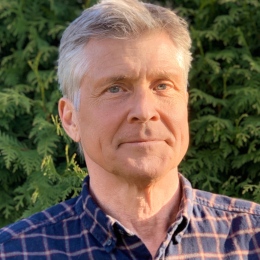
Jan Grimell is an Associate Professor and Senior Lecturer at the Department of Sociology, Umeå University. His research focuses on military chaplaincy, veterans' mental health, and identity formation, combining sociological and religious perspectives. He is affiliated with the research groups Sociology of Organizations, Sociology of Religion, and Sociology of Work. Key research themes include Moral Injury, PTSD, and the transition challenges veterans face when leaving military service. His work explores existential and spiritual dimensions of health, identity reconstruction, and the role of chaplaincy in armed forces and healthcare settings. Recent projects include studies on Ukrainian military chaplaincy during the Russia-Ukraine war, the impact of moral injury among healthcare providers during the pandemic, and the long-term identity struggles of Swedish veterans. His publications span journals like Frontiers in Sociology , Journal of Pastoral Care & Counseling , and Health and Social Care Chaplaincy , with a focus on interdisciplinary approaches linking social psychology, medical sociology, and religious studies.
Mats Danielsson is a Professor at KTH Royal Institute of Technology, leading the Medical Imaging research group within the Department of Particle Astrophysics and Medical Imaging. He has coordinated major projects like the ERC Advanced Grant for the Si3 project (starting 2024) and the EIC Pathfinder's 1MICRON project (starting 2025). His work focuses on advancing photon-counting detectors, X-ray technologies, and medical imaging systems. Notable recognitions include the 2024 KTH Innovation Award and the 2022 Hans Wigzell Science Prize. Danielsson has co-founded companies such as Sectra Mamea AB and C-RAD AB, and holds 135 patents with over 150 scientific publications. Education: MSc (1990) and PhD (1996) from KTH, followed by postdoctoral research at Lawrence Berkeley National Lab (1996–1998). He joined KTH in 1999, where he has held his current professorship since then. His research spans medical imaging, detector innovation, and radiation physics applications in healthcare. Research Interests: Development of high-resolution CT detectors, photon-counting technologies, compact X-ray sources, and AI-driven image processing. His recent work emphasizes minimizing radiation exposure while enhancing diagnostic precision through novel detector designs and machine learning algorithms. Key Projects: ERC Si3 project (3D detector for nuclear medicine), EIC 1MICRON (micrometer-scale imaging), and MedTechLabs collaboration with Karolinska Institutet. He has pioneered innovations such as MicroDose mammography and advanced photon-counting spectral CT systems. Awards: KTH Innovation Award (2024), Hans Wigzell Prize (2022), IVA membership (2017), Polhem finalist (2014), and INGVAR Award (2004). Advising & Grants: Over 150 scientific publications, 135 patents, and leadership in multi-institutional projects. Teaches courses on medical imaging and modern physics at KTH. Labs/Teams: Director of the Medical Imaging Group at KTH, co-founder of MedTechLabs, and collaborator across academia and industry in medical imaging innovation.
Mattias Heldner is Professor of Phonetics and Head of Department at the Department of Linguistics, Stockholm University. He also serves as Director of the Phonetics Laboratory where he has developed advanced recording facilities for breathing movements and voice quality dynamics in conversation. Dr. Heldner received his PhD in Phonetics from Umeå University in 2002, completed a postdoc at TeliaSonera Sweden in 2005, became Docent in Speech Communication at KTH Royal Institute of Technology in 2007, and was appointed Professor in Phonetics at Stockholm University in 2011. His research focuses on communicative behavior relevant for turn-taking in conversation and signaling of prosodic functions such as prominence and boundaries. His work spans multiple dimensions of speech communication, including: Respiratory patterns and their role in conversation flow Voice quality dynamics as turn-taking cues Prosodic functions in spontaneous speech Physiological constraints in verbal communication Acoustic properties of child speech development Neural correlates of lexical stress Dr. Heldner's recent publications demonstrate how respiratory signals provide crucial information for predicting speech activity and managing turn-taking. His research combines physiological measurements with acoustic analysis to uncover hidden aspects of conversational organization, particularly the relationship between breathing patterns and speech timing. As an educator, Dr. Heldner has taught phonetics courses for Speech and Language Pathology students at Karolinska Institutet, University of Gothenburg, and Umeå University. He currently supervises one PhD student and has successfully supervised two PhD theses to completion. Dr. Heldner has held several Swedish research grants and served as one of the Technical Program Chairs for Interspeech 2017 in Stockholm. His Phonetics Laboratory has developed innovative systems like RespTrack for measuring respiratory movements during speech with high experimental control.
Christian Lindh is an active Associate Professor and Senior Lecturer at Lund University's Division of Occupational and Environmental Medicine. He serves as Research Team Manager for Applied Mass Spectrometry in Environmental Medicine and is affiliated with EpiHealth: Epidemiology for Health. His research focuses on environmental and occupational exposures and their health impacts, with particular expertise in biomonitoring and analytical chemistry. His research interests span Occupational Health , Environmental Health , Analytical Chemistry , Exposure Assessment , and Epidemiology . Lindh specializes in studying human exposure to environmental pollutants including PFAS, heavy metals, phthalates, and polycyclic aromatic hydrocarbons, with particular focus on vulnerable populations such as pregnant women and children. His work contributes to UN Sustainable Development Goals related to health and environmental protection. Analysis of his recent publications reveals a strong focus on environmental epidemiology, particularly examining PFAS exposure patterns, heavy metal toxicity, and the health impacts of environmental contaminants across different life stages. His research employs advanced analytical techniques, particularly mass spectrometry, to precisely measure exposure levels and investigate dose-response relationships. Lindh has secured significant research funding, currently leading projects including 'Temporal Trends in Lead, Mercury, and Cadmium Levels in Children' (Swedish Environmental Protection Agency, 2025-2026) and 'Trade-offs between food safety and food security' (FORMAS, 2024-2027). He serves as Principal Investigator on multiple active research projects totaling 15, with 7 currently active and 7 completed. As Manager of the 'Targeted Exposomics at Lund University' infrastructure, Lindh leads the Applied Mass Spectrometry in Environmental Medicine research team. His work bridges analytical chemistry with public health research, developing methodologies to assess human exposure to environmental chemicals and evaluating their health consequences through epidemiological studies.
Nicholas Kamenos is a Professor at the Department of Ecology, Environment and Geoscience and Director of the Umeå Marine Sciences Centre (UMF) at Umeå University, Sweden. His research bridges global biogeochemical cycles and ecological responses to climate change, focusing on ecosystem engineers like coralline algae, corals, and seagrass. He works in polar to tropical regions, employing SCUBA, mesocosm experiments, and advanced analytical tools. Role: Director, Umeå Marine Sciences Centre Research Focus: Climate change impacts, ocean acidification, blue carbon, Arctic-temperate-tropical ecosystems His recent publications highlight interdisciplinary approaches to understanding marine ecosystem resilience. Research spans proxy development for historical climate reconstruction, carbon burial dynamics, and the role of calcifying organisms in carbon cycling, with applications to conservation and policy. Key grants include projects like AQUASERV (2024–2029) on service provision in marine ecosystems, Light Harvesting in Coralline Algae (2024–2027), and IRISCC (2024–2026) exploring seawater temperature changes. Collaborative work addresses coastal deoxygenation and socio-political aspects of blue carbon economies. He leads the Umeå Marine Sciences Centre, leveraging facilities like the Marine Mesocosm Facility and advanced tools (laser ablation ICPMS, isotope ratio mass spectrometry). His work integrates biological, geological, and chemical techniques to address multidisciplinary questions.
Thomas Winkler is an Associate Professor at the Division of Micro and Nanosystems, KTH Royal Institute of Technology, Sweden, and collaborates with TU Braunschweig, Germany. His research focuses on solving life science challenges using microsystems tools, particularly in neuropsychiatric disorders like schizophrenia. He develops organ-on-chip models, engineered microfluidic platforms, and biosensors for point-of-care diagnostics. Winkler leads an interdisciplinary ERC-funded team addressing metabolic coupling in neurovascular units and oxidative stress biomarkers. Key achievements include the ERC Starting Grant (2023) and work on electrochemical sensors for clozapine monitoring. He teaches courses such as Microsystem Technology (EK2350) and supervises PhD and postdoctoral researchers. Current projects include machine learning-guided robotic organoid maturation and electrochemical technology development for the CHIPzophrenia initiative. His lab actively seeks talent through open positions in Stockholm and Braunschweig. Scientific awards include the ERC Starting Grant and Marie Skłodowska-Curie Actions Fellowship. Research spans sensor development, microfabrication, and biomaterials, with a focus on translating lab technologies to clinical applications. Collaborations bridge engineering and life sciences, emphasizing personalized mental healthcare solutions.
Urban Johnson is a Professor at Halmstad University's School of Health and Welfare, specializing in sports psychology with a focus on sustainable participation in sports, health, and physical activity. His research examines psychological aspects of sports injury (pre- and post-injury) and healthy athletic engagement, particularly through pandemic-era studies of Swedish upper secondary sport students. Johnson's research interests center on: Psychological mechanisms in sports injury rehabilitation and prevention Adolescent athlete mental health and dropout dynamics Pandemic impacts on sport education systems Gender-specific responses to athletic challenges Longitudinal behavioral patterns in youth sports His work integrates qualitative analysis of student-athlete experiences with clinical psychology frameworks. His publication trends reveal intense focus on pandemic-related disruptions (2020-2025), with 12 of 15 recent articles examining COVID-19's impact on student-athletes, teachers, and sports systems. Key thematic clusters include: Sport injury psychology (ACL re-ruptures, prevention) Adolescent mental health during crises Fun/motivation dynamics in youth sports Cross-contextual leadership challenges Johnson actively supervises students at basic, advanced, and doctoral levels while teaching methodology courses. His collaborative projects include the Karolinska Football Injury Cohort Study and consensus statements on sport injury psychology. Current work emphasizes cocreation of injury prevention programs and psychological support services for elite handball.
Magnus Boman is a Professor of AI and Health at the Department of Medicine, Solna, Karolinska Institutet (KI), where he leads the AI@KI initiative to support researchers in AI integration. He is affiliated with the Chronic Inflammatory Disease Epidemiology research group under Johan Askling. His research focuses on AI applications in precision medicine, multimodal prediction, ethical norms in AI systems, energy-efficient computing, and quantum sensor data interpretation. Research Interests: Artificial Intelligence in healthcare and precision medicine Multimodal data analysis for disease prediction and treatment Machine learning for clinical decision support systems Ethical and societal implications of AI Grants: Swedish Research Council: Improving breast cancer histology image classification (2024-2026) Scalable Federated Learning (2022-2025) Ai in sustainable cities (VINNOVA, 2019) Advising & Students: Supervised over 50 PhD and Master's students across KI, KTH, and Stockholm University, focusing on AI applications in healthcare, machine learning, and computational epidemiology. Notable projects include predictive modeling for mental health outcomes and variant filtering in genetic data. Labs & Teams: Leads AI@KI, fostering AI adoption in medical research. Collaborates with the Johan Askling group on epidemiology and chronic disease studies.
Mikael Johansson is a Professor at Kungliga Tekniska Högskolan (KTH), specializing in Control Technology . He teaches and coordinates courses such as Distributed Optimization (FEL3311) and various advanced-level degree projects in computer science, electrical engineering, and systems engineering. His research spans Control Systems , Machine Learning , and Optimization , with a focus on asynchronous algorithms, federated learning, and applications in energy systems and construction. His work includes 15 recent publications on topics like neural networks, distributed optimization, and battery technology. Notable areas of contribution are in asynchronous learning, federated learning with privacy constraints, and quasi-Newton methods for optimization. His research bridges theoretical advancements with practical applications in urban design, healthcare, and autonomous systems.
Kerstin Nilsson is a Professor of Public Health Sciences at Kristianstad University , Faculty of Health Sciences, and holds associate professorships in Public Health Epidemiology at Lund University and Work Science at the Swedish University of Agricultural Sciences (SLU). Her research focuses on creating healthy workplaces , sustainable working lives , and person-centered healthcare practices . Key Research Areas: Aging workforce, salutogenesis, nature-assisted rehabilitation, pandemic response in healthcare, and sustainable work environments. Leadership: Developer of the SwAge model for sustainable working life across ages. Scientific Contributions: Over 188 publications, with recent projects analyzing nurses' mental health during the pandemic, workplace relationships in healthcare, and nature-based interventions. Collaborates with international networks like the EU COST Action 'DIGI-net' and the Pufendorf Advanced Study Group. Awards: No explicit awards listed, but recognized through leadership roles and interdisciplinary research. Students: Supervises doctoral candidates like Cicilia Nagel and Sophie Schön Persson, focusing on person-centered care and staff well-being. External Affiliation: Associate Professor at Lund University (2007–present) and SLU (until 2007).
Leif Andersson is a Professor at Uppsala University's Department of Medical Biochemistry and Microbiology, leading a research group focused on functional genomics in domestic animals and fish. His work bridges genetics, ecology, and evolutionary biology to explore phenotypic variation and adaptation. His research includes comparative genomics of domesticated species, identifying mutations linked to traits like horse gaits , chicken comb morphology , and herring ecological adaptation . Recent studies highlight genetic mechanisms in species such as corn snakes , Grey horses , and Darwin's finches , emphasizing environmental interactions and molecular pathways. Key article trends include supergenes in herring adaptation, RNA-binding proteins in cancer and development, and mutation-discovery in domesticated animals. His group's work spans genetic variation , ecological pressures , and evolutionary genetics . Students in his group include Arianna Cocco Ryan Joseph Daniels Jake Goodall Zheng Li Cheng Ma Giulia Maestri Fahime Mohamadnejad Sangdehi Mats Pettersson Matteo Sebastianelli Leyi Su Dandan Wang His contact details include the email Leif.Andersson@imbim.uu.se and phone number 070-425 02 33 , with an office at BMC, Husargatan 3, Uppsala.
Mats Björk is a Professor at Stockholm University's Department of Ecology, Environment and Botany, where he leads the Birch research group focused on marine plant physiology and seagrass ecosystems. He coordinates the bilateral Marine Science Programme between Sweden and Tanzania, building capacity at the University of Dar es Salaam. His research examines: Seagrass productivity and carbon sequestration dynamics in tropical/temperate regions Impacts of environmental stressors (e.g., pollution, acidification) on marine vegetation Blue carbon storage in coastal landscapes including mangroves and seagrass meadows His work spans field studies in Eastern Africa and the Baltic Sea, combining ecophysiology with ecosystem-scale carbon flux assessments. Research interests emphasize: Photosynthetic adaptations of marine angiosperms Sediment carbon storage mechanisms Climate resilience of coastal carbon sinks Analysis of recent publications reveals strong emphasis on blue carbon dynamics, with 11 of 15 articles (2016-2023) addressing carbon sequestration in seagrasses. Work increasingly integrates molecular ecology (e.g., gene expression in Posidonia ) and anthropogenic impacts (microplastics, land-use change). Notable recognitions include co-authorship of IUCN climate resilience guidelines and contributions to intergovernmental blue carbon assessments. Current projects include: CLIM-SCAPE (Baltic coastal carbon hotspots) Ag + släke (nutrient reduction/biodiversity conservation) Fisheries/aquaculture capacity-building in Tanzania
Erik Prytz is a Senior Associate Professor in Cognitive Science at the Department of Computer and Information Science (IDA) at Linköping University. His research focuses on applying human factors principles to improve safety-critical systems, particularly in emergency response domains such as first aid, disaster medicine, and prehospital care. He holds a PhD in Human Factors Psychology and has served in roles including Director of the Forum Securitatis graduate school and Program Chair for the Cognitive Science BSc program. Education: PhD in Human Factors Psychology (Old Dominion University, 2014), MSc in Cognitive Science (LiU, 2010). Research Interests: Simulation-based training, stress and mental workload, emergency responder teamwork, and human-system interaction in crisis scenarios. His work emphasizes interdisciplinary collaboration, combining cognitive science, computer science, and medicine to enhance emergency response systems. Recent projects explore driver behavior toward emergency vehicles, ad-hoc responder group dynamics, and optimal placement of bleeding control kits in public spaces. He contributes to initiatives like the Center for Advanced Research in Emergency Response (CARER) and the Forum Securitatis graduate school. Erik’s teaching includes courses on human factors, distributed cognition, and emergency response systems. He actively participates in curriculum development and quality assurance committees within the Faculty of Arts and Sciences.
Karin Wendin is a Professor in Food and Meal Science at the Department of Food and Meal Science, Faculty of Natural Science, Kristianstad University. She also maintains an Associate Professor position at the University of Copenhagen since 2012. Her research is centered within the Food and Meals in Everyday Life (MEAL) research group and she plays a key role in the Centre for Food, Health and Retail at Kristianstad University (FOHRK). Dr. Wendin earned her PhD in 'Sensory Dynamics in Emulsion Products Differing in Fat Content' from Chalmers University of Technology in 2001. Her academic career spans over two decades with significant contributions to sensory science and food research. She has collaborated extensively with research institutes including RISE and has held visiting researcher positions at the University of Copenhagen. Wendin's primary research focus is sensory science, defined as 'the discipline that evoke, measure, analyze and interpret reactions to characteristics of food and other materials perceived by the human senses.' Her work investigates how chemical and physical food properties influence human sensory perception through sight, smell, taste, touch and hearing. A substantial portion of her research addresses health, wellbeing, and sustainability challenges, particularly in developing food products with reduced fat, salt, and sugar while maintaining sensory appeal, and exploring alternative protein sources including insect-based foods. She has specialized in adapting food products for specific demographic groups including the elderly, children, teenagers, and individuals with weight concerns. Her research methodology incorporates both objective and subjective sensory assessments using various statistical approaches from classic to multivariate methodologies. Analysis of her recent publications reveals a strong emphasis on sustainable food systems, novel food sources, historical grains in modern contexts, and sensory evaluation methods for high-value products. Her work consistently bridges scientific analysis with practical food industry applications, with many projects involving direct collaboration between academia and industry partners. The research demonstrates increasing focus on UN Sustainable Development Goals related to sustainable consumption, health, and responsible production. Professor Wendin has extensive supervisory experience across multiple institutions including University of Copenhagen, University of Borås, Linköping University, Chalmers University of Technology, Örebro University, and Lund University of Technology. She has served on examination committees for PhD defenses at institutions across Scandinavia and internationally. Her research has been funded by major organizations including Formas, Vinnova, and the Family Kamprad Foundation, as well as through contract research with industry partners where results often remain confidential. She currently leads multiple significant projects including 'Food and Drinks for Seniors' (2024-2026), 'Ending food waste from plant to plate' (2023-2026), 'Nutritious, tasty and health-promoting novel wheat products' (2022-2025), and research on prediction methods for sensory properties of high-value sustainable products. These projects reflect her commitment to addressing contemporary food challenges through interdisciplinary research that combines sensory science with sustainability and health considerations.
Michael Rosander , Professor at Linköping University , specializes in Work and Organizational Psychology at the Department of Behavioural Sciences and Learning (IBL) and Division of Psychology (PSY) . His research explores organizational and social work environments, focusing on workplace bullying, discrimination, and their psychological impacts. Recent work examines psychosocial safety, bystander effects, and gender dynamics in Swedish workplaces. Project leader for Swedish Research Council (Forte) initiatives (2019–2024, 2024–2026) Collaborates with Stefan Blomberg, Ståle Einarsen, and Dieter Salin Research extends to crowds, leadership interplay, and PBL group dynamics Publications span longitudinal studies, psychometric tools, and cross-disciplinary analyses of workplace health. Current projects emphasize nationwide data collection and organizational interventions.




 grupp.webp)