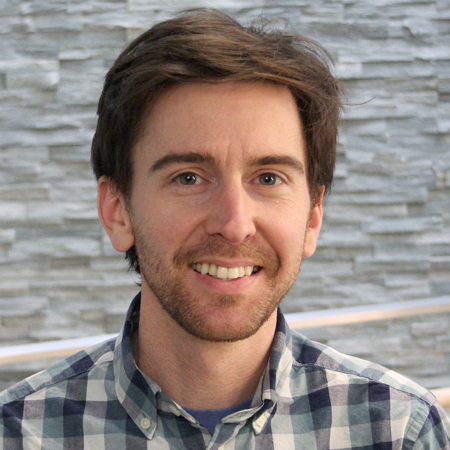
Dr. Matt Finkenbinder serves as Associate Professor in the Biology and Earth Systems Sciences department at Wilkes University, teaching undergraduate courses including Introduction to Geology, Sedimentology and Stratigraphy, and Paleoclimatology. His research reconstructs past climate changes using lake sediment records across Alaska, northeastern Pennsylvania, Montana's Northern Rockies, and Canada. His educational background includes: PhD in Geology from the University of Pittsburgh (2015) MS in Geology from West Virginia University (2008) BS in Geoenvironmental Studies from Shippensburg University (2005) Dr. Finkenbinder's primary research focuses on paleoclimatology, sedimentology, stable isotope geochemistry, and radiometric dating methods. He utilizes small lake sedimentary records to reconstruct climatic changes across diverse timescales, with field sites spanning North America. His teaching emphasizes critical thinking development, societal relevance of Earth Science, and field-based learning through geological trips. Analysis of his 2023-2025 publications reveals dominant themes in Holocene climate dynamics, mercury deposition as a climate proxy, and atmospheric circulation changes using tephra and stable isotope analysis. His work integrates multiple sedimentary proxies across geographic regions to understand past environmental shifts, particularly hydroclimate transitions and ecosystem responses. His scientific awards include: Wilkes University President's Award for Scholarship (2022) Fonds de Recherche du Québec Postdoctoral Fellowship (2016, declined) Arctic Climate Dynamics Course Scholarship, University of Bergen (2016) Andrew Mellon Predoctoral Fellowship (2014-2015) University of Pittsburgh Leighton Memorial Graduate Scholarship (2012-2013) Geological Society of America J. Hoover Mackin Award Honorary Mention (2012) Geological Society of America Graduate Research Grant (2007, 2012) WVU Teaching Assistant of the Year (2006-2007) Marshall Miller Geology Field Camp Award (2006) Dr. Finkenbinder has secured research funding through competitive fellowships including the Andrew Mellon Predoctoral Fellowship. While specific student advisees aren't listed, he mentors undergraduates through research projects and field experiences, integrating them into his paleoclimate research on lake sediment records and climate reconstruction.