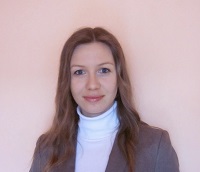
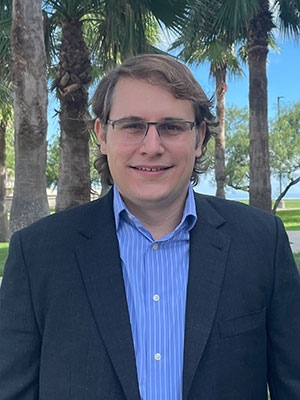
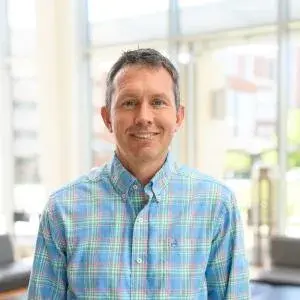
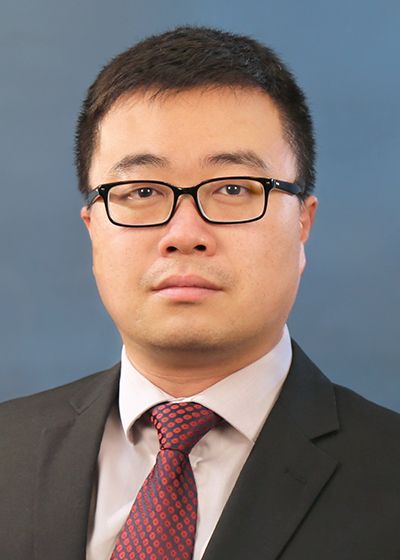
David H. Rogers is a Researcher affiliated with Los Alamos National Laboratory , specializing in Scientific Visualization and Data Analysis . His work focuses on Exascale Computing , Color Mapping , and In Situ Visualization to enhance large-scale scientific data workflows. His research explores methods for Lossy Data Reduction , 3D Streamline Visualization , and Perceptual Uniformity in Color Sequences . He has contributed to frameworks like VTK-m and CinemaScience , enabling efficient data exploration and domain-specific visualization. David collaborates extensively with institutions such as University of Utah , Oak Ridge National Laboratory , and University of Oregon , addressing challenges in High-Performance Computing and Visual Analytics . His publications highlight interdisciplinary efforts in Computer Graphics , Flow Dynamics , and Scientific Data Management .
Zsuzsanna Gódány is an Assistant Professor at the Department of Economics and Management within the Faculty of Economics and Informatics at J. Selye University. She has been serving in this capacity since 2013, following her earlier role as an Assistant from 2010-2013 at the same institution. Her educational background includes: PhD in Economics and Management from J. Selye University (2018-2021) Rigorosum in Management from J. Selye University (2010-2012) Master's degree in Management from J. Selye University (2005-2010) Master's degree in Economics and Business Management from J. Selye University (2005-2008) Dr. Gódány's research primarily focuses on management, organizational behavior, and entrepreneurship. Her work explores various aspects of business management with particular attention to generational differences in the workplace, gamification as a management tool, and challenges facing small and medium enterprises. She has developed expertise in innovative educational methods and their application in business contexts. Her scholarly output demonstrates consistent engagement with practical business challenges through empirical research and theoretical analysis, particularly examining how technological changes and generational shifts impact organizational structures and management practices. Dr. Gódány has secured funding for multiple research projects addressing contemporary business challenges: Streamlining Managerial Skills of Generations Z and Y by gamification Competitiveness challenges of small and medium-sized enterprises in Industry 4.0 Effects of uncertain economic environments on SME work organization Education and training development for food allergies treatment SME Joint Ventures in Visegrad countries Innovative educational methods for critical thinking development She actively contributes to the academic community through conference presentations and collaborative research, maintaining strong connections with international scholars while addressing regionally relevant business issues in Slovakia and the Visegrad region.
Kenneth Jansen is a Professor in the Department of Aerospace Engineering Sciences at the University of Colorado, holding the Denver Business Challenge Endowed Professorship. He serves as Director of the Aerospace Mechanics Research Center (AMReC) and specializes in computational fluid dynamics (CFD), turbulence modeling, and aerodynamic performance analysis. His research focuses on: Turbulent boundary layers under pressure gradients and curvature Large eddy simulation (LES) and direct numerical simulation (DNS) of aerospace flows Data-driven turbulence closure models for CFD Hypersonic and supersonic flow analysis Active flow control for aerodynamic efficiency Mesh adaptation and high-performance computing Recent publications highlight his work on jet interactions, wind tunnel simulations, and multifidelity modeling. Awards include the Denver Business Challenge Endowed Professorship. Jansen leads projects involving the PHASTA finite element solver and contributes to exascale computing initiatives (ECP applications). His collaborations span experimental and computational studies for aerodynamic flow control and medical CFD applications.
Iván Martínez Ortiz is an academic at Complutense University of Madrid's Faculty of Computing, part of the Software Engineering and Artificial Intelligence Department. His work focuses on serious games, learning analytics, and educational technology. He has contributed to projects like Conectado , a serious game addressing bullying and cyberbullying, validated through extensive learning analytics research. His research emphasizes standards-based systems, such as IMS and xAPI-SG, to streamline serious game deployment and assessment. Notable contributions include integrating game analytics with data science to improve educational outcomes and designing infrastructure for web applications and cybersecurity training environments. He collaborates widely, publishing in journals like Journal of Learning Analytics and IEEE Transactions on Learning Technologies . His research interests span serious games , game-based learning , and data-driven educational assessment . Projects like UAdventure and Simva demonstrate his technical focus on game development tools and validation frameworks. Recent work explores automation in academic tracking systems and narrative-driven educational interventions. Key collaborations include projects on cyberbullying prevention, first aid training simulations, and cloud-based laboratory environments for web development education. His interdisciplinary approach bridges computer science with pedagogical innovation, aiming to enhance both teaching methodologies and student engagement through technology.
Dr. Miguel Cid Montoya is an Assistant Professor in the Glenn Department of Civil Engineering at Clemson University. He holds a Ph.D. and M.S./B.S. in Civil Engineering from the University of La Coruña, Spain, and completed a Fulbright postdoc at the University of Notre Dame. His research focuses on wind engineering, bridge optimization, and structural resilience, emphasizing aero-structural design frameworks for long-span bridges and tall buildings. He leads collaborations with industry partners like Airbus and is active in IABSE Task Group 3.1, receiving the 2024 IABSE Outstanding Paper Award for benchmark studies on super-long-span bridge aerodynamics. Education Fulbright Postdoc, Wind Engineering, University of Notre Dame (2021) Ph.D., Civil Engineering, University of La Coruña, Spain (2017) M.S. + B.S., Civil Engineering, University of La Coruña, Spain (2011) Research Interests Dr. Montoya develops multidisciplinary design frameworks for optimizing civil structures under wind loads. Key areas include: Aero-structural optimization of bridges (flutter/buffeting mitigation) Surrogate modeling and computational fluid dynamics (CFD) Cybersecurity of smart infrastructure Profit-driven design of tall buildings Industry collaboration on sustainable structural solutions Grants & Collaborations Engaged in NSF-funded projects and partnerships with companies like Acciona Windpower and Stinorland. Active in IABSE Task Group 3.1, advancing super-long-span bridge aerodynamics research. Labs & Teams Leads wind engineering research at Clemson, with ties to the NatHaz Modeling Lab (Notre Dame) and the Boundary Layer Wind Tunnel Lab (University of Western Ontario).
Ju Feng is a Senior Researcher at the Department of Wind and Energy Systems, Technical University of Denmark (DTU), specializing in Wind Energy Systems , Wind Farm Optimization , and Control Strategies . He contributes to research in Floating Offshore Wind Farms , Multi-Disciplinary Optimization , and Noise Propagation . His work includes developing simulation tools, wake models, and control frameworks for wind farms in complex environments. Research Interests: Optimization of wind farm design and operation Advanced wake and flow modeling AI-driven wind energy solutions Noise control and acoustic propagation Multi-fidelity/multi-disciplinary modeling Cost-effective wind farm technologies Publication Trends: Ju Feng's recent work (2022-2024) focuses on floating offshore wind farms , noise constraints , and multi-disciplinary integration . Older articles (2012-2017) emphasize control algorithms , wake modeling , and optimization frameworks . Advising: Supervising PhD Student Wang R. (AI-Augmented Wind Farm Design Optimization, 2025-2028) Co-supervising Nyborg C. M. (Noise Control in Wind Farms, 2019-2023) Collaboration Network: Active in international projects like DecoWind, ModFarm, and FarmConners. Collaborates with institutions such as DTU Wind Energy and researchers including Shen W. Z. , Réthoré P.-E. , and Bredmose H. .
Cassiano Endres de Oliveira is a Professor in the Department of Nuclear Engineering at the University of New Mexico (UNM). He has held academic positions at institutions including Georgia Institute of Technology and Imperial College London. His research focuses on computational radiation transport, multiphysics coupling, uncertainty quantification, and high-performance computing. Education : Ph.D. in Nuclear Engineering (Queen Mary College, University of London, 1987); M.Sc. in Nuclear Engineering (Federal University of Rio de Janeiro, 1980); B.Sc. in Physics (Catholic University of Rio de Janeiro, 1976). Research Interests : His work centers on developing numerical technologies for simulating complex physical phenomena, particularly in nuclear radiation transport and thermofluid dynamics. He emphasizes multiphysics coupling, optimization, and inverse problems to create high-fidelity tools for environmental and engineering challenges. Publication Trends : His recent publications highlight applications of finite element methods, spherical harmonics, and adaptive algorithms to radiation transport, nuclear reactor design, and ocean modeling. Key areas include computational validation benchmarks, photon migration in biological media, and anisotropic geophysical inversion.
David Jones - Academic Overview David Jones is a Professor of Biological Systems Engineering and Courtesy Professor in the Food Science & Technology Department at Utah State University (USU). He currently serves as the Dean of the College of Engineering at USU. Previously, he was the Department Head of Biological Systems Engineering (2017–2023) and Associate Dean for Undergraduate Programs (2011–2017) at the University of Nebraska-Lincoln. His research focuses on fuzzy set theory, bioenergy, mathematical modeling, and engineering education innovation. Jones has been recognized with numerous awards, including ASABE Fellow (2015) and the Massey-Ferguson Educational Gold Medal (2014). Education Ph.D. in Agricultural Engineering, Oklahoma State University M.S. and B.S. in Agricultural Engineering, Texas A&M University Research Interests Jones' work integrates computational methods (fuzzy logic, soft computing) with agricultural and biomedical systems. Key areas include microwave heating modeling, hyperspectral imaging for food quality assessment, and bioenergy processes like biomass gasification. His engineering education initiatives aim to enhance undergraduate pathways and innovation through programs like S.T.E.P. (Strengthening Transitions to Engineering Programs). Recent Contributions His articles address cutting-edge topics in food engineering (e.g., microwave heating dynamics), biomedical applications (e.g., microwave ablation modeling), and sustainable energy systems (e.g., biomass gasification optimization). Collaborative projects include improving beef tenderness forecasting via hyperspectral imaging and advancing crowd-sourced disaster response technologies. Awards & Honors ASABE Fellow (2015) ASABE Massey-Ferguson Educational Gold Medal (2014) UNL Parents Association Recognition Award (2012, 2011) Holling Family Master Teacher Award (2008) Grants & Leadership NSF-funded S.T.E.P. program to streamline community college-to-university engineering transitions Leadership in NSF initiatives for innovation in engineering education Labs & Teams Directs interdisciplinary teams focusing on precision agriculture, food safety systems, and renewable energy technologies. Active in professional societies including ASABE and ASEE.
Jeff Cain is a Professor and Vice-Chair in the Department of Pharmacy Practice & Science at the University of Kentucky College of Pharmacy. He also serves as Director of the Office of Teaching Innovation & Scholarship and directs the Teaching Certificate Program and Academia Fellowship program. His work focuses on pharmacy education, digital media, artificial intelligence, and student well-being. Education: EdD, MS, BBA from University of Kentucky Research: Behavioral economics, clinical reasoning, mental health, AI in teaching Awards: AACP Distinguished Teaching Scholar (2017), Michael J. Lach Faculty Award (2013, 2019, 2024) Dr. Cain’s recent research explores productivity in pharmacy academia, AI-driven tutoring, and behavioral economics applications. His work often addresses digital media afflictions and educational innovation. Scientific Awards: 2013 AACP Academic Leadership Fellow AACP Distinguished Teaching Scholar (2017) Michael J. Lach Faculty Award (2013, 2019, 2024) 2021 UK Provost’s Award for Outstanding Teaching As a mentor, Dr. Cain leads an academia rotation and co-hosts the Pharmacy Fika podcast. His grants focus on educational innovation, student well-being, and technology integration.
Hüseyin Erdem Görgün is a Professor of Environmental Engineering at Istanbul Technical University's Department of Environmental Engineering. He has held academic roles since 1990, including Professor since 2007, and served in administrative positions like Vice President of the Department and Member of the Faculty Board of Directors. His research focuses on treatment plant design, climate change mitigation, and waste management. He earned his PhD in Environmental Engineering from Istanbul Technical University in 1996 after completing his MSc (1991) and BSc (1987) in the same field. His work emphasizes sustainable development through projects like the Ergene River Basin restoration and evaluation of CO2 emission scenarios in Turkey's electricity sector. He contributed to policy frameworks such as improving environmental permit processes and deposit refund systems for recyclables. His technical expertise spans mathematical modeling of wastewater treatment systems and optimization of nitrogen removal processes. Education: Bachelor of Science in Environmental Engineering, Istanbul Technical University (1983-1987) Master of Science (Thesis), Istanbul Technical University (1989-1991) Doctor of Philosophy (Dr), Environmental Engineering, Istanbul Technical University (1992-1996) Prof. Görgün's research interests include water pollution control, industrial wastewater treatment, and environmental policy implementation. He has advised on national projects like the TC Elbistan Municipality environmental management plan and contributed to international initiatives such as the UN-CP/RAC Clean Technologies Programme. His work bridges technical innovation with policy, addressing challenges in coastal zone management and sustainable industrial clustering. Notable administrative roles include serving as National Focal Point for the UN-CP/RAC and membership in key organizations like the Turkish National Committee on Water Pollution and Research (since 1990). His research spans over three decades, with publications focusing on wastewater treatment optimization, climate change mitigation strategies, and recycling systems.
Jules Vliem is a Doctoral Candidate at the Eindhoven University of Technology , affiliated with the Integrated Circuits group in the College of Engineering . His work focuses on RF coil design for MRI hardware development , spanning ultra-high to ultra-low field applications. Education : BSc (2021) and MSc (2023) in Electrical Engineering from TU/e Research Focus : MRI hardware, RF coil optimization, and electromagnetic engineering for medical imaging Key Collaborations : MRI Hardware Development Lab, international research teams
Jessie Finch serves as Assistant Professor and Chair of the Sociology Department at Northern Arizona University, with research spanning identity dynamics, racial microaggressions, and Latino health disparities across legal, educational, and public health contexts. Her core research foci include: Identity Studies : Examining identity verification processes, competing identity standards, and professional self-image management in institutional settings Racial Microaggressions : Investigating how subtle racial discrimination impacts Latino health outcomes through stress pathways and acculturation Sociology of Law : Analyzing identity negotiation among legal professionals in border enforcement programs like Operation Streamline Experiential Learning : Developing innovative pedagogical approaches for large political science lecture courses using town hall simulations Finch's publication trajectory (2017-2022) reveals consistent theoretical development in symbolic interactionism applied to real-world identity conflicts, with increasing policy relevance evidenced by citations in government reports and significant social media engagement (131+ shares). Her work bridges micro-level identity processes with macro-level structural inequalities.
Frederik Görlitz is a researcher specializing in advanced optical microscopy techniques at the University of Freiburg's Institute for Microsystem Technology (IMTEK), part of the Faculty of Engineering. He holds a PhD from Imperial College London and conducted postdoctoral research at UC Berkeley's Advanced Bioimaging Center. His work focuses on super-resolution microscopy (STED, STORM, SIM), light sheet microscopy, and fluorescence lifetime imaging (FLIM), with applications in biomedical imaging and microscopy instrumentation development. Education: BSc in Physics, Heidelberg University (GER) PhD in Biophotonics, Imperial College London (UK) Research Interests: Development of modular, cost-effective microscopy platforms Optimization of lattice light sheets and super-resolution techniques Integration of machine learning for automated microscopy workflows Biomedical applications in kidney cell signaling and drug receptor analysis Recent Research Trends: His work emphasizes open-source microscopy solutions (e.g., openFrame platform) and high-throughput imaging tools for biological studies. Recent articles highlight advancements in optical autofocus systems, FRET-based signaling visualization, and dSTORM applications in glomerular disease analysis. Labs/Teams: Part of the Bio- und Nanophotonik group led by Prof. Alexander Rohrbach at IMTEK, collaborating with FAIM (Freiburg Center for Data Driven Modelling and Simulation) on interdisciplinary projects.
Junming Diao is an Assistant Professor in Electrical and Computer Engineering at Mississippi State University, specializing in electromagnetics, antennas, and beamforming systems. His work bridges theoretical models and practical applications in wireless communications and radio astronomy. Notable contributions include developing phased array feeds for the Green Bank Telescope and pioneering Poynting streamline analysis for antenna design. His recent publications focus on reconfigurable antennas, UAV swarm-based systems, and energy flow optimization.
Ibuki Kusano is an Assistant Professor at the Department of Industrial Engineering, IQS School of Engineering, Ramon Llull University. His research focuses on aerodynamic and aeroelastic design optimization of long-span bridges, computational fluid dynamics (CFD), and structural reliability analysis. He has contributed to projects like the GEPI research group and studies on marine wind parks using machine learning. His work addresses challenges in bridge deck aerodynamics, vortex mitigation, and flutter constraints, with applications to sustainable infrastructure development aligned with UN SDGs. Key projects include GEPI (2017–2025), marine wind park analysis (2023), and CFD-based optimization of bridge designs. His expertise spans surrogate modeling for aerodynamic response prediction, probabilistic optimization under uncertainties, and experimental validation through wind tunnel tests and full-scale observations. Research interests emphasize deck geometry optimization, turbulence modeling, and structural stability under environmental loads. Collaborations involve international teams in bridge engineering and fluid dynamics.