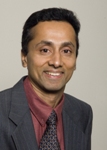
Jagath Samarabandu is a Professor in the Department of Electrical and Computer Engineering at Western University. He holds a Ph.D. and M.S. in Electrical Engineering from SUNY Buffalo, and a B.Sc. in Electronics and Telecommunication Engineering from the University of Moratuwa, Sri Lanka. His academic career spans since joining Western University in 2000, with prior post-doctoral experience at SUNY Buffalo and industry work at Life Imaging Systems Inc. Education: Ph.D. Electrical Engineering, SUNY Buffalo M.S. Electrical Engineering, SUNY Buffalo B.Sc (Eng) Electronics and Telecommunication, University of Moratuwa His research focuses on Artificial Intelligence, Machine Learning, Image Analysis, and Cyber Security , with applications in biomedical imaging, network intrusion detection, and civil infrastructure monitoring. He has supervised numerous graduate students working on topics ranging from chromosome analysis to smart grid security. Recent publications highlight his work in medical AI applications (auditory processing disorder diagnosis), industrial time-series analysis (using contrastive predictive coding), and network security frameworks (INSecS system development). He has contributed to 3D ultrasound segmentation, prostate motion compensation algorithms, and synthetic aperture radar systems. Key projects include NSERC-funded intelligent home monitoring systems for elderly care and low-cost synthetic aperture radar development for search-and-rescue applications.
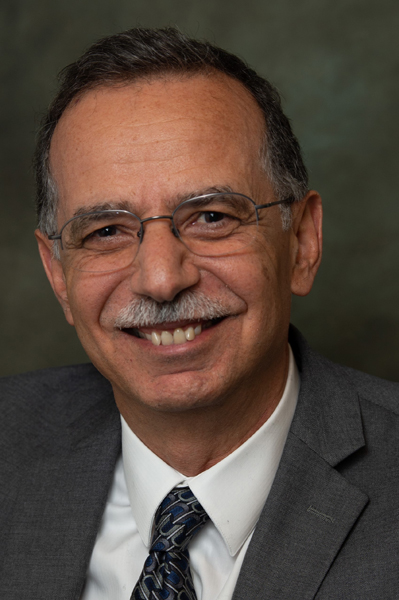
Mostafa Ammar is a Regents' Professor and Interim Chair of the School of Computer Science at the Georgia Institute of Technology. He has held leadership roles including Associate Chair (2006–2012) and has been a faculty member since 1985. His research focuses on network architectures, protocols, and services, with contributions to mobile cloud computing, network virtualization, and disruption-tolerant networks. He has advised 39 Ph.D. students and secured funding from agencies like NSF, DARPA, and industry partners such as Cisco and IBM. Education : S.B. and S.M. from MIT, Ph.D. from the University of Waterloo. Research Interests : Network architectures, mobile cloud computing, overlay networks, video streaming, and network simulation. His work bridges theoretical advancements with practical implementations, emphasizing scalable and efficient network solutions. Publications : Over 214 publications with a focus on network virtualization, mobile edge computing, and distributed systems. Recent work explores encrypted traffic analysis and femto-cloud resource sharing. Awards : ACM/IEEE Fellowships (2002–2003), Best Paper Awards (2012, 2018), and multiple teaching excellence recognitions. Service : Editor-in-Chief of IEEE/ACM Transactions on Networking (1999–2003), conference co-chair roles, and steering committee memberships. Advising & Grants : Mentored 39 Ph.D. students and secured multi-million-dollar grants. His research has influenced industry standards and academic curricula. Labs/Teams : Active in Georgia Tech’s networking research groups, contributing to open-source network simulators and collaborative projects with global institutions.
Andrew Clark is a CNRS Full Research Professor of Exceptional Class (DRCE1) based at the Paris School of Economics (PSE), France, where he has been a permanent member of the research staff since 2001. Previously he held positions at DELTA (now PSE), Université d’Orléans, OECD, CEPREMAP, the University of Essex, and Dartmouth College. Research Interests: Labour Economics: Wage determination, job satisfaction, unemployment experience. Subjective Well-Being: Measurement of utility via life and job satisfaction scores, adaptation to life events, relative income comparisons. Health Economics: Effects of income shocks and life events on physical and mental health. His empirical work relies extensively on large-scale panel datasets and interdisciplinary collaborations with psychologists. Publication Trends: Between 2013 and 2018 Clark produced a steady stream of high-impact articles and two books. Recurring themes include adaptation to income and life events, inequality attitudes, and the long-run determinants of individual well-being. The work spans theoretical modelling, experimental evidence, and policy-oriented syntheses. Grants & Awards: No specific awards or external grants are listed in the provided text. Advising & Teams: No doctoral students or research group details are supplied in the text.
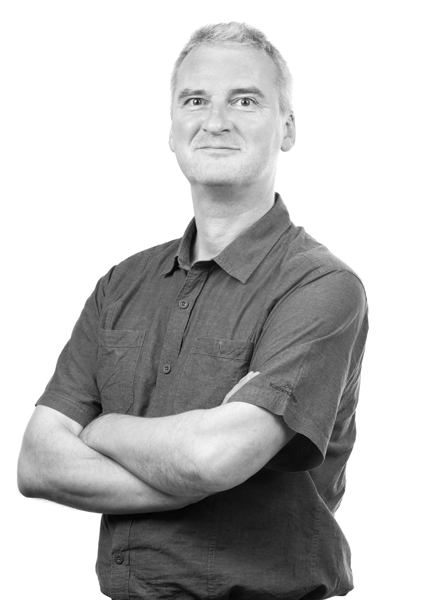
Christian Timmerer is a Professor at the Institute of Information Technology, Alpen-Adria-Universität Klagenfurt. His research focuses on adaptive video streaming , energy efficiency , MPEG standardization , and quality of experience (QoE) , with significant contributions to HTTP Adaptive Streaming (HAS), multi-codec optimization, and immersive media systems. Email: christian.timmerer@aau.at Office Hours: Monday 3:00-4:00 PM (by appointment) Projects: CD-Labor ATHENA, GAIA, SPIRIT His research integrates machine learning and generative AI to enhance video encoding, super-resolution, and voice dubbing, while prioritizing sustainability through energy-aware algorithms and open-source tools like GREEM and VEED. Current work emphasizes latency reduction and dynamic bitrate adaptation in live streaming environments. Recent publications address VVC optimization , multi-resolution encoding , and perceptual quality modeling , reflecting interdisciplinary efforts in networking , computer vision , and human-computer interaction . Awards include leading funded projects on adaptive streaming and green video systems.
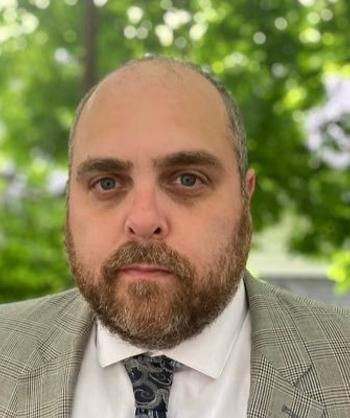
Matt Sienkiewicz is a Professor and Chair of the Communication Department at Boston College, where he also serves as Director of the Jewish Studies Program and Faculty Advisor to Hillel. He holds a Ph.D. and specializes in global media cultures, Jewish civilization, and comedy studies. His research explores intersections between media, politics, and identity, with a focus on satire, conservative media strategies, and digital content dynamics. Dr. Sienkiewicz has authored influential books such as That's Not Funny: How the Right Makes Comedy Work for Them (2022) and The Other Air Force: U.S. Efforts to Reshape Middle Eastern Media Since 9/11 (2016). His work appears in journals like Journal of Cinema and Media Studies , Media, Culture & Society , and Columbia Journalism Review . He is also an Emmy-nominated media producer, with credits including the documentary Live From Bethlehem and the TV series Windy Acres . His research interests span right-wing media ecosystems, streaming content representation, and the role of comedy in political discourse. Recent projects analyze niche streaming platforms, podcasting’s cultural impact, and counter-narratives in conflict zones like Syria and Ukraine. Awards include recognition for his Emmy-nominated media projects. Awards: Emmy Nomination (Media Production) Media Work: Documentaries, TV series, and open-source journalism initiatives Leadership Roles: Department Chair, Jewish Studies Director, and advisor to campus organizations His academic contributions bridge scholarly rigor and creative media practice, emphasizing the societal role of humor and media in shaping cultural and political landscapes.
Roberto Rojas-Cessa is a Professor in the Department of Electrical and Computer Engineering at New Jersey Institute of Technology (NJIT), affiliated with the School of Applied Engineering and Technology. His research focuses on networking, blockchain applications in smart cities, energy systems, wireless communications, and high-performance switching. He has led multiple National Science Foundation (NSF)-funded projects, including initiatives on controlled delivery power grids and next-generation network quality of service. Notably, his work explores blockchain for energy metering, sustainable environmental measures, and smart grid optimization. He is also a Senior Member of the National Academy of Inventors (2024). His research interests span network protocols, distributed systems, and IoT applications. Recent projects include AMI-Chain (a blockchain-based power metering system) and studies on indirect free-space optical communications for vehicular networks. He has contributed to advancements in medium access control for crowded networks and energy packet switches for digital microgrids. Rojas-Cessa’s work integrates machine learning for network management and flood impact analysis. He has developed tools for time-lapse analysis of urban data and agent-based models to evaluate electric vehicle adoption. His publications emphasize scalability, security, and efficiency in both traditional and emerging technologies. Grants: Collaborative Research on Power Grids (NSF, 2016–2018), NeTS-NR: Quality of Service Networks (NSF, 2004–2008) Awards: Senior Member of the National Academy of Inventors (2024) His lab activities include experimental evaluations of digital microgrids and blockchain implementations for carbon footprint tracking. He actively collaborates on projects addressing emergency communications and resilient energy distribution systems.
Professor Tova Milo is the Chair for Information Management at the School of Computer Science, Tel Aviv University, leading the prominent Databases Lab (DB Group). Her research spans databases, big data management, crowd-based data sourcing, and business process querying, with significant contributions to data integration and semi-structured data systems. Her research interests focus on innovative approaches to data management challenges through machine learning integration, crowd computing, and business process analysis. Key projects include Business Process Querying (BPQ) for analyzing BPEL specifications, MoDaS for crowd-based data management, and PROX for data provenance summarization. Her work bridges theoretical foundations with practical applications in fraud detection, recommendation systems, and data cleaning. Analysis of her recent publications reveals strong trends in human-in-the-loop data management systems, with growing emphasis on crowd integration for data cleaning and knowledge acquisition. Her research increasingly combines traditional database theory with machine learning techniques for scalable big data processing, while maintaining focus on business process modeling and provenance tracking. ACM PODS Alberto O. Mendelzon Test-of-Time Award (2010) ERC Advanced Investigators grant MoDaS (2011) The Weizmann Prize for Exact Sciences (2017) VLDB Women in Database Research award (2017) IEEE TCDE Impact award (2022) ISF Breakthrough Research Grant (2022) Doctorate Honoris Causa, University of Zurich (2023) ACM Fellow Member of Academia Europaea Professor Milo has advised over 30 graduate students including PhD candidates like Yael Amsterdamer and Ohad Greenshpan, and numerous MSc students working on projects including MoDaS, BPQ, and EDOS. Her research has been supported by major grants including the ERC Advanced Investigators grant and ISF Breakthrough Research Grant. She actively collaborates with industry partners including IBM and Microsoft, particularly in business process management standards. She directs Tel Aviv University's Databases Lab, which maintains the DB Group with multiple research streams including business process querying (BPQ), crowd-based data management (MoDaS), and self-adaptive data dissemination (EDOS/COLT). The lab operates from the Schreiber Building (M-20) and maintains strong international collaborations, particularly with European institutions through the ERC-funded MoDaS project.
Mariam Abdulkareem is a Postdoctoral Researcher at the School of Energy Systems, Lappeenranta University of Technology (LUT), specializing in Sustainability Science, with additional affiliation at the Natural Resources Institute Finland (LUKE). Her work bridges environmental technology and practical sustainability solutions for industrial and municipal systems. Her academic foundation includes: Doctoral degree in Sustainability Science from Lappeenranta University of Technology (2018-2021) Master's degree in Sustainability Science from Lappeenranta University of Technology (2015-2017) Dr. Abdulkareem's research centers on environmental technology and circular economy implementation , employing advanced life cycle assessment (LCA) methodologies to evaluate waste management systems, sustainable materials, and renewable energy integration. She focuses on quantifying environmental trade-offs in emerging technologies like printed electronics and industrial by-product valorization, with particular emphasis on end-of-life management and resource efficiency optimization. Her cross-disciplinary approach integrates ecological modeling with engineering solutions to address real-world sustainability challenges. Analysis of her 15 most recent publications (2021-2025) reveals a concentrated research trajectory in waste valorization and sustainable materials , with dominant themes including LCA of printed electronics waste streams, geopolymer concrete development from industrial side streams, and comparative analysis of recycling versus incineration pathways. Her work consistently applies multi-objective optimization frameworks to balance environmental performance, economic feasibility, and technical functionality across diverse regional contexts.
Edward F. Chang, MD is a distinguished Professor and Chair of the Department of Neurological Surgery at the University of California, San Francisco (UCSF) School of Medicine. He co-directs the Center for Neural Engineering and Prostheses, a collaborative enterprise between UCSF and UC Berkeley, and leads the Chang Lab focused on speech neuroscience and neural engineering. As a practicing neurosurgeon, he specializes in treating adults with difficult-to-control epilepsy, brain tumors, trigeminal neuralgia, hemifacial spasm, and movement disorders. Dr. Chang's educational background includes a B.A. in Chemistry from Amherst College (1997), an M.D. from UCSF (2004), a Neurological Surgery residency at UCSF (2010), and a postdoctoral fellowship in Cognitive Neuroscience at UC Berkeley (2009). His research focuses on the brain mechanisms for speech, movement, and learning, with particular emphasis on advanced brain mapping methods to preserve crucial areas for speech and motor functions. He has pioneered work in speech neuroprostheses, developing technology that allows patients with paralysis to communicate through brain signals. His work integrates engineering, neurology, and neurosurgery to develop state-of-the-art biomedical technology to restore function for patients with neurological disabilities such as paralysis and speech disorders. Analysis of his recent publications reveals a strong trend toward developing advanced neuroprosthetic technologies, particularly speech decoding systems, and exploring the neural basis of speech production across multiple languages. His research also spans epilepsy surgery optimization, deep brain stimulation for psychiatric conditions, and molecular profiling of brain tumors. Blavatnik National Laureate for Life Sciences (2015) Elected to the National Academy of Medicine (2020) Inaugural Bowes Biomedical Investigator at UCSF HHMI Faculty Scholar Dr. Chang leads multiple NIH-funded research projects totaling millions of dollars, including a pilot clinical trial for speech neuroprosthesis and studies on the neural coding of speech across human languages. He has mentored numerous researchers in the field of neural engineering and speech neuroscience, though specific student names aren't listed in the provided materials. His work has resulted in groundbreaking technologies that have helped restore communication abilities to individuals with paralysis. As co-director of the Center for Neural Engineering and Prostheses, Dr. Chang leads a multidisciplinary team of engineers, neurologists, and neurosurgeons working at the intersection of neuroscience and technology. His lab has been instrumental in developing brain-computer interfaces that translate neural activity into speech, with recent publications demonstrating streaming brain-to-voice neuroprostheses that restore naturalistic communication.
Michele Gattullo serves as an Assistant Professor within the Department of Mechanics, Mathematics & Management at the Polytechnic University of Bari, Italy, specializing in design methods for industrial engineering (ING-IND/15). His research bridges cutting-edge extended reality technologies with practical industrial applications, focusing on human-centered solutions for manufacturing, maintenance, and workplace design. Dr. Gattullo's research portfolio centers on Augmented Reality, Virtual Reality, and Biophilic Design, with significant contributions to Human-Computer Interaction in industrial contexts. He investigates how nature-inspired elements in virtual workspaces enhance employee well-being and productivity, while simultaneously developing practical AR tools for assembly guidance, technical documentation, and maintenance support. His work uniquely integrates ergonomics, cognitive psychology, and industrial engineering to optimize human-technology interaction in complex production environments. Analysis of his 15 most recent publications reveals two dominant research trajectories: biophilic design frameworks for virtual/metaverse workspaces (2023-2025) and industrial AR authoring methodologies. The biophilic stream establishes evidence-based guidelines for digital nature integration, while the AR stream delivers validated tools like ADAM and minimal AR approaches that streamline technical documentation creation. Both trajectories emphasize user experience validation through rigorous industrial studies, demonstrating strong interdisciplinary impact across computer science, industrial engineering, and environmental psychology. Scientific Awards: No awards or honors were documented in the available sources. Advising and Grants: The provided materials contain no information regarding graduate student supervision, research grants, or funding sources. His academic profile emphasizes publication output over mentoring activities or project financing details. Laboratories and Teams: While Dr. Gattullo's research involves advanced XR technologies, the source text does not specify laboratory facilities, research groups, or collaborative teams associated with his work at Politecnico di Bari.
Stefan Decker is a full University Professor (Universitätsprofessor) at RWTH Aachen University, Germany, where he heads the Chair of Information Systems and Databases (Informatik 5) within the Faculty of Mathematics, Computer Science and Natural Sciences. He is actively involved in teaching, research, and the supervision of numerous ongoing and completed doctoral, master’s, and bachelor theses. Education & Academic Background Doctorate (Dr. rer. pol.) – field of Information Systems or related (exact institution/year not stated in text). Appointed as University Professor and Chair of Information Systems and Databases at RWTH Aachen University. Research Interests Prof. Decker’s work lies at the intersection of databases, knowledge graphs, semantic web technologies, data science, and cybersecurity . He investigates architectures and algorithms for large-scale, privacy-preserving, decentralized data analytics , develops ontology-driven information systems , and explores the use of large language models (LLMs) for educational technology, anomaly detection, and incident-response playbooks. Additional focal areas include smart energy systems, mixed-reality learning environments, FAIR data principles, and federated machine learning . Scientific Contributions & Trends His recent publications (2022-2025) demonstrate a clear trend toward explainable AI, LLM-enhanced systems, secure data spaces, and semantic interoperability . Key contributions include novel anomaly-detection frameworks for encrypted power-grid communications, knowledge-graph-driven chatbots for higher-education support, and methodological advances in decentralized analytics and FAIR data sharing. These works are disseminated in top-tier venues such as AAAI, IEEE ISGT Europe, ESWC, IDEAL, and various Springer LNCS and IEEE Transactions. Supervision & Grants Doctoral Theses Advised: A. T. Neumann – “Chatbots as professional companions in large-scale community information systems” (2024) S. M. Welten – “Methods for practical data sharing and decentralized analytics” (2025) Master’s Theses Co-Advised: A. R. Küsters – “Object-centric process constraints using variable bindings” (2025) Additionally supervising more than 30 ongoing bachelor, master, and doctoral projects covering topics such as LLM-driven cybersecurity playbooks, knowledge-graph construction for German law, privacy-preserving analytics in smart grids, and mixed-reality learning agents. Principal investigator or senior researcher in large collaborative projects including NFDI4DS, WestAI, champI4.0ns and several EU/national initiatives on sovereign data spaces and AI services. Labs & Teams Prof. Decker leads the Information Systems & Databases (DBIS) Research Group . The group operates well-equipped laboratories for knowledge-graph engineering, mixed-reality applications, privacy-enhancing technologies, and secure distributed analytics . Current team size exceeds 30 researchers including PhD candidates, postdocs, and scientific programmers, supported by national and EU funding streams.
Knud Villy Christensen is an Associate Professor at the Department of Green Technology (IGT), University of Southern Denmark (SDU), and serves as Head of Section for SDU-Chemical Engineering. His research focuses on Chemical Engineering with emphasis on Membrane Technology , Biofuels , and Biowaste Valorization . He is actively involved in projects targeting sustainable energy and resource recovery from agricultural and industrial waste streams. His work spans Membrane Separation Technology (e.g., membrane distillation for food processing), Chemical Reactor Engineering , and Mathematical Modeling of unit operations. Recent publications highlight his expertise in green extraction of natural compounds biocascade approaches for biomass valorization biofuel production optimization Christensen has supervised numerous internships and projects at institutions like Fjernvarme Fyn, Carlsberg A/S, and Biogas Clean. His current projects include SUSTEPS (sustainable biofuel scaling) and ReCaP (phosphorus recycling). His research aligns with environmental sustainability and industrial process intensification.
Debarati Das is an Assistant Professor in Computer Science and Engineering , specializing in Clustering Algorithms , Edit Distance , and Approximation Algorithms . Her research focuses on theoretical computer science, particularly in algorithm design for data streams, permutation clustering, and sequence alignment. Grants: NSF CAREER Award (2024), NSF Student Travel Grant (2023). Her work includes breakthroughs in consensus clustering, achieving sub-2-approximation, and developing space-efficient algorithms for edit distance in distributed models. Recent projects explore dynamic shortest paths in planar graphs and pseudorandomness extraction. Her publications span journals like the Journal of the ACM and conferences such as SODA, STOC, and FOCS. Collaborations include researchers from institutions in the U.S. and Europe, with applications in computational biology and parallel computing.
Elena Grigorescu is an Adjunct Associate Professor in the Department of Computer Science at Purdue University, where she has been a faculty member since Fall 2012. Her research program spans theoretical computer science with a focus on foundational algorithmic challenges in large-scale data processing and computational limits, maintaining strong connections to cryptography, communications, and optimization applications. Her educational background includes a PhD from the Massachusetts Institute of Technology (MIT), establishing her expertise in rigorous theoretical frameworks. Professor Grigorescu's research emphasizes designing algorithms that operate in sublinear time or space for massive datasets, analyzing complexity of error-correcting codes and lattices, and exploring information-theoretical computation limits. Current investigations integrate differential privacy with learning-augmented techniques to solve online optimization problems, network design challenges, and data stream processing bottlenecks. Her work bridges abstract theory with practical implementations in cryptographic systems and quantum computing paradigms, demonstrating consistent innovation in algorithmic foundations. Analysis of her recent publications (2022-2025) reveals a dominant focus on sublinear-time algorithms, particularly at the intersection with differential privacy and machine learning augmentation. Key contributions include novel spanner constructions for network design, privacy-preserving clustering frameworks, and breakthroughs in trace reconstruction and coding theory. A pronounced trend shows increasing integration of learning-based predictions to enhance classical online algorithms for packing/covering problems while maintaining theoretical guarantees, alongside sustained contributions to error-correcting code analysis and graph-theoretic foundations. No specific scientific awards or major fellowships were documented in the provided materials, though her publication record in premier venues like STOC, FOCS, and APPROX/RANDOM indicates significant peer recognition. Professor Grigorescu actively mentors graduate students in theoretical computer science research, guiding investigations in sublinear algorithms, complexity theory, and coding theory. Her collaborative projects involve interdisciplinary teams across institutions, focusing on cryptographic applications and quantum information theory, though specific grant details were not included in the source texts. Ongoing work suggests expansion into quantum algorithm design and privacy-preserving machine learning frameworks. While dedicated laboratory facilities were not specified, her research operates within Purdue's theoretical computer science group, leveraging university-wide computational resources and fostering collaborations through conference participation and workshop organization.
Elizabeth M. Belding is a Professor in the Department of Computer Science at the University of California, Santa Barbara (UCSB) and Associate Director of the Center for Information Technology and Society. She holds a Ph.D. (2000) and M.S. (1997) in Electrical and Computer Engineering from UCSB. Co-developer of AODV routing protocol (basis for IEEE 802.11s and Zigbee) Director of the Mobility Management and Networking (MOMENT) Laboratory Associate Dean and Faculty Equity Advisor, College of Engineering Her research focuses on mobile and wireless communication networks , including network performance analysis , digital equity , and information and communication technologies for development (ICTD) . She specializes in improving internet access for marginalized communities including Native American reservations, refugee camps, and rural areas in Zambia, South Africa, and Mongolia. Recent research trends include: Accurate broadband measurement in the U.S. using crowdsourced data Development of wireless solutions for underserved regions Analysis of 5G performance variability and GEO satellite latency Mapping cellular network evolution and infrastructure criticality Evaluating federal broadband funding programs (CAF, BEAD, NSF) Quantifying video streaming quality of experience (QoE) Scientific honors include: ACM Fellow (2018) IEEE Fellow (2014) AAAS Fellow ACM SIGMOBILE Test of Time Award (2018) NCWIT Harrold and Notkin Award (2015) UCSB Outstanding Graduate Mentor Award (2012) IRTF Applied Networking Research Prize (2024) She has advised 22 Ph.D. graduates from the MOMENT Lab, including Jiamo Liu (2024) and Udit Paul (2023). Current research receives funding from NSF, Bill & Melinda Gates Foundation, and industry partners like ViaSat, with emphasis on broadband deployment analysis and network solutions for challenged environments.