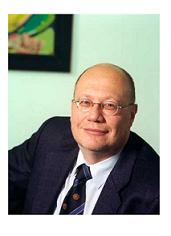
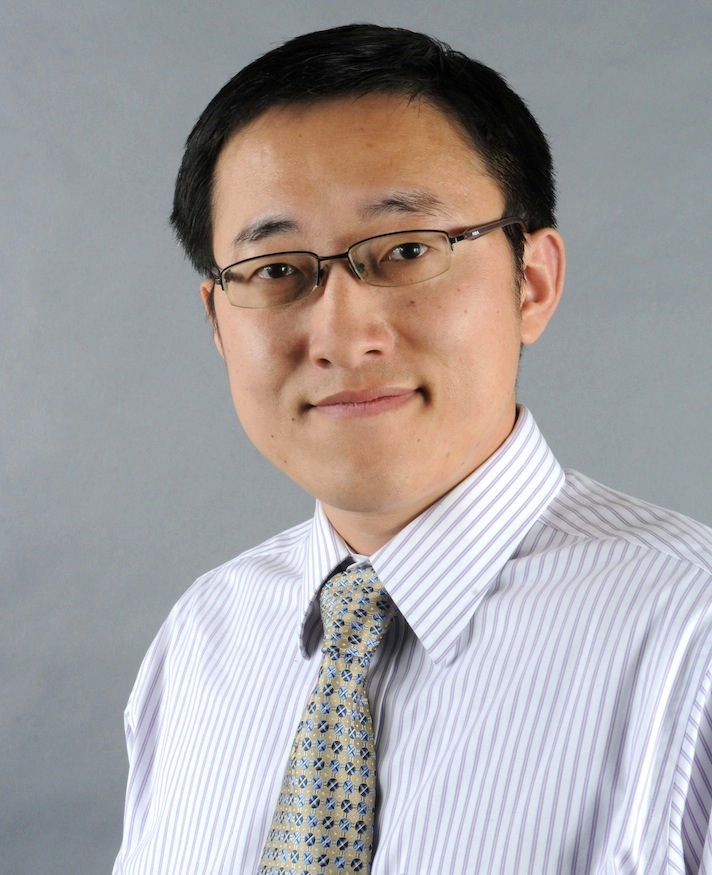
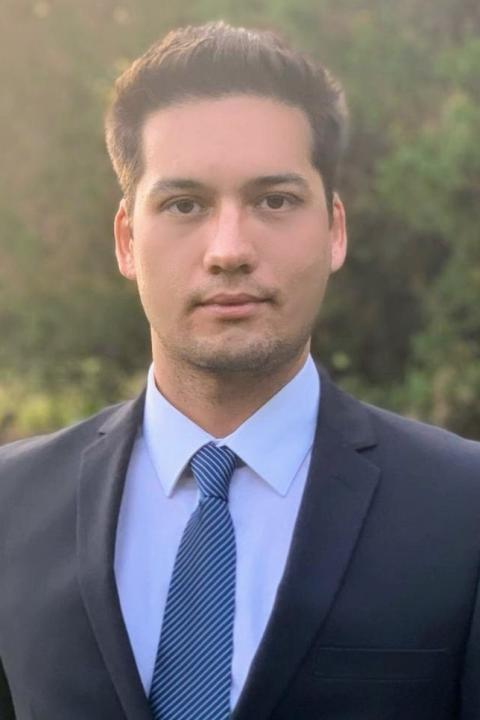
Professor Jason Choi is a Chair in Operations and Supply Chain Management and Director of the Centre for Supply Chain Research at the University of Liverpool Management School. His research focuses on disruptive technologies (e.g., AI, blockchain) in supply chains, sustainable operations, and risk analysis. He has been listed as a Clarivate Highly Cited Researcher since 2022 and serves as Editor-in-Chief of IEEE Transactions on Engineering Management. His work emphasizes practical applications to public policy and social welfare, with over 200+ publications in top journals. Professional roles include leadership in IFAC working groups and advisory roles for major conferences. He teaches modules such as 'Planning for Risk, Uncertainty, and Complexity' and actively supervises doctoral students in risk and sustainable operations. Research Highlights: Blockchain in supply chains, Industry 5.0, supply contracting, and pandemic-driven supply chain reforms (GREAT-3Rs framework). Editorial Roles: IEEE TEMS, Production and Operations Management, Transportation Research Part E. Awards: Clarivate Highly Cited Researcher (2022–present). His recent articles address blockchain-enabled smart contracts, extreme weather resilience, and ESG transparency in supply chains. He collaborates internationally on frameworks like the IJLRA for logistics innovation and the PASO framework for sustainable operations.
Adam Wolisz is a full Professor of Electrical Engineering and Computer Science at Technische Universität Berlin (TU Berlin), where he founded and led the Telecommunication Networks Group (TKN) from 1993 until 2018. He also served as Executive Director of the Institute for Telecommunication Systems (2001-2018), inaugural Dean of the Faculty of Electrical Engineering and Computer Science (2001-2003), and is currently an Einstein Center Digital Future (ECDF) Fellow. Since 2005 he has held an adjunct appointment at the University of California, Berkeley, and is presently a visiting researcher at the Berkeley Wireless Research Center. Education Dipl.-Ing. in Control Engineering, Silesian Technical University, Gliwice (1972) Dr.-Ing. in Computer Engineering, Silesian Technical University, Gliwice (1976) Habilitation in Computer Engineering, Silesian Technical University, Gliwice (1983) Research Interests Professor Wolisz has spent five decades advancing the architectures, protocols, and performance evaluation of communication networks. His current work centres on mobile multimedia communication , wireless sensor networks , and cognitive/cooperative wireless systems . Methodologically, he combines rigorous analytical modelling with large-scale simulation and real-world experimentation, frequently within the open testbeds run by TKN. A cross-cutting theme is Quality of Service (QoS) —from early work on real-time operating systems and industrial field-buses to recent studies on QoE-driven adaptive video streaming and ultra-reliable low-latency vehicular communications. His group is internationally recognised for contributions to reinforcement-learning-based MAC scheduling , spectrum sharing between LTE-U and WiFi , and energy-efficient protocol design . Publication Impact & Trends Across more than 200 refereed publications, two clear trajectories emerge: (1) a continuous evolution from wired network modelling (WDM optical networks, ATM, early Internet QoS) toward fully wireless and mobile settings, and (2) an increasing reliance on machine-learning techniques to tackle uncertainty and dynamics in dense, heterogeneous wireless environments. Recent papers exploit deep reinforcement learning for scheduling, federated learning for context-aware services, and transfer learning for realistic mobile-app testing. Scientific Awards & Recognition Best Paper Awards: IEEE WoWMoM 2020, IEEE INFOCOM CNERT 2019, ACM MSWiM 2017, IEEE EW 2017, IFIP WD 2017, IEEE EW 2009 Best Demo Award: ACM/IEEE IPSN 2014 (EVARILOS benchmarking platform) Senior Member, IEEE & IEEE ComSoc; Member, ITG (VDE); Steering Board, GI/ITG KuVS Doctoral Advising, Projects & Funding Since establishing TKN in 1993, Professor Wolisz has supervised over 60 completed PhD dissertations . Current and recent funding includes the DFG Collaborative Research Centre 1053 “MAKI”, DFG priority programme “SmartSynch”, EU projects (e.g., Fed4FIRE+, H2020 5G-Infrastructure), and industrial collaborations with Deutsche Telekom, Nokia, and Rohde & Schwarz. The group operates large-scale indoor and outdoor testbeds (FIT/IoT-LAB Berlin, TKN campus testbed, EVARILOS benchmarking framework) that are open to external researchers. Laboratories & Teams At TU Berlin, Professor Wolisz heads the Telecommunication Networks Group (TKN) , comprising more than 25 researchers (post-docs, PhD candidates, MSc students, technical staff). TKN maintains four major labs: the Wireless Communication Lab (software-defined radios, mmWave, IEEE 802.11ax/ay), the Sensor Networking Lab (IoT, 6TiSCH, energy harvesting), the Networking Testbed (optical backhaul, network softwarisation), and the QoE & Multimedia Lab (adaptive streaming, immersive media). Multiple spin-off companies have emerged from TKN research, most recently “Wolisz Technologies” (founded 2020) commercialising AI-driven Wi-Fi optimisation.
Mario Baldi is an Associate Professor (on leave) of Information Processing Systems at the Department of Control and Computer Engineering , Politecnico di Torino , and concurrently a Fellow in the Office of the CTO, Adaptive and Embedded Computing Group, at AMD, San Jose, CA. His career blends deep academic research with extensive industry R&D leadership. Education M.Sc. (Summa Cum Laude) in Electrical Engineering, Politecnico di Torino, 1993 Ph.D. in Computer and System Engineering, Politecnico di Torino, 1998 Research Focus Baldi’s research spans programmable data planes, software-defined networking, big-data analytics for network management, network security, high-performance switching architectures, optical networking, QoS mechanisms, and multimedia/voice-over-IP systems . He is especially known for pioneering work on P4 -based programmable networks and SmartNIC architectures. Publication & Patent Impact Across 150+ refereed papers and 35+ US patents (plus European filings), his recent output concentrates on machine-learning-driven network data-plane functions , disaggregated stateful network services , and cloud-grade DPUs . The 2021–2024 articles emphasize real-time inference directly in the network data plane and modular SDN programming. Awards & Honors Best Paper Award, IEEE ICC 2007 Best Paper Award, IEEE ISCC 2008 Best Paper Award, IEEE GreenComm 2009 Best Paper Award, ACM/IEEE WI/IAT 2014 Grants & Projects Baldi has served as Principal Investigator or Scientific Coordinator on numerous EU Framework and Italian national projects (PRIN, FAR), leading consortia on energy-efficient packet networks, trusted software execution, wireless mesh architectures, and streaming media delivery. Teaching & Mentoring He has taught graduate courses on Enterprise Network Technologies, Computer Network Technologies and Services, Networks/Cloud/Application Security at Politecnico di Torino since 2003. He has also supervised PhD collegi for the Computer and Systems Engineering doctoral program (cycles 19–23) and held visiting/adjunct positions across four continents. Labs & Teams Previously headed the NetGroup (Computer Networks Group) at Politecnico di Torino (2001–2007) and co-chairs the p4.org Architecture Workgroup , driving open standards for programmable networking.
Dr. Panagiotis Repoussis serves as Associate Professor of Operations Research and Supply Chain Management at the Department of Marketing and Communication within the School of Business at Athens University of Economics and Business (AUEB). Previously, he held positions as Assistant Professor at Stevens Institute of Technology and visiting Lecturer at the University of Piraeus and Bayes School of Business at City University of London. His academic foundation includes a Diploma in Chemical Engineering from the National Technical University of Athens (2002), followed by graduate studies at Imperial College London and AUEB where he completed his doctoral dissertation in November 2008. His educational trajectory reflects a strategic shift from chemical engineering to operations research specialization. Dr. Repoussis specializes in Operations Research with concentrated expertise in Supply Chain Management , Vehicle Routing and Scheduling , and Production Systems Optimization . His research integrates mathematical modeling with computational intelligence to solve complex combinatorial optimization problems across logistics networks, manufacturing operations, and transportation systems. Key methodological contributions include advanced algorithms for dynamic scheduling under uncertainty and real-time decision support frameworks. Analysis of his 15 most recent publications (2019-2025) reveals a strong research trajectory toward Industry 4.0 applications, with increasing focus on IoT/AGV integration in manufacturing, disruption-resilient logistics, and robust optimization under stochastic conditions. Vehicle routing problems remain his dominant research theme, now extended to cross-docking operations, profit-oriented routing, and humanitarian logistics contexts. As principal investigator, Dr. Repoussis has secured research funding from NSF, EU programs, non-profit organizations, and private sector partners across Europe and North America. His academic service includes editorial board membership for Transportation Research Part E and Advances in Operations Research, leadership roles in the Hellenic Operational Research Society and Production and Operations Management Society, and organization of major conferences including Odysseus and MathSports. His professional activities demonstrate deep engagement with both theoretical advancements and practical implementations, particularly through development of decision support systems for waste management, healthcare logistics, and energy-aware production scheduling. Current initiatives emphasize the convergence of prescriptive analytics with emerging digital technologies in operational planning contexts.
Prof. Dr. Kurt Stockinger is a Professor of Computer Science at ZHAW School of Engineering and holds a doctorate at the University of Zurich . He serves as Head of the MAS Data Science program and co-leads the ZHAW Datalab . His research focuses on Intelligent Information Systems , bridging information systems, natural language processing, and machine learning. Affiliated with the University of Zurich, he contributes to Quantum Machine Learning and Open Data Exploration initiatives. Stockinger's educational background includes a PhD in Computer Science (University of Vienna & CERN), a Master in Business Informatics (University of Vienna), and a CAS in Didactics & Methodology (ZHAW). He has taught courses in Quantum Computing , Big Data for Natural Sciences , and Data Science programs at ZHAW and University of Zurich. His research spans Data Science , Big Data , Natural Language Query Processing , Knowledge Graphs , and Quantum Machine Learning . Recent publications focus on quantum autoencoders , hybrid quantum neural networks , and prompt engineering for knowledge graph question answering. He has developed frameworks like ScienceBenchmark for real-world NL-to-SQL evaluation and NQuest for natural language query exploration. Scientific awards include the Best Paper Award at 7th Swiss Conference on Data Science (2020) He leads major projects such as DataGEMS (Data Discovery Platform, Horizon Europe) Digital Health Zurich (Clinical Innovation Lab) INODE4StatBot.swiss (NL-to-SQL Translation) GraphQueryML (Graph Database Optimization) ScienceBenchmark (NL-to-SQL Evaluation) Stockinger's work intersects with computer vision , biomedical data , and industrial applications , demonstrated through collaborations with institutions like Lawrence Berkeley National Laboratory, CERN, and University of Washington. He has contributed to establishing QuantumBasel and ZHAW Datalab as research hubs.
Maria Halkidi is an Associate Professor in the Department of Digital Systems at the University of Piraeus, Greece, where she conducts cutting-edge research in data mining and machine learning with over two decades of academic experience. Her educational background includes: Bachelor's degree in Informatics from the University of Piraeus (1997) Master's degree from Athens University of Economics and Business (1999) Ph.D. from Athens University of Economics and Business (2003) Dr. Halkidi's research focuses on fundamental and applied aspects of data mining, particularly recommender systems, graph data mining, cluster validity assessment, and distributed data mining. Her work bridges theoretical frameworks with practical implementations in sensor networks, social media, and real-time analytics, contributing significantly to algorithmic development in these domains. Analysis of her recent publications reveals a strong trajectory toward fairness and diversity optimization in recommender systems, alongside innovative approaches to graph clustering quality assessment and scalable sentiment analysis. Her research consistently addresses real-world challenges in dynamic data environments, with increasing emphasis on multi-stakeholder optimization and privacy-aware recommendation frameworks. Scientific awards: No specific awards or honors were documented in the provided materials. Dr. Halkidi has participated extensively in National and European-funded research projects, including a prestigious Marie-Curie fellowship at the University of California, Riverside. She serves on program committees for major international conferences in data mining and machine learning, demonstrating active community engagement. While specific graduate students aren't listed in the source materials, her professorial role indicates ongoing mentorship of Master's and Ph.D. candidates. She maintains active research affiliations with the Network oriented systems & services lab and the DataStories research group at the University of Piraeus, where she collaborates on interdisciplinary projects involving big data analytics, social network analysis, and distributed systems.
Associate Professor Mathew Chylinski is a faculty member at the UNSW Business School within the School of Marketing, where he leads an innovative research program focused on Augmented Reality with recognized methodological expertise in experimental design. His scholarly work has secured ARC research funding and appears in top-tier marketing journals including Marketing Science, Journal of Academy of Marketing Science, and Journal of Retailing. Chylinski co-founded the Augmented Research Group with colleagues from the Netherlands and England to provide thought leadership on technology-enabled consumer behavior. Chylinski has held multiple leadership roles including Honour Coordinator, Advanced Marketing Stream Coordinator, Research Subject Pool Coordinator, Ethics Representative, and Director of the BizLab research laboratory. He was instrumental in establishing BizLab, a behavioral research facility at UNSW Business School, and created the Student Subject Research Pool at the School of Marketing. His organizational contributions include the Marketing Analytics Symposium - Sydney, which brings together academics and industry professionals to foster collaboration. His teaching expertise spans undergraduate, postgraduate, and research-level courses with emphasis on customer-centric innovation, marketing strategy, experimental design, and consumer behavior. He has pioneered teaching innovations for large (100+) university classes, supported by UNSW Learning and Teaching Innovation Grants, and holds a Graduate Certificate in Higher Education along with teaching development courses from NIDA. Chylinski's research portfolio reveals a consistent trajectory in technology-enhanced consumer experiences, with particular focus on augmented reality applications across marketing and retail contexts. His publications demonstrate interdisciplinary collaboration and methodological rigor, examining psychological mechanisms, consumer decision processes, and practical applications of emerging technologies in commercial settings. His research has been supported by significant funding including: Australia Research Council (ARC) grant ($60,000): 'Investigating the Impact of Augmented Reality on Consumer Decision Making and Marketing Systems' (2013-2015) UNSW Learning and Teaching Innovation Grant ($20,000): 'Content Co-Creation in Large Classes: Leveraging the Box and Moodle for Enhanced Student Engagement' (2015-2017) Marketing Science Institute Research Grant ($4,000): 'Experience Infusion: How to improve customer experience with incidental activities' (2016-2018) As an active scholar with publications through 2025, Chylinski continues to advance understanding of how augmented reality transforms consumer experiences, marketing practices, and educational approaches, maintaining strong connections between academic research and industry applications.
Todd Dawson is Professor in the Department of Environmental Science, Policy, & Management at the University of California, Berkeley. His research examines plant-environment interactions using physiological ecology and stable isotope techniques, with particular focus on ecosystem responses to climate change. Research investigates plant water relations, carbon cycling, and nutrient dynamics across ecosystems including tropical forests, riparian zones, and Mediterranean climates. Current projects analyze drought impacts on vegetation, belowground biogeochemistry, and isotopic tracing of ecosystem processes. Publications demonstrate consistent focus on plant hydraulic function and isotope applications. Recent articles examine drought response mechanisms in tropical trees, riparian groundwater dependencies, and isotopic methods development. Research employs field measurements across global ecosystems combined with laboratory analyses. The Dawson Lab conducts interdisciplinary research linking plant physiology to ecosystem processes. Current work includes NSF-funded projects on deep soil biogeochemistry, tropical forest drought responses, and isotope clumping techniques for paleoclimate reconstruction.
Shuvra Bhattacharyya is an Affiliate Professor at the University of Maryland, holding appointments in the Department of Computer Science (CS), the University of Maryland Institute for Advanced Computer Studies (UMIACS), and the Department of Electrical and Computer Engineering (ECE). His research focuses on AI and Robotics, IoT and Wearables Technology, and Computer Vision and Machine Perception, with a strong emphasis on embedded systems, real-time processing, and interdisciplinary applications. Key research interests include optimizing neural networks for resource-constrained environments, developing gait recognition systems using pose estimation, and exploring synthetic data applications in aerial surveillance and VR content creation. He has contributed to frameworks for adaptive digital predistortion systems, dynamic data-driven hyperspectral video processing, and collaborative UAV-based human detection benchmarks like Archangel. His work often bridges theoretical computer science with practical engineering challenges, such as scheduling algorithms for real-time systems, energy-efficient IoT deployments, and interpretable AI models for criminal justice applications. Bhattacharyya collaborates across disciplines to address challenges in edge computing, wearable technology, and sustainable industrial processes. Notable projects include the HoloCamera system for cinematic VR capture and the Flydeling framework for CNN acceleration on heterogeneous platforms. His research also addresses fairness in predictive models and dynamic memory optimization techniques for dataflow-based applications.
Ευριπίδης Γ.Μ Πετράκης is a Professor & Laboratory Director at the School of Electrical and Computer Engineering, Technical University of Crete (TUC) since 1999. He holds a Ph.D. in Computer Science (University of Crete, 1993) and a B.Sc. in Physics (National University of Athens, 1985). His research focuses on Cloud Computing, IoT, Semantic Web, and Image Indexing, with over 175 publications and top international recognition including the 2024 AINA Best Paper Award and Stanford's Top 2% Global Impact ranking (2021-2023). Key projects include leading roles in Horizon 2020-funded BorderUAS (2020-2023), MARS smart farming initiative (2018-2021), and FP7-funded FI-STAR (2013-2016). He has pioneered solutions for IoT security (iBoT), edge-cloud computing (DeFog), and semantic service frameworks (OASL). His academic contributions span advanced distributed systems, including Apache Flink-based real-time video processing (Video2Flink) and Kubernetes optimization strategies. He also actively contributes to standards development for IoT interoperability and semantic web services.
Dr. Bo Sheng is an Associate Professor in the Department of Computer Science at the University of Massachusetts Boston. He holds a Ph.D. from the College of William and Mary and a B.S. from Nanjing University (China), both in Computer Science. His research focuses on collaborative AI, edge computing, mobile computing, cloud computing, cyber security, and wireless networks. He has served on Technical Program Committees for MILCOM 2025, IEEE Healthcom 2025, and IEEE ICC 2025. His recent work addresses challenges in data center congestion control, cloud-based object detection, and resource allocation in distributed systems. Dr. Sheng currently advises two Ph.D. students: Allen Yang (4th year) and Xiangtao Fu (1st year). His office is located in McCormack Hall, Room M-3-201-23. Research highlights include developing algorithms for optimizing network performance in disaggregated storage systems and enhancing fairness in data center operations. His publications span topics like machine learning-driven memory management and game-theoretic approaches to edge-cloud revenue sharing. Dr. Sheng’s contributions also extend to wireless signal analysis for mobile device proximity monitoring and secure RFID systems.
Dr. Miroslav Michalko is an Associate Professor at the Department of Computer Networks and Security, Faculty of Electrical Engineering and Informatics, Technical University of Košice. His research focuses on Cybersecurity, Multimedia Content Delivery, IoT for eHealth, Smart Cities and Homes, Web Technologies, and EU Project Management. He teaches courses such as Computer Networks, Security of Computer Networks, and CCNA Security. He actively coordinates the Girls in IT @ FEEI TUKE initiative and serves as the National Guarantor for Information Technologies and Telecommunications within Slovakia's Qualifications Verification System. His research interests span Cybersecurity methodologies, IoT integration in healthcare, Smart City infrastructure, and innovative educational technologies. Notable projects include developing UAV-based monitoring systems, smart home solutions, and cybersecurity educational platforms. He has contributed to over 50 peer-reviewed publications, emphasizing practical applications of computer networks and IoT. Dr. Michalko's recent work highlights advancements in autonomous UAV control via machine learning, intrusion detection in IoT environments, and real-time water leak detection systems. His teaching emphasizes hands-on learning through simulations and industry-aligned certifications like Cisco's NetAcad program.
Esmaeil Bahalkeh serves as Assistant Professor in the Department of Health Management and Policy at the University of New Hampshire, where his NIH-funded research bridges industrial engineering and healthcare delivery systems. His work focuses on optimizing hospital operations and expanding healthcare access through advanced analytical methods. His academic credentials include: Ph.D. in Industrial Engineering from Purdue University M.S. in Industrial & Systems Engineering from Ohio University B.S. in Industrial Engineering from Sharif University Bahalkeh's research program centers on two interconnected streams: Hospital Operations Management examines resource allocation, workforce scheduling, and financial sustainability in healthcare settings, while his Healthcare Access stream investigates systemic barriers and operational solutions across emergency services, long-term care, and ambulatory settings. He employs discrete event simulation, machine learning, and data mining to model complex healthcare systems and test policy interventions. His publication trajectory from 2015-2025 reveals consistent methodological evolution from manufacturing systems theory toward healthcare-specific applications, with recent work emphasizing interpretable AI for hospital service lines and access improvement strategies in specialized clinics. Over 70% of his recent publications address operational challenges in critical care and outpatient settings. Bahalkeh teaches core courses including Healthcare Operations Management (HMP 712), Machine Learning in Healthcare (HDS 805), and Quality Improvement for nursing practitioners (NURS 933), integrating his research on data-driven decision making into both undergraduate and doctoral programs.
Muhammad Usman Yaseen is an Associate Lecturer at the College of Science and Engineering, University of Derby. His research focuses on cloud computing, deep learning applications in video analytics, IoT security, and healthcare informatics. He has contributed to scalable object detection systems, deep learning pipeline modeling, and cybersecurity frameworks for smart environments. His work bridges theoretical advancements with practical implementations in distributed computing systems. Research trends in his publications emphasize hybrid deep learning architectures, anomaly detection in IoT networks, and health-related predictive models. He explores topics including mental health prediction via social media analysis, SAR image enhancement, and medical imaging diagnostics for conditions like facial paralysis and brain hemorrhages. His work often addresses real-world challenges in edge-cloud integration, resource optimization, and interpretable AI systems. No scientific awards or grant details are explicitly mentioned. He collaborates with researchers in computer science and engineering disciplines, contributing to both theoretical and applied research in distributed systems and AI-driven solutions. His research outputs reflect a focus on interdisciplinary applications of machine learning across healthcare, cybersecurity, and environmental imaging domains.
David Levine serves as an Associate Professor in the Computer Science and Engineering Department within the College of Engineering at The University of Texas at Arlington. His academic career spans decades with continuous teaching and research contributions, evidenced by his ongoing course instruction through Fall 2025 and active grant leadership. Levine's research spans cloud and grid computing, health informatics, bioinformatics, pervasive computing, and secure programming. His work integrates computational techniques with practical applications in healthcare (Smart Hospital for Elderly Care), high-energy physics (Fermilab collaborations), and accessibility infrastructure. He has pioneered curriculum development in emerging fields including Cloud Computing, Secure Programming, Mobile Computing, and Data Mining, with courses consistently reaching maximum enrollment capacity and establishing distance learning records within the engineering college. His publication portfolio demonstrates significant interdisciplinary impact across IEEE Supercomputing, health informatics, genetics, and pervasive computing. Recent work focuses on spatial data visualization for public health (2022), hardware simulation platforms (2017), and scalable notification frameworks for healthcare systems (2011). His research has secured over $5 million in funding from NSF, NIH, DoE, and industry partners including Luminant Power. Computer Science Department Teaching Award recipient Student teams won ATT University Challenge, Nokia Symbian Challenge, and Department of Energy Challenge ($200k+ total) Levine has mentored 4 PhD students as co-supervisor, chaired 6 Master's theses, and advised numerous undergraduate researchers. His laboratory work focuses on grid computing applications for high-energy physics and bioinformatics, with current projects including the GAANN Doctoral Fellowships in IoT and Smart Hospital infrastructure development. He serves as NTT Hiring Committee Chair and Faculty Senate Chair, demonstrating significant institutional leadership.