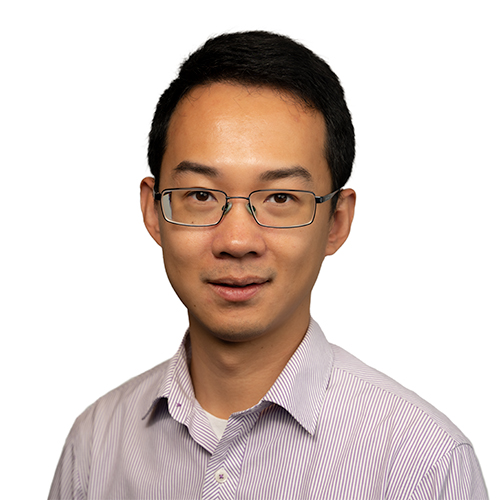
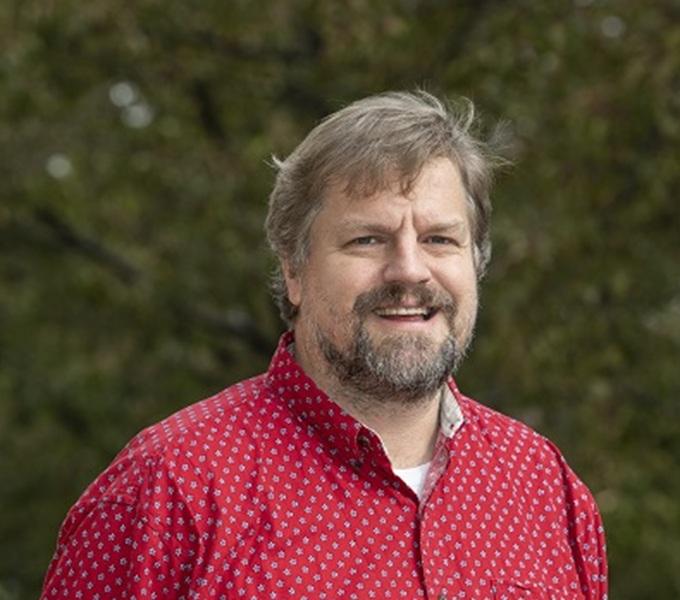
Dr. Monique de Jager is a postdoctoral researcher at Utrecht University's Quantitative Biodiversity Dynamics (QBD) Group and holds guest researcher positions at the Ecology & Biodiversity Group (E&B) at Utrecht University and the Animal Ecology Group at the Netherlands Institute of Ecology (NIOO-KNAW). Her research focuses on eco-evolutionary dynamics, spatial modeling of movement strategies in plants and animals, and biodiversity conservation. She specializes in using computational models, including deep learning, to address ecological challenges such as habitat fragmentation and biodiversity loss. Education: PhD in Eco-evolutionary Feedbacks in Self-organized Ecosystems from the University of Groningen (2015). Research Interests: Movement ecology, evolutionary biology, spatial ecology, seed dispersal mechanisms, and the application of individual-based models to ecological systems. Her work bridges theoretical and applied ecology, addressing questions related to species dispersal, habitat connectivity, and conservation strategies. Recent Trends in Articles: Dr. de Jager's recent work explores critical transitions in dispersal strategies due to habitat fragmentation, optimal management practices for mitigating goose-related agricultural damage, and the role of spatial self-organization in mussel bed ecosystems. Her studies often integrate computational modeling with empirical data to predict ecological outcomes under environmental changes. Awards: Best-publication award (2011) for work on Lévy walks in Science. Second-best publication award (2014) for research on superdiffusion in Proceedings B. Collaborations: With Merel Soons on seed dispersal via water in streams. With Marijke van Kuijk on optimizing camera trap data analysis. With Bart Nolet on goose migration modeling. Labs/Teams: Quantitative Biodiversity Dynamics Group (QBD), Ecology & Biodiversity Group (E&B), and Animal Ecology Group (NIOO-KNAW).