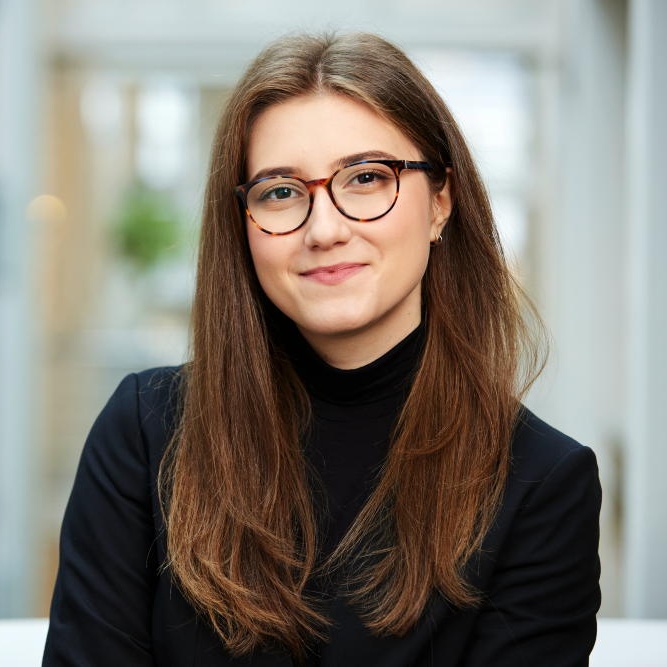
Dr. Noel Juvigny-Khenafou is a Lecturer in Aquatic Environmental Science at the Institute of Aquaculture , University of Stirling . His research focuses on the interactions of anthropogenic stressors in freshwater ecosystems, including climate change, pollution, hydrological alterations, and artificial light at night. Role : Lecturer in Aquatic Environmental Science Institution : University of Stirling, Institute of Aquaculture Email : noel.juvigny-khenafou@stir.ac.uk Research Interests include: Multiple stressor effects on freshwater communities Anthropogenic impact on aquatic biodiversity Experimental stream ecology using mesocosms Microbial and invertebrate community dynamics Environmental variability in aquatic systems Ecosystem service provision by permanent ponds Key Article Trends reveal consistent focus on: Anthropogenic stressor interactions in streams Climate change and chemical pollution synergies Hydrological and light pollution impacts Microbial community responses to environmental changes Predictive frameworks for ecological theory Meta-population responses to spatiotemporal stressors
Benyamin Khoshnevisan is an Associate Professor in the Department of Green Technology (IGT) at the University of Southern Denmark. He specializes in sustainability assessment of renewable energy systems, biofuel production, waste management, and agricultural systems, applying interdisciplinary methods like life cycle assessment, data mining, and multi-criteria decision analysis. Education: PhD in Biosystem Engineering, University of Tehran Research Focus: His work addresses environmental sustainability through biorefinery platforms, microbial protein production, and circular economy strategies. Key projects include EU-funded initiatives on microalgae biorefineries, plant-based food fermentation, and agrochemical sustainability. Article Trends: Recent publications emphasize life cycle assessment of bioenergy systems, waste valorization technologies, and integration of biological-inorganic processes for environmental sustainability. Topics span from microbial protein upcycling to geopolitical impacts on circular economy. Scientific Awards: Recipient of the Moo-ving Toward Carbon Neutrality Prize (2025) Teaching & Supervision: Leads MSc courses in techno-economic assessment and supervises projects on sustainable aviation fuel, carbon capture, and microbial platforms. Collaborates with international teams on EU projects like AgriLoop and GreenImpro.
Dana Petcu is a Professor at the Computer Science Department of the Faculty of Mathematics and Computer Science at West University of Timisoara. She serves as Director of both the Institute for Advanced Environmental Research and Institute e-Austria Timisoara. With expertise in distributed and parallel computing, she has published over two hundred papers on Cloud, Grid, Cluster, and HPC computing. She is also the chief editor of the open-access journal Scalable Computing: Practice and Experience (SCPE) and has coordinated multiple European Commission-funded projects. Education: Ms. Degree in Computer Science Ph.D. in Numerical Analysis Dana Petcu's research focuses on distributed and parallel computing systems. Her current interests include Cloud & Grid computing, and HPC & Cluster computing. Previously, she worked on Mathematical software, Numerical methods, and Computer graphics. Her work bridges theoretical foundations with practical implementations, particularly in resource management, scheduling algorithms, and scalable computing architectures. She has developed significant expertise in applying these technologies to scientific computing, data-intensive applications, and multi-cloud environments. Her scholarly output demonstrates consistent focus on cloud and distributed computing evolution. Over the past decade, her research has shifted from foundational grid computing to modern cloud technologies, edge computing, and exascale systems. Key themes include resource management across heterogeneous environments, autonomic systems, security SLAs, and multi-cloud portability. Her work shows increasing interdisciplinary connections, particularly with AI/ML techniques applied to resource optimization and anomaly detection in large-scale systems. Scientific Awards: Maria Sibylla Merian-Award (2005) IBM Faculty Award (2009) MLNR Award "Spiru Haret" (2015) Romanian Academy Award "Gheorghe Cartianu" (2015) Dana Petcu has advised numerous graduate students through various master's programs in Distributed and Parallel Computing. She has secured substantial research funding as coordinator of FP7 projects HOST and SPRERS, and as scientific coordinator of mOSAIC. Her grant portfolio includes multiple European Commission-funded initiatives focused on cloud computing infrastructure, resource management, and multi-cloud environments. She has also contributed to EU Research Activities in Cloud Computing as an editor, demonstrating her leadership in shaping European research agendas in this field. She leads the Computer Science Research Center (CCI) and High Performance Computing Service Center (HPC-UVT) at West University of Timisoara. Her teams develop and maintain significant infrastructure for distributed computing research, including simulation environments like CloudSim and iFogSim. She has established strong connections between academic research and practical applications through Institute e-Austria Timisoara, fostering technology transfer and innovation in cloud computing solutions.
Francisco de Arriba Perez serves as an Assistant Professor in the Department of Computer Science at the School of Telecommunications Engineering, University of Vigo, where he contributes to the Research Center for Telecommunication Technologies and leads research within the TC1 Group of Information Technologies. He earned his PhD from the University of Vigo in 2019 with a dissertation titled Application of wrist wearables in educational environments for the characterization of sleep and stress , supervised by Dr. Manuel Caeiro Rodríguez and Dr. Juan Manuel Santos Gago. His research centers on Explainable Artificial Intelligence and Natural Language Processing , with pioneering applications in mental health monitoring (postpartum depression, anxiety, cognitive decline), wearable technology integration , and real-time stream analysis for social networks and financial systems. He specializes in developing interpretable machine learning frameworks that bridge theoretical AI advancements with practical healthcare implementations, particularly through large language models for clinical decision support. Analysis of his 15 most recent publications reveals a dominant research trajectory toward healthcare AI (60% of works), with significant contributions to mental health diagnostics using conversational interfaces, followed by applications in social network security (20%) and financial forecasting (20%). His methodology consistently emphasizes explainability , real-time processing , and stream-based adaptation to address data drift challenges. As an active member of the TC1 Group of Information Technologies, he collaborates on interdisciplinary projects advancing telecommunication technologies and information systems, with recent work exploring robotic avatars for social pilgrimage and accessibility enhancements through wearable computing.
Luis Sanchez Fernandez is a Full Professor at the Department of Telematics Engineering, Carlos III University of Madrid. His research focuses span Smart Cities, Semantic Web, and Distributed Systems. Contact information includes email luis.sanchez@uc3m.es and office location 4.1.F08 in Leganés. His research program integrates Blockchain Governance , Urban Mobility Analysis , and Complex Systems Modeling . Recent work examines approval-based voting mechanisms in decentralized networks and fractional transport equations for physical simulations. Publications demonstrate a strong emphasis on fair algorithm design for societal applications. Key article themes show convergence of Smart City Data Integration Multiwinner Election Algorithms Cellular Automaton Dynamics Semantic Annotation Frameworks As Deputy Director of Teaching Affairs, he leads curriculum innovation in Telematics Engineering. His educational background includes a Doctorate from Universidad de Salamanca, focusing on Wikipedia as a teaching resource in higher education.
Thomas Erich Zinner is Professor at the Department of Information Security and Communication Technology, Norwegian University of Science and Technology (NTNU), a position held since August 2019. Previously, he served as visiting professor and head of the FG INET research group at TU Berlin, and led the 'Next Generation Networks' research group at the University of Würzburg's Communication Networks chair. His educational background includes a diploma (2006) and Ph.D. (2012), both from the University of Würzburg. His research spans network architecture performance evaluation with emphasis on SDN/NFV and QoE-centric management approaches for emerging networks. Zinner's recent publications reveal strong trends toward intelligent 6G architectures integrating AI in the user plane, QoE-aware 5G resource allocation, and autonomic management of softwarized networks. His work combines theoretical modeling, simulation frameworks like OMNeT++, and practical implementations focused on real-world applicability in beyond-5G systems. He leads the Networking Research Group at NTNU working on the TeraFlow project, developing secure cloud-native SDN controllers for autonomic traffic management at massive scale. This initiative addresses critical challenges in next-generation network infrastructure through innovative controller architectures and flow management techniques.
Carlos Neto serves as Associate Professor with Tenure at the University of Lisbon's Institute of Geography and Spatial Planning (IGOT), where he bridges human geography and child development through research on children's urban experiences and physical activity interventions. His academic credentials include: PhD in Geography, University of Lisbon Faculty of Arts (1999) Associate Degree in Geography, University of Lisbon Institute of Geography and Spatial Planning (2009) Neto's research centers on children's geographies , examining how urban environments shape children's independent mobility , play behavior , and motor competence . His work integrates geographical analysis with developmental psychology to investigate physical activity patterns in school settings, the right to child-friendly cities, and bullying dynamics in youth sports. Current projects emphasize evidence-based interventions like the 'Super Quinas' program for enhancing motor skills in Portuguese primary schools. Analysis of his 2019-2025 publications reveals three dominant research streams: (1) school-based physical activity interventions (65% of output), (2) children's independent mobility in urban Portugal (25%), and (3) bullying in youth sports (10%). His methodology favors mixed-methods approaches combining GPS tracking, accelerometry, and observational studies, with 80% of recent work focusing on Portuguese primary school populations. No scientific awards were documented in the source materials. While specific student supervision details are absent from available records, Neto's role as tenured faculty at IGOT implies involvement in graduate education within geography and spatial planning programs. Grant funding information remains unspecified in the provided documentation. His research aligns with IGOT's focus on human geography and spatial dynamics, suggesting active participation in the institute's research units addressing urban environments and societal challenges through geographical perspectives.
Nikolaos Pelekis is a Professor at the Department of Statistics and Actuarial Science, School of Finance and Statistics, University of Piraeus, where he teaches courses in Data Science, Data Management, Information Systems, and Computer Programming. He has been actively involved in both undergraduate and postgraduate education, offering specialized courses such as "Statistical Data Mining Methods" in the Applied Statistics Master's program and "Big Data Management" in the Cybersecurity and Data Science postgraduate program. Born in 1975, Professor Pelekis earned his Bachelor's degree in Computer Science from the University of Crete (1998), followed by an MSc in Information Systems Engineering (1999) and a PhD in Moving Object Databases (2002) from UMIST University in the United Kingdom. His educational background laid the foundation for his distinguished career in data science and database management. Professor Pelekis' research spans multiple domains within data science and database management, with particular emphasis on mobility data analytics. His work focuses on data mining, big data management and analytics, with special attention to location and motion data including trajectories of moving objects. He has made significant contributions to spatial and spatiotemporal database management, moving object database systems, privacy-preserving data mining, and OLAP analysis. His research bridges theoretical foundations with practical applications, particularly in maritime and transportation domains. An analysis of Professor Pelekis' recent publications reveals a strong trend toward maritime data analytics and vessel traffic prediction. His work increasingly focuses on applying machine learning techniques to maritime trajectory data, developing systems for collision risk assessment, vessel location forecasting, and maritime route prediction. The research demonstrates a progression from foundational database management techniques to sophisticated analytics for time-critical mobility forecasting, with applications in aviation and maritime domains. Five best research paper awards 1st & 3rd place in the SemEval-2017 competition 3rd place in the ACM SIGSPATIAL Cup 2016 competition Best paper award at ACM SIGSPATIAL'14 (Path-based Queries on Trajectory Data) Best paper award at ER'13 (Baquara: A Holistic Ontological Framework for Movement Analysis with Linked Data) Best application paper award at ICDM'09 (Clustering Trajectories of Moving Objects in an Uncertain World) Ralf H. Güting best research paper award at SSTD'21 (A Novel Indexing Method for Spatial-Keyword Range Queries) Best Demo Paper award at SSTD'21 (MaSEC: Discovering Anchorages and Co-movement Patterns on Streaming Vessel Trajectories) Professor Pelekis has been actively involved in advising and research funding acquisition. He has participated in over 10 European and National Research and Development projects as principal investigator or key researcher. His leadership extends to directing research laboratories and coordinating large-scale collaborative projects. As co-founder of the Data Science Lab - DataStories at the University of Piraeus, he has mentored numerous researchers and students. His research has been supported by prestigious funding programs including Horizon Europe, Horizon 2020, and national research initiatives. Professor Pelekis co-founded and leads the Data Science Lab - DataStories at the University of Piraeus, which comprises 9 faculty members from 4 different Departments along with experienced and young researchers. He previously served as Head of Research for the Information Management Lab (InfoLab) at the Department of Informatics, University of Piraeus (2005-2014). His current research team is actively engaged in multiple European projects including "DAT.AI – Energy-efficient AI-ready Data Spaces" and "EMERALDS – Extreme-scale Urban Mobility Data Analytics as a Service," focusing on cutting-edge applications of data science in maritime and urban mobility contexts.
Assoc. Prof. Dr. Özlem Güçlü Üstündağ is a faculty member in the Food Engineering Department at Yeditepe University's Faculty of Engineering. She has served as Associate Professor since 2018 and previously held positions as Doctoral Lecturer starting in 2010. She also serves as Deputy Head of the Department and coordinates multiple academic programs including the Biotechnology Master's Program and the Master's Program in Design and Innovation for Sustainable Food Systems. Her educational background includes: PhD in Department of Agricultural Food and Nutritional Science from University of Alberta (1998-2003) Master's Degree in Department of Food Science and Technology from University of Reading (1996-1997) Bachelor's Degree in Food Engineering from Middle East Technical University (1991-1995) Dr. Güçlü Üstündağ's research primarily focuses on the extraction and analysis of bioactive compounds from food processing by-products and waste streams. Her work centers on sustainable food systems and waste valorization through advanced extraction technologies. She has made significant contributions to understanding the behavior of lipophilic bioactives during food processing, particularly in olive oil production. Her research employs cutting-edge techniques including supercritical carbon dioxide extraction and subcritical water extraction to recover valuable compounds from agricultural residues. She has published extensively on topics related to phenolic compounds in pistachio hulls, black tea waste valorization, and olive pomace utilization, demonstrating how food industry by-products can be transformed into valuable sources of nutraceuticals and functional food ingredients. Analysis of her recent publications reveals a strong trend toward sustainable food processing technologies and waste valorization. Her work spans lipid science, phenolic chemistry, and advanced extraction methods, with particular emphasis on olive oil processing by-products, pistachio hulls, and tea waste. She has developed analytical methods for determining bioactive compounds and has explored the application of artificial intelligence in predicting extraction behavior. Her scientific contributions include: Multiple book chapters including contributions to "Bailey's Industrial Oil and Fat Products" Over 20 peer-reviewed journal articles in high-impact food science journals Several conference proceedings presenting innovative approaches to food waste utilization Dr. Güçlü Üstündağ has successfully managed significant research projects including a TÜBİTAK project on developing value-added products from tea waste (3.6 million TL) and a European Union project on black tea by-products utilization (100,000 EUR). She has supervised multiple graduate students, with thesis topics focusing on green tea waste utilization, olive pomace valorization, and pistachio by-product recovery. She also serves on national committees including the Ministry of Agriculture and Forestry's National Food Codex Salt Sub-Commission and the Ministry of Development's Specialized Commission for Competitive Production in Agriculture and Food. Her teaching portfolio includes undergraduate courses such as Food Engineering Introduction, Food Chemistry, and Food Process Engineering, as well as graduate courses on Sustainable Food Systems and Digital Innovation in Food Systems. She has been instrumental in developing curriculum for the Master's Program in Design and Innovation for Sustainable Food Systems.
Joydeep Banerjee is an Adjunct Professor in the Department of Data Sciences and Operations at the Marshall School of Business, University of Southern California. He combines academic expertise with extensive industry experience as a Senior Technical Leader at Red Hat, former technology strategist at The Walt Disney Studios, and key project leader during his tenure at IBM. Current focus areas: Observability, Far Edge & Scalability at Red Hat Pioneered cloud migration and microservices implementation at Disney Studios Expertise in distributed computing, streaming analytics, and J2EE technologies from IBM experience His research interests center on applying AI/ML methodologies to observability challenges, while advocating for DevOps transformation and agile development practices. As an instructor, he teaches SQL and NoSQL database systems for business analytics, covering relational databases, distributed database architectures, and data manipulation techniques. Current course: DSO-552 SQL Databases for Business Analysts Previous course: DSO-553 NoSQL Databases in Big Data
Jongsoo Lim serves as Professor in the Department of Media and Communication at Sejong University since 2007 and holds concurrent leadership as Executive Manager of the Korean Society of Journalism and Communication Studies since 2018. His academic foundation spans media theory, digital technology adoption, and cross-disciplinary communication research. His educational credentials include: Ph.D. from Hanyang University (2003) M.A. from Hanyang University (1999) B.S. from Hanyang University (1997) Lim's research integrates Media Studies with Computer Science through investigations of algorithmic media systems, digital television evolution, and social media's societal impact. His work bridges cultural theory with data-driven analysis , particularly examining how platform architectures reshape information flows in health contexts and industrial transitions. Recent scholarship demonstrates methodological versatility across computational content analysis and cultural critique. Publication trends reveal dual trajectories: (1) algorithmic media's role in the Fourth Industrial Revolution's cultural disruption, and (2) Twitter's function as health agenda-setter during disease outbreaks. These streams converge on platform governance and media form transformation , with notable impact evidenced by 51 Scopus citations for his flu/Twitter study. Professional activities include leadership in the Korean Society of Journalism and Communication Studies and prior research fellowship at Korean Educational Broadcasting System (2004-2007). Current work focuses on digital television adoption barriers and algorithmic media's cultural implications.
Orlando Manuel Oliveira Belo is an Associate Professor with Habilitation at the School of Engineering, University of Minho, Portugal, where he has been a member of the Department of Informatics since 1986. He is also a Senior Researcher at the ALGORITMI R&D Centre, and a member of both the CST R&D Group and ISLab R&D Lab. His academic career spans over three decades, with significant contributions to the fields of Business Intelligence, Data Warehousing, and Data Mining. His educational background includes: 5-year degree in Systems and Informatics Engineering (1986) "Provas de Aptidão Pedagógica e Capacidade Científica" (MSc equivalent) in Expert Systems (1991) Ph.D. in Multi-Agent Systems (1998) Habilitation (2013) Professor Belo's research primarily focuses on Business Intelligence and related areas including Data Warehousing Systems, OLAP, Dashboarding, and Data Mining. His work has significant practical applications in fraud detection and control in telecommunication systems, data quality evaluation, and ETL systems for industrial data warehousing. In recent years, his research has expanded into Ontology Learning and Sentiment Analysis, with applications in healthcare analytics, particularly in cardiovascular health monitoring and dermatology. His interdisciplinary approach bridges computer science with practical business and healthcare applications, demonstrating the versatility of data analytics across different domains. His recent publications (2023-2025) show a clear trend toward integrating advanced machine learning techniques with domain-specific knowledge, particularly in healthcare applications. He has published extensively on sentiment analysis, ontologies, and data warehousing, with a growing emphasis on medical applications including atopic dermatitis and cardiovascular health. His work demonstrates a progression from foundational data warehousing and ETL research to more specialized applications in precision medicine and well-being analytics, reflecting the evolving landscape of data science applications. Professor Belo has an impressive publication record with 181 publications, including 26 in Q1/Q2 journals, and has accumulated 468 citations, resulting in an h-index of 11. His editorial contributions further demonstrate his standing in the academic community. As a dedicated researcher and educator, Professor Belo has been instrumental in developing computational platforms for specific applications and has contributed significantly to the advancement of Business Intelligence methodologies. His work with the ALGORITMI R&D Centre has fostered numerous collaborative projects and has positioned him as a key figure in data analytics research at the University of Minho. His laboratory affiliations include the CST R&D Group and ISLab R&D Lab, where he continues to lead research initiatives in Business Intelligence, Data Mining, and their applications across various domains including healthcare, telecommunications, and business analytics.
Chiara Epifanio is a researcher (INFO-01/A) at the University of Palermo , based in the Department of Mathematics and Computer Science . She holds regular office hours on Tuesdays 14:30–17:00 in Room 104, first floor, Via Archirafi 34, and can be reached at chiara.epifanio@unipa.it . Over the past fifteen years she has designed and taught a diverse portfolio of courses spanning Programming , Bioinformatics , Advanced Programming , Teaching Methodologies and Techniques for Computer Science and Pattern Discovery for Life Sciences . These offerings serve degree programmes in Mathematics, Computer Science, Statistics & Data Science, and the recently launched curricula in Data, Algorithms & Machine Intelligence and Computer Science & Artificial Intelligence . Her research lies at the intersection of combinatorics on words , string algorithms , and bioinformatics . She has made sustained contributions to the design of alignment-free distances for biological data, the theory of Sturmian words and their associated graphs, suffix automata tolerant to mismatches, and compact data structures such as linear-size suffix tries. The work repeatedly draws on deep results from formal language theory, automata theory, and discrete mathematics to solve practical problems in sequence analysis. Publications trend: From 2004 onward she has produced a steady stream of peer-reviewed articles that move from foundational combinatorial results on Sturmian words and critical factorization theorems toward application-driven studies on approximate string matching and genomic data mining. A marked acceleration is visible in the 2023 publications addressing k-Hamming and k-edit distances, reflecting current demands in large-scale biological data analytics. Scientific awards: None explicitly mentioned in the provided material. Advising & grants: No PhD or Master’s students are listed in the supplied pages, and no funded project descriptions are available. Laboratories & teams: While no specific lab is named, her teaching and research are embedded within the Department of Mathematics and Computer Science, which hosts groups in algorithms, discrete mathematics, and bioinformatics, and provides access to the university’s ATeN Center and other research infrastructures.
Sonia-Florina Horchidan is a doctoral researcher at the KTH Royal Institute of Technology in Stockholm, Sweden. She is affiliated with the Division of Software and Computer Systems within the School of Electrical Engineering and Computer Science (EECS), working under the supervision of Associate Professor Paris Carbone in the Data Systems Lab . Her academic activities include teaching assistant roles for courses in distributed systems and data storage paradigms. Research Focus: Graph Databases Machine Learning on Graphs Stream Processing Federated Learning with Privacy Guarantees Approximate Query Processing via ML Serverless Streaming Graph Analytics Scientific Contributions: Her recent publications at venues like EDBT, VLDB, and AI4DB explore intersections between graph data management and machine learning. Key themes include ML inference optimization in streaming systems, privacy-preserving health data forecasting, and innovative graph query execution models. Honors & Service: Co-authored Best Paper at DEEM 2022 Best Paper Award at VLDB 2023 PhD Workshop Program Committee Member, aiDM 2024 Reproducibility Committee Member, ACM SIGMOD/PODS
Associate Professor Rahul Govind is a faculty member at the University of New South Wales Business School within the School of Marketing. His research bridges spatial marketing analytics with critical examinations of political philosophy and health marketing applications. Dr. Govind's research utilizes spatial dependence in empirical data to address marketing problems through two primary streams: geographical similarity between consumers for services marketing solutions, and geographical consumer patterns to analyze health consumption issues. His work spans diverse domains including political philosophy (examining thinkers from Hobbes to Kant), constitutional theory (focusing on Ambedkar's contributions), and practical marketing applications in CSR, healthcare, and consumer behavior. Recent publications demonstrate strong interdisciplinary engagement with journals spanning marketing, political science, cultural critique, and engineering fields. His scientific awards include the University Faculty Research Fellowship at Mississippi (2006), Dean's Research Award from Ford Motor Company (2002), and multiple research grants from institutions including University of Mississippi and Indian Institute of Management Bangalore. Govind actively collaborates on major research initiatives such as the Australian Research Council Linkage Project examining co-creation practices in health outcomes. His advising and grant activities reflect significant contributions to marketing education and research methodology development, particularly in spatial modeling applications. Current research explores timely topics including social media's impact on pandemic behaviors, ethical consumption patterns, and the philosophical foundations of modern governance structures.