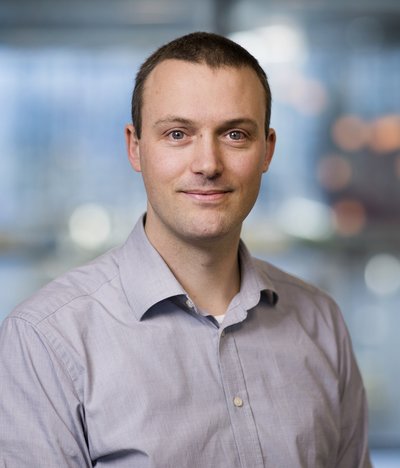
Dr. Boudewijn van Dongen is a Full Professor at Eindhoven University of Technology's Department of Mathematics and Computer Science, chairing the Process Analytics group. His research focuses on conformance checking and process mining , particularly through alignment-based techniques. Develops ProM and CPN Tools frameworks Collaborates with Philips Research and Vanderlande Leads IEEE Task Force on Process Mining Research Interests : Specializes in aligning observed data with process models, addressing multi-case dependencies , privacy-aware mining , and stream processing . Project Highlights : • Strategic partnership with Philips on health data science • Logistics optimization with Vanderlande Industries • Foundational work in alignment theory and behavioral diagnostics
Boudewijn F. van Dongen is a Full Professor in computer science at Eindhoven University of Technology (TU/e), holding positions in Mathematics and Computer Science, Process Analytics, and strategic initiatives like EAISI Foundational, EAISI Health, and EAISI High Tech Systems. He chairs the Process Analytics group, focusing on conformance checking within Business Process Management and Process Mining. Academically, he earned his MSc and PhD in computer science from TU/e (2003 and 2007). His research develops techniques and tools to analyze large-scale systems for process misconformance, leveraging alignments in ProM framework. Key projects include collaborations with Philips Research, Vanderlande, and GDPR compliance initiatives. He teaches courses like Foundations of Process Mining and Data Analytics. Awards include the Best Paper Award BIS 2011. His work contributes to UN Sustainable Development Goals through process optimization in logistics and healthcare.
Prof. Dim Coumou is a Full Professor at the Faculty of Science, Vrije Universiteit Amsterdam (VU), and holds a second position at the Royal Netherlands Meteorological Institute (KNMI). He leads the Climate Data Science research group coordinating efforts between IVM and KNMI. His work focuses on extreme weather events linked to climate change, employing advanced statistical methods, climate models, and machine learning. He has authored over 60 peer-reviewed papers, contributed to IPCC reports, and is a Web of Science Highly Cited Scientist. Education: PhD in Natural Sciences (ETH Zurich, 2003-2008) MSc in Geophysics (University of Utrecht, 1995-2001) Research Interests: Coumou’s research emphasizes how global warming intensifies extreme weather events like heatwaves, heavy rainfall, and droughts. He investigates atmospheric dynamics, circulation patterns, and their societal impacts. His work bridges climate science with stakeholders like the World Bank to prioritize high-risk extremes. Grants & Projects: Coordinator of XAIDA (Horizon-2020, €700k) Co-PI in TiPES (Horizon-2020, €300k) and RECEIPT (Horizon-2020, €300k) NWO VIDI Award (€800k) for Persistent Summer Extremes research Teaching: Leads BSc Honours 'Climate Change' and MSc 'Climate Hydrological Processes' courses. Outreach & Awards: Recipient of the Web of Science Highly Cited Scientist distinction. Active in science communication through projects like 'Aufgeheizt' and 'Extreme Dialogues', fostering dialogue between scientists and the public.
Gert-Jan Steeneveld is an Associate Professor affiliated with the WIMEK faculty at Wageningen University & Research, specializing in Meteorology. His research focuses on urban climate dynamics, boundary layer processes, and climate change impacts. He has contributed significantly to understanding urban surface fluxes, extreme rainfall patterns, and heat stress mitigation strategies in urban environments. His work integrates observational data with advanced modeling techniques, including the use of crowdsourced meteorological observations to improve urban climate predictions. Steeneveld has supervised multiple PhD candidates exploring topics such as tropical cyclone projections, urban climate modeling, and heatwave impacts on indoor environments. His research extends to interdisciplinary projects addressing climate adaptation in informal settlements, combining urban planning and environmental science approaches. Notable datasets include urban meteorological observations from Amsterdam and Wageningen, contributing to climate studies and model validation. His recent publications emphasize high-resolution perspectives on climate change effects, such as extreme rainfall in Southeast Asia and the dynamics of cyclone clustering. He actively participates in workshops and consultancy projects, including urban cooling strategies and climate-responsive design. Despite no explicit awards listed, his extensive publication record and leadership in collaborative research underscore his academic contributions.
Hans van Dijk is Associate Professor at TIAS School for Business and Society and co-founder of Including Behavior Institute. His PhD research on diversity in teams received cum laude distinction. Research focuses on identifying root causes of organizational conflicts and developing collaboration strategies, with particular emphasis on refugee integration and inclusive leadership practices. Key research streams: Microdynamics of diversity in organizational teams Refugee labor market integration ecosystems Destructive organizational patterns and remediation Stereotype mitigation strategies Recent publications address refugee integration (32%), team dynamics (28%), diversity management (25%), and leadership (15%). Authored 'Destructieve dynamieken' on organizational conflict patterns. Teaches sustainability in healthcare leadership, focusing on behavioral interventions. Developed innovative experiential learning approaches using Gather platform during pandemic teaching. Recipient of multiple best paper awards including HRMR Best Article 2020.
Gerard Ritsema van Eck is an Assistant Professor in IT Law at the University of Groningen's Faculty of Law, specializing in privacy and data protection in public spaces, European data law, and surveillance studies. He holds a PhD in Law (2021) and currently serves as a post-doctoral researcher in the SMiLES Living Lab project. His roles include membership in the University Council, Research Ethics Review Committee (CETOR), and leadership of the Surveillance Studies in Groningen Network for All (SSiGNall). His research focuses on the legal and societal implications of surveillance technologies, including body cameras, crowdsourced data collection, and biometric recognition. Notable projects include contributions to the FRA's biometric policing research and the CITYCoP and RESPECT EU-funded projects. He actively advises on privacy policies and frequently engages with media on issues like facial recognition misuse and public camera ethics. Ritsema van Eck publishes extensively on data protection law, with recent works analyzing court rulings on live-stream surveillance and corporate compliance with post-Schrems GDPR obligations. He advises on Data Protection Impact Assessments and advocates for stronger group privacy rights in public spaces. Teaching roles include supervising law students' theses and mentoring junior researchers through the Surveillance Scholars Network.
Syed Muhammad Anwar serves as an Associate Professor in Software Engineering at the University of Engineering and Technology (UET) Taxila, Pakistan. He maintains a significant dual affiliation with the Sheikh Zayed Institute at Children's National Hospital in Washington, DC, USA. Additionally, he holds leadership roles as Co-founder and CTO of Sense Digital PVT. Ltd. and Director of both the Virtual Reality and Machine Learning Lab and the Signal Image Multimedia Processing and Learning (SIMPLE) Group at UET Taxila. Dr. Anwar's research spans multiple cutting-edge domains at the intersection of signal processing, machine learning, and medical applications. His primary research interests include: Multimedia Communication and Signal Processing Image and Video Coding and Quality Assessment Biomedical Signal Processing and Brain-Computer Interfaces Medical Imaging including Segmentation, Detection, and Diagnosis Deep Learning applications in healthcare diagnostics Emotion Classification and Human Behavior Modeling His recent scholarly output demonstrates a strong emphasis on applying deep learning techniques to medical image analysis challenges, particularly in brain tumor segmentation, liver tumor detection, and Alzheimer's disease classification. There's also significant work in EEG-based applications including emotion recognition, stress quantification, and game expertise classification. His research effectively bridges theoretical machine learning advances with practical healthcare applications, showing particular strength in adapting deep learning architectures to medical imaging challenges across multiple organ systems. Dr. Anwar actively mentors the next generation of researchers through his leadership of the SIMPLE research group. His current advisees include: PhD Students: Sanay Muhammad Umar Saeed (Quantification of human stress), Romana Farhan (Security in body area networks), Nosheen Sohail (Medical Image Analysis), Amin Ullah (Knowledge extraction), and Saqib Mehboob (Structural health monitoring) MS Students: Haseeb Iftikhar (Doctor recommender system), Faizah Malik (Sentiment analysis), Samreena Aslam (Fashion image retrieval), Huma Shabbir (Fashion image tagging), Khola Rafiq (Ischemic stroke detection), and Saba Naseem (Blood vessel segmentation) As Director of the Virtual Reality and Machine Learning Lab and the SIMPLE research group, Dr. Anwar oversees a dynamic research environment focused on advancing signal processing, multimedia analysis, and machine learning applications, particularly in healthcare contexts. His lab maintains strong collaborations between UET Taxila and international institutions, including Children's National Hospital in Washington DC, facilitating technology transfer between academic research and clinical practice.
Wouter Kalf is a university lecturer in moral and political philosophy at Leiden University and a core lecturer in the Vision of the Future program. He is also affiliated with Utrecht University as a postdoctoral researcher and works with AOG School of Management. His academic journey includes obtaining a PhD from the University of Leeds in 2013, after which he has focused on bridging philosophy with practical applications in various domains. Dr. Kalf's research spans multiple areas of philosophical inquiry with a strong emphasis on practical application. His work primarily focuses on moral philosophy , political philosophy , and meta-ethics , examining how ethical frameworks can function as practical toolkits for decision making. He places significant importance on the cross-pollination between philosophy, science, and real-world practice, seeking to make philosophical insights accessible and applicable to contemporary challenges. His distinctive approach treats ethics not merely as subjective opinion but as a structured methodology for improving decision-making processes. His publications reveal a consistent trajectory toward making complex philosophical concepts relevant to everyday decision-making and future-oriented thinking. Kalf's work increasingly engages with contemporary issues such as artificial intelligence, sustainability, and the challenges of information integrity in the digital age, while maintaining a strong foundation in traditional philosophical inquiry. His 2023 book represents a significant contribution to making meta-ethical inquiry accessible to Dutch-speaking audiences. Since the fall of 2018, Dr. Kalf has served as program leader for Effective Thinking, where he develops approaches to enhance reasoning and decision-making capabilities. His teaching methodology emphasizes the critical distinction between mere streams of thought and norm-regulated thinking with specific goals, comparing effective thinking to chess where both purpose and rules guide meaningful outcomes. His vision centers on how sharper and more precise thinking about values contributes to a better world.
Koos Kerstholt serves as a PartTime Lecturer at Rotterdam University of Applied Sciences Business School and Project Manager/Researcher at the Business Innovation Knowledge Center (KcBI), focusing on business model innovation for manufacturing SMEs through servitization and digital transformation. His academic foundation includes a business administration degree (Drs.), complemented by professional roles at FMO, Grondmechanica Delft (Deltares), and Syntens, followed by independent innovation consultancy for installation-sector SMEs since 2012. Research centers on enabling manufacturing companies to transition from product sales to service-oriented business models, develop business model portfolios, and implement circular economy practices through co-creative ecosystem approaches. His work emphasizes practical frameworks for digital servitization, skills development, and living lab methodologies that bridge academic theory with industry implementation. Publication analysis (2020-2025) reveals concentrated expertise in digital transformation frameworks for SMEs, structured servitization processes, and skills gap solutions within manufacturing contexts. The body of work consistently addresses systemic challenges through practical toolkits and collaborative innovation models. Kerstholt coordinates the Living Lab Schiedistrict innovation community with Schiedam municipality, fostering regional mechatronics development through projects like 'More with Less' (circular economy acceleration) and 'Learning in a systems perspective', which connect businesses, government agencies, and students in applied research ecosystems.
Petra Awad is an external researcher at the Faculty of Science and Engineering , University of Groningen , Netherlands, specializing in Astronomy . Her work bridges astrophysical research with computational methods, focusing on galaxy clusters, globular clusters, and cosmic structure. Key Research Areas: Globular Cluster Physics, Galaxy Clusters, Tidal Tails, Cosmic Web, Dwarf Galaxies, Machine Learning in Astrophysics Publication Trends include advanced studies on galaxy evolution in cluster environments, tidal disruption phenomena, and Euclid mission contributions to photometric pipelines and cluster analysis. Her work employs N-body simulations, deep spectroscopy, and machine learning for cosmic structure mapping. Collaborations span international teams like the S5 Collaboration and Euclid Consortium, with data contributions to the Centre de Donnees Strasbourg (CDS).
Wouter Kouw is an Assistant Professor at the Electrical Engineering department of Eindhoven University of Technology (TU/e) , leading the Bayesian Intelligent Autonomous Systems lab. With a dual PhD in Computer Science (2018, TU Delft) and MSc in Neuroscience (2013, Maastricht University) , he bridges neurobiology and artificial intelligence through variational Bayesian inference and active inference frameworks. Research Focus : Probabilistic machine learning systems using message passing algorithms on factor graphs , applied to mobile robotics and adaptive control Key Projects : CONTACT-AI (contact-rich robot navigation), FEP-walker (active inference-based locomotion), and BayesBrain (hybrid neuro-in-silico computing) His work spans nonlinear system identification , uncertainty quantification , and sensor modeling , with recent publications in IEEE Transactions , Entropy , and Communications in Computer and Information Science . Awards include the Niels Stensen Fellowship (2017) and TU/e Team Science Award nomination (2023) . Collaborations extend to institutions in Germany, USA, and Denmark, with teaching responsibilities in Bayesian Machine Learning and Neuro Computation .
Johan van Groenestijn is a Researcher at Wageningen Food & Biobased Research (Wageningen University & Research), specializing in biorefinery and fibre technology with expertise spanning circular economy systems, biomass valorization, and sustainable resource management across European and global contexts. His primary research focuses on Circular Economy applications in agricultural systems, Biorefinery processes for organic residue conversion, Water Resources Management through rainwater harvesting and storage solutions, Sustainable Agriculture via nutrient recovery, Renewable Energy from biomass, and Waste Valorization of industrial byproducts. Key investigations include lignin modification using deep eutectic solvents, phosphorus recovery from wastewater, and safety hazard identification in circular food production chains. Recent publications demonstrate a clear trend toward integrated sustainability solutions, combining circular economy principles with practical engineering applications. His work bridges agricultural residues, water security challenges, and nutrient cycling – particularly evident in studies on vegetable oil sustainability, rainwater storage in Tanzania, and municipal sludge valorization. The research consistently addresses UN Sustainable Development Goals through technical innovation in biomass conversion and resource recovery. Dr. van Groenestijn leads multiple funded projects including the active Production and recovery of a more reactive lignin from organic residues (2025) and completed initiatives on nutrient recycling ( HYBRID ), wood vinegar processing, and phosphoric acid production from sludge. His collaborative network spans European institutions, with significant fieldwork in Tanzania and the Netherlands. He actively disseminates findings through academic conferences, workshops (including a 2019 Tailor Made Training Course on biomass residues), and media engagements – notably 2022 expert commentary on biobased fuel production mechanisms for Dutch news outlets. His research group at Wageningen Food & Biobased Research maintains strong industry partnerships focused on practical implementation of circular economy technologies.
Daan Scheepers is Professor of Psychophysiology of Groups at Utrecht University's Faculty of Social and Behavioural Sciences, Department of Social, Health and Organisational Psychology. He holds this position part-time since 2018 while maintaining his associate professorship at Leiden University's Social, Economic, and Organisational Psychology department since 2013. Previously, he served as assistant professor at Leiden University (2007-2013) and conducted postdoctoral research on a VENI grant from the Dutch Research Council (NWO) from 2004-2007. His research program focuses on group processes, intergroup relations, and stress physiology. Using cardiovascular measurements, Scheepers distinguishes between negative stress (threat) and positive stress (challenge), examining how these physiological responses impact decision-making, performance, and health. His work investigates social factors underlying threat and challenge responses, including conflict, power dynamics, status hierarchies, moral evaluations, social change, and inclusion processes. This psychophysiological approach provides novel insights into the biological underpinnings of social behavior. Analysis of his recent publications (2022-2025) reveals three dominant research streams: (1) intergroup relations and prejudice reduction using psychophysiological measures, (2) power dynamics and leadership through cardiovascular reactivity studies, and (3) EU legitimacy research connecting social identity with political psychology. His work consistently bridges social psychology with physiological measurement techniques, often collaborating with Naomi Ellemers' research group at Utrecht University. His scientific recognition includes a prestigious VENI grant from the Dutch Research Council (NWO). He has demonstrated professional leadership through editorial service as associate editor of the Journal of Personality and Social Psychology (2020-2024) and as teaching director of the Kurt Lewin Institute (national graduate school in social psychology) from 2013-2015. Scheepers currently leads the 'Psychophysiology of groups' research chair within Naomi Ellemers' distinguished research group at Utrecht University. His laboratory work combines traditional social psychology paradigms with cardiovascular measurement techniques to explore the physiological foundations of group behavior and intergroup relations. His research program continues to expand the understanding of how social contexts translate into physiological responses that shape human behavior in group settings.
Reynier Peletier is a Professor at the Kapteyn Astronomical Institute, University of Groningen. His research focuses on galaxy formation and evolution, particularly dwarf galaxies in nearby clusters and applying novel computational techniques. He has held leadership roles including Director of the Kapteyn Institute (2011–2016) and Education Director of the Master Astronomy program (2017–2020). He has supervised over 22 PhD students and 10 postdocs, with many continuing in astronomy careers. Education: PhD in Astronomy (1989) and dual master’s in Astronomy and Mathematics (1985) from Leiden University. Prior roles include Lecturer at the University of Nottingham (1999–2003) and Assistant/Associate Professor at University of Groningen (2003–2009). Research interests span stellar populations, galaxy kinematics, and environmental effects on galaxies. Notable projects include the Fornax Deep Survey (FDS), SUNDIAL EU Training Network, and collaborations with Euclid mission. He co-leads the CAVITY project studying galaxies in cosmic voids. Active in light pollution initiatives like the Dark Sky Park Lauwersmeer telescope and EU-funded Interreg projects (Keep it Dark and Darker Sky). Key awards include the Royal Astronomical Society Group Achievement Award (2013) and Senior Teaching Qualification (2019). He serves on boards of the Isaac Newton Group of Telescopes and the Royal Netherlands Astronomical Society. Teaching responsibilities include Numerical Methods for Bachelor students and coordinating instrumentation internships for Master students. Major collaborations: Euclid mission (SWG LU-WP6 lead), SAURON Collaboration, X-Shooter Stellar Library Over 380 research publications and 12 media engagements Organized conferences like Lorentz Workshop on Metals in Galaxies and Netherlands Astronomy Conference
Dr. ShengYun Yang is a Lecturer in Digital Business at the Business Innovation Knowledge Center of Rotterdam University of Applied Sciences. She bridges academic research with practical applications in digital transformation and data-driven decision-making for SMEs. RSM Erasmus University PhD MIT Executive Certificate in Management Certified Scrum Master (CSM) ORSC Certified Coach Her research encompasses digital transformation, AI adoption, big data maturity, and cyber resilience for SMEs. She integrates these themes into education through: New minor programs (AI & Data-Driven Solutions) Practice-based research projects Curriculum development Industry collaboration Recent publications focus on: Cybersecurity planning frameworks AI-enhanced threat intelligence Data literacy in education Process mining applications Financial NLP compliance tools Data minimization in public sectors She connects research and education through: Project-based learning Corporate training programs Executive coaching Curriculum innovation