Dr. Michael Gyensare is a Lecturer in the Department of Leadership and Management at the University of Kent. His research focuses on entrepreneurship, organizational behavior, and leadership dynamics, with particular emphasis on expatriate thriving, psychological contracts, and sustainable HRM practices in both global and African contexts. His scholarly work spans topics like entrepreneurial phronesis, cultural intelligence in international assignments, and polychronicity in venture performance. Recent publications examine green HRM strategies, frugal innovation in emerging markets, and the impact of chronic health challenges on entrepreneurial outcomes. His 2025-2024 publications reveal trends in entrepreneurial cognition, cross-cultural management, and resilience-building in volatile environments. Awards: No specific honors identified in the provided text.
Dr. Seyed Mohammad Sadegh Khaksar is a Senior Lecturer in Technology Management at La Trobe Business School, specializing in digital transformation, innovation, and healthcare technology. He holds a PhD in Management and teaches courses like Project Management. As Head of the Project Management major, he employs innovative pedagogies such as blended learning and peer review to enhance graduate employability. His research focuses on digital excellence strategies in firms, with notable projects including an AUD 96k IoMT platform for rural healthcare and AUD 40k studies on aged care supply chain resilience. He advises startups and organizations on digital strategies, particularly in healthcare, oil & gas, and professional services. Key research areas include social robots in education and care, IoT applications, and agile-lean methodologies. He has secured over $300k in grants and serves on editorial boards like Technological Forecasting and Social Change . Awards include the 2024 Student Experience Award and 2021 Early Career Researcher Award. Current PhD supervision spans digital responsibility in healthcare and banking sectors, and IoT-driven service innovations. He leads funded projects on smart cities and pandemic logistics, reflecting his interdisciplinary impact across technology, healthcare, and education.
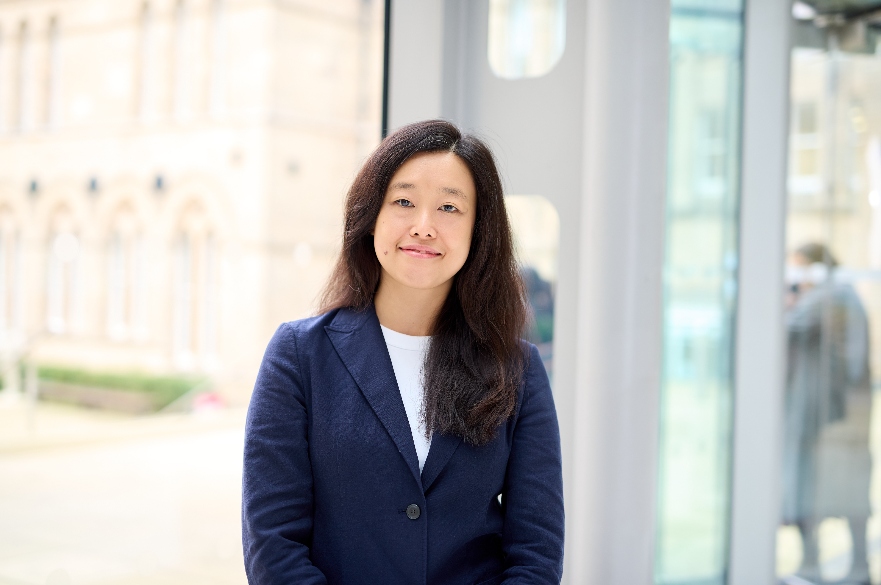
Dr. Carol Tan is a Senior Lecturer and Program Manager of the Master of Fashion Entrepreneurship at RMIT University's School of Fashion and Textiles. Her research focuses on fast-growth small-to-medium enterprises (SMEs), sustainable fashion practices, consumer behavior, and luxury fashion. She has been actively researching since 2003 and has contributed to peer-reviewed journals, media commentary, and industry reports. Dr. Tan holds six teaching awards, including the RMIT University Program Award for Innovation in Curricula (2013) and the 2011 Three-Minute Presentation Award. She currently supervises five PhD students. Research Highlights: Circular economy in fashion, virtual fashion consumption, blockchain in supply chains, and SME resilience. Media Engagement: Featured in ABC National Radio, The Age, Sydney Morning Herald, and industry reports on Australian fashion industry challenges. Committees: Member of RMIT's Learning and Teaching Committee (2024).
Juan Alcacer is the James J. Hill Professor of Business Administration at Harvard Business School. He holds a PhD in International Business and Strategy from the University of Michigan, an M.A. in Economics, an MBA in Finance, and a Computer Engineering degree. His research focuses on international strategies, location decisions, and agglomeration economies. PhD - University of Michigan (Ross School of Business) MA - Economics, University of Michigan MBA - IESA Computer Engineering - Universidad Simon Bolivar Alcacer’s work examines how firms build competitive advantage through geographic choices, supply chain dynamics, and knowledge transfer. Recent projects analyze Brexit’s impact on investment and the role of internal/external agglomeration economies. His publications span top journals like Strategic Management Journal , Management Science , and Journal of International Business . Awards include the 2024 HBS Student Association Faculty Teaching Award and the 2016 Michigan Ross Distinguished PhD Alumni Award. 2024 HBS Student Association Faculty Teaching Award 2019 Greenhill Award for Field Global Immersion program 2016 Michigan Ross Distinguished PhD Alumni Award 2013 Meritorious Service Award from Management Science At HBS, he teaches required MBA strategy courses, Executive Education programs, and PhD seminars. His consulting spans global corporations on competitive advantage and location strategy.
Benjamin Lee is a Senior Lecturer of Accounting and Director of Student Matters at the School of Accountancy, Singapore Management University. He serves as an SMU-X Academic Champion, driving experiential learning initiatives and promoting AI integration in accounting education and practice across multiple institutional roles. His academic background includes: Doctor of Philosophy in Management (Strategy and Technology Management), University of Glasgow, 2025 Master of Science in Business Analytics with Distinction, University of Surrey, 2017 Bachelor of Accountancy, Singapore Management University He is a Chartered Accountant of Singapore with prior industry experience as a consulting data analyst at Singapore's Accountant-General’s Department. Dr. Lee's research centers on AI-driven analytics (AIDA) applications for accounting problem-solving, including fraud detection, financial forecasting, and credit risk analysis. His work explores organizational dynamic capabilities in digital transformation and AI governance frameworks within professional service firms. His publication portfolio (2017-2025) reveals consistent focus on digital transformation across accounting and SME contexts, with recent emphasis on machine learning applications in fraud detection and public transport optimization. The research bridges academic theory with practical industry implementation through numerous case studies. His teaching excellence has been recognized through multiple awards including: Dean’s List for Teaching Excellence (2023-2025) SMU-X Excellent Teacher Award (2023) Howard Teall Award for Innovation in Accounting Education (2023) Wharton-QS Reimagine Education Digital Readiness Award (2022) While specific doctoral advising isn't documented, Dr. Lee actively mentors students through SMU-X experiential projects and industry collaborations. His industry partnerships with ISCA and media contributions to The Business Times demonstrate practical knowledge transfer beyond academia. He holds leadership positions including Director of Student Matters, SMU-X Academic Champion, and member of ISCA's AI Taskforce Sub-Committee on Policy and Regulation, where he shapes professional standards for AI implementation in Singapore's accounting sector.
Abayomi Baiyere serves as an Associate Professor in the Department of Digitalization at Copenhagen Business School (CBS), where he conducts cutting-edge research at the intersection of digital technologies and organizational transformation. His work significantly contributes to UN Sustainable Development Goals through digitally-enabled societal impact initiatives and has yielded 69 research outputs including high-impact publications in premier journals like Information Systems Journal and Information Systems Research . His research program focuses on: Digital transformation frameworks (notably the MIND framework for capability assessment) Platform design and governance mechanisms Smart service systems development Workplace transformation through digital subtraction logic Digital strategy implementation challenges Analysis of his 15 most recent publications (2024-2025) reveals a strong theoretical grounding in institutional and practice-based perspectives, with increasing emphasis on ethical dimensions of digital transformation, AI implementation constraints, and methodological innovations in computational research. His work consistently bridges conceptual rigor with practical applicability for organizational leaders. Dr. Baiyere actively shapes academic discourse through editorial roles including co-editing The Routledge Companion to Management Information Systems (2025) and organizing key events like the African IS Paper Development Workshop (2020). His public engagement includes 6 media contributions discussing digital workplace transformation and strategic implementation challenges, demonstrating commitment to translating research into practical insights for broader audiences. Within CBS, he has supervised 8 academic works while contributing to the department's international recognition in digitalization research. His activities reflect deep engagement with both theoretical advancement in information systems and practical solutions for organizational digital maturity.
Graham T. Allison, Jr. is the Douglas Dillon Professor of Government at Harvard Kennedy School, where he has taught for five decades. He previously served as the Founding Dean of Harvard's John F. Kennedy School of Government and as Director of the Belfer Center for Science and International Affairs until 2017. His career spans academia, government service, and international policy analysis, with significant contributions to national security studies and international relations. Dr. Allison's educational background includes: Davidson College Harvard College (B.A., magna cum laude, in History) Oxford University (B.A. and M.A., First Class Honors in Philosophy, Politics, and Economics) Harvard University (Ph.D. in Political Science) As a leading analyst of national security, Dr. Allison specializes in nuclear weapons policy, US-Russia relations, US-China relations, and decision-making processes in international crises. His research has profoundly influenced how scholars and policymakers understand great power competition and conflict prevention. He is particularly renowned for developing the concept of the "Thucydides Trap" to analyze the historical patterns when a rising power threatens to displace an established power. Dr. Allison's recent scholarly output demonstrates consistent focus on contemporary geopolitical challenges, particularly US-China strategic competition, nuclear weapons policy, and conflicts in the Middle East and Eastern Europe. His publications bridge academic rigor with policy relevance, often providing historical context to current crises while offering concrete recommendations for policymakers. The breadth of his work spans traditional academic journal articles, policy briefs, and commentary in major media outlets, demonstrating his commitment to engaging both scholarly and public audiences. Dr. Allison has received numerous prestigious awards for his contributions to national security: Defense Department's highest civilian award, the Defense Medal for Distinguished Public Service Distinguished Public Service Medal (awarded twice - first by Secretary Cap Weinberger and second by Secretary Bill Perry) Throughout his career, Dr. Allison has advised multiple presidential administrations, serving as Assistant Secretary of Defense in the Clinton Administration and Special Advisor to the Secretary of Defense under President Reagan. He has been a member of the Secretary of Defense's Advisory Board for every Secretary from Weinberger to Mattis. His work has been supported by significant sponsored projects including the "Russia Matters Web Portal" funded by the Carnegie Corporation of New York and programs to help students train for Russia-related jobs funded by the U.S. Russia Foundation. Dr. Allison has maintained strong connections with the Belfer Center for Science and International Affairs, which he directed until 2017 and which remains ranked as the "#1 University Affiliated Think Tank" in the world. Through the Belfer Center, he has fostered relationships with international security experts from around the world, particularly with Israeli security officials and analysts with whom he has collaborated extensively.
György Málovics serves as a Professor at the Institute of Ecological Economics within the Faculty of Economics at the University of Szeged, Hungary. His academic foundation includes a Graduate Economist degree (2002), PhD in Economics (2010), and Habilitation in Economics (2015), all from Hungarian institutions. His educational credentials: Graduate Economist, University of Szeged (2002) PhD in Economics, University of Pécs (2010) Habilitation in Economics, University of Szeged (2015) Professor Málovics specializes in participatory action research with emphases on social justice and sustainability transformations . His work centers on collaborative methodologies that empower marginalized communities through practical interventions in urban desegregation, local economic development, and ecological economics. He bridges academic theory with real-world social impact through community-engaged scholarship. His 13 publications from 2015-2020 reveal consistent focus on Hungarian urban contexts, particularly Roma community integration and socio-environmental justice. Key trends include transformative approaches to responsible research and innovation, place-based sustainability solutions, and critical examinations of policy implementation through participatory frameworks that challenge systemic inequalities. As an active grant recipient, Professor Málovics has led major international projects: SASMob (2018-2021): Senior researcher/task leader for sustainable mobility alliance FoTRRIS (2015-2018): Coordinated Hungarian participatory action researchers in EU innovation systems project PERARES (2010-2014): Research task leader for public engagement in science OTKA K-109425 (2013-2017): Senior researcher on capability approach for local development He maintains active roles in the European Society for Ecological Economics (since 2008), Living Knowledge Network (since 2013), and Hungarian Academy of Sciences' Regional Science Committee (since 2008), fostering international research collaborations on sustainability transformations.
Dr. Elaine Chen serves as Senior Lecturer in Business Analytics and Course Leader for the MSc Business Analytics and Artificial Intelligence at Nottingham Business School, Nottingham Trent University. Her teaching emphasizes practical applications of data and AI technologies for business decision-making, with dedicated focus on accessibility for diverse student backgrounds across technical and strategic domains. Her academic credentials include: PhD in Computing Science MSc in Business Information Technology Postgraduate Certificate in Academic Practice BTech (Hons) in Business Information Systems Chen's research bridges educational and business contexts through data-AI integration: Generative AI adoption in higher education, particularly for neurodivergent/disabled students Human-AI collaboration frameworks in organizational settings SME applications for AI-driven efficiency and competitiveness Workforce analytics and talent management systems Her work consistently connects technical AI capabilities with real-world implementation challenges. Publication analysis (2023-2025) reveals accelerating focus on generative AI's educational impact and business strategy integration, evolving from her foundational work in social recommender systems (2014-2020) which established methodologies now applied to contemporary AI challenges in business contexts. Her professional recognition includes: Senior Fellow of the Higher Education Academy (HEA) Chen actively supervises PhD candidates in AI education, human-AI collaboration, and workforce analytics domains. Her pedagogy leadership includes designing accredited business analytics curricula and securing teaching innovation projects with documented outcomes in student engagement metrics. Prior industry experience as an automation engineer at Intel informs her practical approach to AI implementation. Current initiatives focus on generative AI ethics frameworks and longitudinal SME adoption studies, extending her established research trajectory into emerging business technology challenges.
Armin Kirchknopf serves as a Junior Researcher at the Media Computing Research Group within the Institute of Creative Media/Technologies, Department of Media and Digital Technologies at the University of Applied Sciences St. Pölten. His interdisciplinary work bridges artificial intelligence, computer vision, and social media analysis, with significant contributions to misinformation detection and disaster response systems. Based at Campus-Platz 1 in St. Pölten, Austria, he actively collaborates on EU-funded projects and publishes in top-tier AI venues. His educational journey spans humanities and technology: a Bachelor of Arts in Egyptology and Master of Arts in Classical Archaeology from the University of Vienna (including fieldwork at excavation sites across Austria, Germany, and Egypt), followed by a Bachelor of Science in Media Technology from FH St. Pölten. This unique background informs his human-centered AI research approach. Kirchknopf's research centers on explainable multimodal AI systems for real-world challenges. His recent work demonstrates expertise in transformer-based architectures for cross-lingual fake news detection, sexism identification, and flood monitoring through social media imagery. He pioneers techniques like Grad-CAM for object detection explainability and develops visualization tools for complex data interpretation, emphasizing transparency and social impact in AI deployment. Analysis of his 13 publications (2017-2022) reveals a strategic shift toward applied AI in societal contexts , particularly using social media data for disaster management and combating online toxicity. His projects consistently integrate computer vision with natural language processing, showing increasing sophistication in multilingual capabilities and model interpretability frameworks. His scientific recognition includes: Creative Business Award for co-developing the Tenjin learning quiz application No documented student advisement or grant leadership appears in current records, though he actively mentors through project-based collaborations. His work with the Media Computing Research Group drives innovation in educational technology and public safety applications. Kirchknopf contributes to the Media Computing Research Group's portfolio including Fake News Detection, SAiEX (Safe AI with explainable integrity), InfraBase (building footprint segmentation), and Ressel Center music therapy projects. His cross-disciplinary collaborations span computer scientists, archaeologists, and social scientists, reflecting the group's commitment to human-centric technological solutions .
Yang Song is an incoming Assistant Professor in Electrical Engineering and Computing and Mathematical Sciences at the California Institute of Technology (Caltech). Prior to joining Caltech, he leads the Strategic Explorations team at OpenAI. He received his Ph.D. in Computer Science from Stanford University under the supervision of Stefano Ermon and completed his Bachelor's degree in Mathematics and Physics from Tsinghua University. His educational background includes: Ph.D. in Computer Science, Stanford University Bachelor's in Mathematics and Physics, Tsinghua University Dr. Song's research focuses on building powerful AI models capable of understanding, generating, and reasoning with high-dimensional data across diverse modalities. He is particularly known for inventing foundational concepts and techniques in score-based diffusion models, which have revolutionized the field of generative AI. His work bridges theoretical advances with practical applications, particularly in image generation, medical imaging, and solving inverse problems. His research has demonstrated how score-based models can achieve state-of-the-art results in image generation while maintaining flexibility for various applications including medical image reconstruction. Analysis of his publication record reveals a strong trajectory in generative modeling, with a particular emphasis on score-based approaches and diffusion models. His work consistently addresses fundamental challenges in generative modeling including sample quality, training stability, computational efficiency, and application to real-world problems. His most recent work on consistency models represents a significant advancement toward making generative models practical for real-time applications. His notable achievements include: ICLR 2021 Outstanding Paper Award for Score-Based Generative Modeling through Stochastic Differential Equations NeurIPS 2021 Spotlight Presentation for Maximum Likelihood Training of Score-Based Diffusion Models Multiple ICLR Oral presentations for his work on consistency models Developing foundational techniques that power many modern AI image generation systems His GitHub repository for score-based generative modeling has gained significant traction in the research community, with over 1,700 stars, reflecting the impact of his work. His research bridges theoretical machine learning with practical applications, particularly in medical imaging where his techniques have shown promise for improving image reconstruction in CT and MRI.
Professor Michael Lewis holds the rank of Professor at the University of Bath’s School of Management, Department of Information, Decisions & Operations. His academic career began at the University of Cambridge (PhD, 1995), followed by roles at Warwick Business School (1995–2004) and visiting positions at Harvard Business School and Georgetown University. His research focuses on operations strategy, complex business relationships (including PFI/PPP contracts), and efficiency in public/private service sectors. He co-authored the influential textbook Operations Strategy and leads initiatives like the Cabinet Office/IPA Project Excellence Initiative and Cornell’s Healthy Futures program. His current projects include UKRI’s Secure & Resilient World Hub and green transition research. He advises government on industrial measurement and contributes to policy frameworks through roles like the Chartered Management Institute Advisory Council. Education: PhD in Competence Analysis and Strategy Process from University of Cambridge (1995). Research interests span operations management, supply chain governance, project scale dynamics, and sustainable systems. Recent work examines drone adoption methodologies, conflict resolution in supply chains, and post-crisis trauma recovery in uniformed services. He has supervised 9 students and holds grants totaling £multi-million across 13 projects, emphasizing governance, healthcare innovation, and project delivery excellence. Key affiliations include the Centre for Sustainable Chemical Technologies, Institute of Sustainability & Climate Change, and Institute for Digital Security & Behaviour. His work aligns with UN SDGs related to industry, innovation, and infrastructure. Professional activities include policy fellowships and participation in global expert groups shaping industrial and project management practices.
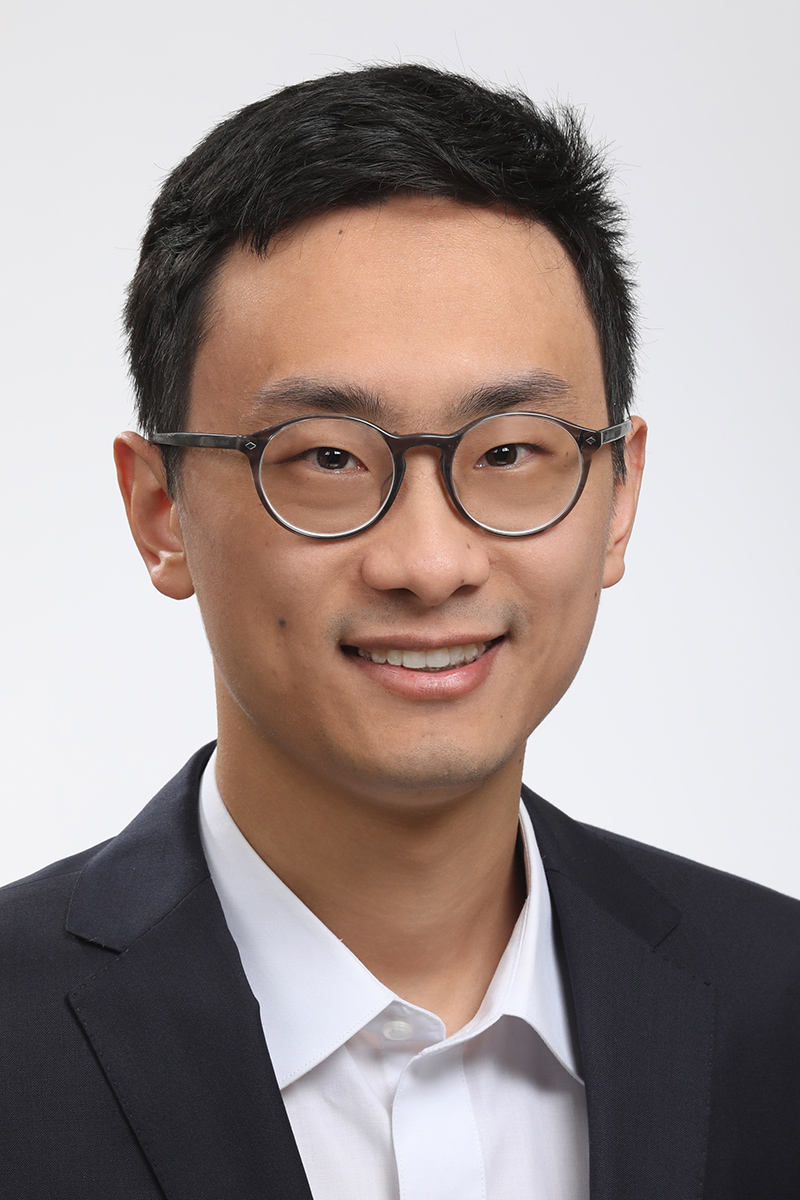
Dong-Hyu Kim is a Senior Lecturer in the Department of Management at the University of Glasgow. He holds a PhD in Strategy & Organisation from Yonsei University (South Korea) and has held visiting scholar positions at Hitotsubashi University, KAIST, LSE, Chinese Academy of Sciences, and TU Berlin. His research focuses on standards competition, digital technology policy (AI/IoT/Blockchain), innovation strategies, and East Asian economies. He serves as Associate Editor of Kybernetes and has contributed to over 20 peer-reviewed articles. Education Background: PhD in Strategy & Organisation, Yonsei University (2014) Master’s in Global Economy & Strategy (Highest Honours), Yonsei University (2011) Bachelor of Science in Electronics & Computer Engineering, Hanyang University (2008) Research Interests: Standards governance and platform competition AI/Blockchain policy frameworks Technological catch-up strategies in emerging economies Systems theory applications in innovation studies Key Publications Trends: Recent work explores AI-human interaction dynamics through Luhmann’s systems theory, China’s NEV innovation systems, and EU-US blockchain standardization geopolitics. Earlier research analyzed IoT patent networks, automotive sector competitiveness, and FTA standardization implications. Awards: Global PhD Fellowship (South Korea’s top scholarship, 2014-2016) IEC-IEEE-KATS Academic Challenge 1st Prize ($20,000, 2018) Academic Leadership: Supervised 4 PhD students on topics like platform ecosystems and EV innovation Received £60k+ in research grants including ESRC IAA funding Edited EURAS proceedings on standardization and open source Labs/Teams: Active contributor to Glasgow’s Strategy & Technology Management research cluster, collaborating internationally across Asia-Europe tech policy networks.
Tor Helge Aas is a Professor at the Department of Management and Innovation, School of Business and Law, University of Agder, and holds a part-time position as Professor II at Kristiania University College. He is the Director of the Executive MBA program at UiA and actively contributes to research and teaching in innovation management. His affiliations include the Research Centre for Studies of Innovation for Sustainable Transition (RIST) and the ISPIM Scientific Panel. His research interests focus on innovation management , particularly in digital servitization, service innovation, innovation processes, collaboration for innovation, and management control. He examines how organizations in manufacturing and service sectors transition to service-oriented business models through digital platforms and ecosystem collaboration. The recent publications highlight a strong trend in digital servitization , platform-based innovation , and human-technology interaction in Industry 5.0. His work spans business model innovation, legitimacy in smart services, and coopetition in R&D projects, with a consistent focus on organizational transformation and sustainable innovation. Scientific Awards and Recognitions: No explicit awards mentioned in the text. Advising and Grants: He has supervised Master’s and PhD students (implied through academic roles). Actively involved in Horizon 2020 projects: OpenInnoTrain (Work Package Manager) and REDI program. Research funded by EU frameworks, indicating competitive grant acquisition. Labs and Research Teams: Member of RIST – Research Centre for Studies of Innovation for Sustainable Transition . Active in ISPIM (International Society for Professional Innovation Management) Scientific Panel. Collaborates extensively with researchers like Anne-Laure Mention, Katja Maria Hydle, and Karl Joachim Breunig.
Huda Khan is a Senior Lecturer in Marketing at the Business School of the University of Aberdeen, where she also serves as Director of the MSc Marketing Management Program and Associate Director of the Africa-Asia Centre for Sustainability Research. She holds a PhD in Marketing from the University of South Australia and has previously worked as a marketing academic there, engaging in high-value research projects with global brands through the Ehrenberg-Bass Institute. University: University of Aberdeen School: Business School Academic Rank: Senior Lecturer Email: huda.khan@abdn.ac.uk Office: 719, MacRobert Building, UK Education: PhD in Marketing, University of South Australia, 2016 Graduate Certificate in Digital Learning, University of South Australia, 2020 Huda Khan’s research centers on international marketing, sustainability, digital transformation, and SME internationalization. Her work explores strategic agility, responsible innovation, and the impact of digitalization on business models and consumer behavior. She is particularly interested in emerging markets and the challenges faced by firms in volatile environments. Her recent publications (2023–2025) span top journals such as Journal of Business Research , Industrial Marketing Management , International Business Review , and European Journal of Marketing . The articles reflect a strong interdisciplinary focus on sustainability, digitalization, and international business, with recurring themes of strategic agility, value co-creation, and responsible innovation. She has also contributed to book chapters and edited special issues on sustainability and marketing disruption. Scientific Awards and Recognitions: Fellow of the Royal Society of Arts Endorser of Responsible Research in Business & Management (RRBM) Certified Practising Marketer (CPM), Australian Marketing Institute Affiliate Professional, Chartered Institute of Marketing (CIM) Member, BAM Peer Review College (2023–2026) Huda Khan has secured research funding from the Society for Advancement of Management Studies and the Royal Society of Edinburgh for projects on supply-chain resilience and women-led startups in Pakistan. She is actively supervising PhD students in Business Management, with a focus on international marketing, digital marketing, and sustainability. She serves on the editorial boards of several journals, including Industrial Marketing Management and Journal of Business Research , and is an Associate Editor for Rutgers Business Review . She is also an External Examiner at the University of Sussex and the University of Kent. Huda is actively involved in research centers and networks, particularly the Africa-Asia Centre for Sustainability Research, where she contributes to cross-regional sustainability initiatives. She has also led special issues on climate change, de-globalization, and sustainable partnerships, reflecting her leadership in shaping scholarly discourse on global business challenges.