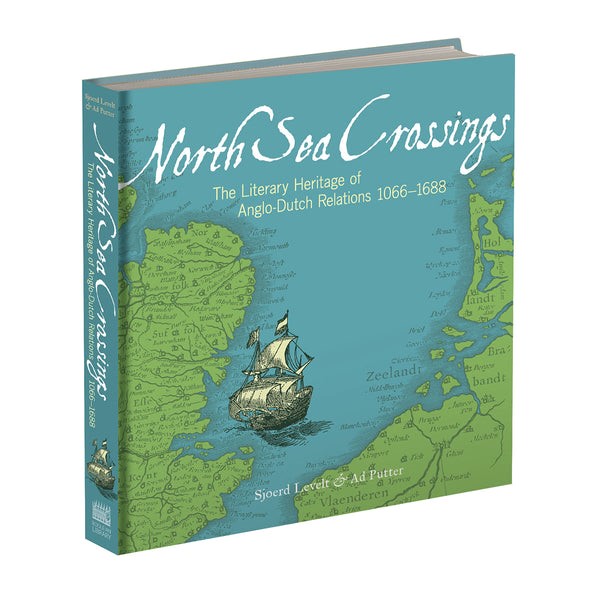
Dr. Moreed Arbabzadah is an Affiliated Lecturer at the Faculty of Classics and a Research Associate at the Faculty of History, both at the University of Cambridge. He is also a Fellow and Praelector at Pembroke College, Cambridge. BA, MPhil, and PhD in Classics from Jesus College, Cambridge Current research focuses on Greek and Latin linguistics (especially bilingualism), epigraphy, textual criticism, and Medieval Latin His recent scholarly work includes a Leverhulme Trust project exploring Anglo-Dutch literary contacts (2022–present) and an edition of Gerald of Wales's writings (2022–2025). Key publications span manuscript studies, authorship attribution, and epigraphic analysis. Scientific awards include a Leverhulme Early Career Fellowship . While not explicitly listing formal advisees, his academic roles include Director of Studies in Classics at Pembroke College.
Jorge Adolfo de Meneses Marques is an Adjunct Professor at the Escola Superior de Educação do Instituto Politécnico de Viseu (ESE-IPV) and has been the Institutional Coordinator for Heritage Valorisation of the Polytechnic Institute of Viseu since 2022. Since 2018 he holds the rank of Professor Adjunto (tenured) and earlier progressed through the categories of Assistant and Invited Assistant at the same institution. Parallel appointments have included teaching posts at the Portuguese Catholic University (1993-2010) and at the Rotary Senior University of Viseu (2023-present). Education PhD in Communication Sciences (ongoing), University of Beira Interior, Portugal Advanced Studies in Communication Sciences (2010–2011), University of Beira Interior Master’s in Archaeology (1991-1996), University of Porto, Faculty of Arts Bachelor’s in Archaeology and History (1985-1990), University of Coimbra, Faculty of Arts Research Focus Marques’ research integrates medieval and Roman archaeology , epigraphy , rock-cut funerary heritage , and the communication of cultural heritage . He has conducted extensive fieldwork and documentation on Roman altars, medieval rock-cut graves, 17th-century inscriptions, and Manueline charters, chiefly in the central Portuguese regions of Viseu, Lafões, and Beira Interior. His current doctoral work explores digital communication strategies for heritage dissemination. Publications & Scholarly Output With more than 150 scholarly outputs —including 25 authored or co-authored books, 30+ book chapters, and 60+ peer-reviewed articles—his work is characterised by an interdisciplinary approach combining archaeology, history, and communication. The most recent articles (2020-2024) emphasise entrepreneurship education in communication sciences , industrial-heritage marketing , and rock-cut heritage documentation . Supervision & Teaching Co-supervisor of two Master’s theses in Applied Communication at IPV/ESE (2023) Supervised numerous pedagogical training periods in History at the Portuguese Catholic University (2003-2007) Regular lecturer for the Senior University programme and vocational training courses on heritage and citizenship Heritage Coordination & Outreach Since 2022 he has coordinated the Institutional Heritage Valorisation Plan of the Polytechnic Institute of Viseu, fostering links between academic research, municipal authorities, and local communities. He has curated exhibitions, organised international conferences (e.g., JOEEL, Forums on Geopolitics), and delivered over 150 public lectures aimed at schools, municipalities, and cultural associations.
Cristina Carusi is an Associate Professor of Greek History at the University of Parma's Department of Humanities, Social Sciences and Cultural Enterprises (DUSIC). She previously served as Assistant Professor of Classics at the University of Texas at Austin (2013-2019) and was a member of the School of Historical Studies at the Institute for Advanced Study in Princeton (2018-2019). Dr. Carusi earned her PhD in 2006 from the Scuola Normale Superiore after completing her Literature degree at the University of Pisa in 1999. Her academic journey includes research positions at the Italian Archaeological School of Athens, the University of Parma, and the Center for Hellenic Studies in Washington, DC. Her research focuses on the economic history of classical and Hellenistic Greece, Greek epigraphy, institutions and law of Greek cities, history of salt in the ancient Mediterranean, history of the Greek insular world, documentary papyrology, and Greek historiography. Her work demonstrates particular expertise in Athenian building projects, public contracts, and the organization of the construction industry in Classical Athens. Analysis of her recent publications reveals a consistent scholarly trajectory examining the materiality of ancient documents, the organization of labor in public building projects, and the economic structures of Classical Athens. Her work shows increasing sophistication in analyzing epigraphic evidence alongside literary sources to reconstruct ancient economic practices. Dr. Carusi actively participates in the academic community through conference presentations, organizational roles in scholarly panels, and editorial work. She currently serves as the International Relations Delegate and International Mobility Commission Coordinator for the DUSIC Department at the University of Parma, as well as the Erasmus+ (SMT) coordinator for departmental students. Her teaching portfolio includes courses on Greek history, Greek epigraphy and institutions, and ancient writing cultures. At the University of Parma, she teaches Greek History at both undergraduate and master's levels, along with specialized courses on Greek epigraphy.
Dr. Svenja Bonmann is an Assistant Professor of Historical-Comparative Linguistics at the University of Cologne's Department of Linguistics. Her work focuses on reconstructing syntactic parameters in Proto-Indo-European and Proto-Indo-Iranian, with a particular interest in linguistic areas, typological comparisons, and undeciphered scripts. She holds a PhD from the University of Cologne (2023) and has held research positions at the Universities of Zurich and Duisburg-Essen. Her research explores Indo-European languages (especially Italic, Germanic, and Iranian), Yeniseian, and Austronesian language families, alongside projects on deciphering ancient scripts like the Kushan trilingual inscriptions. Education highlights include a Master's in Historical-Comparative Linguistics (University of Cologne, 2016) and a Bachelor's in History and German Studies (University of Duisburg-Essen, 2014). Her awards include the second-place Society for Indo-European Studies dissertation prize (2022) and top thesis awards at both bachelor's and master's levels. Research interests span theoretical questions about linguistic universals (e.g., 'linguistic periodic table'), substrate influences in Central Asian languages, and syntactic reconstruction methodologies. Recent projects include deciphering the Dašt-i Nāwur trilingual inscription and studying Yeniseian sound systems. She leads the 'Junges Kolleg' fellowship (2025) and collaborates on international projects like the Hellenistic Central Asia Research Network. Publications focus on Indo-European syntax, Yeniseian phonology, and Central Asian epigraphy. Key contributions include work on the ā-conjunctive in Italic languages, partial decipherment of the Kushan script, and proto-language sound system reconstructions. Her talks address topics like substrate effects in Sogdian and Bactrian, multilingualism in ancient Central Asia, and linguistic connections between the Xiongnu and Huns. Awards include the best master's thesis award (2016), best bachelor's thesis award (2014), and the 2022 dissertation prize. She actively participates in academic organizations like the Societas Linguistica Europaea and the Indogermanischen Gesellschaft.
Ricardo Augusto Caminos (1915–1992) was an Argentinian-American Egyptologist holding positions at Brown University as Assistant Professor (1952), Associate Professor (1957), and Wilbour Professor (1972–1979). He conducted seminal work in hieratic palaeography and epigraphy, specializing in ancient Egyptian texts and inscriptions. His academic affiliations included the Oriental Institute of Chicago, Oxford University, and the USSR Academy of Sciences as a Visiting Professor (1973–1974). Education: BA (1932), MA (1938) from University of Buenos Aires; PhD (1947) from Oriental Institute Chicago; DPhil (1952) from Oxford under Sir Alan Gardiner. His fieldwork spanned Gebel es-Silsila, Qasr Ibrim, Buhen, and Wadi el-Shatt el-Rigal, contributing to Nubian Rescue Campaign efforts. Retired in London, he bequeathed his house to the Egypt Exploration Society, now housing the Ricardo A. Caminos Memorial Library. Research focused on epigraphic methods and ancient Egyptian religious architecture, with notable publications analyzing temple structures, rock inscriptions, and literary fragments. His work integrated historical linguistics with archaeological context, establishing foundational studies in hieratic script analysis. Key excavations: Gebel es-Silsila (1955–1960, 1975–1982), Qasr Ibrim (1960–1965) Publications: Ancient Egyptian Epigraphy , New Kingdom Temples of Buhen , and Gebel es-Silsilah I
Domingo Beltran Corbalan is an Adjunct Professor (part-time) at the University of Murcia's Faculty of Arts and Humanities, within the Department of Prehistory, Archaeology, Ancient History, Medieval History and Historiographic Sciences and Techniques. He holds a PhD from the Universidad de Murcia (2014), supervised by Dr. Francisco Reyes Marsilla de Pascual, focusing on the archival history of the House of Vélez. His research group, 'Paleography and Literacy. Documentation and Archives,' explores topics such as noble archives, heraldic representation, and classical antiquity in noble contexts. His work spans 18th-century noble documentation practices, Spanish aristocratic families like the Vélez and Alba, and the intersection of material culture with historical memory. Notable contributions include studies on the centralized organization of noble archives (e.g., Villafranca, Vélez, and Medina Sidonia), the role of libraries in aristocratic intellectual life, and the preservation of inscriptions in historical foundations. His research bridges archival science, paleography, and the socio-political dynamics of noble families in early modern Spain. His publications reflect a focus on archival analysis, historical documentation, and the cultural practices of Spanish nobility. Key themes include clientelar service networks, heraldic symbolism, and the interplay between classical antiquity and aristocratic identity.
Dr. Kelsey Williams is an Associate Professor in English Studies at the University of Stirling, specializing in the history of the book, early modern Scottish culture, and antiquarianism. She holds degrees from Balliol College, Oxford (MSt and DPhil), and has held roles including British Academy Postdoctoral Fellow at the University of St Andrews before joining Stirling in 2016. Her research bridges historical scholarship with material culture, focusing on book history, Scottish Enlightenment studies, and the intersection of literature and antiquarianism. Education: MSt and DPhil from Balliol College, Oxford. Research interests span early modern book history, Scottish cultural history, Latin and Gaelic poetry, and the evolution of scholarly practices. Current projects include Bibliomania: Portrait of an Obsession (Oxford UP) and Thomas Frognall Dibdin's 1836 Scottish Tour Revisited (Roxburghe Club). She directs the Pathfoot Press, a letterpress initiative, and serves on the Scottish History Society's publications committee. Awards include the Katharine Briggs Award shortlist (2017) for The Antiquary: John Aubrey’s Historical Scholarship and a British Academy fellowship (2016–2019) supporting her work on Scotland’s early Enlightenment. Professional roles include Council Member of the Scottish History Society and Secretary of the Universities Committee for Scottish Literature (2017–2022). She is a Fellow of the Society of Antiquaries of Scotland and the Higher Education Academy.
Verity Platt is a Professor in the Department of Classics at Cornell University 's College of Arts and Sciences. She specializes in Greek and Roman art history , focusing on the interplay between literary and visual cultures in the Hellenistic and Roman periods. Her research spans ancient theories of images , media and intermediality , and the historiography of ancient art , particularly through the lens of Pliny the Elder. She has co-edited Wonder and Wakefulness: The Nature of Pliny the Elder (2024) and The Frame in Greek and Roman Art (2017). Research Focus : Epistemic models in Hellenistic epigram, Pliny’s Natural History , environmental humanities, and the concept of the fold in sculpture Academic Leadership : Director of Cornell’s Humanities Scholars Program , co-curator of the Cornell Cast Collection Interdisciplinary Work : Explores intersections between art history, material studies, and ecological thought Recent publications include analyses of Roman wall-painting, eco-critical approaches to classical art, and embodiments of objects in antiquity. She has curated exhibitions like Wonder and Wakefulness (2023) and Cast and Present (2015). Notable Awards : Stephen H. Weiss Presidential Fellow Award
Stefan Baumann is a tenure-track lecturer in Egyptology at the Archaeology Research Group of KU Leuven's Faculty of Arts and serves as a researcher (supervisor) at the Royal Museums of Art and History in Brussels. He is also a member of LECTIO – KU Leuven Institute for the Study of the Transmission of Texts, Ideas and Images in Antiquity, the Middle Ages and the Renaissance, and participates in the Faculty Council of Arts as an observer. Dr. Baumann earned his PhD in Egyptology summa cum laude from the University of Tübingen in 2018 with his dissertation "Schatzkammern: Ihre Dekroartion und Raumkonzeption in ägyptischen Tempeln der griechisch-römischen Zeit" (Studien zur spätägyptischen Religion 19), published by Harrassowitz. His academic background includes studies in Egyptology, Prehistory and Classics at the University of Tübingen. Prior to joining KU Leuven, he served as a lecturer in the Department of Egyptology at the University of Trier (2018-2024) and as a Research Assistant on the project "Der Tempel als Kanon der religiösen Literatur Ägyptens" at the Heidelberg Academy of Sciences / University of Tübingen (2010-2018). Baumann's research is exceptionally broad and interdisciplinary, spanning Greco-Roman temple inscriptions and architecture, ancient Egyptian coffins, New Kingdom tombs, late antique and modern travel accounts, connections between text and visual culture, and ancient Egyptian intellectual history. His work also encompasses Egyptian travelogues from late antiquity to 1800, semantics of color in hieroglyphic texts, space and design of Egyptian temples, ancient Egyptian 'survivals' in modern Egypt, history of mineralogy, Egyptian visual language, and pseudo-archaeology. As a trained archaeologist, philologist and epigrapher, he has participated in archaeological missions in Athribis and Saqqara (Egypt), and Pantelleria (Italy). His recent publications (2022-2025) reveal a strong focus on temple inscriptions, mineralogy in ancient Egypt, Egyptian travel accounts through Western eyes, and critical examinations of popular misconceptions about ancient Egypt. His work demonstrates consistent engagement with both textual and material evidence, often bridging philological analysis with archaeological context. The thematic threads connecting his publications include the study of cultural transmission, the relationship between text and image in Egyptian culture, and critical approaches to the reception of ancient Egypt in modern times. Baumann currently leads or co-leads several significant research projects including "The reconstruction of ancient Egyptian sites using early modern cartographic and visual sources" (2025-2029), "Space for the Leuven Integrated Archaeological Information System" (2025), and "Early Egyptian Travelogues from Late Antiquity to Napoleon" (2024-2026). His scholarly approach integrates traditional Egyptological methods with broader archaeological and historical perspectives, making significant contributions to our understanding of Egyptian temple architecture, material culture, and the reception of ancient Egypt through time.
Denis ROUSSET is a permanent faculty member at the École Pratique des Hautes Études (EPHE), Fourth Section of Historical and Philological Sciences, since 2002. He specializes in Ancient Greek History, Historical Geography, Greek Epigraphy, and Archaeology, with a focus on the Hellenistic period and Asia Minor. His career includes affiliations with the French School of Athens (1987-1991), École Normale Supérieure (ENS Ulm) as a Maître de Conférences (1991-2002), and visiting roles at Princeton’s Institute for Advanced Study (2007-2008). Rousset’s research explores intersections of sacred and public finance in Greek cities, epigraphic evidence for border disputes, and institutional frameworks like the Lycian Confederation. He has published extensively on Hellenistic treaties, including the Lycie en Cabalide monograph, and contributed to foundational epigraphic resources like GrEpiAbbr . His editorial responsibilities span major journals such as Bulletin de Correspondance Hellénique and Adalya , and he directs the “Epigraphica” collection at Les Belles Lettres. Recent publications analyze ephebic education (Amphipolis, 2017), sacred land co-ownership (Journal of Hellenic Studies, 2013), and Byzantine monastic foundations (Aghia Moni, 2012). His work emphasizes textual re-editions, prosopographic analysis, and the legal-economic dimensions of Greek inscriptions, including collaborative projects with Nicolas Laubry and others. Rousset’s awards include editorial board memberships for Revue des Études Grecques (since 2013) and Adalya (since 2010). He has no listed advisees, but contributes to academic community through bibliography curation and conference participation, such as the Euploia Colloquium (2013) on Lycian geography.
Dr. Ü. Saim CİRTİL is a Lecturer in the Department of Art History at Pamukkale University. His academic career focuses on Anatolian cultural heritage, with particular attention to medieval architecture and archaeological findings in regions like Denizli, Kayseri, and Konya. His work bridges historical documentation with material culture analysis. Education: Licence in Archaeology and Art History, Selcuk University (1988) Degree in Art History, Selcuk University (1991) Doctorate in Art History, Selcuk University (2001) Research Interests encompass Anatolian medieval architecture, funerary monuments, and cultural continuity during the transition from Seljuk to Ottoman periods. His studies also investigate numismatic evidence from excavations and traditional rural architecture in Denizli. Publications span tomb analysis (Herakles Sarcophagus, Emirzadi Mehmet Zengi), archaeological reports (Muğla-Yatağan Tepecik), and regional studies on mosques, water structures, and ethnographic works. His research combines fieldwork with historical contextualization.
Tomoyasu IIYAMA is a Professor at Waseda University's School of Humanities and Social Sciences, specializing in premodern Chinese history with a focus on the Jin-Yuan period and Mongol rule in China. His research examines how local elites in North China maintained status through dynastic transitions using stone inscriptions and genealogical records. Dr. IIYAMA earned his PhD in Literature from Waseda University, where he has been teaching since 2009. His field research across North China has documented hundreds of stone inscriptions that reveal patterns of social continuity and change during periods of foreign rule. His research interests center on how ethnic identity, kinship organization, and political power intersected in premodern China. He investigates how local elites in North China navigated the transitions between Jurchen (Jin Dynasty), Mongol (Yuan Dynasty), and native Chinese (Ming Dynasty) rule, often maintaining status through strategic adaptation while preserving cultural identity. His work demonstrates how stone inscriptions serve as crucial historical sources for understanding social history beyond official dynastic narratives. Dr. IIYAMA's publications reveal a consistent focus on how local societies in North China maintained continuity despite dramatic political changes. His work on genealogical steles shows how families preserved historical memory across dynastic boundaries, with particular attention to how ethnic identity was constructed and reconstructed over time. His recent research examines how late Qing families reclaimed Mongol ancestry as a strategy for social advancement. Waseda Research Award (High-Impact Publication), 2020 Dr. IIYAMA has supervised numerous graduate students through Waseda's Asian History Seminar and Oriental History Research Seminar programs. His research has been supported by multiple Japanese government grants, including several from the Japan Society for the Promotion of Science. He has led extensive field research projects documenting stone inscriptions across North China, building comprehensive databases of epigraphic evidence. He directs field research teams that survey and document historical stone inscriptions across North China, with particular focus on Shanxi, Shaanxi, and Hebei provinces. These teams combine historical expertise with on-site documentation to preserve and analyze these crucial historical sources before they are lost to environmental damage or development.
Dr. Antònia Juan Vicens, Senior Lecturer at the University of the Balearic Islands' Department of Historical Sciences and Theory of Art since 2011, specializes in Gothic architectural sculpture and medieval artisan guilds. With a PhD in History of Art (2012) and a Research Staff Training Scholarship (2006-2010), she leads the GRESMED research group and contributes to state-funded projects like 'La casa medieval. Materiales para su estudio en Mallorca' (HAR2016-77032-P). Education: PhD in History of Art (UIB, 2012, Extraordinary Award), BA in History of Art (UIB, Extraordinary Award) Research Focus: Analyzes medieval stonemason guilds, architectural sculpture typology, and cultural exchange between Sardinia, Sicily, and Mallorca during the 15th-16th centuries. Her work bridges art history with urban studies, emphasizing building conservation and societal roles of artisans. Recent Publications: 2024 study on medieval house sculpture enhancement, 2022 analysis of Germanías construction conflicts, and 2021-2020 works on Mallorcan Gothic portals, window typologies, and interdisciplinary urban studies. International Collaborations: Conducted research at Università di Cagliari (2013), Università di Padova (2013), and Centre d'Études Supérieures de Civilisation Médiévale (2015). Scientific Recognition: Extraordinary academic awards, ResearcherID E-9679-2019, and participation in national/international conferences.
Prakash Venkatesan serves as an Assistant Professor of Instruction in the Department of Asian Studies at the College of Liberal Arts, The University of Texas at Austin, teaching Tamil language courses since joining the Asian Studies program in Fall 2024. His educational background includes: PhD, University of Madras (2012) Dr. Venkatesan's research centers on classical Tamil literature (Sangam and Bhakti periods), Indian philosophy, and traditional grammar. He has significantly contributed to editing Tamil mathematical texts like muttukkaṇakku (pearl valuation in Gulf of Mannar) and kaṇakkatikāra rettiṉa curukkam during the 'Social history of mathematical practices' project at the French Institute of Pondicherry (2019-2023), demonstrating an interdisciplinary approach bridging literary studies with history of science. His recent publication in the Indian Journal of History of Science (2024) on the Ukãy plant exemplifies his methodology, integrating historical botany with epigraphic and literary evidence from stone inscriptions and copper plates. This reflects his consistent research trajectory examining intersections between natural history, material culture, and classical Tamil textual traditions. He has participated in multiple collaborative research initiatives: Post-doctoral research on puṟanāṉūṟu 's historical trajectory at French Institute of Pondicherry (2012-2017) Study of hunger and calamities in Tamil literature with Professor Srilata Raman (University of Toronto, 2017-2019) Digitization of Chettiyar mercantile accounts from Karaikkudi, Tamil Nadu (2021-2023) Current translation project of the Sangam anthology Kuṟuntokai with Professor Martha Selby (Harvard University)
Antoni Ciężkowski is a Senior Lecturer at the Faculty of Conservation and Restoration of Works of Art of the Academy of Fine Arts in Warsaw, where he has served as an academic teacher since 1996. He works within the Department of Conservation and Restoration of Sculpture and Architecture, specifically in the Studio of Sculptural Techniques, Sculpture Technology, Copying and Reconstruction. His educational background includes a Master of Arts in the field of conservation and restoration of stone sculpture and architectural elements, with a diploma obtained in 1993 from the Faculty of Conservation and Restoration of Works of Art at the Academy of Fine Arts in Warsaw. He also earned a distinction for his annex to the diploma in drawing from the studio of Professor Marian Nowiński. Specializing in the conservation and restoration of stone sculpture and architectural elements, Ciężkowski's expertise spans multiple historical periods and materials including sandstone, limestone, granite, marble, stucco, and gypsum. His research interests focus on traditional sculptural techniques, historical reconstruction methods, and the technical aspects of stone processing for conservation purposes. His work bridges practical craftsmanship with academic scholarship in art conservation. Ciężkowski has supervised numerous student field practices and provided technical consultations for diploma students at the Academy. His teaching encompasses all levels of study, from first-year fundamentals of stone processing to advanced reconstruction techniques for fifth-year students working on complex architectural elements. His professional work extends to significant conservation projects across Poland's most important cultural heritage sites, including the Royal Castle in Warsaw, Wilanów Palace, Jasna Góra Monastery in Częstochowa, and the Royal Baths Park. He has led or participated in over 50 major conservation projects between 1991 and 2019, working with diverse materials and historical periods from medieval to socialist realism.