- Mesoamerican Studies
- Archaeology
- Cultural Anthropology
- +۱۳ مورد دیگر
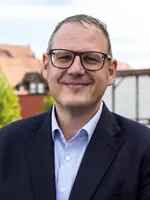
Dr. Daniel Grana-Behrens is a Researcher at the Institute of Archaeology and Cultural Anthropology at the University of Bonn, where he is affiliated with the Department of Ancient American Studies & Ethnology. He serves as Coordinator of the BASA Museum (Bonn Americas Collection) and as Project Coordinator for the BMBF-funded 'The Collections – One Cosmos' initiative, a collaborative project exploring object-based knowledge arrangements in the digital age. He is also involved in interdisciplinary digital humanities projects such as ViCo and SciCoMove, focusing on scientific collections and provincial museums from 1800–1950. His research spans Mesoamerican archaeology , cultural anthropology , and digital humanities , with a particular focus on writing systems, cultural memory, death and ancestor cults, and the anthropology of nature. He has conducted extensive epigraphic work on Mayan inscriptions, especially from Northwest Yucatan, and engages in comparative studies between Mesoamerica and ancient China. His recent scholarship explores digital provenance research, museum collections in colonial contexts, and the historiography of the Spanish conquest of Mexico. His recent publications reflect a strong trend toward interdisciplinary scholarship, combining archaeology, epigraphy, museum studies, and digital culture. Themes include provenance and restitution , digital knowledge networks inspired by Alexander von Humboldt, Maya political organization , and comparative memory systems . His work frequently appears in journals such as Ancient Mesoamerica , Anthropos , and Estudios de Cultura Maya . Dr. Grana-Behrens has not been awarded any scientific prizes explicitly mentioned in the text. He has supervised no students listed in the provided materials. His research is supported through institutional and BMBF-funded projects, including 'SciCoMove' and 'KOSMOS'. He contributes to academic discourse through editorial work and book editing, particularly in the series Estudios Indiana . He is actively involved with the BASA Museum and contributes to the Bonn Center of Digital Humanities, integrating material culture, digital tools, and ethnological research in collaborative environments.