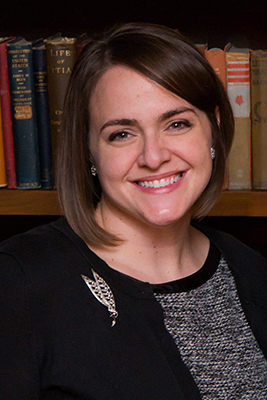
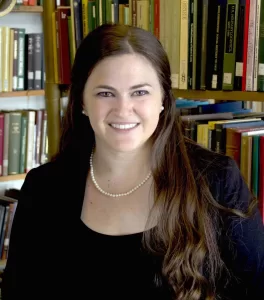
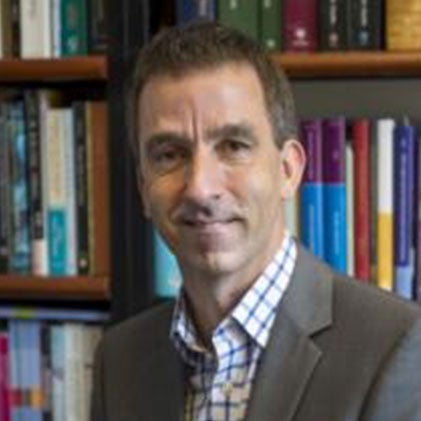
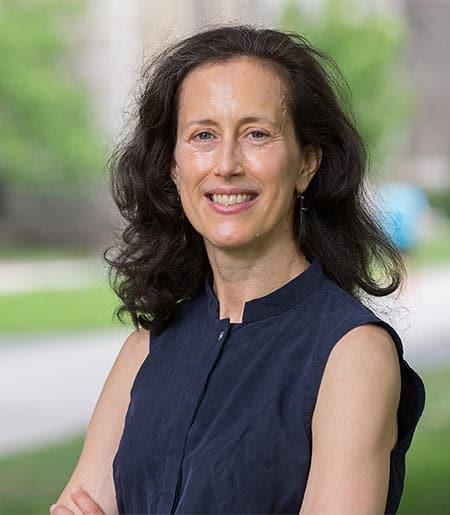
Susan Erickson is a Professor of Art History at the University of Michigan-Dearborn, affiliated with the College of Arts, Sciences, and Letters and the Department of Language, Culture, and the Arts. Her teaching spans Art History/Applied Art and Human Centered Engineering Design, with office hours held Tuesdays and Thursdays from 2:00pm to 3:00pm or by appointment. Her academic foundation includes: Ph.D. from the University of Minnesota M.A. from the University of Minnesota Dr. Erickson's research focuses on Ancient China through the lens of Chinese Art History, specializing in Han Dynasty material culture. Her work examines jade pendants, tomb architecture, funerary practices, and ritual monuments like Que pillars, bridging archaeological evidence with cultural interpretation. This scholarship explores how material objects mediated social, political, and spiritual dimensions in early Chinese society. Her publication trends from 2003-2018 reveal deep specialization in Han Dynasty archaeology, with consistent contributions to journals (*Archives of Asian Art*, *Arts Asiatiques*) and major exhibition catalogues. Key thematic patterns include systematic analysis of jade artifacts, spatial organization of tombs, death rituals, and sacred site monuments across Henan and Sichuan provinces. Her work demonstrates enduring collaboration with institutions like Cambridge University Press and museum curators.
Dr. Sonya Lee is a Professor of Art History, East Asian Languages and Cultures, and Religion at the University of Southern California. She currently serves as Department Chair of East Asian Languages and Cultures, demonstrating her academic leadership. Her research focuses on religious art and architecture in China and Central Asia, with particular expertise in Buddhist visual culture. PhD in Art History from University of Chicago (2004) Her scholarship explores the material culture of the ancient Silk Road, examining intersections between art, ecology, and heritage conservation. She has authored major publications on Buddhist cave temples and museum curation practices, including Temples in the Cliffside: Buddhist Art in Sichuan (2021) and Surviving Nirvana: Death of the Buddha in Chinese Visual Culture (2010). Recent work includes a Scalar exhibition titled The Silk Roads: Connecting Communities, Markets, and Minds since Antiquity (2021-2022), showcasing her commitment to digital humanities projects. Her research spans topics like inscribed scriptures in cave temples, artistic appropriation in Dunhuang, and the display of Kucha murals in Western museums.
Kristel Zilmer is Professor of Runology and Iconography at the Department of Archaeology, Museum of Cultural History, University of Oslo since May 2020. Previously serving as Associate Professor at the same institution (2019-2020), she has held academic positions at Western Norway University of Applied Sciences (2013-2019) and University of Tartu, Estonia (1997-2008). Her career spans over 25 years of research in Scandinavian textual cultures with focus on runic inscriptions across historical periods. Her research interests encompass Runology , Epigraphy , and Textual Cultures from the Iron Age through Middle Ages, with specialized focus on writing practices, visuality, materiality, and identity construction in Norse societies. She investigates script-bearing artifacts as cultural interfaces, examining how runes functioned within social contexts and how Old Norse literature is received in modern times. Her methodological approach integrates archaeological, philological, and media-theoretical perspectives. Analysis of her recent publications reveals consistent focus on runic artifacts from Norwegian contexts (Bergen, Svingerud, Hole), demonstrating expertise in multimodal analysis of inscribed objects. Her work bridges archaeological findings with linguistic interpretation, particularly examining how runes operated within medieval urban environments and sacred spaces. The 2025 Antiquity paper represents cutting-edge integration of radiocarbon dating with epigraphic analysis. Series Editor for Bibliotheca Nordica (Novus Forlag) Norway representative on International Advisory Board of International Saga Conference Establishing member and former leader of 'Språk og Samfunn' research group Zilmer actively supervises graduate students and leads major research initiatives including the Ui3D project (Understanding and Immersion in 3D) and participation in the Research Network of Urban Literacy. Her grant portfolio includes projects on medieval Bergen literacy practices and Christian identity formation in Northern Europe. She directs the Centre for Viking-Age Studies (ViS) research group and serves on multiple editorial and advisory boards including Kjeldeskriftkommisjonen (National Archives). Her laboratory work centers on the Centre for Viking-Age Studies where she applies 3D modeling techniques to runic artifacts, developing new methodologies for analyzing inscribed objects through digital humanities approaches. Current collaborations with international teams focus on cross-cultural comparisons of medieval writing practices across Nordic regions.
Jill Hamilton Clements is an Associate Professor of English at the University of Alabama at Birmingham (UAB), within the College of Arts and Sciences. Her research focuses on Old and Middle English literature, Old Norse-Icelandic texts, and medieval death practices. She explores themes like material culture, memory studies, and medieval law, with a current book project on the interplay of dead bodies and texts in early English commemorative genres. Her teaching spans Old English, medieval epic, and language history. She co-directs the Ancient, Medieval, and Renaissance Studies minor and co-organizes 'Dinner+Movie' events linking pre-modern texts to film. Education: B.A. (Phi Beta Kappa) from Truman State University, M.A. from Western Michigan University’s Medieval Institute, and Ph.D. from the University of Illinois. Her work appears in Review of English Studies , Gesta , and Anglo-Saxon England . Research interests include death and burial archaeology, medieval textual analysis, and interdisciplinary approaches to manuscripts and artifacts. She actively presents at conferences like the International Congress on Medieval Studies (Kalamazoo) and publishes on topics like hell-mouth imagery, legal texts, and gender in medieval literature.
Dominique Soutif serves as a Senior Lecturer at the French School of the Far East (École française d'Extrême-Orient) and heads the Siem Reap EFEO Angkor center located at Boeng Don Pa Centre, Slakram, Siem Reap, Cambodia. The EFEO is a prestigious French research institution dedicated to the study of Asian civilizations with particular emphasis on Southeast Asia. Soutif's research expertise centers on Khmer epigraphy, Angkorian archaeology, and Southeast Asian history. Their scholarly work demonstrates deep knowledge of Khmer inscriptions, temple architecture, and administrative systems from the Angkorian period (9th-15th centuries CE). Soutif has made significant contributions to understanding religious symbolism, boundary markers, and material culture of the Khmer Empire through meticulous analysis of inscriptions and artifacts. Analysis of Soutif's publication record reveals a consistent research trajectory focused on deciphering Khmer texts and material culture. Their work frequently examines temple hermitages, boundary stones, religious artifacts, and administrative documents from Angkorian Cambodia. The research shows particular strength in interpreting epigraphic evidence to reconstruct historical administrative practices, religious beliefs, and social organization during the Khmer Empire period. As Head of the Siem Reap EFEO Angkor center, Soutif coordinates archaeological research at one of Southeast Asia's most significant heritage sites, working closely with international organizations including UNESCO through the International Coordinating Committee for the Safeguarding and Development of the Historic Site of Angkor. This leadership role involves overseeing excavation campaigns, conservation projects, and scholarly research related to the Angkor complex.
Zoltán Varady is a Professor in the Department of Medieval Studies at the Faculty of Humanities and Social Sciences of Gáspár Károli Reformed University. He previously served as a college professor at PTE Gyula Illyés Faculty in Szekszárd and as a postdoctoral fellow at ELTE BTK in Budapest. His academic career spans several decades with significant contributions to Hungarian medieval history and epigraphy. Varady earned his MA in History and Linguistics from ELTE BTK in 1982, followed by a university doctor (dr. univ.) qualification in 1994, and completed his doctoral studies at the Hungarian Academy of Sciences in 1996 with a dissertation on epigraphic examination of medieval stone inscriptions in Transdanubia. His research focuses on epigraphic examination of medieval Hungarian inscriptions, Latin-language sources from medieval and early modern Hungary, medieval Hungarian history, and auxiliary historical sciences. He has extensive knowledge of basic archaeology and archival practices. His publications and research output demonstrates a consistent focus on medieval epigraphy, particularly stone inscriptions in the Transdanubian region. His work spans from Romanesque and early Gothic inscriptions through Renaissance capitalis typefaces to inscriptions from the era of King Matthias. His research methodology combines careful epigraphic analysis with historical contextualization, revealing insights about medieval society, royal patronage, and linguistic evolution. His recent publications continue to advance the field of Hungarian medieval epigraphy with sophisticated dating methods and interpretation techniques. Rector's Commendation from University of Pécs (2005) Certificate of Recognition from Board of Trustees of the János Bolyai Research Scholarship of the Hungarian Academy of Sciences (2006) Honorary University Professor title from Pécsi Tudományegyetem Szenátusa (2013) Varady has also served in significant administrative roles including Deputy Director General of General and Educational Affairs at PTE IGYK (1998-2003, 2006-2007), Head of Department at University of PTE IGYK (1997-2002, 2007-2009), and Chairman of the Scientific and R&D Committee of the University of Pécs (2005-2006). He is a member of the Hungarian Academy of Sciences' Public Body and serves as Vice President of the South-Transdanubian Group of the Hungarian Historical Society. His language skills include Latin (superlative), Esperanto (superlative), and English (intermediate). He has organized numerous conferences, particularly the Tolna County Archival Days series, and has participated in important research projects including the Central European Medieval Epigraphy Team since 2008.
Francesca DELL'ACQUA is an Associate Professor of History of Medieval and Byzantine Art at the University of Salerno, Department of Cultural Heritage Sciences (DISPAC). Her academic work bridges the fields of art history, religious studies, and medieval history, with a particular focus on the cultural and theological exchanges between Byzantium and the Latin West during the early medieval period. Based at the Fisciano Campus, she maintains an active research profile with numerous publications and international collaborations. Professor DELL'ACQUA's research interests primarily center on the iconography and theological significance of the Virgin Mary in early medieval art and literature, Byzantine Iconoclasm and its reception in Italy, cultural transmission between East and West, and early medieval monasticism. Her work demonstrates how religious concepts, particularly concerning Marian devotion, traveled across linguistic and political boundaries despite the growing divide between Greek and Latin cultures. She has made significant contributions to understanding how theological ideas were translated into visual forms during periods of religious controversy. Her publications reveal a consistent focus on the eighth and ninth centuries, examining how theological debates about sacred images influenced artistic production across Europe. A recurring theme is the transmission of Byzantine theological concepts into Western European contexts, particularly through monastic networks. Her research shows how early medieval artists and theologians creatively adapted Eastern traditions to local contexts, resulting in distinctive hybrid forms of religious expression that reflected both theological orthodoxy and regional identity. Professor DELL'ACQUA has led significant research projects including 'Iconophilia' (2015-2017), funded by the European Commission, which investigated the echoes of the Byzantine debate on sacred images in Rome and central-southern Italy. She is also principal investigator of 'At the Crossroads of Empires: The Longobard Church of S. Ambrogio, Montecorvino Rovella,' examining an early medieval church discovered in the 1970s that shows clear links to the material culture of secular courts and monasteries in southern Langobardia during the late eighth and ninth centuries. Her collaborative archaeological work at this site, funded by the British Academy, Gerda Henkel Stiftung, and universities of Salerno and Birmingham, has yielded important insights into Lombard-Byzantine cultural interactions. Her research methodology combines close analysis of visual materials with textual scholarship, revealing how theological concepts shaped artistic production and religious practice. She has demonstrated particular expertise in analyzing how early medieval communities used architectural space, liturgical practice, and material objects to express complex theological ideas related to the Incarnation, the nature of Christ, and the role of Mary in salvation history. Her work on pectoral crosses, ivory carvings, mural paintings, and liturgical textiles has illuminated the multisensory nature of early medieval religious experience.
Liana J. Brent is an Assistant Professor of Classical and Medieval Studies at Bates College, specializing in Roman material culture and social history. She holds a Ph.D. in Classics (Classical Archaeology) from Cornell University (2019), and B.A./M.A. degrees from McMaster University (2010, 2012). Her research focuses on Roman burial practices, Latin inscriptions, and archaeological fieldwork in southeast Italy. Brent has held prestigious fellowships including the Rome Prize at the American Academy in Rome and a Mellon Postdoctoral Fellowship at the University of Pennsylvania. Education: Ph.D., Cornell University; M.A. & B.A., McMaster University (Canada) Research: Excavates a Roman cemetery in Italy; monograph in progress on Roman burial rituals Teaching: Courses on Roman history, archaeology, Latin language, and slavery Brent’s work bridges archaeology and museum studies, analyzing how ancient practices connect living communities with ancestors. Her publications explore topics like libation rituals, labor identity, and the materiality of Roman funerary artifacts. She has conducted fieldwork across Italy and incorporates hiking (including the Via Appia Antica) into her research methodology. Awards include the Rome Prize (2017–2019) and Mellon Fellowship (2019–2020). She advises senior theses and leads archaeological teams, contributing to both academic discourse and public understanding of classical antiquity.
Professor Thomas O Clancy is a leading academic in Celtic and Gaelic studies at the University of Glasgow, specializing in medieval Celtic literature, Scottish history, and onomastics. He holds the rank of Professor in the Department of Celtic & Gaelic. His research focuses on early medieval Scottish literature, saints’ cults, and place-name studies, with notable contributions to understanding Gaelic language and cultural history in Scotland. Key research interests include: Medieval Celtic literature, particularly early Irish and Welsh texts Early medieval Scottish literature and the role of Gaelic Religious history, including saints’ cults and hagiography Place-name studies, particularly in Galloway and the Scottish Highlands Notable projects include the Place-Names of Clackmannanshire and investigations into saints’ commemorations in Scottish place-names. He has supervised over 20 doctoral students, many focusing on medieval Celtic topics. His articles span literary analysis, historical linguistics, and archaeological interpretation, emphasizing interdisciplinary approaches to cultural and linguistic change.
Dr. Orla Murphy is a Lecturer and Head of the Department of Digital Humanities at the School of English and Digital Humanities, University College Cork (UCC), Ireland. Her roles include National Coordinator of DARIAH-IE, Irish National Representative on CoST-EU and ESFRI committees, and leadership in UCC's teaching and digital education committees. She holds a PhD in English from UCC (2007), an MPhil in English (1998), and a Diploma in Medieval Studies (1994). Her research focuses on digital humanities, textual transmission from orality to cyberculture, and cultural heritage documentation through technologies like 3D scanning. She explores how emerging digital tools transform scholarship and pedagogy, co-designing innovative degrees promoting international digitization standards. Recent projects include the Irish Research Council-funded 'Embedding Digital Literacies in Irish HEIs' and grants totaling over €160k. Awards include the Fulbright TechImpact Award and National Teaching Expert Award. Her work spans books, peer-reviewed journals, conference papers, and curated exhibitions like *Selective Memory: Artists in the Archive* (2014).
Professor Halil Ibrahim Yakar is a distinguished scholar at Gaziantep University's Faculty of Arts and Sciences, Department of Turkish Language and Literature, where he has served as Professor since 2017. His academic journey at the university progressed from Associate Professor (2012) to Doctor Lecturer (2014) and ultimately to his current position. His expertise centers on Classical Turkish Literature, with special emphasis on Ottoman literary traditions and historical Turkish texts. Professor Yakar's educational background includes a Doctorate from Istanbul University's Institute of Social Sciences (1996-2002), a Master's degree from Marmara University's Institute of Turkish Language and Literature Department (1993-1996), and undergraduate studies at Marmara University's Faculty of Arts and Sciences (1989-1993). His academic work has been enriched by international experience as a Visiting Professor at Aleppo University's Turkish Language Teaching Center (2008-2009) and Jagiellonian University's Turkology Institute in Poland (2005-2006). His research primarily focuses on Classical Turkish Literature, particularly examining 17th-19th century nazım forms, Ottoman literary traditions, and textual analysis of historical manuscripts. Professor Yakar has made significant contributions to Turkish lexicography, especially regarding manzum (verse) dictionaries, and has conducted extensive research on Antep's role during the National Struggle period. His scholarly approach combines philological precision with historical context, offering rich insights into Turkey's literary heritage. Professor Yakar's extensive publication record demonstrates consistent scholarly productivity, with particular focus on historical documentation of the National Struggle period, especially regarding Antep's defense. His work on Turkish-Arabic lexicography and poetic forms represents significant contributions to the field of Classical Turkish literature studies. Over 100 book publications including encyclopedia entries for the Republic of Turkey Ministry of Culture and Tourism Extensive editorial work for Gazikültür Publications Multiple research projects funded by Gaziantep University, Ministry of Development, and TÜBİTAK As an educator, Professor Yakar has supervised numerous graduate students through doctoral and master's theses on diverse aspects of Turkish literature. His teaching portfolio includes advanced courses on Classical Ottoman Turkish texts, textual commentary, and specialized literature from the 17th-19th centuries. He has also held significant administrative roles including Department Head (2011-2017) and Chair of the Academic Field (2006-present), demonstrating leadership within his academic community.
Professor Halil İbrahim Yakar is a distinguished academic at Gaziantep University's Faculty of Arts and Sciences, Department of Turkish Language and Literature. With a career spanning over two decades, he has established himself as a leading scholar in Classical Turkish Literature and Ottoman studies. His academic journey began with his undergraduate studies at Marmara University, continued with a master's degree from the same institution, and culminated in a doctorate from Istanbul University. Doctorate: 1996-2002, Istanbul University, Institute of Social Sciences Master's: 1993-1996, Marmara University, Institute of Turkish Language and Literature Department Bachelor's: 1989-1993, Marmara University, Faculty of Arts and Sciences, Department of Turkish Language and Literature Professor Yakar's research primarily focuses on Classical Turkish Literature, with special emphasis on Ottoman-era literary works, Divan poetry, and textual commentary. His scholarly work demonstrates a deep engagement with 17th-19th century Turkish literature, particularly examining Antep's literary heritage within the broader Ottoman context. He has made significant contributions to the study of Sufi poetry, manzum dictionaries, and historical inscriptions in Gaziantep. His extensive publication record reveals a consistent exploration of regional literary traditions, with particular attention to Antep's contribution to Ottoman literature. Professor Yakar has authored over 100 book chapters in the Dictionary of Turkish Literature Works, focusing on various poetic collections and literary figures. His recent work shows a growing interest in cultural heritage, historical documentation of the National Struggle, and Gaziantep's epigraphic history. Professor Yakar has supervised numerous graduate students, guiding doctoral and master's theses on diverse aspects of Turkish literary history. His academic leadership extends to directing research projects related to Gaziantep's historical and cultural heritage, including documentation of inscriptions and preservation of local literary traditions. He has also been actively involved in cultural projects, serving as scenario writer and director for documentaries about Gaziantep's history and cultural heritage, including works on the Antep Resistance and historical sites in Aleppo. His interdisciplinary approach bridges academic scholarship with public history and cultural preservation.
Matthias Henze is the Isla Carroll and Percy E. Turner Professor of Biblical Studies and Founding Director of Rice University’s Program in Jewish Studies, where he has taught since 1997. His work bridges Hebrew Bible scholarship, early Jewish literature, and Syriac studies, focusing on texts outside the canonical Bible such as the Apocrypha, Pseudepigrapha, and Dead Sea Scrolls. Ph.D., Harvard University (1997) M.A., Harvard University (1996) Master of Divinity, University of Heidelberg (1992) Research Interests Dr. Henze’s research centers on the literary history of early Judaism, apocalyptic literature, biblical ethics, textual transmission, and the history of biblical interpretation. He emphasizes the interconnections between canonical and non-canonical texts from the Second Temple period (4th century BCE–2nd century CE). Key Academic Contributions He has authored and edited nine major works, including a critical commentary on 2 Baruch and a three-volume analysis of the textual history of the Deuterocanonical scriptures. His publications reflect a commitment to making ancient texts accessible to modern audiences while maintaining scholarly rigor. Awards & Recognition George R. Brown Award for Superior Teaching (2009, 2010, 2015) Phi Beta Kappa Teaching Prize (2003) Graduate Student Association Teaching and Mentoring Award (2015) John Freeman Faculty Teaching and Mentoring Award (2022) Faculty Award for Excellence in Research, Teaching, and Service (2019) Leadership & Innovation In 2009, he founded Rice’s Program in Jewish Studies, fostering interdisciplinary research on Jewish cultures from antiquity to the present. He co-founded the Joan and Stanford Alexander South Texas Jewish Archives in 2017 to preserve regional Jewish heritage and has led initiatives on antisemitism studies.
TJ Hinrichs serves as Associate Professor in the Department of History at Cornell University's College of Arts and Sciences, with cross-affiliations in the Medieval Studies Program, Religious Studies Program, and Science and Technology Studies. Her research centers on Song Dynasty China (960-1279 CE), examining medical, political, and cultural transformations through projects like her forthcoming monograph Shamans, Witchcraft, and Quarantine: The Medical Transformation of Governance and Southern Customs in Mid-Imperial China (Harvard East Asia Series). Hinrichs investigates connections between intimate human experiences (illness, personal transformation), communal practices (medical training, religious rites), and macro-historical shifts (civil service examinations, commercialization, urbanization). Her teaching spans China's classical to modern periods through courses including Medicine and Healing in China , Daoist Traditions , and East Asian Martial Arts , often comparing Chinese and Japanese contexts. Analysis of her publications reveals consistent focus on medicine's role in Song governance through material culture (tomb murals), textual production (stone inscriptions), and epidemic responses. Her work bridges political authority, medical knowledge systems, and social reform, demonstrating how healthcare became instrumental in state-building during China's medieval period. Scientific Awards: No awards, fellowships, or medals were mentioned in the source text. Advising and Grants: The provided materials contain no information about graduate students advised, research grants, or sponsored projects. Labs and Teams: Hinrichs co-organizes the Cornell Classical Chinese Colloquium (CCCC) with Professor Suyoung Son, a weekly reading group analyzing classical Chinese texts from earliest times to the 20th century. The colloquium welcomes participants of all experience levels for collaborative translation and historical discussion, meeting Fridays 3:30-5:30 PM with texts distributed onsite.
Romi Hida is a Professor at Waseda University's Faculty of Letters, Arts and Sciences, School of Humanities and Social Sciences. She also serves as Director of Waseda University Aizu Museum since 2019 and as a Research Fellow at China Academy of Art's China Institute for Visual Studies since 2021. With a PhD in Literature from Waseda University, Professor Hida has established herself as a leading scholar in East Asian art history with particular focus on Buddhist art. Professor Hida earned her graduate degrees from Waseda University, completing her Graduate School studies in the Division of Letters from 1978 to 1987. Her academic journey includes positions at numerous prestigious institutions including Seisen University, Tohoku University of Art and Design, Rikkyo University, and Nihon Bunka University before her long-standing appointment at Waseda University. Professor Hida's research primarily focuses on Art History and Buddhist Art , with special emphasis on Chinese Buddhist sculpture, particularly from the Sui-Tang period and the Sichuan region. Her work examines the transmission of Buddhist art from India through Central Asia to China and Japan, analyzing iconography, stylistic developments, and the relationship between religious texts and visual representations. She has conducted extensive field research on cliff sculptures in Sichuan province, employing advanced 3D measurement techniques to document and analyze these historical artifacts. Her scholarship bridges art history, religious studies, and archaeology, with particular interest in how political power and religious institutions interacted in the creation and veneration of Buddhist images. Professor Hida's extensive publication record demonstrates her expertise in East Asian Buddhist art history, with particular focus on Chinese sculpture from the Sui-Tang period. Her research reveals consistent patterns in the transmission of Buddhist iconography from India through Central Asia to China, with special attention to regional variations in Sichuan province. She has made significant contributions to understanding the relationship between textual sources like Daoxuan's "Collection of the Three Treasures of China" and actual sculptural representations. Her work often examines how political authority intersected with religious practice in the commissioning and veneration of Buddhist images, particularly through analysis of inscriptions and contextual evidence from cliff sculpture sites. Guohua Award (2012.10) for "Research on Buddhist Art in the Early Tang Dynasty" Professor Hida has supervised numerous graduate students at Waseda University and has collaborated extensively with Chinese institutions on joint research projects. She has received multiple competitive research grants from the Japan Society for the Promotion of Science, including projects on "Construction and Implementation of a Deep Learning System for Estimating the Production Date and Region of Buddhist Statues" and "Stylistic analysis of Buddhist sculptures by using Artificial Intelligence and 3D measurement data." Her international collaborations include joint fieldwork with Sichuan University and Chengdu City Research Institute of Archaeology on cliff sculptures in western Sichuan province. As Director of Waseda University Aizu Museum, Professor Hida oversees significant collections related to Japanese art history. Her research has also involved establishing digital archives of Chinese cliff sculptures, creating valuable preservation records of these vulnerable cultural heritage sites. She has been instrumental in developing methodologies for non-contact 3D documentation of Buddhist sculptures, contributing to both scholarly research and conservation efforts.