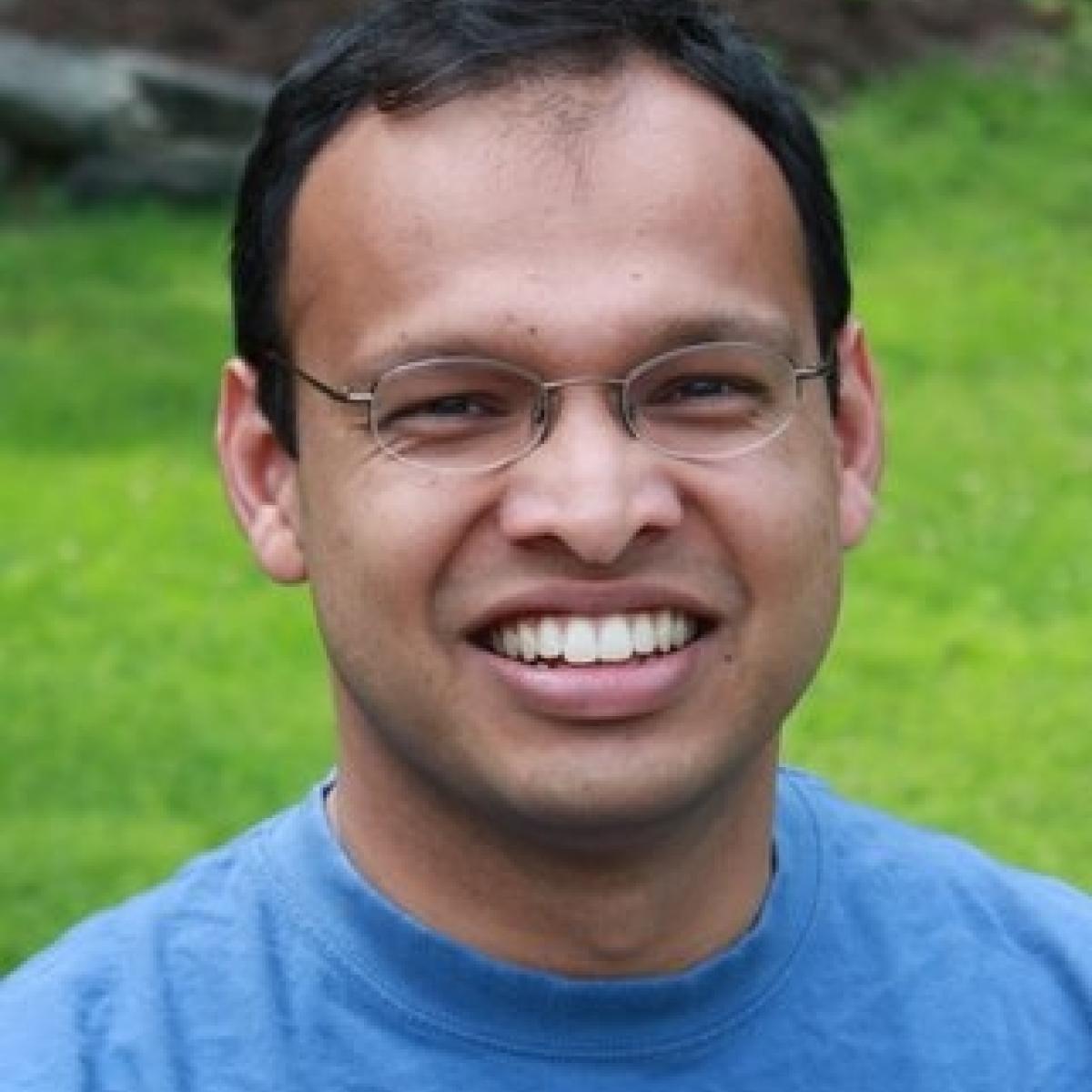
Nikhil Bansal is a Professor in Theoretical Computer Science at the University of Michigan, Ann Arbor. He earned his PhD from Carnegie Mellon University and previously worked at IBM Research, TU Eindhoven, and CWI Amsterdam. His research focuses on algorithm design, discrepancy theory, and combinatorial optimization. Education: PhD, Carnegie Mellon University Bansal's work bridges classical and quantum computing, with recent publications exploring k -Forrelation, vector balancing, and stochastic scheduling. His algorithmic approaches often combine geometric insights and probabilistic methods. Scientific Awards: Patrick C. Fischer Professor of Theoretical Computer Science NSF Career Award (2023) He has advised numerous PhD and postdoctoral researchers, including Marek Elias, Shashwat Garg, and Makrand Sinha. Bansal actively contributes to program committees (ICALP 2021, STOC 2020, FOCS 2018) and organizes workshops on discrepancy theory and optimization.
Effie Apostolou serves as Associate Professor of Molecular Biology in Medicine at Weill Cornell Medicine's Department of Medicine, Division of Hematology/Oncology and Cancer Center. She leads the Chromatin Organization & Cell Fate Decisions laboratory within the vibrant Tri-Institutional research community (Weill Cornell, Rockefeller University, Memorial Sloan Kettering). Her research focuses on the critical interplay between transcription factors, 3D chromatin architecture, and transcriptional regulation during cell fate decisions. Key areas include somatic cell reprogramming to induced pluripotent stem cells (iPSCs), epigenetic inheritance of cell identity, and dysregulation in cancer. Her lab utilizes cutting-edge 4D genomics approaches including Hi-C, ChIP-seq, and CRISPR-based technologies to build molecular roadmaps of cellular transitions. Analysis of her publication record reveals consistent focus on chromatin topology mechanisms across developmental and disease contexts. Her work spans fundamental discoveries in mitotic bookmarking (2021), enhancer-promoter networks (2019), and epigenetic barriers to reprogramming (2012-2013), demonstrating interdisciplinary integration of computational and experimental genomics. Scientific recognition includes: NIH Director's New Innovator Award Emerging Leader Award from the Mark Foundation EMBO Postdoctoral Fellowship Jane Coffins Child Foundation Fellowship As a dedicated mentor, she advises multiple PhD students across BCMB, PBSB, and Tri-I CBM programs while maintaining a multicultural lab environment with members from over 10 nationalities. Her research is supported through the 4D Nucleome Consortium and focuses on translating chromatin architecture insights into therapeutic applications for cancer and regenerative medicine.
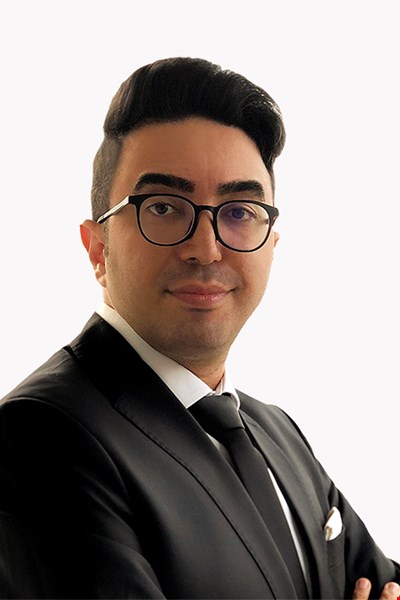
Dr. Masoud Shahmanzari is a Senior Lecturer in Operations and Information Systems Management at Brunel Business School, Brunel University London, where he also serves as Programme Lead for the MSc Business Intelligence and Digital Marketing. He holds a Ph.D. in Operations Management and Information Systems from Koç University (2019) and is actively engaged in research, teaching, and academic leadership. Research Interests: Operations Management Mathematical Programming and Optimization Metaheuristics and Matheuristics Business Analytics and Big Data Machine Learning Algorithms Data-Driven Decision Making in Logistics, Healthcare, and Energy Markets His recent publications focus on applying advanced optimization and analytics to real-world challenges such as election logistics, pandemic response modeling, and transportation planning. The articles demonstrate a strong trend toward integrating learning-based heuristics with operational decision-making in dynamic, high-stakes environments. Scientific Recognition: Editorial Board Member, Journal of Business Analytics Peer reviewer for leading journals including Production and Operations Management , European Journal of Operational Research , and Transportation Research Part E Advising and Grants: Dr. Shahmanzari supervises PhD research in data-driven techniques applied to real-world problems. He secured a research grant from the Economic & Social Research Council for a project on computational analytics of cyber-bullying behavior in online communities (Feb 2022 – July 2023). Labs and Teams: His research is aligned with the Innovation and Sustainability research group at Brunel Business School, focusing on sustainable and intelligent business systems.
Daniel Fernández-Muñoz is an Associate Professor at the Universidad Politécnica de Madrid (UPM) , affiliated with the Department of Physical Electronics, Electrical Engineering and Applied Physics. He earned his PhD in 2021 with a thesis on "Generation scheduling in isolated power systems with high variable renewable generation and pump-storage," receiving both the Extraordinary Doctoral Award and Carlos González Cruz Award. He has held academic roles since 2006, including Assistant Professor positions from 2016-2021 and a current permanent Associate Professor appointment. Education : PhD in Electrical Engineering (UPM), DEA in Electrical Engineering (2010), Civil Engineering degree (2006) Research Focus : Renewable energy integration, power system optimization, battery degradation modeling, and frequency control in isolated grids Collaborations : Instituto de Sistemas Eléctricos de Potencia (Austria), EERA Joint Programme on Energy Storage, H2020 project eNeuron His work emphasizes hybrid wind-battery systems , pumped-storage hydropower , and virtual power plants , with notable publications in JCR Q1 journals. He has contributed to the Energy2Win project on sustainability education and served as a peer reviewer for multiple scientific journals. Scientific Awards Premio Extraordinario de Doctorado (UPM) Premio Carlos González Cruz Teaching activities include Physics for Biomedical Engineering and Energy Systems for Telecommunications. He has participated in international conferences as an invited speaker and contributed to projects funded by the Spanish government and private entities.
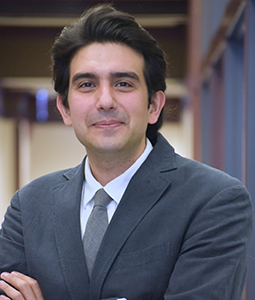
Sina Ansari is an Assistant Professor at DePaul University's Driehaus College of Business , specializing in Management & Entrepreneurship . He co-directs the MS Business Analytics program and has held academic roles at Northwestern University and Tuck School of Business . Northwestern University (PhD, Industrial Engineering & Management Sciences, 2018) Tuck School of Business (Postdoctoral Research Fellow) His research focuses on optimizing service systems through mathematical models, with applications in healthcare operations, opioid crisis mitigation, and logistics. Key areas include: Dynamic resource allocation Patient scheduling optimization Emergency department operations Humanitarian logistics Recent publications highlight his work in humanitarian operations , healthcare scheduling , and medical decision-making . He has received recognition through editorial roles in journals like Naval Research Logistics and Healthcare Management Science . Professional memberships include: INFORMS (Vice President, Chicago Chapter) Production and Operations Management Society Decision Sciences Institute
Muriel Dal-Pont-Legrand is a University Professor of Economic Sciences at the University of Côte d'Azur, affiliated with the Research Group in Law, Economics, Management (GREDEG) and the EUR ELMI program. She serves as Vice-President for European Affairs at Université Côte d'Azur, coordinating European project participation and institutional visibility in Brussels since 2020. Her research specializes in the history of economic thought with particular focus on business cycles, macroeconomic theory evolution, and economic expertise institutionalization. Key research trajectories include: Analysis of Schumpeter's theories on productive recessions and capitalist dynamics Historical examination of French economic expertise during wartime Interdisciplinary integration of digital humanities with economic thought history Critical assessment of coordination problems across economic theories Her recent publications demonstrate consistent engagement with both classical economic thinkers (Schumpeter, Solow, Leijonhufvud) and contemporary methodological debates, particularly the comparative analysis of DSGE and Agent-Based Modeling approaches in macroeconomics. As co-leader of GREDEG's History of Thought project and co-managing editor of the European Journal of the History of Economic Thought , she maintains significant institutional leadership in her field. Her administrative roles since 2005 include Department of Economics Director and various academic governance positions within the university system.
Noah Gans is the Anheuser-Busch Professor of Management Science at the Wharton School of the University of Pennsylvania, where he serves as Professor in the Operations, Information and Decisions department. His research focuses on service operations with particular emphasis on call center management, stochastic processes, and queueing system control. Department Editor, Stochastic Models and Simulation at Management Science President of Manufacturing and Service Operations Management Society (MSOM) PhD Program Coordinator for the OID Department His academic work spans diverse domains including healthcare technology pricing, container inspection security, workforce optimization, and revenue management. He has pioneered adaptive clinical trial designs and developed novel models for customer demand sensitivity in overbooking scenarios. Key research areas include: Bayesian sequential learning for multi-arm clinical trials Value-based pricing under uncertainty Stochastic control in service systems Security policy analysis for global supply chains Risk-sharing mechanisms in healthcare Scientific honors include NSF CAREER Award (1998), INFORMS George E. Nicholson Prize (1995), and multiple teaching awards from the Wharton MBA program (2004, 2010-2011, 1997-2001). His publications bridge theoretical operations research with practical implementation across healthcare, transportation, and service industries.
Prof. Dr. Rolf Wanka is a Professor at the Department of Computer Science, Friedrich-Alexander-Universität Erlangen-Nürnberg (FAU), specializing in efficient algorithms and combinatorial optimization. His research focuses on swarm intelligence, discrete optimization algorithms, and scheduling problems, particularly in timetabling and robotics applications. Education : Sc.D. (Dr. rer. nat.) in Computer Science His work includes theoretical and experimental analyses of particle swarm optimization (PSO) algorithms, addressing runtime complexity, stagnation behavior, and convergence properties. He has developed novel heuristics for timetabling and sorting problems, with applications in multi-robot systems and medical imaging. Notable collaborations include studies on Markov chain-based PSO and fairness in academic scheduling. Key trends in his recent publications span swarm intelligence , discrete optimization , and scheduling heuristics , with a focus on robust timetabling , runtime analysis , and stochastic algorithm behavior . While no explicit scientific awards are listed, his mentorship in the Max Weber-Programm highlights his advisory role in academia. His publications demonstrate interdisciplinary applications of algorithms in robotics , medical imaging , and parallel computing , leveraging both theoretical rigor and practical experimentation. The full description below provides exhaustive details on his academic contributions and affiliations.
Cécile Münch-Alligné is a Professor in Hydraulic Energy at the University of Applied Sciences and Arts Western Switzerland (HES-SO) in Sion, where she serves as the Head of the Hydroelectricity Research Group and the Renewable Energy Program. She leads the Hydro Alps Lab, which conducts applied research in hydropower combining experimental and numerical approaches. Her work focuses on enhancing the flexibility of both small and large hydropower plants, with particular emphasis on adapting these systems to the evolving energy landscape and integration of renewable energy sources. Her educational background includes a BSc in Energy and Environmental Techniques, an MSc in Engineering, and a BSc in Industrial Systems, all from HES-SO Valais-Wallis. Her research spans multiple domains within hydraulic engineering and renewable energy systems, with particular expertise in CFD simulation, numerical methods, and hydraulic machine design. Münch-Alligné's research interests primarily center around improving hydropower flexibility through innovative approaches such as hydraulic short-circuit operating modes, variable speed operation, and energy recovery systems in water networks. She investigates both large-scale pumped storage power plants and micro-hydropower systems for urban water networks, with a strong focus on practical implementation and commercialization of research findings. Her work bridges theoretical modeling with experimental validation to address real-world challenges in the energy transition. Her research has been published extensively in leading journals, covering topics from Pelton turbine dynamics and Francis turbine vortex analysis to micro-turbine implementations in drinking water networks. The publications reveal a clear trend toward enhancing operational flexibility of hydropower systems to better integrate with intermittent renewable energy sources, with increasing emphasis on practical demonstration projects and commercial applications. As Principal Investigator, she has led multiple significant research projects including the SCCER 4 WP 3.2.0 2017-2020 (Supply of Electricity), Hydrolienne pour canaux artificiels Centrale de Lavey, and SOLUTION DE TRANSFERT D'ENERGIE PAR POMPAGE-TURBINAGE A PETITE ECHELLE. These projects, totaling over 2 million CHF in funding from sources including CTI, OFEN, and industrial partners, demonstrate her ability to secure substantial research funding and collaborate effectively with both academic and industry partners. Münch-Alligné leads the Hydro Alps Lab research team, which includes numerous researchers such as Steiner Amandus, Walpen Olivier, Vaccari Aldo, and others. Her collaborative approach extends to partnerships with institutions like Stahleinbau GmbH and The Ark Energy, facilitating the transfer of knowledge from research to industry application. The lab's work spans from fundamental fluid dynamics research to full-scale demonstration projects, creating a comprehensive pipeline from theory to practical implementation.
Prof. Dr. Kumru Didem Atalay is a distinguished academic at Başkent University, specializing in Industrial Engineering . With a PhD in Statistics from Ankara University (2007), she has made significant contributions to Operations Research , Fuzzy Logic , and Decision Support Systems . Her work bridges statistical analysis with real-world applications in healthcare logistics, pandemic response, and manufacturing optimization. Education: PhD (2007), MS (2000), BS (1998) in Statistics from Ankara University Current Role: Professor in Industrial Engineering at Başkent University Her research focuses on stochastic processes , fuzzy modeling , and healthcare operations , particularly in pandemic-era service quality and microchannel manufacturing. She has developed innovative methods for project scheduling , risk analysis , and multi-criteria decision-making . Recent publications examine Covid-19's impact on education quality and fuzzy linear programming for project scheduling . She applies intuitionistic fuzzy models to optimize manufacturing systems and hesitant fuzzy regression for pandemic death count estimation. Scientific recognition includes a Runner-up Prize at the 15th ICMSEM (2021) and a Bronze Medal at ISIF21 (1970). She supervises advanced research on topics like multi-trip home healthcare routing and fuzzy quality function deployment .
Nacira Agram is an Associate Professor at Kungliga Tekniska Högskolan (KTH), specializing in stochastic analysis, mean-field processes, and mathematical finance. She contributes to education through roles as Examiner and Teacher in advanced financial mathematics courses. Research Focus: Her work centers on stochastic differential equations with applications to financial markets, energy systems, and population modeling. Key areas include conditional McKean–Vlasov jump diffusions, singular control of stochastic Volterra equations, and deep learning applications in stochastic modeling. Publications: Recent research explores mean-field control, optimal stopping, and SPDEs with space interactions, emphasizing advanced mathematical techniques for financial and ecological systems. Teaching: Currently involved in courses like Financial Derivatives and Martingales and Stochastic Integrals , where she serves as course responsible and examiner.
PD Dr. habil. Thomas Wöhling serves as a Senior Research Scientist and Team Leader for Stochastic Modelling of Hydrosystems at the Chair of Hydrology, Dresden University of Technology's Faculty of Environmental Sciences. His research spans integrated environmental systems modeling with particular expertise in surface water-groundwater interactions, braided river systems, and vadose zone processes. Previously, he held research positions at Water and Earth System Sciences Competence Cluster in Tübingen (2010-2015) and Lincoln Environmental Research in New Zealand (2006-2010). Dr. Wöhling completed his Dipl.-Hydrol. (1999) and PhD in Hydrology (2005) at Dresden University of Technology, followed by habilitation in Stochastic Hydrology (2021). His educational background includes extensive research at the Institute of Hydrology and Meteorology at TU Dresden (1999-2005) where he developed foundational expertise in hydrological modeling. Wöhling's research focuses on integrated modeling of coupled environmental systems , particularly flow and contaminant transport in surface water-groundwater systems, nutrient and energy fluxes in soil-plant-atmosphere systems, and distributed hydrological modeling. His work emphasizes stochastic modeling and uncertainty analysis , with significant contributions to inverse modeling, model calibration, multiobjective optimization, and Bayesian model averaging techniques. He has pioneered methods for evaluating monitoring network worth and data utility for environmental models. His publication record demonstrates consistent contributions to hydrological science, with recent work (2023-2025) focusing on machine learning applications in hydrology, advanced statistical inversion techniques, and complex karst system modeling. Key trends include integration of physics-based and data-driven approaches, improved uncertainty quantification methods, and applications to climate change impacts on water resources. His work bridges theoretical advances with practical applications in New Zealand's braided rivers and European hydrological systems. STAHY Best Paper Award (2018) ASCE Journal of Irrigation and Drainage Engineering Best Reviewer Awards (2008, 2010, 2011, 2015, 2018) ASCE Journal of Irrigation and Drainage Engineering Best Paper Awards (2008, 2009) Dr. Wöhling leads the Stochastic Modelling of Hydrosystems team and has secured funding for numerous projects including Klimakonform, ISOSIM, VAMOS II, and the International Research Training Group 'Integrated Hydrosystem Modelling.' His work combines novel monitoring techniques with modeling and optimal sensor placement to improve prediction reliability for river-groundwater exchange fluxes. He collaborates extensively with international partners, particularly in New Zealand through the Lincoln Agritech's Braided Rivers program. His laboratory work focuses on combining traditional hydrological measurements with advanced computational techniques, including deep learning applications for soil surface hydrology and time-windowed Bayesian analysis for predictive modeling. The team maintains strong connections with field sites in Germany's Saxon region and New Zealand's Canterbury Plains, facilitating integrated theoretical and empirical research approaches.
Dr. Yasmine Abdin serves as an Assistant Professor in the Department of Materials Engineering within the Faculty of Applied Science at the University of British Columbia (UBC). Her research focuses on advancing polymer matrix composite materials through innovative digital simulation and probabilistic design methodologies. Her academic credentials include: B.Sc. from KU Leuven M.Sc. from KU Leuven Ph.D. from KU Leuven Dr. Abdin's research program centers on overcoming limitations in composite material durability through probabilistic design frameworks and multi-scale modeling. She integrates finite element analysis, machine learning, and Industry 4.0 technologies to predict structural reliability under stochastic service conditions, with emphasis on damage tolerance, manufacturing-process-structure relationships, and optimization of carbon fiber production from sustainable precursors like lignin and asphaltenes. Her recent publications (2023-2025) demonstrate strong focus on sustainable composite manufacturing, including carbon fiber production from renewable resources, 4D printing of shape memory polymers, flax fiber-reinforced composites, cellulose nanofibril modification, and fatigue behavior analysis. Key thematic trends include the convergence of digital twin technologies with composite manufacturing, sustainable precursor development, and the application of machine learning to enhance modeling efficiency in structural reliability prediction. Information regarding doctoral students, research grants, laboratory facilities, or scientific awards was not provided in available sources.
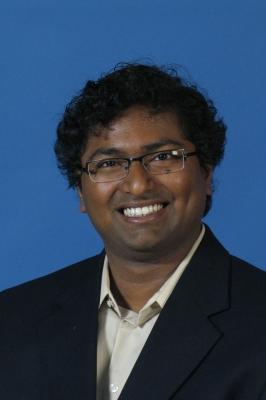
Dr. Saibal Mukhopadhyay is a Professor in the Department of Electrical and Computer Engineering at the Georgia Institute of Technology, where he joined in 2007. He holds the Joseph M. Pettit Professorship and is recognized as an IEEE Fellow for his contributions to low-power and reliable VLSI systems. Education: BEng (Jadavpur University, India), Ph.D. (Purdue University) Labs: Gigascale Reliable Energy Efficient Nanosystem (GREEN) Lab His research focuses on VLSI Systems , Nanotechnology , and Low-Power Electronics , with emphasis on technology-circuit co-design for energy-efficient computing. Recent work explores Compute-in-Memory (CIM) architectures and Spiking Neural Networks for edge AI. Key article themes include Transformer Model Acceleration , Quantum Computing Calibration , 3D Object Detection , and Device Aging Analysis , reflecting his interdisciplinary approach bridging hardware design and machine learning. Scientific Awards IEEE Fellow (2018) ONR Young Investigator (2012) NSF CAREER Award (2011) IBM Faculty Awards (2009, 2010) Best Paper Awards (IEEE-Nano 2003, ICCD 2004)
Heiner Giefers is a Professor for Cloud Computing at the Department of Computer Science and Natural Sciences at Southwestphalia University of Applied Sciences since 2018. Prior to this position, he worked as a Research Staff Member at IBM Research - Zürich (2013-2018), focusing on hardware acceleration in cloud environments, implementation of big data algorithms on FPGAs, and development of hardware platforms for approximate and in-memory computing. Dr. Giefers received his doctorate (Dr. rer. nat.) from Universität Paderborn in 2012 with a dissertation titled "Design and Programming of Reconfigurable Mesh based Many-Cores." His academic journey at Universität Paderborn includes serving as an Academic Council Member (Akademischer Rat a.Z.) from 2008-2013 and as a Scientific Staff Member from 2006-2012, where he taught digital technology and computer architecture. Professor Giefers' research focuses on energy-efficient computing, particularly through hardware acceleration using FPGAs for cloud and AI workloads. His work spans cloud computing infrastructure, hardware-software co-design, approximate computing, in-memory computing, and energy-efficient implementations of machine learning algorithms. He has made significant contributions to the field of reconfigurable hardware for high-performance computing applications. His recent publications show a strong trend toward applying hardware acceleration techniques to artificial intelligence and machine learning workloads, with a particular focus on energy efficiency. His work bridges the gap between theoretical computer science and practical hardware implementation, often resulting in patented technologies that address real-world computing challenges in cloud environments. Best Paper Award for "Stochastic Matrix-Function Estimators: Scalable Big-Data Kernels with High Performance" (2016) Best Paper Award Nomination for "Energy-Efficient Stochastic Matrix Function Estimator for Graph Analytics on FPGA" (2016) Best Paper Award Nomination for "Analyzing the energy-efficiency of dense linear algebra kernels by power-profiling a hybrid CPU/FPGA system" (2014) Best Paper Award Nomination for "A Triple Hybrid Interconnect for Many-Cores: Reconfigurable Mesh, NoC and Barrier" (2010) Professor Giefers actively supervises numerous Bachelor's and Master's students, with over 50 completed theses covering topics from machine learning and cloud computing to IoT systems and hardware acceleration. He leads the "Energy-efficient AI" project (eki), which aims to increase the energy efficiency of AI systems through approximation techniques for FPGA implementation. Additionally, he collaborates with Prof. Dr. Christian Plessl on the "Digital teaching materials with Jupyter Notebooks" project, creating interactive learning materials that integrate teaching content, program code, and results into a single document. His work extends to practical applications through multiple patents related to FPGA implementations, neural networks, and memory systems, demonstrating his commitment to translating research into real-world solutions.