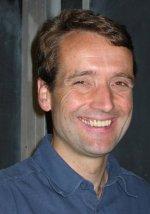
Rupert Klein is a Professor at Freie Universität Berlin in the Department of Mathematics and Computer Science , specializing in Geophysical Fluid Dynamics . His research spans atmospheric dynamics, numerical methods, and gas dynamics of combustion. Research Interests : Geophysical Fluid Dynamics and Atmospheric Modeling Multiscale Asymptotic Analysis Wave Propagation and Turbulence Combustion and Pressure Gain Combustion Climate Dynamics and Data Assimilation Scientific Awards : DRS Award for Excellent Supervision (2014) ECMWF Fellowship (renewed 2017) His recent work includes multiscale models for atmospheric flows, vortex dynamics, and combustion processes. Key collaborations involve DFG SPP 1276, CRC 1029 (TurbIn), and CRC 1114 (SCCS) projects. He contributes to numerical methods for low-Mach-number flows and geophysical simulations.
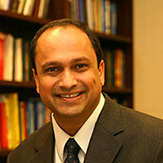
Michel Mandjes is a Professor at the University of Amsterdam's Faculty of Science and holds a Visiting Professor position at the Faculty of Economics and Business (FEB). His research focuses on stochastic processes, queueing theory, and probability theory, with applications in risk modeling, network analysis, and operations research. Recent publications highlight his contributions to multivariate Hawkes processes , Lévy-driven systems , and dynamic random graphs , emphasizing large deviations, rare event simulation, and statistical inference. His work bridges theoretical probability with practical challenges in traffic flow, financial risk, and social network modeling. The trends in his research include the development of stochastic models for network stability, appointment scheduling optimization, and inference techniques for non-stationary processes. His methodological innovations often leverage advanced probability theory and queueing frameworks to address real-world problems in transportation, healthcare, and finance.
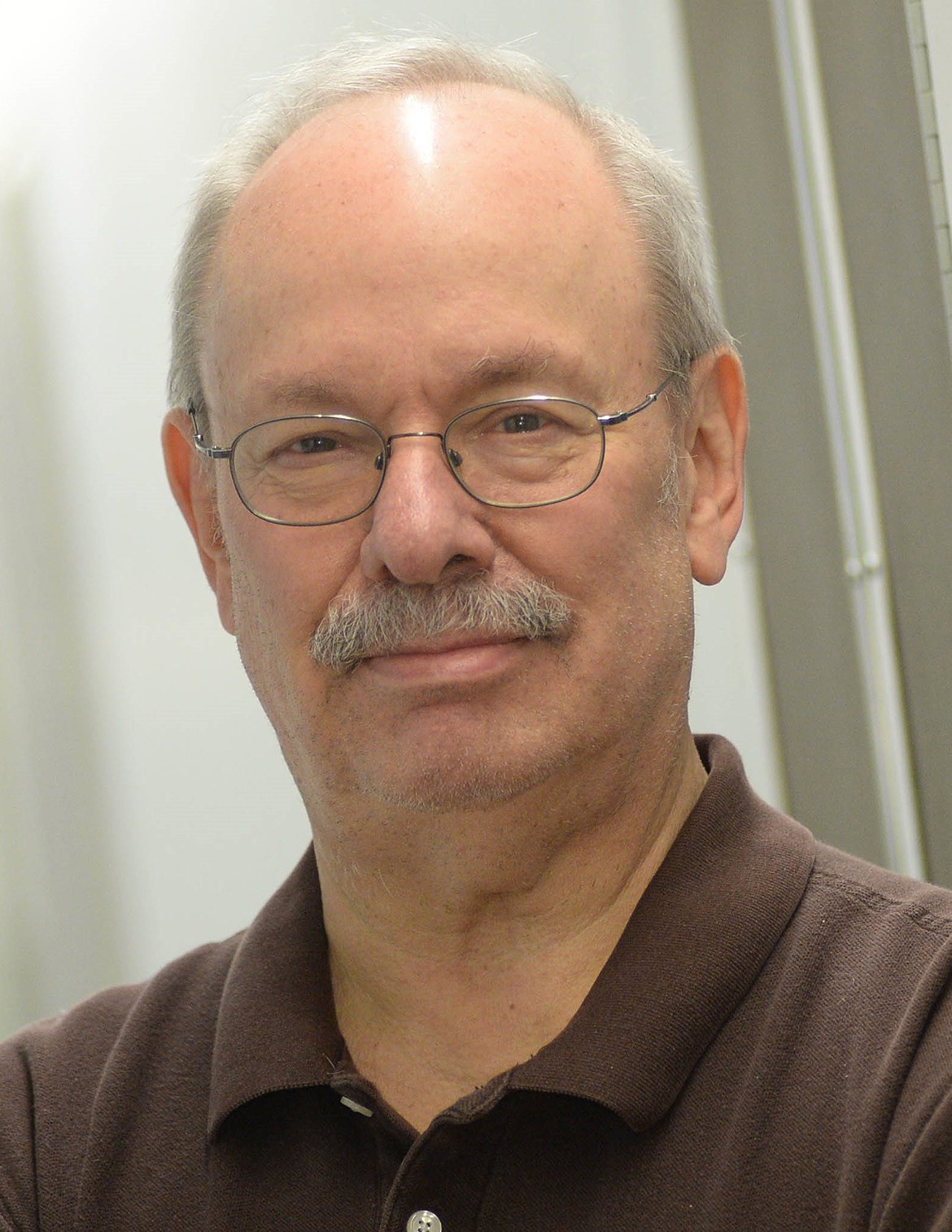
Martin Wainwright is a Professor at the University of California at Berkeley with joint appointments in the Department of Statistics and the Department of Electrical Engineering and Computer Sciences (EECS). His research spans high-dimensional statistics , information theory , statistical machine learning , and optimization theory . He has made significant contributions to understanding computational and statistical trade-offs in high-dimensional settings, as well as developing advanced message-passing algorithms for graphical models. His educational background includes a Bachelor's degree in Mathematics from the University of Waterloo and a Ph.D. in EECS from MIT . His work has been recognized with prestigious awards such as the COPSS Presidents' Award (2014) , IEEE Joint Paper Award (2012) , and Sloan Research Fellowship (2005) . He has advised numerous prominent researchers, including Nihar Shah , John Duchi , and Yuchen Zhang . Publications by Wainwright reflect trends in machine learning , high-dimensional data analysis , and graphical model inference . Notable works include advancements in Markov Chain Monte Carlo algorithms , pairwise comparison models , and distributed computation methods . He has also contributed extensively to signal processing and LDPC codes . COPSS Presidents' Award (2014) IEEE Joint Paper Award (2012) Institute of Mathematical Statistics Fellow (2011) NSF CAREER Award (2006) Okawa Research Grant (2005) Sloan Research Fellow (2005)
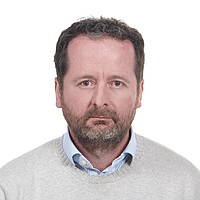
Thorsten Schmidt is Professor of Mathematical Stochastics at the University of Freiburg, succeeding Prof. Ernst Eberlein in the summer semester of 2015. He also serves as Senior Financial Engineer at MathFinance. Previously, he held professorships at Chemnitz University of Technology (2008-2015), Technical University Munich (2008), and University of Leipzig (2004 onwards). From 2017-2019, he was a Research Fellow at the Freiburg Institute for Advanced Studies (FRIAS) in a joint research group with the University of Strasbourg and USIAS on the topic of Linking Finance and Insurance. His research focuses primarily on financial and actuarial mathematics, stochastic processes, and statistics, with recent work on machine learning methods and their applications in financial mathematics and AI regulation. In Freiburg, his goal with his young team is to tackle complex challenges with improved mathematical models and apply these methodologies to various fields. Key Research Areas: Financial mathematics and credit risks Pricing and hedging of derivative financial products Statistics of stochastic processes Energy markets and nonlinear filter theory Machine learning applications in finance and insurance His recent publications show a strong trend toward integrating machine learning with traditional mathematical finance, particularly in risk management, insurance-finance arbitrage, and robust financial modeling. His work increasingly addresses ethical considerations in AI applications within finance, reflecting his broader interest in responsible AI development. Notable Awards: IDA Award Finance (2015) FRIAS-USIAS Research Fellow (2017/2018) IDA Award Machine Learning and AI (2020) MAPFRE Research Grant (2020) Luis Bachelier Fellow (2021) As Editor-in-Chief of Statistics and Risk Modeling and Associate Editor for Mathematical Finance and International Journal of Theoretical and Applied Finance, Schmidt plays a significant role in academic publishing. He leads the CRC 'Small Data' research center with Harald Binder, focusing on medical problems where disease progression must be estimated with few data points per patient. His LeanAI project, funded by the Vector Foundation, explores the connection between machine learning and theorem-proving software LEAN, aiming to develop AI that can translate between mathematics and formal proof systems. His laboratory work centers around the application of stochastic methods combined with machine learning to solve problems in finance and insurance where data is limited ('Small Data' initiative), with significant funding from DFG (€12 million for CRC Small Data) and the Carl Zeiss Foundation.
Professor David D. Yao is a Senior Fellow at the Hong Kong Institute for Advanced Study, City University of Hong Kong, and a full Professor of Industrial Engineering and Operations Research at Columbia University , where he has held distinguished chairs since 1988. A member of the US National Academy of Engineering and Fellow of IEEE, INFORMS, and SIAM, his career spans over four decades with groundbreaking contributions to stochastic systems, supply chain optimization, healthcare operations, and financial engineering. Ph.D. (1983), M.A.Sc. (1981) from the University of Toronto Academic appointments: Assistant Professor at Columbia (1983-86), Associate Professor at Harvard (1986-88), Professor at Columbia (1988–present) Research Interests center on stochastic modeling, optimization of complex systems, and risk management , with applications to healthcare logistics, semiconductor manufacturing, internet traffic modeling, and financial networks. He has pioneered theories in polymatroid optimization, dynamic scheduling, and systemic risk analysis. Recent Trends in Publications emphasize financial systemic risk via network models , asymptotic inventory optimization , healthcare resource allocation , and multi-bottleneck stochastic networks , reflecting his interdisciplinary approach. Scientific Awards include the 2024 Presidential Award for Outstanding Teaching, 2015 Markov Lecture, 2015 National Academy of Engineering membership, 2005 INFORMS and IBM Faculty Awards, 2003 SIAM Outstanding Paper Prize, and 1999 Franz Edelman Award. Grant Leadership spans $302,875 NSF-CMMI-1462495 for systemic risk modeling to $20.45M Hong Kong RGC Theme-Based Grant for healthcare systems. His editorial roles and co-founding of Columbia’s Center for Applied Probability and the Financial and Business Analytics Center underscore his institutional impact. Patents cover semiconductor job configuration, warranty inspection systems, and inventory optimization, with 8 US patents. He has supervised over 15 postdoctoral fellows and advised 20+ doctoral students.
Richard Futrell is an Associate Professor at the University of California, Irvine (UCI), affiliated with the Department of Language Science. He leads the Language Processing Group, focusing on computational models of human and machine language processing. His work bridges information theory, Bayesian cognitive modeling, and natural language processing (NLP) interpretability. University of California, Irvine Department of Language Science Language Processing Group leader His research examines how linguistic structures emerge from cognitive and communicative pressures. Key areas include dependency locality, surprisal theory in sentence processing, and efficiency-driven language evolution. He investigates how memory constraints, predictability, and information density shape syntactic and morphological patterns across languages. Recent publications analyze code-switching efficiency, syntactic priming, ERP component modeling, and agent-based language contact simulations. His work frequently employs Bayesian modeling, neural network analysis, and cross-linguistic corpora to uncover universal principles in language processing. ACL Best Paper Award (2024) Best Paper Award for Computational Modeling of Language (2023) Marr Prize for Best Student Paper (2017) He has developed datasets like SPACER for error repair analysis and contributed to phonotactic learning frameworks. His collaborations span cognitive scientists, computational linguists, and neuroscientists, advancing understanding of language production, comprehension, and structural optimization.
Sanjeev Kulkarni is the William R. Kenan, Jr. Professor of Electrical and Computer Engineering and Operations Research & Financial Engineering at Princeton University. He is associated with the Department of Philosophy and has held significant administrative roles including Dean of the Graduate School (2014-2017), Director of the Keller Center (2011-2014), and Master of Butler College (2004-2012). His research spans Statistics , Machine Learning , Applied Probability , Information Theory , and Signal Processing , with applications to Wireless Networks , Econometrics , and Control Systems . He has co-authored over 100 publications and supervised numerous PhD and Master’s students.
James Manley is the Julian Clarence Levi Professor of the Life Sciences at Columbia University, with extensive research in gene expression regulation. His work spans transcription, RNA splicing, and polyadenylation mechanisms in human cells, connecting these processes to neurodegenerative diseases (ALS/FTD) and cancers. Affiliation: Columbia University, Department of Biological Sciences Contact: jlm2@columbia.edu Research Interests: Dr. Manley's laboratory investigates nuclear processes including: Transcriptional control via RNA polymerase II CTD modifications Alternative splicing regulation by hnRNP and SR proteins Polyadenylation dynamics in cell cycle and differentiation Disease mechanisms in spliceosome mutations (SF3B1, SRSF2) RNA-protein interactions in stress responses Publication Trends: Recent work focuses on disease-associated mutations affecting RNA processing, non-canonical RNA functions, and immune regulation via polyadenylation. Articles span molecular oncology, neurodegeneration, and RNA surveillance mechanisms. Scientific Recognition: Member, American Academy of Arts & Sciences Member, National Academy of Sciences Key Collaborations: Studies involve interdisciplinary work with neurology, cancer biology, and immunology teams. His lab employs biochemical assays, structural analysis, and genetic models to dissect RNA processing pathways.
Athanasios Liavas is a Professor at the Technical University of Crete in the School of Electrical and Computer Engineering , specializing in Signal Processing for Telecommunications and Information Theory . He has held administrative roles as Department Chair (2009-2011), Vice Chair (2011-2013), and Dean of the ECE School (2017-2021). Education: Diploma (1989) and PhD (1993) in Computer Engineering and Informatics from the University of Patras. Professional Background: Postdoctoral Marie Curie Fellow at INT, Evry (1996-1998); Lecturer at University of Ioannina (1999-2001); Assistant/Associate Professor at University of the Aegean (2001-2004) and Technical University of Crete (2004-present). His research focuses on Signal Processing for Telecommunications , Information Theory , and Tensor Decomposition . Recent work involves nonnegative tensor factorization , parallel algorithms , and fMRI data analysis , with applications in wireless communications and medical imaging . Articles show trends in optimization algorithms , LDPC code design , and MIMO system robustness . Scientific Awards include: Marie Curie Fellowship (1996-1998) Associate Editor, IEEE Transactions on Signal Processing (2005-2009) Elected Member, IEEE Signal Processing for Communications and Networking Technical Committee (2006-2011) He has taught courses like Telecommunications Systems II , Wireless Communications , and Information Theory , and supervised students such as Despoina Tsipouridou (PhD) and Alex Balatsoukas-Stimming (Graduate). He leads projects like Partensor (Parallel Tensor Toolbox) and COOPCOM (Cooperative Communications), and contributes to labs including the Telecommunications Laboratory .
Rekha R. Thomas is a Professor of Mathematics and Undergraduate Program Director at the University of Washington. She holds a Ph.D. in Operations Research from Cornell University (1994), with postdoctoral experience at Yale University and the Konrad-Zuse-Zentrum in Berlin. Her research focuses on optimization, applied algebraic geometry, and computer vision, with contributions to semidefinite programming, graphical designs, and geometric algorithms. She has held distinguished positions such as the Robert R. and Elaine F. Phelps Professorship (2008–2012) and the Robert B. Warfield Jr. Faculty Fellowship (2017–2020). Her work bridges theory and application, addressing challenges in computer vision, combinatorial optimization, and algebraic geometry. Notable contributions include advancements in multiview geometry, kernel learning, and the geometric analysis of rank-deficient matrices. She actively collaborates across disciplines, publishing extensively and supervising numerous graduate students and postdocs. Rekha also engages in academic leadership, mentoring students, and participating in international conferences. Her research has been recognized through invited talks at major events like the International Congress of Mathematicians (2018) and SIAM Annual Meetings. She continues to explore the intersections of algebraic geometry, optimization, and computational methods.
Ardo van den Hout is a Professor of Statistics at the Department of Statistical Science, University College London. He holds a PhD in Social Statistics from Utrecht University (2004) and has previously worked at the MRC Biostatistics Unit in Cambridge. His research focuses on advanced statistical methodologies including longitudinal data analysis, survival analysis, multi-state models, and applications in aging research and public health. He has authored influential works such as Multi-state Survival Models for Interval-censored Data (2017). Research Interests Development and application of multi-state models for complex health data Survival analysis techniques for interval-censored and longitudinal datasets Methodological advancements in cognitive decline and disease progression modeling Integration of socio-economic factors in health expectancy analysis Key Contributions Pioneered penalized likelihood approaches for multi-state models Developed frameworks for estimating life expectancies in health and disease Advanced methods for handling missing/misclassified data in longitudinal studies Awards Recipient of the Gopal Kanji Prize 2012 for outstanding contributions to statistics Professional Activities Maintains an active research program with collaborations across biostatistics, epidemiology, and health economics. Supervises doctoral students focusing on statistical methodologies with real-world health applications. His work frequently addresses critical questions in aging populations, cancer research, and public health policy.
Stefan Riezler is a full professor of Statistical Natural Language Processing at Heidelberg University's Department of Computational Linguistics (since 2010), affiliated with the Faculty of Mathematics and Computer Science. Prior to this, he worked in Silicon Valley at Xerox PARC and Google Research. He holds a PhD in Computational Linguistics from the University of Tübingen (1998) and conducted postdoctoral research at Brown University (1999). His research spans machine learning, NLP, and medical informatics, focusing on interactive statistical learning. He co-leads the Interdisciplinary Center for Scientific Computing (IWR) and serves on the editorial boards of Computational Linguistics and Transactions of the Association for Computational Linguistics . Key research areas include neural machine translation, healthcare AI (e.g., sepsis prediction), data augmentation, and reproducibility in ML. He develops tools like JoeyNMT and explores ethical challenges in clinical machine learning. Notable recent work includes advancements in time series analysis, multimodal interfaces (e.g., NLMaps for OpenStreetMap), and ethical frameworks addressing validity in healthcare ML. His publications emphasize practical applications of NLP in healthcare, speech translation, and cross-lingual systems. Grants and collaborations include interdisciplinary projects on medical data science and training next-gen NLP researchers. He actively contributes to open-source toolkits and reproducible research practices.
Daniel Holz is a Professor of Physics and Astronomy & Astrophysics at the University of Chicago, affiliated with the Enrico Fermi Institute, Kavli Institute for Cosmological Physics, and the College. His research focuses on gravitational wave astrophysics, cosmology, and black hole dynamics, contributing to major discoveries like GW150914 and GW170817 as part of the LIGO collaboration. He holds a BA from Princeton and a PhD from the University of Chicago, with postdoctoral fellowships at the Albert Einstein Institute (Germany), Kavli Institutes in Santa Barbara and Chicago, and a Richard Feynman Fellowship at Los Alamos National Laboratory. Research interests include gravitational-wave standard sirens for cosmology, black hole-neutron star mergers, and testing general relativity. Awards include the NSF CAREER Award, Quantrell Teaching Award, and Breakthrough/Gruber Prizes (via LIGO). He chairs the Bulletin of the Atomic Scientists' Science and Security Board, guiding the Doomsday Clock, and directs the UChicago Existential Risk Laboratory (XLab), addressing nuclear, climate, and AI risks. His lab and collaborations leverage multi-messenger astronomy and advanced data analysis techniques. Notable contributions include pioneering gravitational-wave cosmology methods and advancing understanding of cosmic expansion tensions.
Chuchu Fan is the Leonardo Career Development Professor and Director of the REALM Lab (REliable Autonomous system Lab) at MIT's School of Engineering , with a primary appointment in the Department of Aeronautics and Astronautics and Laboratory for Information and Decision Systems . Her work bridges formal methods , control theory , and machine learning to ensure safety in autonomous systems. Ph.D., University of Illinois at Urbana-Champaign (2019) B.E., Tsinghua University (2013) Her research focuses on rigorous safety verification of autonomous systems through neural Lyapunov-barrier functions , control contraction metrics , and formal logic specifications . Recent work emphasizes LLM integration for symbolic planning, multi-robot collaboration , and robustness against model uncertainties . The 15 most recent articles highlight trends in safety-critical control using graph neural networks , reinforcement learning , and temporal logic . Key themes include collision avoidance , multi-agent coordination , and runtime safety filters applied to drones, self-driving cars, and microgrids. Scientific Awards & Honors : 2025 ONR YIP Award 2023 NSF CAREER & AFOSR YIP Awards 2020 ACM Doctoral Dissertation Award 2016 Rising Stars in EECS As head of the REALM Lab, she leads projects on autonomous air taxis , safety verification , and neural certificates for robotic systems. Her teaching includes courses on feedback control and formal methods for autonomous systems.
Hesham ElSawy is an Assistant Professor in the Department of Systems and Networks at the School of Computing, Faculty of Arts and Science, Queen's University. His work focuses on advancing next-generation wireless systems, with particular emphasis on federated learning, IoT networks, and edge computing. He is affiliated with Ingenuity Labs Research Institute, Queen's University, and contributes to interdisciplinary research at the intersection of communication theory and network optimization. His research interests span stochastic geometry modeling, energy-efficient protocols for massive IoT deployments, and resilient federated learning frameworks. ElSawy explores novel paradigms in aerial wireless networks, UAV-assisted communication, and network security through percolation theory applications. Recent publications highlight his contributions to system-level analysis of parallel computing at extreme edges, UAV-enabled federated learning architectures, and energy-as-a-service models for RF-powered networks. His work emphasizes practical implementations and large-scale network validation. ElSawy holds no listed awards or grants in the provided text but maintains active collaborations through Ingenuity Labs. His research addresses critical challenges in 5G/6G networks, including latency optimization, resource allocation, and heterogeneous network integration.