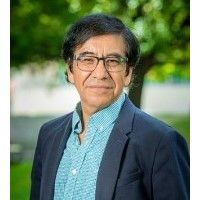
Vissarion Papadopoulos is a Professor in the Department of Structural Engineering at the School of Civil Engineering, National Technical University of Athens (NTUA). His office is located at the Statics and Aseismic Research Laboratory, with contact details including email vpapado@central.ntua.gr and phone 210 772 4158. He has maintained an active research profile since at least 2016, focusing on advanced computational methods in structural engineering. His primary research domains include: Structural Engineering and Computational Mechanics Stochastic Analysis and Uncertainty Quantification Multiscale Modeling of Composite Materials Machine Learning for Engineering Simulations Optimization of Structural Systems Thermomechanical Behavior of Advanced Materials Analysis of his recent publications reveals a decisive shift toward integrating deep learning frameworks with traditional computational mechanics. His work demonstrates consistent innovation in accelerating solutions for parametric and transient structural problems through transformer networks, Bayesian inference, and physics-informed neural networks. Key application areas include carbon nanotube reinforced composites, sustainable automotive design, and seismic-resistant structures, with emphasis on enhancing computational efficiency while maintaining accuracy. He is affiliated with NTUA's Statics and Aseismic Research Laboratory, which specializes in structural dynamics, earthquake engineering, and advanced computational methodologies for civil infrastructure analysis and design.
Prof. Dr. Mario Ohlberger is a faculty member in the Department of Mathematics and Computer Science at the University of Münster, Germany. As a leading researcher in numerical analysis and scientific computing, he contributes to the Cluster of Excellence 2044 'Mathematics Münster: Dynamics – Geometry – Structure' and the Mathematical Research Data Initiative (MaRDI). His work integrates machine learning with classical numerical methods. University: University of Münster Research Focus: Numerical analysis for PDEs, model reduction, machine learning, multiscale methods Key Projects: EXC 2044 (subprojects C2 and C4), MaRDI His recent publications emphasize adaptive reduced basis methods, multi-fidelity learning, and surrogate modeling for parameterized PDEs, with applications in oil recovery and reactive transport. He has supervised numerous theses and taught courses on numerical analysis, scientific computing, and model reduction. Scientific awards include the Eliteförderprogramm für Postdoktoranden (2002), Ferdinand-von-Lindemann-Preis (2001), and a 1994 teaching award. Current teaching includes lectures on differential equations and seminars on advanced numerical methods.
Khanh Duy Trinh is a Professor (non-tenure-track) at Waseda University's Global Center for Science and Engineering, specializing in probability theory and its applications to random matrix theory and stochastic topology. He holds a PhD from Osaka University (2012) and has held academic positions at Tohoku University and Kyushu University. Current affiliation: Waseda University (2025-present) Past roles: Associate Professor at Waseda (2019-2025), Tohoku University, Kyushu University Research areas: Beta ensembles, Random topology, Spectral measures, Stochastic geometry His work demonstrates universal behavior in random matrix models through spectral analysis and topological persistence. Key contributions include central limit theorems for eigenvalue statistics, Poisson approximations in high-temperature regimes, and geometric interpretations of persistence diagrams. His recent papers focus on generalized beta processes and higher-dimensional complex structures. Current projects include: JSPS Grant 2024-2029: Universal approaches in random matrix theory Past JSPS Grant 2019-2023: Multi-aspects of beta ensembles Teaching activities at Waseda include: Introduction to Probability and Statistics Advanced Probability and Statistics Master's Thesis advising in Pure and Applied Mathematics
Karin Leiderman, PhD, is an Associate Professor in the Department of Mathematics and a member of the UNC Lineberger Comprehensive Cancer Center. She also holds appointments in the Department of Biochemistry and Biophysics and the Computational Medicine Program at the University of North Carolina at Chapel Hill. Her research integrates mathematical modeling, computational simulations, and experimental approaches to study biochemical and biophysical mechanisms in blood coagulation, clot formation, and bleeding disorders with applications in hemophilia and cancer-associated thrombosis. She leads the Leiderman Research Group, which develops open-source software frameworks like clotFoam for simulating thrombus formation under flow. Recent publications highlight her work on: Mathematical analysis of anticoagulant drugs (emicizumab, concizumab) and their impact on coagulation Computational modeling of lipid surface enzyme kinetics and HIV-1 Env protein binding Development of multiscale models for hemostasis and thrombosis Scientific awards include: NSF CAREER Award (2020) Colorado School of Mines Faculty Excellence Award (2021) W.M. Keck Graduate Student Mentorship Award (2020) Invited State-of-the-Art Speaker at ISTH (2022) Dr. Leiderman has mentored numerous graduate and undergraduate students, including Jamie Madrigal (PhD, UNC), Kenji Miyazawa (PhD, UNC), and Nicholas Danes (PhD, Colorado School of Mines). Her research is supported by NIH R01 funding and focuses on contextualizing findings across mathematical and biological communities.
Leonard Harris is an Assistant Professor in the Department of Biomedical Engineering within the College of Engineering at the University of Arkansas. His research focuses on cancer systems biology, with expertise in computational modeling and simulation of complex intracellular signaling pathways and cell-cell interactions in tumors. Working closely with experimental collaborators, his lab develops comprehensive, mechanistic models of molecular pathways underlying non-genetic mechanisms of drug resistance in cancer cells. Education: Postdoctoral Research Fellow, Biochemistry, Vanderbilt University School of Medicine Postdoctoral Associate, Computational & Systems Biology, University of Pittsburgh School of Medicine Ph.D., Chemical and Biomolecular Engineering, Cornell University B.S., Chemical Engineering, University of Colorado, Boulder Dr. Harris's research centers on cancer systems biology with a focus on phenotypic plasticity and non-genetic heterogeneity in anticancer drug response. His lab develops multiscale models of intracellular signaling pathways and cell-cell interactions to understand tumor heterogeneity. A key aspect of his work examines intrinsic stochasticity in cell fate decision making and its role in therapeutic resistance. His computational approaches aim to create in silico platforms for virtual anticancer drug screens to identify novel molecular targets and improve cancer treatment outcomes. Analysis of Dr. Harris's recent publications reveals a consistent focus on computational approaches to understand tumor heterogeneity and drug resistance mechanisms. His work integrates mathematical modeling with experimental data to dissect genetic, epigenetic, and stochastic sources of variability in cancer cell populations. His research spans multiple cancer types, with particular emphasis on melanoma and lung cancer, examining how non-genetic mechanisms contribute to therapeutic resistance. The publications demonstrate progression from foundational computational methods to increasingly sophisticated models of tumor dynamics and drug response. Scientific Awards: NIH/NCI Transition Career Development Award to Promote Diversity (K22) National Library of Medicine Biomedical Informatics Postdoctoral Fellowship Semiconductor Research Corporation Graduate Fellowship Dr. Harris serves as principal investigator for multiple research grants focused on cancer systems biology and computational oncology. His lab receives funding from the National Institutes of Health, including the NCI K22 award supporting his transition to independence. His research integrates experimental and computational approaches through collaborations with wet-lab researchers at the University of Arkansas and other institutions. Current projects examine tumor-induced bone disease, phenotypic plasticity in small cell lung cancer, and mechanisms of drug tolerance in melanoma. Dr. Harris leads a computational cancer biology lab that develops and applies advanced modeling techniques to understand tumor heterogeneity and drug resistance. His team works at the intersection of computational biology, systems pharmacology, and cancer biology, creating models that bridge molecular, cellular, and population scales. The lab collaborates extensively with experimental groups to validate model predictions and generate new hypotheses about cancer progression and therapeutic response.
Adrien Busnot Laurent is a permanent researcher (Chargé de recherche) at INRIA Rennes in the MINGuS (Multi-scale numerical geometric schemes) team. He previously held a postdoctoral position at the University of Bergen working on the CODYSMA project (Computational Dynamics and Stochastics on Manifolds) with Hans Z. Munthe-Kaas, and completed his Ph.D. in Mathematics at the University of Geneva under Gilles Vilmart's supervision. His research focuses on numerical methods for stochastic differential equations, with particular emphasis on geometric numerical integration, algebraic structures in numerical analysis, and numerical integrators on manifolds. He has made significant contributions to the theory of exotic aromatic B-series, which provide a framework for analyzing high-order integrators for ergodic stochastic differential equations. Adrien's publication record shows consistent high-impact contributions in top journals including Foundations of Computational Mathematics, SIAM Journal on Scientific Computing, and Forum of Mathematics, Sigma. His work bridges theoretical mathematics with practical numerical algorithms, with applications in molecular dynamics and statistical physics. He has been recognized with the SWICCOMAS prize 2022 and the Henri Fehr prize for his Ph.D. thesis. As PI of the ANR JCJC project MaStoC, he leads research on manifolds and stochastic computations, with plans to open postdoc positions from September 2026. Adrien is actively involved in the academic community, co-organizing conferences including GeoStoch 2026 and CANUM 2026, and organizing a research seminar in applied mathematics at ENS Rennes. He also participates in outreach activities and supports diversity in mathematics.
Professor Alexander Mielke is a leading applied mathematician at the Weierstrass Institute for Applied Analysis and Stochastics (WIAS) in Berlin, with extensive involvement in Germany's premier mathematical research initiatives. His career centers on developing rigorous mathematical frameworks for complex physical phenomena, particularly through leadership roles in major DFG-funded programs including Priority Programmes and Collaborative Research Centers. His research spans critical areas of modern applied mathematics: Multiscale modeling of material behavior Mathematical theory of plasticity and hysteresis Continuum mechanics of multifield systems Pattern formation in coupled differential equations Variational methods for rate-dependent processes Professor Mielke's scientific leadership is demonstrated through his role as speaker of Priority Programme SPP 1095 'Analysis Modeling and Simulation of Multiscale Problems' and Collaborative Research Center SFB 404 'Multifield Problems in Continuum Mechanics'. Currently, he drives research as a participating scientist in the Cluster of Excellence MATH+ and sub-project manager for multiple Collaborative Research Centers, maintaining WIAS's prominence in mathematical research. His work consistently addresses fundamental challenges in connecting microscopic mechanisms to macroscopic material properties. Through the Berlin Mathematical School and MATH+, Professor Mielke actively mentors the next generation of applied mathematicians while securing sustained DFG funding for cutting-edge research. His collaborative approach spans theoretical development, numerical implementation, and physical application, particularly in materials science and engineering contexts.
Dr. Angelo Valleriani serves as Group Leader for Stochastic Processes in Complex and Biological Systems at the Max Planck Institute of Colloids and Interfaces in Potsdam, Germany, and coordinates the International Max Planck Research School (IMPRS) on Multiscale Bio-Systems. His research bridges theoretical physics and biological applications with a focus on quantitative modeling of complex biological phenomena. Dr. Valleriani earned his PhD in High Energy Physics from SISSA in Trieste, Italy (1996), following a Laurea Degree in Theoretical Physics from the University of Bologna (1992) with full marks and honors. His academic journey includes Visiting Scientist positions at Max Planck Institutes in Golm and Dresden before becoming a Group Leader in November 2000. His research interests encompass: Stochastic modeling of biological processes RNA biology and translational control mechanisms mRNA and tRNA turnover dynamics Population genetics and evolutionary biology Biostatistical data analysis Dr. Valleriani's recent publications (2022-2024) reveal a strong emphasis on computational approaches to biological problems, particularly in ribosome dynamics, protein synthesis regulation, and cellular remodeling processes. His work demonstrates sophisticated integration of mathematical modeling with experimental biology. He maintains active collaborations with researchers from multiple institutions including the University of Potsdam (Silke Leimkühler, Carsten Beta, Stefanie Barbirz), University of Cambridge (Davide Chiarugi), Weizmann Institute (Ziv Reich, Ruti Kapon), DRFZ Berlin (Ria Baumgrass), and others. The research group actively recruits MSc students from physics, mathematics, engineering, and bioinformatics backgrounds for challenging thesis projects in computational biology and biophysics.
Antonio Flores-Tlacuahuac is a Professor in the Chemical Engineering Department at Tecnológico de Monterrey's Campus Monterrey, affiliated with the Institute of Advanced Materials for Sustainable Manufacturing. His research spans sustainable process systems engineering with emphasis on optimization, machine learning applications, and resource nexus modeling. Chemical Engineering Degree, Universidad Autónoma de Puebla Ph.D. in Philosophy, University of London His research interests focus on developing advanced computational frameworks for sustainable engineering systems. Key areas include Bayesian optimization for chemical processes, machine learning applications in polymerization and separation systems, and integrated modeling of water-energy-carbon systems. His work bridges fundamental process engineering with sustainability challenges, particularly in renewable energy integration and CO 2 capture technologies. Analysis of his 2024-2025 publications reveals a strong trend toward hybrid AI-optimization methodologies, with 60% of recent work incorporating Bayesian approaches. The research spans from molecular-scale catalyst design to community-scale energy systems, demonstrating exceptional breadth while maintaining technical depth in process systems engineering. Mexican Researcher Certification - Level 3 Flores-Tlacuahuac mentors doctoral students through courses including Automation and Control of Chemical Processes and Doctoral Research series. His research portfolio includes significant contributions to the Centro Mexicano de captura, uso y almacenamiento de CO 2 , with funding evidenced by extensive publication output in high-impact journals. Current projects focus on quantum-classical hybrid algorithms for bioprocess optimization and machine learning frameworks for pandemic surveillance. He leads research within the Institute of Advanced Materials for Sustainable Manufacturing, with strong emphasis on UN Sustainable Development Goals including Affordable and Clean Energy, Climate Action, and Sustainable Cities. His work integrates multiple stakeholder perspectives in sustainable system design, particularly for rural energy solutions and circular economy implementations.
Professor Michael Kaliske is a leading researcher at Dresden University of Technology's Institute of Statics and Dynamics of Structures, where he conducts cutting-edge research in computational mechanics and structural engineering. His work bridges theoretical developments with practical applications across civil, mechanical, and materials engineering disciplines. Professor Kaliske's research focuses on computational mechanics with particular expertise in finite element methods, multiscale modeling, and material behavior under various loading conditions. His work spans diverse application areas including concrete technology, wooden structures, elastomeric materials (particularly tires), and uncertainty quantification in structural design. He has developed sophisticated numerical frameworks for analyzing complex structural behaviors, especially in contexts where traditional analytical methods fall short. His research demonstrates strong interdisciplinary connections between civil engineering, mechanical engineering, and computational science with practical applications in infrastructure durability and material design. His publication record shows consistent advancement in computational methods for structural analysis, with recent work emphasizing multiscale approaches, uncertainty quantification, and experimental validation. The research themes demonstrate progression from fundamental material modeling to increasingly complex system-level analysis, particularly in infrastructure durability and tire-road interaction phenomena. His work increasingly incorporates data-driven approaches and uncertainty modeling to address real-world engineering challenges. Professor Kaliske actively leads multiple research projects funded by the German Research Foundation (DFG), including ongoing Priority Programs and Material Grants. His project portfolio demonstrates significant contributions to both theoretical developments in computational mechanics and practical applications in civil infrastructure and industrial manufacturing. His research has particularly strong connections to industrial applications in tire manufacturing and road infrastructure design.