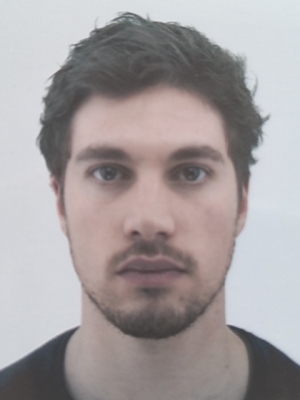
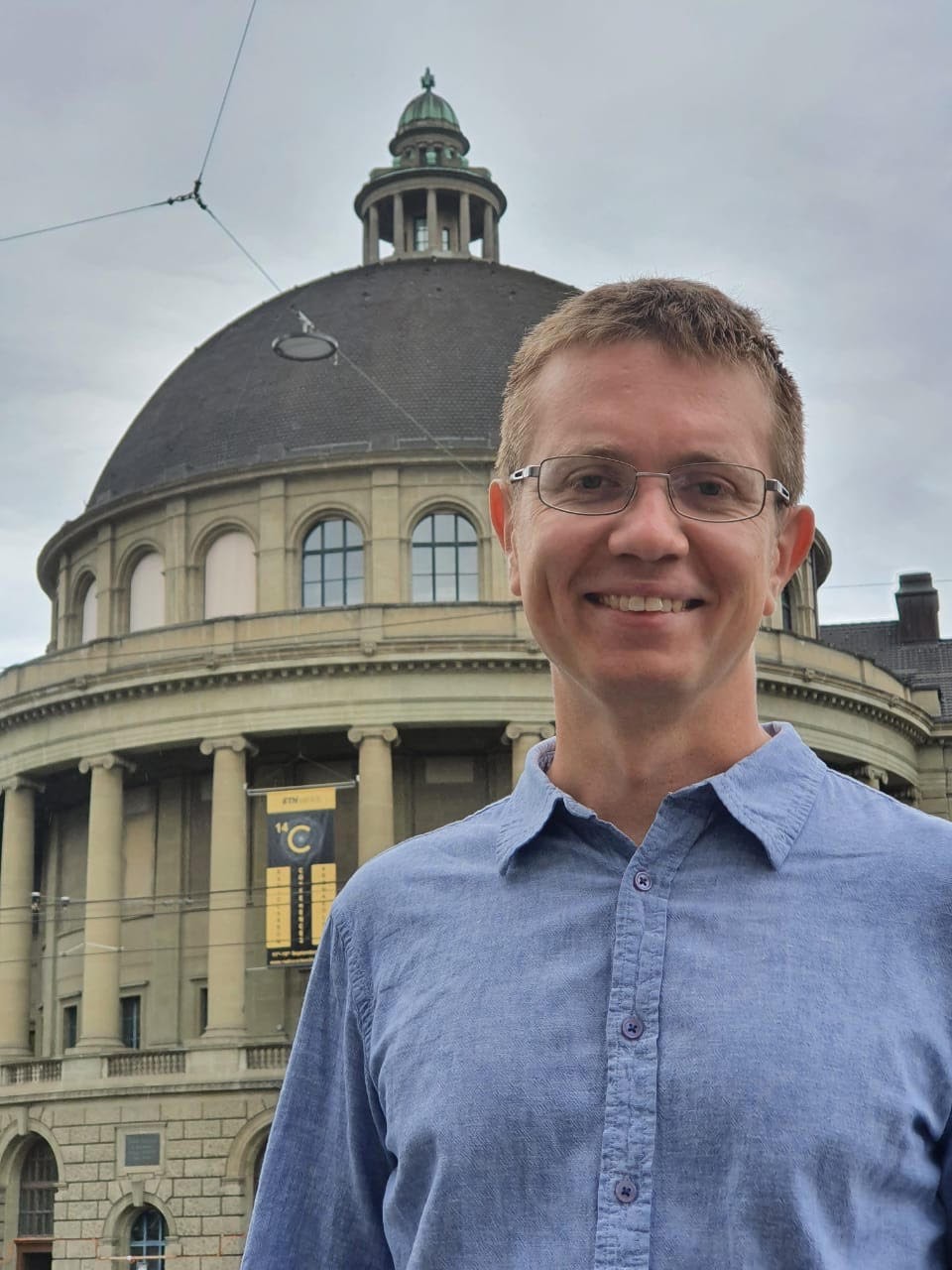
Lukas Hewing is a Lecturer at ETH Zürich's Department of Mechanical and Process Engineering. He received his BSc and MSc in Mechanical Engineering and Automation Engineering from RWTH Aachen University, where he was awarded the Springorum Denkmünze for his master's work. He is currently pursuing a PhD in the Intelligent Control Systems Group at ETH Zürich. His research focuses on predictive control of dynamical systems with machine learning methods and stochastic MPC. Key areas include Gaussian process-based control, autonomous racing applications, and safety-critical systems design. His work bridges control theory with practical implementations in robotics and medical devices. Hewing's publications demonstrate a strong focus on learning-based control methods applied to autonomous systems and medical technology. Recent work shows increasing applications in safety-critical domains like autonomous vehicles and ventilators, combining theoretical rigor with practical validation.
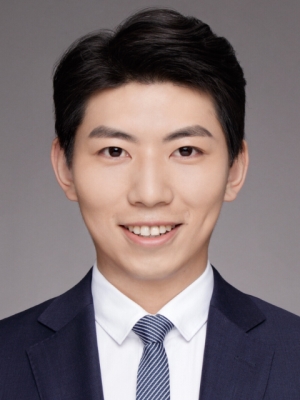
Dr. Lucas Slot is a Lecturer at the Department of Computer Science, ETH Zurich, specializing in theoretical computer science, computational complexity, and optimization algorithms. His research focuses on polynomial optimization, sum-of-squares hierarchies, and semidefinite programming, with applications to algorithmic design and complexity analysis. Recent work includes studies on computational thresholds in stochastic block models, convergence rates of optimization hierarchies, and kernel-based methods for high-dimensional inference. His contributions span theoretical foundations and algorithmic advancements in mathematical programming and geometric data analysis. Lacking explicit mentions of academic awards or grants, Dr. Slot’s scholarly activities emphasize computational and mathematical challenges in optimization and discrete geometry. No student advisees are listed in the provided materials.
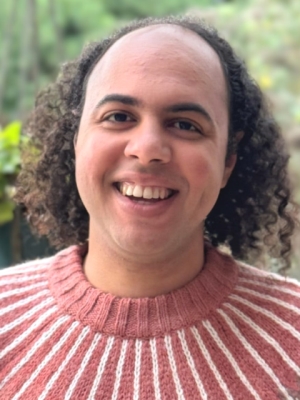
Dr. Elena Raycheva is a researcher affiliated with ETH Zürich's Department of Information Technology and Electrical Engineering, working within the Professorship for Electric Power Systems. Her research focuses on energy systems transformation, emphasizing renewable integration, hydrogen infrastructure, and grid resilience. She collaborates closely with Professors Gabriela Hug and Giovanni Sansavini on interdisciplinary projects. Key research interests include: renewable energy systems, power systems planning, and energy storage technologies. Her work addresses challenges of decarbonization through analysis of power-to-gas systems, hydrogen storage economics, and climate-resilient infrastructure. Notable contributions include studies on Switzerland's energy transition pathways published in Energy and Applied Energy . Her doctoral thesis (2023) developed ensemble models for net-zero system planning. Recent publications analyze flexibility provision in integrated power-gas systems and hydrogen storage roles in hydropower-dominant grids. Laboratory affiliations include the Energy Systems Group at ETH Zurich. She leads workpackages in the SWEET consortium's PATHFNDR project, funded by Swiss Federal Office of Energy.
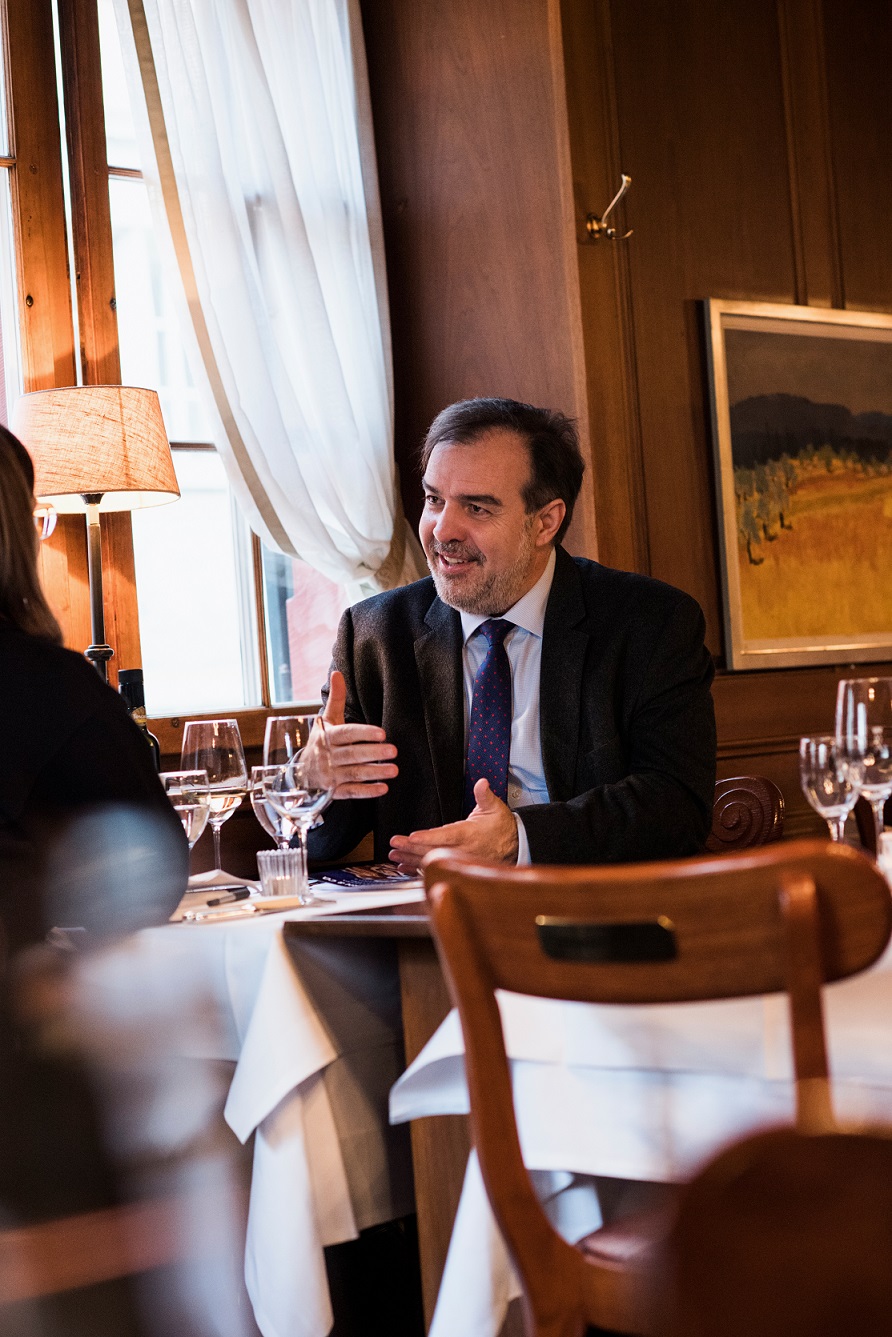
Dr. Andrea Bellè is a Researcher at the Research Center for Energy Networks (FEN-ETH) at ETH Zürich since January 2024. His work focuses on optimizing resilience of critical infrastructures and energy systems through advanced modeling and optimization techniques. He holds a Ph.D. in Complex Systems Engineering from University of Paris-Saclay (2022), an M.S. in Nuclear Engineering from KTH Royal Institute of Technology and University of Paris-Saclay (2019), and a B.S. in Energy Engineering from University of Padua (2017). His current research emphasizes the RESAIL project collaboration with Swiss Federal Railways (SBB), developing strategies for energy transition and reliable demand fulfillment. Prior to ETH, he was a research engineer at Thales Group working on defense and space projects. Research interests include: resilience modeling of interdependent systems, optimization under uncertainty, and energy system design. His publications span applications in power networks, satellite constellations, and molten salt reactors. Key technical areas are multi-objective optimization, distributionally robust approaches, and vulnerability analysis. Advising: Currently focuses on postdoctoral research with no listed advisees. Grant activity includes FEN-funded initiatives. Lab affiliations: Primarily works within FEN-ETH's Research Center for Energy Networks and collaborates with industry partners like SBB on applied energy transition projects.
Dr. Mengshuo Jia is a Senior Scientist and Principal Investigator at ETH Zürich, affiliated with the Power Systems Laboratory (PSL) within the Department of Electrical Engineering. He holds a Ph.D. from Tsinghua University (2016–2021) and a B.Eng. from North China Electric Power University (2012–2016). His roles include Guest Lecturer for 'Optimization in Energy Systems' and Associate Editor for IEEE Systems Journal and IET Renewable Power Generation. Education: Ph.D. in Electrical Engineering, Tsinghua University (2016–2021) B.Eng. in Electrical Engineering, North China Electric Power University (2012–2016) Research focuses on AI4Science , Uncertainty Modeling , Probabilistic Analysis , Stochastic Optimization , and Data-Driven Power Systems . Notable contributions include the RePower LLM-driven research platform and the DALINE toolbox for power flow linearization. His work bridges AI advancements with energy system challenges, enhancing autonomous research and grid optimization. Recent publications emphasize LLM applications in energy systems, small modular reactor integration, and hydrogen supply chain optimization. Over 10 peer-reviewed articles since 2022 highlight interdisciplinary innovation. Awards: 2023 ESI Hot Paper (top 0.1%) and Highly Cited Paper (top 1%) 2023 China First Prize of High-influence Papers 2022 Springer Thesis Award Advising and grants include leadership in Swiss National Science Foundation projects and editorial roles in top-tier journals. Collaborations emphasize data-driven methodologies and privacy-preserving distributed algorithms. Labs: Active in the Power Systems Laboratory (PSL) at ETH Zurich, advancing research in energy system optimization and AI integration.
Dr. Evren Mert Turan is a Lecturer at ETH Zürich's Department of Energy and Process Systems Technology. His academic background includes a Bachelor's and Master's in Chemical Engineering from the University of Cape Town, followed by a PhD in Process Systems Engineering at the Norwegian University of Science and Technology. His research focuses on integrating machine learning and optimization techniques to address decision-making challenges under uncertainty in energy systems and process engineering. Evren's expertise spans model predictive control, real-time optimization, and data-driven approaches for complex systems. He has contributed to advancements in semi-infinite programming, feedback control policies, and steady-state detection algorithms. His work emphasizes practical applications in sustainable energy systems and industrial process optimization. Key research trends include the development of neural network-based control strategies, convex optimization methods for reduced computational complexity, and experimental validation of novel algorithms. His publications highlight interdisciplinary approaches blending machine learning with traditional engineering methodologies. Evren currently teaches the course 'Introduction to Modeling and Optimization of Sustainable Energy Systems' and actively engages in collaborative research at ETH Zürich. His contributions to scientific machine learning aim to enhance robustness and reliability in dynamic systems analysis.
Fabio Widmer is a PhD researcher at the Institute for Dynamic Systems and Control (IDSC) within ETH Zürich's Department of Mechanical and Process Engineering. He received his B.Sc. and M.Sc. degrees in mechanical engineering from ETH Zürich in 2015 and 2017, respectively, with distinction, focusing on electric mobility and energy flows during his studies. His academic background includes: B.Sc. in Mechanical Engineering, ETH Zürich (2015) M.Sc. in Mechanical Engineering, ETH Zürich (2017) Widmer's research centers on model-based optimization of thermal and energy management systems for electrified public transport vehicles. His work spans electric buses, hydrogen hybrid vehicles, and charging infrastructure optimization. He has made significant contributions to understanding energy-comfort trade-offs in HVAC systems, developing optimization methods for charging strategies, and creating online-capable control algorithms for hydrogen vehicles. His research combines theoretical modeling with practical applications, utilizing dynamic programming, model predictive control, and scenario-based optimization approaches to address real-world transportation challenges. Widmer has received recognition for his academic achievements, including two Outstanding Bachelor Awards and a scholarship from ETH Zürich's Excellence Scholarship and Opportunity Programme. His research has resulted in numerous publications in high-impact journals such as Control Engineering Practice, Energy, and Energies, demonstrating both theoretical rigor and practical relevance to sustainable transportation systems. As part of his research activities, Widmer has contributed to projects including ISOTHERM and Swiss eBus Plus. He was also actively involved with ETH's formula student team AMZ, where student teams develop and compete with self-developed electric race cars, reflecting his hands-on approach to electric mobility research.
Erich Walter Farkas is an Associate Professor of Quantitative Finance at the University of Zurich (UZH) and an Associate Faculty member at ETH Zurich's Department of Mathematics. He serves as Program Director for the joint UZH-ETH Zurich Master of Science in Quantitative Finance, established to bridge expertise in finance and mathematics. His research focuses on risk management, sustainable investments, and mathematical finance, emphasizing holistic approaches that integrate quantitative analysis with behavioral factors. Education: Farkas earned his doctorate and habilitation in Germany, later moving to Switzerland. He holds a Master's and Licentiate in Mathematics from the University of Bucharest, and a Certificate in Advanced Studies for Board Members from Bern-Rochester. Research Interests: Mathematical Finance, Quantitative Risk Management, Volatility Modeling, Sustainable Investment Impact, and Risk Measures. He leads projects like the Data-Driven Financial Risk (DaDFiR3) initiative and co-initiated the Finance Roundtable 2025 on AI and Big Data in finance. Advising & Grants: Supervises theses in quantitative finance and risk management. Active in organizing conferences such as ETH Risk Days and serves on boards like the Swiss Risk Association and Swiss Finance Institute. Professional Roles: Member of the Executive Education Board at UZH, Director of the Teaching Center at the Department of Finance, and founder of the Swiss Risk Association. His work bridges academia and industry, emphasizing practical applications of theoretical frameworks.
Prof. Giuseppe Carleo is a Professor specializing in quantum computing and machine learning for quantum many-body systems, renowned for developing the NetKet open-source software library. His research bridges theoretical physics and artificial intelligence to solve complex quantum problems. His primary research interests include: Variational quantum algorithms and neural quantum states Simulation of quantum dynamics and non-equilibrium phenomena Hamiltonian reconstruction and learning Open-source tool development for quantum simulation Recent publications (2022-2025) demonstrate leadership in applying machine learning to quantum systems, with breakthroughs in Bose gas dynamics, noise resilience in quantum state propagation, and scalable software frameworks. The NetKet project has become a cornerstone for researchers globally, enabling neural-network-based quantum simulations. While specific mentorship details are unreported, his collaborative publications indicate active supervision of computational physics projects. His work drives innovation in quantum computing infrastructure, with implications for quantum hardware development and algorithm design.
Aleksei Minabutdinov is a Lecturer at the Department of Management, Technology, and Economics at ETH Zürich, Switzerland. His research focuses on environmental economics, stochastic processes, and dynamic programming. Contact: aminabutdinov@ethz.ch
Fabian Torres is a Lecturer at École Polytechnique Fédérale de Lausanne (EPFL), affiliated with the College of Engineering ( ENAC ). He works in the Transportation and Mobility Laboratory (TRANSP-OR) and SGC-ENS (Civil Engineering Teaching). His research spans transportation systems, operations research, and algorithm design. Research Focus : Modeling driver behavior and decision support in transportation Statistical modeling of transportation systems Algorithm development for pricing and routing optimization Scientific Contributions : Recent work includes continuous pricing algorithms, crowdshipping logistics, stochastic vehicle routing, and elevator dispatching optimization. His publications emphasize integrating advanced discrete choice models with operational challenges in transportation.
Sandra Stupar serves as a Lecturer at the Lucerne University of Applied Sciences and Arts (HSLU), School of Business, within the Institute for Financial Services Zug (IFZ). She teaches core courses including Introduction to Mathematics for Business and Economics, Risk Models and Optimization, and Financial Risk Management across bachelor's and master's programs in Banking & Finance. Education: Bachelor and Master in Mathematics, Oxford University (2008-2012) PhD in Theoretical Physics (Quantum Information Theory), ETH Zurich (2012-2018) Dr. Stupar's research bridges financial risk management and quantum information theory. Her finance work focuses on corporate governance mechanisms—particularly board secretary roles—and practical risk modeling, evidenced by 2023 publications on VR-Sekretäre and Central Swiss financial monitoring. Earlier contributions to quantum physics explored clock synchronization and time operationalization, with foundational work published in PRX Quantum and arXiv. This dual expertise stems from her industry transition from Deloitte risk consulting to UBS quantitative analysis before academia. Recent publications (2022-2023) reveal a decisive shift toward applied finance: developing the Third-Party Risk Calculator, analyzing compliance frameworks, and monitoring regional banking sectors. Her quantum physics output has diminished since 2018, reflecting her career pivot toward financial applications where she leverages mathematical modeling for regulatory challenges. Dr. Stupar actively supervises master's research through project courses and practical methods modules. Her industry background enables direct translation of academic concepts into banking applications, particularly in risk assessment. Current projects like 'Return on Compliance' demonstrate her focus on bridging regulatory requirements with operational banking practices through institutional collaborations with IFZ and industry partners. Her work occurs within HSLU's Institute for Financial Services Zug ecosystem, characterized by close industry partnerships in Swiss financial regulation. The absence of a dedicated lab reflects her applied, project-based research model focused on immediate industry solutions rather than theoretical experimentation.
Florian Weigert is a Full Professor of Financial Risk Management at the University of Neuchâtel, Switzerland, where he has held his position since February 2020. He also serves as the Director of the Master of Science in Finance program. Prior to this, he was an Assistant Professor of Finance at the University of St. Gallen from 2014 to 2020. Weigert has held visiting scholar positions at prestigious institutions including New York University, Georgetown University, University of Texas at Austin, and Georgia State University. Weigert's research focuses on empirical asset valuation, hedge funds, mutual funds, financial technology, risk management, and behavioral finance. His work employs sophisticated quantitative methods to analyze financial markets, with particular emphasis on crash risk, option pricing, and the application of machine learning in finance. His research has been published in top-tier finance journals including the Journal of Finance, Journal of Financial Economics, and Review of Financial Studies. Currently, Professor Weigert leads two major research projects: an FNS project on "Measuring, Understanding, and Predicting Mutual Fund Performance Worldwide" (2022-2027) and an Innosuisse Project on "Fund Manager Selection with Machine Learning" (2022-2026). His recent publications demonstrate a growing interest in the intersection of financial technology, machine learning, and traditional finance topics, with several forthcoming papers in 2025 addressing cryptocurrency returns, weather risk, and advanced modeling techniques for equity options. Best Paper Awards Excellence Awards Weigert actively contributes to the academic community as the managing editor of the scientific journal Financial Markets and Portfolio Management since July 2024. He is also a research member of several prominent organizations including the Centre of Financial Research Cologne, the Swiss Society for Financial Market Research, and the Association of University Professors of Business Administration.
Dr. Yannik Faes is a Lecturer at both the Lucerne University of Applied Sciences and Arts (HSLU) in the Business department and at UniDistance Suisse (Swiss Distance Learning University) in the Faculty of Psychology. At HSLU, he teaches Personality Psychology, Research Design, and Business Psychology II modules within the BSc Business Psychology program. At UniDistance Suisse, he lectures in the BSc Psychology module on Work and Organizational Psychology and the MSc Psychology module on Teamwork, Corporate Health, Occupational Safety and Organizational Development, as well as the Certificate of Advanced Studies in Business Psychology focusing on Health and Productivity. Education: 2018-2021: Dr. phil. in Work and Organizational Psychology, University of Bern (Dissertation: Occupational Back Pain and Body Balance: A test of SOS Theory and Whole-Body Vibration Intervention) 2019-2020: Competitive Sports Coach with Federal Certificate, Federal Office of Sport Magglingen (Project: Mental Skills and Strategies in Competitive Karate) 2015-2017: Master of Science in Psychology, Work and Organizational Psychology, University of Bern 2010-2015: Bachelor of Science in Psychology, University of Bern 2010-2014: Bachelor Minor in Sports Science, University of Bern Dr. Faes' research focuses on the intersection of workplace conditions and physical health, particularly examining how occupational tasks contribute to musculoskeletal disorders. His work explores the physiological and psychological mechanisms behind workplace pain, with special attention to how illegitimate tasks (unnecessary or meaningless work) impact physical health over time. He has made significant contributions to understanding the therapeutic potential of whole-body vibration interventions for improving balance, reducing back pain, and enhancing workplace wellness. His research combines experimental laboratory studies with longitudinal field research, often employing diary methods to capture real-time workplace experiences and their health consequences. Analysis of Dr. Faes' publication record reveals a consistent trajectory examining workplace health from multiple angles. His early work focused on the acute physiological effects of vibration interventions, while more recent publications investigate the long-term consequences of workplace stressors through longitudinal designs. A distinctive thread throughout his research is the examination of how psychological factors (particularly self-efficacy) interact with physical work conditions to influence health outcomes. His work spans multiple disciplines including occupational health psychology, rehabilitation science, sports medicine, and organizational behavior, demonstrating an interdisciplinary approach to workplace health issues. Dr. Faes has been actively involved in teaching across multiple institutions since completing his doctorate. His teaching responsibilities span undergraduate and graduate levels, covering foundational psychology courses as well as specialized topics in business psychology and occupational health. While specific grant information isn't detailed in the available materials, his research output suggests involvement in projects related to workplace health interventions and longitudinal studies of occupational stress. His practical experience includes roles in corporate health management at the Federal Department of Defence and a sports psychology internship at the Federal Office of Sport, providing him with real-world context for his academic work.