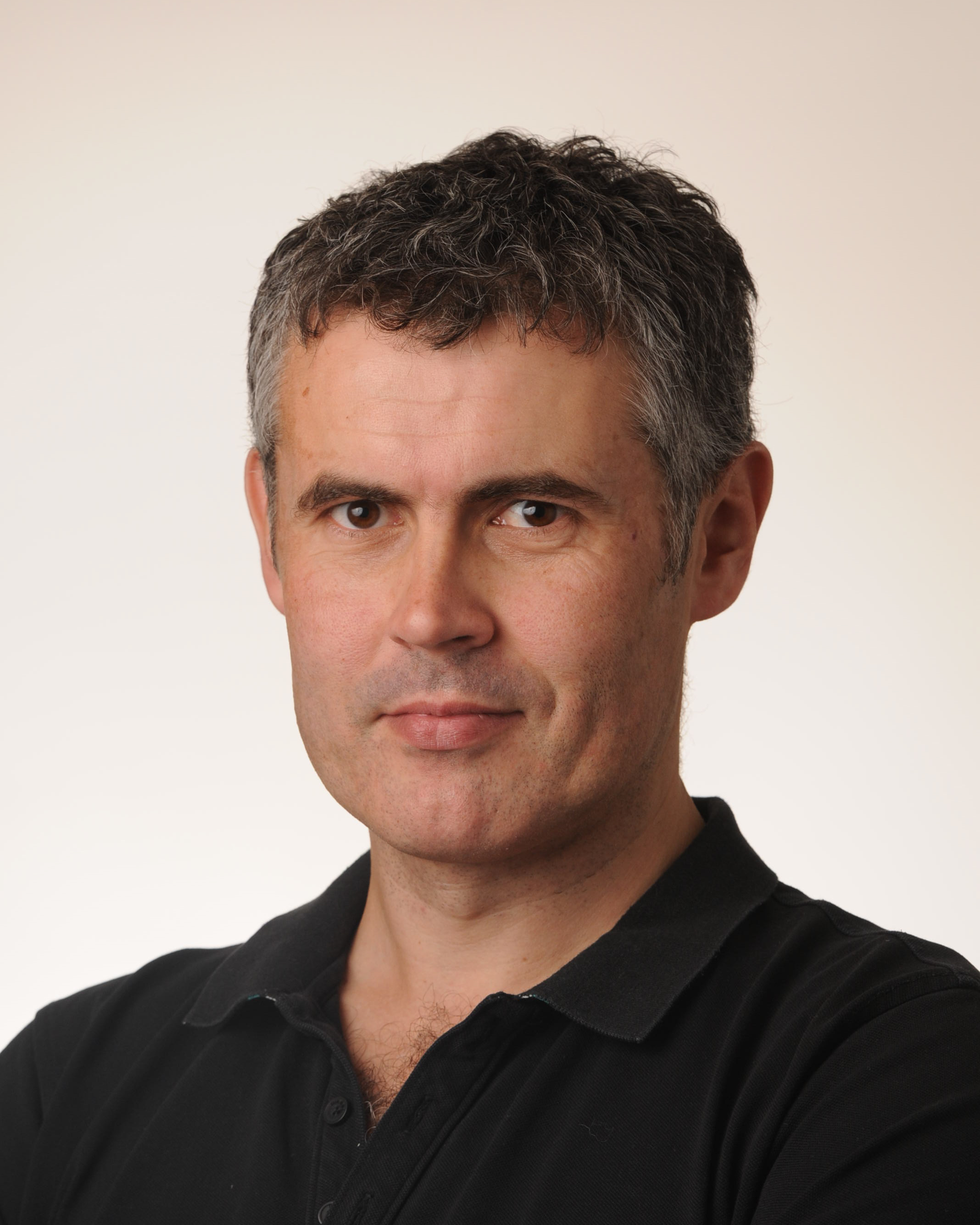
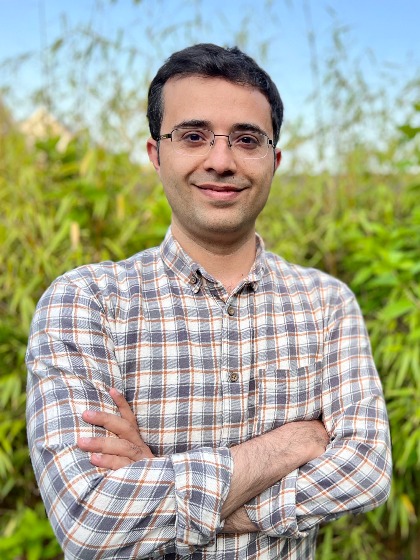
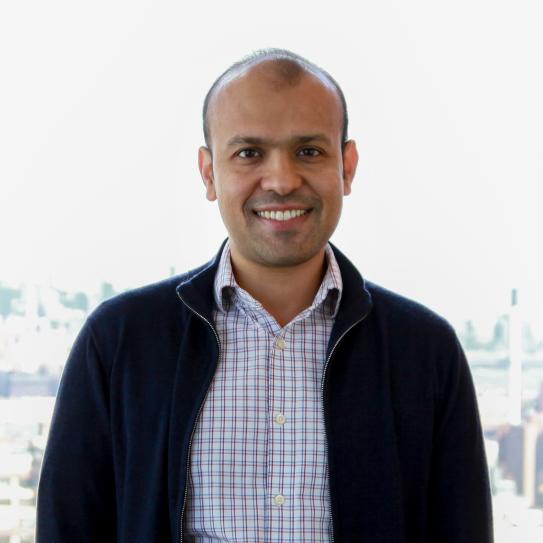
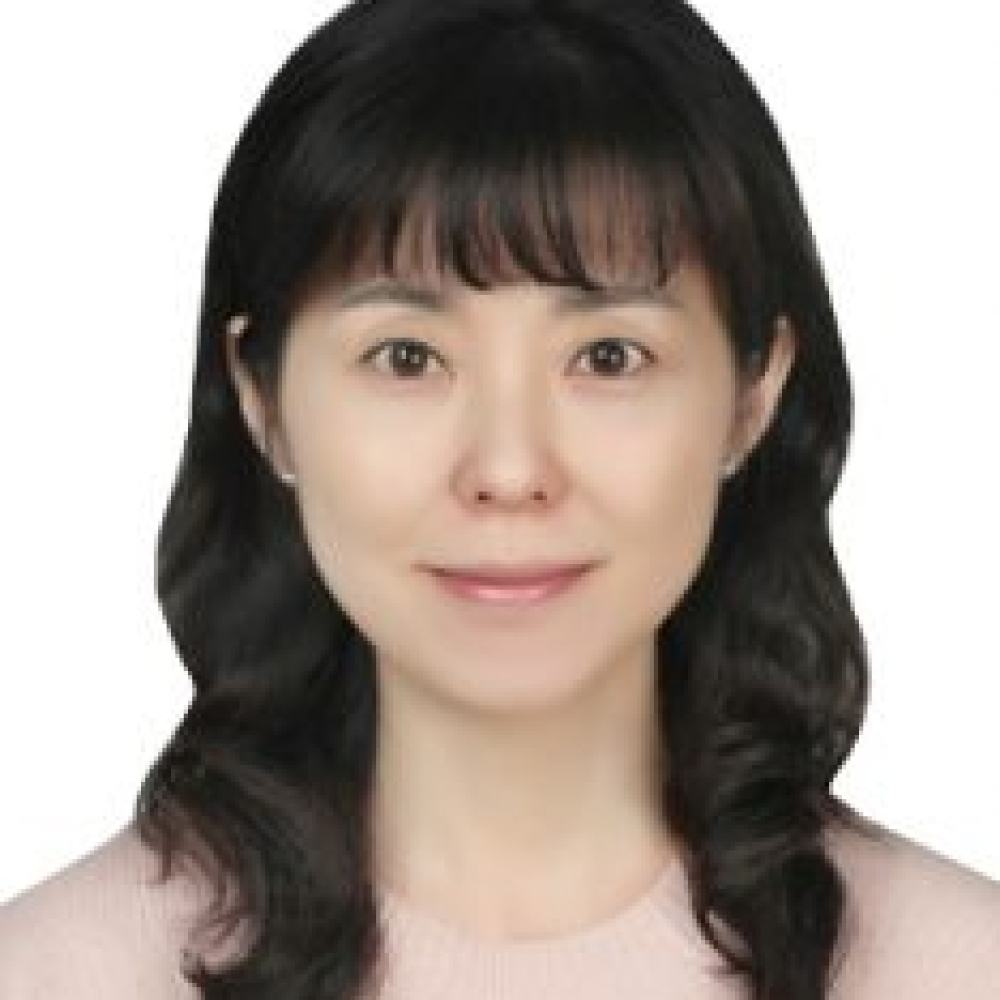
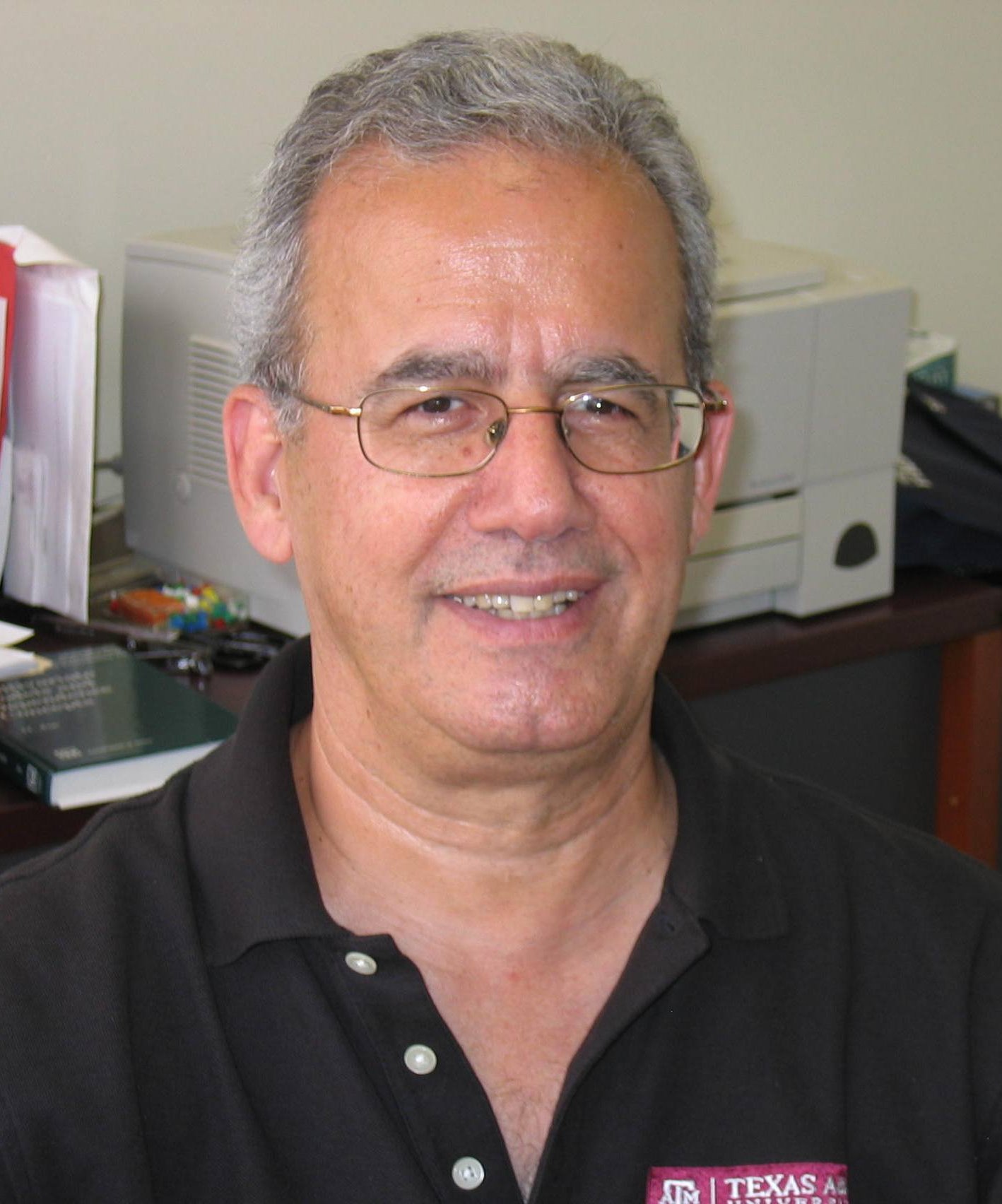
Nick Heard is a Professor and Chair in Statistics at the Department of Mathematics, Faculty of Natural Sciences, Imperial College London. His research focuses on computational Bayesian inference, clustering, and changepoint analysis applied to dynamic networks (e.g., computer networks, social networks) and bioinformatics. He leads the EPSRC-funded NeST project on Network Stochastic Processes and Time Series, collaborating with universities including Bristol, Oxford, and LSE. His work bridges statistical theory with applied problems in cyber-security and neuroscience. Research Interests - Modelling large dynamic networks - Changepoint analysis and anomaly detection - Statistical methods for cyber-security - Bayesian computation and inference - Spectral clustering and graph embeddings Grants & Collaborations - Co-leads the NeST project on Dynamic graph embeddings: procedures and inference - EPSRC Programme Grant (EP/T004870/1) supporting Network Stochastic Processes and Time Series research Software & Tools - Developed open-source packages for Bayesian changepoint analysis (e.g., changepoints ) - Code for p-value combination methods ( standardised_partial_product )
Prof. Dr. Andreas S. Schulz is a faculty member at Technische Universität München (TUM), holding a chair in the Department of Mathematics and the Department of Business and Economics. He previously served as the Patrick J. McGovern Chair of Management and Professor of Mathematics at MIT. His research focuses on mathematical optimization, algorithm design, and their applications in logistics, production, healthcare systems, and online advertising. He has held visiting professorships at institutions such as the Sauder School of Business (UBC) and ETH Zurich. Prof. Schulz’s research bridges operations research, theoretical computer science, and economics. He develops analytical methods to solve complex decision-making problems in business, including scheduling, resource allocation, and network optimization. A key interest is applying mathematical approaches to enhance healthcare delivery and system efficiency. Education: PhD in Operations Research (MIT), prior academic roles at MIT and visiting institutions. Key Achievements: Alexander von Humboldt Professorship (2014), Humboldt Research Award (2010), Glover-Klingman Prize (2006). Research Themes: Robust optimization, approximation algorithms, scheduling theory, and algorithmic game theory. His publications span topics like integer programming, optimal transport, and congestion games. He collaborates across disciplines, emphasizing practical applications of theoretical insights.
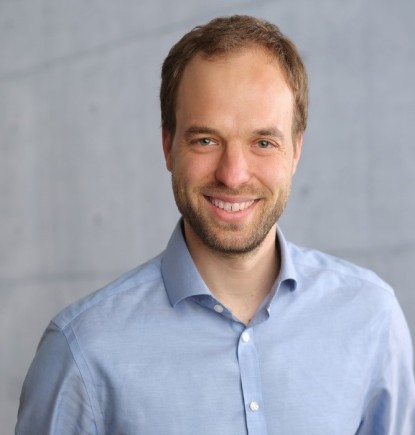
Prof. Benno Liebchen holds a faculty position at the Technische Universität Darmstadt within the Institute for Condensed Matter Physics , part of the Faculty of Physics. He leads the Liebchen Group , dedicated to advancing research in the Theory of Soft Matter , focusing on active matter, colloidal systems, and non-equilibrium phenomena. His work explores collective behavior in self-propelled particles, phase transitions in active fluids, and adaptive strategies in smart materials. Research Interests include: Active matter dynamics and pattern formation Non-equilibrium statistical mechanics Biophysical systems and biomimetic design Computational modeling of soft matter Recent publications highlight breakthroughs in intelligent active particles , self-reverting vortices , and motility-induced phase coexistence . His lab develops tools like the AMEP Python package to analyze active systems. Teaching responsibilities include advanced modules in soft matter physics. Collaborative projects involve interdisciplinary approaches to microswimmer behavior and machine learning-driven optimization of collective systems. Contact: +49 6151 16-24509 / Office: S2|04 104
David Danks is a Professor of Data Science, Philosophy, and Policy at the University of California, San Diego. His work bridges AI ethics, causal inference, and policy, focusing on governance frameworks for emerging technologies. He leads research on trustworthy AI systems, healthcare technology applications, and sociotechnical risks. Danks is affiliated with the DIVER Lab, exploring interdisciplinary approaches to AI's societal impact. His research spans causal discovery algorithms, ethical AI design, and the intersection of science and policy. Notable themes include mitigating bias in quantum machine learning, dynamic certification for autonomous systems, and addressing unforeseen technological harms. He has contributed to national AI policy through roles like the National Artificial Intelligence Advisory Committee. Publications emphasize ethical challenges in AI development, such as algorithmic fairness, epistemic utility, and moral responsibilities in dual-use technologies. His work frequently intersects with healthcare innovation, including personalized hemodynamic models for surgical risk reduction. While no formal awards or grants are listed, Danks' involvement in high-profile initiatives like the CCC Whitepaper on pandemic prevention underscores his leadership in translational ethics and policy.
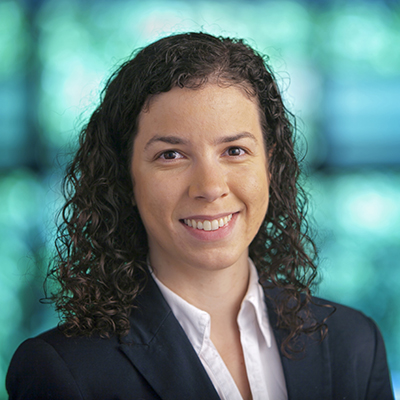
Celia Reina is an Associate Professor in the Department of Mechanical Engineering and Applied Mechanics at the University of Pennsylvania’s School of Engineering and Applied Science (SEAS). Her research focuses on multiscale modeling of materials, bridging statistical mechanics, thermodynamics, and machine learning. She develops novel frameworks for predicting non-equilibrium material behavior using data-driven methods and uncertainty quantification. Her work emphasizes integrating computational tools like neural networks (Stat-PINNs, VONNs) with physical principles to model dissipative systems, phase transitions, and mesoscale dynamics. Key areas include coarse-graining techniques, epistemic uncertainty analysis, and predictive modeling of complex materials under dynamic loading. Recent publications highlight advancements in stochastic systems, resonant metamaterials, and the derivation of thermodynamic models from particle-level fluctuations. She leads efforts in experimental-simulation co-design to enhance predictive capabilities in materials science.
Jonathan Weare is a Professor of Mathematics at the Courant Institute of Mathematical Sciences, New York University. He holds affiliations with the Faculty of Arts and Science and the Graduate School of Arts and Science. His academic journey includes roles as an Associate Professor at the University of Chicago (2014–2019) and Assistant Professor (2011–2014), following postdoctoral work as a Courant Instructor at NYU. He earned his Ph.D. in Mathematics from UC Berkeley in 2007. His research focuses on stochastic algorithms and models, with applications in astrophysics, biophysics, computational chemistry, and climate science. Key areas include Monte Carlo methods, rare event simulation, and machine learning-driven scientific analysis. Collaborations with domain experts ensure his work addresses real-world challenges in diverse fields. Recent publications emphasize advancements in trajectory stratification, rare event prediction using machine learning, and efficient algorithms for high-dimensional problems. Notable contributions include the BAD-NEUS framework and AI-based solar system instability predictions. His group’s interdisciplinary approach bridges computational methods with scientific inquiry. Weare has advised numerous students and mentored postdocs, fostering talent in applied mathematics and computational science. His work on Mercury’s orbital dynamics and extreme weather prediction showcases the societal impact of his research. Current projects explore AI applications in weather modeling and rare event analysis, leveraging cutting-edge machine learning techniques. Labs/Teams: His research group at Courant develops stochastic algorithms and collaborates with interdisciplinary teams in computational chemistry, climate science, and astrophysics. Key collaborations include the University of Chicago and Columbia University.
Nima Monshizadeh Naini is a Professor in the Faculty of Science and Engineering at the University of Groningen. He holds the position of Chair of the IEM Program Committee and serves on the boards of ENTEG and YSEN. His academic journey includes a PhD in Control Systems from the University of Groningen (2013, Cum Laude), followed by postdoctoral research at the University of Cambridge (2016-2017) and the University of Groningen (2014). He has been an Assistant Professor since 2018 and was awarded the NWO Open Competition Grant in 2021. His research focuses on Cyber-Physical Human Systems (CPHS) , addressing two core areas: (1) Coordination of self-interested users in power systems and traffic networks using dynamic information design and game-theoretic mechanisms; and (2) Privacy-aware control and optimization with tailored encryption methods for dynamic systems. Applications include energy markets, microgrids, and smart grids. He has published extensively in top venues like IEEE CDC and Automatica, with key topics including privacy-preserving algorithms, distributed control, and optimal intervention design. His work contributes to UN Sustainable Development Goals related to affordable energy and responsible consumption. Education: PhD in Control Systems, University of Groningen (2013) Research Associate, University of Cambridge (2016-2017) Postdoctoral Researcher, University of Groningen (2014) Awards: Cum Laude distinction for PhD thesis (2013) NWO Open Competition Grant (2021) Advising & Grants: Supervised 5 PhD students Editorial roles in IEEE journals and conference proceedings Labs/Teams: Leading the Cyber-physical systems group within the Smart Manufacturing Systems institute.
Siddharth Garg is the Institute Associate Professor of Electrical and Computer Engineering at NYU Tandon School of Engineering, leading the EnSuRe Research Group. He holds a Ph.D. from Carnegie Mellon University (2009) and a B.Tech. from IIT Madras. His research focuses on secure and energy-efficient computing systems, integrating machine learning, cybersecurity, and hardware design. He previously held roles as Assistant Professor at NYU Tandon (2014-2020) and the University of Waterloo (2010-2014). Key affiliations include NYU Center for Cybersecurity (CCS), NYU Wireless, and the Center for Advanced Technology in Telecommunications. His work has been recognized with prestigious awards like the NSF CAREER Award (2015) and inclusion in Popular Science’s 'Brilliant 10' (2016). Notable research includes private inference optimization, secure hardware IP protection, and adversarial machine learning defenses. Publications highlight advancements in zero-knowledge proofs, AI-driven chip design, and mitigating backdoor attacks in neural networks. His grants include funding from NYU Wireless and NSF initiatives like the Chips4All project. The EnSuRe group emphasizes bridging software and hardware design gaps using AI and fostering cybersecurity education.
Hyejin Ku is a Full Professor in the Department of Mathematics and Statistics at York University's Faculty of Science. Her research focuses on the intersection of Mathematical Finance and Machine Learning, addressing challenges in risk measurement, portfolio optimization, and quantitative finance. She develops advanced mathematical models to enhance decision-making through reinforcement learning and data analytics. Notable projects include novel algorithms for credit rating prediction using neural networks and sequence-based clustering for credit risk assessment. Her work integrates applied mathematics with real-world financial applications, such as systemic risk reduction in multi-layer networks and option pricing under liquidity constraints. She holds a prominent position in mathematical finance, contributing to both theoretical advancements and practical solutions for financial markets. Her research trends emphasize interdisciplinary approaches, combining machine learning techniques with financial modeling to solve complex problems in risk management and asset valuation. Her publications span over two decades, showcasing contributions to portfolio optimization, derivatives pricing, and computational finance. Dr. Ku is affiliated with York University’s Department of Mathematics and Statistics, where she contributes to academic leadership and research mentorship. Her office is located in DB 2025, and she can be reached at hku@yorku.ca.
Mohsen Pourahmadi is a Professor in the Department of Statistics at Texas A&M University, part of the College of Arts & Sciences. His research focuses on developing methodologies for modeling covariance matrices in multivariate and time series data, with applications to financial analysis, longitudinal studies, neuroeconomics, and high-dimensional data. Key tools include graphical lasso algorithms, Cholesky decomposition, and Bayesian approaches. He emphasizes extending generalized linear models (GLM) to covariance matrix estimation, leveraging prediction theory and stochastic processes. Education details are not explicitly provided in the text. His work spans theoretical advancements in covariance estimation, such as sparse VAR models, nonstationary process analysis, and regularized multivariate regression. He has contributed to applications like detecting cyber attacks on infrastructure systems and analyzing breast cancer data through Bayesian networks. Research interests include time series graphical models, antedependence models for longitudinal data, and regularization techniques for high-dimensional covariance matrices. His recent work explores fused-lasso penalties, Bayesian correlation matrix estimation, and stationary subspace analysis. Pourahmadi has authored numerous articles on topics ranging from multivariate volatility modeling to nonparametric covariance estimation, emphasizing both computational efficiency and theoretical rigor.
Dr. Somayeh Allahyari is an Assistant Professor in Operations and Supply Chain Management at the Birmingham Business School, University of Birmingham. She holds a PhD in Industrial Engineering (2021) and has academic qualifications including an MSc (2013), BSc (2011), and a Diploma in Mathematics and Physics (2006). Her research focuses on Operations Research methodologies applied to Logistics, Network Design, and Supply Chain Management. Key interests include Optimization, Heuristics, Decision Support Systems, and Business Analytics. She has led industry projects such as the Drone Medical Logistics project for the Solent Future Transport Zone Programme, exploring multi-modal logistics solutions. Teaching responsibilities include modules on Supply Chain Management (UG), Operations Management (MSc), and Business Analytics (MSc Singapore). She actively supervises PhD candidates in areas like Logistics, Blockchain Technology, and Digital Transformation. Her publications appear in top journals like Transportation Research Part E and European Journal of Operational Research , with conference contributions at INFORMS Transportation Science. She serves as a peer reviewer for major journals and conferences in her field.
Ronald Coifman is the Sterling Professor of Mathematics and Professor of Computer Science at Yale University. His research focuses on nonlinear analysis, scattering theory, complex analysis, numerical analysis, and their applications in data science, signal processing, and biomedical imaging. He holds the National Medal of Science and is a member of the National Academy of Sciences and the American Academy of Arts and Sciences. Coifman's work bridges pure mathematics and applied sciences, emphasizing harmonic analysis, manifold learning, and data-driven modeling. His contributions include foundational advancements in wavelet theory, diffusion maps, and nonlinear dimensionality reduction techniques. Key innovations include the development of empirical intrinsic geometry for analyzing complex systems and the use of Wasserstein distances in high-dimensional data analysis. His academic portfolio includes over 250 publications since the 1960s, spanning topics from theoretical mathematics to practical medical diagnostics. Notable applications include methods for stroke detection, medical imaging analysis, and anomaly detection in dynamic systems. Coifman collaborates across disciplines, integrating computational methods with domain-specific challenges in biology, chemistry, and engineering. Education: Ph.D. in Mathematics from the University of Geneva (1965) Awards: National Medal of Science (2001), Member of NAS (1993), Member of AAAS (2006) Key Projects: Development of diffusion maps, manifold learning algorithms, and empirical geometry frameworks Coifman's current research explores the intersection of machine learning and mathematical analysis, with recent focus on intrinsic data organization, emergent dynamical models, and scalable computational methods for large datasets.
Prof. Jalal Etesami is an Assistant Professor in the Department of Computer Science at Technical University of Munich (TUM), leading the Decision Sciences & Systems group. He holds a Ph.D. in Industrial and Systems Engineering from the University of Illinois at Urbana-Champaign and was a Postdoctoral Fellow at EPFL in Switzerland. His research focuses on machine learning, causal inference, multi-agent systems, and game theory, with applications to systemic risk modeling and market design. He teaches advanced courses such as Causal Inference in Time Series , Algorithmic Game Theory , and Optimization, Learning, and Market Design . Notable contributions include work on causal structure learning, stochastic optimization, and non-Gaussian causal models. Recent research explores causal effect identification under confounding, neural networks for market analysis, and optimal experiment design. Prof. Etesami’s work appears in top venues like NeurIPS, AAAI, and IEEE journals. He actively contributes to the academic community, organizing seminars and workshops on topics ranging from causal reasoning to computational social choice.
Dr. Yi Guo is an External Scientific Staff member at the Power Systems and High Voltage Lab, part of ETH Zurich's Department of Information Technology and Electrical Engineering. His research focuses on advancing smart grid technologies, particularly in power system coordination, stochastic control, and distributed energy resource integration. His work emphasizes real-time operational frameworks for integrated transmission-distribution systems, flexibility modeling, and robust optimization under uncertainty. Collaborations include projects funded by NCCR Automation (SNF). Key research areas include: - Real-time grid control and NMPC applications - Stochastic modeling of distributed energy resources (DERs) - Sparsity-promoting control design for power grids - Joint optimization-estimation architectures for distribution networks - Two-stage electricity market frameworks for DER participation Recent publications (2020-2024) highlight contributions to grid resilience, DER aggregation, and sensor placement optimization. His work addresses challenges in energy transition through advanced control systems and market mechanisms. Lab affiliations include the Power Systems and High Voltage Lab, collaborating on projects like NCCR Automation Phase I. His research bridges theoretical control advancements with practical grid implementation.
I. Safak Bayram is a Senior Lecturer (Associate Professor) in the Department of Electronic and Electrical Engineering at the University of Strathclyde, Glasgow, UK. He joined Strathclyde in 2020 as a Chancellor's Fellow, following his role as an Assistant Professor and Scientist at Hamad Bin Khalifa University, Qatar. His research focuses on advancing sustainability and efficiency in intelligent power grids and transportation networks through system-level modeling, control, and management frameworks. Education: PhD in Electrical and Computer Engineering, North Carolina State University (2014) MSc in Telecommunications, University of Pittsburgh (2010) BSc in Electrical and Electronics Engineering, Dokuz Eylul University, Turkey (2007) His research interests center on the integration of electric vehicles (EVs), renewable energy, and energy storage systems into the grid to decarbonize transportation and electricity sectors. He specializes in smart charging, demand-side management, harmonics, power quality, and V2G technologies. His recent publications (2024–2025) emphasize experimental and modeling approaches to EV smart charging impacts on transformers, phase imbalance, and grid compatibility, reflecting a strong focus on real-world deployment and grid resilience. Scientific Awards: Best Paper Award, IEEE SmartGridComm (2024) Best Paper Award, IEEE Workshop on Renewable Energy and Smart Grid (2015) Best Paper Award, IEEE SmartGridComm (2018) Best Readings in Smart Grid Communications (2014) Adjunct Faculty Member Appointment (2020) Dr. Bayram is actively involved in research leadership and academic service. He has secured multiple research grants as Principal Investigator, including projects on V2G hubs and off-grid EV charging. He serves as an Associate Editor for IEEE Transactions on Transportation Electrification and IET Electrical Systems in Transportation, and has organized special issues and conferences such as IEEE SmartGridComm. He regularly delivers tutorials and participates in international conferences, contributing to the global smart grid and electrification community. Labs and Research Teams: His work is supported by active collaborations with industry (e.g., Arnold Clark Automobiles Limited) and research institutions. He leads research on modular EV charging (BumblebeeEV), smart charging algorithms, and grid integration projects, often involving experimental validation and field data analysis.