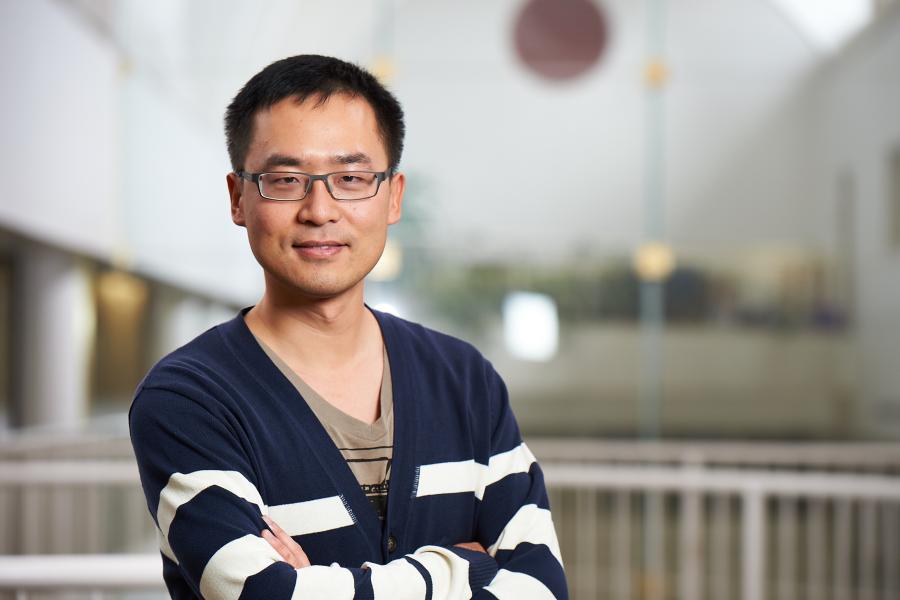
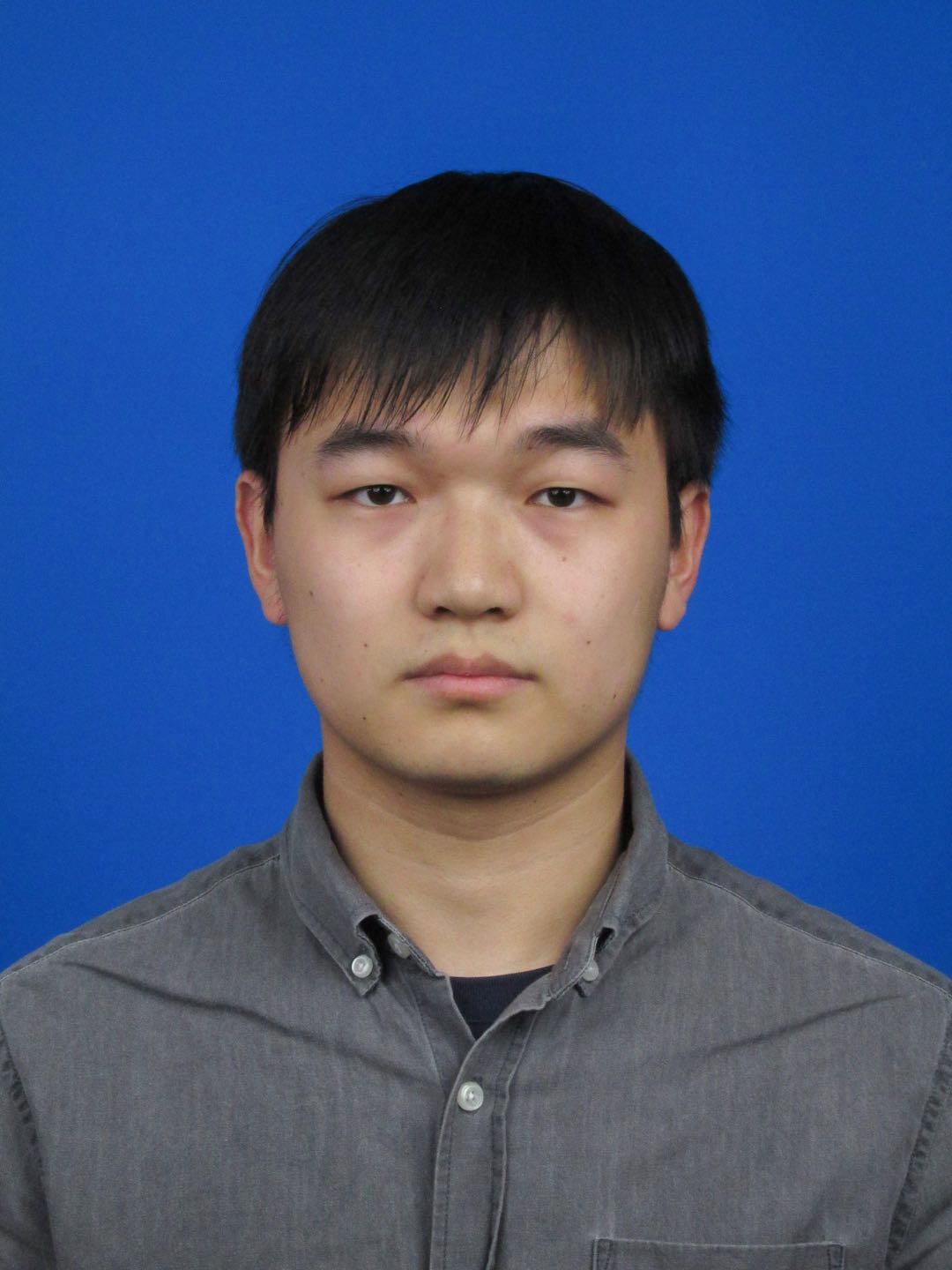
Xuemiao (Samuel) Hao is an Associate Professor at the Warren Centre for Actuarial Studies and Research within the Asper School of Business at the University of Manitoba. He holds dual bachelor's degrees in mathematics and economics from Peking University, and PhD in statistics from University of Iowa. Research focuses on: Mathematical modeling of insurance/financial risks Applications of stochastic processes Credit derivative pricing Ruin theory with heavy-tailed distributions His methodological work employs advanced techniques including Lévy processes, Fourier transforms, and asymptotic analysis for risk quantification.
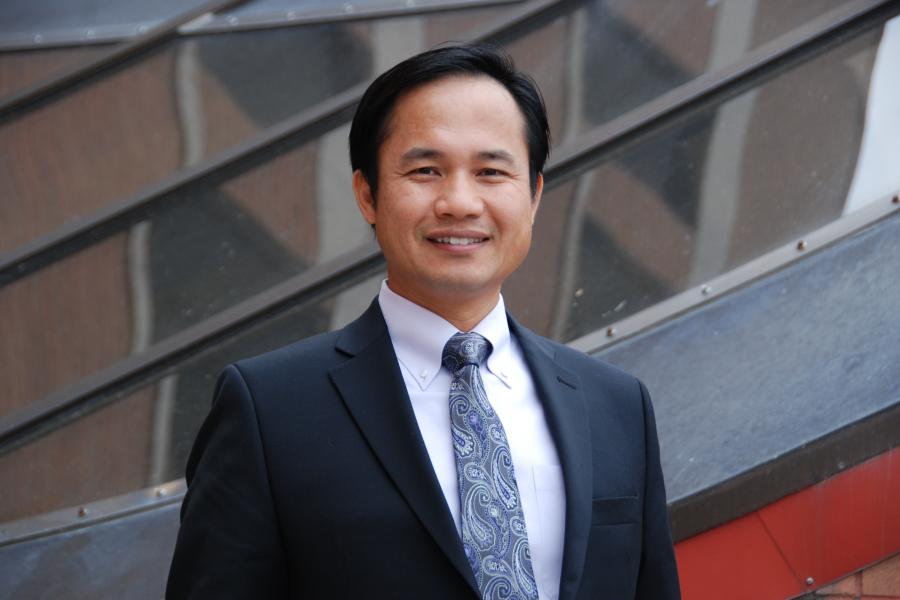
Jeffrey Pai is a Professor at the Warren Centre for Actuarial Studies and Research within the Asper School of Business at the University of Manitoba. With over 30 years of academic experience spanning multiple countries, he specializes in actuarial science, risk modeling, and financial derivatives. His research examines livestock/crop insurance, weather derivatives, and Bayesian statistical methods for risk assessment. Research encompasses quantitative risk management frameworks, stochastic modeling of insurance products, and econometric analysis of financial instruments. Recent work focuses on parametric insurance for natural disasters, mortality catastrophe modeling, and agricultural risk transfer mechanisms using advanced statistical approaches. Publications demonstrate consistent focus on practical applications of actuarial science, particularly in agricultural insurance and weather-related financial instruments. Recent trends show increased emphasis on Bayesian methods, catastrophe modeling, and developing market applications. Awards: Students' Teacher Recognition Awards (2021, 2002) CAS Best Paper Award (2016) Literati Network Outstanding Paper Award (2011) Featured in MACLEAN's Guide to Canadian Universities (2004) Extensive teaching includes courses in life contingencies, risk theory, and actuarial modeling. Secured research funding from international agencies including SSHRC (Canada), Society of Actuaries (USA), and UK Development Partnerships.
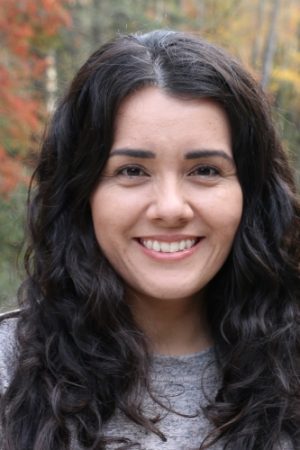
Dr Banafsheh Khosravi is a Senior Lecturer in Operational Research at the University of Portsmouth, affiliated with the School of Mathematics and Physics. She is a member of the Logistics, Operational Research and Analytics Research Group (LORA) and the Centre for Operational Research and Logistics (CORL). Her research focuses on mathematical modelling, combinatorial optimization, and applications in transportation and healthcare. She holds a PhD in Management Science from the University of Southampton, with earlier degrees in Industrial Engineering. Before joining Portsmouth, she worked at the University of Southampton's CORMSIS Centre and the University of Westminster's Health and Social Care Modelling Group. Dr Khosravi teaches Operational Research, Modern Computational Methods, and Supply Chain Management courses. She has supervised numerous academic projects and led industry-funded research with EPSRC, ESA, NHS, RSSB, and Arriva. Her work addresses challenges like railway scheduling, routing optimization, and healthcare capacity planning. She is a Fellow of the Higher Education Academy and contributes to professional organizations including The OR Society and IAROR. Her research trends span transportation logistics (railway rescheduling, electric vehicle routing) and healthcare systems (NHS patient activity forecasting). Recent work emphasizes risk-based surveillance and digital performance analysis in undersea infrastructure and insurance sectors. Collaborations with industry partners ensure practical impact across sectors like rail networks and space operations. Awards: Fellow of the Higher Education Academy (FHEA) Labs/Teams: LORA Group, CORL Centre, Intelligent Transport Research Cluster Grants: Funded by EPSRC, ESA, NHS, RSSB, Arriva
Juan Carlos Parra-Alvarez is an Associate Professor at Aarhus University's Department of Economics and Business Economics, with adjunct roles at Aalborg University and research fellowships at CREATES and the Danish Finance Institute. He holds a PhD in Economics and Business from Aarhus University. His research focuses on quantitative methods for macroeconomic and financial analysis, including dynamic equilibrium economies, asset pricing, and disaster risk modeling. Key interests span continuous-time econometrics, heterogeneous agent modeling, and consumption-based capital asset pricing. Recent publications demonstrate concentrated work on refining estimation techniques for DSGE models, solving peso problems in asset pricing, and developing risk-sensitive approximation methods. Awards include the William E. Brigman Award for outstanding graduate research.
John Abatzoglou is a Professor in the Department of Management of Complex Systems at the University of California, Merced. His work focuses on the intersection of climate change, wildfire dynamics, and environmental systems. He investigates how climatic factors influence fire regimes, hydrological processes, agricultural sustainability, and ecosystem resilience. His research often integrates geospatial data, climate projections, and interdisciplinary collaboration to address real-world challenges such as water security and disaster risk reduction. Key research themes include wildfire risk assessment, climate change impacts on ecosystems, and the socio-economic dimensions of environmental management. He has developed influential models like the Western United States Large Forest-Fire Stochastic Simulator (WULFFSS) to predict fire behavior under changing climates. His work also examines the compounding effects of climate change and urban expansion on wildfire vulnerability, particularly in California. Abatzoglou’s publications highlight linkages between anthropogenic climate change and extreme events such as prolonged droughts, heatwaves, and elevated wildfire emissions. He emphasizes the need for adaptive strategies in water resource management, agricultural practices, and wildfire mitigation. His findings are frequently cited in policy discussions regarding climate adaptation and environmental governance. Notable contributions include studies on the role of vapor pressure deficit in fire regimes, the economic impacts of drought on agriculture, and the evaluation of seasonal climate forecasts for rangeland management. His research bridges global climate patterns with local-scale management decisions, offering actionable insights for policymakers and practitioners.
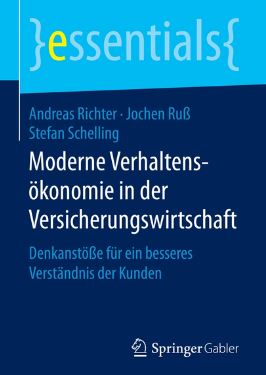
Dr. Stefan Schelling is a Lecturer and Researcher at the Department of Insurance Science, University of Ulm. He holds a PhD in Management and Economics (2019) with a focus on Behavioral Insurance, and dual Master's degrees in Mathematics and Management (2014) from Ulm University and Syracuse University. Education: Ph.D. in Management and Economics (Dr. rer. pol.), University of Ulm (2019) M.Sc. in Mathematics and Management, University of Ulm (2014) M.Sc. in Mathematics, Syracuse University, NY, USA (2014) Research Interests: Behavioral Insurance, retirement savings strategies (including optimal saving, guarantees, and the annuity puzzle), Prospect Theory applications, and actuarial data science. His work emphasizes bridging theoretical models with client preferences in retirement product design. Key Contributions: His research on return smoothing mechanisms in life insurance, demand for cliquet-style guarantees, and wellness-linked insurance incentives has earned awards such as the Ernst Meyer Prize and GAUSS-Nachwuchspreis. Recent publications focus on intergenerational risk sharing and low-interest-rate impacts on withdrawal rules. Awards: Ernst Meyer Prize (Geneva Association) GAUSS-Nachwuchspreis (DGVFM/DAV) Excellence Award (Association for the Advancement of Insurance Research Hamburg) 2016 DIA Zukunftspreis Teaching & Leadership: Teaches advanced actuarial courses (e.g., Asset-Liability Management, Actuarial Data Science) and supervises theses. Serves on University committees including the Faculty Council (Mathematics and Economics) and licensing committees for actuarial and finance programs. Organized major conferences like the 2021 International Congress on Insurance: Mathematics & Economics.
Dr. Shihao Zhu is a postdoctoral researcher at the Institute of Insurance Science (IVW) at Ulm University since February 2024. He completed his Ph.D. in Mathematics at Bielefeld University, Germany (January 2021 - June 2024), supervised by Prof. Dr. Giorgio Ferrari at the Center for Mathematical Economics (IMW). His academic affiliation at Ulm University involves collaboration with Prof. Dr. An Chen. Education : Ph.D. in Mathematics, Bielefeld University (2021-2024) Current Role : Postdoc Researcher at Ulm University's Institute of Insurance Science (IVW) His research focuses on stochastic control models, insurance mathematics, and financial optimization under uncertainty. Key areas include dividend policies, reinsurance strategies, retirement planning, and health-wealth complementarities. The work often involves Markov-modulated environments and ambiguity modeling. Recent publications demonstrate expertise in solving free-boundary problems, stochastic dynamic programming, and actuarial risk modeling. Topics span optimal consumption, life insurance timing, and irreversible healthcare investment frameworks, reflecting interdisciplinary applications of mathematics in finance and insurance.
Marco Bee is a Full Professor at the Department of Economics and Management, University of Trento. His expertise spans applied econometrics, computational statistics, finance, and risk modeling. He focuses on methodologies for handling heavy-tailed distributions, extreme value theory, and machine learning applications in financial risk assessment. Education details are available in his CV (CVeng.pdf). His research interests include developing statistical models for operational risk, volatility forecasting, and credit scoring, often employing mixture models, copula-based approaches, and indirect inference techniques. He has contributed significantly to the analysis of spatial econometrics and the application of extreme value theory to financial crises and insurance analytics. His recent work emphasizes tail risk estimation, with over 150 publications since 2006. Notable contributions include methodologies for Value-at-Risk (VaR) forecasting, distribution fitting for skewed data, and the use of machine learning to predict defaults in small businesses. His research bridges theoretical statistics and practical financial applications, with a focus on high-frequency data and scenario-based risk analysis. Awards and grants are not explicitly listed in the provided data, but his extensive publication record reflects recognition in quantitative finance and econometrics. He advises students on topics related to computational econometrics and risk modeling, though specific advisee names are not documented here.
Adriana Ocejo is an Associate Professor and Undergraduate Program Director in the Department of Mathematics & Statistics at the University of North Carolina at Charlotte. She holds a PhD in Statistics (2014) from the University of Warwick, UK, and a MSc and BSc in Mathematics from Universidad de Sonora, Mexico. Her research focuses on mathematical finance, actuarial science, and stochastic optimal control, with applications to risk management, derivatives pricing, and portfolio optimization. She has contributed to regime-switching models, optimal stopping problems, and variable annuities analysis. Her work bridges theoretical stochastic processes with practical financial and actuarial challenges. Notable publications include studies on Feynman-Kac formula characterizations and utility maximization in regime-switching markets. She received the J.L. Doob Best Paper Award for her contributions to applied probability. Ocejo actively participates in academic programs such as the Actuarial Science Program, Mathematics Honors Program, and the MS in Mathematical Finance.
Prof. Dr. Stefan Baumgärtner is a Chair of Environmental Economics and Resource Management at Albert Ludwig University of Freiburg. His expertise spans ecological economics, environmental policy, and sustainability science. He previously held roles as Professor of Sustainability Economics at Leuphana University (2006–2014) and led the Futures of Ecosystem Services Research Center (2011–2014). He has also served as an advisor to institutions like the European Commission and the German Federal Ministry of the Environment. His research focuses on ecosystem resilience, intergenerational justice, and sustainable pastoral management in semi-arid regions. Education & Appointments: Chair at University of Freiburg since 2015 Professor of Sustainability Economics, Leuphana University (2006–2014) Assistant Professor and Junior Research Group Head, University of Heidelberg (2000–2006) Visiting positions at UC Berkeley, Arizona State University, and Universities of Augsburg, Zurich, and Namibia Research Interests: Combining ecological and economic principles to address sustainability challenges. Key areas include: Biodiversity and ecosystem services valuation Risk, resilience, and insurance mechanisms in socio-ecological systems Thermodynamics and joint production in human-environment systems Intergenerational justice frameworks Publications & Impact: Authored over 100 articles and books, including Joint Production and Responsibility in Ecological Economics (2006). His work appears in top journals like Ecological Economics and Environmental and Resource Economics . Recent articles explore causal responsibility in dynamical systems and stakeholder perspectives on sustainability. Consultancy & Leadership: Advises policymakers on biodiversity conservation and ecosystem services. Collaborates with Namibian institutions on rangeland management and climate adaptation strategies.
Athanasios Episcopos is a Professor at the Department of Accounting and Finance, School of Business, Athens University of Economics and Business (AUEB). He has held leadership roles including vice chair of his department and senior economist at the National Bank of Greece, with teaching experience at universities in both the USA and Greece since 1988. Education: Ph.D. in Economics, State University of New York (SUNY)-Buffalo, USA (1992) M.A. in Economics, SUNY-Buffalo (1989) M.B.A. in Business Administration, Roosevelt University, USA (1987) M.Sc. in Mathematics, University of Athens (1983) Research Interests: His primary research focuses on corporate finance with a specialized emphasis on contingent claims analysis in banking . His work spans areas including banking regulation , derivatives pricing , ESG risk premia , market microstructure , and financial risk management . His contributions integrate theoretical finance with empirical applications, particularly in banking and corporate valuation contexts. Research Trends: His recent publications (2022-2024) demonstrate a clear shift toward examining ESG factors in finance , geopolitical impacts on firm valuation , and regulatory effects on corporate financial behavior . His earlier work established foundational contributions in banking regulation using barrier options and neural network applications in finance . Awards & Recognition: Research Leadership Award, Clarkson University Excellence-in-Teaching Award, SUNY-Buffalo Teaching & Industry Experience: Beyond academia, he served as senior economist at the National Bank of Greece , bridging theoretical research with practical banking applications. His textbook "Corporate Finance: Theory and Practice" (2014) serves as a key educational resource in Greek universities. Research Contributions: He has authored/co-authored numerous refereed journal publications in top-tier outlets including Journal of Banking and Finance , European Journal of Finance , and Economics Letters . His working papers explore cutting-edge topics like 10-K filing sentiment in M&A and predictability in bank stock returns .
Raphael Boleslavsky is an Associate Professor in the Department of Economics at the School of Business Administration, University of Miami. His research lies at the intersection of microeconomic theory, information design, and political economy. His primary research interests include Bayesian persuasion , mechanism design , moral hazard , strategic communication , and political economy . He investigates how information is strategically used in markets, institutions, and political systems to influence behavior and outcomes. His work often applies game-theoretic models to study education, media freedom, protest dynamics, corporate governance, and financial reporting. The 15 most recent publications reflect a strong focus on information design and strategic signaling , with recurring themes in authoritarian politics , education quality , and contract theory . His work frequently employs tools from microeconomic theory and game theory to analyze incentive structures in complex environments. Bachelor’s degree: Princeton University (2004) Ph.D. in Economics: Northwestern University (2010) Boleslavsky has advised or collaborated with several economists, though specific students are not listed in the provided text. He has worked on grants and research projects related to information in economics , political institutions , and market design . His collaborations include economists such as Christopher Cotton, Mehdi Shadmehr, Kyungmin Kim, and Bruce Carlin. He is affiliated with research centers including the University of Miami Business School and has published in journals such as Review of Economic Studies and working paper series like NBER and CEPR. His research contributes to theoretical foundations in economics with applications in policy, finance, and political science.
Agnieszka Marciniuk is a Researcher in the Department of Statistics at Wrocław University of Economics. She serves as Coordinator of the Statistics Teaching Team and Treasurer of the PTS Wrocław Branch. Her work focuses on actuarial science, life insurance, stochastic modeling, and financial instruments for retirement planning. She has published extensively on equity release contracts, marriage-based financial instruments, and the socio-economic impacts of online education. Her research interests include life annuity equity release mechanisms, stochastic interest rate modeling, and the application of copulas in insurance products. She actively participates in international academic events, such as the Wrocław-Marburg Statistical Seminars. Recent articles highlight her expertise in demographic factors affecting pension benefits and cross-national comparisons of financial instruments. Her work frequently addresses aging populations and financial protection for retirees, combining mathematical rigor with practical policy implications. She maintains an active academic presence, with consultations scheduled in both on-site and online formats, and oversees diploma and master’s seminars in statistics and economics.
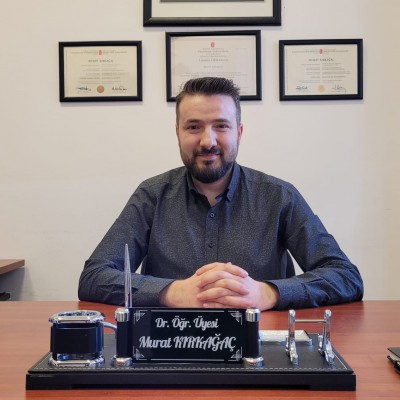
Murat Kırkağaç is an Assistant Professor at the Department of Insurance and Risk Management, Faculty of Applied Sciences, Dumlupınar University. He holds a PhD in Actuarial Sciences from Hacettepe University. His academic career includes roles such as Deputy Head of Department, Research Assistant, and lecturer dating back to 2013. He teaches courses like Actuarial Mathematics, Risk Management, and Life Models. His research focuses on actuarial science, pension systems, risk management, and statistical analysis of insurance markets. Education: Bachelor's in Actuarial Sciences (Hacettepe University, 2011) Master's in Actuarial Sciences (Hacettepe University, 2015) PhD in Actuarial Sciences (Hacettepe University, 2022) His work emphasizes quantitative methods applied to insurance and financial systems, including time series forecasting, pension fund optimization, and disaster risk modeling. He has contributed to over 15 peer-reviewed articles and co-authored books on actuarial topics. His recent studies analyze the socio-economic impacts of the 2023 Kahramanmaraş earthquakes on insurance markets and pension systems. He has participated in international conferences and projects, including the 2nd National Insurance and Actuarial Congress (2015) and the 6th International Symposium of Researchers (2022). His administrative roles include Deputy Head of Department since 2023, overseeing academic and operational coordination.
R.A. Dr. Yılmaz KÖPRÜCÜ is an active academic at the Department of Economics in Eskişehir Osmangazi University (Turkey). His roles include research and teaching in applied economics with a focus on price analysis, agricultural economics, and development issues. Education : B.A. Economics, Dokuz Eylül University (2010) M.A. Economics, Dokuz Eylül University (2013) Ph.D. Economics, Yıldız Technical University (2021) Research Interests : Dr. Köprücü's work emphasizes quantitative analysis of economic systems, particularly in agricultural markets, industrial competitiveness, and policy impacts. He employs econometric techniques like ARDL, spatial analysis, and stochastic frontier approaches to study topics such as price transmission mechanisms, cost efficiency in industries, and FDI spillover effects. His recent focus includes evaluating market dynamics in Turkey's cement, red meat, and wheat sectors. Publications Trends : Over 15 peer-reviewed articles (2016–2024) highlight his expertise in: Industrial competition analysis (cement sector efficiency) Agricultural policy evaluation (spatial market integration) Macroeconomic policy modeling (education-FDI-growth linkages) Health economics (insurance system reforms) Professional Contributions : Serves as thesis advisor for graduate students and contributes to academic governance via consultancy roles in student clubs.