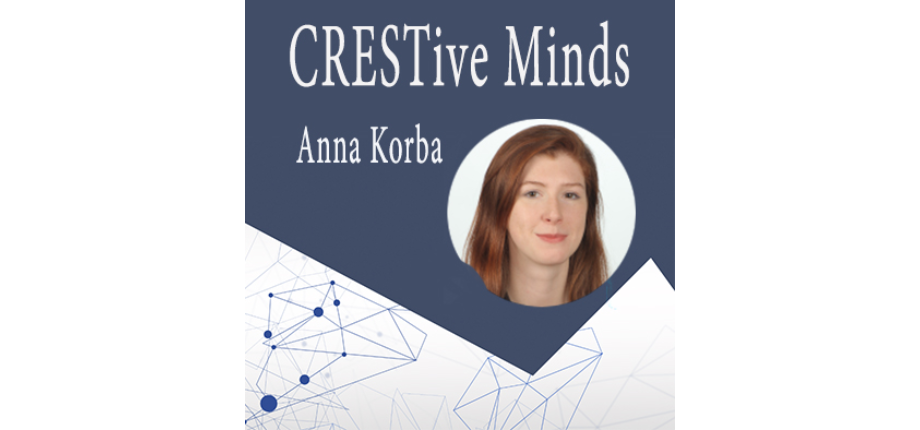
Anna Korba is an Assistant Professor at CREST-ENSAE Paris within the Statistics Department. She holds an ENSAE Engineering degree in Data Science and a Master's in Mathematics, Vision & Learning (MVA) from ENSAE Paris. Her career includes a Ph.D. in Machine Learning at Télécom ParisTech, followed by a postdoctoral position at UCL's Gatsby Unit. Her research focuses on sampling techniques, Bayesian inference, optimal transport, and generative modeling, with recent work on constrained sampling and fairness integration. She contributes to collaborative efforts at the intersection of machine learning, dynamical systems, and PDEs. Notably, she co-presented tutorials on Wasserstein gradient flows at ICML 2022. Her work addresses unsolved challenges in sampling efficiency and fairness constraints. She is actively involved in CREST research initiatives and academic mentorship.
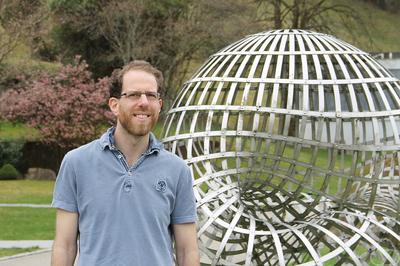
Simon Lacoste-Julien is an Associate Professor at Université de Montréal, affiliated with the Department of Computer Science and Operations Research (DIRO). He also serves as the Associate Scientific Director of Mila – Quebec Institute of Artificial Intelligence and holds the position of Vice President Lab Director at Samsung SAIT AI Lab Montreal (SAIL). His research focuses on machine learning, optimization, and their applications in areas like deep learning, generative models, causality, and computer vision. Lacoste-Julien has held academic positions at INRIA in Paris and has a PhD from UC Berkeley, with postdoctoral work at the University of Cambridge. He teaches advanced graduate courses on probabilistic graphical models and structured prediction. His work includes contributions to optimization algorithms (e.g., Frank-Wolfe methods), causal discovery, and generative models. Lacoste-Julien has supervised numerous students and postdocs, and his awards include being a CIFAR Fellow and Canada CIFAR AI Chair. His research spans theoretical foundations and practical applications, with a strong emphasis on scalable and efficient machine learning techniques.
Univ.Prof. Michael Wimmer is a Professor in the Department of Computer Graphics and Visualization at TU Wien's Faculty of Informatics. His research focuses on real-time rendering, point cloud processing, GPU computing, and computational design. He leads projects involving architectural visualization, thermal simulation, and integrative design frameworks combining 4D sketching with material modeling. His work bridges computer graphics with applications in architecture and engineering. ORCID: 0000-0002-9370-2663 Research Group: Network Lab Recent research emphasizes GPU-accelerated algorithms (e.g., LOD generation for 2 billion points), real-time rendering techniques, and deep learning approaches for surface reconstruction. Collaborations span thermal simulation with civil engineers and 4D design tools for architects. Notable contributions include: Developing PPSurf for detailed surface reconstruction using point convolutions Advancing Vulkan-based rendering pipelines in academic settings Integrating light polarization for HDR imaging His lab explores applications in architectural design metaphors, computational material assessment via GeoRadar, and thermal simulation using precomputed radiative transport. Students under his supervision focus on GPU optimization, 3D reconstruction, and VR ergonomics.
Avi Giloni is an Adjunct Associate Professor in the Leonard N. Stern School of Business at New York University, where he has been teaching since 2004. He is also an Associate Professor of Operations Management and Statistics at the Sy Syms School of Business, Yeshiva University. His academic work bridges robust statistical methods and operational applications. Ph.D. in Statistics and Operations Research, New York University, 2000 B.A., New York University, 1994 Professor Giloni's research centers on robust regression , optimization , and stochastic system design , with applications in revenue management and supply chain operations . His expertise spans statistical modeling , decision-making under uncertainty , and operations analytics , contributing to both theoretical and applied domains in business and industry. The 15 most recent publications reflect a consistent focus on robust statistical techniques and stochastic modeling in business contexts. Key thematic areas include robust regression under outliers and heteroscedasticity , optimization in supply chains under uncertainty , and design of service systems . The keywords span operations research, statistics, and applied mathematics, while subfields reveal deep technical engagement with estimation, simulation, risk, and efficiency. While no formal scientific awards are listed in the provided text, Professor Giloni's sustained publication record in top-tier journals such as Management Science and SIAM Journal on Optimization indicates scholarly recognition. He has advised students in statistics, operations, and business analytics, though specific names are not listed. His founding of Del V.I., LLC, a consulting firm in statistics and operations research, demonstrates real-world application of his research and suggests involvement in industry grants or contracts. His teaching includes foundational courses such as Statistics for Business Control and Regression and Forecasting Models. Professor Giloni is affiliated with research activities through his consulting firm Del V.I., LLC, which functions as an applied research team focusing on statistical solutions and operational improvements for clients. His collaborative work across NYU and Yeshiva University suggests active participation in interdisciplinary teams addressing business analytics challenges.
Audrey Repetti is an Associate Professor in the Department of Actuarial Mathematics and Statistics within the School of Mathematical and Computer Sciences at Heriot-Watt University in Edinburgh, UK. She also holds a dual affiliation with the Institute of Sensors, Signals, and Systems in the School of Engineering and Physical Sciences, and is part of the Maxwell Institute for Mathematical Sciences - Edinburgh. Her research spans mathematical imaging, optimization, and computational methods with applications across astronomy, medical imaging, and optical engineering. Dr. Repetti's research focuses on developing advanced mathematical frameworks for solving imaging inverse problems. Her work centers on optimization algorithms, Bayesian uncertainty quantification, and the integration of machine learning with traditional mathematical approaches. She has made significant contributions to radio interferometric imaging, computational optical imaging with photonic lanterns, and uncertainty quantification in medical imaging. Her research bridges theoretical mathematics with practical applications in astronomy, healthcare, and engineering. Analysis of her recent publications reveals a clear trajectory toward integrating traditional mathematical imaging approaches with modern machine learning techniques. Her work increasingly focuses on 'hybrid' methodologies that combine data-driven models with optimization frameworks. Key themes include plug-and-play algorithms, uncertainty quantification in imaging, and the development of efficient computational methods for high-dimensional inverse problems. Her research demonstrates strong interdisciplinary connections between mathematics, signal processing, astronomy, and medical imaging. Dr. Repetti is actively involved in academic service, including co-organizing the 2026 ICMS Workshop on Imaging inverse problems and generating models. She has received research funding supporting her work in computational imaging and inverse problems, though specific grant details aren't listed in the provided materials. Her teaching portfolio includes advanced courses in scalable inference, deep learning, and statistics for sciences. She leads several research projects with associated software toolboxes including BUQO (Bayesian Uncertainty Quantification by Optimization), SARA-COIL (Compressive optical imaging with a photonic lantern), and CALIM (Self direction-dependent effect calibration and imaging in radio-interferometry). These projects demonstrate her commitment to developing practical computational tools that advance both theoretical understanding and real-world applications in imaging science.
Yoav Zemel is a Lecturer at the École polytechnique fédérale de Lausanne (EPFL) , affiliated with the School of Basic Sciences and Department of Mathematics . He specializes in statistical aspects of optimal transport and related geometric methods. B.Sc. Mathematics & Economics, Hebrew University of Jerusalem (summa cum laude, 2010) M.Sc. Applied Mathematics, EPFL (2012) PhD Mathematical Statistics, EPFL (2017), advised by Victor M. Panaretos His research focuses on geometrical statistics , point processes , shape theory , and optimal transportation . Recent work explores covariance operators, Gaussian processes, and stochastic algorithms in Wasserstein spaces. Publications bridge theoretical advancements with applications in ecology, genetics, and machine learning. Scientific awards include the Robert May Prize , Swiss government scholarship , and multiple Hebrew University honors. He has taught courses on probability, statistical machine learning, and optimal transport at EPFL, Göttingen, and Cambridge.
Marcelo Pereyra is a Professor in Statistics at the School of Mathematical & Computer Sciences of Heriot-Watt University and the Maxwell Institute for Mathematical Sciences in Edinburgh, UK. His academic journey began with a double M.Eng. degree from ITBA (Argentina) and INSA Toulouse (France), followed by a M.Sc. from INSA Toulouse in 2009. He earned his Ph.D. in Signal Processing from the University of Toulouse in 2012, after which he served as a Research Fellow in Statistics at the University of Bristol from 2012 to 2016. In 2017, he joined Heriot-Watt University as an Assistant Professor in Statistics, was promoted to Associate Professor in 2019, and subsequently to Professor in Statistics in 2023. His educational background includes: Ph.D. in Signal Processing, University of Toulouse (2012) M.Eng. (double degree) from ITBA (Argentina) and INSA Toulouse (France), with M.Sc. from INSA Toulouse (2009) Professor Pereyra's research advances the statistical foundations of quantitative and scientific imaging. He has made important contributions to Bayesian imaging sciences and developed significant connections between statistical, variational, and machine learning approaches to imaging. His specific interests include robust uncertainty quantification in imaging inverse problems, automatic calibration and verification of statistical image models, scalable Bayesian computation algorithms derived from stochastic diffusion processes, and applications of imaging with high social or environmental value. His work sits at the intersection of statistics, computational mathematics, and imaging science, with a strong emphasis on developing mathematically rigorous methods that provide reliable uncertainty quantification alongside point estimates. His recent publications demonstrate a clear trajectory toward integrating modern machine learning techniques, particularly diffusion models and generative approaches, with traditional Bayesian statistical methods for imaging problems. The research spans applications from medical imaging to astronomical observations and industrial inspection, with consistent emphasis on uncertainty quantification. His work increasingly focuses on developing scalable computational methods that can handle the high-dimensional nature of modern imaging problems while maintaining statistical rigor. Professor Pereyra has received numerous prestigious awards throughout his career: SIAM SIGEST Award in Imaging Sciences for contributions to proximal Markov chain Monte Carlo methodology Marie Curie Intra-European Fellowship for Career Development (2013) Brunel Postdoctoral Research Fellowship in Statistics (2012) Postdoctoral Research Fellowship from French Ministry of Defence (2012) Leopold Escande PhD Thesis award from the University of Toulouse (2012) INFOTEL R&D award from the Association of Engineers of INSA Toulouse (2009) ITBA R&D award from the Buenos Aires Institute of Technology (2007) Professor Pereyra is deeply committed to developing early career talent, currently supervising five PhD students and two Postdoctoral Research Associates (PDRAs), having previously supervised four PhD students and three PDRAs to completion. His research has received significant support from Heriot-Watt University and the UK Engineering and Physical Sciences Research Council (EPSRC). He is known for fostering multidisciplinary collaboration, having organized eleven international interdisciplinary research meetings in the UK since 2012 and chaired the IMA Conference on Inverse Problems in Edinburgh (2022). As a leader in his field, Professor Pereyra has held Invited Professor positions at prestigious institutions including Institut Henri Poincaré (Paris, 2019), Ecole Normale Supérieure Lyon (2023), and Université Paris Cité (2024). He frequently delivers invited talks at leading mathematical centers worldwide (CIRM, BIRS, IHP, Flatiron, Hausdorff School, INI, and ICMS) to promote multidisciplinary collaboration in imaging sciences.
Dr. Elliot Carr is a Senior Lecturer in the School of Mathematical Sciences at Queensland University of Technology (QUT), Faculty of Science. He holds a PhD in Mathematics from QUT and has been a faculty member since 2015, progressing from Lecturer to his current rank. His research and teaching focus on applied and computational mathematics, with strong interdisciplinary applications. Education: PhD in Mathematics, Queensland University of Technology, 2009–2012 Bachelor of Applied Science (Honours) in Mathematics, QUT, 2008 Bachelor of Mathematics, QUT, 2005–2007 Elliot Carr's research lies at the intersection of applied mathematics and real-world physical systems. His work centers on developing and analyzing mathematical models of advection, diffusion, and reaction processes, particularly in heterogeneous media. He employs both deterministic (PDE-based) and stochastic (random walk) frameworks, contributing to analytical solutions, multiscale modeling, surrogate models, and numerical methods such as finite volume and Newton-Krylov techniques. His research has been applied to diverse fields including groundwater contamination, drug delivery, heat transfer, and tumor spheroid modeling. The latest publications reflect a consistent focus on transport phenomena in complex geometries and heterogeneous environments. Key themes include dual-grid mapping for contaminant transport, analytical modeling of drug release from spherical capsules, thermal diffusivity in shell geometries, and stochastic models of biological systems. His methodological contributions span analytical, numerical, and statistical approaches, demonstrating versatility across applied mathematics. Scientific Awards and Recognitions: JH Michell Medal, ANZIAM (2022) ARC DECRA Fellowship (2015) QUT Outstanding Doctoral Thesis Award (2012) University Medal, QUT (2008) Dean’s Award for top graduate in both Honours and Bachelor programs Keynote and plenary speaker at major conferences including ANZIAM and Forum “Math-for-Industry” Dr. Carr actively supervises PhD and Masters students, with completed and ongoing projects on diffusive transport, tumor modeling, and sports analytics. He has secured competitive research funding, including an ARC Discovery Project on multiscale modeling. His teaching includes computational mathematics, linear algebra, and differential equations, with a focus on MATLAB-based implementation. He is a member of the Australian Mathematical Society (AustMS) and ANZIAM. Research Labs and Teams: While not explicitly tied to a named lab, Carr is part of the broader Applied Modelling and Computation research environment at QUT. He collaborates extensively with researchers such as Ian Turner, Matthew Simpson, and Chris Drovandi, contributing to interdisciplinary teams in mathematical biology, environmental modeling, and statistical computation.
Prof. Jan Magott holds a research position at the Faculty of Information and Communication Technology of Wrocław University of Science and Technology , specifically within the Department of Computer Engineering . His work bridges formal methods in computer science with safety engineering applications. Focus on safety-critical systems across railway and aviation domains Expertise in computational intelligence and dependability analysis Research interests span: Formal verification of time-dependent systems Fault tree modeling with temporal constraints Functional Resonance Analysis Method (FRAM) applications Hospital safety and medical diagnostics optimization Urban transport reliability analysis Human factors in safety systems Recent publications show increasing focus on: Railway safety protocols and traffic management (2023) Medical error prevention in primary care (2021-2020) Formal timing analysis in software engineering (2016) Aviation incident modeling with fuzzy logic (2016) Key methodological contributions include: Time-dependent fault tree analysis Execution time modeling for real-time systems Fuzzy probability applications in safety engineering FRAM framework for complex system analysis
Tadesse Ghirmai is a Professor and Division Chair of Electrical Engineering at the University of Washington Bothell, affiliated with the School of Science, Technology, Engineering & Mathematics. He has worked at the university since 2009 and holds a Ph.D. in Electrical Engineering from Stony Brook University (2007), an M.S. in Electrical Engineering from the University of South Florida, and a B.S.E.E. from Addis Ababa University, Ethiopia. His research focuses on statistical signal processing , Bayesian analysis , and Monte Carlo methods for applications in wireless communication, sensor networks, system modeling, and biomedical signals. He has developed advanced algorithms for data detection, channel estimation, and adaptive filtering in dynamic communication environments. Key trends in his 15 most recent publications (2012–2017) include innovations in distributed particle filtering Laplace autoregressive modeling non-invasive biomedical monitoring systems reduced-complexity precoding for MIMO-OFDM Bayesian methods in relay-based communication multi-band signal processing. Scientific recognition includes the Best Paper of the Year Award from IEEE Signal Processing Magazine (2007) for co-authoring a seminal work on particle filtering in wireless communications. His teaching portfolio includes courses on digital signal processing, wireless communication, and statistical signal processing at undergraduate and graduate levels.
Aleksandra Walczak is a Professor of Biophysics at the École normale supérieure , leading research at the Laboratoire de Physique Théorique (LPENS). Her work bridges statistical physics and biology, focusing on understanding complex living systems through gene regulatory networks, immune system dynamics, and population genetics. Research Interests : Non-equilibrium biological systems, T-cell/B-cell receptor repertoires, stochastic molecular systems, and evolutionary dynamics. Funding & Collaborations : Supported by the Fondation Bettencourt Schueller, she co-organizes interdisciplinary workshops like the Paris Workshop on Immunology and contributes to GDRI Evolution, Regulation and Signaling network. Recent Publications explore gene regulatory principles, immune repertoire modeling, viral-immune coevolution, and collective behavior. She has secured competitive grants and mentors students in theoretical biophysics. Awards : Habilitation à diriger des recherches (2012), Princeton Center for Theoretical Physics Postdoctoral Fellowship (2007-2010). Students & Positions : Actively supervises PhD/Master projects; offers internships in biophysics and quantum engineering.
Steven Wu is an Associate Professor in the School of Computer Science at Carnegie Mellon University, with primary appointments in the Software and Societal Systems Department (S3D) and affiliated roles in the Machine Learning Department, Human-Computer Interaction Institute, CyLab, and Theory Group. Previously, he held positions at the University of Minnesota (Assistant Professor) and Microsoft Research-New York City (post-doctoral researcher). Ph.D. in Computer Science, University of Pennsylvania (co-advised by Michael Kearns and Aaron Roth) His research spans Machine Learning , Algorithms , Privacy , and Fairness , focusing on responsible AI foundations, interactive learning, causal inference, and economic applications. Recent work explores uncertainty quantification and privacy risks in synthetic data. He has received prestigious awards including the NSF CAREER Award and Penn's Rubinoff Award for his dissertation. His group mentors students across Ph.D. , postdoc, and visiting programs, with alumni now at institutions like UC Berkeley, Stanford, and Amazon. Key grants: NSF, Okawa Foundation, Open Philanthropy, Amazon, Google, J.P. Morgan, Meta, Mozilla, Apple, Cisco
Bruno Ebner is a researcher at the Institute of Stochastics within the Department of Mathematics at Karlsruhe Institute of Technology (KIT). He maintains an active research program in theoretical and applied statistics, with particular expertise in goodness-of-fit testing and distribution characterizations. His office is located in Kollegiengebäude Mathematik (20.30) room 2.018, and he holds regular office hours on Tuesdays from 2 p.m. to 3 p.m. Dr. Ebner's primary research interests focus on asymptotic statistics , goodness-of-fit problems , stochastic processes , and distribution characterizations . His work prominently features Stein's method as a theoretical foundation for developing new statistical tests. He has made significant contributions to directional data analysis, particularly for hyperspherical data, and has developed novel approaches for testing uniformity on spheres. Analysis of his recent publications reveals a strong trend toward developing unified theoretical frameworks for goodness-of-fit testing across various distribution families. His work increasingly integrates computational methods with theoretical statistics, particularly through collaborations that bridge Stein's method with modern computational techniques. The development of R packages like gofIG, mnt, and gofgamma demonstrates his commitment to making theoretical advances accessible to practitioners. Dr. Ebner has developed several R packages that implement his theoretical work, including gofIG for Inverse Gaussian distribution testing, mnt for multivariate normality tests, and gofgamma for Gamma distribution testing. These packages represent significant contributions to statistical methodology with practical applications across various scientific domains. His teaching portfolio demonstrates expertise across multiple domains, including introductory stochastics for teaching candidates, generalized regression models, statistics for biology students, and specialized courses on Stein's method. He has also contributed to educational initiatives for economics students at KIT, reflecting his commitment to statistical education across disciplines.
Dr. K. Ravi-Chandar is a Professor and the M.C. (Bud) and Mary Beth Baird Endowed Chair at the University of Texas at Austin , affiliated with the Cockrell School of Engineering and Department of Aerospace Engineering and Engineering Mechanics . He joined UT Austin in 2000 after serving as a Professor at the University of Houston since 1983. His roles include Associate Director of the Center for Mechanics of Solids, Structures, and Materials (CMSSM) and Editor of the International Journal of Fracture . Education: Bachelor's in Aeronautical Engineering (Madras Institute of Technology, 1976) M.S. (1977) and Ph.D. (1982) in Aeronautics from the California Institute of Technology Research Focus: Mechanical behavior of materials at high strain rates, fracture mechanisms in brittle materials, shear banding in polymers, and phase transformations in shape memory alloys. His work bridges experimental, theoretical, and computational approaches to understand material failure under extreme conditions. Key Achievements: Recipient of prestigious awards including the Takeo Yokobori Gold Medal (2023) , William Prager Medal (2020) , and ASME Daniel C. Drucker Medal (2015) . Leader in dynamic fracture mechanics, with contributions to phase-field modeling, hydrogel fracture, and elastomer damage. Advising & Grants: Active in guiding research in fracture mechanics and materials science, with funding supporting studies on additive manufacturing, polymer coatings, and biomechanical systems. Labs/Teams: Central to the Center for Mechanics of Solids, Structures, and Materials (CMSSM) and collaborates with the Texas Materials Institute (TMI) .
Michael Biercuk is a Professor and Director of the Quantum Control Laboratory at the University of Sydney. He holds a dual role as founder and CEO of Q-CTRL, a quantum technology company. His academic work focuses on quantum control, quantum firmware, and trapped ion systems, with applications in quantum computing, quantum metrology, and quantum simulation. Biercuk earned his undergraduate degree from the University of Pennsylvania and his Master's and PhD from Harvard University. He has held research fellowships at NIST Boulder and advised agencies like DARPA. Education: BA (University of Pennsylvania), MSc/PhD (Harvard University) Research interests include developing quantum control techniques to suppress errors in qubits, engineering quantum firmware for scalable systems, and exploring trapped ion-based quantum sensors. His lab combines theory and experiment, leveraging ultra-high-vacuum systems and precision lasers to study quantum coherence. Awards include the 2021 Australian Financial Review 'Most Innovative Companies' recognition, 2015 Eureka Prize for Outstanding Early Career Researcher, and multiple innovation accolades. His work bridges academia and industry, with collaborations spanning Tsinghua University, MIT, and NIST. Key Projects: Quantum Control & Firmware, Quantum Simulation of Many-Body Systems, Quantum Metrology with Ions