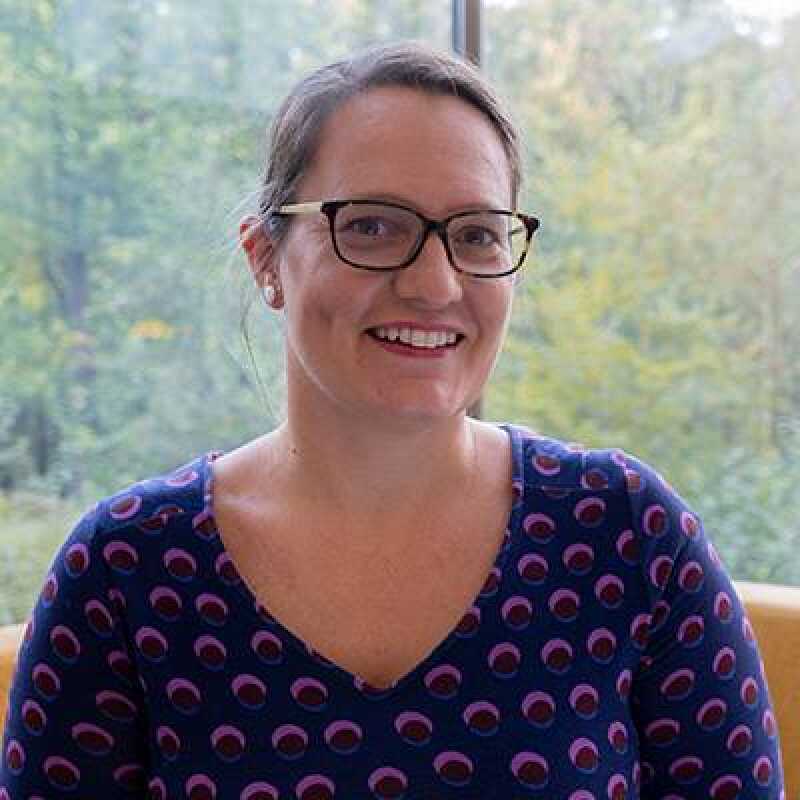
Adam Zylbersztejn is an Assistant Professor (Maître de conférences HDR) at Université Lumière Lyon 2 and affiliated with GATE Lyon Saint-Etienne, a research group in economics. He holds a PhD from the Paris School of Economics (2013) and previously conducted postdoctoral research at WU Wien (Vienna University of Economics and Business). His research focuses on behavioral economics using experimental methods to study individual and interactive decision processes, particularly in contexts involving trust, strategic uncertainty, and cultural variability. Key research areas include behavioral game theory, experimental finance, and the impact of nonverbal communication in economic interactions. His work has been published in top journals such as Journal of Economic Psychology , Games and Economic Behavior , and Experimental Economics . Recent studies examine topics like anonymity effects in charitable giving, trust in market exchanges under oath, and cognitive processes in asset markets using eye-tracking technology. His ongoing projects include research on risk-incentive tradeoffs and ambiguity framing in decision-making. While no formal academic awards are listed, his work has received press coverage in outlets like Le Monde and CORTEX Mag . He collaborates widely with institutions such as GATE-LSE and the Paris School of Economics, contributing to both theoretical and applied economic inquiry.
Desmond Elliott is an Associate Professor in the Natural Language Processing section at the Department of Computer Science, University of Copenhagen (UCPH). His research focuses on multimodal and multilingual models with specific emphasis on vision-language integration and tokenization-free NLP approaches. He teaches Bachelor and Master's level courses including Advanced Topics in Natural Language Processing (since 2019), Grundlæggende Data Science (since 2023), and previously Data Science (2021-2023). His research interests center on building and understanding multimodal and multilingual models , particularly exploring vision and language interactions through billion-parameter systems. Current work investigates cultural representation disparities in vision-language models, parameter-efficient captioning, and multimodal distributional semantics across diverse domains including food culture and medical imaging. His methodology emphasizes real-world applicability in non-English contexts and ethical considerations in multimodal systems. Elliott's recent publications (2025) demonstrate leadership in multimodal NLP, with significant contributions to vision-language pretraining, multilingual evaluation frameworks, and clinical NLP applications. His work spans theoretical advancements in model architectures and practical implementations addressing challenges in low-resource languages and domain adaptation. Best Long Paper Award at EMNLP 2021 Best Poster Award at COLING 2019 As an active educator, Elliott contributes to courses on Fair and Transparent Machine Learning and previously taught Information Retrieval. His research collaborations span international institutions with particular focus on European and non-English language contexts, reflecting UCPH's recognition as Europe's #1 institution for HCI research over the past decade.
Robin A. Murphy is a Professor of Experimental Psychology at the University of Oxford and a Fellow and Tutor for Admissions at Corpus Christi College. He holds a PhD from McGill University (Canada) and has contributed over 50 scientific publications on associative learning mechanisms, their role in mental disorders like depression and psychopathy, and translational neuroscientific applications. His research bridges animal and human learning, with a focus on computational psychopathology and neurochemical modulation (e.g., serotonin). Education: Undergraduate degree, Queen's University MA and PhD in Psychology, McGill University Research Interests: Dr. Murphy investigates how associative learning processes underpin mental disorders, particularly through neurochemical systems like serotonin. His work explores causal reasoning biases in depression, psychopathy's learning deficits, and translational models linking animal studies to human cognition. Key themes include agency perception, contingency judgment, and the neural substrates of prejudice. Recent projects involve peptide research in aging and computational modeling of multi-agent systems in depression. Grants and Funding: Supported by MRC, BBSRC, Wellcome Trust, and Japan Society for the Promotion of Science. He has advised UK Research Councils and NSERC (Canada). Labs and Teams: Leads a lab focusing on associative learning mechanisms, collaborating with institutions globally on computational psychopathology and translational neuroscience.
L. Taylor Phillips is an Associate Professor in the Department of Management & Organizations at the Leonard N. Stern School of Business, New York University, where she has been a faculty member since 2016. She holds a Ph.D. in Business Administration and a B.A. in Psychology and Human Biology, both from Stanford University. Ph.D., Business Administration, Stanford University B.A., Psychology and Human Biology, Stanford University Her research centers on the psychology of privilege, inequality, and diversity, with a focus on how advantaged groups perceive and respond to inequity. She investigates how privilege shapes beliefs and behaviors, particularly in organizational contexts, and how to engage privileged individuals in diversity and inclusion efforts. Her work integrates social psychology with organizational behavior, using experimental, longitudinal, and field methods to study hierarchy, power, race, gender, and social class. Her recent publications explore themes such as allyship effectiveness, discrimination recognition, denial of class privilege, and group-based hierarchies. These works appear in premier journals including the Journal of Personality and Social Psychology , Academy of Management Annals , and Organizational Behavior and Human Decision Processes , reflecting interdisciplinary impact across management, psychology, and sociology. Notable scientific awards and recognitions include: Early Career Award, International Society for Justice Research (2023) Rising Star Early Career Award, Association for Psychological Science (2021) Best Undergraduate Professors, Poets & Quants (2020) DARE Doctoral Fellowship, Stanford University (2014) NSF Graduate Research Fellowship (2011) Dr. Phillips advises on organizational DEI strategy and is a SPARQ Faculty Affiliate at Stanford University, applying research to real-world challenges. She has taught courses in Management and Organizations and Research Methods, mentoring future scholars and practitioners. Her work is supported by prestigious fellowships and appointments, including affiliations with the Clayman Institute for Gender Research and the Society for Personality & Social Psychology. She leads a research program that combines theoretical rigor with practical relevance, aiming to transform how organizations understand and manage social hierarchies. Her lab employs diverse methodologies, including physiological and cognitive tools, to uncover the mechanisms underlying privilege and inclusion.
Eliot R. Smith is a Professor in the Department of Psychological and Brain Sciences at Indiana University Bloomington's College of Arts and Sciences. With over 126 publications and an h-index of 50, he has established himself as a leading scholar in social psychology, particularly in the areas of intergroup emotions and social cognition. His Scopus profile shows 10,991 citations across 8,796 documents, reflecting significant impact in his field. Smith's research focuses on how group membership shapes emotional experiences and social judgments. His work has significantly contributed to Intergroup Emotions Theory, exploring how people experience emotions on behalf of their social groups and how these group-based emotions influence intergroup relations. Recent research examines gender bias in hiring decisions through a large meta-analysis spanning 44 years of field experiments, human-robot interaction through social psychological lenses, and the dynamics of group-based emotions over time. His research integrates theoretical advances in embodied cognition with social psychological phenomena, examining how physical and social contexts shape cognitive and emotional processes. Analysis of his recent publications (2019-2024) reveals three dominant research trajectories: 1) gender bias and discrimination in organizational contexts, 2) extension of social psychological theories to human-robot interaction, and 3) refinement of Intergroup Emotions Theory with attention to temporal dynamics and regulatory processes. His work increasingly incorporates methodological innovations including meta-analyses, multi-analyst approaches, and cross-cultural comparisons.
Katherine L. Milkman is the James G. Dinan Endowed Professor at The Wharton School of the University of Pennsylvania, with secondary appointments in the Perelman School of Medicine and School of Arts and Sciences. She co-founded and co-directs the Behavior Change for Good Initiative , focusing on harnessing behavioral economics and psychology for societal benefit. Education: PhD in Computer Science and Business, Harvard University Undergraduate degree (summa cum laude) in Operations Research and American Studies, Princeton University Her research bridges behavioral economics , decision-making , and health psychology , with applications in education, finance, and public health. Recent studies explore quantification fixation , streak incentives , and diversity interventions using megastudy methodologies. Scientific awards include Thinkers50 Top 50 Management Thinker (2021, 2023) APS Fellow (2020) FABBS Early Career Award (2015) Wyss Award (Harvard, 2008) She teaches courses in decision-making and judgment research , including OIDD9950 (Dissertation) and OIDD2990 (Judgment & Decision Making Research). Media outlets like The New York Times and Nature regularly feature her work, while her podcast Choiceology disseminates behavioral economics insights to a broader audience.
Katherine L. Milkman (Katy) is the James G. Dinan Professor at the Wharton School of the University of Pennsylvania, with secondary appointments in Penn's Perelman School of Medicine and School of Arts & Sciences. She co-founded and co-directs the Behavior Change for Good Initiative, a research center dedicated to advancing the science of lasting behavior change. Her work integrates economics and psychology to address challenges like savings, exercise adherence, vaccination rates, and discrimination through large-scale field experiments. Education: PhD in Computer Science and Business from Harvard University; Bachelor's degree (summa cum laude) in Operations Research and Financial Engineering from Princeton University. Research Focus: Milkman's research leverages big data and behavioral science to understand decision-making failures (e.g., self-control, discrimination) and design scalable interventions. Her recent work emphasizes: Nudge-based strategies for education, health, and finance Diversity enhancement in organizational settings Habit formation through incentive structures Publication Trends: Her 15 most recent articles (2022-2025) primarily involve megastudies testing behavioral interventions. Key themes include: leveraging email/reminders to improve math education and vaccination rates; addressing loan delinquency through nudges; and using stereotyping dynamics to increase diversity in hiring. Over 80% employ field experiments across healthcare, finance, and education sectors. Awards & Honors: Thinkers50 Top Management Thinker (2021, 2023) Schmidt Futures Innovation Fellow (2022) Fellow, Association for Psychological Science (2020) Multiple teaching awards from Wharton (2015, 2016) William F. O’Dell Award for impactful research (2017) Advisory & Grants: Milkman has advised major organizations including The White House, Google, Walmart, and the U.S. Department of Defense. Her Behavior Change for Good Initiative secures funding for large-scale social impact research. She hosts Schwab's behavioral economics podcast Choiceology and contributes to policy through op-eds in The New York Times and Scientific American . Labs & Teams: Co-directs the Behavior Change for Good Initiative, collaborating with interdisciplinary researchers (e.g., Angela Duckworth, Sendhil Mullainathan) on longitudinal studies. The initiative designs and tests interventions across health, education, and savings domains.
Ariel Mosley serves as an Assistant Professor in the Psychology Department at the University of California Davis, where she leads the Mosley Lab focused on intergroup perceptions of cultural appropriation, stigma, and intersectionality. Her research examines how social categorization and identity structure judgments of intergroup inequalities through experimental design, mediation analyses, and meta-analyses. Her educational background includes a Doctor of Philosophy in Psychology (2020) and Masters of Arts in Psychology (2016) from the University of Kansas, and a Bachelor of Arts in Psychology with a Philosophy minor (2014) from California State University Sacramento. As an undergraduate, she was a Ronald E. McNair Scholar, Sally Casanova Scholar, and Leadership Alliance Scholar. Professor Mosley's research investigates three core questions: how group-based biases influence responses to cultural appropriation; how intersectional stereotypes affect diverse individuals' experiences; and how marginalized groups adapt to discrimination. She combines social cognition, intergroup relations, and racial inequality frameworks to evaluate inequality from both target and perceiver perspectives. Her work spans social identity, objectification, dehumanization, structural racism in healthcare/law, and intersectional stigma. Analysis of her recent publications reveals consistent focus on cultural appropriation mechanisms, moral evaluations of intergroup interactions, and intersectional approaches to understanding bias. Her work increasingly integrates legal and policy implications while maintaining strong methodological rigor through experimental and meta-analytic approaches. University of California Davis Center for Multicultural Perspectives Faculty Scholar (2022-present) National Science Foundation Graduate Research Fellowship (2016) National Science Foundation Graduate Opportunities Worldwide Fellowship (2018) International Society of Political Psychology Award (2022) Multiple awards from SPSSI, SSPC, and SSPSP (2017-2022) Professor Mosley actively mentors undergraduate research assistants through her Mosley Lab, where students participate in all research phases from conception to dissemination. Her lab has produced multiple conference presentations and co-authored publications. She has secured significant grant funding including NSF fellowships and institutional support through UC Davis's multicultural research center. Her teaching portfolio includes Social Psychology, Psychology of Law, and specialized courses on cultural appropriation and racism. The Mosley Lab maintains an active research program with undergraduate scholars and graduate affiliates investigating intergroup relations, social cognition, and diversity issues. The lab emphasizes community-based research and recently presented at the Society for Personality & Social Psychology Annual Convention, with plans to attend the 2026 Chicago conference. Professor Mosley's work bridges academic research and community engagement through public science communication initiatives.
Christian Unkelbach is Professor of Social Psychology at the Department of Psychology, Faculty of Humanities, University of Cologne, where he leads the Unkelbach Group. His research spans multiple domains of social and cognitive psychology with significant contributions to understanding evaluative processes. His primary research interests include Social Cognition, Evaluative Judgments, Information Ecologies, Stereotypes and Prejudice, Evaluative Learning, Fluency Effects, and Sport Psychology. Unkelbach's work examines how humans process evaluative information in social contexts, with particular focus on the truth-by-repetition effect , evaluative conditioning , and cognitive ecological frameworks that explain why certain information patterns dominate social cognition. His research demonstrates how repetition increases belief in information , how attributes become associated through mere pairings , and why positive information is processed more efficiently than negative information. Analysis of his recent publications reveals a consistent trajectory examining the relativity of social cognition , truth effects across contexts , and metacognitive awareness of cognitive biases . His work increasingly integrates cross-linguistic perspectives and examines real-world applications in media consumption and social judgment. Honorary Doctorate from UCLouvain (2025) ISCON Best Paper Award 2020 Speaker of DFG Research Unit FOR2150 'Relativity in Social Cognition' (2017-2021) Emmy Noether Research Grant (DFG, 2009-2013) Feodor Lynen Research Scholarship (Alexander von Humboldt Foundation) Fulbright Scholarship Unkelbach has advised numerous doctoral researchers including Andreas Miculka, Anne Irena Weitzel, Felix Speckmann, Lea Sperlich, and Tabea Zorn. His research group has secured multiple C-SEB grants for projects examining social cognition phenomena. The Unkelbach Group maintains active collaborations with international researchers across Europe and North America, with recent work funded through the DFG Research Unit on Relativity in Social Cognition. The Unkelbach Group laboratory at Richard-Strauss-Str. 2 in Cologne comprises postdoctoral researchers, doctoral candidates, and student assistants working on experimental paradigms examining evaluative learning, truth effects, and social judgment processes. Current projects investigate cross-linguistic truth effects, metacognitive monitoring of repetition effects, and ecological validity in social cognition frameworks.
Daphna Motro is an Associate Professor in the Department of Management and Entrepreneurship at Hofstra University's School of Business. She holds a PhD in Management & Organizations from the University of Arizona and a BA in Cognitive Science with highest distinction from the University of Virginia. Her academic work bridges behavioral science, organizational behavior, and ethics. PhD, Management & Organizations – University of Arizona BA, Cognitive Science (Highest Distinction) – University of Virginia Dr. Motro’s research centers on emotions in organizational contexts, particularly how emotional experiences and expressions affect motivation, leadership, ethical behavior, and performance evaluations. She investigates how demographic factors such as gender and race shape emotional dynamics in the workplace. Her methodological approach incorporates modern technologies like eye-tracking and facial recognition software to capture subtle emotional responses. Her recent publications span top journals including the Journal of Applied Psychology , Journal of Business Ethics , and Journal of Experimental Social Psychology . The themes across her work reveal a strong focus on behavioral ethics, emotional regulation, bias in evaluation, and affective influences on decision-making. Her research has been featured in high-impact outlets such as Harvard Business Review and MIT Sloan Management Review , indicating broad relevance beyond academia. Dr. Motro teaches graduate and undergraduate courses such as Organizational Behavior and Compliance, Ethics, and Sustainability. She emphasizes interactive, research-informed pedagogy to engage students in contemporary organizational challenges. While no specific scientific awards or student advisees are listed in the profile, her publication record and media presence reflect a growing influence in the field of organizational behavior and behavioral ethics. She is actively involved in research and teaching, with no indication of retirement or emeritus status. Her office is located in Leo A. Guthart Hall, and she can be contacted via the university’s email system.
Yanliu Huang is a Professor and Department Head of Marketing at LeBow College of Business, Drexel University. She holds a PhD in Marketing from the Wharton School, University of Pennsylvania, and combines field and lab studies to address critical marketing and consumer behavior questions. Education: PhD in Marketing (Wharton School, University of Pennsylvania) Her research focuses on new technology in marketing , in-store decision making , consumer planning , and consumer welfare . She explores how digital interfaces influence planning, the psychology of indulgent choices, and the impact of store layouts on unplanned purchases. Recent publications examine voice-based shopping interactions , emoji usage in communication , and technology’s role in financial decision making . Her work bridges marketing science , neuroscience , and behavioral economics . Scientific Awards: MSI/H. Paul Root Award, Dean’s Excellence in Research Award, ExCITe Research Funding Award, Best Retail Proposal Award (Society for Marketing Advances) Editorial Roles: Associate Editor at Service Science; Editorial Review Board member at Journal of the Academy of Marketing Science, Journal of Consumer Psychology, and Journal of Retailing Dr. Huang’s research has been featured in Harvard Business Review , Wall Street Journal , and The Economist , with grants supporting studies on digital interfaces and consumer welfare.
Dr. Carola Leicht is a Reader in HRM/Organisational Behaviour at Kent Business School, University of Kent. Her research focuses on social psychological processes influencing workplace decisions, particularly around diversity, stereotypes, and leadership evaluations. She applies these insights to areas such as women and minorities in leadership and the cultural context of science-religion interactions. Current affiliation: University of Kent, Kent Business School Prior role: Post-Doctoral Researcher at Coventry University Her research combines social cognition, stereotype analysis, and intergroup dynamics to examine how diversity experiences and implicit biases shape organisational behavior. She has secured significant funding, including a £2 million Templeton Religion Trust grant as Co-Investigator for a public perceptions study on science and religion. Recent publications highlight her interdisciplinary approach, blending organisational behavior with sociology and psychology to analyze leadership prototypicality, science-religion narratives, and stereotype mitigation. Her awards include a Professional Fellowship from the Advanced HE Academy . Carola is active in academic societies, including the Society for Personality and Social Psychology and the European Association of Social Psychology. She serves on the advisory board of the International Research Network for the Study of Science and Belief in Society.
Molly Crockett is a Professor at Princeton University's Department of Psychology and affiliated with the University Center for Human Values . Her research integrates cognitive science, social psychology, philosophy, and data science to examine how systems of power shape knowledge production, and how technologies like artificial intelligence reinforce social inequalities. Education: Ph.D. from the University of Cambridge Her lab focuses on epistemic injustice , using behavioral experiments, computational modeling, and machine learning to study moral cognition, narrative testimony, and the cultural evolution of ethics. Recent work highlights AI's role in distorting scientific understanding and explores how social norms constrain self-knowledge. Key article trends include analyses of algorithmic bias in social networks, moral outrage dynamics, and the interplay between self-perception and societal expectations. She actively mentors postdoctoral, PhD, and undergraduate researchers, emphasizing diversity and inclusion in scientific practice. Publications span topics from neurobiological markers of guilt to positive illusions in relationships , reflecting her interdisciplinary approach. Her lab avoids tech industry funding to maintain research autonomy.
Miao Qian is an Assistant Professor of Psychology at the University of Detroit Mercy. She earned her Ph.D. in Developmental Psychology and Education from the University of Toronto and completed postdoctoral training in Harvard University's Inequality in America Initiative program. Her research investigates child social cognition, focusing on how children acquire social category knowledge and apply it to social evaluations. Research examines the development and reduction of implicit biases related to race and gender. Current projects include studying social-cognitive drivers of bias and developing interventions like individuation training and cooperative games. Recognized as a 2023 Emerging Scholar by Diverse: Issues In Higher Education.
Matteo Mario Pietro Motterlini is a Full Professor of Philosophy of Science at Università Vita-Salute San Raffaele in Milan, where he is affiliated with the Faculty of Philosophy. He is the director of the Center for Research in Experimental and Applied Epistemology (CRESA) and the Behavior Change Lab, and collaborates with the Cognitive Neuroscience Center and Division of Neuroscience. He holds teaching responsibilities in Cognitive Economics and Neuroeconomics, and Behavior Change, and serves on the university's academic committee. Università degli Studi di Milano – Philosophy London School of Economics – Economics Carnegie Mellon University – Cognitive Science His research lies at the intersection of philosophy, behavioral economics, and cognitive neuroscience, focusing on human rationality, decision-making processes, emotions, regret, and social learning, particularly in economic and financial contexts. He investigates how behavioral science can inform public policy and improve organizational practices. His work integrates experimental methods with neuroimaging to uncover the neurobiological foundations of judgment and choice. The recent publications highlight a strong trend in applying behavioral and cognitive sciences to societal challenges such as vaccine hesitancy, disinformation, charitable giving, and policy design. His work combines empirical rigor with philosophical depth, exploring topics like the epistemology of nudges, truth perception, and the role of expert endorsement. The integration of neuroscience, psychology, and economics is evident across his research output. Chief Behavioral Officer, E.ON Italia Spa Chief Behavioral Officer, Gruppo San Donato Scientific Advisor, MilanLab (AC Milan) Scientific Advisor, MarketPsych LLC Advisor for Behavioral Finance, Fidelity (Growth, Income & Stability project) Advisor for Social and Behavioral Sciences, Presidency of the Council of Ministers (Italy) He has received no explicitly mentioned scientific awards in the provided text. However, his advisory roles in high-impact public and private institutions reflect recognition of his expertise. His books are international bestsellers, translated into multiple languages, indicating broad scholarly and public influence. Motterlini has been actively involved in public engagement through collaborations with Corriere della Sera, Il Sole 24 Ore, and Il Foglio. He has delivered keynote lectures and participated in public festivals and media appearances, including on Sky TG24. He has advised on financial education (EDUFIN) and participated in events on longevity risk, health, and sustainability. His research is supported by interdisciplinary collaborations and applied projects with industry partners. He leads two major research units: the Center for Research in Experimental and Applied Epistemology (CRESA) and the Behavior Change Lab (also referred to as the E.ON Customer Behavior Lab), which focus on biometric and neuroscientific analysis of behavior. These labs serve as hubs for experimental research in decision-making, nudging, and behavioral interventions in health, finance, and sustainability.