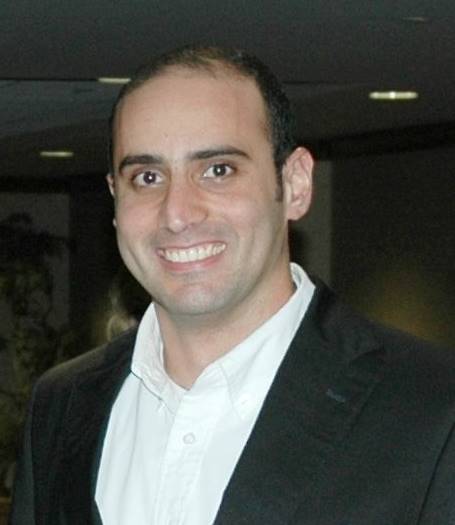
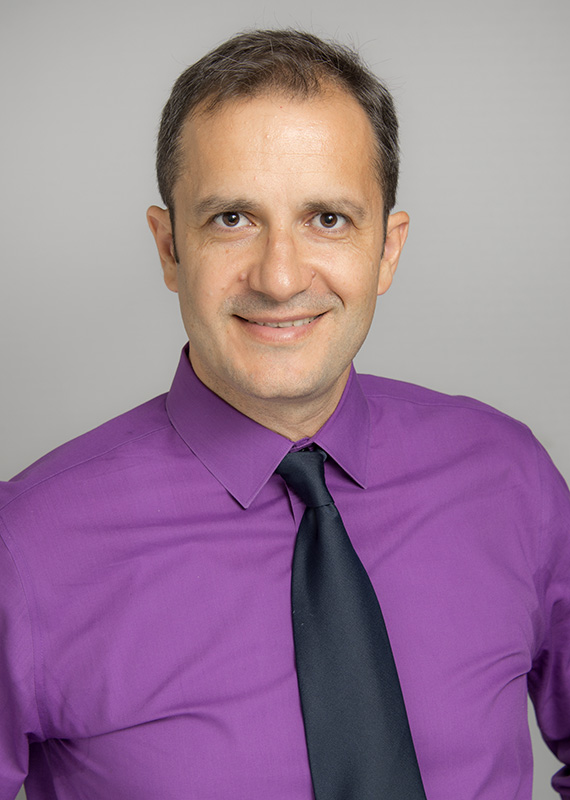
Dr. Jurgen Becque is an Associate Professor in Structural Engineering at the University of Cambridge's Department of Engineering. He specializes in cold-formed steel structures, stainless steel structural behavior, and stability analysis, with a focus on local-overall buckling interaction and innovative design methodologies. His work bridges experimental investigations with computational modeling and machine learning applications. Research Interests: Cold-formed steel structural systems Stainless steel column stability Local and overall buckling interaction Mechanics-based design optimization Machine learning for structural behavior prediction Recent publications demonstrate expertise in cross-sectional stability, connection mechanics, and composite systems like UHPC-confined stainless steel columns. His work addresses both monotonic and cyclic loading scenarios, contributing to Eurocode 3 design standards.
Dorina Siebert is a Researcher at the Chair of Metal Construction within the School of Engineering at the Technical University of Munich. She has been working as a research assistant at the Chair since 2019, contributing to various research projects related to steel and aluminum construction, fracture mechanics, and additive manufacturing in construction. Education: M.Sc. in Civil Engineering from Technical University of Munich (2012-2019) Affiliation: Chair of Metal Construction, School of Engineering, Technical University of Munich Contact: dorina.siebert@tum.de, Room 0101.Z1.038, +49 (89) 289-22527 Dorina's research primarily focuses on the fatigue strength of aluminum structures, fracture mechanics in railway bridges, and the application of additive manufacturing techniques in construction. Her work on powder bed-based laser beam melting of metal has significant implications for modern construction methods. She also investigates safe operating time intervals for historic steel bridges and has contributed to the development of a mobile vehicle barrier, demonstrating the practical applications of her theoretical work. Her publication record shows a strong trend toward computational and experimental analysis of material behavior under stress, particularly in aluminum alloys and steel structures. She has published extensively on fatigue properties, fracture mechanics calculations, and additive manufacturing applications, with a clear progression toward more complex modeling techniques and practical engineering solutions. Her work bridges theoretical computational models with real-world infrastructure challenges. Dorina teaches courses including 'Constructing with aluminum' for the Summer semester 2025 and 'Fracture mechanics and fatigue' for the Winter semester 2024/25. She also leads a seminar on plate buckling and steel bridge construction, sharing her specialized knowledge with engineering students. Her teaching directly reflects her research expertise, creating a strong connection between theoretical knowledge and practical application for her students.
Yan Delaure is Associate Professor of Fluid Mechanics at Dublin City University's School of Mechanical and Manufacturing Engineering and Deputy Director of the DCU Water Institute. His research focuses on multiphase flows, environmental hydraulics, and computational fluid dynamics applications in wastewater treatment and marine systems. Research includes microbubble dynamics for aeration, fluid-structure interactions in deformable systems, and biomimetic antifouling solutions. Recent publications explore advanced simulation methods for turbulent flows and additive manufacturing process optimization.
Dr. Esmaeel Esmaeeli is a Senior Lecturer in Civil and Environmental Engineering at Brunel University London, serving as Course Director for the MSc in Structural Engineering. His work focuses on sustainable structural retrofitting solutions, safety, and resilience of concrete and masonry structures. Brunel University London (Current: Senior Lecturer) Queen’s University Belfast (Postdoctoral Fellow, Horizon 2020 MSC Fellowship) University of Minho (PhD research on Hybrid Composite Plate) K. N. Toosi University (MSc research on seismic strengthening) His research spans advanced materials like Strain-Hardening Cementitious Composite (SHCC) and Carbon Fibre Reinforced Polymer (CFRP) for seismic retrofitting, computational modeling of FRP-concrete interfaces, and dynamic response under extreme loads. Recent work includes the SMArtPlate and Hybrid Composite Plate (HCP) systems. Scientific recognition includes the Horizon 2020 Marie Skłodowska-Curie Individual Fellowship and a Portuguese Foundation for Science and Technology (FCT) scholarship. He has advised on structural vulnerability assessments and leads teams in consultancy projects.
Dr. Joseph Ndogmo is a Senior Academic Councillor in civil service for life at the Chair of Metal Construction at the Technical University of Munich (TUM), working under Prof. Martin Mensinger. He has been with the Chair since December 2005, initially as a Research Assistant, then as an Academic Councillor on probationary civil service status from November 2007 to June 2009, and as an Academic Councillor in civil service for life from July 2009 to June 2014, before being promoted to his current position as Senior Academic Councillor in July 2014. Dr. Ndogmo's educational background includes: Primary school in Yaoundé, Cameroon (1972-1978) High school in Batouri and Mbouda, Cameroon (1978-1985) Studies in Mathematics/Computer Science at the University of Yaoundé, Cameroon (1985-1986) Language course at the Herder Institute in Leipzig (1986-1987) Diploma in Engineering (Dipl.-Ing.) from the Friedrich List University of Transport in Dresden, majoring in road construction with specialization in bridge construction (1987-1992) Doctorate (Dr.-Ing.) from Technical University of Munich with thesis on "On the safety and economic reinforcement of bulging web plates of solid-wall girder bridges taking fatigue into account" (awarded November 27, 1997) Training as an international welding engineer at SLV Munich (January-April 2008) Dr. Ndogmo's research focuses on structural engineering with particular expertise in steel and composite bridge construction. His primary research interests include: Overall stability of steel composite bridges Plate and shell buckling phenomena External reinforcement elements for composite bridges Buckling verification according to Eurocode 3 standards Welding technology applications in structural engineering His work bridges theoretical structural mechanics with practical engineering applications, particularly in the context of bridge construction and maintenance. Dr. Ndogmo has made significant contributions to the understanding of buckling behavior in stiffened plates under various loading conditions, with numerous publications addressing both theoretical aspects and practical implementation of Eurocode standards. Dr. Ndogmo's recent publications (2016-2024) demonstrate a consistent focus on buckling analysis of steel structures, particularly in bridge applications. His work shows increasing sophistication in analyzing complex loading scenarios including biaxial stresses and eccentric load introduction. He has made notable contributions to the implementation of Eurocode 3 standards, particularly Part 1-5 on plate buckling. His research combines experimental testing with numerical analysis, providing practical insights for structural engineers. Professional memberships include: VSVI (Association of Road Construction and Traffic Engineers in Bavaria) DVS (The Connection Specialists) Technical Working Group 8.3 (Plate buckling) Working Group EN 1993-1-5 Working Group EN 1993-1-14 CEN / TC 250 / SC 3 / WG22 Dr. Ndogmo is actively involved in teaching at TUM, with courses including Assessment and preservation of historic steel structures, Welding Technology, Composite building and bridge construction, and Plate buckling and steel bridge construction. He also serves as a municipal councilor in Erdweg since 2014 and previously ran as a mayoral candidate in 2017 (finishing second with 32.4% of the vote).
Heikki Remes serves as Associate Professor in the Department of Energy and Mechanical Engineering at Aalto University's School of Engineering, where he investigates high-performance steel structures for marine environments with emphasis on lightweight ship designs using advanced materials and manufacturing techniques. His research integrates fundamental fatigue and fracture mechanics with practical structural challenges, spanning from crystal-level material behavior to continuum-scale modeling. Key focus areas include welded joint integrity, additive manufacturing defects, and computational analysis of marine structures under extreme conditions. Recent publications reveal strong trends in fatigue assessment methodologies for complex welded geometries, experimental validation of distortion effects, and AI-enhanced damage prediction systems, reflecting his commitment to bridging theoretical mechanics with shipbuilding applications. Scientific Awards: Aalto Education Impact Award (2018) for establishing Marine Technology study programs SNAME Honorable Mention for 2018 Vice Admiral E. L. Cochrane Award Teaching Award of Aalto School of Engineering (2012) for educational tools No specific student advising or grant information appears in available sources, though his active publication record indicates ongoing research leadership. He contributes significantly to the Marine and Arctic Technology research group, driving projects on structural integrity assessment and advanced manufacturing solutions for next-generation marine vessels.
Seung Eock Kim is a Professor in the Department of Civil and Environmental Engineering at Sejong University, Korea, where he has served since 1997. Previously, he held executive leadership as Senior Vice President (2015-2018) and brings industry experience from Daewoo Engineering. His academic credentials include a Ph.D. from Purdue University (1996), M.S. from KAIST (1990), and B.S. from Yonsei University (1983). Kim leads research in structural systems optimization with emphases on: Nonlinear inelastic analysis of steel/composite structures AI-driven structural design methodologies LRFD (Load and Resistance Factor Design) frameworks Advanced computational mechanics for infrastructure His recent publications (2024-2025) demonstrate strong focus on machine learning applications for structural health monitoring, nano-scale material characterization of steels, and sensor-based corrosion detection. This represents a strategic expansion into intelligent infrastructure systems beyond traditional mechanics. Awards and honors: National Research Laboratory designation (Ministry of Science, 2000) Elected Full Member of Korean Academy of Science and Technology (2011) He directs the Steel Structure Laboratory , where he developed the specialized nonlinear analysis software 3D-PAAP. His research has generated 132 SCIE-indexed publications with 1,599+ citations, including the influential CRC Press book LRFD Steel Design Using Advanced Analysis (1997).
Dr. Marina Bock is a Chartered Civil Engineer and Lecturer in Civil Engineering at Aston University's College of Engineering and Physical Sciences. She specializes in structural engineering with expertise in metallic structures, additive manufacturing, and numerical modeling. Currently accepting PhD students, her work bridges academic research and industry applications in sustainable construction. Her educational background includes: PG Cert in Building and Design and Construction Technology, University of Wolverhampton (2017-2018) PhD in Local Buckling and Web Crippling Response of Stainless Steels, Universitat Politècnica de Catalunya (2010-2015) MSc in Patch Loading of Hybrid Plate Girders, Universitat Politècnica de Catalunya (2004-2010) Dr. Bock's research integrates laboratory experiments and numerical modeling to advance metallic structural systems, with pioneering work in additive manufacturing for construction. Her investigations span stainless steel design code development, corrosion prevention in reinforced concrete using hydrogels, and cold-formed steel behavior. Recent projects focus on sustainable infrastructure solutions through novel composite materials. Analysis of her 2022-2025 publications reveals dominant themes in additive manufactured aluminum structures, cold-formed steel design methodologies, and sustainable paving materials for urban heat island mitigation. Her work consistently addresses practical engineering challenges through experimental validation and code-compliant design solutions. Scientific recognition includes: IStructE Academic Research Award Commendation (2021) for research on aluminum SHS/RHS under biaxial bending Dr. Bock has secured significant research funding including a Royal Society Research Grant (£20k, 2023) for additive manufactured Al7075 aluminum and Innovate UK funding (£437k) for UV-reflective resin-based paving. Previous internal projects (£20k) focused on structural aluminum applications. She supervises PhD research in additive manufacturing and corrosion prevention while maintaining industry collaborations. Her experimental work utilizes advanced university laboratories for structural testing, with collaborations spanning European research consortia and industrial partners. Current projects involve multi-institutional teams developing reusable structural systems and solar-energy-harvesting building envelopes.
Dr. Fatemeh Azhari is a Lecturer in Structural Engineering at the Faculty of Engineering, Monash University, specializing in multi-scale computational tools for advanced materials and structures. She holds a Ph.D. from Monash University (2018), an M.Sc. and B.Sc. from Isfahan University of Technology (2012, 2010). Her research focuses on composite materials, additive manufacturing, and structural mechanics, with applications in sustainable construction and defense projects. Education: Ph.D. Structural Engineering, Monash University (2018) M.Sc. Structural Engineering, Isfahan University of Technology (2012) B.Sc. Civil Engineering, Isfahan University of Technology (2010) Research Interests: Multi-scale modeling, finite element analysis, composite materials (CFRP/GFRP), titanium alloys, fire dynamics, and structural stability. She leads projects funded by DST Group and collaborates with institutions like UNSW and the University of Melbourne. Research Trends: Her work emphasizes integrating computational models with experimental data to predict material behavior under extreme conditions, with recent studies focusing on pseudo-ductile composites, fire dynamics, and additive manufacturing. Awards: 2023 Advancing Women’s Success Grant 2023 ECA Seed Program Best Research Paper Award (2018, 2021) Supervision & Grants: Supervises multiple PhD candidates and co-leads projects on titanium alloys and dental implant mechanics. Active in teaching structural mechanics and materials courses at Monash. Teams/Labs: Collaborates on ICME projects and leads multi-institutional teams focusing on advanced materials and structural systems.
Alireza Vakil Amirkhizi serves as Professor in the Department of Mechanical and Industrial Engineering at the Francis College of Engineering, University of Massachusetts Lowell. His research focuses on mechanics of materials under extreme conditions and advanced composite systems. His academic credentials include: Ph.D. in Mechanical and Aerospace Engineering, University of California, San Diego (Dissertation: Multifunctional Composites and Structures with Integrated Mechanical and Electromagnetic Properties) M.S. in Mechanical and Aerospace Engineering, University of California, San Diego B.S. in Civil and Environmental Engineering, Sharif University of Technology (Thesis: Experimental Study of Concrete Shear Walls Reinforced with Punched Steel Plates under Cyclic Loading) Dr. Amirkhizi's research spans applied mechanics and materials science with emphasis on dynamic behavior of materials under high strain-rates, extreme pressures, and temperature variations. His work explores metamaterials for wave manipulation, biomechanics of soft tissues, and molecular-level design of polymeric materials. Current investigations focus on structure-property relationships for next-generation protective systems and energy-absorbing composites. His publication record (2006-2019) reveals consistent contributions in composite mechanics , polymer physics , and metamaterial design . Key themes include constitutive modeling of pressure-sensitive polymers, micromechanical analysis of composite systems, and electromagnetic-mechanical coupling in chiral materials. His work bridges experimental validation with computational modeling across multiple length scales. Notable recognitions: Dissertation Fellowship (2006), UC San Diego Highest Academic Achievement Award (2004), UC San Diego MAE Department Certificate of Recognition (2003), UC San Diego Research funding demonstrates strong military and defense partnerships. As Principal Investigator, he secured grants from the U.S. Army (Natick Soldier RDEC), Air Force (AFOSR, SBIR), Office of Naval Research, and DARPA for projects including parachute material shelf-life analysis, cavitation-resistant coatings, and microstructurally-architected materials. Collaborative projects with S. Nemat-Nasser at UC San Diego involved blast-mitigating polymers and multi-frequency dynamic materials. His laboratory activities focus on experimental characterization of materials under dynamic loading, supported by advanced testing facilities for high-strain-rate mechanics and multi-physics material response.
Joel Lanning is an Associate Professor in the Department of Civil and Environmental Engineering at the Samueli School of Engineering, University of California, Irvine. Education: Ph.D. in Structural Engineering from UC San Diego (2014), M.S. in Structural Engineering from UC San Diego (2008), B.S. in Civil Engineering from The Ohio State University (2006) His research focuses on engineering education, seismic design of civil structures, large-scale testing methodologies, and alternative building materials. He integrates constructivist learning principles with active learning components like group problem-solving and interactive technology. Awarded the 2023 Distinguished Early-Career Faculty Award for Teaching, 2022 SSoE Early Career Innovation in Teaching Award, 2020 Dean’s Honoree for DTEI’s Celebration of Teaching, and the 2019 CEE Faculty of the Year Award, Joel has demonstrated excellence in pedagogical innovation and student engagement. He serves as Director of the MEng CEE Concentration and is a licensed Professional Engineer (Civil Engineering, California #80946). Joel actively mentors the UCI Steel Bridge Team, guiding hands-on structural design competitions.
Dr. Adel Abdelnaby is an Associate Professor in the Department of Civil, Construction, and Environmental Engineering at The University of Memphis College of Engineering. He holds a Ph.D. from the University of Illinois at Urbana-Champaign (2012) and has been on the faculty since fall 2012. Dr. Abdelnaby is a licensed Professional Engineer (P.E.) in multiple states and a licensed Structural Engineer (S.E.) in Illinois. His research interests span structural dynamics, earthquake engineering, structural health monitoring, life-cycle analysis of structures, application of innovative materials, and nonlinear finite element methods. He specializes in analyzing structures subjected to multiple hazards and developing methods for structural assessment and improvement. Dr. Abdelnaby's publications reveal a strong focus on earthquake engineering, particularly the effects of multiple earthquakes on reinforced concrete structures. His work includes fragility analysis, hybrid simulation techniques, and vulnerability assessment of bridges and buildings. He has established the Multi-Axial Testing and Simulation (MAT-SIM) Facility at the University of Memphis for advanced structural testing. Engaged Learning Fellowship for redesigning undergraduate steel design courses American Institute of Steel Construction Educator Workshop participant Dr. Abdelnaby has advised numerous graduate students on topics including semi-rigid steel connections, multiple earthquake effects, fragility analysis, and structural health monitoring. He directs the MAT-SIM facility, which includes sophisticated equipment for structural testing under complex loading conditions. His professional affiliations include ASCE, AISC, ACI, EERI, and ASEE, and he serves as a reviewer for several structural engineering journals.
Fatmir Menkulasi is an Associate Professor in the Department of Civil and Environmental Engineering at Wayne State University's College of Engineering. His research focuses on developing sustainable structural systems for buildings and bridges, with emphasis on concrete, steel, and composite materials. Current research explores novel material applications in structural design Specializes in computational modeling and experimental studies Active in infrastructure rehabilitation and structural health monitoring Recent publications highlight advancements in UHPC (Ultra-High Performance Concrete) systems, hybrid structural configurations, and deformation analysis. His work addresses critical challenges in urban infrastructure resilience and cost-effective engineering solutions. Scientific Recognition AASHTO Region 3 High Value Research Award (2024) MDOT Top 4 Project Recognition (2022) ASCE Outstanding Reviewer (2020) Multiple Professor of the Year awards at Louisiana Tech University Menkulasi teaches advanced courses in reinforced concrete design, bridge engineering, and prestressed concrete systems at both graduate and undergraduate levels.
Kiyoshi Ono is a Professor at Waseda University's School of Creative Science and Engineering, Faculty of Science and Engineering, specializing in structural and earthquake engineering. He holds a Doctor of Engineering degree from Osaka University and has been actively contributing to academia since at least 2007, following his tenure as Associate Professor at Osaka University Graduate School of Engineering (2002-2007). His academic journey demonstrates a consistent focus on advancing structural engineering knowledge with practical applications for infrastructure resilience. Professor Ono's research interests center around structure engineering and earthquake engineering, with particular expertise in steel structures, bridge engineering, and high-performance steel materials. His work explores the seismic performance of steel structures, innovative bridge design methods, and the application of high-strength steel materials (particularly SBHS series) to improve structural safety and durability. He investigates how material properties affect structural behavior under seismic loads, developing evaluation methods that balance safety with economic considerations. His publication record shows a consistent research trajectory with 41 papers, 123 citations, and an h-index of 4 according to Scopus. The most recent publications (2015-2024) demonstrate his ongoing commitment to advancing knowledge in steel structure performance, particularly focusing on high-performance steel materials and their application in seismic-resistant design. His research spans fundamental material properties investigations to practical structural applications, showing a comprehensive approach from microscopic material behavior to macroscopic structural performance. Scientific Awards: New Road Technology 5-Year Plan Award (2003) Professor Ono actively contributes to academic knowledge dissemination through numerous publications, presentations, and his role in developing industry standards. His work on the 'Steel and Composite Structure Standard Specifications' and 'Buckling Design Guidelines' demonstrates his influence on engineering practice. He serves on committees including the Japan Society of Civil Engineers Kansai Branch (as General Affairs and Accounting Committee Member since 2010) and the Performance-Based Seismic Design Committee for Bridges. His professional memberships include the Japan Society of Civil Engineers Kansai Branch, Japanese Society of Steel Construction, and Japan Society of Civil Engineers, reflecting his active engagement with the engineering community. His research projects consistently address practical challenges in bridge engineering while advancing theoretical understanding of structural behavior under extreme loading conditions.
Professor Zuheir Barsoum is a faculty member at KTH Royal Institute of Technology, serving as Vice Head (Research) in the Department of Engineering Mechanics. His research focuses on computational weld mechanics, fatigue assessment of materials, and structural integrity of welded joints. Key areas include high-frequency mechanical impact (HFMI) treatments for fatigue improvement, finite element analysis, and lightweight metal joining. Funded by VINNOVA, SSAB, Volvo, and others, his work addresses industrial challenges in structural durability. Current PhD students include Martin Edgren (bridge structural health monitoring), Mehdi Ghanadi (fatigue of high-strength steels), Yu Zhu (laser cladding simulations), and Kaushik Iyer (LCC modeling of welded structures). He teaches courses like Advanced Design of Welded Structures (SD2420) and oversees degree projects in Lightweight and Solid Mechanics. Notable achievements include the 2010 Henry Granjon Prize for fatigue design research. His startup Winteria AB commercializes digital quality assurance solutions for welding production, aligning with Industry 4.0 trends. Recent research emphasizes probabilistic fatigue modeling, machine learning for weld geometry analysis, and material defect characterization. Collaborations include Chalmers University and Swerim. His work bridges advanced manufacturing, computational mechanics, and industrial applications to enhance structural reliability and lifecycle cost optimization.