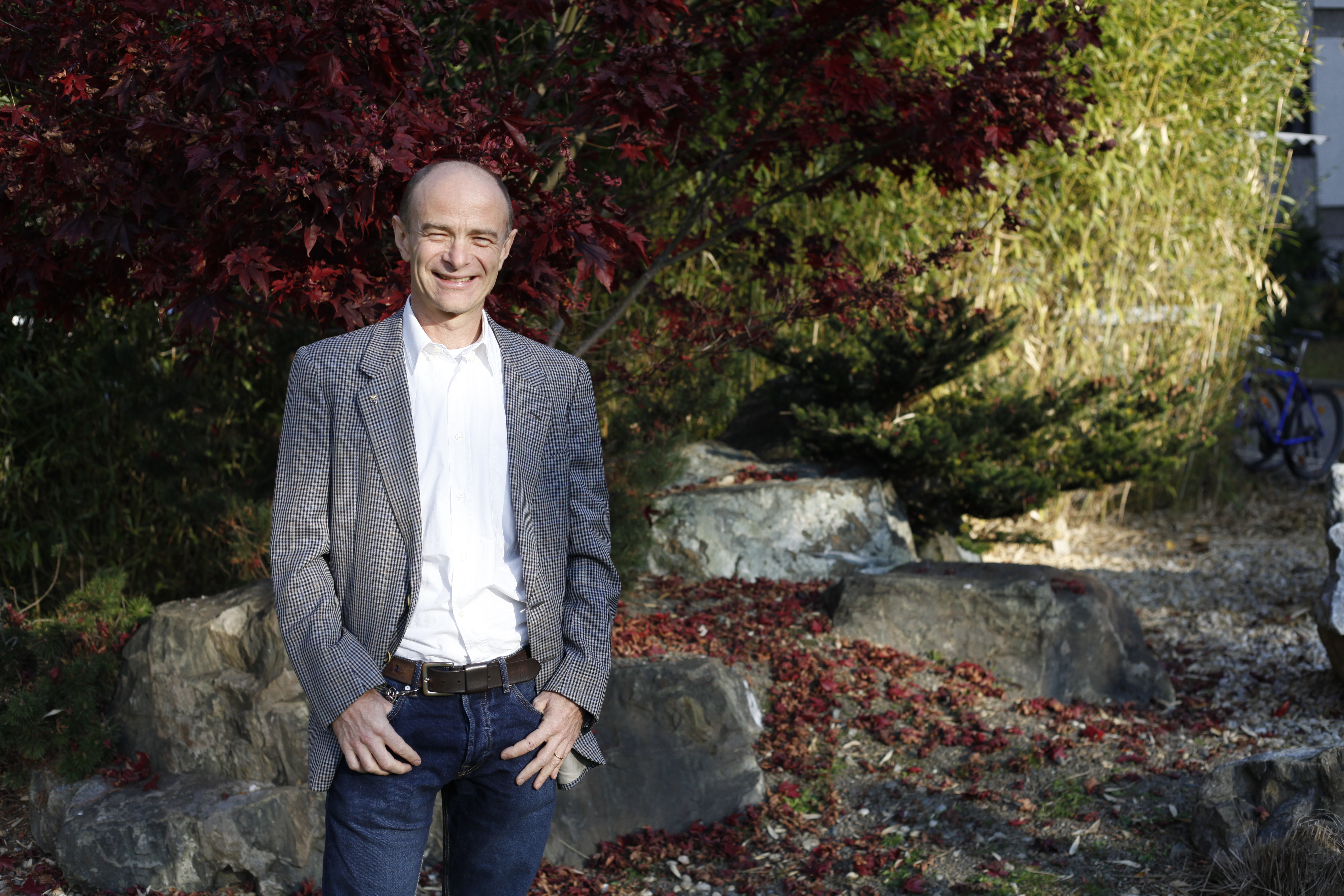
Enrico Arrigoni is a Professor at the Institute of Theoretical Physics - Computational Physics at Graz University of Technology (TU Graz). His research focuses on correlated quantum systems, many-body physics, and nonequilibrium dynamics, with applications to Mott insulators, quantum transport, and photovoltaic systems. He teaches courses such as 'Green's functions in Many-Particle Physics' and 'Atom Physics - Quantum Mechanics'. Recent work explores phonon effects in Mott systems, neural network approaches to quantum states, and impact ionization processes in photodriven materials. His methods include auxiliary master equation techniques and variational cluster approaches. Publications span topics like nonequilibrium steady states, quantum impurity models, and disordered systems. While no specific awards are listed, his contributions to theoretical physics and computational methods are evident through his prolific research output. Advising and grants details are not explicitly mentioned, though his involvement in graduate theses and research projects is implied via available master's and bachelor's thesis topics.
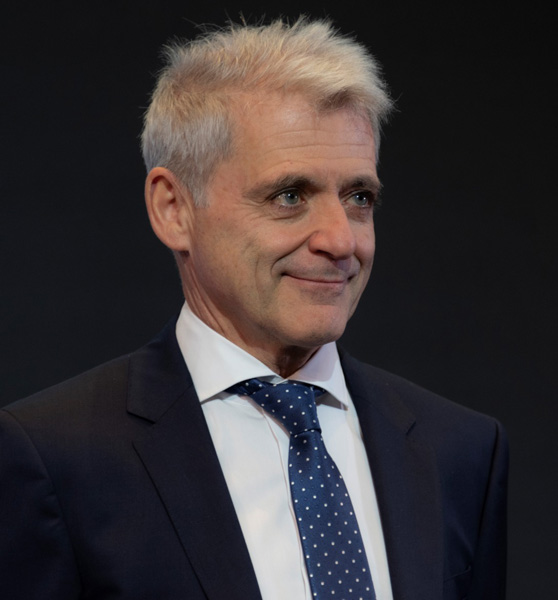
Eitan Tadmor is a Distinguished University Professor at the Department of Mathematics and Institute for Physical Science & Technology at the University of Maryland. He holds the 2024 Chaire d'excellence at Sorbonne University's Fondation Sciences Mathématiques de Paris, and has served as Director of multiple research centers including the Center for Scientific Computation and Mathematical Modeling (2002-2016) and The Sackler Institute of Scientific Computation (1993-1996). Current: University of Maryland (2005-present) Previous: UCLA (1995-2002), Tel-Aviv University (1989-1995), CalTech (1980-1982) His research spans nonlinear conservation laws , entropy-stable schemes , collective dynamics , spectral methods , and multiscale modeling . He pioneered the spectral viscosity method and developed stability criteria for numerical schemes. Recent publications focus on swarm-based optimization , Euler-Poisson equations , and hydrodynamic alignment with over 15000 citations. His work on kinetic formulations and regularizing effects in PDEs has become foundational in computational mathematics. 2022 Norbert Wiener Prize (AMS-SIAM) 2022 Gibbs Lecturer (AMS) 2015 Peter Henrici Prize (SIAM-ETH) 2013-2021 Fellow of AMS/SIAM NSF grants (1999, 2008-2012, 2012-2020) He developed CentPack software for hyperbolic conservation laws and co-authored influential review papers on numerical methods and mathematical modeling. His collaborative work with institutions like IPAM, KI-Net, and ETH-ITS demonstrates international scientific leadership.
Georges Gielen is Full Professor in the Department of Electrical Engineering (ESAT) at KU Leuven, Belgium, and part-time Research Director at imec. He has held multiple leadership roles including Chair of ESAT Department (2012-2013, 2020-2024) and Vice-Rector for Science, Engineering & Technology (2013-2017). His academic career spans over 30 years at KU Leuven, progressing from Assistant to Full Professor. His research focuses on analog and mixed-signal integrated circuit design automation , with expertise in CAD tools, design optimization, sensor interfaces, and neuromorphic systems. His work bridges hardware design with machine learning, particularly in hardware-efficient AI implementations and biomedical applications. He has pioneered techniques for automated analog circuit sizing, topology synthesis, and reliability-aware design in nanometer CMOS. Gielen has received numerous accolades including the IEEE CAS Mac Van Valkenburg Award (2015), IEEE CAS Charles Desoer Award (2020), and EDAA Achievement Award (2021). He holds an ERC Advanced Grant AnalogCreate and is an IEEE Fellow since 2002. As a prolific scholar, he has chaired major conferences including DATE (2006), ICCAD (2007), and ESSCIRC (2017). He has graduated over 55 PhD students through the MICAS research group at KU Leuven, currently supervising 13 doctoral candidates. His research team collaborates extensively with imec and industry partners on cutting-edge projects in carbon-aware AI accelerators, uncertainty-aware design, and neuromorphic sensor interfaces.
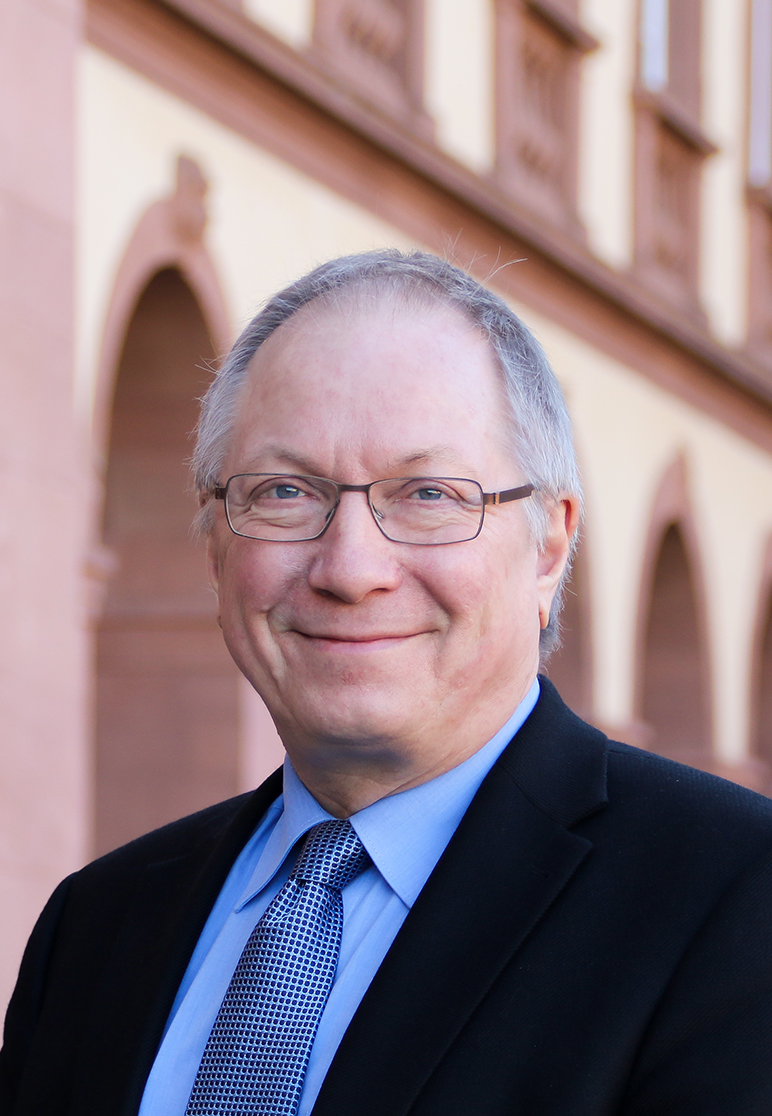
Edgar Erdfelder is a Full Professor of Psychology at the University of Mannheim, Germany, holding the Chair of Cognitive Psychology and Individual Differences since 2008. He is affiliated with the School of Social Sciences and has made significant contributions to cognitive psychology, statistical modeling, and decision-making research. Previously, he served as Full Professor at the University of Mannheim (2002–2008), Associate Professor at the University of Giessen (2001–2002), and Senior Lecturer at the University of Bonn (1987–2001). Ph.D. in Psychology, University of Trier (1986) Habilitation in Psychology, University of Bonn (2000) Diploma (M.Sc.) in Psychology, University of Göttingen (1980) Erdfelder's research focuses on statistical power analysis, multinomial processing tree (MPT) modeling, sequential statistical inference, and cognitive modeling. His work explores judgment and decision-making through mathematical and computational frameworks, integrating signal-detection theory with threshold models. He developed the widely used GPOWER software for statistical power analysis and advanced MPT models to measure cognitive process speeds. His recent publications with students highlight applications of Bayesian sequential methods, meta-analyses of sleep effects on memory, and theoretical extensions of the recognition heuristic. These studies span subfields like cognitive architecture, decision theory, and experimental design. Martin Irle Award (2020) Fellow of the Association for Psychological Science (2016) Heinz Heckhausen Award (1988) Erdfelder has held leadership roles, including Vice President of Research at the University of Mannheim and Academic Director of the Center of Doctoral Studies in Social and Behavioral Sciences funded by the DFG. He mentored numerous Ph.D. students and led the DFG-funded Research Training Group SMiP, focusing on statistical modeling in psychology.
University of Natural Resources and Life Sciences ViennaAustria
Rainer Schuhmacher is a Full Professor for Plant and Microbe Metabolomics at the University of Natural Resources and Life Sciences, Vienna (BOKU), affiliated with the Department of Agricultural Sciences and the Institute of Bioanalytics and Agro-Metabolomics in Tulln an der Donau. His research focuses on metabolomics, analytical chemistry, and plant-microbe interactions, with emphasis on fungal secondary metabolites, mycotoxin resistance, and environmental stress responses in crops. He leads projects funded by the Austrian Science Fund (FWF), European Commission, and national agencies. Research interests span: Metabolomic profiling of plant-pathogen interactions (e.g., Fusarium -wheat systems) Stable isotope-assisted techniques for metabolic pathway analysis Cold stress mitigation in plants using Antarctic bacteria Development of computational tools for untargeted metabolomics data processing His work integrates analytical chemistry, bioinformatics, and molecular biology to study metabolic crosstalk in agricultural systems. Awards include the Fritz-Feigl-Preis (2012) and Dr.-Wolfgang-Houska-Preis (2005). He has supervised multiple PhD projects and leads the Plant-Microbe Metabolomics group, managing core metabolomics platforms and international collaborations. Key projects: Chemical crosstalk in mycoparasitic interactions (FWF) Metabolomics of cold stress tolerance mediated by psychrotolerant bacteria Extension of metabolomics platforms for plant-pathogen studies
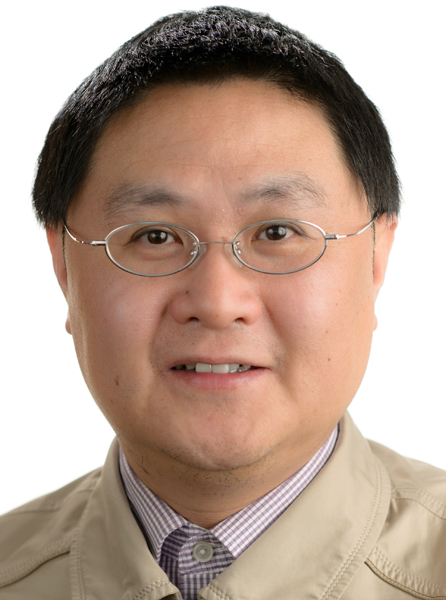
Professor Dong Xu is a Tenured Professor in the Department of Computer Science at the University of Hong Kong (HKU), part of the School of Computing and Data Science. He holds a B.Eng. and Ph.D. from the University of Science and Technology of China (USTC). His career includes tenured roles at Nanyang Technological University and the University of Sydney, alongside postdoctoral research at Columbia University. His research focuses on Artificial Intelligence, Computer Vision, Multimedia, and Machine Learning , with applications in autonomous driving, AR/VR, medical image analysis, and video surveillance. Xu has authored over 150 papers in top journals and conferences, including CVPR, ICCV, and IEEE Transactions. He actively contributes to the academic community as an editorial board member for journals like ACM Computing Surveys and IEEE Transactions, and through leadership roles in conferences such as ACM Multimedia and ICME. Notable awards include Fellowships from IEEE and IAPR, and the IEEE Signal Processing Society Distinguished Lecturer title (2021–2022). Education: B.Eng. (USTC, 2001), Ph.D. (USTC, 2005) Professional Service: Program Coordinator of ACM Multimedia 2024, Guest Editor of over ten special issues.
Jean Ponce is a Professor of Computer Science at Ecole Normale Superieure (ENS) in Paris and a Part-Time Global Distinguished Professor at New York University's Courant Institute of Mathematical Sciences and Center for Data Science (CDS). He previously served as Director of the ENS Computer Science Department (2011-2017) and held positions at Inria (2017-2022), University of Illinois at Urbana-Champaign (1998-2006), MIT, Stanford, and Inria (1982-1985). Academic Leadership: Scientific Director of PRAIRIE Interdisciplinary AI Research Institute in Paris Startup Involvement: Co-founder and CEO of Enhance Lab (2022) Editorial Roles: Senior Editor-in-Chief of International Journal of Computer Vision (2019-2022) Conference Leadership: Chair of IEEE CVPR (1997,2000), ECCV (2008), and upcoming ICCV (2023) Research Focus: Computer vision, machine learning, robotics, and AI with applications in exoplanet imaging, 3D reconstruction, and image quality assessment. His work bridges statistical learning and deep learning approaches. Awards: IEEE Fellow (2003) ELLIS Fellow (2019) ERC Advanced Grant (2011) IEEE CVPR Longuet-Higgins Prizes (2016,2020) ICML Test-of-Time Award (2019) Patents & Publications: Co-author of influential textbook Computer Vision: A Modern Approach (translated into Chinese, Japanese, Russian). Holds two US patents and one pending French patent. Google Scholar h-index of 78 with over 55,000 citations.
Marie Farge is a distinguished French mathematician and physicist currently serving as Directrice de Recherche 1ère classe at the French National Center for Scientific Research (CNRS) since 2008. She maintains strong affiliations with École Normale Supérieure in Paris where she has been based since 1981, and teaches at multiple institutions including Institut des Etudes Politiques (IEP) in Paris since 2011. Her extensive academic career includes visiting positions at prestigious institutions worldwide including Cambridge University, Harvard University, and the Max Planck Institute. Dr. Farge's research focuses on the intersection of mathematics and physics, with particular emphasis on wavelets , turbulence , and computational fluid dynamics . Her pioneering work has established wavelet analysis as a fundamental tool for studying turbulent flows and extracting coherent structures. She has developed the Coherent Vortex Simulation (CVS) method, which has become influential in turbulence modeling. Her research spans theoretical mathematics, numerical methods, and practical applications in fluid dynamics and plasma physics. Analysis of her publication record reveals a consistent focus on applying wavelet transforms to fluid dynamics problems, with increasing sophistication in handling three-dimensional turbulence and plasma phenomena. Her work demonstrates a progression from theoretical foundations of wavelet analysis to practical computational methods for complex fluid systems. The interdisciplinary nature of her research bridges mathematics, physics, and engineering applications. Prix Poncelet from the French Academy of Sciences (1993) American Physical Society Gallery of Fluid Motion award (1990) Seymour Cray Award for Scientific Computing (1988) Ministry of Foreign Affairs of Japan Award (1985) Fulbright Fellowship at Harvard University (1981) ESRO Award (1971) Elected member of Academia Europaea (2005) Grand Prix du CNRS 'La Recherche en Action' (1989) As an educator, Dr. Farge has taught extensively across France and internationally at institutions including Stanford University, Cambridge University, and numerous European and Asian universities. She has served on the editorial boards of major journals including the Journal of Applied and Computational Harmonic Analysis since 1993 and has been active in the Ethics Committee of CNRS since 2007. Her teaching spans wavelet theory, computational physics, turbulence, and signal processing, reflecting the breadth of her expertise. Dr. Farge maintains active research collaborations worldwide, evidenced by her numerous visiting positions at leading research centers including the Center for Turbulence Research at Stanford University, the Newton Institute in Cambridge, and the Institute for Advanced Study in Princeton. Her work continues to influence both theoretical developments in wavelet analysis and practical applications in fluid dynamics and related fields.
Robert Peharz is an Assistant Professor at Graz University of Technology, where he leads research at the Institute of Machine Learning and Neural Computation. His work focuses on probabilistic machine learning, with particular emphasis on tractable probabilistic models, causality, and neurosymbolic AI. Education and Career PhD from TU Graz (Austria) in 2015 Postdoc at Medical University of Graz Postdoc and Marie-Curie Individual Fellow at University of Cambridge (2017-2019) Assistant Professor at Eindhoven University of Technology (2019-2021) Current: Assistant Professor at Graz University of Technology Research Interests Peharz's research spans multiple areas of artificial intelligence with a focus on making probabilistic reasoning both theoretically sound and practically efficient. His work addresses fundamental challenges in tractable probabilistic inference and learning, probabilistic circuits as a unified framework for deep generative models, Bayesian causal inference, and neurosymbolic AI combining sub-symbolic and symbolic approaches. His research has applications in cybersecurity, healthcare, and energy systems. Research Projects VENTUS (2024-present): Physics-informed, probabilistic and causal machine learning for wind energy systems NEO DNA (2023-present): DNA-based data storage systems using computer vision and probabilistic ML VanillaFlow (2023-present): AI-guided development of novel vanillin-based molecules for redox flow batteries Bilateral AI : Cluster of Excellence focused on Broad AI combining sub-symbolic and symbolic AI approaches Awards and Recognition Finalist for TUG's Excellent Teaching Award (2023) for all 3 of his courses Marie-Curie Individual Fellow at University of Cambridge Academic Service Peharz is actively involved in the academic community through conference organization and reviewing: Area Chair: UAI (2022), ECML/PKDD (2022) Senior Committee Member: UAI (2021), IJCAI (2019, 2020) Reviewer for major conferences including ICML, NeurIPS, AAAI, IJCAI-ECAI Teaching and Mentorship Peharz supervises multiple PhD students working on diverse projects at the intersection of machine learning, causality, and neurosymbolic AI. His current advisees include Sepideh Adamiat, Irina Dobrianski, Johannes Exenberger, Giacomo Di Gobbi, Tim d'Hondt, Christian Toth, and Thomas Wedenig. Previous students include Alvaro Correia, Martin Trapp, and David Montalvan.
Antonio Plaza is a Full Professor at the University of Extremadura, Spain, and Head of the Hyperspectral Computing Laboratory. With over 600 publications, he is a leading expert in hyperspectral data processing and parallel computing of remote sensing data. He serves as IEEE Fellow and has received numerous accolades, including the 2019 Excellent Teaching Award and multiple Highly Cited Researcher recognitions. Research Interests : His work bridges Hyperspectral Image Analysis , Medical Imaging , and High-Performance Computing . Recent projects focus on 3D anatomical modeling, AI-driven surgical tools, and deep learning applications for aortic dissection segmentation. Scientific Awards : 2019 Highly Cited Researcher (Geosciences) 2015 IEEE Fellow 2019 Excellent Teaching Award 2018 Highly Cited Researcher (Cross-Field) 2002 Best PhD Dissertation, University of Extremadura Editorial Leadership : Served as Editor-in-Chief of IEEE Transactions on Geoscience and Remote Sensing (2013–2017) and held multiple committee roles in IEEE GRSS. His articles reflect a shift from remote sensing to medical imaging, with a focus on Aortic Dissection Segmentation , Skull Reconstruction , and AI-driven Medical Tools .
Georgios B. Giannakis is a Full Professor, Endowed Chair, and Presidential Chair in the Department of Electrical and Computer Engineering at the University of Minnesota since 1999. He directs the Digital Technology Center and has held academic roles at the University of Virginia (1987-1999) and USC (1982-1986). His research spans Data Science, Wireless Communications, Network Science, and Statistical Signal Processing , with applications to IoT and power systems. Diploma in Electrical Engineering, NTUA (1981) MSc in Electrical Engineering, USC (1983) MSc in Mathematics, USC (1986) PhD in Electrical Engineering, USC (1986) His publications (470+ journals, 770+ conferences, 34 patents) focus on fading channel modeling, UWB localization, blind signal estimation, and cross-layer wireless design . Articles emphasize multicarrier systems, time-varying channels, and ultra-wideband communication , with citations exceeding 76,000 (H-index 145). Scientific Awards : EURASIP 'Athanasios Papoulis' Society Award (2020) IEEE Fourier Technical Field Award (2015) Gugliermo Marconi Prize Paper Award (2003) 9 Best Journal Paper Awards (IEEE/SPS & ComSoc) IEEE SPS Technical Achievement Award (2001) He has mentored over 50 PhD students and 25 postdocs, served IEEE as Distinguished Lecturer, and contributed to Greek university accreditation panels. His work bridges theoretical signal processing and practical communication systems .
H. Vincent Poor is a distinguished academic currently serving as the Dean of Princeton University's School of Engineering and Applied Science and the Michael Henry Strater University Professor of Electrical Engineering. He also holds a Visiting Professor position at Imperial College London's Electrical & Electronic Engineering department. B.E.E. and M.S. in Electrical Engineering from Auburn University M.A. and Ph.D. in EECS from Princeton University His research spans signal processing, information theory, and wireless systems, with a focus on robust techniques, stochastic analysis, and quantum communication. His work has driven advancements in MMSE detection, finite-blocklength coding, and quickest detection theory. He has advised 37 doctoral and 57 postdoctoral researchers, many of whom hold prominent roles globally. His recent publications highlight innovations in communication theory, quantum channels, and detection algorithms. These include foundational work on MMSE multiuser detection, iterative processing in wireless systems, and theoretical frameworks for quickest detection applications. 2011 IEEE Eric E. Sumner Award 2005 IEEE James H. Mulligan, Jr., Education Medal 2002 NSF Director's Award for Distinguished Teaching Scholars Multiple honorary doctorates and fellowships As principal investigator on over 50 research grants, Poor has led groundbreaking projects in signal processing and wireless networking. His visiting roles at institutions like Stanford, Harvard, and Imperial College further underscore his global academic influence.
Anders Lindquist is Zhiyuan Chair Professor at Shanghai Jiao Tong University and Emeritus Professor at KTH Royal Institute of Technology. He earned his PhD from KTH in 1972 and began his career as a postdoctoral fellow at the University of Florida under R.E. Kalman. His academic journey includes positions as Assistant Professor (University of Florida), Associate Professor (University of Kentucky and Brown University), and Full Professor (University of Kentucky and KTH). At KTH, he served as Head of Mathematics Department (2000-2009) and Director of the Center for Industrial and Applied Mathematics (2006-2016). His research focuses on: Mathematical systems theory and control theory Stochastic realization and estimation Spectral estimation methods Moment problems with complexity constraints Applications of operator theory His publications demonstrate consistent focus on mathematical foundations of control systems, stochastic processes, and optimization techniques, with recent work expanding into multidimensional applications and image processing. Major scientific honors include: IEEE Control Systems Award (2020) Reid Prize in Mathematics (2009) Axelby Outstanding Paper Award (2003) Fellowships: IEEE, SIAM, IFAC Memberships: Royal Swedish Academy of Engineering Sciences, Chinese Academy of Sciences He holds four U.S. patents and has served on editorial boards of leading journals including Philosophical Transactions of the Royal Society and SIAM Review.
Theresia Gschwandtner is a Researcher at TU Wien's Research Division of Visual Analytics (E193-07). Her work focuses on advancing visual analytics methodologies for temporal data, fraud detection, and uncertainty visualization. She leads the Network Lab and contributes to tools like TimeCleanser for data cleansing and NEVA for fraudulent network identification. Her research emphasizes interactive systems for guidance in data analysis, provenance tracking, and enhancing user-centric visualization frameworks. Key research interests include temporal data preprocessing, multivariate time series analysis, and the integration of automated guidance systems into visual analytics platforms. She has collaborated on projects such as Hermes (economic network exploration) and TBSSvis (temporal blind source separation), which combine algorithmic innovation with intuitive user interfaces. Guidance frameworks and user studies are central to her work, exploring how automated support impacts performance and mental state during complex data analysis tasks. She has advised students on theses addressing data quality, cyclical pattern detection, and lighting design visualization. Notable contributions include the Quantifying Uncertainty in Time Series Processing framework and the LightGuider system for interactive lighting design guidance. Her work bridges theoretical advancements with practical applications in healthcare, finance, and engineering domains.
Silvia Miksch is a Full University Professor of Visual Analytics at TU Wien's Faculty of Informatics, leading the CVAST Center. She holds a PhD from the University of Vienna and has held roles including Head of the Department of Information and Knowledge Engineering at Danube University Krems. Her research focuses on Visual Analytics, Information Visualization, Temporal Data Analysis, and Medical Informatics. She has supervised numerous PhD and Master’s students, with notable advisees including Ignacio Baltazar Pérez Messina and Davide Ceneda. Her work bridges theory and practice, addressing challenges in Visual Analytics for healthcare, business intelligence, and digital humanities. Awards include the IEEE VGTC Technical Achievement Award (2023) and induction into the IEEE Visualization Academy (2020). She actively contributes to conferences like IEEE VIS and EuroVis as program chair and steering committee member. Her projects, such as 'VisuExplore' and 'DisCo', have received recognition for advancing visualization in medical and cultural domains. Key research areas include guidance-enriched systems, network visualization, and temporal reasoning. She explores applications in fraud detection, cultural heritage analysis, and pandemic data visualization. Her lab's tools, like 'Hermes' and 'COVIs', exemplify task-driven design for real-world data challenges.