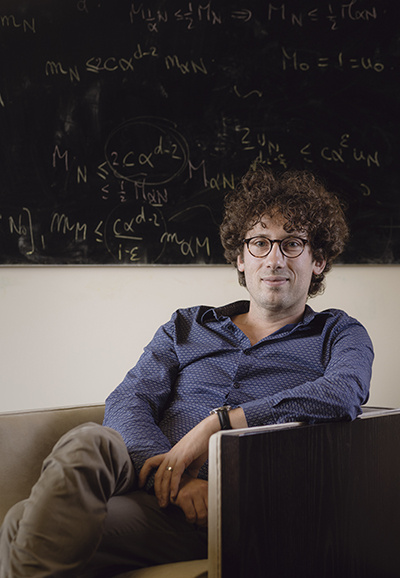
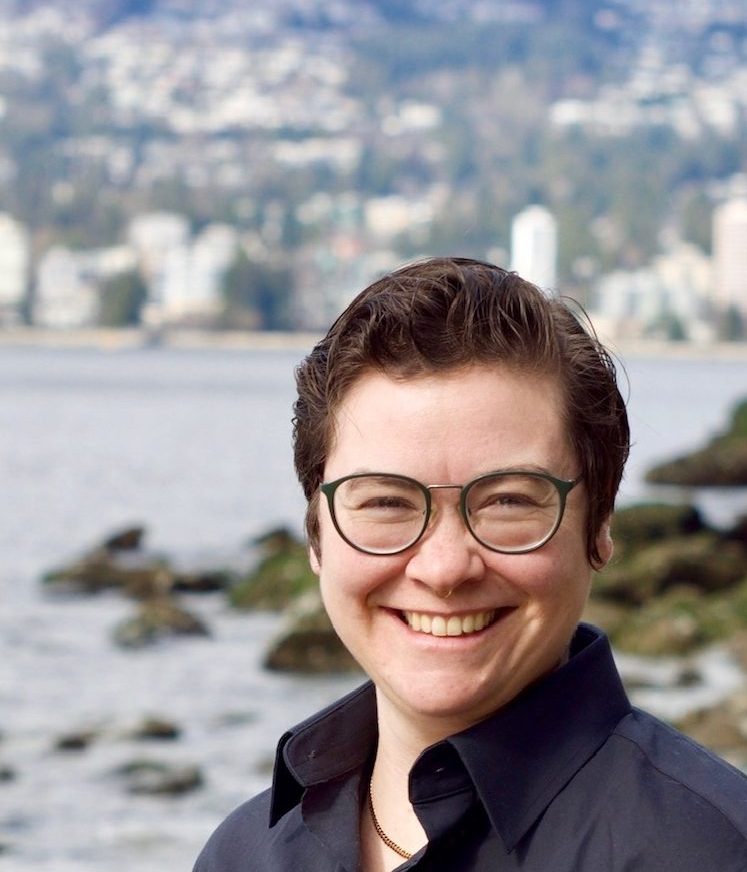
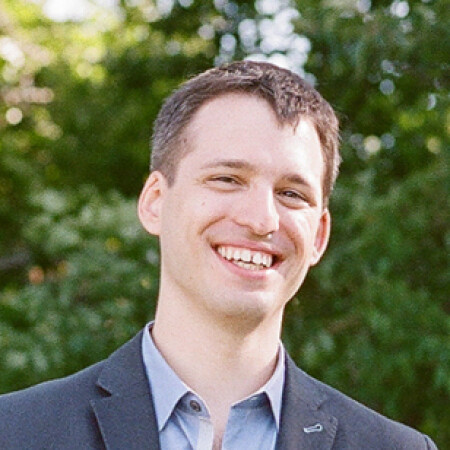
Jonathan S. Phillips is an Assistant Professor in the Program in Cognitive Science at Dartmouth College , with affiliations in the Department of Psychological and Brain Sciences and the Department of Philosophy . He directs the PhilLab , which explores cognition through interdisciplinary methods integrating philosophy, psychology, linguistics, and computer science . Education: B.A., University of North Carolina, Chapel Hill Ph.D., Yale University (Philosophy/Psychology) Research focuses on modal cognition , including how humans represent possibilities ( possible worlds ), moral judgment , causal reasoning , and theory of mind . The lab investigates how these representations influence language and decision-making , with empirical work spanning fMRI studies , computational modeling , and developmental psychology . Recent publications examine modal decomposition , counterfactual neural substrates , and moral constraints on possibility representation . Collaborators include scholars from Harvard, Yale, Stanford, and MIT. The lab has trained graduate students in Cognitive Science and Psychology , with alumni pursuing computational, moral, and developmental research.
Ben Seiyon Lee is an Assistant Professor in the Department of Statistics at George Mason University's College of Science. His work bridges computational statistics, climate modeling, and environmental risk assessment. Education: PhD in Statistics, Pennsylvania State University (2020) Lee specializes in computational methods for high-dimensional spatiotemporal data and uncertainty quantification in climate models. His research explores climate change impacts on extreme hydrological events, wildfire emissions, and medical decision-making. Recent publications focus on Bayesian spatiotemporal frameworks for extreme precipitation analysis, zero-inflated spatial models, and multisector uncertainty quantification. His work addresses challenges in flood risk assessment, agricultural yield projections, and healthcare compliance metrics.
Eric Talley is the Marc and Eva Stern Professor of Law and Business at Columbia Law School , where he has served as Full-time Faculty since 2015. Prior to Columbia, he held tenured positions at the University of California, Berkeley (2006–2015) and the University of Southern California (1995–2006), and visiting appointments at Caltech, University of Chicago, ETH-Zurich, European University Institute, Georgetown, Harvard, RAND Graduate School, and Stanford. Education : J.D. and Ph.D. in Economics from Stanford University; B.A. in Economics & Political Science from UC San Diego His research and teaching focus on Corporate Law , Mergers & Acquisitions , Corporate Governance , Law and Machine Learning , and Economic Analysis of Law . He co-directs the Ira M. Millstein Center for Global Markets and Corporate Ownership , directing research on corporate governance and performance trends. Recent publications analyze topics such as valuation disputes , officer liability in Delaware , and gender dynamics in startups , reflecting his interdisciplinary approach blending law, finance, and data science. His work has been featured in top journals and media outlets like the Wall Street Journal , Bloomberg , and Harvard Law School’s Forum . Scientific Awards : Willis L.M. Reese Prize for Excellence in Teaching (2017, 2022) Elected member of the American Academy of Arts & Sciences (2024) Talley hosts the Beyond “Unprecedented” podcast, exploring economic recovery post-pandemic. He serves on the Executive Committee of the Columbia University Data Science Institute and has held leadership roles in the Society for Empirical Legal Studies and the American Law and Economics Association.
Christoph Stadtfeld is Associate Professor of Social Networks at ETH Zurich's Department of Humanities, Social and Political Sciences and co-director of the ETH Social Networks Lab. His research examines social network dynamics, focusing on tie formation processes, network effects on individuals, and advanced statistical methodologies for longitudinal network analysis. Education: PhD from Karlsruhe Institute of Technology (2011) Postdoctoral researcher and Marie-Curie fellow at University of Groningen, University of Lugano, and MIT Media Lab (2011-2014) His work bridges sociology, statistics, and computer science to address fundamental questions about how social structures evolve and influence behavior. Key interests include relational event modeling, co-evolution of networks and attributes, and applications in mental health, political polarization, and scientific collaboration. He develops innovative methods for analyzing dynamic networks using cutting-edge computational approaches. Recent publications reveal strong emphasis on methodological rigor in temporal network analysis, with significant contributions to relational event modeling and dynamic network actor frameworks. His work increasingly addresses societal challenges including political polarization, mental health impacts of social isolation, and innovation dynamics in healthcare. Scientific awards: Raymond Boudon Award of the European Academy of Sociology (2017) Freeman Award of the International Network for Social Network Analysis (2021) As co-director of the ETH Social Networks Lab, Stadtfeld leads interdisciplinary research teams developing novel network methodologies. His work has been supported by prestigious fellowships including Marie-Curie funding, and he actively mentors graduate students in network science methodology and applications across diverse domains. The ETH Social Networks Lab serves as a hub for advancing network theory and methodology, with ongoing projects examining student networks during crises, scientific collaboration dynamics, and innovation ecosystems through the lens of network science.
Ravi Dhar is the George Rogers Clark Professor at the Yale School of Management and holds an affiliated appointment as a Professor of Psychology at Yale University. He serves as Director of the Center for Customer Insights , focusing on consumer behavior, branding, and marketing strategy through psychological and economic frameworks. Ph.D. in Marketing, University of California at Berkeley (1992) MS, University of California at Berkeley (1990) MBA, Indian Institute of Management (1987) BTech, Indian Institute of Technology (1986) His research examines preference formation, self-regulation, and the interplay of conflicting goals in consumer decisions. Recent work explores sustainability, mobile commerce, and how guilt paradoxically enhances consumer pleasure. He has published over 50 articles and advised Fortune 100 companies across industries. Key trends in his publications include behavioral economics , eco-conscious consumption , and technology-mediated decisions . His studies address choice overload, goal systems, and the psychological drivers of indulgence versus self-control. Distinguished Scientific Contribution Award (Society for Consumer Psychology, 2012) Yale SOM Alumni Teaching Award (2012) William O'Dell Award Finalist (2004, 2008, 2012) AMA Doctoral Consortium Fellow (1991) Dhar consults firms on customer insights and has held visiting roles at HEC Paris , Erasmus University , and Stanford/NYU . He edits top journals like Journal of Consumer Research and Marketing Science , shaping academic and industry discourse.
Hugo Duminil-Copin is a Full Professor at the University of Geneva and a permanent professor at the Institut des Hautes Études Scientifiques (IHES) since 2016. His research focuses on Mathematical Physics , Combinatorics , and Probability Theory . Education : École Normale Supérieure (ENS) Paris, University of Paris-Saclay Awards : 2022 Fields Medal for work in statistical physics Research Trends : Probabilistic aspects of lattice models Phase transitions and critical phenomena Conformal invariance and percolation theory Collaborations : Active collaborations with researchers such as R. Panis, S. Goswami, I. Manolescu, and others. Teaching : Offers courses in mathematical physics and probability at the University of Geneva. His recent publications emphasize critical models, random-cluster models, and Gaussian free fields, with applications in planar and high-dimensional systems. He supervises doctoral students including Emile Averous , Aman Markar , and Tiancheng He .
Dr. Friedrich Götz is an Associate Professor of Psychology in the Department of Psychology at the University of British Columbia (Faculty of Arts). His research focuses on geographical psychology, exploring the causes and consequences of regional personality differences through an interdisciplinary Big Data approach. PhD, University of Cambridge (UK), 2021 MPhil, University of Cambridge (UK), 2017 BSc, University of Konstanz (Germany), 2016 Dr. Götz’s work bridges social and personality psychology with behavioral science, examining topics like mobility, migration, wanderlust, courage, and entrepreneurship. He co-developed large-scale survey studies with TIME Magazine, attracting over 3 million participants. His research often involves experience sampling methods and open science. His recent publications emphasize geographical psychology, personality-environment interactions, and methodological advancements. Articles span 2020–2025, with key themes including regional personality differences, misinformation susceptibility, and the psychological impact of environmental features. Rising Star Award (Association for Psychological Science), 2025 SAGE Emerging Scholar Award (Society for Personality and Social Psychology), 2025 Top 40 under 40 – Germany (CAPITAL Magazine), 2024 President’s New Researcher Award (Canadian Psychological Association), 2024 Best Dissertation Prize (German Psychological Society), 2021 Leading Scholar (Green College), 2021 Dr. Götz teaches undergraduate and graduate courses, including Personality Psychology and Contemporary Conceptual Issues in Personality, with a focus on geographical dimensions. He is based in the Personality and Geographical Ambiance (PANGEA) Lab, which prioritizes inclusivity and collaboration in studying person-environment interactions.
Callan Hummel (they/them) is an Assistant Professor in the Department of Political Science at the University of British Columbia's Faculty of Arts. Their research focuses on why and how communities with little political power organize and negotiate with their governments, with particular expertise in comparative politics, civil society, LGBTQ+ policy, labor politics, health policy, and Latin American politics. Hummel earned their Ph.D. and M.A. from the University of Texas at Austin in 2017 and 2014, respectively, and completed their B.A. at the University of Washington in 2009. As a nonbinary researcher, they bring unique perspectives to their work examining political power dynamics and marginalized communities. Dr. Hummel is the author of Why Informal Workers Organize: Contentious Politics, Enforcement, and the State (Oxford University Press 2021), which won the 2023 Riker Prize for the Best Book in Political Economy. Their current research agenda examines the expansion of trans and nonbinary rights globally, using diverse methodologies including statistical analysis, ethnography, survey, computational, experimental, and formal modeling. They conduct field research with trans-led NGOs and street vendor unions in Miami, Florida, La Paz, Bolivia, and São Paulo, Brazil. Hummel's recent scholarly output demonstrates a strong focus on transgender rights, particularly in Latin American contexts, with several 2024-2025 publications examining gender-affirming policies in Bolivia and transgender experiences in Florida. Their work consistently bridges political science with public health concerns, particularly regarding the impacts of policy on marginalized communities. The research combines comparative analysis with deep ethnographic engagement, often focusing on how informal workers and transgender communities navigate state institutions. 2023 Riker Prize for Best Book in Political Economy Publications in Lancet Global Health , BMJ Global Health , British Journal of Political Science Research funded by NIH, NSF, Department of Education, and APSA Dr. Hummel actively supervises graduate students and has contributed to understanding harassment and satisfaction among political science graduate students. Their interdisciplinary approach connects political science with public health, gender studies, and economic sociology. They are available for collaborations through research clusters and grant opportunities at UBC.
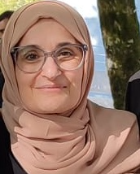
Shili Lin is a Professor of Statistics at The Ohio State University's Department of Statistics, within the College of Arts and Sciences. She joined the faculty in 1995 after serving as the Neyman Visiting Assistant Professor at the University of California, Berkeley. Her expertise spans statistical genomics, bioinformatics, high-dimensional data analysis, Bayesian statistics, and Monte Carlo methods. Lin collaborates extensively with medical researchers to address challenges in genomic data such as ultra-high dimensionality, complex dependencies, and sparsity, focusing on diseases like cancer, multiple sclerosis, tuberculosis, and diabetes. She has contributed to developing computational tools for analyzing chromatin interactions, methylation patterns, and metagenomic samples. Lin holds a PhD from the University of Washington (1993). Her professional roles include serving as an Associate Editor for Biometrics , Statistical Applications in Genetics and Molecular Biology , and Statistics in Biosciences , as well as an Editorial Board member for Genetic Epidemiology . She is a standing member of NIH's Biostatistical Methods and Research Design Study Section and has served on multiple NSF and NIH grant review panels. Additionally, she is President Elect of the Caucus for Women in Statistics and has been a member of the ASA Committee on AAAS representation for six years. Her research interests emphasize statistical methodologies tailored to genomic data, including model selection, epigenetic analysis, and integrative approaches for multi-omics data. Lin's work often combines theoretical advancements with practical applications, such as predicting relapse in immune-mediated disorders and improving imputation techniques for single-cell Hi-C analysis. She has pioneered software tools like TopKLists and GrammR to facilitate ranked list aggregation and metagenomic data analysis. Lin's scientific accolades include ASA Fellowship (2004), AAAS Fellowship (2009), and membership in the International Statistical Institute (2014). Her contributions to statistical genetics and epigenomics have been recognized through grants and editorial leadership roles. While her research group focuses on cutting-edge methods, no formal advisees or students are explicitly listed in the provided materials.
Malay Ghosh is a Distinguished Professor in the Department of Statistics at the University of Florida. He holds a B.A. (1962) and M.A. (1964) in Statistics from Calcutta University, and a Ph.D. (1969) in Statistics from the University of North Carolina at Chapel Hill. His research focuses on Bayesian statistics, small area estimation, and survey sampling methodologies. Ghosh has contributed extensively to statistical theory and applications, including foundational work in probability matching priors and generalized linear models for small area estimation. Research Interests : His key areas include advanced statistical modeling, methodological developments in survey sampling, and Bayesian approaches to complex data analysis. His work bridges theoretical rigor with practical applications in diverse fields requiring precise estimation techniques. Awards: Fellow, American Statistical Association Fellow, Institute of Mathematical Statistics Elected Member, International Statistical Institute Recipient of TIP (1994) and PEP (1996) Awards Editorial Roles: Editor of Sequential Analysis (since 1996), Co-Editor of Sankhya (since 2000), and Associate Editor of the American Statistician (since 2000). His editorial contributions reflect his leadership in advancing statistical discourse.
Robert E. (Rob) Kass is the Maurice Falk University Professor of Statistics and Computational Neuroscience at Carnegie Mellon University, holding joint appointments in the Department of Statistics & Data Science, Machine Learning Department, and Neuroscience Institute. His research spans Bayesian statistics, neural data analysis, and computational neuroscience. Kass earned a B.A. in Mathematics from Antioch College, a Ph.D. in Statistics from the University of Chicago, and has been at CMU since 1981. He has served as Department Head of Statistics (1995–2004) and Interim Co-Director of the CNBC (2015–2018). His work focuses on statistical methods for neuroscience, particularly analyzing spike train data and identifying cross-brain interactions. Notable contributions include co-authoring Analysis of Neural Data and foundational articles on Bayesian inference. Kass has received prestigious awards such as the National Academy of Sciences membership and COPSS Distinguished Achievement Award. Research interests include computational neuroscience, statistical modeling of neural systems, and interdisciplinary education. He has advised numerous students and co-organized major workshops like the Statistical Analysis of Neuronal Data series. Kass’s work emphasizes the interplay between statistical rigor and scientific insight, bridging theoretical and applied domains. Education: B.A. in Mathematics, Antioch College Ph.D. in Statistics, University of Chicago Postdoctoral Fellow, Princeton University Scientific contributions include advancements in spike train analysis, Bayesian model assessment, and statistical methods for brain connectivity. His work on neural synchrony and population coding has influenced both theoretical and applied neuroscience.
Alan Montgomery is a Professor of Marketing at Carnegie Mellon University's Tepper School of Business, where he has held a tenured position since 2018 (previously as Associate Professor from 2005-2017). He also maintains an affiliation with the Machine Learning Department at CMU's School of Computer Science, demonstrating his interdisciplinary research approach at the intersection of marketing, economics, and computational methods. Dr. Montgomery earned his educational credentials from prestigious institutions: Ph.D. in Marketing/Economics, University of Chicago (1994) MBA, University of Chicago (1994) BS in Economics, University of Illinois at Chicago (1989) His research focuses on applying advanced quantitative methods to marketing problems, with particular expertise in consumer behavior modeling, clickstream data analysis, pricing strategies, and micro-marketing. Dr. Montgomery's work bridges traditional marketing theory with computational approaches, making significant contributions to both academic literature and practical business applications. His research often involves large-scale data analysis to uncover patterns in consumer decision-making processes, with recent work exploring mental accounting, bandit algorithms, and the impact of digital phenomena like movie piracy on traditional markets. Dr. Montgomery has received notable recognition including the 1999 Mitchell Prize from the American Statistical Association for his paper "Estimating Price Elasticities with Theory-based Priors." His work has been published in top-tier journals across marketing, economics, and computer science disciplines, demonstrating the interdisciplinary impact of his research. As an educator and mentor, Dr. Montgomery has advised numerous PhD students and collaborated extensively with researchers across multiple institutions. His interdisciplinary approach has led to collaborations with computer scientists studying web browsing behavior and economists examining consumer decision frameworks. His research has been supported by various grants throughout his career, enabling extensive data collection and analysis projects. Dr. Montgomery's work spans multiple research environments, including collaborations with the Machine Learning Department at CMU's School of Computer Science. His research group likely focuses on applying computational methods to marketing problems, particularly in the areas of consumer behavior modeling, clickstream analysis, and data-driven marketing strategies. His recent work shows increasing integration of machine learning techniques with traditional marketing research methodologies.
Nicholas Ruozzi is an Assistant Professor of Computer Science at The University of Texas at Dallas (UTD), affiliated with the Erik Jonsson School of Engineering and Computer Science. His research focuses on machine learning, statistical inference, and probabilistic graphical models, with applications in virtual reality (VR) training, computer vision, and explainable AI. He has contributed to areas such as tractable probabilistic modeling, activity recognition in videos, and user tracking in VR systems. His work often bridges theoretical foundations with practical applications, such as developing algorithms for data privacy in VR training sessions and enhancing deep learning models through hybrid approaches with graphical models. Recent research trends include exploring multimodal interaction, distributionally robust models, and novel instance detection techniques in computer vision. Ruozzi's publications span topics like user identifiability in VR, predictive task guidance in AR, and systematic analysis of device interactions in VR systems. While no specific awards or grants are listed, his contributions reflect a strong emphasis on interdisciplinary applications of machine learning and probabilistic methods.
Arthur A. Danielyan is Professor in the Department of Mathematics and Statistics at the University of South Florida. His research focuses on complex analysis and approximation theory, particularly boundary behavior of analytic functions, polynomial and rational approximation, and functional analysis methods. Danielyan earned his PhD from the Armenian Academy of Sciences (1987) under S. N. Mergelyan. Research solves longstanding problems including Rubel's bounded analytic functions problem (2016) and von Renteln's boundary uniqueness problem. Recent work addresses Fatou's theorem extensions and interpolation in Hardy spaces. He has supervised multiple PhD students and organized international conferences including the Southeastern Analysis Meeting (2016). Funded by Simons Foundation and DAAD, Danielyan has published over 35 scholarly papers resolving problems from Hayman's list. Articles demonstrate consistent focus on boundary properties of analytic functions, interpolation theorems, and polynomial approximation in complex domains. Recent publications increasingly address Blaschke products and Baire classification problems. Honors and Grants Simons Foundation collaborative grant (2017-2022) DAAD Visiting Research Professorship (1996-1997) Henri Hecaen Award (1989)
Jalaa Hoblos is an Associate Professor of Practice in the Department of Computer Science at Stony Brook University, part of the College of Engineering and Applied Sciences. She holds a B.S. from the Lebanese University in Beirut, Lebanon, and an M.S. and Ph.D. in Computer Science from Kent State University. Prior to Stony Brook, she served as an Assistant Professor at Penn State Behrend, a Visiting Assistant Professor at Hiram College, and adjunct faculty at Kent State University and the University of Akron. Her primary roles include teaching and research. Her research focuses on Data Quality Analysis, Cloud Computing (particularly load balancing and security), Wireless Networks Security, and Statistical Mathematics. She has explored topics such as fairness and throughput in multi-hop wireless networks, malicious behavior detection in clouds, and protocol modifications like the adaptive 802.11 MAC. Her work integrates statistical methodologies with network optimization and security challenges. Recent publications emphasize anomaly detection in time-series data and fairness-enhancing protocols. She has also applied techniques like Latent Semantic Analysis to educational technology. No scientific awards are explicitly mentioned in the texts. While no advising or grant details are provided, her teaching includes courses like CSE 114 (OOP), CSE 101 (Principles), CSE 310 (Computer Networks), and security-focused courses such as ISE 331 (Fundamentals of Computer Security). She has maintained consistent academic engagement across institutions and disciplines.