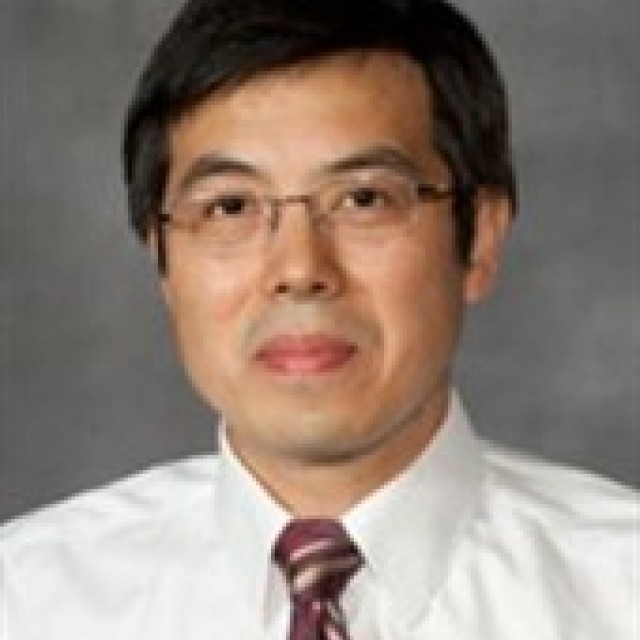
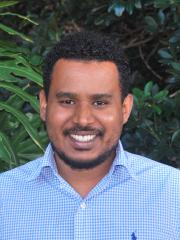
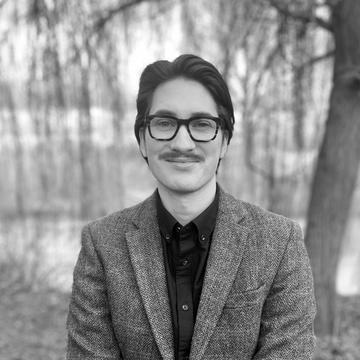
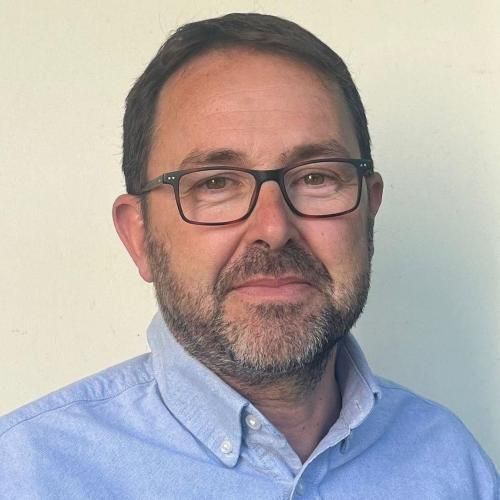
Stephen Drinkwater is a Professor of Economics at the University of Roehampton’s Business School and Deputy Dean of the Faculty of Business and Law. He holds research fellowships at the Institute for Labor Economics (IZA), the Centre on Dynamics of Ethnicity (CoDE), WISERD, and CReAM (UCL). His research focuses on applied microeconomics, labour markets, migration, and regional issues. Notable projects include analyses of EU migration impacts, ethnic minorities in labour markets, and civil society dynamics through WISERD’s £12.5M projects (2014-2024). He has secured funding from the European Commission, Joseph Rowntree Foundation, Welsh Government, and ESRC. Consultancy includes OECD, Government Office for Science, and local authorities. Teaching expertise spans Labour Economics and Research Methods. Recent activities include co-leading projects on ethnic pay gaps in public sectors and presenting at academic conferences. Media engagements include analysis of Brexit impacts and immigration policy debates.
Dr. Chunhu Shi is a Research Fellow at the University of Manchester's Division of Nursing, Midwifery and Social Work, contributing to the NIHR ARC GM Evaluation theme. He holds a PhD in applied health research and evidence synthesis, with expertise in advanced meta-analysis methods and systematic reviews. His work focuses on pressure ulcer prevention, prognosis research, and healthcare innovation evaluation. Shi is a Fellow of the Higher Education Academy (FHEA), an Associate Editor of the International Journal of Nursing Studies, and a member of the HTA Programme Funding Committee. Education: Doctor of Philosophy (2015–2019), University of Manchester Master of Science (2012–2015), Lanzhou University Bachelor of Medicine (2007–2012), Lanzhou University Research Interests: Applied health research emphasizes evidence synthesis methodologies like network meta-analysis and individual participant data analysis. His work bridges clinical practice and policy, particularly in pressure ulcer prevention and digital health innovations. He explores how meta-analytic techniques can address healthcare disparities, such as racial bias in medical devices. Publications: His recent work spans mobile health app evaluations, virtual healthcare models, and delirium-falls associations in elderly populations. Notable contributions include systematic reviews on pulse oximetry accuracy and wound care technologies. Recognition: Shi received the President's Doctoral Scholar Award (2019). His advisory roles include contributing to clinical practice guidelines on pressure ulcers and serving on panels for digital healthcare innovation. Grants/Advising: Collaborations span global healthcare institutions. He leads projects on telemedicine efficacy and equity-focused meta-analyses, funded by NIHR and international bodies. No formal student supervision is listed, though he mentors early-career researchers through editorial and guideline activities. Labs/Teams: Affiliated with the Manchester Precision Medicine Institute, focusing on data-driven healthcare solutions. Active in interdisciplinary networks for evidence-based practice and health equity research.
Guimin Gao is a researcher with expertise in statistical genetics and bioinformatics. His research focuses on applying statistical methods to analyze genetic and genomic data, including collaborations in clinical and translational science. He has developed methods for haplotyping, gene mapping in admixed populations, and analyses of GWAS, methylation, and DNA sequencing data. He holds a Ph.D. in Biostatistics from Sun Yat-sen University of Medical Sciences and has completed postdoctoral training at Virginia Tech and Creighton University. His work spans diverse areas such as epigenetic biomarker identification in schizophrenia and statistical methodologies for genomic association studies. Education: Ph.D. (Biostatistics, 2000), Postdoc in Statistical Genetics (2001-2005) Research interests include statistical genetics, bioinformatics, and the application of computational methods to biomedical data. His publications demonstrate contributions to haplotype analysis, admixture mapping, and epigenetic studies. Gao has collaborated on projects involving family-based studies, meta-analyses, and the development of tools like MethylPCA for confounder control in methylome-wide studies.
Dr. Sewunet Admasu Belachew is a Postdoctoral Research Fellow in the FNCWR Program at the School of Public Health, University of Queensland. With a background in pharmacy and public health, he specializes in cancer care pathways with a particular focus on improving healthcare access for Aboriginal and Torres Strait Islander peoples. His work also encompasses antimicrobial resistance research and cardiovascular outcomes among cancer patients. Dr. Belachew earned his BPharm, MSc, and PhD (completed in 2023) from the University of Queensland. Prior to his doctoral studies, he served as a lecturer, clinical preceptor, and mentor at the University of Gondar in Ethiopia, where he taught pharmacotherapy, pharmacoepidemiology, and clinical pharmacy practice. His research interests span Indigenous health equity, antimicrobial use and resistance surveillance, cancer risks and outcomes, and pharmacy practice. Dr. Belachew's work consistently addresses health disparities, with particular attention to vulnerable populations in both Australia and Sub-Saharan Africa. His methodological expertise includes quantitative, qualitative, and mixed-methods research approaches, with a strong focus on systematic reviews and meta-analyses. Analysis of Dr. Belachew's recent publications reveals a strong focus on global health disparities, particularly in Indigenous populations. His work spans cancer care, antimicrobial resistance, maternal and child health, and cardiovascular outcomes. A significant portion of his research examines healthcare access barriers for marginalized communities, with increasing attention to data-driven policy recommendations. Nominated for Faculty of Medicine Graduate of the Year Award at University of Queensland Recipient of prestigious travel grant to attend Annual Symposium on Global Cancer Research Research cited by World Health Organization, with one article referenced in two WHO policy documents Research featured in media outlets including CIDRAP, Health Reporter, Medscape, FAO, and The Conversation Dr. Belachew has demonstrated grant-writing ability, having secured funding including Cancer Australia's 'Empowering Indigenous Communities' grant (2025-2028) and the Australian Society for Antimicrobials grant (2024-2025). He has supervised students during his time at the University of Gondar and is currently available for supervision at the University of Queensland. His collaborative approach is evident in his extensive co-authorship network across multiple continents. Dr. Belachew maintains active involvement in professional organizations as a director for membership of the Pharmaco-economics and Outcomes Research (ISPOR) Ethiopian regional chapter and as a board member of the Ethiopian Organisation for Cancer Prevention and Research. He is also an Ethiopian Young African Leadership Initiative (YALI) alumni.
Clemens Jarnach is a Tutor in Sociology and Politics at the University of Oxford , affiliated with Green Templeton College . His work bridges computational social science and political sociology , focusing on public opinion formation , electoral behavior , and media effects in contexts like political polarization , Brexit , and climate politics . PhD in Sociology (University of Oxford) BSc in Business Studies (City, University of London) MSc in Sociology (University of Oxford) His research employs quantitative methods such as network analysis , machine learning , and causal inference via quasi-experimental designs . Recent projects analyze how digital trace data and social networks shape political identities and voting behavior , including studies on echo chambers and media consumption during elections. Key blog articles (2023-2025) highlight interdisciplinary explorations, from AI watermarks to Markdown styling , reflecting his technical expertise. Collaborations with Giving Evidence and Caroline Fiennes include high-profile analyses of Royal patronage effects and charity revenue dynamics . Teaching : Sociological Theory, Radical Social Theory, Political Sociology for undergraduates in PPE, History, and Politics Technical Skills : R programming, statistical modeling, digital trace data analysis
Dr. Anastasia Burkovskaya is a Senior Lecturer at the University of Sydney's Department of Economics, within the Faculty of Arts and Social Sciences. She holds a PhD in Economics from UCLA, an MA in Economics from the New Economic School, and a Specialist Degree in Computer Science from Moscow State University. Her research focuses on Decision Theory and Econometrics, with particular emphasis on behavioral anomalies under ambiguity and the identification of electoral fraud. She has also explored topics such as retirement's impact on energy consumption and the political economy of central bank independence. Dr. Burkovskaya’s recent work bridges theoretical econometrics with real-world applications, including structural analyses of electoral systems and policy implications of retirement behavior. Her publications span prestigious journals like Management Science , Economic Theory , and Journal of Risk and Insurance , reflecting her interdisciplinary approach to economic challenges. Her research often combines empirical rigor with behavioral insights, addressing questions at the intersection of decision-making, institutional design, and public policy. Her academic contributions include modeling state aggregation under ambiguity, analyzing framing effects in insurance choices, and studying central bank autonomy's role in stabilizing economies. While no specific awards are listed, her active engagement in high-impact conferences and journals underscores her scholarly influence. Dr. Burkovskaya’s work has practical relevance for policy design, fraud detection mechanisms, and understanding human decision-making under uncertainty.
Diana Sergeeva Dobreva is a Temporary Assistant Professor at the Department of Cultures and Civilizations, Università di Verona. Her research focuses on Classical Archaeology, Roman material culture, and trade networks, combining typochronological methods with archaeometric analyses and statistical approaches. University: Università di Verona Academic Role: Assistant Professor (ARCH-01/D - Classical Archaeology) Research Areas: Trade networks, Roman economy, landscape archaeology, production systems Her work spans Italy, Bulgaria, and Austria, with field projects in Aquileia, Pompei, Deultum, and Nicopolis ad Istrum. She has taught courses on Greek/Roman art history, archaeological methodology, and heritage management across multiple degree programs. Scientific Awards: European Social Fund Research Grant Cariparo Foundation International PhD Fellowship Post-lauream Research Grant (Italian Ministry of Foreign Affairs) RCRF Fellowship for Young Researchers DAAD Scholarship She participates in third mission activities (public engagement, professional training) and collaborates with research centers like ArcheoLab and CISA, while directing projects on Late Antique trade and Roman settlements.
Paul Siebrasse serves as an Adjunct Instructor of Business in Bethel University's College of Adult and Professional Studies, teaching economics courses since 2015 while concurrently working as a Senior Economist at Reynolds & Earle LLC. His dual expertise bridges academic instruction and forensic economic analysis for high-stakes litigation. His educational credentials include: Master of Science in Applied Economics, Montana State University (1987) Siebrasse's research centers on applied economics in legal contexts, with core competencies in microeconomics, macroeconomics, and econometrics. He specializes in quantifying economic damages—including lost wages, lost profits, and business valuation disputes—across healthcare, manufacturing, financial services, and real estate sectors. His methodological rigor in statistical analysis supports complex litigation requiring expert testimony. His scholarly output demonstrates interdisciplinary integration of economic theory with healthcare regulation, notably examining fair market value compliance within Stark Law frameworks. Professional recognition includes: Accredited Senior Appraiser (ASA) in Business Valuation from the American Society of Appraisers Through Bethel University and prior appointments at Montana State University/Rocky Mountain College, Siebrasse has mentored students in foundational and advanced economics courses. His consulting practice operates without disclosed research grants, focusing instead on direct client engagement in litigation support. At Reynolds & Earle LLC, he collaborates with legal teams on forensic economic analyses, applying valuation methodologies to resolve commercial disputes and intellectual property conflicts.
Lei He is an Assistant Professor of Economics at Moravian University's School of Business & Economics. He holds a B.A. and M.S. from Beijing Jiaotong University and a Ph.D. from the University of Oklahoma. His teaching focuses on statistics, economics, and econometrics, while his research examines the US airline industry and network formation dynamics. His work combines empirical analysis with theoretical frameworks to explore pricing strategies, subcontracting networks, and competitive responses in transportation markets. Lei's research interests span macroeconomic modeling, business cycle analysis, and the intersection of microeconomic theory with industrial organization. His recent studies investigate duopolistic price discrimination in homogeneous markets and the role of subcontracting networks in public procurement. He has published extensively on airline industry dynamics, including analyses of service unbundling, competitive strategies, and regulatory implications. No scientific awards or grants are explicitly listed in the provided materials. His current affiliations include the School of Business & Economics at Moravian University, where he contributes to curriculum development and student mentorship in quantitative economics disciplines.
Professor Daniel Edward Chamberlain is a faculty member in the Department of Life Sciences and Systems Biology at the University of Turin. His academic rank is Professor, specializing in Ecology and Conservation Biology. His research focuses on avian ecology, climate change impacts on biodiversity, and the ecological effects of agricultural practices. He teaches courses such as Ecology, Animal Ecology, and Statistical Analysis for Environmental Biology at both undergraduate and graduate levels. PhD in Biological Sciences and Applied Biotechnologies Research interests include ornithology, conservation strategies for alpine biodiversity, and the evolution of animal behavior. His work integrates field studies with statistical methodologies, addressing topics like bird population dynamics under environmental changes and the genetic architecture of human diseases (e.g., COVID-19). He leads the Conservation of Alpine Biodiversity research group and actively participates in international relations and research committees within his department. Recent publications highlight collaborative efforts in genetic studies of SARS-CoV-2 and meta-analyses of climate change effects on mountain bird populations. Grants and advising focus on environmental monitoring and data analysis tools for ecological research.
Prof. Michele MODINA is a Full Professor at the Department of Economics of the University of Molise. His research focuses on corporate finance, credit risk management, SME financing, banking systems, and innovation ecosystems. He actively contributes to understanding the dynamics of entrepreneurial ecosystems, digital finance, and sustainable business practices. His work spans empirical analyses of bank-firm relationships, credit scoring methodologies, and the impact of digital technologies on financial services. Key research interests include predicting SME default risks, evaluating the role of cooperative banks in sustainability, and exploring crowdfunding mechanisms. He has published extensively on topics such as financial literacy, the evolution of banking models, and the integration of digital tools in financial decision-making. His articles highlight trends in SME financing challenges, the influence of institutional policies on social crowdfunding, and the application of advanced statistical methods like Bayesian analysis for risk prediction. Prof. MODINA’s work bridges theoretical frameworks with practical applications, offering insights for policymakers, financial institutions, and entrepreneurs.
Antonio Palacios‐Rodríguez is a researcher affiliated with the Universidad de Sevilla, with past roles at institutions including Universidad de Málaga, Virginia Tech, and the Ministerio de Ciencia, Innovación y Universidades. His work focuses on digital literacy in education, teacher training, and the application of statistical methods to assess educational competencies. He has contributed to frameworks like DigCompEdu, emphasizing digital competence validation and its implementation in diverse educational contexts. His research spans topics such as teacher digital competence for students with functional diversity, statistical analyses using ANOVA and logistic regression, and the adaptation of international digital competence frameworks to regional educational systems. Collaborations with co-authors like Julio Cabero Almenara highlight interdisciplinary efforts in educational technology and policy. Publications demonstrate a strong focus on quantitative methodologies applied to educational challenges, with notable contributions to journals such as British Journal of Educational Technology and Sustainability . Despite prolific output (139 works, H-index 20), no specific awards or grants are explicitly listed in the provided texts.
Dr. Pablo Salmon is an Affiliate Researcher at the University of Glasgow's School of Biodiversity, One Health & Veterinary Medicine. His research focuses on the intersection of physiology and evolutionary ecology, particularly life-history trade-offs, oxidative stress, telomere dynamics, and mitochondrial functioning. He investigates how environmental changes, especially urbanization, impact wildlife physiology and aging processes. Salmon's work spans studies on songbird adaptations to urban environments, mitochondrial aging mechanisms in zebra finches, and telomere dynamics under anthropogenic stressors. His research employs meta-analyses, experimental approaches, and genomic tools to understand organismal responses to environmental perturbations. He has published extensively in top journals like Journal of Animal Ecology , Nature Communications , and Molecular Ecology . Key themes in his publications include urbanization-induced physiological changes in birds, mitochondrial efficiency declines with age, and the role of telomeres in stress resilience. While no scientific awards are explicitly listed, his contributions highlight impactful studies on biodiversity conservation and evolutionary biology. Salmon collaborates widely with institutions globally, evidenced by multi-author papers on topics like DNA methylation in urban birds and continent-wide genomic adaptations. His research narrative emphasizes practical implications for wildlife management and environmental policy in the context of human-driven ecological changes.
Dr. Abigail Marsh is a Professor at Georgetown University, renowned for her research on the neural and psychological mechanisms underlying altruism, psychopathy, and moral decision-making. She explores how fear, empathy, and social connectedness shape prosocial behavior, with a focus on extraordinary altruists and individuals with antisocial traits. Her work integrates neuroscience, psychology, and behavioral economics to understand human morality and its extremes. Key research areas include the neural architecture of altruism, the role of amygdala and oxytocin in social behavior, and the developmental pathways linking trauma to psychopathy. She has conducted large-scale international studies on climate psychology, social discounting, and the ethical implications of human challenge trials. Her findings have been published in top journals and inform debates on societal well-being and altruistic behavior. Marsh collaborates globally, including with the ENIGMA Consortium and the International Climate Psychology Collaboration. Her studies often use neuroimaging, meta-analyses, and experimental designs to bridge basic science and real-world applications.
Juan Pedro Mellinas Canovas is a Professor of Marketing at the University of Murcia, affiliated with the Faculty of Economics and Business and the Department of Marketing and Market Research. He holds a Ph.D. from the Universidad Politécnica de Cartagena (2015), focusing on online hotel reputation measurement systems. His research group, Consumer Behavior, explores topics such as tourist satisfaction, online review dynamics, and the impact of social media in the hospitality sector. Research Interests: Mellinas Canovas specializes in analyzing online reviews and their implications for tourism and hospitality industries. Key areas include platform comparisons (e.g., Booking.com vs. TripAdvisor), hotel reputation management, post-COVID tourist dissatisfaction, and the role of social media in destination marketing. He also examines issues like review incentivization, halo effects in ratings, and accessibility in inclusive tourism. Publications Trends: His work consistently addresses online travel platforms’ influence, rating system biases, and traveler behavior. Recent studies highlight themes like Booking.com’s scoring system impacts, cultural differences in tourist complaints, and the effects of pandemic-related disruptions on theme park experiences. Earlier research delves into regional tourism (e.g., Murcia’s hotel social media strategies) and inclusive accessibility standards. Awards: No scientific awards explicitly listed in available texts. Advising & Grants: Supervised doctoral research on hotel reputation systems. No grant details provided in current data. Maintains a personal website at http://www.mellinas.es for further research access. Labs/Teams: Active in the Consumer Behavior research group, focusing on empirical analyses of tourism markets and digital consumer interactions.