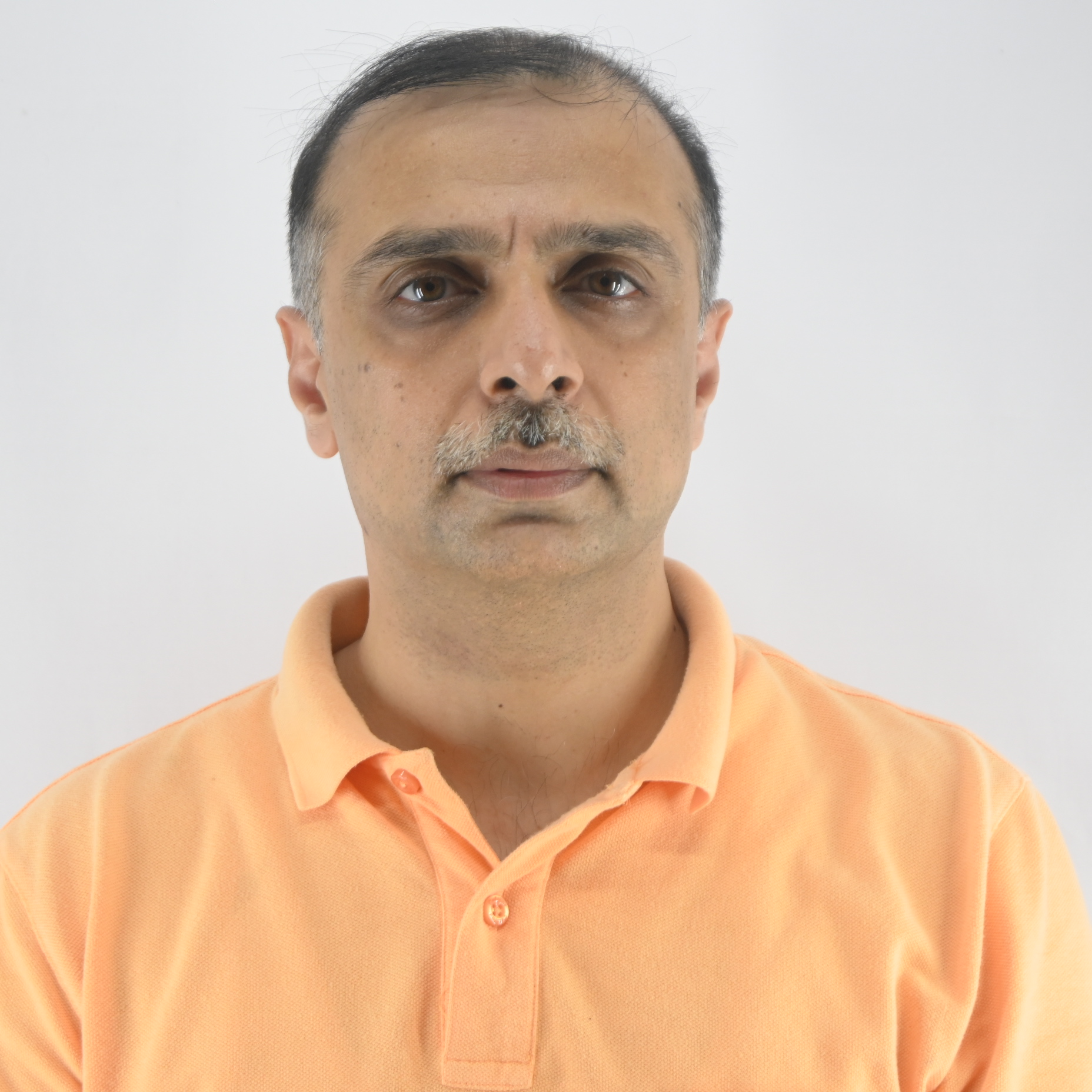
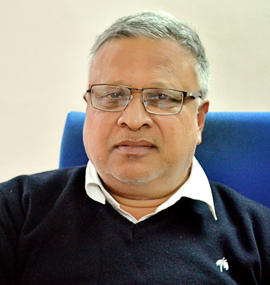
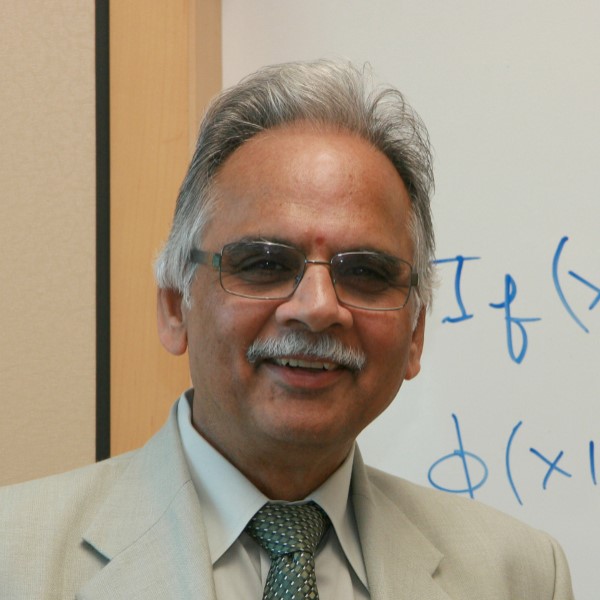
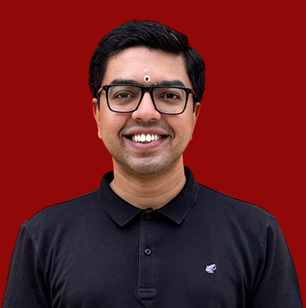
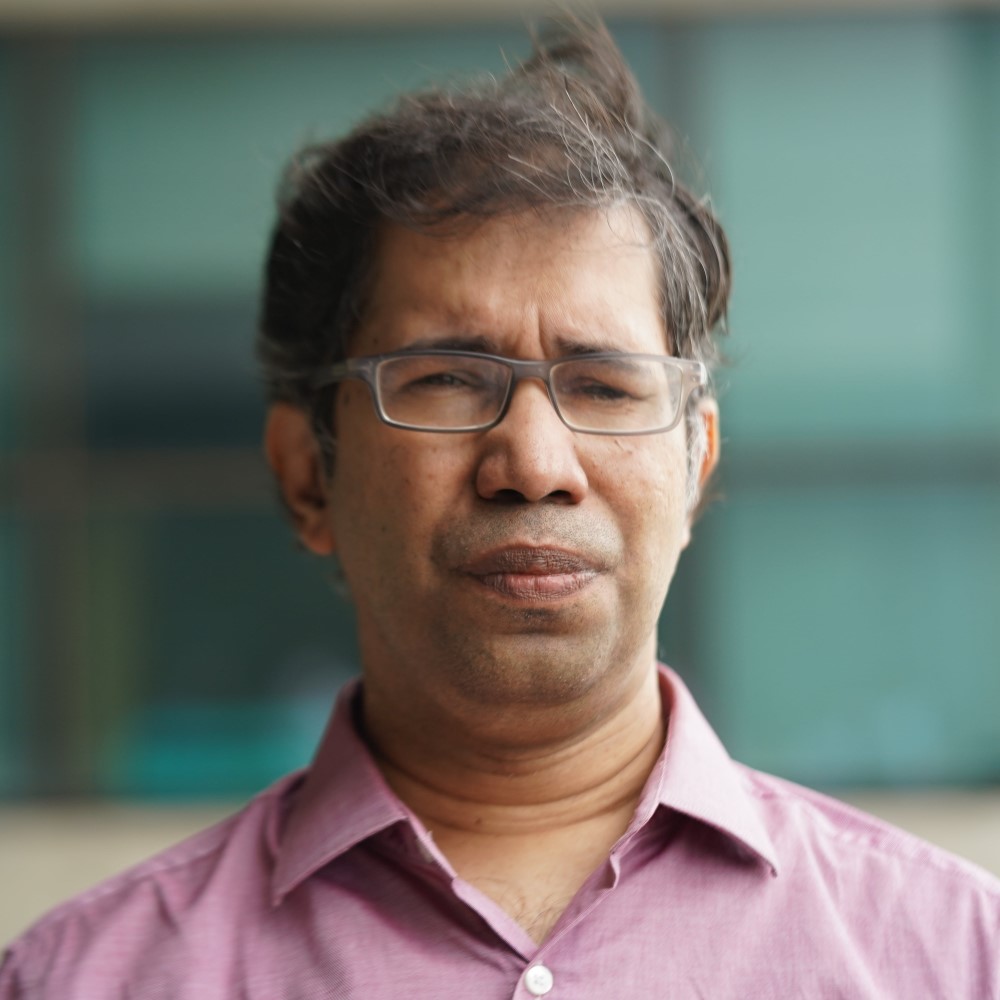
Ajit Rajwade is a Professor at the Department of Computer Science and Engineering , Indian Institute of Technology Bombay. His research spans Artificial Intelligence , Compressed Sensing , and Medical Imaging , with affiliations to the Centre for Machine Intelligence and Data Science and the Koita Centre for Digital Health . Education : PhD in Computer and Information Science and Engineering, University of Florida (2010) MSc in Computer Science, McGill University (2004) BTech in Computer Engineering, University of Pune (2002) His research interests focus on intelligent data acquisition, particularly in neural network analysis , graph signal processing , and medical imaging . He develops compressed sensing algorithms for inverse problems like tomography and MRI reconstruction , alongside applying group testing to pandemic response. Scientific awards include the Prof. S. P. Sukhatme Award (2024) and Departmental Teaching Excellence (2019). His publications demonstrate expertise in image restoration , noise modeling , and epidemiological algorithms . He has advised PhD students like Sabyasachi Ghosh and Jerin Geo James , with a focus on computationally efficient methods in medical imaging and machine learning .
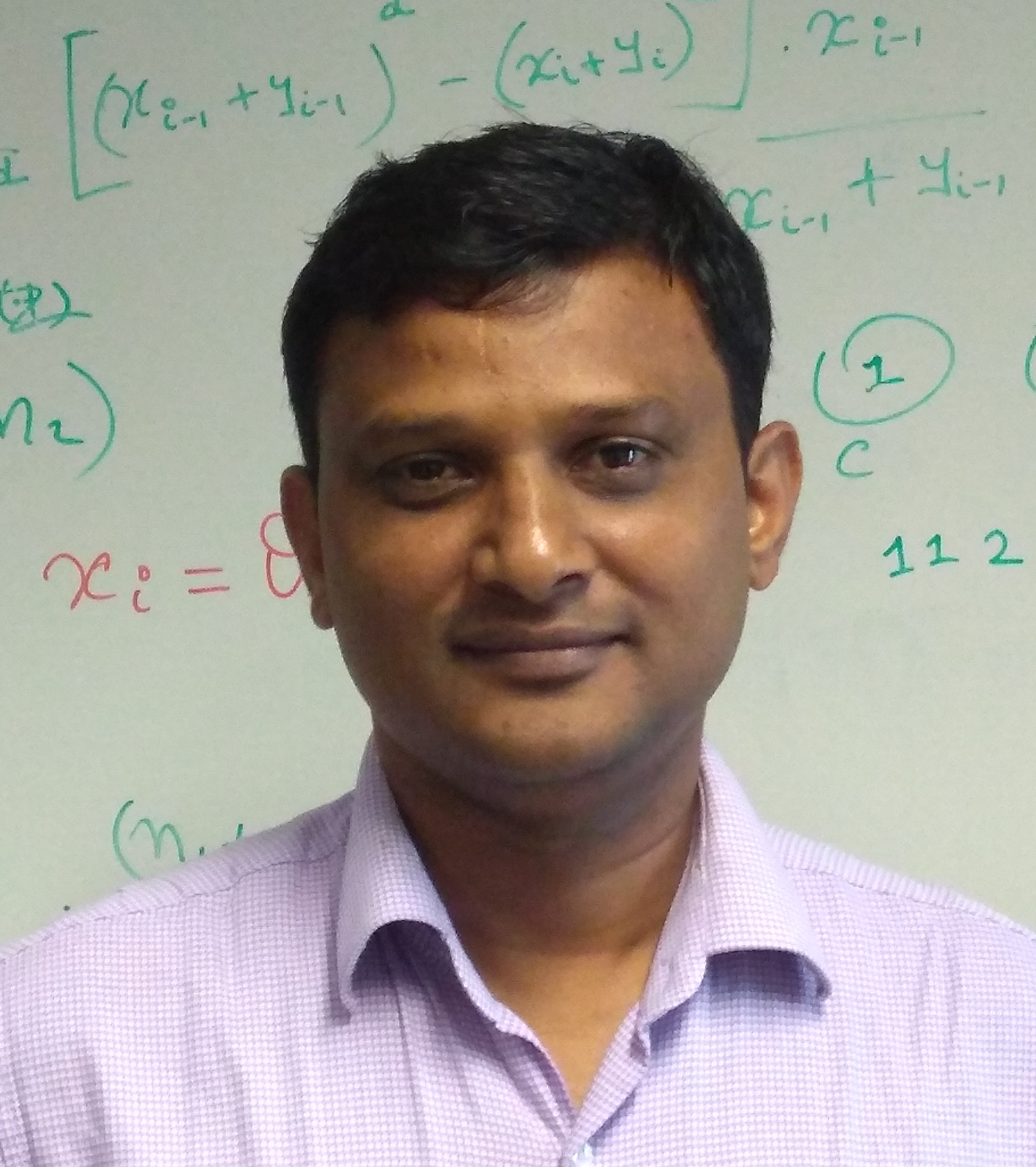
Manjesh Kumar Hanawal is an Associate Professor at the Industrial Engineering and Operations Research (IEOR) center of IIT Bombay , India. His academic journey includes a Ph.D. from University of Avignon/INRIA (2013), M.Sc (Engg) from IISc Bangalore (2009), and B.E. from NIT Bhopal (2004). Pre-Ph.D. work: Scientist-B at DRDO's CAIR Postdoctoral: Boston University (2013-2015) Appointed as first Professor-In-Charge of TCA2I center Research focuses on Machine Learning algorithms for limited feedback environments, Communication Networks resource allocation, and Cybersecurity threat detection. Publications span top venues like IEEE Transactions, NeurIPS, INFOCOM, and AISTATS. Recent work trends include: Bandit algorithms for distributed learning in heterogeneous networks Contextual information integration in sequential selection Energy efficiency optimization in wireless sensor networks Net neutrality violation detection frameworks Anti-jamming countermeasures in cognitive networks Scientific recognition includes the SERB Early Career Research Award (2019-2022) for machine learning applications in wireless networks. Advisees include Ph.D. awardee Arun Verma and Best Masters Thesis Awardee Sayan Chatterjee.
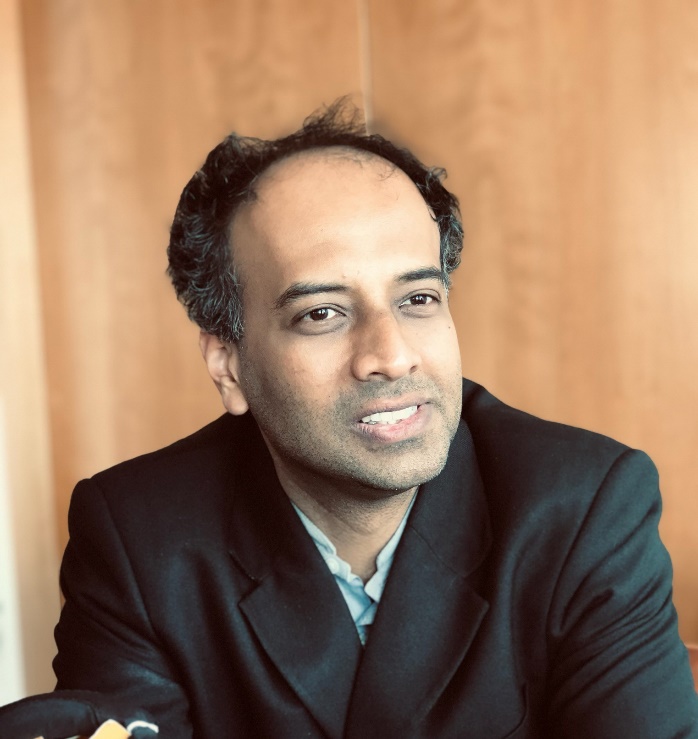
Krishna Jagannathan is a full-time Professor in the Department of Electrical Engineering at the Indian Institute of Technology Madras (IIT Madras), India. He specializes in stochastic modeling, communication networks, information theory, and queuing theory. He obtained his B.Tech from IIT Madras in 2004, followed by S.M. and Ph.D. degrees from MIT in 2006 and 2010, respectively. After post-doctoral positions at Caltech and MIT, he joined IIT Madras in 2011. Education: B.Tech in Electrical Engineering, IIT Madras (2004) S.M. in Electrical Engineering and Computer Science, MIT (2006) Ph.D. in Electrical Engineering and Computer Science, MIT (2010) Research Interests: His research focuses on stochastic modeling and analysis of communication networks , information theory , and queuing theory . He has made significant contributions to understanding network performance, resource allocation, and risk-aware decision-making in complex systems. He leads the Networks and Stochastic Systems lab at IIT Madras, mentoring a large cohort of Ph.D. and M.S. students working on cutting-edge problems in networking, optimization, and stochastic systems. Scientific Awards: Best Paper Award at WiOpt 2013, Tsukuba, Japan Young Faculty Recognition Award for Excellence in Teaching and Research, IIT Madras (2014) Teaching & Mentorship: He has taught a wide range of courses including Probability Foundations , Stochastic Modeling and Queuing Theory , Convex Optimization , and Signals & Systems , consistently receiving high teaching evaluations. He has supervised over 15 Ph.D. and M.S. students to completion and continues to guide several active researchers.
Prof. Rajiv Sinha is a Professor in the Department of Earth Sciences at Indian Institute of Technology Kanpur . With a PhD from the University of Cambridge (1992), his career spans over two decades at IITK, including roles as Head of Department since 2014. Education: PhD (University of Cambridge, 1992), M.Tech (University of Roorkee, 1987), B.Sc (Patna University, 1983) Key Affiliations: Member of International Association of Sedimentologists, SEPM, Quaternary Research Association, and Indian Professional Societies Research Focus: Specializing in river science , Prof. Sinha investigates fluvial geomorphology , sedimentology , and natural hazards like Kosi floods . His work integrates remote sensing and GIS for climate change and paleoclimate reconstruction , notably studying the Ganga river system and its anthropogenic impacts . Scientific Leadership: His publications (2013-2017) reveal: Anthropocene river systems (2016) Indus Civilization paleohydrology (2017) Kosi megafan dynamics (2015) Monsoon evolution (2010, 2014) Groundwater management (2016) Awards & Recognitions: Pandit Girish Ranjan Chair Professorship (2013) National Mineral Award (2002) Alexander von Humboldt Fellowship (2000) UGC Research Fellowship (1988) University Gold Medal (1987) Collaborative Network: Partners include University of Durham , Imperial College London , and Institute du Physique de Globe, Paris . Currently leading Ganga River Basin Management studies and river science initiatives at IITK.
Rajesh M. Hegde is a Professor in the Department of Electrical Engineering at the Indian Institute of Technology Kanpur. He holds a PhD in Computer Science from IIT Madras (2005), an M.E. in Electronics Engineering from Bangalore University (1988), and a B.E. in IT Engineering from Mysore University. His research focuses on Machine Learning , AI , and multimodal systems, with applications in wireless networks, IoT, and speech/audio processing. Specific interests include federated learning, WSN, and information fusion for ASR/VR systems. His lab is located in ACES 203-204. Publications predominantly explore signal processing techniques for multimedia and speech applications, showing consistent focus on feature extraction, multimodal fusion, and real-time system design across 15+ years of research. Awards & Honors: P.K Kelkar Research Fellowship (2009-2013) Undergraduate design mentorship award, UC San Diego ISCA Grant at INTERSPEECH-ICSLP 2004 IBM Best Thesis Award recommendation Teaching excellence commendation
R K Bansal is a Professor in the Department of Electrical Engineering at Indian Institute of Technology Kanpur (IIT Kanpur). He has been actively contributing to the fields of Detection Theory and Information Theory for several decades with a strong academic background including a PhD from University of Connecticut (1987). His research interests include: Universal data compression with applications Sequential detection of a change in distribution Robust detection Ergodic theory and large deviation theory applications Stochastic processes Dr. Bansal's recent publications primarily focus on data compression algorithms, particularly variations of the Lempel-Ziv algorithm, and detection theory applications. His work demonstrates a strong theoretical foundation with practical applications in information processing and analysis, showing consistent research activity from the 1980s through 2013. He has received significant recognition for his teaching excellence: Letter of commendation from Director on best teaching (2011) Outstanding tutor for Mathematical Statistics (BSO209) based on student feedback (1998-II) Consistently high teaching evaluations exceeding institute averages Dr. Bansal has advised students and maintained active research in his specialized areas, though specific names of current advisees are not mentioned in the available information. His research has been published in prestigious venues including IEEE Transactions on Information Theory. His laboratory is located in room 202 ACES (Advanced Centre for Electronic Systems) at IIT Kanpur, serving as the base for his research activities in detection theory and information theory applications.
Nishchal K. Verma is a Professor at the Department of Electrical Engineering, Indian Institute of Technology Kanpur. He holds a PhD from IIT Delhi (2007), an M.Tech from IIT Roorkee (2003), and a B.Tech from DEI Agra (1996). His postdoctoral research includes work at the University of Tennessee (2009) and Louisiana Tech University (2008). Specialization: Fuzzy Logic, Health Monitoring, Intelligent Informatics Current Research Interests: Intelligent Data Mining, Computer Vision, Smart Grids, Biomedical Applications His research focuses on Fuzzy Systems , Machine Learning , and Health Monitoring with applications to power systems, biomedical data, and wireless sensor networks. He has developed technologies like the Transducers and Instrumentation Virtual Laboratory and Brain Computer Interface Laboratory , emphasizing predictive modeling and fault diagnosis. Key sponsored projects include DST-funded Fuzzy Rule-Based Image Prediction and DRDO-supported Visual Surveillance Systems . His work spans 15+ years of interdisciplinary publications in journals and conferences. Scientific Awards : Devendra Shukla Young Faculty Research Fellowship (2013-16) He has served as Associate Editor for journals and Chairman of IEEE chapters, with leadership roles in academic administration at IIT Kanpur.
Laxmidhar Behera is a Professor in the Department of Electrical Engineering at the Indian Institute of Technology Kanpur, specializing in Intelligent Systems and Control. With over two decades of academic experience at IIT Kanpur and international research experience at institutions including Fraunhofer Institute of Autonomous Intelligent Systems in Germany, ETH Zurich, and University of Ulster, he has established himself as a leading researcher in cognitive robotics and intelligent control systems. Dr. Behera's research spans multiple cutting-edge domains including Cognitive Robotics, Nano-robotics, Vision based Control, Soft Computing, Information Retrieval in music and language, Semantic Information Processing, Physics of Complex Systems, Cyber Physical Systems, Formation Control of UAVs, Brain-Computer Interface (BCI), and Sanskrit Computational Linguistics. His interdisciplinary approach bridges traditional control theory with modern computational intelligence techniques, creating innovative solutions for complex real-world problems. His extensive publication record in top-tier journals like IEEE Transactions demonstrates his leadership in areas such as brain-computer interfaces, visual servoing, multi-robot systems, and music information retrieval. Notably, his work on quantum neural networks for EEG filtering and multisatellite formation control has received significant attention in the research community. UKIERI Standard Research Award 2008 Best Paper at International Conf. on Intelligent Sensors and Information Processing (ICISIP-2004) Best Paper at WoSco,02, Int. Conf. High-Performance Computing (HiPC, 2002) AICTE career award for young teacher (1997) Senior Member IEEE Multiple IEEE top accessed articles (2009-2010) As an Associate Editor for Autosoft Journal and Technical Committee Member for Intelligent Control at IEEE Control System Society, Dr. Behera actively contributes to the academic community. His laboratory in the Western Lab - 212A of the Department of Electrical Engineering serves as a hub for research in intelligent systems, where he mentors students and collaborates with researchers worldwide on cutting-edge projects in robotics, control systems, and computational intelligence.
Mathukumalli Vidyasagar is a Distinguished Professor at the Indian Institute of Technology Hyderabad and previously held the SERB National Science Chair and Cecil & Ida Green Chair in Systems Biology Science at the University of Texas at Dallas. He earned his Ph.D. from the University of Wisconsin, Madison, and has authored 13 books and over 160 peer-reviewed papers.
Karthik P. N. is an Assistant Professor in the Department of Artificial Intelligence at the Indian Institute of Technology Hyderabad (IIT Hyderabad). He previously served as a Research Fellow at the Institute of Data Science, National University of Singapore (NUS), and completed his Ph.D. and Master of Science (Engineering) at the Department of Electrical Communication Engineering, Indian Institute of Science (IISc), Bengaluru, under the guidance of Prof. Rajesh Sundaresan. Earlier, he worked as a Project Assistant in Prof. Chandra R. Murthy's lab at IISc and earned a Bachelor of Engineering in Electronics and Communications from R V College of Engineering, Bengaluru. Ph.D., Electrical Communication Engineering, IISc Bengaluru M.Sc. (Engineering), IISc Bengaluru B.E., Electronics and Communications, R V College of Engineering His research focuses on Probability Theory, Detection and Estimation Theory, Markov Decision Processes , and Multi-armed Bandits , with applications in Federated Learning, Differential Privacy, Reinforcement Learning, Information Theory , and Statistics . Recent work explores optimal strategies for best arm identification in restless bandits and privacy-preserving machine learning. He has received high instructor ratings for courses like Stochastic Processes and Programming for AI , and was honored with the Faculty Teaching Excellence Award 2025 at IIT Hyderabad. His Google Scholar articles highlight advances in 3D point cloud security, railway accident prevention, and vision-language model robustness . Scientific awards include the Faculty Teaching Excellence Award 2025 and First place in the INAE Kanpur Chapter 100 Seconds Competition (2021) . He collaborates with researchers like Prof. Vincent Y. F. Tan and Prof. Yeow Meng Chee, and has served on technical program committees for conferences such as APWDSIT 2025 and ISIT 2025 . Teaching roles at IIT Hyderabad involve graduate-level courses on Probability and Stochastic Processes , cross-listed with Electrical Engineering.
B. V. Rathish Kumar is a Professor at the Department of Mathematics and Statistics , Indian Institute of Technology Kanpur, with a PhD from SSSIHL, Prasanthinilayam. His research spans Numerical Analysis , Computational Fluid Dynamics , Finite Element Methods , and Biomedical Image Processing . Education: PhD in Applied Mathematics (SSSIHL, Prasanthinilayam) His research interests include Wavelet Methods for PDEs , Cardiac Electrophysiology Modeling , Convection in Porous Media , and AI/ML for Differential Equations . He has pioneered courses like Finite Element Error Estimation and AI/ML Methods for PDEs . His recent publications focus on convection dynamics , image processing , and singularly perturbed equations , contributing to fields like Biomedical Engineering and Thermal Systems . Scientific Awards: Fellow of Indian Association of Mathematical Modelling and Simulation (2018) Fellow of National Academy of Sciences (2009) Erasmus Mundus Fellowship (2004) University Gold Medal (1987)
Amit Mitra is a Professor in the Department of Mathematics & Statistics at the Indian Institute of Technology Kanpur (IIT Kanpur), India. He has held academic positions at IIT Kanpur since 2005, progressing from Assistant Professor (2005-2007) to Associate Professor (2008-2012) and Professor (2012-present). Prior to this, he served as an Assistant Professor at IIT Bombay (2002-2005) and held research roles at the Reserve Bank of India (1996-2002). His international collaborations include visiting positions at Uppsala University (Sweden) and universities in Australia and Cyprus. His educational qualifications include: Ph.D. in Statistics from IIT Kanpur (1996) M.Sc. in Statistics from IIT Kanpur (1991) B.Sc. (Honors) in Statistics from the University of Calcutta (1988) Professor Mitra's research centers on statistical signal processing with emphasis on parameter estimation for nonlinear time series models, particularly chirp signals, and data mining of financial/economic time series. His work develops robust algorithms for signal model estimation using techniques like genetic algorithms, M-estimators, and wavelet filtering, with applications in radar, sonar, finance, and image processing. He has pioneered methods for 1D/2D chirp signal analysis and volatility modeling in econometrics. His 15 most recent publications (2018-2023) reveal a sustained focus on advanced parameter estimation for chirp and sinusoidal models, with increasing attention to computational efficiency and real-world applicability. Key trends include the development of robust M-periodogram approaches, asymptotic analysis of quantile estimators, and extensions to multidimensional signal processing—particularly for image applications through nonnegative matrix factorization. His scientific awards include: Excellence in Teaching Award (2019, IIT Kanpur) Distinguished Teacher Award (2010, IIT Kanpur) M. N. Murthy Award from the Indian Statistical Institute (2002) Postdoctoral award from Swedish Foundation for Strategic Research (2000) Research award from National Board for Higher Mathematics (1992) Professor Mitra has supervised 67 students including 3 PhD candidates (1 completed), 4 M.Tech students, and 59 Masters students across Mathematics, Economics, and Statistics programs. His applied work includes consultancy projects with Politis (Cyprus) on market data modeling, Retailzoom (Cyprus) on retail analytics, and QuantLink Solutions (USA) on data mining software development for financial applications. No specific research labs or teams are mentioned in the provided text, though his patent in image processing (US Patent 9,940,868) indicates collaborative work with engineers on real-time display systems.
Shantanu Desai is a full-time Professor of Physics (and jointly of Artificial Intelligence) at the Indian Institute of Technology Hyderabad , a position he has held since October 2023 after serving as Associate Professor from 2016-2023. He earned his Ph.D. in Physics from Boston University in 2004 and is a member of several high-profile international collaborations, most notably the Super-Kamiokande Collaboration —sharing the 2016 Breakthrough Prize in Fundamental Physics for the discovery of atmospheric neutrino oscillations and solving the solar neutrino puzzle. Education Ph.D. in Physics, Boston University, May 2004 M.A. in Astronomy, Boston University, May 1997 B.Tech in Physics, Indian Institute of Technology Bombay, May 1995 Research Interests Desai’s work straddles observational cosmology, high-energy astrophysics, and data-driven methodologies. His core research areas include: Cosmology and Galaxy Clusters: probing dark energy, cluster abundances, and large-scale structure. Pulsar Timing & Gravitational Waves: member of the Indian Pulsar Timing Array searching for nano-Hertz gravitational waves. Neutrino Astrophysics: utilizing Super-Kamiokande data to study solar and atmospheric neutrinos. Gravitational Lensing: strong and weak lensing analyses within the Dark Energy Survey and Euclid. Machine Learning & Astrostatistics: developing AI/ML techniques for transient detection, lens finding, and survey optimization. High-Performance Computing: leveraging HPC resources for large-scale simulations and data processing. Publication & Research Trends Across 2024-2025, Desai’s publications reveal a focused synergy between multi-wavelength observations and advanced statistical methods. Topics include joint analyses of DES Y3 weak-lensing and ACT SZ data, targeted gamma-ray searches for dark matter signals in galaxy clusters, cosmological constraints on neutrino masses, and machine-learning-driven lens discoveries. These works consistently integrate large survey datasets (DES, ACT, Fermi-LAT, InPTA) with rigorous profile-likelihood techniques to address tensions in the standard cosmological model. Scientific Awards 2016 Breakthrough Prize in Fundamental Physics – shared as a member of the Super-Kamiokande Collaboration for the discovery of atmospheric neutrino oscillations and resolution of the solar neutrino problem. Student Supervision & Mentorship At IIT Hyderabad, Desai has mentored over 60 students ranging from B.Tech to Ph.D. levels, many proceeding to prestigious graduate programs worldwide (e.g., Penn State, University of Utah, Southern Methodist University, IUCAA, Swinburne, Florida Tech). Current advisees include Ph.D. students Siddhant Manna, Kamal Bora, Aman Srivastava, Gopika K., and Srinadh Reddy (co-supervised). Laboratory & Team Affiliations Desai leads a vibrant research group within the Physics Department at IIT Hyderabad. The group is actively involved in the Indian Pulsar Timing Array (InPTA) , Dark Energy Survey (DES) , Euclid Consortium , and Atacama Cosmology Telescope (ACT) collaborations, maintaining dedicated computational resources and close ties with international partners for joint observations and data analysis.
Ketan Rajawat is an Associate Professor in the Department of Electrical Engineering at the Indian Institute of Technology Kanpur (IIT Kanpur), specializing in signal processing in communications and networks. His research and teaching focus on optimization algorithms, network measurement, localization, and network optimization within communication systems. He maintains an active research program with publications in top IEEE journals. Dr. Rajawat's research interests span optimization algorithms in communications, dynamic network measurement and cartography, network localization, and network optimization. His work bridges theoretical foundations with practical applications in wireless communications and networked systems. He has developed novel approaches for distributed estimation, matrix completion, and multidimensional scaling in network environments, contributing significantly to the field of signal processing for communication networks. His recent publications demonstrate a consistent research trajectory in distributed optimization techniques for communication networks, with a focus on wireless sensor networks, matrix completion, and asynchronous optimization methods. These works primarily appear in high-impact IEEE journals including IEEE Transactions on Wireless Communications and IEEE Transactions on Signal Processing, reflecting the quality and relevance of his research contributions to the field. Dr. Rajawat teaches courses in Convex Optimization, Networks, and Signals and Systems, providing students with both theoretical foundations and practical applications in electrical engineering. His office is located in ACES 305C at IIT Kanpur, where he conducts his research and academic activities.
Debasis Kundu is a Professor in the Department of Mathematics and Statistics at the Indian Institute of Technology Kanpur (IIT Kanpur) . He holds a PhD in Statistics from Pennsylvania State University , where his thesis focused on estimating parameters of exponential signals in the presence of noise, under the supervision of Prof. C.R. Rao. His research expertise lies in Statistical Signal Processing , Distribution Theory , and Lifetime Data Analysis . These areas encompass theoretical and applied statistics, particularly in modeling and analyzing complex data patterns, reliability analysis, and signal extraction from noisy environments. Prof. Kundu is actively involved in teaching and research at IIT Kanpur, contributing to both academic programs and scholarly advancements in statistical sciences.