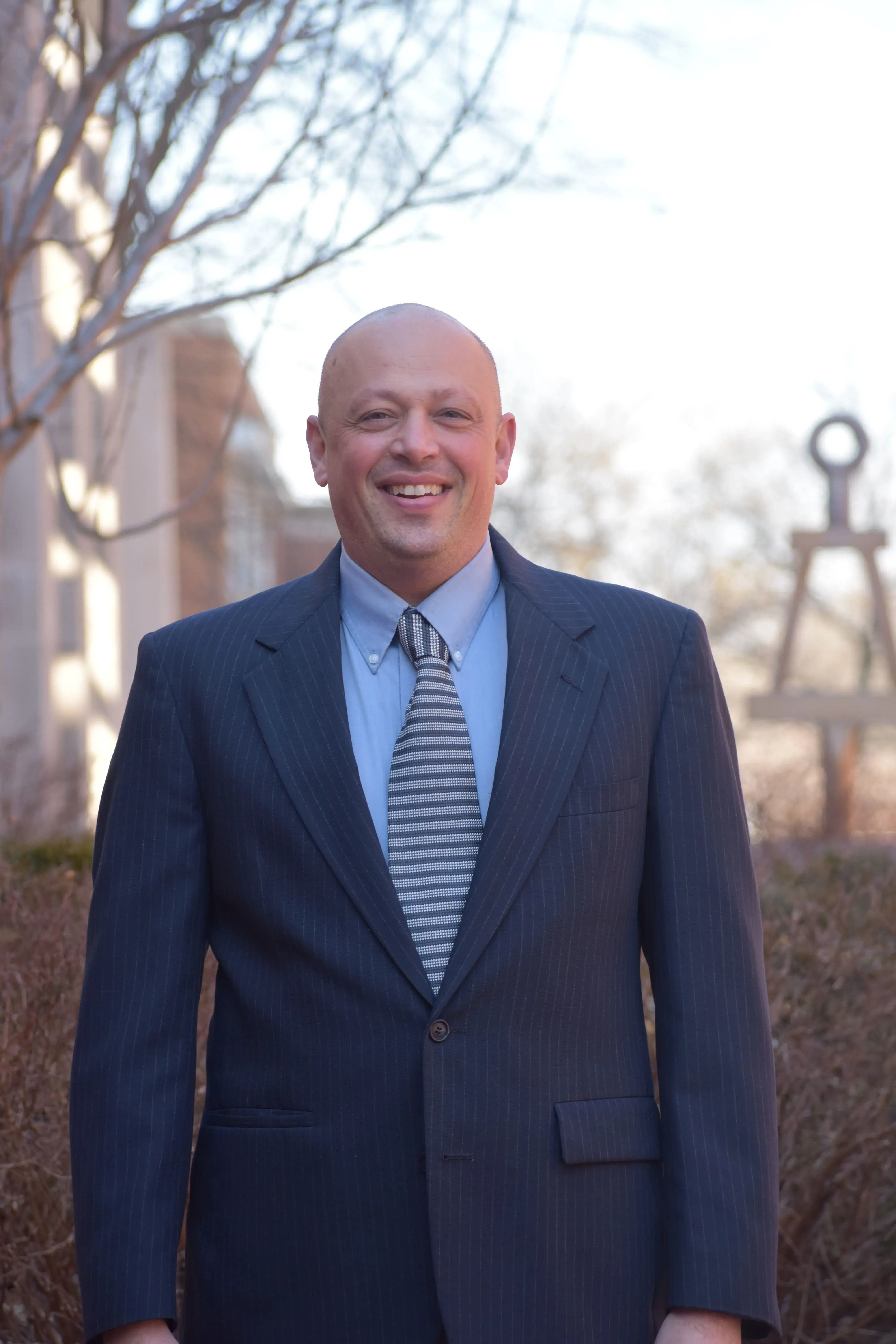
Eric Green is an Adjunct Assistant Professor in the Department of Civil Engineering at the University of Kentucky , affiliated with the Kentucky Transportation Center . He holds a Ph.D., M.S., and B.S. in Civil Engineering from the same institution. Ph.D., Department of Civil Engineering, University of Kentucky M.S., Department of Civil Engineering, University of Kentucky B.S., Department of Civil Engineering, University of Kentucky His research focuses on highway safety , spatial analysis (GIS) , crash modeling , and software development for traffic safety . Recent work includes text mining for secondary crash detection and GPS-based horizontal curve analysis. Publications highlight trends in crash analysis , Highway Safety Manual methodologies , and data integration for asset management . Key subfields include GIS applications, safety modeling, and automated regression techniques.
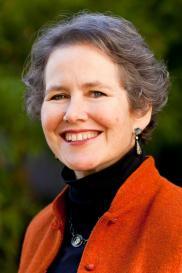
Mariane C. Ferme is a Professor in the Department of Anthropology at the University of California, Berkeley. Her research focuses on sociocultural dynamics in West Africa, particularly Sierra Leone, with expertise in political anthropology, legal studies, and material culture. She holds a PhD in Anthropology from the University of Chicago and has taught at prestigious institutions including the University of Cambridge and École des Hautes Études en Sciences Sociales. Education : PhD in Anthropology (University of Chicago), MA in Political Science (University of Milano), BA in Anthropology (Wellesley College). Ferme’s research spans the political imagination in conflict zones, agrarian transformations, and the interplay between humanitarian law and local justice systems. Her work has been supported by major grants from the National Science Foundation and the France-Berkeley Fund. She has published extensively on Sierra Leone’s post-war societies and the socio-cultural dimensions of the Ebola outbreak. Scientific awards include funding from the National Science Foundation, Hellman Family Faculty Fund, France-Berkeley Fund, Harvard Academy for International and Area Studies, and the Carter Woodson Institute for African and African-American Studies.
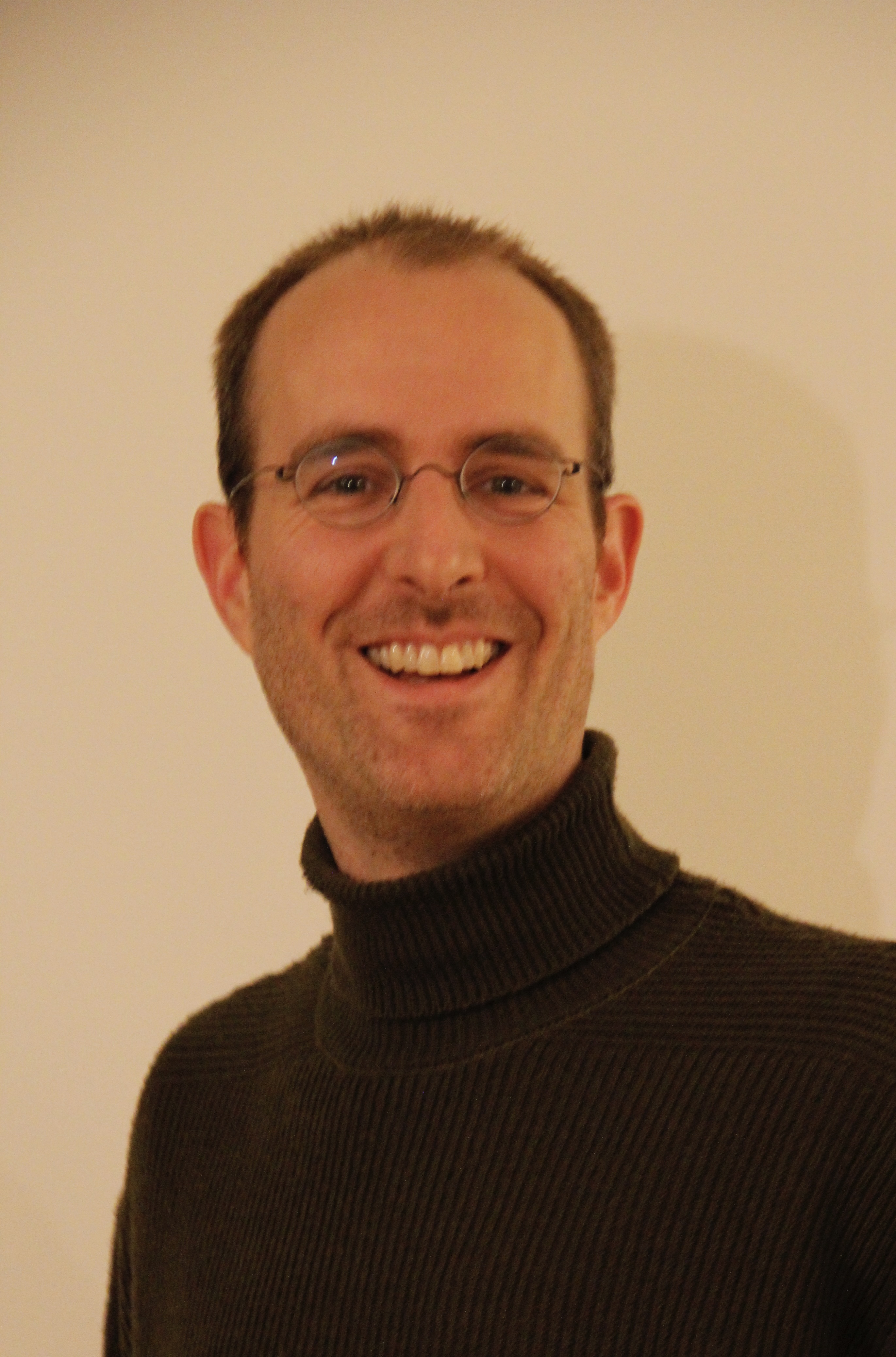
Thomas Demeester is an Associate Professor at the Internet Technology and Data Science Lab (IDLab), Ghent University - imec, Belgium. Appointed as Assistant Professor in 2019, he leads an AI research group focused on health applications and drug design, co-directing the Text-to-Knowledge research cluster with Prof. Chris Develder. His educational background includes: M.Sc. in Electrical Engineering from Ghent University (2005), completed with thesis work at ETH Zurich Ph.D. in Computational Electromagnetics from Ghent University (2009), funded by Research Foundation - Flanders (FWO) Demeester's research spans artificial intelligence with emphasis on deep learning and neuro-symbolic methods. Current tracks include energy-based models (Hopfield Networks, Deep Equilibrium Models), diffusion models for drug design, and clinical reasoning systems. His work bridges NLP, healthcare informatics, and generative AI with strong industry partnerships. Recent publications (2023-2025) reveal strategic expansion from NLP into health-centric AI: BioLORD biomedical encoders (2023), synthetic medical data frameworks (UAI/NeurIPS 2024), and novel diffusion model guidance (ICLR 2025). This evolution demonstrates convergence of generative modeling, clinical data analysis, and protein design. He actively mentors 24 PhD students across diverse AI domains: Current Research: Conversational agents, emotion analysis, clinical reasoning, antibody design, and diffusion model optimization Recent Graduates: Interpretable language models, biomedical semantics, task-oriented dialogue, and social media knowledge extraction Research is supported by imec funding and collaborations with Flemish biotech companies, building on his post-doctoral experience securing media-sector projects. Within IDLab, he co-leads the Text-to-Knowledge cluster driving NLP innovations for healthcare, legal, and economic applications.
Dr. Karim El-Basyouny is a Killam Laureate Professor and City of Edmonton Urban Traffic Safety Research Chair at the University of Alberta's Faculty of Engineering, where he serves as Associate Dean (Research Infrastructure and Innovation) in the Civil and Environmental Engineering Department. A licensed Professional Engineer in Alberta, he holds advanced degrees in Transportation Engineering from the University of British Columbia and has dedicated his career to advancing road safety through data-driven management frameworks. His academic credentials include: Doctor of Philosophy, Civil Engineering, University of British Columbia, 2011 Engineering Management Sub-specialization, Civil Engineering, University of British Columbia, 2010 Master of Applied Science, Civil Engineering, University of British Columbia, 2006 Bachelor's degree (ABET Equivalent), Civil & Environmental Engineering, United Arab Emirates University, 2003 El-Basyouny's research pioneers the integration of remote sensing, machine learning, and statistical modeling to enhance transportation safety. His work develops automated tools for infrastructure digitization, collision prediction, and speed management, treating safety as a systemic product requiring management frameworks. Key contributions include LiDAR-based road feature extraction, network-level safety evaluations, and frameworks for vision-zero outcomes that address both human-driven and autonomous vehicle contexts. His recent publications demonstrate a cohesive research trajectory centered on leveraging point cloud data and computational intelligence for safety management. Over 15 major publications since 2021 focus on automated infrastructure assessment (light pole detection, clear zone mapping, vertical clearance evaluation), weather-impact modeling, and enforcement resource optimization. This body of work bridges transportation engineering with computer vision and operations research to create scalable safety solutions. His scientific contributions have been recognized with prestigious honors including: 2024 Killam Annual Professorship Award 2024 Road Safety Achievement Award from TAC 2023 Donald Stanley Award for environmental engineering 2022 Faculty of Engineering Graduate Teaching Award 2021 Daniel B. Fambro Student Paper Award As an academic leader, El-Basyouny actively mentors graduate students and secures significant research funding through his endowed chair position. He currently recruits fully-funded PhD and postdoctoral candidates specializing in remote sensing applications, machine learning, and geomatics for road digitization projects. His research group collaborates with national safety committees and municipal agencies to translate findings into policy, while he serves on editorial boards for Transportation Research Record and Analytic Methods in Accident Research. The research group operates at the intersection of transportation engineering and computational science, developing automated frameworks that merge sensor technologies with data processing tools. Current projects focus on semantic segmentation of 3D point clouds, safety implications of infrastructure digitization, and machine learning applications for road feature extraction in both urban and rural environments.
Jean-Pierre Fouque is a Professor in the Department of Statistics and Applied Probability (PSTAT) at the University of California, Santa Barbara. His research focuses on stochastic processes, financial mathematics, systemic risk, and reinforcement learning, with a particular emphasis on mean field games and multi-scale stochastic models. He explores applications in portfolio optimization, risk management, and algorithmic finance. His work combines theoretical advancements in stochastic analysis with practical applications in economics and finance. Notable contributions include developing models for systemic risk in financial networks, analyzing reinforcement learning algorithms in mean-field frameworks, and studying stochastic volatility effects in derivatives pricing. Recent research trends include integrating deep learning techniques for systemic risk quantification, advancing multi-scale asymptotic methods for portfolio optimization, and investigating strategic interactions in financial systems using game-theoretic approaches. His publications frequently address topics such as stochastic volatility calibration, optimal investment strategies under uncertainty, and the dynamics of financial markets under stress scenarios. Dr. Fouque has contributed to foundational textbooks and edited volumes on systemic risk and mean field games. His interdisciplinary work bridges probability theory, mathematical finance, and computational methods, impacting both academic research and practical risk management practices.
Max Lau is an Assistant Professor in the Department of Biostatistics and Bioinformatics and the Department of Epidemiology at Emory University. His research focuses on integrating machine learning and computational methods with epidemiological and genomic data to study infectious disease dynamics. He teaches courses such as BIOS 790R (Advanced Seminar in Biostatistics) and DATA 534 (Applied Machine Learning). Dr. Lau's work emphasizes scalable Bayesian inference, graph neural networks, and stochastic modeling to address challenges in disease transmission, outbreak control, and pathogen evolution. His recent research includes developing tools like ScITree and Epilearn, and he has contributed to understanding measles dynamics, tuberculosis treatment, and livestock disease management. His academic contributions span over 30 publications since 2010, with a particular focus on phylodynamics, epidemic modeling, and vaccine strategy evaluation. His interdisciplinary approach bridges computational methods with public health applications, aiming to enhance disease prediction and intervention efficacy.
Oussama Damen is a Professor at the University of Waterloo's Department of Electrical and Computer Engineering. His research focuses on advanced wireless communication systems, particularly in MIMO (Multiple-Input Multiple-Output) systems, signal processing, and machine learning applications in telecommunications. He is actively involved in developing innovative solutions for beamforming, hybrid precoding, and distributed decoding in massive MIMO and millimeter-wave networks. Damen's work also extends to optical fiber communication, federated learning in wireless systems, and optimization of resource allocation in next-generation networks like 5G/6G. His research interests include wireless communication theory, antenna system design, channel modeling, and algorithm development for improving spectral and energy efficiency. He has contributed extensively to the theoretical foundations of MIMO detection, lattice reduction techniques, and statistical signal processing methods. Notable trends in his publications emphasize bridging theoretical performance limits with practical implementations, particularly in scenarios involving channel impairments, limited backhaul capacity, and multi-core fiber transmission. His work often addresses fairness and optimization in distributed systems, including federated learning frameworks and hybrid beamforming architectures. No scientific awards or grants are explicitly mentioned in the provided information. Damen has advised no listed students, and no specific lab affiliations are noted.
Pourang Irani is a Professor and Principal’s Research Chair in Ubiquitous Analytics at the University of British Columbia (Okanagan campus), within the Irving K. Barber Faculty of Science’s Department of Computer Science, Mathematics, Physics and Statistics. Previously, he served at the University of Manitoba for 19 years as a faculty member and Acting Associate Dean of Science. His research focuses on Human-Computer Interaction (HCI), Wearable Computing, and Information Visualization, with an emphasis on designing interactive systems for 'anytime, anywhere' sensemaking using emerging technologies like mixed reality and smart devices. He leads interdisciplinary projects such as the NSERC CREATE grant on Visual and Automated Disease Analytics, training data scientists in health analytics. Education: PhD in Computer Science (University of New Brunswick, 2002), supervised by Dr. Colin Ware. Research Interests: Wearable interfaces (smartwatches, smartrings, and AR/VR) Data visualization for health and pervasive systems Persuasive health technologies and data storytelling Mid-air and hands-free interaction techniques Embodied interaction through social robots Recent Work Trends: Articles emphasize innovations in smartwatch interaction (e.g., bezel-to-bezel gestures), tactile visualizations via skin-dragging, and voice assistant-driven health data queries. Projects like Databiting explore transient personal data exploration, while Data Videos focus on narrative-driven health communication. Grants & Leadership: Principal Investigator of NSERC CREATE Visual and Automated Disease Analytics program. Co-leads UBCO’s Digital Transparency cluster. Active in interdisciplinary teams addressing health informatics and HCI challenges. Labs & Teams: Leads a lab developing prototypes in wearable computing, spatial analytics, and immersive technologies. Collaborates with researchers in medicine, engineering, and data science to translate HCI innovations into practical solutions.
Betsey Stevenson is a Professor of Economics (Courtesy) and Professor of Public Policy at the University of Michigan. She holds affiliations with the National Bureau of Economic Research (NBER), Centre for Economic Policy Research (CEPR), and Ifo Institute for Economic Research. Her research focuses on labor markets, public policy, and the intersection of family dynamics with economic forces. She served as a member of President Obama's Council of Economic Advisers (2013-2015), Chief Economist of the U.S. Department of Labor (2010-2011), and on the Biden-Harris Transition team. Education: B.A. in Economics and Mathematics from Wellesley College; M.A. and Ph.D. in Economics from Harvard University. Research interests include women's labor market experiences, family economics, and policy impacts on employment and well-being. Notable contributions include analyses of the gender pay gap, Title IX's effects on sports participation, and the economic consequences of divorce laws. She co-hosts the podcast Think Like an Economist and co-authored a Principles of Economics textbook. Scientific Awards: Elected member of the National Academy of Social Insurance; Research Fellowships at NBER, CEPR, and Ifo Institute. Grants and Advising: Extensive policy advisory roles, including contributions to U.S. Treasury policy development. Her work frequently appears in major media outlets. Labs/Teams: Collaborates with interdisciplinary teams at the University of Michigan and national research institutions.
Edward Ashworth is a Postdoctoral Research Associate at the Sydney School of Health Sciences, University of Sydney. He is affiliated with the Thermal Ergonomics Laboratory and the Heat and Health Research Incubator. His research focuses on human adaptations to extreme environments, including heat, altitude, hyperbaric conditions, and space-related stressors. Key projects include improving sleep quality in hot environments and enhancing physical work capacity for outdoor workers. Edward's research interests span environmental physiology, with a focus on thermal tolerance, radiation injury mitigation, and the physiological effects of extreme conditions. He has contributed to studies involving nitrogen kinetics tracking using PET imaging, hyperbaric oxygen therapy, and robotic surgery applications. Awards: Young Investigator Award (2023), Art of Science Contest 1st Prize (2024), Australia Space Biology Summit 1st Place (2022), and Sporting Blue (Auckland University of Technology). Associations: The Physiological Society and American Physiological Society. His work integrates clinical trials, statistical research design, and translational approaches to address challenges in environmental health, cardiovascular disease, and healthy ageing. Current projects aim to optimize thermal tolerance strategies for military and occupational settings.
Sandip Tiwari is the Charles N. Mellowes Professor in Engineering at Cornell University, leading the School of Applied and Engineering Physics. He holds a B.Tech in Electrical Engineering from IIT Kanpur (1976), M.Eng from Rochester Institute of Technology (1977), and a Ph.D. in Electrical Engineering from Cornell (1980). His research bridges semiconductor electronics/optics and nanotechnology, emphasizing cross-scale integration of devices and systems. He directs the U.S. National Nanotechnology Infrastructure Network (NNIN) and has held visiting roles at Stanford, Harvard, Columbia, and the University of Paris-Sud. Notable honors include the IEEE Cledo Brunetti Award, APS Fellowship, and IIT Kanpur's Distinguished Alumnus Award. Education: IIT Kanpur (B.Tech), Rochester Polytechnic Institute (M.Eng), Cornell (Ph.D.) Affiliations: NNIN Director, IEEE Transactions on Nanotechnology (founding editor), multiple visiting professorships Research focuses on nanoscale device physics, quantum phenomena in electronics, and societal applications of nanotechnology. His work integrates engineering principles with physical sciences to address challenges in scalable electronic systems and MEMs. Awards highlight his contributions to semiconductor physics and nanotechnology, including recognition from IEEE, APS, and IIT Kanpur. He also promotes global scientific collaboration through education initiatives and NNIN.
Jan Dirk Wegner is an Associate Professor at the University of Zurich, holding the chair in 'Data Science for Sciences' and leading the EcoVision Lab. He previously served as a Postdoc (2012–2016) and senior scientist (2017–2020) at ETH Zurich's Photogrammetry and Remote Sensing Group, following his PhD (with distinction) from Leibniz University Hannover (2011). His research bridges machine learning, computer vision, and remote sensing to address environmental and geoscience challenges, focusing on large-scale environmental data analysis, vegetation monitoring, and climate change mitigation. Education: PhD (with distinction) in Geodesy, Leibniz University Hannover (2011) Postdoc, ETH Zurich (2012–2016) Senior Scientist, ETH Zurich (2017–2020) Research Interests: Machine Learning, Computer Vision, Remote Sensing, Environmental Science, Climate Science, Geosciences, Explainable AI, Uncertainty Quantification, and Applications in Sustainability. The EcoVision Lab develops data-driven methods for global-scale environmental monitoring, including vegetation parameter mapping, flood prediction, forest degradation detection, and AI-driven ecological modeling. Awards: ETH Postdoctoral Fellowship (2012–2016) Science Prize of the German Geodetic Commission WEF Young Scientist Class 2020 (Top 25 globally under 40) Advising & Leadership: Director of the University of Zurich's Doctoral School in Data Science, leading the EcoVision Lab, and coordinating the CVPR EarthVision Workshops. His roles include Vice President of ISPRS Technical Commission II, member of the ETH AI Center, ELLIS, and UN-ETH Partnership. Labs/Teams: EcoVision Lab focuses on interdisciplinary AI applications for environmental challenges, collaborating with NGOs, governments, and industry to translate research into societal impact.
Dr. Sotirios Stathakis is Chief of Physics at the Mary Bird Perkins Cancer Center (2023–Present) and Associate Director of the Medical Physics Division at the University of Texas Health Science Center San Antonio (2017–2022). He holds an Adjunct Professor position at Louisiana State University's Department of Physics and Astronomy (2023–Present). His expertise lies in radiation oncology and medical physics, with a focus on patient-specific quality assurance, dose verification, and advanced treatment techniques like adaptive radiation therapy and SBRT. Education: Ph.D., Medical Physics, University of Patras (2005) M.S., Medical Physics, University of Aberdeen (1997) B.S., Physics (minor in Mathematics and Computer Science), University of Waterloo (1995) Research Interests: Patient-specific quality assurance Daily dose verification Treatment planning techniques Adaptive radiation therapy Stereotactic body radiation therapy (SBRT) Automation and workflow optimization in radiation oncology Publications: Over 20 peer-reviewed articles since 2020, focusing on topics like Monte Carlo simulations, AI-driven beam analysis, and AAPM task group recommendations for IMRT verification. Key themes include improving dose accuracy, equipment validation, and clinical implementation of advanced radiation technologies. Grants & Awards: Not explicitly listed in provided text. Labs/Teams: Collaborates with institutions like Fox Chase Cancer Center, South Texas Veterans Health Administration, and LSU on medical physics research and clinical applications.
Zhuo Feng is Professor of Electrical and Computer Engineering at Stevens Institute of Technology, directing the HUDSON Lab and holding a Ph.D. from Texas A&M University. His research develops spectral graph methods for VLSI design, including circuit simulation, power grid verification, and machine learning applications. Funded by NSF CAREER and multiple grants, his work has produced award-winning algorithms like GRASS for graph sparsification. Recent publications focus on spectral methods for circuit stability analysis, physics-informed neural networks, and explainable AI frameworks. He teaches graduate courses in VLSI design and GPU programming while co-founding LeapLinear Solutions. NSF CAREER Award (2014) ACM/IEEE DAC Best Paper Award (2013) Multiple Best Paper Nominations (ICCAD 2008, 2006)
Chan Song Heng is an Associate Professor in the Division of Mathematical Sciences at the School of Physical and Mathematical Sciences, Nanyang Technological University (NTU), Singapore. He has been affiliated with NTU since 2007. His academic journey includes a B.Sc. (Hons) in Mathematics from the National University of Singapore (2001) and a Ph.D. in Mathematics from the University of Illinois at Urbana-Champaign (2005). His research focuses on advanced mathematical topics such as partition theory, q-series, mock theta functions, and number theory. Recent work includes studies on identities analogous to Jacobi, Fermat-Wilson theorems, and applications of Rogers-Fine identities. His publications explore combinatorial, analytic, and algebraic aspects of these fields, with notable contributions to modular forms, theta functions, and partition congruences. Dr. Chan’s articles often intersect with classical problems in mathematics, blending historical insights with modern analytical techniques. Notable themes include exploring identities through modular forms, analyzing partition statistics (ranks/cranks), and studying mock theta functions. Despite his prolific output, no specific scientific awards or student advisees are listed in the provided materials.