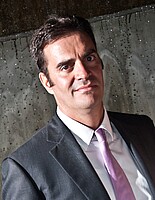
Yannis Stylianou is Professor of Speech Processing at University of Crete and Senior Research Scientist at Apple. Former positions include AT&T Labs Research, Bell-Labs, and Toshiba Cambridge Research Lab. IEEE Fellow with PhD from ENST-Paris and over 200 publications. Research spans: Adaptive speech/audio modeling Neural speech synthesis/enhancement Biomedical signal processing Awards include: IEEE Fellowship French Ministry Research Fellowship ENST Graduate Scholarship Recent work focuses on neural TTS architectures, intelligibility enhancement, and multimodal synthesis. Organizes annual International Summer School on Speech Processing.
Sotirios Bersimis is an Associate Professor at the University of Piraeus, Department of Business Administration. He holds additional roles as an elected member of the board of directors of the National Statistical Institute (Greece) and representative for FenSTATs and ECAS. Previously, he served as President of the Hellenic Organization for Health Care Services (EOPYY) and as President of the European Healthcare Fraud & Corruption Network (EHFCN). His education includes a PhD in Statistics from the University of Piraeus, an MSc in Statistics from Athens University of Economics and Business, and a BSc in Statistics and Insurance Science from the University of Piraeus. His research focuses on stochastic models for process monitoring, statistical process control, and health analytics. He has published over 60 peer-reviewed articles in journals like Journal of Quality Technology , Statistics in Medicine , and Annals of the Institute of Statistical Mathematics . His work emphasizes applications in healthcare surveillance, quality management, and fraud detection. Notable contributions include the development of the Process Monitoring Group and the 'Multivariate Statistical Process Control Charts: An Overview' paper, which remains highly cited in the field. Bersimis has received awards such as the 2018 ENBIS Best Manager Award and a public honor from the Greek Prime Minister. He actively collaborates with healthcare institutions, pharmaceutical companies, and international organizations, contributing to projects on health expenditure modeling and anti-fraud initiatives. His teaching spans undergraduate and postgraduate programs in statistics, biostatistics, and data science.
Minos Garofalakis is a Professor of Computer Science at the School of Electrical and Computer Engineering (ECE) of the Technical University of Crete (TUC), where he directs the Software Technology and Network Applications Laboratory (SoftNet). He is also the Director of the Information Management Systems Institute (IMSI) at the Athena Research and Innovation Centre in Athens. Previously, he held roles at Yahoo! Research, Intel Research Berkeley, and Bell Laboratories, and was an Adjunct Associate Professor at UC Berkeley. Education: He earned a BSc in Computer Engineering from the University of Patras (1992), followed by MSc (1994) and PhD (1998) in Computer Science from the University of Wisconsin-Madison. Research Interests: His work focuses on Big Data analytics , including database systems, data streams, approximate query processing, probabilistic databases, and secure/private data analytics. Key areas include distributed stream processing, data synopses, and machine learning applications. He has authored over 150 papers and holds 29 patents, with an h-index of 63 and 13,500+ citations. Recent Work Trends: His recent articles emphasize scalable stream analytics (e.g., OmniSketch), privacy-preserving techniques, and distributed event processing. He explores challenges in handling high-velocity data streams, uncertainty in databases, and real-world applications like healthcare analytics. Scientific Awards: ACM Fellow (2018), IEEE Fellow (2017), TUC Excellence Award (2015), and multiple patents from Bell Labs/Yahoo/AT&T. Advising & Grants: He led EU projects such as FERARI, LEADS, and The Human Brain Project. His lab, SoftNet, develops tools for extreme-scale analytics and declarative networking. Current work includes interactive cross-platform analytics (Infore) and AI-driven medical data systems. Labs/Teams: Director of SoftNet Lab and IMSI. Collaborates with industry partners on distributed systems and privacy-preserving technologies.
Demetrios Antzoulakos is an Associate Professor at the Department of Statistics and Insurance Science, University of Piraeus. He holds leadership roles as Head of the Department since January 2014 and Director of the MSc in Applied Statistics program. He has been affiliated with the University of Piraeus since 1998, progressing through Lecturer (1998-2000) to Assistant Professor (2000-2006) before his current role. His research focuses on distribution theory, run and pattern analysis, statistical quality control, and actuarial science applications. Education: Ph.D. in Mathematics, University of Patras (1990) Diploma in Mathematics, University of Patras (1986) Teaching: Undergraduate courses include Probability I/II and Life Insurance II. Postgraduate courses cover Data Analysis, Statistical Quality Control, Survival Analysis, and Life Contingencies. Research Interests: Span distribution theory of runs, control charts, start-up demonstration tests, and Fibonacci polynomials. His work bridges theoretical probability with practical applications in risk theory and quality assurance. Refereeing: Serves as a referee for journals like Journal of Applied Probability , Annals of the Institute of Statistical Mathematics , and IEEE Transactions on Reliability .
Antzoulakos Dimitrios is an Associate Professor in the Department of Statistics and Actuarial Science at the University of Piraeus. His academic career spans over two decades, with progressive appointments from Lecturer (1998-2000) to Assistant Professor (2000-2006) and finally Associate Professor (since 2006). He has held significant administrative roles including Chairman of the Department (2013-2015) and Director of the Postgraduate Program 'Applied Statistics' (2013-2017). Dr. Antzoulakos earned his Degree (1986) and PhD (1990) from the Department of Mathematics at the University of Patras. His teaching portfolio includes undergraduate courses such as Probabilities I & II and Actuarial Life Event Models II, as well as postgraduate courses in Data Analysis, Survival Analysis, and Statistical Quality Control. His research focuses on Applied Probability with particular emphasis on success flow theory, k-order distributions, component reliability, control charts, composite distributions in risk theory, and Fibonacci applications. His work bridges theoretical probability with practical applications in quality control and actuarial science. His publications from 2001-2016 demonstrate a clear trajectory from theoretical probability distributions toward practical applications in quality control and reliability engineering, appearing in top journals including Journal of Applied Probability and Journal of Quality Technology. Dr. Antzoulakos serves as a reviewer for numerous prestigious journals including Journal of Applied Probability, Journal of Statistical Planning and Inference, and The Fibonacci Quarterly, demonstrating his standing in the academic community. He has authored textbooks on probability exercises and developed extensive university notes for courses in life insurance, survival analysis, and quality control, contributing significantly to educational resources in his field.
Platon Tinios is a Professor in the Department of Statistics and Actuarial Science at the University of Piraeus, Greece. An economist by training, he completed his education at prestigious UK institutions including Cambridge (BA, PhD) and Oxford (MPhil). His academic journey began at Christ's College, Cambridge University (1975-1978) for his BA in Economics, followed by Nuffield College, Oxford University (1978-1980) for his MPhil, and returned to Christ's College, Cambridge University (1980-1984) for his PhD with a thesis titled "Housing Demand and Taxation in Greece: An Econometric Analysis of the Household Expenditure Survey, 1974". Professor Tinios has held influential positions including Advisor to the Prime Minister of Greece (1996-2004) with a special focus on economic aspects of social policy, and membership in the European Union's Social Protection Committee (1999-2004). He was the main author of the Sprouse Report on pensions in 1997 and has been involved in numerous international research collaborations including Horizon 2020 projects and World Bank initiatives. His research expertise spans social insurance, the economics of aging, social policy economics, public finances, and gender economics. His scholarly output is extensive and influential, with numerous publications addressing pension systems, particularly in the context of Greece's economic challenges. His work examines three-pillar pensions as potential levers for growth recovery, as documented in his 2018 book "Pensions for Young People" (co-authored with M. Nektarios and G. Symeonidis). Recent publications focus on long-term care systems, financial risk attitudes among aging populations, and pandemic response strategies, reflecting his ability to address contemporary challenges through rigorous economic analysis. Professor Tinios has been actively involved in significant research projects including serving as Scientific Responsible in Greece for SHARE-COVID 19 (Horizon 2020 project, 2020-2024), Consultant for the World Bank research project "The reform of Social Care Services in Greece" (2020-2021), and Deputy Scientific Coordinator of the Greek group in the multinational "Survey of Health and Retirement in Europe" (SHARE) since 2002. His participation in the SPRINT project (2015-2018) and UK Economic and Social Research Council projects further demonstrates his international research profile. As an educator, Professor Tinios teaches undergraduate courses in Social Insurance, Insurance Economics, Macroeconomics, and Population Aging and Insurance Economics, as well as postgraduate courses on Pension schemes and social security. His teaching reflects his commitment to connecting theoretical economic principles with practical policy applications, preparing students to address real-world challenges in economics and social policy, particularly in the context of aging populations and social security systems.
National and Kapodistrian University of AthensGreece
Earl T. Barr is a Professor of Software Engineering at University College London (UCL), where he heads the System Software Engineering Group and is a member of the Centre for Research on Evolution, Search and Testing (CREST). His academic journey began with a Ph.D. in Computer Science from the University of California, Davis in 2009, after which he joined UCL as faculty. His research spans multiple domains within software engineering, with particular focus on program analysis, type systems, automated program repair, and the emerging field of dual channel analysis that examines the interplay between natural language and formal programming language in source code. Barr's work on the 'naturalness of software' has been influential in understanding how code differs from natural language while exhibiting statistical regularities. Barr's publication record shows a strong trend toward integrating machine learning with traditional software engineering techniques, particularly in type inference (Typilus), program repair, and code understanding. His recent work increasingly focuses on dual channel analysis, exploring how the natural language elements in code (identifiers, comments) interact with the formal programming language to create a richer communication channel for developers. MSR 2019 Most Influential Paper Award Multiple ACM SIGSOFT Distinguished Paper Awards Best Paper Award at IEEE Conference on E-Commerce Technology (2005) Barr actively supervises numerous Ph.D. students and postdocs, with current projects focusing on dual channel program analysis, AI for code, and software security applications. He has established long-term collaborations with researchers at institutions including Royal Holloway and the University of Luxembourg. His teaching portfolio at UCL includes core courses in Malware, Compilers, and Validation and Verification, reflecting his broad expertise across the software engineering spectrum. Barr leads the System Software Engineering Group at UCL, which focuses on practical applications of software engineering research with strong connections to industry problems. The group's work bridges theoretical foundations with real-world software development challenges, particularly in the areas of program analysis and automated software maintenance.
George Nenes is a Professor and Head of the Department of Mechanical Engineering at the University of Western Macedonia (Greece), affiliated with the Polytechnic School. He also serves as a research associate at Aristotle University of Thessaloniki's Mechanical Engineering Department. His academic journey includes a PhD in Statistical Quality Control (2006), MSc in Management of Production Systems (2002), and a Mechanical Engineering Diploma (2000), all from Aristotle University. He has held visiting roles at institutions like the University of Thessaly and Democritus University of Thrace, and taught in international programs like Middlesex University's external programme. Research focuses on Statistical Quality Control and Supply Chain Management, with expertise in adaptive control charts, economic-statistical design methodologies, and inventory optimization. His work spans journals such as European Journal of Operational Research and IIE Transactions. He leads the MORSE Lab (Quantitative Methods of Operations Research and Statistics in Engineering) and teaches courses including Operations Research I/II, Inventory Management, and Simulation. Publications emphasize optimization of quality control systems, remanufacturing lot sizing, and finite-horizon process monitoring. His research integrates Bayesian methods, stochastic modeling, and cost-benefit analysis to address challenges in manufacturing and supply chain systems.
Dimitrios Nikolopoulos is Professor at University of West Attica specializing in radiation physics applications for environmental monitoring and seismic forecasting. Research integrates sensor technology with fractal analysis to detect earthquake precursors in radon emissions and electromagnetic signals. Key domains include: radiation detection methodologies, multifractal time-series analysis of environmental data, and sensor development for medical/industrial applications. Recent work examines radon-thoron correlations with meteorological factors using multifractal detrended cross-correlation analysis. Publications demonstrate consistent innovation in applying DFA/MFDFA techniques to geophysical datasets. Article themes cluster around signal processing approaches for natural hazard prediction and environmental radioactivity patterns. No awards or student supervision details are available.
Michael Sfakianakis is Professor of Informatics and Statistics Applications in Business Administration at the Department of Business Organization and Management, University of Piraeus, where he also serves as Dean of the School of Economics, Business and International Studies since 2017. He holds a degree in Mathematics from the University of Athens, a Master’s in Informatics and Operations Research, and a PhD in Applied Quantitative Methods. First Degree: Department of Mathematics, University of Athens Master: Informatics and Operations Research PhD: Applied Quantitative Methods His research interests center on Applied Statistics, Business Informatics, Health Informatics, Tourism Economics, and Public Policy Modeling . His work bridges theoretical statistical methods with practical applications in business, healthcare, and public administration. He has published extensively in journals such as IEEE Transactions on Reliability, Journal of Applied Statistics, and European Journal of Clinical Investigation. The 15 most recent publications reflect a strong interdisciplinary trend, combining quantitative modeling with applications in telecommunications, e-government, health systems, and digital business . Key themes include business process automation, information systems evaluation, corporate social responsibility, and data-driven decision-making in public and private sectors. He has authored seven books on simulation, statistics, and informatics, and teaches in six postgraduate programs across the University of Piraeus and Athens University of Economics and Business. No specific scientific awards are listed in the provided text. Prof. Sfakianakis has supervised numerous students and has been deeply involved in academic and public service. He has led major research and policy initiatives in areas such as tourism satellite accounts, public procurement reform, and national statistical systems. His leadership roles include presidency of multiple university departments and advisory roles in national regulatory bodies. He is actively engaged in public policy, having chaired the Central Supervisory Board of the General Commercial Registry, served on the European Advisory Committee for Economic and Social Affairs, and contributed to OECD projects on measuring societal progress. He is also President of the Tourism Observatory and Deputy President of the National Authority for Healthcare Quality Assurance (ODIPY).
National and Kapodistrian University of AthensGreece
Vertzoni Maria is an Associate Professor of Biopharmaceutics & Pharmaceutical Technology at the Department of Pharmacy, National and Kapodistrian University of Athens. Her research focuses on oral drug absorption mechanisms, gastrointestinal physiology, and predictive modeling for pharmaceutical development. She teaches undergraduate and graduate courses in biopharmaceutics, pharmaceutical analysis, and nanomedicine. Education: Bachelor of Science in Chemistry (National and Kapodistrian University of Athens) Master of Science in Analytical Chemistry (National and Kapodistrian University of Athens) Master of Science in Medical and Pharmaceutical Statistics (Athens University of Economics and Business) Doctor of Philosophy in Pharmaceutical Sciences (National and Kapodistrian University of Athens) Research Interests: Physiologically-Based Pharmacokinetic (PBPK) Modeling Impact of Gastrointestinal Variability on Drug Absorption Pediatric and Geriatric Pharmacology In Vitro/In Silico Predictive Tools for Drug Development Her work emphasizes the development of biorelevant in vitro systems (e.g., BioGIT) and computational frameworks to bridge preclinical and clinical drug performance. Notable contributions include studies on food effects, age-related absorption changes, and formulation optimization for modified-release products. Awards & Affiliations: Member of the Editorial Board, Die Pharmazie (2013–present) Co-editor of Oral Absorption of Modified Release Dosage Forms (Wiley, in press) Scholarship for post-doctoral training, Greek State Scholarships Foundation (2008–2009) Her research group collaborates with international networks like UNGAP and OrBiTo to advance oral drug delivery science, particularly addressing challenges in pediatric and elderly populations.
Panagiotis Pegas is an Assistant Professor at the Department of Regional and Economic Development of the Agricultural University of Athens. He has extensive teaching experience across multiple Greek institutions including the University of Thessaly, University of West Attica, Harokopio University, Hellenic Open University, and the Hellenic Institute of Economics of Education, Research & Innovation. Dr. Pegas holds a Bachelor's and Master's Degree in Applied Economics and Finance from the Department of Economics of the National and Kapodistrian University of Athens, and a PhD in Economics from the Department of Economics and Sustainable Development of Harokopio University. His academic journey includes participation in research programs at the Department of Economics, National and Kapodistrian University of Athens and work experience in the National Accounts Directorate of the Hellenic Statistical Authority. Dr. Pegas's research focuses primarily on Macroeconomics and Applied Economics , with specific interests in Energy Economics, Tourism Economics, Economics of Education, and the Greek economy. His work explores the complex relationships between economic growth, human capital, energy consumption, environmental sustainability, and policy interventions. His research methodology often employs advanced econometric techniques to analyze Greek and Eurozone economic data. Dr. Pegas has published numerous papers in international scientific journals and has presented his research at scientific conferences. He also serves as a reviewer for conference papers and international scientific journals, contributing to the academic community's quality control processes. His publications demonstrate a consistent focus on empirical economic analysis with policy relevance, particularly for the Greek and Eurozone contexts. Macroeconomics and Inflation Dynamics Energy Economics and Renewable Energy Tourism Industry Efficiency Economics of Education and Human Capital R&D and Innovation Economics Environmental Economics and CO2 Emissions Dr. Pegas teaches several courses including Energy Economics, Macroeconomic Theory I, and Macroeconomic Theory II. His teaching approach emphasizes connecting theoretical economic concepts with practical applications, particularly in the Greek economic context. He has supervised various academic projects though specific student names are not mentioned in the available information. Dr. Pegas is actively engaged in the academic community through his ResearchGate, Google Scholar, and Scopus profiles, which document his extensive publication record and research impact. His work contributes significantly to understanding the Greek economy's dynamics, particularly in relation to energy, tourism, education, and macroeconomic policy.
Paraskevi Kapetanopoulou is an Assistant Professor at the Department of Mechanical Engineering, University of Western Macedonia (Greece), and a research associate at Aristotle University of Thessaloniki. Her academic journey includes a PhD in Reverse Supply Chain Management and an MSc in Production Systems Management, both from Aristotle University. She has held visiting roles as Associate Professor at Aristotle University and Lecturer at University of Western Macedonia, in addition to postdoctoral research at INSEAD (France). Her teaching spans multiple institutions, including the Open University of Cyprus where she coordinates the Master’s Programme in Management, Technology and Quality. Education: PhD: Operation and Management of Reverse Supply Chains (Aristotle University of Thessaloniki, 2009) MSc: Management of Production Systems (Aristotle University of Thessaloniki, 2003) Mechanical Engineering Diploma (Aristotle University of Thessaloniki, 1996) Research interests focus on Statistics , Statistical Quality Control , and Supply Chain Management , with emphasis on empirical studies in manufacturing industries, transportation safety, and sustainable practices. Her work bridges theoretical methodologies with practical applications in logistics optimization, information systems efficiency, and product recovery strategies. Selected research contributions include analysis of information systems adoption in Greek manufacturing, cost efficiency of supply chain structures, and driver behavior in transportation safety. Her lab, MORSE Lab, focuses on quantitative methods in Operations Research and Engineering Statistics. Grants and advising details are not explicitly mentioned in available texts, but her academic roles suggest active involvement in research coordination and postgraduate supervision. She maintains affiliations across multiple Greek institutions and international collaborations through her postdoctoral work.
National and Kapodistrian University of AthensGreece
Nikos Pantazis serves as Assistant Professor of Epidemiology and Medical Statistics at the Department of Hygiene, Epidemiology and Medical Statistics within the Medical School of the National and Kapodistrian University of Athens (NKUA). He delivers core instruction in Medical Statistics and Epidemiology across undergraduate programs in Medicine, Dentistry, and Biology, while advancing specialized postgraduate coursework in Generalized Linear Models, Longitudinal Data Analysis, and Meta-analysis at NKUA and the University of Patras. His academic foundation includes a Physics degree from NKUA, followed by Master's and PhD credentials from the university's joint Medical School/Department of Mathematics Biostatistics program. This interdisciplinary background fuels his dual expertise in theoretical statistics and clinical epidemiology. Dr. Pantazis's research centers on HIV epidemiology and advanced longitudinal data methodologies , with particular focus on statistical solutions for non-random missing data scenarios in survival analysis. His work bridges theoretical biostatistics with urgent public health applications, especially in infectious disease surveillance systems. Recent publications reveal consistent engagement with HIV transmission dynamics, cohort study design, and methodological innovations for complex missing data. His output spans clinical domains (HIV, HCV, COVID-19) and statistical theory, demonstrating significant cross-disciplinary impact through high-impact journals like Lancet HIV and Journal of the Royal Statistical Society . He leads as local Principal Investigator for an ECDC initiative enhancing European HIV surveillance data quality and has secured funding from the European Union, NIH-USA, and national agencies. To date, he has mentored over 30 Master's students through thesis supervision and committee roles, shaping the next generation of epidemiological researchers.
Raikou Maria is a Professor at the Department of Economics, University of Piraeus. She holds a Degree in Electrical and Computer Engineering from the National Technical University of Athens (N.T.U.A.), an MSc and PhD in Health Economics from City University, London. Previously, she was a Research Fellow and Visiting Lecturer at LSE Health and Social Care (London School of Economics). Her research focuses on statistical/econometric modeling of healthcare costs, health technology diffusion, and hospital cost-quality analysis. She has advised governmental bodies (UK Department of Health, NICE) and served on the Board of Directors of the Onassis Cardiac Surgery Center. Her work spans peer-reviewed journals like Health Economics , British Medical Journal , and Journal of Health Economics . Education: Bachelor's: Electrical and Computer Engineering, National Technical University of Athens Master's: Health Economics, City University, London PhD: Health Economics, City University, London Research Trends: Her recent articles (2022–2021) emphasize cost-effectiveness of ovarian cancer screening and patient outcomes in cardiovascular diseases. Earlier work (2000–2010) focused on diabetes management economics and technology diffusion in heart attack care. Consulting/Advisory Roles: She has consulted for pharmaceutical companies and national health institutes, contributing to policy frameworks for smoking cessation interventions and healthcare resource allocation. Labs/Teams: Affiliated with the Onassis Cardiac Surgery Center's strategic board and collaborates with global networks like the UK Collaborative Trial of Ovarian Cancer Screening (UKCTOCS).